Women Psychoanalysts in Great Britain
Geschichte

Enid Balint née Albu (1903-1994)
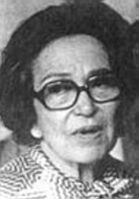
Enid Flora Albu, psychoanalyst and welfare worker, was born in London. She was educated at Cheltenham Ladies' College before she entered the London School of Economics in 1922, and graduated in 1925. In 1926 she married Robert N. Eichholtz (later Eccles), a philology professor, and became the mother of two daughters.
During and after the Second World War Enid Albu-Eichholtz organized the Citizens' Advice Bureaux in London on behalf of the Family Welfare Association (later the Institute of Family Relations), helping families who lost their homes during the bombing. In 1948 she participated in founding the Family Discussion Bureau, the later Tavistock Institute of Marital Studies, in order to train social workers, who were needed for family counselling. The same year she started her psychoanalytic training with John Rickman at the Tavistock Clinic. After Rickman died in 1951, she continued training analysis with Donald W. Winnicott. In 1952 she was accepted as an associate member of the British Psychoanalytical Society (BPAS), and after her presentation of Three phases of a transference neurosis became a full member in 1954.
In connection with her work at the Tavistock Institute of Human Relations, Enid Albu-Eichholtz met Michael Balint (1896-1970), whom she married in 1953, after divorcing Eichholtz (Fig.). She introduced Balint to the casework technique, which she used in training social workers and psychologists. Between 1949 and 1954 they developed the concept of the "Balint group", a training method for practitioners. In these groups, doctors discuss (under the direction of an analyst) case reports from their practice and work through the transference and counter-transference in the doctor-patient relationship. Even after their divorce Enid and Michael Balint worked closely together and developed the focal psychotherapy and the so-called flash technique for generalists.
In 1963 Enid Balint became a training analyst of the BPAS, where she belonged to the Middle Group of independents. Until 1965 she was in charge of the training and research course for general practitioners at the Tavistock Clinic, and from 1970 till 1974 she directed the London Institute of Psychoanalysis. A volume of her papers Before I was I was edited in 1993. Her work is especially related to that of Sándor Ferenczi, Michael Balint and Donald Winnicott. Above all she was interested in unconscious communication, the understanding of pre-verbal and bodily processes and the interface between the pre-verbal and verbal. She saw the aim of analysis as the development of "imaginative perception": the patient imagines his perceptions and by that he creates his own, partly imaginated, partly perceived world. Balint stated, that the self and the world around us become real and alive only through the imagination.
After Michael Balint's death Enid Balint married (in 1976) Robert Humphrey Gordon (Robin) Edmonds (1920-2009), a retired diplomat and historian. (Top of the article)
- SELECTED WORKS
- Development of family discussion bureau work. Social Casework January 1951, 495-500
- Three phases of a transference neurosis (1954). In Balint 1993 [Drei Phasen einer Übertragungsneurose. Psyche 11 (8), 1957, 526-542]
- Training postgraduate students in social casework. Brit J Med Psychol 32, 1959, 193-199
- On being empty of oneself. IJP 44, 1963, 470-480 [Über innere Leere. In Balint 1997, 58-83]
- Marital conflicts and their treatment. Comprehensive Psychiatry 7, 1966, 403-407 [Ehekonflikte und ihre Behandlung. In Balint 1997, 271-278]
- Remarks on Freud's metaphors about the "mirror" and the "receiver". Comprehensive Psychiatry 9, 1968, 344-348
- Unconscious communications between husband and wife. In W. G. Joffe (ed.): What is Psychoanalysis? London 1968 [Unbewußte Kommunikation zwischen Ehepartnern. In Balint 1997, 279-294]
- The possibilities of patient-centered medicine. Journal of the Royal College of Generel Practioners 17, 1969, 269-276
- Fair shares and mutual concern. IJP 53, 1972, 53-61 [Gerechtigkeit und gegenseitige Anerkennung als Erziehungsziele. Psyche 27, 1973, 118-128]
- Technical problems found in the analysis of women by a woman analyst. A contribution to the question "What does a woman want?". IJP 54, 1973, 195-201 [Die Analyse der Frau durch eine Analytikerin. "Was will das Weib?". In Balint 1997, 105-120]
- The psychoanalyst and medicine. International Journal of Psychiatry in Medicine 7, 1976/77, 35-46 [Der Psychoanalytiker und die Medizin. In Balint 1997, 183-198]
- Memory and consciousness. IJP 68, 1987, 475-483 [Erinnerung und Bewußtsein. In Balint 1997, 121-139]
- Before I was I. Psychoanalysis and the Imagination. Ed. by Juliet Michell and Michael Parsons. London, New York 1993 [Bevor Ich war. Imagination und Wahrnehmung in der Psychoanalyse. Stuttgart 1997]
- (and Michael Balint) Psychotherapeutic Techniques in Medicine. London 1961 [Psychotherapeutische Techniken in der Medizin. Stuttgart 1963]
- (with Michael Balint, R. Gosling and P. Hildebrand) A Study of Doctors. Mutual Selection and the Evaluation of Results in a Training Programme for Family Doctors. London 1966
- (with Michael Balint and P. Ornstein) Focal Psychotherapy: An Example of Applied Psychoanalysis. London 1972 [Fokaltherapie. Ein Beispiel angewandter Psychoanalyse. Frankfurt/M. 1973]
- (and J. S. Norell) (eds) Six Minutes for the Patient. London 1973 [Fünf Minuten pro Patient. Frankfurt/M. 1975]
- REFERENCES
- Baruch, Hoffman Elaine, and Lucienne J. Serrano: Women Analyze Women, in France, England and the United States. New York, London 1988
- Clulow, Christopher: Obituary Enid Balint Edmonds. Sexual and Marital Therapy 9 (3), 1994, 301
- Hopkins, Philip: Balint, Michael Maurice (1896-1970). Oxford Dictionary of National Biography, vol. 3. Oxford, New York 2004, 550-553
- Moreau-Ricaud, Michelle: Enid Balint-Edmonds (1904-1994). Le Coq-Héron No. 136, 1995, 77-80
- Parsons, Michael: Einleitung zu Enid Balint: Bevor Ich war. Stuttgart 1997, 13-21
- Pictures from the life of Michael Balint. Am J Psychoanal 62, 2002, 355-358
- Ruszczynski, S.: Enid Balint and the beginning of the psychoanalytical understanding and treatment of the marital relationship. Bulletin of the Society of Psychoanalytical Marital Psychotherapists 3, 1996, 4-7
- Wikipedia: English; German; French (2023-11-07)
- PHOTO: Courtesy of Société Balint Belge


Dorothea Helen Ball (1916-2006)
Dorothea was born in in Lenzie, just outside Glasgow, the eldest of three children. Her father died soon after her birth, and her mother brought up Dorothea and her two brothers alone. She studied medicine at Glasgow University, qualifying just before the outbreak of the Second World War.
After the end of the war, she married Sidney Ball (1909-1991), a Canadian osteopath, with whom she had two children, Graham and Calie. She began studying at the London College of Osteopathic Medicine, but soon decided to train as a psychiatrist and psychoanalyst. She practised privately in London and worked as a Clinical Assistant in the Department of Psychological Medicine, University College Hospital London (UCL). In 1958, along with Heinz Wolff and Roger Tredgold, she initiated the UCL Student Psychotherapy Scheme as a way to improve the doctor-patient relationship: It was a programme that enabled medical students to treat a patient in supervised psychotherapy. In 1969 she was the co-author of a report on the training of UCL medical students in patient-centered medicine, under the direction of Michael Balint.
Following a stroke, Dorothea Ball retired in 1999. (Top of the article)
- SELECTED WORKS
- (and Heinz H. Wolff) An experiment in the teaching of psychotherapy to medical students. Lancet 26 (1), 1963, 214-217
- (with Michael Balint and Mary L. Hare) Training medical students in patient-centered medicine. Comprehensive Psychiatry 10 (4), 1969, 249-258 [Unterrichtung von Medizinstudenten in patientenzentrierter Medizin. Psyche 23, 1969, 532-546]
- REFERENCES
- Osteopathic Trusts Limited (2017-10-23)
- Phillips, Gerald: Obituary Dorothea Helen Ball. BPAS, August 2006
- Shoenberg, Peter, and Jessica Yakeley (eds): Learning about Emotions in Illness. Integrating Psychotherapeutic Teaching into Medical Education. London; New York 2014
Mary Barkas (1889-1959)
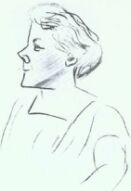
Mary Rushton Barkas was born in Christchurch, New Zealand. She was the only child of Frederick Barkas and Amy Parker, both immigrants from England. (Fig.) Her father, with whom she maintained a lifelong close relationship, was a chemist and worked as a manager for the New Zealand Loan and Mercantile Agency Company. Her mother had worked as a governess and music teacher before before marrying.
From 1905 to 1909 Mary Barkas studied Domestic Science at Victoria University College Wellington (BSc 1908). She then achieved her MSc at the University of New Zealand in 1910. In 1913 she went to London to study Home Science and Economics at King's College. Shortly after the outbreak of World War I, she decided instead to study medicine at the London School of Medicine for Women, training at St Mary's Hospital and qualifying in 1918.
After graduating Mary Barkas worked as house-physician at Bethlem, London's famous psychiatric hospital, which she left in 1919 in order to study Psychological Medicine at the University of London. In 1919 she was elected a member of the Medico-Psychological Association, the professional organisation of psychiatrists. Within three years she obtained the necessary university degrees in Psychological Medicine, going on to her MD in 1923.
Having become an enthusiast for psychoanalysis, she looked for training analysis. After inquiries with C. G. Jung and Sigmund Freud, she underwent in 1922 a three-month analysis with Otto Rank in Vienna. That same year she became an associate member of the British Psychoanalytical Society (BPAS). She was less interested in psychoanalytic theory than in the application of psychoanalysis to the therapy of psychotic patients. Mary Barkas gave lectures about psychosis, such as, in 1925, about The treatment of psychotic patients in institutions in the light of psycho-analysis at the BPAS. In 1924, she attended the International Psychoanalytical Congress in Salzburg.
From 1923 to 1927 Mary Barkas was appointed as an assistant medical officer at the newly opened Maudsley Psychiatric Hospital in London, where she worked along with William S. Dawson in the department for the treatment of children established by him. From 1928 to 1933 she was Medical Superintendent of The Lawn Hospital in Lincoln, a small private asylum. By 1932, the hospital was on the edge of bankruptcy and after her father died the same year, Mary Barkas returned to New Zealand.
She settled in Tapu, north of Thames, and gave up practising medicine. After a trip to Europe in 1937/38, she devoted the rest of her life primarily to the study of Chinese philosophy and the breeding of schnauzers. She passed away at the age of 67 after suffering from advanced dementia. (Top of the article)
- SELECTED WORKS
- The treatment of psychotic patients in institutions in the light of psycho-analysis. J Neurol Psychopathol 5 (20), 1925, 333-340
- A note on the significance of the vegetative nervous system in tabes dorsalis. J Neurol Psychopathol 6 (22), 1925, 126-128 (2016-03-11)
- Tonic spasm of the eyes in conjugate deviation. The Lancet 2, 1926, 330
- Psychosis associated with pressure from a disc of bone replaced after trephining. Proceedings of the Royal Society of Medicine 20 (5), 1927, 630
- Psychosis showing recovery after relief of intracranial pressure of doubtful origin. Proceedings of the Royal Society of Medicine 20 (5), 1927, 631-632
- Case for diagnosis between psychogenic depression and the post-encephalitic syndrome. Proceedings of the Royal Society of Medicine 20 (5), 1927, 632
- BMA: Annual meeting at Cardiff. Section of mental diseases and neurology. The Lancet, 1928, 340-345
- REFERENCES
- Andrews, Jonathan, u. a.: The History of Bethlem Hospital. London 1997
- Barkas Papers (2021-08-06)
- Barrowman, Rachel: Mason. The Life of R.A.K. Mason. Wellington, N.Z. 2003
- Dawson, William S.: Obituary Mary R. Barkas. Br Med J, 20.6.1959 (2019-07-10)
- Evans, Bonnie, and Edgar Jones: Organ extracts and the development of Psychiatry: Hormonal treatments at the Maudsley Hospital 1923-1938. Journal of the History of the Behavioral Sciences 48 (3), 2012, 251-276
- Kaplan, Robert M.: Mary Barkas. A New Zealand pioneer at the Maudsley. Irish Journal of Psychological Medicine, March 2016, 1-4
- Kaplan, Robert M.: Mary Barkas at the Maudsley 1923-1927. Journal of Medical Biography, Oktober 2017, 1-8
- Kaplan, Robert M.: Promise Unfulfilled. The Life of Mary Barkas, Psychiatrist and Psychoanalyst. Self published 2023
- Liebich, Susann: Reading and writing in intimate relations: The correspondence between father and daughter Fred and Mary Barkas. In dies.: Connected Readers. Reading Practices and Communities across the British Empire, c. 1890-1930. Phil. Diss. Victoria University of Wellington 2012, 101-133 (2025-03-28)
- Lück, Helmut E., and Elke Mühlleitner (eds): Psychoanalytiker in der Karikatur. München 1993
- Meisel, Perry, and Walter Kendrick (eds): Bloomsbury/Freud. The Letters of James and Alix Strachey 1924-1925. New York 1985
- Sanderson, Kay: Mary Barkas (1889-1961). In C. Macdonald et al. (eds): The Book of New Zealand Women. Ko Kui Ma Te Kaupapa. Wellington 1991, 45-47
- Wikipedia (2021-01-04)
- FIG.: Robert Berény 1924; s. a. Bethlem Museum of the Mind Blog (2021-07-27)
Agnes Bene-Moses (1929-1979)

Agnes "Agi" Judith Bene was born into a Hungarian Jewish family in Budapest. She and her family survived the German occupation and the Arrow Cross terror with the help of the Swedish diplomat Raoul Wallenberg - except her father, who was executed shortly before the end of the war. In 1948, Agnes Bene emigrated to Switzerland and studied psychology in Geneva with Jean Piaget. In 1950, she and her friend Anne-Marie Weil went to London for psychoanalytic training. She qualified first as a Child Psychotherapist with Anna Freud at Hampstead Child-Therapy Courses, going on to train with the British Psycho-Analytical Society (BPAS).
Agi Bene was a prominent member of the psychoanalytic community, and as a training analyst and supervisor very much in demand. She was a senior child psychoanalyst at the Hampstead Clinic, where she had played an active part in the training and research activities for many years. Her papers on self-pathology in children reflected her particular interest in borderline children and adults. In cases of children with deaf-mated parents, she assumed that lack of auditory contact and verbalisation lead to cognitive and ego deficits (1977).
After marrying Rafael Moses (1924-2001), a German psychiatrist and psychoanalyst who had emigrated to Palestine in 1937, Agi Bene-Moses moved to Israel in 1976. She was a member of the Israel Psychoanalytic Society until her premature death. (Top of the article)
- SELECTED WORKS
- Depressive phenomena in childhood. Their open and disguised manifestations in analytic treatment. In A. Freud et al.: Studies in Child Psychoanalysis: Pure and Applied. The Scientific Proceedings of the 20th Anniversary Celebrations of the Hampstead Child-Therapy Course and Clinic. New Haven; London 1975, 33-46
- The influence of deaf and dumb parents on a child's development. Psa Study Child 32, 1977, 175-194
- The question of narcissistic personality disorders. Self pathology in children. Bul Anna Freud Centre 2, 1979, 209-218
- Self pathology in children. In P. Beren (ed.): Narcissistic Disorders in Children and Adolescents. Diagnosis and Treatment. Northvale, N.J. 1998, 113-126
- (and Rafael Moses) Perspectives of the Middle East peace process obstacles to peace, with special reference to narcissism. Samiksha 34 (4), 1980, 117-129
- REFERENCES
- Agi Bene-Moses. Bul Anna Freud Centre 2, 1979,163
- Biographische Handbücher der deutschsprachigen Emigration nach 1933: Moses, Rafael (2023-11-07)
- Israel Psychoanalytic Society: Agi Bene-Moses + Rafael Moses (2018-10-16)
- Sandler, Anne-Marie: Konflikt und Versöhnung. In L. M. Hermanns (ed.): Psychoanalyse in Selbstdarstellungen, Bd X. Frankfurt/Main 2015, 221-287
- Photo: Israel Psychoanalytic Society
Esther Bick née Wander (1902-1983)
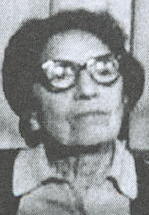
The child analyst Esther Bick was born Esteza Lifsza Wander in Przemysl in Galicia. She was the eldest daughter of orthodox Jewish parents. Her father, Samuel Wander, came from a family of small traders, and her mother, Chaja Lea Malawer, from a family of merchants and homeowners. She spent her first five years with her grandmother, but then had to return to her mentally unstable mother and two younger siblings. Around 1916, Esther Wander joined a Zionist youth organisation and left school to prepare to emigrate to Palestine. She earned her living as a nanny in a home for war orphans. It was here that her professional interest in child psychology awoke.
In 1924 she got her Abitur and went to Vienna to study Psychology under Charlotte Bühler, who at that time was researching infant development. Esther Wander became Bühler's research assistant and, despite her discomfort with Bühler's behaviouristic approach, she completed in 1935 her PhD dissertation Gruppenbildung im zweiten Lebensjahr in the context of this project. In 1936, she married the medical student Philipp Bick (1904-1972). Following Germany's annexation of Austria in 1938 they fled to Switzerland. Not being granted a work permit, Esther Bick emigrated at the end of 1938 to England - without her husband who stayed in Switzerland. They divorced in 1945.
She settled in Manchester, where in 1941 she began an analysis with Michael Balint, which was converted into a training analysis a year later. During this time she worked in a day nursery in Salford, and between 1942 and 1945 in a child guidance clinic in Leeds. After the end of the war she moved to London, starting her training at the Institute of Psychoanalysis in 1947. She continued her training analysis with Melanie Klein and became a disciple of hers. In 1948 she was accepted as an associate member of the British Psychoanalytical Society, and in 1953, after the presentation of her paper Anxieties underlying phobia of sexual intercourse in a woman, as a full member.
In 1948, Esther Bick was invited by John Bowlby to head a child psychotherapy training at the Tavistock Clinic, which she ran from 1949 to 1960. At the same time, she taught at the BPAS Institute of Psychoanalysis. Esther Bick exerted a significant influence on the development of child psychotherapy in Great Britain, particularly by her discovery of the potential of infant observation. Starting from Bühler's behavioral observations, she integrated the observation of young children into the psychoanalytic setting and conceived the technique of psychoanalytic infant observation, which is connected with her name. Bick's method of observing the infant in its family environment was a conceptual innovation, for her focus lied on the emotions of the observer as a means for getting into connection with the child's unconscious.
Situated within the Kleinian theory, Bick's most important concepts include the term of the "mental skin", the primal skin function, and the defensive second skin phenomena. Esther Bick stated, that the baby's own skin, felt both from within itself and through its boundary with its mother's skin (skin of self-and-mother), is experienced as being able to hold together its personality in an early state of development. If this primary skin containment fails, a second skin is built by muscular self-containment as defense against the catastrophic experience of a leak containment and the threatening life-spilling-out. This opened the way to Didier Anzieu's idea of the skin ego. (Top of the article)
- SELECTED WORKS
- [Wander, E.] Gruppenbildung im zweiten Lebensjahr. Phil. Diss. Wien 1935
- Anxieties underlaying phobia of sexual intercourse in an woman (1953). Brit J Psychother 18 (1), 2001
- Child analysis today. IJP 43, 1962, 328ff; in Bick 2002, 27-36
- Notes on infant observation in psycho-analytic training. IJP 45, 1964; in Bick 2002, 37-54 [Bemerkungen zur Säuglingsbeobachtung in der psychoanalytischen Ausbildung. Jb Psychoanal 53, 2006]
- The experience of the skin in early object relation. IJP 49, 1968, 484-486; in Bick 2002, 55-59 [Das Hauterleben in frühen Objektbeziehungen. In E. Bott Spillius (ed.): Melanie Klein Heute, Bd 1. München u.a. 1990, 236-240]
- Further considerations on the function of the skin in early object relations. Brit J Psychother 2 (4), 1986; in Bick 2002, 60-71
- Collected Papers of Martha Harris and Esther Bick. Ed. by Meg Harris Williams. Perthshire, Scotland 1987
- Surviving Space. Papers on Infant Observation. Essays on the Centenary of Esther Bick. Ed. by A. Briggs. London, New York 2002
- REFERENCES
- Anzieu-Premmereur, Christine: Nourisson (observation thérapeutique du-). In Dictionnaire international de la psychanalyse (2002). Ed. by A. de Mijolla. Paris 2005, 1182-1184
- Briggs, Andrew (ed.): The life and work of Esther Bick. In Bick 2002, xix-xxx
- Gedenkbuch für die Opfer des Nationalsozialismus an der Universität Wien (2023-11-08)
- Golse, Bernard: Bick, Esther. In Dictionnaire international de la psychanalyse (2002). Ed. by A. de Mijolla. Paris 2005, 217f [International Dictionary of Psychoanalysis. Detroit u. a. 2005, 177-178]
- Harris, Martha: Esther Bick (1901-1983). J Child Psychother 9, 1983, 101f
- Köhler-Weisker, Angela: Esther Bick: Eine Pionierin der teilnehmenden Säuglingsbeobachtung. Jb Psychoanal 53, 2006
- Prat, Régine: Panorama de l'observation du bébé selon la méthode Esther Bick dans les pays francophones. Devenir 17 (1), 2005, 55-82 (2015-04-08)
- Rustin, Margaret: Esther Bick. Melanie Klein Trust 2013 (2019-07-22)
- Sharif-Nassab, Arin: Przemysl - Wien - London. Bemerkungen zu Leben und Werk von Esther Bick (1902-1983). Werkblatt 26 (63), 2009 148-170
- Willoughby, Roger: Between the basic fault and second skin. IJP 85, 2004, 179-195 (2009-08-21)
- PHOTO: Courtesy of Karnac Books
Augusta Bonnard (1903-1974)
Augusta "Guita" Josephine Bonnard was born in Russia. Her family emigrated to England after the abortive revolution in 1906. Augusta Bonnard studied medicine and qualified at the London University College Hospital (UCH) in 1927. She was for a time in general practice, after which she obtained a consultant's post at Paddington Green Children's Hospital. There she was influenced by Donald W. Winnicott, who worked as a pediatrician at the hospital and stimulated her interest in child psychiatry and psychoanalysis.
Augusta Bonnard went to Vienna and briefly studied with Sigmund Freud. She underwent psychoanalytic training with Anna Freud and became a member of the British Psychoanalytical Society. After the foundation of the Hampstead Child Therapy Clinic and Course in London by Anna Freud in 1952, the clinic staff included Augusta Bonnard, who was one of the honorary consultants and taught in Anna Freud's training programme.
After the end of the Second World War, Augusta Bonnard restarted and directed the East London Child Guidance Clinic at the London Jewish Hospital. She acted as a consultant psychiatrist to the clinic until her retirement in 1968. While working in private practice as a psychoanalyst in London, she also held posts at Great Ormond Street Hospital, the Tavistock Clinic, UCH and the Lasker Clinic in Jerusalem. She was a classical Freudian and a proponent of ego psychology, but her work was also influenced by Winnicott.
Since the late 1920s, Augusta Bonnard was married to Christopher Tatham Brunner (1902-1962), a director of the petroleum company Shell-Mex & BP. (Top of the article)
- SELECTED WORKS
- "Black-out" and ventilation. Br Med J, March 23, 1940, 506
- The mother as therapist, in a case of obsessional neurosis. Psa Stud Child 5, 1950, 391-440
- War trauma in children, real or imaginary. Quarterly Journal of Child Behavior 3, 1951
- Some discrepancies between perception and affect as illustrated by children in wartime. Psa Stud Child 9, 1954, 242-251
- The metapsychology of the Russian trials confessions. An example of the defence mechanism of 'identification with the (idealized) aggressor'. IJP 35, 1954, 208-213 [Die Metapsychologie der Geständnisse in den russischen Prozessen. Ein Beispiel des Abwehrmechanismus' der Identifikation mit dem (idealisierten) Angreifer. Psyche 9 (3), 1955, 230-239]
- Bewusste und unbewusste Treue: Aus der East London Child Guidance Clinic. Psyche 9, 1956, 603-609
- Pre-body-ego types of (pathological) mental functioning. JAPA 6, 1958, 581-611
- The primal significance of the tongue (in normal and aberrant conditions). IJP 41, 1960, 301-307 [Die primäre Bedeutung der Zunge in normalen und abnormen Zuständen. Psyche 14, 1961, 690-700]
- Über pathologische Funktionsweisen aus der Vorstufe des Körper-Ichs. Psyche 15, 1961/1962, 274-297
- Impediments of speech: A special psychosomatic instance. IJP 44 (2), 1963, 151-162
- Primary process phenomena in the case of a borderline psychotic child. IJP 48, 1967, 221-236
- The parent's psychic reality as a part of the child's psychic reality. Ann Psychoanal 3, 1975, 123-144
- REFERENCES
- Obituary Notices. BMJ, 23 November 1974, 475
- Obituary Mr. Christopher Brunner. Commercial Motor, 30th March 1962 (2014-07-31)
- Pretorius, Inge-Martine: From the Hampstead War Nurseries to the Anna Freud Centre. In N. T. Malberg and J. Raphael-Leff (eds): The Anna Freud Tradition: Lines of Development - Evolution and Theory and Practice over the Decades. London 2012, 30-37
- Rubinstein, William D., Michael Jolles and Hilary L. Rubinstein (eds): The Palgrave Dictionary of Anglo-Jewish History. Chippenham; Eastbourne 2011
Marjorie Brierley neé Ellis (1893-1984)
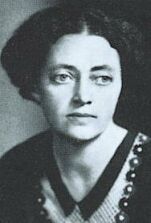
Marjorie Flowers Brierley was born in the London Borough of Lewisham, the only child of Thomas Ellis and Louisa Sarah neé Lanaway. Her mother presumably worked at the Medico-Psychological Clinic (later Brunswick Square Clinic), the first clinic in Britain to offer psychoanalytic training and therapy.
Marjorie Ellis studied psychology at the University College London from 1916 to 1921 and became medically qualified in 1928. In 1922 she married William B. Brierley (1889-1963), botany professor at Reading University and formerly the husband of her friend Susan Isaacs. She had personal analysis with John Carl Flügel and subsequently with Edward Glover. She qualified as an associate member of the British Psychoanalytical Society (BPAS) in 1927 and as a member in 1930.
Commencing in 1933, Marjorie Brierley was a training and control analyst of the BPAS and a lecturer at the Psychoanalytic Institute in London. During the controversies between Melanie Klein and Anna Freud she took an intermediate position and belonged later to the so-called Middle Group of the independents. As a member of committee with Edward Glover and James Strachey she organized the Controversal Discussions, which were held in 1943 and 1944 to attempt to evaluate the different theoretical positions of Kleinians and Anna Freudians.
Although Marjorie Brierley reproached Melanie Klein for her general lack of precise definition, especially of the term "internal object", on many issues she agreed with her and regarded the Kleinian concept of internalised object phantasies as compatible with Sigmund Freud's fundamental ideas. Brierley's book Trends in Psycho-Analysis (1951) contains all the articles, she wrote between 1934 and 1947 - with the exception of two papers on the subject of female development. The most notable is her essay Affects in theory and practice, which aimed to restore affects to their appropriate place in psychoanalytic theory, distinguishing them as essentially ego experiences from instinct.
Marjorie Brierley published between 1931 and 1967 numerous book reviews and abstracts in the International Journal of Psychoanalysis, for which she was assistant editor until 1978. After her training analyst Edward Glover left the BPAS in 1944, she reduced her activities concerning the psychoanalytic society. When her husband retired in 1954, she also withdrew from clinical practice. They moved to the Lake District, where Marjorie Brierley lived until she died. (Top of the article)
- SELECTED WORKS
- Some problems of integration in women. IJP 13, 1932, 433-448
- Present tendencies in psycho-analysis. IJP 14, 1934, 211-229
- Specific determinants in feminine component. IJP 17, 1936, 163-180
- Die Affekte in der Theorie und Praxis. IZP 22, 1936, 439-452 [Affects in theory and practice. IJP 18, 1937, 256-268]
- A prefatory note on internalized objects. IJP 20, 1939, 241-245
- Internal objects and theory. IJP 23, 1942, 107-112
- Theory, practice and public relations. IJP 24, 1943, 119-125
- Notes on the metapsychology as process theory. IJP 25, 1944, 97-107
- Further notes on the implication of psychanalysis. Methodology and personology. IJP 26, 1945, 89-113
- Notes on psycho-analysis and integrative living. IJP 28, 1947, 57-105
- Trends in Psycho-Analysis. London 1951
- "Hardy perennials" and psycho-analysis. IJP 50, 1969, 447-452
- REFERENCES
- Abram, Jon: Marjorie Brierley. British Institute of Psychoanalysis 2015 (2017-07-21)
- Grosskurth, Phyllis: Melanie Klein. New York 1986; Stuttgart 1993
- Hayman, Anne: On Marjorie Brierley. Int Rev Psycho-Anal 13, 1986, 383-392
- Hayman, Anne: Brierley, Marjorie Flowers. In Dictionnaire international de la psychanalyse (2002). Ed. by A. de Mijolla. Paris 2005, 247f [International Dictionary of Psychoanalysis. Detroit u. a. 2005, 226-227]
- Huppke, Andrea: Marjorie Brierley. Ein Blick in die Frühzeit der Londoner Middle Group. Luzifer-Amor 27 (53), 2014, 52-70
- King, Pearl: Biographical notes. In P. King and R. Steiner (eds): The Freud-Klein Controversies 1941-45. London, New York 1991, ix-xxv
- PHOTO: Courtesy of The British Psychoanalytical Society Archive
Marion Burgner née Chasik (1930-1996)
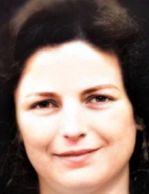
Marion Burgner's parents Mordechai and Sonia Chasik were Russian Jewish immigrants living in East London, where she spent her childhood. She studied part-time at Birkbeck College, University of London, and qualified in English literature and then psychology. In 1958 she married Thomas "Tom" Burgner (1932-2001), a Berlin-born public administrator and a cousin of Hilda Abraham, with whom she had two sons.
Marion Burgner trained as a child analyst at Anna Freud's Hampstead Child Therapy Clinic and Course, and qualified as an adult psychoanalyst at the London Institute of Psychoanalysis in 1976. In 1984 she became a training analyst of the British Psychoanalytical Society. She taught and undertook research in child development and was associated with the work of the Anna Freud Centre for more than 25 years. Besides that she worked for various organisations including the Child Guidance Training Centre and the Brent Consultation Centre. She taught at the Department of Psychological Medicine at University College Hospital and was involved in different projects such as an early HIV/AIDS research group at the Tavistock Clinic and the Young Adult Research Programme led by Anne-Marie Sandler at the Anna Freud Centre. In addition she was one of the founder members of Psychoanalytic Psychotherapy.
The core theme of Marion Burgner's contribution was the integration of Anna Freud's developmental perspective with newer ideas and clinical experience. In the 1970s she published along with Rose Edgcumbe a number of prescient papers emphasising the importance of early object relationships. In their most cited paper The phallic-narcissistic phase. A differentiation between preoedipal and oedipal aspects of phallic development, Edgcumbe and Burgner elaborated on Anna Freud's concept of the phallic-narcissistic phase, delineating early pre-Oedipal narcissistic construction of body self-representations from Oedipal acquisition of sexual identity in the context of triangular relationships. (Top of the article)
- SELECTED WORKS
- The diagnostic profile 1: A latency boy (John B.). Bull Hampstead Clin 1, 1978, 31-55
- A failure to establish a treatment alliance with a latency girl. A developmental viewpoint. Bull Hampstead Clin 1, 1978, 181-192
- Understanding children. A developmental viewpoint. J Child Psychother 8, 1982, 117-130
- The Oedipal experience. Effects on development of an absent father. IJP 66, 1985, 311-320
- Analytic work with adolescents: Terminable and interminable. IJP 69, 1988, 179-187
- Working with the HIV patient. A psychoanalytic approach. Psychoanal Psychother 8, 1994, 201-213
- Analytic treatment of an adolecent with bulimia nervosa. In J. Raphael-Leff and R. Jozef Perelberg (Eds): Female Experience. Three Generations of British Women Psychoanalysts on Work with Women. London; New York 1997, 93-103
- (and Rose Edgcumbe) Some problems in the conceptualization of early object relationships. Part I: The concepts of need satisfaction and need-satisfying relationships. Psa Study Child 27, 1972, 283-314
- (and Rose Edgcumbe) Some problems in the conceptualization of early object relationships. Part II: The concept of object constancy. Psa Study Child 27, 1972, 315-333
- (and Rose Edgcumbe) The phallic-narcissistic phase. A differentiation between preoedipal and oedipal aspects of phallic development. Psa Study Child 30, 1975, 161-180
- (and Hansi Kennedy) Different types of sadomasochistic behavior in children (1979). Psychoanalytic Dialogue 4, 1980, 49-58
- (and Audrey Gavshon) The diagnostic profile: XI. interim profile on John B.. Bull Hampstead Clin 5, 1982, 193-206
- REFERENCES
- Downey, Judy: Obituary Tom Burgner. The Independent, 10 September 2001 (2015-04-14)
- Fonagy, Peter: Marion Burgner. Psychoanal Psychother 11 (2), 1997, 173-176 (2016-07-3)
- Geni (2022-05-18))
- Malberg, Norka T., and Joan Raphael-Leff (Eds): The Anna Freud Tradition: Lines of Development - Evolution and Theory and Practice over the Decades. London 2012
- MyHeritage (2015-04-14)
- Sandler, Anne-Marie: Obituary Marion Burgner. The Independent, 23 October 1996 (2015-10-12)
- PHOTO: Geni (2022-05-18)
Mary Chadwick (1885-1943)

Mary Chadwick was an early pioneer of child analysis in Great Britain. She was born in St. Pancras, Middlesex, the daughter of Alfred and Annie Chadwick née Hartry. Mary Winifred Chadwick qualified as a nurse and subsequently received her psychoanalytic training with Julia Turner at the Brunswick Square Clinic in London and with Hanns Sachs at the Psychoanalytic Institute in Berlin. Her name is mentioned on the same level as Ella Sharpe and Nina Searl, all of them pupils of Hanns Sachs who represented a similar psychoanalytic view. Mary Chadwick conducted her first child analysis in 1922, employing the principles of Sigmund Freud and Hermine Hug-Hellmuth.
Mary Chadwick became an associate member of the British Psychoanalytical Society (BPAS) in 1923. She belonged to the BPAS until the mid 1940s. Full membership was refused to her by the veto of a minority, although the majority in the BPAS including Ernest Jones supported her application. Her collegue Melitta Schmideberg claimed, that Mary Chadwick had been, like Nina Searl, pushed out of the Society by the "Kleinian clique" - in spite of Melanie Klein's approval of her book Women's Periodicity. Menstruation, a subject to which little attention had been paid in psychoanalytic theory before, was one of the main themes in the writings of Mary Chadwick.
Mary Chadwick was a lecturer at the British College of Nurses and published numerous works about the psychology of children and education. One of her analysands was the American poet Hilda Doolittle, who underwent three months of analysis with her in 1931. (Top of the article)
- SELECTED WORKS
- Psychology for Nurses. Introductory Lectures for Nurses upon Psychology and Psycho-Analysis. Given at 6 Guilford Place, London, during 1924-25. London 1925
- Über die Wurzel der Wißbegierde. IZP 11, 1925, 54-68
- A case of kleptomania in a girl of ten years. IJP 6, 1925, 300-312
- Ein Experiment in einem Kindergarten. Z psa Päd 1, 1927, 350-357
- Die Gott-Phantasie bei Kindern. Imago 13, 1927, 383-394
- The whence and whither of day dreams. The New Era 8 (30), 1927, 58-61
- Die Unterscheidung zwischen Ton und Sprache in der frühen Kindheit. Z psa Päd 2, 1928, 369-383
- Difficulties in Child Development. London 1928
- Notes upon the fear of death. IJP 10, 1929, 321-334 [Die Furcht vor dem Tode. IZP 15, 1929, 271-284]
- Die Erziehung der Erzieher. Z psa Päd 4, 1930, 356-370
- Nursing Psychological Patients. London 1931
- Menstruationsangst. Z psa Päd 5, 1931, 184-189
- The Psychological Effects of Menstruation. New York, Washington 1932
- Adolescent Girlhood. New York 1932
- Women's Periodicity. London 1933
- Chapters about Childhood. The Psychology of Children from 5-10 Years. London 1939
- The Toddler in the Home. London 1940
- REFERENCES
- Barry Web site auf MyHeritage (2026-05-14)
- Doolittle, Hilda: Huldigung an Freud. Frankfurt/M. 1975
- Grant Duff, Iseult F.: Rev. of Chadwick, Mary: Nursing Psychological Patients. Allen a. Unwin. IZP 18 (2), 1932, 262-263
- King, Pearl, and Riccardo Steiner (eds): The Freud-Klein Controversies 1941-45. London; New York 1991 [Die Freud/Klein-Kontroversen 1941-1945. 2 Bde. Stuttgart 2000]
- Klein, Melanie: Review of "Woman's Periodicity" by Mary Chadwick (1933). The writings of Melanie Klein, vol. III: Envy and Gratitude and Other Works, 1946-1963. London 1975
- Lück, Helmut E., and Elke Mühlleitner (eds): Psychoanalytiker in der Karikatur. München 1993
- Meisel, Perry, and Walter Kendrick (eds): Bloomsbury/Freud. The Letters of James and Alix Strachey 1924-1925. New York 1985
- Wikipedia (2019-07-10)
- FIG.: Olga Székely-Kovács 1924
Estelle Maude Cole née Aikin (1874-1958)
Estelle Maude Cole was born in Aden in South Arabia (other sources: Ireland) and married the electrician Philip Henry Cole (1874-?) in 1896. She worked as a Medical Officer of the Psychological Clinic at Brunswick Square in London in the early 1920s. She was analysed by Ernest Jones and became
an associate member of the British Psycho-Analytical Society (BPAS) in 1919 and a full member in 1920. Until 1927 she belonged to the medical staff of the London Clinic of Psycho-Analysis, which was affiliated with the British Institute of Psychoanalysis. She attended the IPA Congress in The Hague in 1920.
After recovering from severe pneumonia, she went to Budapest in 1922 in order to learn „active technique“ from Sándor Ferenczi. But instead of that she had a piece of personal analysis with him. She returned to Ferenczi for further analysis in 1925.
In her case studies presented at the BPAS, Estelle Cole discussed the association of flute playing with urethral erotism, a connection between circumcision and castration complex, and the interpretation of a woman patient's hæmorrhoids as the fulfilment of her wish for masculinity.
In late 1927 Estelle Cole resigned from the BPAS and joined the Adler Society, which was founded that same year by Dimitrije Mitrinović in London. Her counseling books Three Minute Talks about Children und Education for Marriage were about problems of child education and sex education for unmarried women. (Top of the article)
- SELECTED WORKS
- A new point in the symbolism of flute playing. IJP 2, 1921, 202-203
- A few 'don'ts' for beginners in the technique of psycho-analysis. IJP 3, 1922, 43-44
- The abreaction of fear in relation to circumcision [Das Abreagieren von Angst bezüglich der Beschneidung]. Paper read in the BPAS, 21.12.1921. Bull Int Psychoanal Assn 3, 1922, 120
- Notes in connection with the significance of hæmorrhoids [Notizen zur Bedeutung von Hämorrhoiden]. Paper read in the BPAS, 2.6.1926. Bull Int Psychoanal Assn 8, 1927, 115-116
- Circumcision and the abreaction of fear. J Neurol Psychopathol 7 (27), 1927, 237-238
- Instruction in psychiatry. The Lancet 212 (5476), 1928, 305-306
- Three Minute Talks about Children. London 1928
- Education for Marriage. London 1938
- REFERENCES
- Brennan, William B.: Ferenczi’s patients and their contribution to his legacy. In A. Dimitrijević et al. (eds): Ferenczi’s Influence on Contemporary Psychoanalytic Traditions. Lines of Development. Evolution of Theory and Practice over the Decades. New York 2018
- England and Wales, Census 1901 (FamilySearch 2024-12-12)
- Ferenczi, Sándor - Ernest Jones: Letters 1911-1933. London 2013; New York 2018
- IZP 6, 1920, 187, 378; 7, 1921, 119; 14, 1928, 284
- Kahr, Brett: D. W. Winnicott. A Biographical Portrait. London 1996
- Kuhn, Philip: Psychoanalysis in Britain, 1893–1913. Histories and Historiography. London 2017
- The New Atlantis Foundation Dimitrije Mitrinović Archive: Catalogue. University of Bradford, November 2015 (2023-10-25)
- Wittenberger, Gerhard, und Christfried Tögel (Hg.): Die Rundbriefe des »Geheimen Komitees«. Nachtragsband: 1927–1936. Gießen 2023
Nina Coltart (1927-1997)
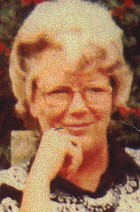
Nina Elizabeth Cameron Coltart was born in Shortlands, Kent, the eldest of two daughters of a general practitioner. During World War II, she and her sister Gillian were evacuated to Cornwall, where they lived with their grandmother. In 1940 their parents died in a train wreck on their way to visit their daughters.
Nina Coltart read Modern Languages at Somerville College in Oxford from 1947 to 1950, but by the time she graduated she decided to train as a doctor. In 1951, śhe commenced her medical study at the St. Bartholomew's Hospital's Medical College in London, where she qualified in 1957. Subsequently she worked as a house physician and psychiatrist in the National Health Service until she set up a private psychotherapy practice in 1961.
From 1960 to 1966 she trained at the British Psychoanalytical Society (BPAS), her training analyst was Eva Rosenfeld, supervisors were Armstrong Harris, Masud Khan and Paula Heimann. In 1969, she became a full member, and in 1971 a training analyst of the BPAS, where she belonged to the Independent Group. She was involved with the academic and administrative activities of the BPAS of which she was a Vice-President from 1984 to 1987. From 1972 to 1982 she was Director of the London Clinic of Psychoanalysis. Besides teaching at the British Institute of Psychoanalysis, she lectured as a visiting analyst in the USA, Australia, New Zealand, Sweden and Israel.
In Nina Coltart's writings her patients came to life with novelistic vividness. One of the most distinctive features of her work is the integration of psychoanalysis and Buddhism. Wilfred Bion and his concept of the mystic exerted a deep influence on her thought.
In 1994 Nina Coltart resigned from the BPAS and retired to the rural seat of Leighton Buzzard. Suffering from severe osteoporosis, she committed suicide three years later. (Top of the article)
- SELECTED WORKS
- The practice of psychoanalysis and Buddhism (1985). In N. Coltart: Slouching Towards Bethlehem. London 1992, 164-175
- The treatment of a transvestite. Psychoanal Psychother 1 (1), 1985, 65-79
- Slouching towards Bethlehem...or thinking the unthinkable in psychoanalysis (1986). In N. Coltart: Slouching Towards Bethlehem. London 1992, 1-14
- The silent patient. Psychoanal Dial 1 (4), 1991, 439-453
- The analysis of an elderly patient. IJP 72, 1991, 209-219
- The super-ego, anxiety and guilt. Free Associations 3 (2), 1992, 243-259
- Slouching Towards Bethlehem... And Further Psychoanalytic Explorations. London; New York 1992
- How to Survive as a Psychotherapist. London 1993
- Buddhism and psychoanalysis revistited. In N. Coltart: The Baby and the Bathwater. London 1996, 125-139
- The Baby and the Bathwater. London 1996
- Auf dem Hochseil. Essays und Meditationen zur Praxis der Psychoanalyse. Gießen 2018
- REFERENCES
- Brafman, A. H.: Obituary: Nina Coltart. The Independent, 17 August 1997 (2017-10-26)
- Budd, Susan: Nina Coltart. Institute of Psychoanalysis 2015 (2017-10-26)
- England and Wales, Census, 1901 (FamilySearch 2024-12-12)
- Molino, Anthony (ed.): Freely Associated. Encounters in Psychoanalysis with Christopher Bollas, Joyce McDougall, Michael Eigen, Adam Phillips, Nina Coltart. London 1997
- Rudnytsky, Peter L., and Gillian Preston (eds): Her Hour Come Round at Last. A Garland for Nina Coltart. London 2011
- Rudnytsky, Peter L.: Interview (with Brett Kahr). Karnacology (2017-10-26 - removed)
- Wikipedia (2017-10-26)
- PHOTO: With kind permission of Gillian Preston (sister of Nina Coltart)
Rose Edgcumbe (1934-2001)
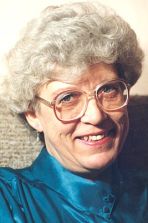
The child analyst Rose Marjorie Edgcumbe was born in London, where she studied psychology at the University College London. In the mid 1950s she went to the United States, where she continued studying psychology and worked as a clinical psychologist in a children's hospital. After two years she returned to England and was active at the Booth Hall Children's Hospital in Manchester. In 1959 she began her training as a child analyst with Anna Freud at the Hampstead Child Therapy Course and Clinic in London and she qualified in 1963.
Rose Edgcumbe became a member of the British Psychoanalytical Society and worked as a training and supervising analyst at the Hampstead Clinic (after 1984, The Anna Freud Centre), where she served as a director in 1992/93. She published a succession of ground-breaking papers on the theory and practice of child analysis, e. g., on the young girl's sexual development, psychological aspects of the acquisition of language and on symbolization. She focused her interest on the description and explanation of the Anna Freudian approach, in this context she wrote her most notable book Anna Freud. A View of Development, Disturbance and Therapeutic Techniques.
In the 1970s she published along with Marion Burgner a number of prescient papers emphasizing the importance of early object relationships. In their most cited paper The phallic-narcissistic phase. A differentiation between preoedipal and oedipal aspects of phallic development, Edgcumbe and Burgner elaborated on Anna Freud's concept of the phallic-narcissistic phase, delineating early pre-Oedipal narcissistic construction of body self-representations from Oedipal acquisition of sexual identity in the context of triangular relationships.
In 1990 Rose Edgcumbe married Peter Theobald. She died of cancer at the age of 67. (Top of the article)
- SELECTED WORKS
- Some comments on the concept of the negative oedipal phase in girls. Psa Study Child 31, 1976, 35-61
- Toward a developmental line for the acquisition of language. Psa Study Child 36, 1981, 71-103
- Anna Freud. Child analyst. IJP 64, 1983, 427-433
- The development of symbolization. Bull Anna Freud Centre 7, 1984, 105-126
- Modes of communication. The differentiation of somatic and verbal expression. Psa Study Child 39, 1984, 137-154
- Five lectures on symbolization, thinking and affect. Bull Anna Freud Centre 11, 1988, 15-52
- Anna Freud. A View of Development, Disturbance and Therapeutic Techniques. London 2000
- (and Marion Burgner) Some problems in the conceptualization of early object relationships, Part I: The concepts of need satisfaction and need-satisfying relationships. Psa Study Child 27, 1972, 283-314; Part II: The concept of object constancy. Psa Study Child 27, 1972, 315-333
- (and Marion Burgner) The phallic-narcissistic phase. A differentiation between preoedipal and oedipal aspects of phallic development. Psa Study Child 30, 1975, 161-180
- (with Peter Fonagy, George S. Moran, Hansi Kennedy and Mary Target) The roles of mental representations and mental processes in therapeutic action. Psa Study Child 48, 1993, 9-48
- REFERENCES
- Fonagy, Peter: Marion Burgner. Psychoanal Psychother 11 (2), 1997, 173-176
- Malberg, Norka T., and Joan Raphael-Leff (eds): The Anna Freud Tradition: Lines of Development - Evolution and Theory and Practice over the Decades. London 2012
- Wikipedia (2021-01-04)
- Yorke, Clifford: Obituary Rose Edgcumbe. The Guardian, 1 September 2001 (2009-08-26)
- PHOTO: Wikipedia (2021-10-06)
Elizabeth Foulkes née Marx (1918-2004)
Elisabeth Therese Fanny Marx was born in Karlsruhe, the elder of two daughters of the Jewish lawyer Jacob Marx and his wife Henriette née Fuchs (Fig.). In 1934 she left Germany to attend a boarding school near Merano and later a business school in Neuchâtel. In 1936 she came to London to learn the antiquarian book trade (apprenticeship from 1937 to 1941) and to train at Pitman's College as a secretary.
In 1938 her parents emigrated to France. Her father died that same year in Nice; her mother and her sister Gertrude were arrested in 1942 and deported to Auschwitz. Only Elisabeth Marx, who stayed in London, survived the Holocaust. From 1942 to 1947 she served in the Catering Corps of the British Army, later in the Educational Service and as an administrative secretary. From 1950 she worked as a secretary for her uncle Siegmund Heinrich Fuchs (1898-1976), known as S.H. Foulkes, a psychoanalyst and pioneer of group analysis, who also came from Karlsruhe and emigrated to England in 1933. In 1952 she was a co-founder of the Group Analytic Society (GAS), together with S.H. Foulkes, Norbert Elias and four others. Over time, she held various functions within the GAS, including Vice President. In 1960 she married S.H. Foulkes, for whom she served as an assistant until his death in 1976.
From 1976 to 1988 Elizabeth Foulkes became the editor of the journal Group Analysis International Panel and Correspondence, later Group Analytic Contexts. In addition, she acted as a group therapist in various institutions. In the last she trained group psychotherapists at Goldsmith's College in London. Elizabeth Foulkes was an adherent of S. H. Foulkes' approach, which was inspired by Gestalt psychology. Foulkes regarded groups as basic to human existence and stressed that mental disorders could only be understood and treated within the social context. (Top of the article)
- SELECTED WORKS
- Notes in the early days of the Group-Analytic Society (London). Group Analysis 10 (2), 1977, 104-108 + Group Analysis 14 (1), 1981, 92-96
- Meeting of Members of the Group Analytic Society (London) attending the International Congress of Group Psychotherapy at Copenhagen in August 1980. Group Analysis 13 (3), 1980, 217
- Norbert Elias. Bulletin of the Group Analytic Society 33 (8), 1990
- Brief memoir. In Selected Papers of S. H. Foulkes: Psychoanalysis and Group Analysis. Edited by Elizabeth Foulkes. London 1990
- Group Analysis: A brief history of this journal,1967-92. Group Analysis 25 (3), 1992, 269-276
- Some personal recollections of Norbert Elias. Group Analysis 30 (4), 1997, 525-530
- 50 years of group analysis. Group Analysis 31 (4), 1998, 437-446
- REFERENCES
- Campos, Juan, and Hanne Campos: Milestones in the History of Group Analysis. The European Group Analytic Movement and the Question of Internationality of Group Analysis. Group Analysis 14 (1), 1981
- Gedenkbuch für die Karlsruher Juden (2022-05-18)
- Group Analytic Society (2023-11-08)
- Internationale Arbeitsgemeinschaft für Gruppenanalyse (2012-01-02)
- Jacob, Steffen: Leben danach. Lebensgeschichten zweier jüdischer Familen aus Deutschland. Berlin 2003
- Pines, Malcolm: Obituary Elizabeth Foulkes. Group Analysis 37 (4), 2004, 560
- Wellcome Library (2023-11-08)
Liselotte Frankl (1910-1988)
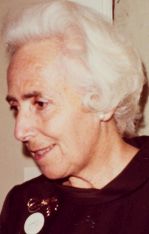
Liselotte "Lilly" Frankl was born in Vienna, the eldest daughter of the Jewish businessman Robert Frankl and his wife Julie Baum. After attending a reformed grammar school for girls, she began studying psychology in 1929 at the University of Vienna, where she became Charlotte Bühler's research assistant. At the same time she secretly attended Anna Freud's lectures at the Vienna Psychoanalytic Institute - Bühler was strictly opposed to psychoanalysis - and started training analysis with Ernst Kris in 1935.
In the same year, she completed her PhD at the Vienna University and worked subsequently as an education advisor at the Wiener Jugendamt and Karolinen-Kinderspital. In 1938, the year of Austria's "Anschluss" to Nazi Germany, she emigrated to Scotland where she was appointed to the staff of the Crichton Royal Hospital in Dumfries. She undertook medical training at the London School of Medicine for Women and the University of Saint Andrews in Scotland. After her graduation in 1945, she worked as a psychiatrist at the East London Child Guidance Clinic.
Liselotte Frankl continued her psychoanalytic training in London and joined the British Psychoanalytical Society, where she became a training analyst and supervisor a few years later. She worked closely with Anna Freud and was appointed Medical Director of the Hampstead Child Therapy Clinic - a post in which she served for many years. At Hampstead (with Ilse Hellmann) she directed a research project on adolescence. Liselotte Frankl represented the tradition of ego psychology. Her psychoanalytic writings include works on the problems of adolescence, accident proneness, the development of Albanian infants and the Ego's participation in the therapeutic alliance.
In 1967 Liselotte Frankl went on leave because of a depressive period and underwent psychiatric treatment. After her recovery she did not return to her former position and died at the age of 78 in London. (Top of the article)
- SELECTED WORKS
- Lohn und Strafe. Ihre Bedeutung in der Familienerziehung. Jena 1935
- Some observations on the development and disturbances of integration in childhood. Psa Study Child 16, 1961, 146-163
- Self-preservation and accident proneness in children and adolescents. Psa Study Child 18, 1963, 464-483
- A specific problem in adolescent boys. Difficulties in loosening the infantile tie to the mother. The Bulletin of The Philadelphia Association for Psychoanalysis 13 (3), 1963, 120-129
- Die Hampstead Child Therapy Clinic. In P. Federn and H. Meng (eds): Psychoanalyse und Alltag. Bern, Stuttgart 1964
- Susceptibility to accidents. A developmental study. Brit J Med Psychol 38, 1965, 289-297
- (and Lotte Danzinger) Zum Problem der Funktionsreifung. Erster Bericht über Entwicklungsprüfungen an albanischen Kindern. Zeitschrift für Kinderforschung 43, 1934, 219-254
- (and Ilse Hellman) The Ego's participation in the therapeutic alliance. IJP 43, 1962, 333ff [Die Ich-Beteiligung am therapeutischen Bündnis. In G. Biermann (ed.): Handbuch der Kinderpsychotherapie. Frankfurt/M. 1988, 199-208]
- REFERENCES
- Benetka, Gerhard: Frankl, Liselotte. In U. Wolfradt et al. (ed.): Deutschsprachige Psychologinnen und Psychologen 1933-1945. Ein Personenlexikon. Berlin 2015, 123-124
- Geburtsbuch für die israelitische Kultusgemeinde in Wien. FamilySearch (2024-04-15)
- King, Pearl, and Riccardo Steiner (eds): The Freud-Klein Controversies 1941-45. London, New York 1991 [Die Freud/Klein-Kontroversen 1941-1945. 2 Bde. Stuttgart 2000]
- Pakesch, Nadja: Liselotte Frankl and Hans Herma. Two candidates of the Vienna Psychoanalytic Society in 1938. In Victor Blüml et al. (eds): Contemporary Perspectives on the Freudian Death Drive in Theory, Clinical Practice and Culture. London 2019, 163–172.
- Weitzel, Ursula: Frankl, Liselotte. In Brigitta Keintzel and Ilse Korotin (eds): Wissenschaftlerinnen in und aus Österreich. Leben - Werk - Wirken. Wien 2002, 184
- Yorke, Clifford: Liselotte Frankl. An Obituary. Bull. Anna Freud Centre 12, 1989, 85-86
- PHOTO: Courtesy of the Freud Museum London
Marjorie Franklin (1887-1975)
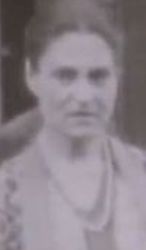
The English psychiatrist and psychoanalyst Marjorie Ellen Franklin was born into a well-to-do family prominent in banking and liberal Jewish circles. She had been intended for the educational profession and was sent to the House of Education in Ambleside to be trained by Charlotte Mason, but soon she decided to study medicine. After basic medical training, Marjorie Franklin went to New York, to specialise in psychiatry under Adolf Meyer, a co-founder of the New York Psychoanalytic Society and the American Psychoanalytic Association.
Marjorie Franklin underwent analysis with Sándor Ferenczi between 1924 and 1926. She became
an associate member of the British Psycho-Analytical Society (BPAS) in 1927 and a full member in 1931. Her main interest was the application of psychoanalysis to the under-privileged which she undertook through honorary appointments at hospitals. She worked in London as a consultant psychiatrist at the British Hospital for Functional Nervous Disorders, the Howard League for Penal Reform, and the Institute for the Scientific Treatment of Delinquency (later the Portman Clinic), of which she was a co-founder together with Edward Glover, Grace Pailthorpe and Melitta Schmideberg.
While working as a junior medical officer at the Portsmouth Borough Mental Hospital in the early 1920s, Marjorie Franklin became interested in the relationship between mental illness and the patient's environment. She developed a therapeutic concept, which she called "Planned Environment Therapy" (PET), and tried it out at the so-called Q Camps. According to this milieu-therapy, theoretically inspired by positions of Donald W. Winnicott, Anna Freud, Otto Shaw and I. D. Suttie, patients live in a therapeutic community and are treated by a psychoanalytically supervised staff team. The therapy is based on establishing non-authoritarian, loving and accepting relationships.
The first practical project of the Planned Environmental Therapy, the Hawkspur camp for maladjusted men, was set up in 1936 by Marjorie Franklin and her colleague David Wills, it was followed by a camp for maladjusted boys in the 1940s. Another project was the Children's Social Adjustment (CSA), which also followed the PET principles. In 1966 Franklin founded the Planned Environmental Therapy Trust (PETT) to promote research, discussion and training regarding the PET approach. (Top of the article)
- SELECTED WORKS
- Die bedingten Reflexe bei Epilepsie und der Wiederholungszwang. Imago 14 (2/3), 1928, 364-376
- Family reactions during the analysis of a case of obsessional neurosis. IJP 14, 1933, 87-107
- Obituary Barbara Low. IJP 37, 1956, 31
- (ed.) Q Camp. An Experiment in Group Living with the Maladjusted and Anti-Social Young Men. Planned Environment Therapy Trust 1966
- Discussion Groups. The AWMC Newsletter, März 1968, 7
- REFERENCES
- Brennan, William B.: Ferenczi’s patients and their contribution to his legacy. In A. Dimitrijević et al. (eds): Ferenczi’s Influence on Contemporary Psychoanalytic Traditions. Lines of Development. Evolution of Theory and Practice over the Decades. New York 2018
- Bridgeland, Maurice: Pioneer Work with Maladjusted Children. A Study of the Development of Therapeutic Education. London 1971
- Bull Int Psychoanal Assn 8, 1927, 559 + 12, 1931, 514
- Ferenczi, Sándor - Ernest Jones: Letters 1911-1933. London 2013; New York 2018
- Marjorie Franklin collection. Archives of the British Psychoanalytical Society (2020-09-30)
- Pines, Malcolm: Forgotten pioneers. The unwritten history of the therapeutic community movement (1998). The International Journal for Therapeutic and Supportive Organizations 20 (1), 1999
- Planned Environment Therapy Trust (2023-11-08)
- Wills, David: Marjorie Franklin. 1877-1975. British Journal of Criminology 15 (2), 1975, 109-110
- FOTO: Film still from Sándor Lorand: The Eleventh Congress of the International Psycho-Analytical Association, Oxford, England, July, 1929 (Film). Library of Congress (2020-10-01)
Kate Friedländer née Frankl (1902-1949)
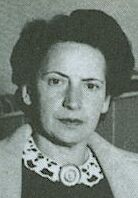
Kate Friedländer, psychoanalyst and physician, was born in Innsbruck, she was the daughter of middle-class Hungarian Jewish parents. The families of her father, the businessman Karl Frankl, and her mother Adele Frankl came both from Preßburg. Käte Frankl was educated by the Ursuline catholic nuns and was a member of a Zionist youth group (as were also her two brothers and her sister). In 1921 she commenced her medical education in Innsbruck and Berlin and obtained her degree in 1926. Subsequently she became an assistant to Karl Bonhoeffer at the Charité psychiatric university clinic in Berlin. Simultaneously she began her psychoanalytic training at the Berlin Psychoanalytic Institute. From 1928 to 1930 she unterwent analysis with Josine Müller-Ebsen, which was converted into a training analysis in 1929 and continued with Wilhelm Reich in 1931.
In 1929 she married Walter Misch (1889-1943), then a senior physician at the Charité and, like her, of Jewish origin. Their daughter Sybille (Sybil Wolfram) was born two years later. In 1932 together they wrote an essay on Die vegetative Genese der neurotischen Angst und ihre medikamentöse Beseitigung, which was highly regarded by Wilhelm Reich. Käte Misch-Frankl became an associate member of the Deutsche Psychoanalytische Gesellschaft in 1933, where she belonged to a group of left oriented analysts around Otto Fenichel.
Käte and Walter Misch emigrated to London after the Reichstagsbrand in 1933. Käte Misch took her third medical degree in Edinburgh and obtained a Diploma in Psychological Medicine in London. She became an associate member of the British Psychoanalytical Society (BPAS) in 1933 and a full member in 1938. In 1934 she separated from her first husband and three years later married Georg Friedländer, a Jewish radiologist from Wroclaw.
Kate Friedländer was no supporter of Melanie Klein's thinking, which predominated in the BPAS at that time. She shared the views of Anna Freud, with whom she worked together during the following years. After the war it was Kate Friedländer who persuaded Anna Freud to establish the Hampstead Child Therapy Course, where she was active as a teacher and training analyst.
Focussing her main interest on the problem of juvenile delinquency, Kate Friedländer was the first to develop a systematic psychoanalytic theory of the causes of delinquency. Working at the Institute for the Study and Treatment of Delinquency under the leadership of Edward Glover, she referred to August Aichhorn's Viennese work with problem adolescents and counselled maladjusted children and delinquent juveniles.
In 1946, she set up Britain's first Child Guidance Clinic focusing on psychoanalysis as research method in Chichester, West Sussex. However, she did not find it useful to conduct personal analysis with juvenile delinquents, but combined psycho- and socio-therapeutic measures. She preferred prevention, rather than cure, by educating parents, teachers and social workers.
In her main work The Psychoanalytic Approach to Juvenile Delinquency she described the origins of the delinquent behaviour as follows: A latent neglect structure - strong unmodified drives, a weak ego, which is dominated by pleasure principle, and an non-independent super-ego - becomes manifest under the influence of negative environmental conditions. Unlike the neurotic, who gets substitutive satisfaction by the use of the imagination, the drive impulse of the antisocial character leads to a criminal act.
When Edward Glover, whom she strongly supported, resigned from the BPAS in 1944, Kate Friedländer withdrew as well. She died at the early age of 46 of lung cancer. (Top of the article)
- SELECTED WORKS
- (Misch-Frankl, Käthe) Die biologischen Grundlagen der Freudschen Angsttheorie. IZP 21, 1935, 62-67
- On the "longing to die". IJP 21, 1940, 416-426
- Charlotte Brontë. Zur Frage des masochistischen Charakters. IZP 26, 1941, 32-49
- Über Kinderbücher und ihre Funktion in Latenz und Vorpubertät. IZP 26, 1941, 232-252
- Social factors and mental health. Health Education Journal 2, 1942
- Delinquency research. New Era in Home and School 24, 1943, 105-108
- Delinquency and mental health. Health Education Journal 3, 1943
- Formation of the antisocial character. Psa Study Child 1, 1945, 189-204
- Psychoanalytic orientation in child guidance work in Great Britain. Psa Study Child 2, 1947, 343-357
- The Psychoanalytic Approach to Juvenile Delinquency. London 1947
- Neurosis and home background. A preliminary report. Psa Study Child 4, 1949, 423-438
- Latent delinquency and ego development. In K. R. Eissler u. a.: Searchlights on Delinquency. New York 1949, 205-215
- Neurosis and home background. Psa Study Child 3-4, 1949, 432-438
- Psychoanalytic orientation (1947). In Frank Alexander et al. (eds): Psychoanalytic Pioneers. New York 1966
- (Misch-Frankl, Käthe, and Walter Misch) Die vegetative Genese der Angst und ihre medikamentöse Beseitigung. Nervenarzt 5, 1932, 415-418
- REFERENCES
- Ärztinnen im Kaiserreich. Institut für Geschichte der Medizin und für Ethik in der Medizin, Charité Berlin (2023-11-08)
- Haager, Jutta: Kate Friedländer (1902-1949). Leben und Werk. Med. Diss. Köln 1986
- Hoffer, Willi: Kate Friedländer. IJP 30, 1949, 59f
- Jacobs, Lydia: Dr. Kate Friedländer. The New Era in Home and School 30, 1949, 101-103
- Lantos, Barbara: Kate Friedländer. Prevention of juvenile delinquency. In Frank Alexander et al. (eds): Psychoanalytic Pioneers. New York 1966, 508-518
- Mühlleitner, Elke: Friedländer, Kate, geb. Frankl. In Brigitta Keintzel and Ilse Korotin (eds): Wissenschaftlerinnen in und aus Österreich. Leben - Werk - Wirken. Wien 2002, 203-205
- Roudinesco, Elisabeth, and Michel Plon: Wörterbuch der Psychoanalyse (1997). Wien, New York 2004
- Schröter, Michael: 129 dokumentierte Ausbildungskandidaten am Berliner Psychoanalytischen Institut 1924-1932: Tabelle. Luzifer-Amor 33 (66), 2020 (2020-12-10)
- Wikipedia (2023-11-08)
- Yorke, Clifford: Friedländer-Fränkl, Kate. In Dictionnaire international de la psychanalyse (2002). Ed. by A. de Mijolla. Paris 2005, 700f [International Dictionary of Psychoanalysis. Detroit u. a. 2005, 645-646]
- PHOTO in Haager 1986
Alice Goldberger (1897-1986)
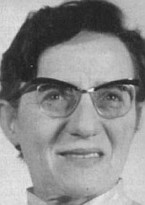
Alice Goldberger was born into a Jewish family in Berlin. In 1916 she completed her training as a kindergarten teacher at the Verein Jugendheim in Berlin-Charlottenburg, where she obtained a certificate as a youth-leader in 1930. She worked as educator and kindergarten nurse in various institutions in Berlin, inter alia in a transition home for orphans from 1923 to 1930. In 1930 she became head of the municipal homeless shelter in Charlottenburg. When Hitler came to power in 1933, she had to give up her post. Since 1934 she led the kindergarten of the Jewish Community in Berlin before emigrating to England in 1939.
Classified as an „enemy alien“ she was put into the internment camp on the Isle of Man where she established a kindergarten. Anna Freud got to know about her work by an article in the daily newspaper and invited her to join her team in 1942. She first became director of the country house in New Barn, Essex, where the children from Hampstead War Nurseries had been evacuated after the London air raids. In 1945 Alice Goldberger was appointed head of „Lingfield House“ at Weir Courtney Manor near Lingfield, Surrey, a stately home for child survivors of the Holocaust, who had lost their family, brought to Britain at the end of the war. In 1948, Alice Goldberger and the children moved to Isleworth, London, where they lived until the home was closed in 1957.
In 1947 Alice Goldberger was among the first group of the War Nurseries colleagues who received their training as "psychoanalytical child experts" at Anna Freud's Hampstead Child Therapy Courses. Lieselotte Frankl was her training analyst. She then participated at the Hampstead Child Therapy Clinic in Dorothy Burlingham's projects with blind children and her research on simultaneous analysis of mother and child. Alice Goldberger died in London at the age of 88. (Top of the article)
- SELECTED WORKS
- (with Dorothy Burlingham and Andrée Lussier) Simultaneous analysis of mother and child. Psa Study Cild 10, 1955, 165-186 [Gleichzeitige Analyse vom Mutter und Kind. In D. Burlington: Labyrinth Kindheit. Beiträge zur Psychoanalyse des Kindes. München 1980, 229-255]
- (and Dorothy Burlingham) The re-education of a retarded blind child. Psa Study Child 23, 1968, 369-385
- REFERENCES
- Freud, Anna, und Sophie Dann: An experiment in group upbringing. Psa Study Child 6, 1951, 127-168
- Friedmann, Manna: Alice Goldberger. Bul Anna Freud Centre 9 (4), 1986, 313-314
- Ludwig-Körner, Christiane: Wegbereiter der Kinderanalyse. Die Arbeit in der "Jackson Kinderkrippe" und den Kriegskinderheimen. Luzifer-Amor 13 (25), 2000, 78-104 [Anna Freud and her collaborators in the early post-war period. In N. T. Malberg and J. Raphael-Leff (eds): The Anna Freud Tradition: Lines of Development. London 2012, 17-29]
- Ludwig-Körner, Christiane: Und sie fanden eine Heimat. Leben und Wirken der Mitarbeiterinnen von Anna Freud in den Kriegskinderheimen. Stuttgart 2022
- Malberg, Norka T., and Joan Raphael-Leff (eds): The Anna Freud Tradition: Lines of Development. Evolution and Theory and Practice over the Decades. London 2012
- National Holocaust Centre and Museum, Laxton (Nottinghamshire): Lingfield House (2019-07-10)
- US Holocaust Memorial Museum. Washington, D.C.: Alice Goldberger and the Children of Weir Courtney. Curators Corner #5 (2017-11-02)
- PHOTO: Zdenica Husserl, Joanna Millan and Rachel Oppenheimer: Lingfielders' reunion, 2009. AJR Journal 9 (9), 2009, 5 (2018-05-23); s. a. US Holocaust Memorial Museum
Iseult Grant Duff (1882-1957)
Iseult Frederica Grant Duff came from a very upper crust British family. Her father, Sir Mountstuart Elphinstone Grant Duff was the British Governor of Madras from 1881 to 1886, where Iseult, the youngest of eight children, was born. Her mother Lady Grant Duff née Webster was a famed beauty, a painter and poetess. After the return of her family from South India to England Iseult Grant Duff grew up under the care of a German governess in the York House mansion at Twickenham.
As a young woman Iseult Grant Duff went to India as a missionary for several years. Having lost her religious faith, she came back to England after the First World War. While studying at the Brunswick Square Clinic in London, she met the analysts James Glover and Ella Sharpe. She had her training analysis first with Edward Glover in London, and later (1928) with Hanns Sachs in Berlin. After reading her paper "Notes on Thérèse Martin", she was admitted to associate membership of the British Psycho-Analytical Society (BPAS) in 1925 and gained membership in 1933. She was one the followers of Anna Freud in the BPAS. In 1930 and 1931 she was guest of the Deutsche Psychoanalytische Gesellschaft in Berlin.
Iseult Grant Duff was particularly interested in the application of psychoanalysis to literature and poetry. She translated Sigmund Freud's essay Der Dichter und das Phantasieren into English and analysed the misogyny and oral fixations of Jonathan Swift or the bisexuality of Thérèse of Lisieux. Her pathographies included "A psychoanalytic study of Hitler's 'Mein Kampf'", a paper read at the BPAS in 1934, where she compared Adolf Hitler's autobiographical manifesto with Daniel Paul Schreber's Memoirs of My Nervous Illness.
Iseult Grant Duff retired from active psychoanalytical practice at the end of the Second World War. At the age of seventy-five, she and her female companion, who was bedridden with arthritis, committed suicide. (Top of the article)
- SELECTED WORKS
- A psycho-analytical study of a phantasy of St Thérèse de l'Enfant Jésus. Brit J Med Psychol 5 (4), 1925, 345-353 [Étude psychanalytique d'un fantasme de sainte Thérèse de l'Enfant Jésus. Archives des Sciences Sociales des Religions 41, 1976, 130-135]
- Die Geschichte der Phantasie einer Heiligen. Imago 16, 1930, 486-501 [L'histoire du fantasme d'une sainte. Archives des Sciences Sociales des Religions 41, 1976, 114-125]
- Die Beziehung Elisabeth - Essex. Eine psychoanalytische Betrachtung. Psychoanalytische Bewegung 3, 1931, 457-474
- Schneewittchen. Versuch einer psychoanalytischen Deutung. Imago 20, 1934, 95-103 + in W. Laiblin (ed.): Märchenforschung und Tiefenpsychologie. Darmstadt 1969, 88-99
- A one-sided sketch of Jonathan Swift. Psa Quart 6, 1937, 238-259
- (and Jacques Maître) Recherches psychanalytiques sur un cas de sainteté canonisée. Thérèse Martin (1873-1897). Archives des Sciences Sociales des Religions 41, 1976, 109-136 (2020-12-10)
- REFERENCES
- Bull Int Psychoanal Assn 7, 1926, 289 + 14, 1933, 518 + 16, 1935, 119
- Fremantle, Anne: Three-Cornered Heart. London 1971
- Grant Duff, Mountstuart E.: Notes from a Diary, Kept Chiefly in Southern India, 1881-1886. Vol. 1. London 1899 + archive.org (2018-05-23)
- Kahr, Brett: Reminiscences by John Bowlby: Portraits of Colleagues, 1935-1945 (Previously Unpublished). Attachment: New Directions in Relational Psychoanalysis and Psychotherapy 6, 2012, 27-49
- Payne, Sylvia M.: Obituary Iseult Grant Duff. IJP 39, 1958, 619
- Raitt, Suzanne: Early British Psychoanalysis and the Medico-Psychological Clinic. History Workshop Journal 58 (1), 2004, 63–85
- The Peerage (2017-07-21)
- Steiner, Riccardo: Erste Versuche britischer Psychoanalytiker, die gesellschaftspolitischen Probleme ihrer Zeit zu analysieren. Jb Psychoanal 78, 2019, 211-256
- Wikipedia: Iseult Duff (2009-03-09)
- Wikipedia: M. E. Grant Duff (2018-05-23)
Meena Battiscombe Gunn née Meacham (1886-1973)
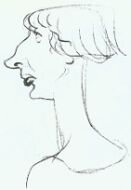
Meena Battiscombe Gunn was born Lillian Florence ("Meena") Meacham on 12th September 1886 in Maidstone, Kent. She grew up in a protestant family, the eldest of four children. Her youngest sister Gwendoline Emily Meacham, better known as Wendy Wood, was a famous campaigner for Scottish independence. Her father Charles Stephen Meacham was a chemist, her mother Florence Peploe Wood came from an old Scottish family. In 1894 the family moved to South Africa, where Charles Meacham took up a leading position in a brewery.
In her late teens, Meena Meacham returned to London to study piano at the Royal Academy of Music. She became part of the circle around George Bernard Shaw and H. G. Wells and was a member of the Fabian Society. In 1908 she married the Irish musician Herbert Hughes (1882-1937), their son Patrick - later known as Spike Hughes - was born in the same year. After her divorce from Hughes in 1922, she married the Egyptologist Battiscombe George ("Jack") Gunn (1883-1950), who was a Curator and Professor in Cairo, Philadelphia and Oxford. (Fig.) In 1928 their son John Battiscombe Gunn was born. They divorced in 1940, and Meena Gunn married the neurologist and psychiatrist Alexander Grey Clarke (1911-1944).
In 1924 she began her psychoanalytic training in Vienna as a staff member of the Vienna Psychoanalytic Polyclinic. That same year she went to Budapest, presumably to continue her psychoanalytic training with Sándor Ferenczi. She attended the International Psychoanalytical Congress in Salzburg (1924) and in Bad Homburg (1925). Meena Battiscombe-Gunn maintained a psychoanalytical practice on Harley Street in London, but did not join the British Psychoanalytical Society.
After World War II she worked with Anna Freud, before she left England in 1960 and stayed for a while in Canada. In 1965 she moved to the United States, settling in Lake Peekskill, where she treated schizophrenic patients. She spent her final years in Canada and died there from a stroke. (Top of the article)
- REFERENCES
- Addison, Rosemary: Designing Woman. textualities 2005 (2008-04-07)
- FamilySearch (2025-02-21)
- Hughes, Patrick C.: Opening Bars. Beginning an Autobiography. London 1946
- Hughes, Patrick C.: Second Movement. Continuing the Autobiography. London 1951
- Lück, Helmut E., und Elke Mühlleitner (Hg.): Psychoanalytiker in der Karikatur. München 1993
- Molnar, Michael (ed.): The Diary of Sigmund Freud 1929-1939. A Record of the Final Decade. New York; London 1992 [Sigmund Freud. Tagebuch 1929-1939. Kürzeste Chronik. Basel; Frankfurt/M. 1996]
- Obituary Alexander Annand Grey Clarke. Br Med J, April 15, 1944, 541 (2014-11-06)
- Simpson, R. S.: Gunn, Battiscombe George (1883-1950). Oxford Dictionary of National Biography, Bd. 24. Oxford, New York 2004, 237f
- Simpson, R. S.: Gunn, Battiscombe George (1883-1950). Oxford Dictionary of National Biography, Bd. 24. Oxford, New York 2004, 237f
- Wikipedia: Lillian Florence Meacham; Wendy Wood; Battiscombe Gunn; Spike Hughes; J. B. Gunn (2017-07-21)
- FIG.: Olga Székely-Kovács 1924
Victoria Hamilton (*1941)
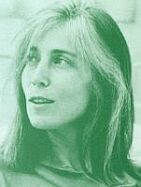
Victoria Edith Hamilton, born in Aberdeenshire, Scotland, was the youngest daughter of Robert Edward Archibald Udney-Hamilton, 11th Lord Belhaven and Stenton, and his wife Sheila de Hauteville Pearson. She studied painting and design at Glasgow School of Art, and piano and organ at the Royal Scottish Academy of Music, before graduating in philosophy from the University of London in 1967. In 1966 she met the anti-psychiatrist Ronald D. Laing and underwent analysis with him. In the beginning of the 1970s, she received her training in child and adolescent psychotherapy with John Bowlby at the Tavistock Clinic. Victoria Hamilton worked in London as an art therapist in a psychiatric day hospital, liberal arts lecturer at Hornsey College of Art, as a special needs teacher for schools in the Inner London Education Authority and in child guidance clinics for the National Health Service.
In 1975 she emigrated to the US, where she married Nicholas Tufnell a year later. Their son Samuel was born in 1978. Victoria Hamilton completed her adult training at the Los Angeles Institute of Psychoanalytic Studies and graduated in 1991 at the Psychoanalysis Unit of the University of London, having accomplished an empirical study on Patterns of transference interpretation. She practiced for over 30 years as a psychoanalyst and child and family psychotherapist and was a training and supervising analyst at the Institute of Contemporary Psychoanalysis in Los Angeles. After moving to New York in 2000, she lectured at the Columbia University Center for Psychoanalytic Training and Research.
Victoria Hamilton orients herself in the use of the concepts from attachment theory and object-relations theory. In her book Narcissus and Oedipus she takes up Greek myths again, which Sigmund Freud had used to illustrate his theory of the psychological development, completing them with later psychoanalytic research and relating them to her own experience with children. In her book The Analyst's Preconscious (1996) she presents the results of her depth interviews with 65 analysts in Britain and the U. S., whom she questioned about the relationship between their theoretical positions and the exigencies of the practical conduct of analysis. (Top of the article)
- SELECTED WORKS (for more, see: Victoria Hamilton Website)
- Narcissus and Oedipus. The Children of Psychoanalysis. London u. a. 1982
- Grief and mourning in Tennyson's "In memoriam". Free Associations No. 7, 1986, 87-110
- Patterns of transference interpretation. An empirical study. Thesis (PhD) University of London 1991
- Truth and reality in psychoanalytic discourse. IJP 74, 1993, 63-79
- The Analyst's Preconscious. Hillsdale 1996
- Foreword to Judith Edwards (Ed.): Being Alive. Building on the Work of Anne Alvarez. Hove, East Sussex; New York 2001, xiii-xxii
- (and John Bowlby) An ethological basis for psychoanalysis. In J. Reppen (ed.): Beyond Freud. A Study of Modern Psychoanalytic Theorists. Hillsdale, N.J. 1985, 1-28
- REFERENCES
- Itten, Theodor: From R. D. Laing to Jack Lee Rosenberg. In T. Itten and M. Fischer (eds): Jack Lee Rosenberg. Celebrating a Master Psychotherapist. St.Gallen 2002, 54-70
- Kurzweil, Edith: The Freudians. A Comparative Perspective. New Haven 1989
- Redler, Leon: Interview mit Victoria Hamilton (1971). Accounts of Kingsley Hall, the network, herself. Glasgow: Special Collection Dept. Univ. of Glasgow, R. D. Laing Collection, Call No. L192/1+192/2
- Spiegel, Rose: Narcissus and Oedipus, the Children of Psychoanalysis. Victoria Hamilton. J Am Acad Psychoanal 13, 1985, 269-272
- The Peerage (2008-04-08)
- Victoria Hamilton Website (2019-04-29)
- PHOTO: With kind permission of Victoria Hamilton
Martha Harris née Dunlop (1919-1987)
Martha "Mattie" Gemmell Dunlop Harris was born at her parent's farm in Beith, Ayrshire (Scotland), the eldest of four children. Her father Gabriel Dunlop was a farmer, her mother Margaret McLure ran her own thriving tailoring company before marrying. When Martha was eight, the family moved to Turner`s Hill in Sussex, where she went to the County Grammar School at East Grinstead. From 1939 to 1940 she studied English at the University College London. During and after the war she worked as a teacher in secondary schools.
In 1941 she married Harry Thompson, an ecologist working for the Forestry Commission, from whom she was divorced in 1949. Her second husband was the poet and English scholar Roland Harris (1919-1969), with whom she had two daughters, Meg and Morag.
After studying psychology in Oxford, Martha Harris came to the Tavistock Clinic in 1950 to undertake the training in child psychotherapy recently established by Esther Bick at John Bowlby’s invitation. At the end of the 1950s she completed her psychoanalytic training at the Institute of Psychoanalysis and became a training analyst and supervisor of the British Psychoanalytical Society. From 1960 to 1980 she was was head of the child psychotherapy service at the Tavistock Clinic, taking over from Esther Bick. Like Esther Bick, she was an adherent of Melanie Klein's ideas and a pioneer of the method of infant observation. Another important teacher of her's was Wilfred Ruprecht Bion.
After Roland Harris died in 1969, Martha Harris married the Kleinian psychoanalyst Donald Meltzer (1922-2004). Together they developed the psychoanalytically-oriented work unit "The Child-in-the-Family-in-the-Community" for schools and therapeutic institutions. From the mid-seventies to the mid-eighties Donald Meltzer and Martha Harris lectured and supervised in Italy and fostered the establishing of child psychotherapy training, following the Tavistock model, in all the principal Italian institutions. The same they did in India.
Martha Harris died in 1987 following a serious car accident. (Top of the article)
- SELECTED WORKS
- Inside Information on Understanding Infants (Birth to 5 Years). London 1969
- Thinking About Infants and Young Children. London 1975
- The contribution of observation of mother-infant interaction and development to the equipment of a psychoanalyst or psychoanalytic psychotherapist (1976). In Collected Papers of Martha Harris and Esther Bick, 225-239
- Collected Papers of Martha Harris and Esther Bick. Ed. by Meg Harris Williams. Perthshire, Scotland 1987
- (et al.) Your Teenager. Thinking About Your Child During the Secondary School Years. London 1969; 2007
- (and Donald Meltzer) A psychoanalytic model of the child-in-the-family-in-the-community. In D. Meltzer: Sincerity and Other Works. Collected Papers. London 1994
- (and Romana Negri) The Story of Infant Development. London 2007
- REFERENCES
- Centro Studi Martha Harris (2024-11-20)
- Harris Williams, Meg, und Nancy Holt: Martha Harris. A biography. (1987, 2011) The Harris Meltzer Trust (2024-12-11)
- Harris Williams, Meg (Hg.): Enabling and Inspiring. A Tribute to Martha Harris. London 2012
- Kanter, Joel: Clare Winnicott. Her life and legacy. In C. Winnicott: Face to Face with Children. The Life and Work of Clare Winnicott. London, New York 2004, 1-94
- Rustin, Margaret: Martha Harris. Melanie Klein Trust 2017 (2019-07-22)
- The Harris Meltzer Trust (2015-04-08)
- Wikipedia (2024-12-09)
- PHOTO: Tavistock Clinic 1949/1950 (James Robertson); aus Esther Bick: Surviving Space. Papers on Infant Observation. London 2002, xxiv
Lisbeth Hearst née Neumann (1920-2020)
Lisbeth (Liesel) Hearst was born Lisbeth Edith Neumann in Vienna to well-off Jewish parents. Her father was a socialist politician, her mother was active in the Bauhaus movement. In the 1930s the family fled the Nazis and emigrated to Palestine. After the end of the war Lisbeth Neumann went to England and qualified in 1949 as a psychiatric social worker at the University of Cardiff. Subsequently she worked with the National Association for Mental Health, leading a group of mothers with borderline disorders in a working-class London neighborhood.
In 1948 she married Stephen Hearst [Stefan Hirschtritt] (1919-2010), a Jewish emigrant from Vienna, who graduated in history in Oxford and later became a BBC executive. After a break to raise her two children Daniela and David, she worked at a psychiatric hospital for children and families in Hertfordshire and trained as a psychotherapist. In 1971 she began training in group analysis with S. H. Foulkes [Siegmund Heinrich Fuchs], the founder of group analysis, at the newly formed Institute of Group Analysis (IGA) in London. After qualifying in 1974, she ran therapy groups for parents, couples, foster-parents, nursing staff and teachers in schools and children's homes.
Liesel Hearst was a training group analyst and supervisor at the IGA and in private practice at the North London Centre for Group Therapy. She was a long-standing chairman of the Overseas Sub-Committees of the Institute and worked on the Institute's training programmes in Denmark, Norway, Germany and Switzerland. In the mid-1970s, she participated in establishing Gruppenanalyseseminare e. V. (GRAS) in Germany, and in 1982 she supported the development of the Seminar für Gruppenanalyse Zürich (SGAZ). She was an honorary member of GRAS (until 1997), of the Institute of Group Analysis, Heidelberg, and the Group Analytic Society in London.
Liesel Hearst's publications focus on the theory and practice of S. H. Foulkes' group analysis, especially their use in therapy groups with severely disturbed narcissistic mothers, as well as problems of the training and supervision of group analysts. She died shortly before her 101st birthday after a corona infection in London. (Top of the article)
- SELECTED WORKS
- The emergence of the mother in the group. Group Analysis 14, 1981, 25-32
- The restoration of the impaired self. In N. Slavinska-Holy (ed.): Group Analytic Treatment in Borderline and Narcissistic Patients in Therapy. Madison, Conn. 1988
- Der Wandel unseres historischen und kulturellen Erbes in der Gruppenanalyse. Luzifer-Amor 11 (21), 1998, 30-47
- Transference, counter-transference and projective processes in training course block sessions. Group Analysis 23, 1990, 341-346
- Die gruppenanalytische Behandlung von Schuld und Schuldgefühlen in deutschen Gruppen. Jahrbuch für Gruppenanalyse 5, 1999
- Träume in der Gruppenanalyse. In W. M. Roth and J. Shaked (eds): Affekte in therapeutischen Gruppen. Wien 2008, 51-56
- Das kreative Potential der Gruppenanalyse. In R. Maschwitz et al. (eds): Die Kunst der Mehrstimmigkeit. Gruppenanalyse als Modell für die Zivilisierung von Konflikten. Gießen 2009
- (with Malcolm Pines and Harold Behr) Group analysis. In G. M. Gazda (ed.): Basic Approaches to Group Psychotherapy and Group Counselling. Springfield, Ill. 1982
- (and Harold Behr) Group analysis goes into Napsbury. Group Analysis 10, 1977, 264-266
- (and Harold Behr) Group Analytic Psychotherapy. A Meeting of Minds. London; Philadelphia 2005 [Gruppenanalytische Psychotherapie. Menschen begegnen sich. Eschborn 2009]
- REFERENCES
- Barthel-Rösing, Marita: Nachruf für Liesel Hearst (Januar 2021). Gruppenpsychother. Gruppendynamik 57, 2021, 89-91 (2022-05-18)
- Gfäller, Georg R., and Grete Leutz (eds): Gruppenanalyse, Gruppendynamik, Psychodrama. Quellen und Traditionen - Zeitzeugen berichten. Der Umgang mit Gruppenphänomenen in den deutschsprachigen Ländern. Heidelberg 2004
- Group Analytic Society (2023-11-10)
- Hearst, Liesel, and Harold Behr: Introduction in Hearst und Behr 2005, x-xv
- Purser, Philip: Stephen Hearst obituary. The Guardian, 30 March 2010 (2017-11-09)
- Roberts, Jeff, and Malcolm Pines: The Practice of Group Analysis. 1991
- Rösing, Wilhelm, und Marita Barthel-Rösing: Pioneers of Group Analysis. Dokumentarfilm 2017
- PHOTO: Still from Sue Einhorn: Liesel Hearst in Conversation. Group Analytic Society, 2014-9-21 (Vimeo)
Paula Heimann née Klatzko (1899-1982)

Paula Heimann was born in Danzig, the youngest daughter of the businessman Salomon Klatzko and his wife Fanny née Edelmann. Both her parents were Russian Jewish immigrants. She attended the high school for girls in Danzig and studied medicine from 1918 in Königsberg, Berlin and Frankfurt am Main, and passed the "Staatsexamen" in 1923 at Breslau. In Breslau she met Franz Heimann (1898-1972), a left-wing internist coming from a Jewish family in Kattowitz. They married in 1924 and moved to Heidelberg, where their daughter Mirza was born a year later. Paula Heiman began her resideny in psychiatry at the Psychiatric University Hospital Heidelberg and graduated in 1925 with a thesis on the subject of progressive paralysis.
In 1927, Paula Heiman followed her husband to Berlin, where she worked in different Hospitals, including the Charité in Berlin. Encouraged by Elisabeth Naef, she started her psychoanalytic training at the Berlin Psychoanalytic Institute in 1929. She underwent three years of training analysis with Theodor Reik, who left Berlin in 1932. Supervising analysts were Karen Horney, Hanns Sachs and Otto Fenichel, whose "Kinderseminar" she attended. She completed her training in Berlin in 1933.
When Hitler came to power in 1933, she emigrated with her daughter to London, while her husband was in Lausanne. They divorced in 1933. That year she became an associate member and in 1939 a full member of the British Psychoanalytical Society (BPAS). In 1937, she received her British medical qualification from the University of Edinburgh.
In 1934 Paula Heimann began her friendship with Melanie Klein, whose emphasis on the aggression and the death instincts appealed to her. A year later she went into further analysis with Klein, continuing it (with interruptions) until 1953. She became a close collaborator of Melanie Klein and - besides Joan Riviere and Susan Isaacs - the most vehement advocate of Kleinian positions during the 1940s Controversial Discussions with Anna Freud and her followers. In 1944 she became a training analyst and was elected a member of the Training Committee of the BPAS in 1949. In addition she trained in child analysis with Donald Winnicott as her supervisor.
In the midst 1950s a break occurred between Melanie Klein and Paula Heimann, to which Heimann's paper On countertransference, read at the 1949 IPA Congress in Zürich, provided the ostensible cause. In this study, considered to be one of the most important influences on modern psychoanalytic technique, Paula Heimann presented a concept of the counter-transference that differed from the Kleinian view. To Melanie Klein the counter-transference signified merely a disturbance of the analytic process, however, Paula Heimann showed that the analyst's affective response to his patient could be a key to the unconscious of the latter.
Paula Heiman left the Kleinian Group in 1955 and joined the Independent Group of the BPAS. In the following years she pleaded for a synthesis of Freudian and Kleinian positions, linking basic Freudian concepts with new developments of ego psychology and object-relation theory. Training analysands of hers were, among others, Betty Joseph, Martha Eicke-Spengler, Emilio Rodrigu, and Alexander Mitscherlich, whose Psychoanalytic Institute in Frankfurt (Sigmund-Freud-Institut) she supported. For this purpose, she came back to Germany in 1959 for the first time since she had left Berlin in 1933.
Paula Heimann, who was known for her charm as well as for her strictness and strength of will, died at the age of 83 in London. (Top of the article)
- SELECTED WORKS
- Über atypische Eisenreaktionen bei progressiver Paralyse. Med. Diss. Breslau 1925
- A contribution to the problem of sublimation and its relation to processes of internalization. IJP 22. 1942, 8-17
- On countertransference. IJP 31, 1950, 81-84 [Bemerkungen zur Gegenübertragung. Psyche 18, 1964, 483-493]
- Certain functions of introduction and projection in early infancy. In Developments in Psycho-Analysis, London 1952
- Notes on the theory of the life and death instincts. In Developments in Psycho-Analysis, London 1952
- The polymorphous state of instinctual development. In Developments in Psycho-Analysis, London 1952
- Problems of the training-analysis. IJP 35, 1954, 163-168
- Dynamics of transference interpretations. IJP 37, 1956, 303-310 [Die Dynamik der Übertragungsinterpretationen. Psyche 11, 1957, 401-415]
- Bemerkungen zur Sublimierung. Psyche 13, 1959, 397-414
- Bemerkungen zum Arbeitsbegriff der Psychoanalyse. Psyche 20, 1966, 321-361
- Gedanken zum Erkenntnisprozeß des Psychoanalytikers. Psyche 23, 1969, 2-24
- About Children and Children-No-Longer. Collected Papers 1942-1980. Ed. by Margret Tonnesmann. London, New York 1989
- (and Susan Isaacs) Regression (1943). In P. King and R. Steiner (eds): The Freud-Klein Controversies 1941-45. London; New York 1991, 517-533 + in Developments in Psycho-Analysis. London 1952
- (with Melanie Klein, Susan Isaacs and Joan Riviere): Developments in Psycho-Analysis. London 1952
- REFERENCES
- Elrod, Norman: Rezension von Paula Heimann: About Children and Children-No-Longer. Psyche 48, 1994, 88-95
- Grosskurth, Phyllis: Melanie Klein. New York 1986; Stuttgart 1993
- Holmes, Maren: Die Emigration von Paula Heimann nach London und ihr Beitrag zur Wiederbelebung der Psychoanalyse in der BRD nach 1945. In L. M. Hermanns et al. (eds): Psychoanalyse und Emigration aus Budapest und Berlin. Frankfurt/M. 2013, 157-172
- Holmes, Maren: Paula Heimann. Leben, Werk und Einfluss auf die Psychoanalyse. Gießen 2017
- Holmes, Maren, und Thomas Müller: Paula Heimann und die Deutsche Psychoanalytische Vereinigung. Psyche 70 (4), 2016, 295-313
- King, Pearl: Paula Heimann's quest for her own identity as a psychoanalyst. An introductory memoir. In P. Heimann: About Children and Children-No-Longer. Collected Papers 1942-1980. Ed. by M. Tonnesmann. London, New York 1989, 1-9
- King, Pearl, and Ricardo Steiner (eds): The Freud-Klein Controversies 1941-45. London, New York 1991 [Die Freud/Klein-Kontroversen 1941-1945, 2 Bde. Stuttgart 2000]
- Lockot, Regine: Paula Heimann im Gespräch mit Marlinde Krebs. Luzifer-Amor 8 (16), 1995, 134-160
- MyHeritage (JewishGen + England & Wales, Deaths records 1837-2005)
- Reinke, Ellen: "Wir alle arbeiten mit der Gegenübertragung". Methodische Anmerkungen auf der Grundlage der Auffassung von Paula Heimann. Luzifer-Amor 8 (15) , 1995, 43-60
- Rolnik, Eran J.: "Why is it that I see everything differently?" Reading a 1933 letter from Paula Heimann to Theodor Reik. JAPA 56 (2), 2008, 409-430 ["... wie geht es zu, daß ich alles so anders sehe ...?" Ein Brief zur psychoanalytischen Technik an Theodor Reik (Berlin, 7. Februar 1933). Luzifer-Amor 18 (36), 2005, 7-15]
- Roudinesco, Elisabeth, and Michel Plon: Wörterbuch der Psychoanalyse (1997). Wien, New York 2004
- Tonnesmann, Margret: Heimann, Paula. In Dictionnaire international de la psychanalyse (2002). Ed. by A. de Mijolla. Paris 2005, 765f [International Dictionary of Psychoanalysis. Detroit u. a. 2005, 729-730]
- Wikipedia (2018-05-24)
- Zimansl, Simone: Heimann, Paula. In G. Stumm et al. (eds): Personenlexikon der Psychotherapie. Wien 2006
- PHOTO: Wikipedia (2024-11-22)
Ilse Hellmann Noach (1908-1998)
Ilse Rosa Hellmann (Hellman) grew up as the youngest of three children in a wealthy Jewish industrial family in Vienna. Her parents, Paul Hellmann, a jurist and textile mill owner, and Irene Hellmann-Redlich, maintained a famous cultural salon in Vienna and Altaussee during the 1920s. After her Matura, Ilse Hellmann underwent a two-year welfare course, specialising in juvenile delinquency and graduating in 1931. Subsequently she went to France and worked from 1931 to 1932 in a home for young offenders near Paris. From 1933 to 1935 she took care of children from multi-problem families in the Clinique Médico-Pédagogique Paris XIVe. At the same time, she attended evening classes in psychology at the Sorbonne.
On returning to Vienna in 1935, Ilse Hellmann studied psychology under Charlotte Bühler. After graduating in 1937, she followed Bühler's invitation, to join her in a study of retarded children at the Parents' Association Institute in London. During the Second World War Ilse Hellman worked from 1941 to 1945 at Anna Freud's Hampstead War Nurseries offering refuge for children made homeless by bombing. The further development of these "war babies", separated from their parents and living in the therapeutic community of Hampstead, continued to be an object of her research during the following decades.
In 1942 Ilse Hellman began her psychoanalytic training at the London Institute of Psychoanalysis, her training analyst was Dorothy Burlingham. She became an associate member of the British Psychoanalytical Society in 1945, a full member in 1952, and a training analyst in 1955. In the 1950s she was one of the leading figures in the Anna Freudian Group. After joining the staff at Anna Freud's Hampstead Child Therapy Course and Clinic, she was for some years in charge of the department for adolescents and directed, together with Liselotte Frankl, a research project on adolescence. In addition she participated in Dorothy Burlingham's research on simultaneous analysis of mother and child.
In 1948, Ilse Hellman married the Dutch art historian, Arnold Noach (1911-1976), who later became Professor of the History of Art at the University of Leeds. Their daughter Margaret was born in 1949. Increasing ill health forced Ilse Hellman Noach to abandon the practice at the age of 84. (Top of the article)
- SELECTED WORKS
- Some observations on mothers of children with intellectual inhibitions. Psa Study Child 9, 1954. 259-273
- Hampstead Nursery follow-up studies: Sudden separation and its effect followed over twenty years. Psa Study Child 17, 1962, 159-174
- Assessment of analysability illustrated by the case of an adolesent patient (1964). Bull Hampstead Clinic 1, 1978, 65-73
- Simultaneous analysis of parents and child. In I. Glenn (ed.): Child Analysis and Therapy. London, New York 1978, 473-491
- Work in the Hampstead War Nurseries. IJP 64, 1983, 435-439
- From War Babies to Grandmothers. Forty-Eight Years in Psychoanalysis. London 1990
- (with Oscar Friedmann and Elizabeth Shepheard) Simultaneous analysis of mother and child. Psa Study Child 15, 1960, 359-377
- (and Lieselotte Frankl) The ego's participation in the therapeutic alliance. IJP 43, 1962, 333-337 [Die Ich-Beteiligung am therapeutischen Bündnis. In Gerd Biermann (ed.): Handbuch der Kinderpsychotherapie. Frankfurt/M. 1988, 199-208]
- REFERENCES
- Blanks, Fred: A sculpture story. Quadrant Magazine XLVI (10), 2002
- Grosskurth, Phyllis: Melanie Klein. Her World and Her Work. New York 1986 [Melanie Klein. Ihre Welt und ihr Werk. Stuttgart 1993]
- Haines, Catharine M. C.: International Women in Science. A Biographical Dictionary to 1950. Santa Barbara, Calif. 2001
- Hellmann, Paul: Irene, mijn grootmoeder. De neergang van een Weens-joodse familie. Amsterdam 2015
- Ludwig-Körner, Christiane: Und sie fanden eine Heimat. Leben und Wirken der Mitarbeiterinnen von Anna Freud in den Kriegskinderheimen. Stuttgart 2022
- Taschwer, Klaus: Wie wichtige jüdische Förderer der Salzburger Festspiele einfach vergessen wurden. Der Standard, 13.7.2021 (2021-10-08)
- Wikipedia (2021-10-06)
- Yorke, Clifford: Hellman Noach, Ilse. In Dictionnaire international de la psychanalyse (2002). Ed. by A. de Mijolla. Paris 2005, 768f [International Dictionary of Psychoanalysis. Detroit u. a. 2005, 733-734]
- PHOTO: Private Archive Paul Hellmann, Rotterdam - With kind permission of Paul Hellmann
Ethilda Budgett Meakin Herford (1872-1956)
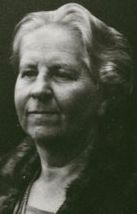
Ethilda Budgett Meakin was born in Red Hill, Surrey, the daughter of Edward E. Meakin and Sarah Anne Budgett. Before her birth her father was a tea planter in India, in 1882 he moved with his family to Tangier, where he established two years later the Times of Morocco. Ethilda wanted to do medicine and was sent to attend school in Göttingen before going to the North London Collegiate School for girls. Subsequently she worked for two years with a mission in the Glasgow slums. She then studied at the London Royal Free Hospital School of Medicine for Women and graduated in 1898/1899. After graduation she held appointments as assistant medical officer at the Camberwell Infirmary and the Grove Hospital.
In 1902 she went to India to do mission work. She was appointed medical officer at the Zenana Hospital in Hyderabad, acting first physician to the Cama Hospital in Bombay and, from 1904 to 1907, medical superintendent of the Victoria Hospital for Women and Children in Calcutta. In 1907 Ethilda Budgett Meakin married Oscar Haarbleicher (1868-1953), a businessman based in Calcutta with a German-Jewish background. They had four children: Harold, Martin, Sylvia and George. During the following years Ethilda B. Meakin Haarbleicher spent her time partly in India, partly in Europe, where she held postgraduate appointments at university women's hospitals in Geneva, Munich, Berlin, and Königsberg. She published three papers on gynaecological topics in 1910 and 1911.
Due to the anti-German feelings in World War I, Oscar Haarbleicher changed his name to Herford. In 1917 the family returned to England and settled at Reading. Ethilda Herford trained in London at the Medico-Psychological Clinic, also known as the Brunswick Square Clinic, and worked there as a psychoanalyst. Her nomination as a member of the the British Psychoanalytical Society (BPAS) was refused in 1920 - Ernest Jones, president of the BPAS, disapproved of the "wild" analysis at Brunswick. She first had analysis with John Carl Flügel, then with Karl Abraham in Berlin in 1920, and entered training analysis with Sándor Ferenczi in 1922. She became an associate member of the BPAS in 1921 and a member in 1934.
Ethilda Budgett Meakin Herford specialised in the treatment of functional nervous disorders by psychoanalysis and became a director of the British Hospital for Functional Nervous Disorders in Camden Town. She practised psychoanalysis in Reading and was appointed Hon. Physician to the Institute for the Scientific Treatment of Delinquency and the London Clinic of Psychoanalysis. In addition, she translated three works of Sigmund Freud into English. (Top of the article)
- SELECTED WORKS
- [Meakin, Ethilda B.] Medical work among the women of 'Little' Indur (Nizam), India. Magazine of the London School of Medicine for Women and the Royal Free Hospital, 5 (May), 1903
- [Haarbleicher, Ethilda B. Meakin] Intramural cysts of the uterus. BJOG: An International Journal of Obstetrics & Gynaecology 17 (3), 1910, 208-229
- [...] Conservative operations upon the internal female genital organs, with special reference to the operation of Dührssen-Beuttner. BJOG: An International Journal of Obstetrics & Gynaecology 18 (3), 1910, 188-193
- [...] Notes of sixteen unselected cases of hebosteotormy from the Kliniks of Berlin, Munich, and Königsberg (Pr.). BJOG: An International Journal of Obstetrics & Gynaecology 19 (3), 1911, 307-330
- The infantile mind and its relations to social problems and mental hygiene. Journal of State Medicine 36, 1928, 139-148
- REFERENCES
- Burton, Antoinette: Contesting the Zenana. The mission to make "Lady Doctors for India," 1874-1885. The Journal of British Studies 35 (3) 1996, 368-397
- Dictionary of National Biography, 1912 supplement, Vol. 2. Wikisource (2014-06-03)
- Ferenczi, Sandor - Ernest Jones: Letters 1911-1933. Ed. by J. Szekacs-Weisz, F. Eros and K. Robinson. London 2013
- Hall, Matthew: A Doctor at War. The Story of Colonel Martin Herford - the Most Decorated Doctor of World War Two. Malvern Wells, Worcs. 1995
- Lück, Helmut E., and Elke Mühlleitner (eds): Psychoanalytiker in der Karikatur. München 1993
- Obituary Ethilda B. M Herford. Br Med J, Nov. 10, 1956, 1122
- Payne, Sylvia: Obituary Dr. Ethilda Budgett-Meakin Herford. IJP 38, 1957, 276-277
- Raitt, Suzanne: Early British Psychoanalysis and the Medico-Psychological Clinic. History Workshop Journal 58, 2004, 63-85
- Tompsett, Margaret E. (Granddaughter of Ethilda B. M. Herford): Personal communication, May 29, 2014
- Wikipedia: Martin Edward Meakin Herford (2012-02-13)
- PHOTO: With kind permission of Margaret E. Tompsett
Juliet Hopkins née Phelps Brown (*1934)
Juliet Hopkins was born Juliet Virginia Phelps Brown, the daughter of Ernest Henry Phelps Brown and Evelyn née Bowlby. Her father was a Professor of Economics of Labour knighted in 1989. Her mother, the younger sister of John Bowlby, creator of the attachment theory, was interested in psychoanalysis and analysed by Joan Riviere.
Juliet Phelps Brown attended Newnham College and studied biology and psychology at Cambridge University. After working in the Yale Child Study Centre in the US she began child psychotherapy training at the Tavistock Clinic in 1960. She chose Enid Balint as her training analyst and was supervised by Donald W. Winnicott. In 1963 she married Keith Hopkins (1934-2004), a historian and sociologist, with whom she had three children: Edmund, Ben and Rachel. Juliet and Keith Hopkins divorced in 1989.
As well as her training in child and adult psychoanalytic psychotherapy, Juliet Hopkins had also completed family therapy training. She worked on the staff of the Tavistock Clinic and the London Child Guidance Training Centre until her retirement in 2000. Juliet Hopkins was a founder member of the independent child psychotherapy training run by the British Association of Psychotherapists, of which she remains a senior member. She is also a member of the Association of Child Psychotherapists, the British Confederation of Psychotherapists and the British Psychoanalytic Council. She has retired from private practice as a psychotherapist for adults and children but is still involved in teaching at the Tavistock Clinic.
Juliet Hopkins has always affiliated herself with the Group of Independents. She was inspired by the ideas of Winnicott and Bowlby, as well as Melanie Klein and Anna Freud. She has published widely on aspects of child psychotherapy and child development and has a special interest in infancy and attachment behaviours. A collection of her articles was translated into German and published under the title Bindung und das Unbewusste. (Top of the article)
- SELECTED WORKS
- Living under the threat of death. The impact of a congenital illness on an eight-year-old boy. J Child Psychother 4, 1977, 5-24
- The probable role of trauma in a case of foot and shoe fetishism. Aspects of the psychotherapy of a six-year-old girl. Int Rev Psychoanal 11, 1984, 79-91
- Solving the mystery of monsters. Steps towards the recovery from trauma. J Child Psychother 12, 1986, 61-71
- Failure of the holding relationship. Some effects of physical rejection on the child's attachment and on his inner experience. J Child Psychother 13, 1987, 5-17
- The observed infant of attachment theory. Brit J Psychother 6, 1990, 460-470
- Therapeutic interventions in infancy. Two contrasting cases of persistent crying. Psychoanal Psychother 8, 1994,141-152
- The dangers and deprivations of too-good mothering. A type of spoiling observed by Winnicott. J Child Psychother 22, 1996, 407-422
- From baby games to let's pretend. The achievement of playing. Journal of the British Association of Psychotherapists 31 (1, Part 2), 1996, 20-27
- Narcissistic illusions in late adolescence. The role of defensive and gratifying object-relationships and generative opportunities. Psychoanal Inq 19, 1999, 229-242
- Overcoming a child's resistance to late adoption. How one new attachment can facilitate another. J Child Psychother 26, 2000, 335-347
- Bindung und das Unbewusste. Ein undogmatischer Blick in die kinderpsychoanalytische Praxis. Frankfurt/M. 2008
- An Independent Mind. Collected Papers of Juliet Hopkins. Ed. by A. Horne und M. Lanyado. London; New York 2015
- REFERENCES
- Boyle Spelman, Margaret: The Evolution of Winnicott's Thinking. Examining the Growth of Psychoanalytic Thought over Three Generations. London 2013
- Freedland, Jonathan: The plot to create Britain's super race. The Telegraph, 12 Feb 2012 (2021-01-04)
- Holmes, Jeremy: John Bowlby and Attachment Theory. London; New York 1993
- Harris, William V.: Morris Keith Hopkins 1934-2004. Proceedings of the British Academy 130, 2005, 81-105
- The Peerage (2014-01-31)
- PHOTO: Still from Jane O'Rourke: Interview with Juliet Hopkins. MINDinMIND 2020 (2024-11-26)
Susan Isaacs née Fairhurst (1885-1948)
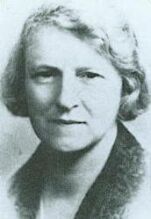
Susan Sutherland Isaacs was one of the most important representatives of the psychoanalytic theory of education in England. She was born in Bromley Cross near Bolton, Lancashire, as the ninth child of William Fairhurst, journalist and Methodist lay-preacher. Her mother, Miriam Sutherland, died when Susan was six years old. At the age of fifteen, her father removed her from her Bolton secondary school, because she had become an agnostic. She worked as a private tutor and governess, before training as a teacher of young children at Manchester and subsequently studying philosophy in Manchester and psychology at Newnham College, Cambridge. After gaining a master's degree in 1913, she lectured in infant school education at Darlington Training College in 1913/14 and in logic at Manchester University in 1914/15.
In 1914 she married the botany professor William B. Brierley (1889-1963) and moved with him to London, where she was appointed tutor in psychology at London University in 1916. At that time she still supported a biological approach, as can be seen in her book An Introduction to Psychology. After attending courses on psychoanalysis at the Brunswick Square Clinic in London, Susan Isaacs went to Berlin to undergo analysis with Otto Rank, which she continued with John Carl Flügel and then from 1922 with the Kleinian analyst Joan Riviere in London. In 1921 she became an associate member and in 1923 a full member of the British Psychoanalytical Society. She divorced Brierley - who later became the husband of her friend Marjorie - and married Nathan Isaacs (1895-1966), a metallurgist and educationalist, in 1922.
From 1924 to 1927 Susan Isaacs directed the famous Malting House School in Cambridge, an educational research project inspired by Melanie Klein's ideas, where children aged 2½-7 were given great freedom to develop their fantasies. The results of her research, reported in Intellectual Growth in Young Children and Social Development of Young Children, even influenced Jean Piaget. The fact that the children were encouraged to express their sexual curiosity, led in 1927 to the closure of the institution. Afterwards Susan Isaacs taught developmental psychology at the University College London. From 1933 to 1943 she directed the Department of Child Development, founded by her at the London University.
Between 1929 and 1936, under the pseudonym of "Ursula Wise", Isaacs replied to parents' questions in Nursery World. She stated that the intellectual development of the child was intimately connected with emotional development. Starting with the opinion that an education free of repression will prevent learning inhibitions and developmental disturbances, she soon turned to Melanie Klein's view of a particularly harsh super-ego active within the earliest years of life. Too much tolerance can moderate its strength, but also set free the feelings of guilt and aggression linked with it.
As the most sharp-witted spokeswoman for Melanie Klein in the dispute with the Anna Freudians, Susan Isaacs opened the Controversial Discussions in 1943 with her paper The nature and function of phantasy, one of the most important essays of the Kleinian writing. In this paper she defined phantasy - differentiating unconscious "phantasy" from daydreaming "fantasy" - as the psychical representative of the drives. According to her, unconscious phantasies constitute the primary content of psychical life and the basis of all unconscious and conscious mental processes.
Susan Isaacs' numerous clinical and theoretical contributions were collected and reprinted in the anthology Childhood and After. She died of cancer in 1948. (Top of the article)
- SELECTED WORKS
- An Introduction to Psychology. London, New York 1921
- The Nursery Years. London 1929
- Intellectual Growth in Young Children. London 1930
- The Children We Teach. London 1932
- Social Development in Young Children. London 1933
- The Psychological Aspects of Child Development. London 1935
- The Educational Value of the Nursery School. London 1937
- An acute psychotic anxiety ocurring in a boy of four years. IJP 24, 1938, 13-32
- Criteria for interpretation. IJP 20, 1939, 148-160
- Temper tantrums in early childhood in their relation to internal objects. IJP 21, 1940, 280-293
- Fatherless Children. London 1945
- Troubles of Children and Parents. London 1948
- Childhood and After. London 1948
- The nature and function of phantasy. IJP 29, 1948, 73-97 + Developments in Psycho-Analysis. London 1952, 67-121 [Wesen und Funktion der Phantasie. Psyche 70 (6), 2016, 530-582]
- (and Paula Heimann) Regression. In Development in Psycho-Analysis. London 1952
- (with Melanie Klein, Paula Heimann and Joan Riviere) Developments in Psycho-Analysis. London 1952
- REFERENCES
- Boswell, Jill: Susan Sutherland Isaacs. Melanie Klein Trust 2016 (2019-07-22)
- Gardner, Dorothy: Susan Isaacs. The First Biography. London 1969
- Graham, Philip: A Biography of Susan Isaacs. A Life Freeing the Minds of Children. London 2009
- Grosskurth, Phyllis: Melanie Klein. New York 1986; dt. Stuttgart 1993
- Hinshelwood, Robert: Susan Isaacs, 1885-1948. In Joy A. Palmer (ed.): Fifty Modern Thinkers on Education. London u. a. 2001, 6-10
- Rickman, John: Susan Sutherland Isaacs. IJP 31, 1950, 279-285
- Roudinesco, Elisabeth, and Michel Plon: Wörterbuch der Psychoanalyse (1997). Wien, New York 2004
- Smith, Lydia A.: To Understand and to Help. The Life and Work of Susan Isaacs (1885-1948). London 1985
- Steiner, Riccardo: Isaacs-Sutherland, Susan. In Dictionnaire international de la psychanalyse (2002). Ed. by A. de Mijolla. Paris 2005, 890f [International Dictionary of Psychoanalysis. Detroit u. a. 2005, 873-874]
- Torok, Maria: Phantasie. Psyche 51, 1995, 33-45
- Wikipedia (2008-04-08)
- PHOTO: in Grosskurth 1993 (Vroni Gordon). Archives of the British Psychoanalytical Society?
Betty Joseph (1917-2013)
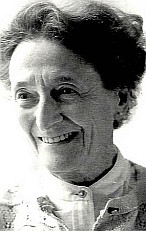
The Kleinian psychoanalyst Betty Joseph was born in Edgbaston, a suburban area of Birmingham. She was the daughter of an electrical engineer, whose Jewish ancestors had arrived in England in the early-18th century from Alsace. Betty Joseph completed her psychiatric social work training at Birmingham University and at the London School of Economics. In her first employment she helped in the starting up of a child guidance clinic in Salford near Manchester, where she began an analysis with Michael Balint in 1940. After the war she finished her psychoanalytic training in London and became a member of the British Psychoanalytical Society in 1950. In the mid-1950s she was appointed a training analyst of the BPAS. She became a collaborator of Melanie Klein and went into further analysis with Paula Heimann from 1951 to 1954.
Betty Joseph demonstrated and drew out the technical implications of Kleinian concepts, particularly those of projective and introjective identification. She was interested in the way some patients tried to maintain their (often painful) psychic equilibrium, although they had a conscious wish for psychic change. Based on Melanie Klein's concept of the "total transference situation", Betty Joseph developed her own distinctive technique. She paid close attention to the interaction between patient and analyst in the immediate here and now of the analytic process and highlighted the analyst's counter-transference, i. e. his tendency to take part in enactments of the patient's internal object relationships.
Many of Betty Joseph's most important papers are collected in Psychic Equilibrium and Psychic Change, published in 1989. In 1994 Betty Joseph received the Sigourney Award for outstanding achievement in psychoanalysis. (Top of the article)
- SELECTED WORKS
- An aspect of the repetition compulsion. IJP 40, 1959, 213-222
- Some characteristics of the psychopathic personality. IJP 41, 1960, 526-531 + in J. R. Meloy (ed.): The Mark of Cain. Psychoanalytic Insight and the Psychopath. Hillsdale, N.J. ; London 2001
- A clinical contribution to the analysis of a perversion. IJP 52, 1971, 441-449
- Different types of anxiety and their handling in the analytic situation. IJP 59, 1978, 223-228
- Toward the experience of psychic paine. In J. S. Grotstein (ed.): Do I Dare Disturb the Universe? A Memorial to Wilfred R. Bion. Beverly Hills 1981
- Understanding and not understanding. Some technical questions. IJP 64, 1983, 291-298 [Verstehen und Nichtverstehen. Einige technische Fragen. Psyche 40, 1986, 991-1005]
- Transference. The total situation. IJP 66, 1985, 447-454
- Object relations in clinical practice. Psa Quart 57, 1988, 626-642
- Psychic Equilibrium and Psychic Change. Selected Papers of Betty Joseph. London, New York 1989 [Psychisches Gleichgewicht und psychische Veränderungen. Stuttgart 1994]
- Psychic change. Some perspectives. IJP 73, 1992, 237-243
- Agreeableness as obstacle. IJP 81, 2000, 641-649
- (with Melanie Klein and Elliott Jaques) Our Adult World, and Other Essays. London 1963
- (and Melanie Klein) Melanie Klein Centenary Papers. London 1983
- REFERENCES
- Anderson, Robin: Betty Joseph. Melanie Klein Trust (2019-07-22)
- British Institute of Psychoanalysis: Meeting Betty Joseph. London 2007. Encounters Through Generations (Excerpt) (2015-10-13)
- Eskelinen, Terttu: Betty Joseph: In memoriam. Temas de Psicoanálisis, Nr. 6, 2013,1-4 (18.3.2016)
- Feldman, Michael, and John Steiner: Betty Joseph obituary. The Guardian, 23 June 2013 (2015-10-13)
- Hargreaves, Edith, and Arturo Varchevker (eds): In Pursuit of Psychic Change. The Betty Joseph Workshop. London 2004
- Pick, Daniel, and Jane Milton: Interview with Betty Joseph, 23. November 2001 (Transcription). Melanie Klein Trust London (2021-01-06)
- Pick, Daniel: Betty Joseph: Psychoanalyst and Klein disciple noted for treating the reluctant patient. Independent, 13 May 2013 (2024-08-08)
- The Telegraph, 23 June 2013 (2015-10-13)
- Tuckett, David: Betty Joseph 1917-2013. IJP 96 (1), 2015, 201-209
- Wikipedia (2015-10-13)
- PHOTO: AEJCPP (2008-04-08)
Hansi Kennedy née Engl (1923-2003)
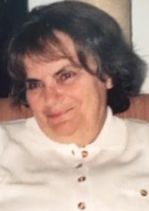
Hanna "Hansi" Engl was born in Colonia, near Vienna, the younger of two girls. Her parents, Oskar Engl and Gertrud née Kohn, were of eastern European Jewish descent. In 1934 economic conditions led her father to move the family hat-making firm to London. In 1939, a year after the "Anschluss" of Austria to Nazi Germany, the rest of the family followed him into emigration.
In London Hansi Engl worked from 1941 to 1945 at the Hampstead War Nurseries, a residential care home for children made homeless by the war, founded by Anna Freud and Dorothy Burlingham. From 1942 on, she studied psychology at King's College, then at Birkbeck College, and graduated in psychology in 1945. After the end of the war, Kate Friedländer invited her in 1947 to work as a child therapist in her Child Guidance Clinic in Chichester, West Sussex, where she stayed for four years. During this time she received her training as a "psychoanalytical child expert" at the Hampstead Child Therapy Course founded by Anna Freud in 1947. Her training analyst was Dorothy Burlingham. In 1949 Hansi Engl married the merchant Gerhard Helmut Kahn, who as a soldier took the name Gerald Kennedy. With him, she had two sons, born 1952 and 1955.
From 1952 Hansi Kennedy worked as psychoanalytical child therapist in her own practice and in the Hampstead Child Therapy Clinic founded by Anna Freud that same year. Along with Anna Freud, she was the Co-Director of the Hampstead Child Therapy Course and Clinic from 1978 onwards. When Anna Freud died in 1982, the name of the centre was changed to the Anna Freud Centre, co-directed by Hansi Kennedy and Clifford Yorke until 1987. Kennedy then held the position of the Centre's First Child Therapist until she retired in 1993. She was an editorial advisor for The Bulletin of the Hampstead Clinic, later The Bulletin of the Anna Freud Centre, from 1978 to 1993, and on the editorial board of the Psychoanalytic Study of the Child from 1984 to 2002.
Hansi Kennedy was especially interested in the developmental fate of memory, its inevitable distortion over time by fantasy and repression, and its reconstruction in child analysis. Her experience in theory and practice led her to understand the relative capacities of a child's insight at various stages of development and to perfect the child analytic technique. (Top of the article)
- SELECTED WORKS
- Cover memories in formation. Psa Study Child 5, 1950, 275-284
- Problems in the reconstruction in child analysis. Psa Study Child 26, 1972, 386-404
- Pseudobackwardness in children. Maternal attitudes as an etiological factor. Psa Study Child, 30, 1975, 279-306
- The role of insight in child analysis. A developmental viewpoint. JAPA 27, 1979, 9-28
- Dorothy Burlingham (1891-1979). Psa Quart 49, 1980, 508-511
- Anna Freud (1895-1982). Psa Quart 52, 1983, 501-506
- The 'baby at the breast' experience: Memory or fantasy? Some further thoughts on reconstruction. Bul Anna Freud Centre 7, 1984, 15-24
- For or against child placement. A clinical illustration. Bul Anna Freud Centre 8, 1985, 245-252
- Growing up with a handicapped sibling. Psa Study Child 40, 1985, 255-274
- Trauma in childhood. Signs and sequelae as seen in the analysis of an adolescent. Psa Study Child 41, 1986, 209-219
- The technique of psychoanalysis with the pre-latency child (1988). In R. L. Tyson (Hg.): Analysis of the Under-Five Child. New Haven 2001 [Die Technik der psychoanalytischen Behandlung von Kindern in der Prälatenz. Analytische Kinder- und Jugendlichen-Psychotherapie 44 (4), 2013, 561-577]
- Children in conflict: Anna Freud and the War Nurseries (1995). Psa Study Child, 64, 2009, 306-319
- Memories of Anna Freud. American Imago 53 (3), 1996, 205-208
- The Psychoanalytic Work of Hansi Kennedy. From War Nurseries to the Anna Freud Centre (1940-1993). Ed. by J. M. Miller and C. Neely. London 2008
- (mit Clifford Yorke und Stanley Wiseberg) Some clinical and theoretical aspects of two developmental lines. In S. I. Greenson und H. Pollock (Hg.): The Course of Life. Adelphi, MD 1981, 619-637
- (with Joseph Sandler and Robert L. Tyson) The Technique of Child Psychoanalysis. Discussions with Anna Freud. Cambridge, Mass. 1980 [Kinderanalyse. Gespräche mit Anna Freud. Frankfurt/M. 1982]
- (and Clifford Yorke) Steps from outer to inner conflict viewed as superego precursors. Psa Sudy Child 37, 1982, 221-228
- (and Mary Target) Psychoanalytic work with the under-fives. Forty years' experience. Bul Anna Freud Centre 14, 1991, 5-29
- (and George Moran) Reflections on the aims of child psychoanalysis. Psa Study Child 46, 1991, 181-198
- REFERENCES
- Burlingham, Michael John: The Last Tiffany. A Biography of Dorothy Tiffany Burlingham. New York 1989
- Essenhigh, Caroline: Hansi Kennedy and Clifford Yorke. J Child Psychother 21 (3) 1995, 347-359
- Kennedy, Hansi: Memories of Anna Freud. American Imago 53 (3), 1996, 205-209
- Ludwig-Körner, Christiane: Und sie fanden eine Heimat. Leben und Wirken der Mitarbeiterinnen von Anna Freud in den Kriegskinderheimen. Stuttgart 2022
- Malberg, Norka T., and Joan Raphael-Leff (eds): The Anna Freud Tradition: Lines of Development - Evolution and Theory and Practice over the Decades. London 2012
- Miller, Jill M., and Carla Neely: The making of a child analyst. In: The Psychoanalytic Work of Hansi Kennedy. From War Nurseries to the Anna Freud Centre (1940-1993). London 2008, xix-xxix
- PHOTO: With kind permission of Christiane Ludwig-Körner
Pearl King (1918-2015)
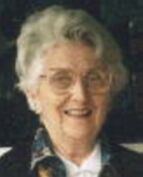
Born in East Croydon, Surrey, Pearl Helen Mellows King spent her childhood with her missionary parents, Louise und Stanley King, in Tanganyika (East Africa), before returning to England for her schooling. From 1937 to 1941 she studied psychology at Bedford College, University of London, with sociology as a subsidiary subject, and subsequently qualified as a social and industrial psychologist.
She received her psychoanalytic training from 1946 to 1950 at the Institute of Psycho-Analysis in London. Her training analyst was the Kleinian John Rickman, who left the Kleinian group while she was in analysis with him. She was supervised by Marion Milner, Michael Balint and Donald Winnicott. During her training she did research in social and industrial psychology at the Tavistock Institute of Human Relations. After Rickman's death in 1951 she went into further analysis with Marion Milner.
In 1951 she became an associate member and in 1954 a full member of the British Psychoanalytical Society, where she joined the Middle Group of the independents. In 1955 she was appointed as a training analyst. Pearl King held numerous offices within the BPAS and was the first non-medical president of the society between 1982 and 1984. Also she played a significant role internationally in the organisational life of psychoanalysis, amongst others as Honorary Secretary of the IPA from 1957 to 1961 and of the EPF from 1953 to 1967.
Besides her interest in the psychoanalysis of the elderly, a main focus of Pearl King's work lay on the history of psychoanalysis. From 1984 to 1994 she was Honorary Archivist of the BPAS and initiated a computerised search program concerning the history of psychoanalysis in Britain. She published a book (in collaboration with Riccardo Steiner) on the famous controversy between Melanie Klein and Anna Freud during the 1940s.
In 1992, along with Hanna Segal, she was awarded the Sigourney Prize for outstanding contributions to psychoanalysis. (Top of the article)
- SELECTED WORKS
- Change. The psychoanalysis of a four-year-old boy and its follow-up (1951). In Time Present and Time Past, 2005, 15-40
- The therapist-patient relationship. J Anal Psychol 18, 1973, 1-8
- Affective response of the analyst to the patient's communications. IJP 59, 1978, 329-334
- The contribution of Ernest Jones to the British Psycho-Analytical Society. IJP 60, 1979, 280-284
- The life cycle as indicated by the nature of the transference in the psychoanalysis of the middle-aged and elderly. IJP 61, 1980, 153-160
- The education of a psycho-analyst. The British experience. Bulletin of the British Psycho-Analytical Society 2, 1981, 93-107
- Identity crisis. Splits and compromises, adaptive or maladaptive. In E. D. Joseph and D. Widlöcher (eds): The Identity of the Psychoanalyst. New York 1983, 181-194
- The life and work of Melanie Klein in the British Psycho-Analytical Society. IJP 64, 1983, 251-260
- Early divergences between the psychoanalytic societies in London and Vienna. In E. Timms and N. Segal (eds): Freud in Exile. Psychoanalysis and its Vicissitudes. 1988, 124-133
- Activities of British psychoanalysts during the Second World War and the influence of their interdisciplinary collaboration on the development of psychoanalyis in Great Britain. Int Rev Psycho-Anal 16, 1989, 15-33
- (ed.) No Ordinary Psychoanalyst. The Exceptional Contributions of John Rickman. London, New York 2003
- Time Present and Time Past. Selected Papers of Pearl King. London 2005
- (and Riccardo Steiner) (eds) The Freud-Klein Controversies in the British Psycho-Analytical Society 1941-45. London, New York 1990 [Die Freud/Klein-Kontroversen 1941-1945, Bd. 1 und 2. Stuttgart 2000]
- REFERENCES
- Robinson, Ken: Introduction to Pearl King and her work. In Time Present and Time Past. Selected Papers of Pearl King. London 2005, 1-12
- Robinson, Ken: Pearl King obituary. The Guardian, 5 February 2015 (2015-02-26)
- Steiner, Riccardo, and Jennifer Johns (eds): Within Time and Beyond Time. A Festschrift for Pearl King. London 2001
- Stekelman, Sharon: Pearl King. IPA Newsletter 8 (2), 1999
- PHOTO: Archives of the British Psychoanalytical Society
Melanie Klein née Reizes (1882-1960)
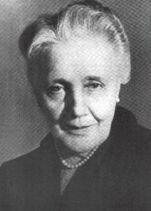
Melanie Klein played a significant role in the history of psychoanalysis, as the founder of her own school focussing on pre-oedipal development and the early object relations. She was born as the youngest of four children into a Jewish family in Vienna. Her father, Moriz Reizes, was a general practitioner from Galicia. Melanie Reizes had an ambivalent relationship to her dominant mother, Libussa née Deutsch, but she was very close to her only brother Emanuel, who died at an early age in 1902.
Contrary to her first wish for a medical training, she enrolled to study history and art at the University of Vienna. However, when she was 21 she married Arthur Klein, a chemical engineer. She moved with him to Rosenheim, where their children Melitta (1904) and Hans (1907) came into the world. Their youngest son, Ernst (1914), was born in Budapest, where the family settled in 1909.
Chronically depressive, Melanie Klein went c. 1914 into analysis with Sándor Ferenczi, who encouraged her to dedicate herself to child analysis, which was still in its infancy at that time. Her first probands were her own children. After presenting her paper Der Familienroman in statu nascendi [The development of a child] - which based on the psychoanalytic observation of her son Erich - she became a member of the Hungarian Psychoanalytical Society in 1919.
After separating from her husband, Melanie Klein went to Berlin in 1921. Three years later she began a training analysis with Karl Abraham. In 1923 she was accepted as a member of the Berliner Psychoanalytischen Vereinigung and established a psychoanalytic practice in Berlin. At that period, inspired by Hermine Hug-Hellmuth, she developed her technique of play analysis, substituting free verbal association with the actions of children at play.
After Karl Abraham's death, her situation in Berlin became untenable because of hostility in particular from Franz Alexander and Sándor Radó. Through Alix Strachey she received an invitation from Ernest Jones to come to London, where she settled in 1926. She became a member of the British Psychoanalytical Society (BPAS) in 1927, and a training analyst in 1929. In contrast to Vienna and Berlin her work was greatly appreciated in England. Joan Riviere, Susan Isaacs and John Rickman belonged to her followers, as later on also did Paula Heimann, Hanna Segal, Herbert Rosenfeld, Donald W. Winnicott and Wilfred Ruprecht Bion. However, there was also an anti-Kleinian opposition in the BPAS, initially consisting of Edward Glover and Melanie Klein's daughter Melitta Schmideberg and then strengthened by the "Viennese group" of Anna Freud, who fled to London from Nazi persecution in 1938.
The opposition between Melanie Klein and Anna Freud dated from 1927, when Melanie Klein, at the London Symposium on Child Analysis, attacked Anna Freud, who had criticised Klein's views in her book Einführung in die Technik der Kinderanalyse. They disagreed especially on the origin of the super-ego, which superseded, according to Sigmund and Anna Freud, the Oedipus complex. The archaic and harsh Kleinian super-ego, however, occurred out of early experiences of loss and had its origin in the infant's sadistic impulses, not in the identification with the parents. Melanie Klein described an inner world of early childhood largely independent of the outer world and populated by phantasmatic "good" and "bad" (partial) objects, originating from instinctual conflicts and interacting by the processes of projection and introjection with real objects. Referring to Sigmund Freud's theory of the death instinct, Melanie Klein stated, that these internal objects, finally, were manifestations of an innate conflicting drive structure. For Klein, the motor of the psychic development was fear as a response to destructive impulses, which were derivatives of the death instinct.
Melanie Klein demonstrated the basic ideas of her theory in her main work The Psycho-Analysis of Children, published in 1932. In her essays A contribution to the psychogenesis of manic-depressive states (1935), Mourning and its relation to manic-depressive states (1940) and Notes on some schizoid mechanism (1946), she completed her theory with the important concepts of the paranoid-schizoid and the depressive position, which took into account the conflict of simultaneous feelings of love and hate. The characteristics of these positions were mechanisms of splitting, projective identification and reparation.
The decisive debate between Kleinians and Anna Freudians, the so-called Controversial Discussions, took place in the midst of World War II and led to the official establishment of three groups within the BPAS: the Kleinians (A-Group), Freudians (B-Group) and the Middle Group, later called the Independent Group.
After the end of the war, Melanie Klein withdrew from the BPAS and concentrated on her activity as a training and supervising analyst. In 1955 she initiated the foundation of the Melanie Klein Trust. In her last major contribution Envy and Gratitude (1957), she described envy as an innate destructive drive, which was particularly important for the child's development.
Melanie Klein died in 1960 - unreconciled with her daughter Melitta - subsequent to a successful operation for colon cancer, of complications resulting from a broken hip. (Top of the article)
- SELECTED WORKS
- Der Familienroman in statu nascendi. IZP 6, 1920, 151-155 [The Development of a Child. IJP 4, 1923, 419-474]
- Zur Frühanalyse. Imago 9, 1923, 222-259
- Symposium on child analysis. IJP 8, 1927 [Symposium über die Kinderanalyse. In Klein 1981]
- Infantile anxiety situations reflected in the creative impulse. IJP 10, 1929 [Frühe Angstsituationen im Spiegel künstlerischer Darstellungen. IZP 17, 1931, 497-506]
- The psychotherapy of the psychoses. Brit J med Psychol 10, 1930
- Die Bedeutung der Symbolbildung für die Ichentwicklung. IZP 16, 1930, 57-72
- The Psycho-Analysis of Children. London 1932 [Die Psychoanalyse des Kindes. Wien 1971]
- A contribution to the psychogenesis of manic-depressive states. IJP 16, 1935 [Zur Psychogenese der manisch-depressiven Zustände. IZP 23, 1937, 275-305]
- Love, guilt, and reparation. In Klein/Riviere 1937 [Liebe, Schuldgefühl und Wiedergutmachung. In Klein/Riviere 1974]
- Mourning and its relation to manic-depressive states. IJP 21, 1940 [Die Trauer und ihre Beziehung zu manisch-depressiven Zuständen. In Klein 1962]
- The oedipis complex in the light of early anxieties. IJP 26, 1945 [Der Ödipuskomplex unter dem Aspekt früher Angstsituationen. In Klein 1985]
- Notes on some schizoid mechanism. IJP 27, 1946 [Bemerkungen über einige schizoide Mechanismen. In Klein 1962]
- Contributions to Psycho-Analysis, 1921-45. London 1948
- A contribution to the theory of anxiety and guilt. IJP 29, 1948 [Zur Theorie von Angst und Schuldgefühl. Psyche 14, 1960]
- The psycho-analytic play technique. Its history and significance. In Klein et al. (eds) 1955 [Die psychoanalytische Spieltechnik: ihre Geschichte und Bedeutung. Psyche 12, 1959]
- Envy and Gratitude. London 1957
- A note on depression in the schizophrenic. IJP 40, 1960
- Narrative of a Child Analysis. London 1961 [Der Fall Richard. München 1975]
- Das Seelenleben des Kleinkindes und andere Beiträge zur Psychoanalyse. Stuttgart 1962
- The Writings of Melanie Klein, Vol. I-IV. London 1975 [Gesammelte Schriften von Melanie Klein, Bd. I-IV. Stuttgart-Bad Cannstatt 1995-2002]
- Ein Kind entwickelt sich. Methode und Technik der Kinderanalyse. München 1981
- Frühstadien des Ödipuskomplexes. Frühe Schriften 1928-1945. Frankfurt/M. 1985
- (and Joan Riviere) Love, Hate, and Reparation. London 1937 [Seelische Urkonflikte. Liebe, Haß und Schuldgefühl. München 1974]
- (with P. Heimann, S. Isaacs and J. Riviere) Developments in Psycho-Analysis. London 1952
- (with P. Heimann and R. E. Money-Kyrle) (eds) New Directions in Psycho-Analysis. The Significance of Infant Conflict in the Pattern of Adult Behaviour. London 1955
- REFERENCES
- Amos, Anne: Melanie Klein. British Institute of Psychoanalysis 2015 (2017-07-21)
- Frank, Claudia: Melanie Klein (1882-1960). "Weibliches Genie" oder "Antigenie"? In M. Conci und W. Mertens (Hg.): Psychoanalyse im 20. Jahrhundert. Freuds Nachfolger und ihr Beitrag zur modernen Psychoanalyse. Stuttgart 2016
- Gast, Lilli: Melanie Klein: Die Psychoanalyse des Kindes. In S. Volkmann-Raue and H. E. Lück (eds): Bedeutende Psychologinnen. Weinheim 2002, 31-44
- Grosskurth, Phyllis: Melanie Klein. Her World and Her Work. New York 1986 [Melanie Klein. Ihre Welt und ihr Werk. Stuttgart 1993]
- Hinshelwood, Robert D.: Klein-Reizes, Melanie. In Dictionnaire international de la psychanalyse (2002). Ed. by Alain de Mijolla. Paris 2005, 936-938 [International Dictionary of Psychoanalysis. Detroit u. a. 2005, 914-916]
- King, Pearl: The life and work of Melanie Klein in the British Psycho-Analytical Society. IJP 64, 1983, 251-260
- King, Pearl, and Riccardo Steiner (eds): The Freud-Klein Controversies 1941-45. London, New York 1991 [Die Freud/Klein-Kontroversen 1941-1945. 2 Bde. Stuttgart 2000]
- Kristeva, Julia: Melanie Klein (2000). New York 2001
- Luzifer-Amor 17, 1996: Melanie Klein
- Melanie Klein Trust (2021-12-06)
- Phillips, John, and Lindsay Stonebridge (eds): Reading Melanie Klein. London 1998
- Quinodoz, Jean-Michel: Melanie Klein's letters addressed to Marcelle Spira (1955-1960). IJP 90 (6), 2009, 1393-1418
- Riesenberg, Ruth: Das Werk von Melanie Klein. In D. Eicke (ed.): Die Psychologie des 20. Jahrhunderts III: Freud und die Folgen (2). Zürich 1977, 210-249
- Rothländer, Christiane: Melanie Klein. PADD (2014-01-22 - no more existing)
- Roudinesco, Elisabeth, and Michel Plon: Wörterbuch der Psychoanalyse (1997). Wien, New York 2004
- Rustin, Margaret and Michael: Reading Klein. London 2016
- Segal, Hanna: Melanie Klein. Eine Einführung in ihr Werk (1954). München 1974
- Spillius, Elisabeth Bott (ed.): Melanie Klein heute, Bd. 1: Beiträge zur Theorie; Bd. 2: Anwendungen. München u.a. 1990; 1991
- Stephan, Inge: Die Gründerinnen der Psychoanalyse. Stuttgart 1992
- Wikipedia (2012-02-13)
- Young-Bruehl, Elisabeth: Anna Freud. A Biography. London 1989
- PHOTO: Courtesy of the Melanie Klein Trust, London
Barbara Lantos née Ripper (1896-1962)
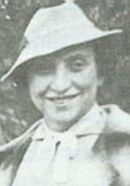
Barbara Lantos, born Borbála Ripper in Budapest, studied medicine at the University of Budapest and graduated as a doctor in 1918. While studying she frequented student circles such as the left-wing intellectual Galilei Circle, with which Therese Benedek, Edith Gyömröi and Lilly Hajdu were also associated. Her first husband was the communist medical student Albert Lantos (1892-1943), who fled to the USSR after the collapse of the Hungarian Soviet Republic in 1919.
Barbara Lantos started an analysis with Sándor Ferenczi in Budapest, before she emigrated via Vienna to Leipzig. There she underwent a training analysis with Therese Benedek and continued it with Hanns Sachs in Berlin. In 1927 she became an associate member, and in 1929 a full member of the Deutsche Psychoanalytische Vereinigung, where she belonged to the circle of Marxist analysts around Otto Fenichel and Wilhelm Reich.
In 1933, after Hitler came to power, Barbara Lantos emigrated first to Paris, where her son was born in 1934. In 1935 she followed her friend Käthe Misch to London and became a member of the British Psychoanalytical Society. They both rejected the ideas of Melanie Klein and in the Freud-Klein Controversies they supported Anna Freud, who had come to London in 1938. Barbara Lantos was appointed as a training analyst and lecturer at the Hampstead Child Therapy Course, founded by Anna Freud after the end of the war. From 1953 onwards, Lantos represented the Anna Freudian Group in the training committee of the BPAS. As the scientific secretary of the BPAS, she later took a more independent position.
Based on the theory of ego-psychology, Barbara Lantos wrote essays about the nature of work, which were still influencing later discussions. Herbert Marcuse judged her paper Work and the instincts (1943) as the most far-reaching attempt at that time to answer the question of the drive structure of work. Lantos saw work as a highly integrated ego activity serving self-preservation instincts, in contrast to play, which is gratifying in itself and determined by pregenital impulses.
Later married to the Hungarian dentist Sándor Rakos, Barbara Lantos died from cancer at the age of 66. (Top of the article)
- SELECTED WORKS
- Analyse einer Konversionshysterie im Klimakterium. IZP 15 (1), 1929, 114-130
- Work and the instincts. IJP 24, 1943, 114-119
- Metapsychological considerations on the concept of work. IJP 33, 1952, 439-443
- On the motivation of human relationships. A preliminary study based on the concept of sublimation. IJP 36, 1955, 267-288
- Julia Mannheim 1895-1955. IJP 37, 1956, 197-198
- The two genetic derivations of aggression with reference to sublimation and neutralization. IJP 39, 1958, 116-120 [Die zwei genetischen Ursprünge der Aggression und ihre Beziehungen zu Sublimierung und Neutralisierung. Psyche 12 (3), 1958, 161-169]
- The theory of the parent-infant relationship. IJP 43, 1962, 249
- Kate Friedländer 1903-1949. In Franz Alexander et al. (eds): Psychoanalytic Pioneers. New York 1966, 508-518
- REFERENCES
- Ammon, Günter: Arbeit, Gruppe und Gesellschaft. Dynamische Psychiatrie 76, 1982, 268-285
- Borgos, Anna: Holnaplányok. Nők a pszichoanalízis budapesti iskolájában. Budapest 2018
- Borgos, Anna: Women in the Budapest School of Psychoanalysis. Girls of Tomorrow. London 2021
- Delany, Paul: Bill Brandt. A Life. London 2004
- Haager, Jutta: Kate Friedländer (1902-1949). Leben und Werk. Med. Diss. Köln 1986
- IZP 13 (3), 1927, 367 + 15 (2-3), 1929, 368
- Jacoby, Russel: Die Verdrängung der Psychoanalyse oder Der Triumph des Konformismus. Frankfurt/M. 1990
- King, Pearl, and Riccardo Steiner (eds): The Freud-Klein Controversies 1941-45. London, New York 1991 [Die Freud/Klein-Kontroversen 1941-1945. 2 Bde. Stuttgart 2000]
- Marcuse, Herbert: Triebstruktur und Gesellschaft. Frankfurt/M. 1967
- Mühlleitner, Elke: Ich - Fenichel. Wien 2008
- Obituary Barbara Lantos. Br Med J, October 6, 1962, 931-932
- Peters, Uwe H.: Psychiatrie im Exil. Düsseldorf 1992
- Rátkai, Árpád: Ido en Hungario. (2012-02-14)
- PHOTO: Sammlung Hanna Pitkin. With kind permission of Hanna Pitkin
Eglé Laufer née Vajda (1925-2021)
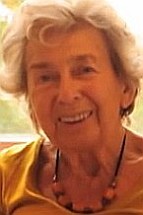
Marie Eglé Laufer was born in Vienna to Sigrid, an Austrian child psychiatrist, and Imre Vajda, a Hungarian economist. Her parents divorced in the early 1930s, and when her mother married Edwin Pribram, an Austrian aircraft engineer, she moved to London at the age of seven with her new family.
Eglé Laufer graduated in mathematics and physics at King's College, London. In 1947 she had married Sigurd Zienau (1921–1976), a theoretical physicist, with whom she had a son. She then decided to become a psychoanalyst and trained in the 1950s at the London Institute of Psychoanalysis. Her training analyst was a member of the Anna Freudian Group. In 1959 she became a member and later a training analyst of the British Psychoanalytical Society.
In 1960 she divorced Zienau and married the Canadian psychoanalyst Moses (Moe) Laufer (1928-2006) in 1965. Moe Laufer's main focus was on treating disturbed and delinquent adolescents. As a result of working with pregnant girls and women, Eglé Laufer was especially interested in female sexual development, before she became involved with Moses Laufer and adolescent psychopathologies. In 1967, together with her husband and others, she was a co-founder of the Brent Adolescent Centre in London, an institution for the analytic treatment of adolescents and research into adolescent disturbances.
Eglé and Moses Laufer were pioneers of adolescent psychoanalysis. They base their Adolescent Exploratory Therapy on Sigmund Freud's proclamation that the pubertal processes give sexual identity its final shape, which they describe as a compromise between what is wished and what can be allowed. In this context, the central masturbation fantasy plays an important role, it contains the various regressive satisfactions and the main sexual identifications. An adolescent breakdown takes place when the regressive elements in the central masturbation fantasy are too powerful and cannot be integrated with the reality of the changing sexual body. The unconscious rejection of the sexual body becomes manifest in symptoms like suicide attempts, self-mutilations, anorexia, and psychotic disorders. (Top of the article)
- SELECTED WORKS
- The adolescent's use of the body in object relationships and in the transference. A comparison of borderline and narcissistic modes of functioning. Psa Study Child, 36, 1981, 163-180
- Female masturbation in adolescence and the development of the relationship to the body. IJP 63, 1982, 295-302
- The female oedipus complex and the relationship to the body. Psa Study Child 41, 1986, 259-276
- Suicide in adolescence. Psychoanal Psychother 3 (1), 1987, 1-10
- Body image, sexuality and the psychotic core. IJP 72, 1994, 63-71
- Formulation of interpretation. From truth to experience. IJP 75, 1994, 1093-1105
- The role of passivity in the relationship to the body during adolescence. Psa Study Child 51, 1996, 348-364
- Die Angst, in der Adoleszenz verrückt zu werden. WPV-Bulletin Nr. 8, 1997
- Gender identity and reality. In S. Budd and R. Rusbridger (eds): Introducing Psychoanalysis. Essential Themes and Topics. London; New York 2005, 129-141
- Now and then. Psychoanal Inq 29 (3), 2009, 277-287
- (und Moses Laufer) Adolescence and Developmental Breakdown. A Psychoanalytic View. New Haven 1984 [Adolescence et rupture du développement. Une perspective psychoanalytique. Paris 1989; Adoleszenz und Entwicklungskrise. Stuttgart 1989]
- REFERENCES
- British Institute of Psychoanalysis: Encounters through Generations: Eglé Laufer (2024-08-08)
- Bronstein, Catalina: Marie Eglé Laufer (1925–2021). IJP 103 (2), 2022, 388-394
- Bull Int Psycho-Anal Assn 40, 1959, 382
- Flanders, Sara: Eglé Laufer. British Institute of Psychoanalysis 2015 (2017-11-13)
- Flanders, Sara: Moses Laufer. British Institute of Psychoanalysis 2015 (2017-11-14)
- Frankel, Richard: The Adolescent Psyche. Jungian and Winnicottian Perspectives. London; New York 1998
- Laufer, Eglé: Now and then. Psychoanal Inq 29 (3), 2009, 277-287
- Moguillansky, Carlos, and Nora Rubinstein: Entrevista a Eglé Laufer. Psicoanálisis 23 (2), 2001, 431-441
- Sauma, Maxim de: Eglé Laufer obituary. The Guardian, 15 Mar 2022 (2022-05-18)
- Sauma, Maxim de: Moses Laufer. The Guardian, 15 November 2006 (2017-11-13)
- Wikipedia: Moses Laufer + Sigurd Zienau (2022-05-19)
- PHOTO: Still from British Psychoanalytical Society: Egle Laufer Clip (13.11.2017)
Hilde Lewinsky (1907-1956)
Hildegard Lewinsky was born in Berlin-Charlottenburg as the youngest daughter of Wilhelm and Margarete Boehm, née Ettinger. In 1926, she married Alfred Olschki (1896-1955); they divorced in 1933. Following Hitler’s rise to power, she fled Germany, emigrating first to Paris and then to Manchester, where in 1934 she married the Jewish dentist Werner Lewinsky (1904-1952). Lewinsky, a friend of her Berlin days, had also emigrated to England and anglicized his name to Lindley. The marriage lasted only five years.
Hilde Lewinsky studied psychology at the University of Manchester, where she obtained her master’s degree in 1941. She received her psychoanalytic training at the Manchester Training Centre, a branch of the British Psychoanalytical Society (BPAS) founded by Michael Balint and Alfred Gross in 1940. This attempt to establish psychoanalytic training in Manchester, however, was short-lived. Hilde Lewinsky became a member of the BPAS in 1944 and a training analyst in 1945. She was for ten years in practice as a psychoanalyst in Manchester and did work at various child guidance clinics in the North-west. In 1951, she left England and emigrated to the United States. She established a psychoanalytic practice in New York and became a member of the American Psychoanalytic Association.
Her publications dealt with topics such as shyness, obsession, homosexuality, masochism, and pathological generosity. In her famous paper On some aspects of masochism, she centralized the narcissistic satisfactions gained through masochism, which had the significance of a proof of what one can endure. Her last paper The closed circle, read at the IPA Congress at Geneva in 1955, dealt with the fantasy of a closed circuit of oral and genital exchange between mother and child (“perpetuum mobile”).
Suffering from chronic post-scarlatinal arthritis, Hilde Lewinsky died at the early age of 48. (Top of the article)
- SELECTED WORKS
- The nature of shyness. British Journal of Psychology 32, 1941, 105-113
- Boredom. British Journal of Educational Psychology 13, 1943, 147-152
- Occupation and obsession. Brit J Med Psychol 19, 1943 (3/4), 388-393
- On some aspects of masochism. IJP 25, 1944, 150-155
- Notes on two special features in a homosexual patient. IJP 30, 1949, 56
- Pathological generosity. IJP 32, 1951, 185-189
- Features from a case of homosexuality. Psa Quart 21, 1952, 344-354
- The closed circle. An early image of sexual intercourse. IJP 37, 1956, 290-297
- REFERENCES
- Bulletin of the IPA 39, 1958, 282
- Gostynski, E.: Obituary Hilde Lewinsky. IJP 38, 1957, 277
- Manchester Medical Collection (2023-11-10)
- MyHeritage (2026-08-24)
- Rathbone, June: Anatomy of masochism. New York 2001
- Simon, Frederick Arthur Jack, und Anna-Isabel Fuss: Hilde Lewinsky – Leben und Werk (1907–1956). Luzifer-Amor 77, 2026, 143-156
- Willoughby, Roger: Between the basic fault and second skin. IJP 85, 2004, 179-195
- Zamet, John: German and Austrian Refugee Dentists. The Response of the British Authorities 1933-1945. Phil. Diss. Oxford Brookes University 2007 (2021-01-06)
Margaret I. Little (1901-1994)
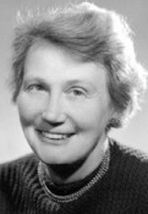
Margaret Isabel Little was born in Bedford as the second of five children. Her father was a maths teacher, her mother was musical and artistic, but also chaotic and controlling. Margaret Little read medicine and completed her clinical training at St. Mary's Hospital in 1927. From 1928 to 1939 she worked as a general practitioner in Edgware in West London. During this time she had been a clinical assistant at the Tavistock Clinic (1936 to 1939), where she trained as a psychotherapist.
Due to personal problems Margaret Little undertook her first analysis from 1936 to 1938 with a Jungian analyst she called "Dr. X". From 1940 to 1947 she went into analysis with Ella Sharpe, who became her training analyst. She was elected as an associate member of the British Psychoanalytical Society (BPAS) in 1945 and a full member the following year. Dr. X and Ella Sharpe failed to realize the psychotic character of Margaret Little's anxieties, so she began a further analysis with Donald W. Winnicott. In her book Psychotic Anxieties and Containment she gave an account of this successful analysis, lasting from 1949 to 1955, and resuming in 1957. Margaret Little became a training analyst of the BPAS in 1949 and joined, like Winnicott, the Independent Group.
Margeret Little is particularly known for her contributions on counter-transference. In her article Countertransference and the patient's response to it (1951) she went beyond Paula Heimann's view of counter-transference as a signal for the analyst and stated, that counter-transference is of the same importance as transference: Patients often noticed unconsciously the analyst's counter-transference and if the analyst took no account of his counter-transference then they also would not believe in transference.
In 1980 Margaret Little withdrew from professional life. Besides her work as a psychoanalyst she was a painter and poet. An anthology of her essays and poems was published in 1981 under the title Transference Neurosis and Transference Psychosis. Toward Basic Unity. (Top of the article)
- SELECTED WORKS
- Countertransference and the patient's response to it. IJP 32, 1951, 32-40
- "R" - the analyst's total response to his patient's needs. IJP 38, 1957, 240-254
- On delusional transference. IJP 39, 1958, 134-138 [Über wahnhafte Übertragung (Übertragungspsychose). Psyche 12, 1958, 231-248]
- Countertransference symposium. Brit J Med Psychol 33, 1960, 29-31
- On basic unity. IJP 41, 1960, 377-384
- Transference in borderline states. IJP 47, 1966, 476-485
- Winnicott working in areas where psychotic anxieties prevail. A personal record. Free Associations No. 3, 1985, 9-42
- Transference Neurosis and Transference Psychosis. Toward Basic Unity. New York u.a. 1981
- On the value of regression to dependence. Free Associations No. 10, 1987, 7-22 [Über die Bedeutung der Regression auf Abhängigkeit. Psyche 45, 1991, 914-930]
- Psychotic Anxieties and Containment. A Personal Record of an Analysis with Winnicott. Northvale, N. J., 1990 [Die Analyse psychotischer Ängste. Zwei unorthodoxe Fallgeschichten. Stuttgart 1994]
- Miss Alice M and Her Dragon. Recovery of a Hidden Talent. London 1990 [Miss Alice M. und ihr Drache. In Little 1994, 99-154]
- REFERENCES
- Boyle Spelman, Margaret: The Evolution of Winnicott's Thinking. Examining the Growth of Psychoanalytic Thought over Three Generations. London 2013
- Grosskurth, Phyllis: Melanie Klein. New York 1986; Stuttgart 1993
- Langs, R.: Editor's note to Margaret Little's "Counter-transference and the patient's response to it". In R. Langs (ed.): Classics in Psychoanalytic Technique. New York, London 1981
- Layland, Ralph W.: Obituary: Margaret Little (1901-1994). Bulletin of the British Psychoanalytical Society, 1995 (3) (2017-02-21)
- Lehmann, Jean-Pierre: Marion Milner et Margaret Little. Actualité de leur travail avec des psychotiques. Toulouse 2008
- Young, Robert M.: The analytic space. Countertransference and evocative knowledge. In R. M. Young: Mental Space. New York 1994
- PHOTO: des femmes (2015-02-26)
Constance Long (1867-1923)
Constance Ellen Long was a pioneer in the early history of psychoanalysis in Great Britain. She was born in Reading to the linen draper John Long und Sarah Ann Colebrook and grew up as one of seven siblings. She was an art teacher in South Kensington before she studied at the London School of Medicine for Women, graduating in 1896. Subsequently she worked, among others, as resident medical officer at an orphanage in Hawkhurst, Kent, and set up her own practice as a general practitioner in London.
Constance Long, whose psychotherapic practice was focused on hypnotism and dream analysis, was a member of the Psycho-Medical Society (formerly the Medical Society fo the Study of Suggestive Therapeutics) and the Society for Psychical Research, which had the purpose of understanding parapsychological phenomena. In 1913 Long was one of the founding members of the London Psycho-Analytical Society initiated by Ernest Jones. In the same year - together with Jessie Murray and Julia Turner - she participated in founding the Medico-Psychological Clinic, later known as the Brunswick Square Clinic.
In 1913/1914 she underwent analysis with C. G. Jung in Zurich, whose theories she regarded as an extension of classical psychoanalysis. Even after the break between Jung and Freud, she continued participating in the meetings of the London Psycho-Analytical Society - to the annoyance of Ernest Jones, who dissolved the London Society and reformed it as the British Psycho-Analytical Society in 1919, expelling the Jungians. Constance Long pioneered in propagating the theories of Jung in Great Britain, especially by editing a volume of Jung's works entitled Collected Papers on Analytical Psychology (1916).
In 1919 she attended the International Conference of Women's Physicians in New York and planned, along with her friend Beatrice Hinkle and other Jungians, to establish the first Jung Club in the United States. However, she became seriously ill and returned to England after the conference. She did not participate in founding the C. G. Jung Club in London in 1922, because she went to the U.S. that year, where she died a year later. Apparently, she was no longer directed by Jung's ideas, after she had become an adherent of the Russian mystic Peter D. Ouspensky in 1921. (Top of the article)
- SELECTED WRITINGS
- Introduction to the study of psycho-analysis. In Ch. L. Tuckey (ed.): Treatment by Hypnotism and Suggestion or Psycho-Therapeutics. London 1913 (6th edition), 353-377
- Collected Papers on the Psychology of Phantasy. London 1920
- A psycho-analytic study of the basis of character. Proceedings of the International Conference of Women Physicians 4, 1920, 67-82
- Psychoanalysis. Encyclopaedia and Dictionary of Education, Vol. 3. London 1923, 1356-1357
- Mary Rose. A study of the infantile personality. British Journal of Psychology 2 (1), 68-80
- REFERENCES
- Eder, M. D.: Review of C. Lloyd Tuckey, M. D. Treatment by Hypnotism and Suggestion. (6th Edition. London, Baillière, Tindall and Cox.). IZP, 2 (2), 1914, 178-179
- England and Wales Birth Registration Index, 1837-2008 (FamilySearch 2024-08-09)
- Fischer, Anton M.: Sigmund Freuds erstes Land. Eine Kulturgeschichte der Psychotherapie in der Schweiz. Gießen 2013
- Kuhn, Philip: Psychoanalysis in Britain, 1893-1913. Histories and Historiography. Lanham u. a. 2017
- MyHeritage (2024-08-09)
- Noll, Richard: The Aryan Christ. The Sectret Life of Carl Gustav Jung. New York 1977
- Raitt, Suzan: Early British Psychoanalysis and the Medico-Psychological Clinic. History Workshop Journal 58 (1), 2004, 63-85
- Sherry, Jay: Beatrice Hinkle and the early history of Jungian psychology in New York. Behavioral Sciences 3 (3), 2013, 492-500
- Valentine, Elizabeth R.: "A brilliant and many-sided personality". Jessie Margaret Murray, founder of the Medico-Psychological Clinic. J Hist Behav Sci 45 (2), 2009, 145-161
- Wonersh Families (2023-11-13)
Barbara Low (1874-1955)
Barbara Low was born Alice Leonora Loewe in 1874* in London. She was the youngest of eleven children in a Jewish family. Her father Maximilian Loewe was a participant in the Hungarian revolution of 1848 and had fled to England after its failure. Her mother Therese Schacherl was the daughter of an Austrian rabbi. Barbara Low attended Mary Buss' Camden School for Girls and then went on to University College London. After qualifying as a teacher at the Maria Grey Training College, she taught for several years in girls' schools and in a boys' school. From 1913 to 1915* she lectured in education, literature, and history at the London County Council Training College for Teachers at Fulham. She was a member of the Labour Party and the left-wing intellectual Fabian Society.
Barbara Low was introduced to psychoanalysis by David Eder, her sister Edith's husband, who was a co-founder of the London Psycho-Analytic Society in 1913. In 1919 she was the only female founding member of the British Psycho-Analytical Society. She was in analysis with Hanns Sachs in Berlin and had training analysis with Ernest Jones in London. D. H. Lawrence, a friend of hers, whom she had introduced into psychoanalysis, gave her the manuscript of Sea and Sardinia, which enabled her to pay for her training analysis.
Impressed by the psychoanalytic polyclinic in Berlin, Barbara Low urged the setting up in London of a similar organisation for the free treatment of patients without means, which opened in 1926. Like Susan Isaacs and Nina Searl she was especially interested in the application of psychoanalysis to education and published a number of papers on this subject in the International Journal of Psychoanalysis. She rejected the ideas of Melanie Klein on child psychoanalysis and during the Freud-Klein Controversies she was a staunch supporter of Anna Freud, whose Einführung in die Psychoanalyse für Pädagogen she translated into English.
In 1920 Barbara Low's book Psycho-Analysis. A Brief Account of the Freudian Theory was published. In this introduction for a wider public she conceived the term "Nirvana-principle", which Sigmund Freud acknowledged and used in Beyond the Pleasure Principle. This meant for Low the desire to return into an ante-natal stage of omnipotence, where no non-fulfilled desires exist - in Freud's words: the effect to reduce, to keep constant or to remove internal tension due to stimuli.
In addition to her activities at the Psychoanalytic Institute, which Barbara Low served as its librarian for several years, she was a co-director of Imago Publishing Company and a lecturer and therapist at the Institute for the Study and Treatment of Delinquency. During her last years she retired from public life and lived with her older sister Florence, who also remained unmarried, in Hampstead Garden Suburb. (Top of the article)
- * For this information I thank Dr Julie Greer from the University of Southampton.
- SELECTED WORKS
- Psycho-Analysis. A Brief Account of the Freudian Theory. London, New York 1920
- A revived sensation-memory. IJP 1, 1920, 271-272
- Sanity in sex. IJP 2, 1921, 458-462
- Education and mental health. National Health 18, 1926
- The psychology of the free child. IJP 7, 1926, 115-116
- An interesting invented "portemanteau" word. IJP 8, 1927, 73-74
- The Unconscious in Action. Its Influence Upon Freudian Theory. London 1928
- A note on the influence of psychoanalysis upon english education during the last 18 years. IJP 10, 1929, 314-320
- The psychological compensation of the analyst. IJP 16, 1935, 1-8
- REFERENCES
- Franklin, Marjorie: Obituary Barbara Low. IJP 37, 1956, 473f
- Greer, Julie Anne: Learning from linked lives: Narrativising the individual and group biographies of the guests at the 25th Jubilee dinner of the British Psychoanalytical Society at The Savoy, London, on 8th March 1939. Phil. Diss. University of Southampton 2014 (2017-07-24)
- Grosskurth, Phyllis: Melanie Klein. Her World and Her Work. New York 1986
- Jewish Virtual Library (2016-03-14)
- King, Pearl, and Riccardo Steiner (eds): The Freud-Klein Controversies 1941-45. London, New York 1991 [Die Freud/Klein-Kontroversen 1941-1945. 2 Bde. Stuttgart 2000]
- Yorke, Clifford: Low, Barbara. In Dictionnaire international de la psychanalyse (2002). Ed. by Alain de Mijolla. Paris 2005, 994 [International Dictionary of Psychoanalysis. Detroit u. a. 2005, 996-997]
- PHOTO in Tim N. Gidal and Volker Friedrich: Die Freudianer. Auf dem 13. Internationalen Psychoanalytischen Kongreß 1934 in Luzern. München; Wien 1990, Fig. 115
Julia Mannheim née Láng (1893-1955)
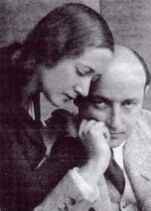
© Archiv für die Geschichte
der Soziologie in Österreich
Julia Mannheim was born Károlyne Júlia (Juliska) Láng in Budapest. From 1911 to 1916 she studied languages, philosophy and psychology (with Géza Révész) at the Eötvös Loránd University and graduated as a doctor in psychology in 1919. She became an Assistant Lecturer at the University of Budapest and worked with Géza Révész at his laboratory for experimental psychology.
Like Edith Gyömröi she joined the "Sonntagskreis", a left-wing literary-philosophical circle, and in 1917 she became a member of the Hungarian Philosophical Society. In the "Sonntagskreis" she met her future husband, Karl Mannheim (1893-1947). He lectured in philosophy at the Humanistic University of Budapest until he emigrated in 1919 to Germany after the suppression of the Hungarian Soviet Republic. In 1920 Júlia Láng followed him into German exile, where they married a year later at Heidelberg. Karl Mannheim was an Assistant Lecturer in sociology at the University of Heidelberg, before he was called to the Chair of Sociology and Economics at Frankfurt University in 1930.
Julia Mannheim was introduced to the practical application of psychoanalysis during her work at a Child Guidance Clinic in Heidelberg, directed by August Homburger, a pioneer in child psychiatry, who was interested in the ideas of Sigmund Freud. At the beginning of the 1930s she started psychoanalytic training in Frankfurt am Main, but had to interrupt it, when Karl Mannheim was dismissed in 1933 because of his Jewish origins.
Julia and Karl Mannheim emigrated via Holland to England. In London Julia Mannheim continued her psychoanalytic training and became a member of the British Psychoanalytical Society in 1944. In addition to her private practice as a psychoanalyst and her teaching activity in Anna Freud's Child-Therapy Course, she devoted herself after her husband's death to the editing of his writings. Her promising membership paper on the case of a female drug addict was destined to be her only analytical publication, when she died at the age of 60. (Top of the article)
- SELECTED WORKS
- Notes on a case of drug addiction. IJP 36, 1955, 166-173
- REFERENCES
- 50 Klassiker der Soziologie: Biografie Karl Mannheim. Archiv für die Geschichte der Soziologie in Österreich (2023-11-10)
- Borgos, Anna: Holnaplányok. Nők a pszichoanalízis budapesti iskolájában. Budapest 2018
- Borgos, Anna: Women in the Budapest School of Psychoanalysis. Girls of Tomorrow. London 2021
- Harmat, Paul: Freud, Ferenczi und die ungarische Psychoanalyse. Tübingen 1988
- Lantos, Barbara: Julia Mannheim 1895-1955. IJP 38, 1956, 197f
- Mészáros, Judit: Ferenczi and Beyond. Exile of the Budapest School and Solidarity in the Psychoanalytic Movement During the Nazi Years. London 2014
- Wikipedia (2015-10-13)
- PHOTO: Courtesy of the Archiv für die Geschichte der Soziologie in Österreich, Graz (2023-11-10)
Isabel Menzies Lyth (1917-2008)
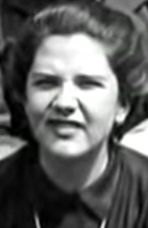
Isabel Menzies Lyth, a British psychoanalyst in the tradition of Melanie Klein and Wilfred R. Bion, was a pioneer of the psychoanalytic study of organisations. She was born in Dysart, Fife, in Scotland, the fourth child of the minister Hugh Menzies and the only daughter with his second wife Sarah Curran Ness. She attended Madras College in St Andrews and studied psychology and economics at St Andrews University. Graduating in 1939, she became a lecturer there from 1939 to 1945.
During the war she became involved with the group around Wilfred R. Bion studying social dynamics in officer training at the War Office Selection Board (WOBS) and in the relationships of prisoners of war at Civil Resettlement Headquarters of the British Army. In 1946, she was the only woman in the group of psychiatrists and psychologists - among them Bion, Eric Trist and John Bowlby - who founded the Tavistock Institute of Human Relations (TIHR). She underwent training analysis with Bion and qualified as a psychoanalyst in 1954. In 1960 she became a training analyst of the British Psychoanalytical Society and in 1957 she qualified as a child analyst.
Beside her private practice as a psychoanalyst, she acted as consultant to a number of institutions and carried out many research studies with the TIHR until 1975, most significantly in the context of healthcare. She worked, inter alia, with the nursery nurses at the Royal National Orthopaedic Hospital in Stanmore, in order to improve the situation of children being treated as inpatients for a long period of time. In 1975 she married the psychoanalyst Oliver Lyth (1908-1981) and moved to Oxford.
In her most famous paper, first published in 1959, The functioning of social systems as a defense against anxiety, drawing on her experiences working with nurses at the London King's College Hospital, Isabel Menzies was able to analyse the dynamics of certain social systems. She maintained, that the nurses' unconscious defense against anxiety connected with their task lead to detachment and depersonalisation of their relations to the patients. This was reinforced institutionally by a rigid hierarchy of roles and tasks, uniforms etc.. According to Menzies, social structures such as these are dominated by defense mechanisms, which have been described by Melanie Klein as the paranoid-schizoid defenses. (Top of the article)
- SELECTED WORKS
- The functioning of social systems as a defense against anxiety. A report on a study of the nursing service of a general hospital. Human Relations 13, 1959, 95-121; London 1970
- Social systems as a defence against anxiety. An empirical study of the nursing service of a general hospital. Human Relations 13, 1960, 95-121; shortened version (2014-11-12)
- A personal review of group experiences (1969). In Menzies Lyth 1989, 1-18
- Staff support systems. Task and anti-task in adolescent institutions in therapeutic communities. In R. D. Hinshelwood and N. P. Manning (eds): Therapeutic Communities. London 1979, 197-207
- Thoughts on the maternal role in contemporary society. J Child Psychother 4, 1975, 5-14
- Action research in a long-stay hospital (1987). In Menzies Lyth 1988, 130-207
- Containing Anxiety in Institutions. Selected Essays, vol. 1. London 1988
- The Dynamics of the Social. Selected Essays, vol. 2. London 1989
- Eine psychoanalytische Betrachtung sozialer Institutionen. In E. Bott Spillius (ed.): Melanie Klein heute, Bd 2: Anwendungen. Stuttgart 1995, 379-400
- REFERENCES
- Barnett, Lynn: Isabel Menzies Lyth. Psychoanalyst and social scientist. The Independent, 4 February 2008
- Dartington, Tim: Isabel Menzies Lyth. Tavistock Institute social sciences pioneer with brilliant psychological insight. The Guardian, 20 February 2008 (2009-11-05)
- Fraher, Amy: Interview mit Isabel Menzies Lyth. ISPSO, 19 July 2008 (2014-11-12)
- Kraemer, Sebastian: Anxiety at the front line. In D. Armstrong und M. Rustin (Hg.): Social Defences against Anxiety. Explorations in a Paradigm. London 2015 + pdf (2024-11-22)
- Lawlor, David: Isabel Menzies Lyth. Melanie Klein Trust 2016 (2019-07-16)
- Obituary: Isabel Menzies Lyth. Psychoanalyst and social scientist. The Scotsman, 23 January 2008
- Pecotic, Branka: The life of Isabel Menzies Lyth. Organisational and Social Dynamics 2 (1), 2002, 2ff
- Menzies Lyth, Isabel: Reflections on my work. Isabel Menzies-Lyth in conservation with Ann Scott and Robert M. Young. In Menzies Lyth 1988, 1-42
- Sharpe, Charles: Some observations on the life and work of Isabel Menzies-Lyth. The Therapeutic Care Journal, 1st April 2021 (2023-10-25)
- Whitwell, John: The experience of external consultancy in a therapeutic community for children. Therapeutic Communities 19 (3), 1998, 201-210; s. a. The Times, 26 February 2008 (2017-12-11)
- Wikipedia (2023-09-01)
- Young, Robert M.: The psychodynamics of institutions (2003). Psychoanalysis and Psychotherapy (2019-07-16)
- PHOTO: Detail from "Summer 1943, 25th War Office Selection Board staff" (Beulah Trist)
Merrell Middlemore (1898-1938)
Merrell [Merell, Merrill] Philippa Middlemore was born in Warwickshire, England, the youngest of eight daughters (one younger brother) of John Throgmorton Middlemore and his second wife Mary Middlemore née Price. Her father was a Member of Parliament and the manager of the Children's Emigration Homes in Birmingham. Merrell Middlemore studied medicine and qualified in 1923 at the London School of Medicine. She was a member of the British Psychoanalytical Society and an adherent of Melanie Klein. Trained as an obstetrician, she was in the 1930s one of the few analysts whose knowledge was based on the empiric observation of infants during the first two years of life.
In the 1930s Merrell Middlemore wrote numerous book reviews in the International Journal of Psychoanalysis. In her posthumously published book The Nursing Couple, dealing with the feeding responses of infants in the first days of life, she showed how varied and complex even the earliest responses of the new-born were, and how intimately the experiences of being handled and suckled influenced the succeeding phases of feeling and later fantasy. Middlemore stressed, that in connection with the different habits of sucking, rudimentary psychic processes arose, which were within a few months organised so as to become fantasy.
Merrell Middlemore died suddenly of cardiac failure at the age of forty. (Top of the article)
- SELECTED WORKS
- The treatment of bewitchment in a puritan community. IJP 15, 1934, 41-58
- The uses of sensuality. In J. Rickman et al.: On the Bringing up of Children. London 1936, 57-85
- The Nursing Couple. London 1941
- (with John Rickman, Susan Isaacs, Melanie Klein, Nina Searl and Ella F. Sharpe) On the Bringing up of Children. London 1936
- REFERENCES
- Geni (2014-04-07)
- Hall, Lesley A. (Hg.): Outspoken Women. An Anthology of Women's Writing on Sex, 1870-1969. London; New York 2005
- Jones, Ernest: Obituary Dr. Merrell Middlemore. IJP 20, 1939, 115
- King, Pearl, and Riccardo Steiner (eds): The Freud-Klein Controversies 1941-45. London, New York 1991 [Die Freud/Klein-Kontroversen 1941-1945. 2 Bde. Stuttgart 2000]
Marion Milner née Blackett (1900-1998)
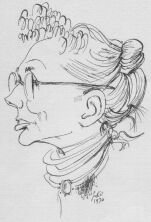
Nina Marion Blackett was born in London as the youngest of three children. Her father Arthur Blackett worked as a stockbroker on the London Stock Exchange until 1917, her mother Caroline Maynard was an enthusiastic painter. Her brother Patrick Blackett won the Nobel Prize for Physics in 1948. After first starting as a Montessori teacher, Marion Blackett studied psychology and physiology at University College London. She graduated as a psychologist in 1923 and subsequently worked under Cyril Burt at the National Institute of Industrial Psychology. In 1927 she went on a fellowship to Boston and attended the seminars of the industrial psychologist Elton Mayo, who was then working on his famous Hawthorne Experiments.
The same year she married Dennis Milner (1892-1954), inventor, amateur economist, play writer, and also well-known for his call for a minimum income for all citizens. Their son John was born in 1932. They divorced in 1943.
Introduced to psychoanalytic ideas by her brother Patrick, Marion Milner went into analysis with Irma Putnam in Boston, at that time a Jungian. After her return to England in 1929, she worked as a psychologist for the Girls' Public Day Schools Trust from 1933 until war broke out in 1939. She did research on "difficult" pupils' problems, published in her book The Human Problem in Schools in 1938, and gave psychology lectures for the Workers Education Association. In 1934 (under the pseudonym of "Joanna Field") her autobiographical book A Life of One's Own, the first and best known of her journal based books, was published.
In 1940 Marion Milner began a training analysis with Sylvia Payne and trained as an analyst for children and adults at the London Psychoanalytic Institute. One of her patients was Melanie Klein's 11-year-old grandson Michael, whose case she described in her paper Aspects of symbolism in comprehension of the not-self. In 1943 she became a member of the British Psychoanalytical Society, where she joined the Independent Group. She undertook further analysis with Donald W. Winnicott and at the same time she began analysing a schizophrenic young woman, "Susan", a foster daughter of Winnicott's wife Alice. Milner described the treatment of Susan from 1943 to 1959 in her book The Hands of the Living God. She continued her own analysis in 1949 with Clifford Scott.
Marion Milner was especially interested in the mechanisms of symbolisation. Inspired by Melanie Klein's thesis of symbolism as the basis of all sublimation, she arrived at the formulation that creativity lay in the capacity for making a symbol - not only in the service of defense (Ernest Jones) or reparation (Melanie Klein), but of making something new. Artistic activity, she concluded, repeats the illusion of inner-outer fusion and omnipotence experienced in the mother-child-relation, but in a conscious way.
Milner, who made use of painting and doodling in her therapy and was an enthusiastic painter herself, argued in her famous book On Not Being Able to Paint, that inhibitions to create are based on the fear of regression to an undifferentiated state in which the boundaries between self and object become blurred. She highlighted the fusion of inner and outer experience as a major precondition for psychological health and was one of the few to combine psychoanalysis with mysticism.
Marion Milner was a member of the Imago Society, founded in 1954 to explore the extension of psychoanalysis to art and other non-clinical matters. Since the late 1970s she was an Honorary President of the British Association of Art Therapists. (Top of the article)
- SELECTED WORKS
- (Joanna Field) A Life of One's Own. London 1934
- (Joanna Field) An Experiment in Leisure. London 1937
- The Human Problem in Schools. Ed. by Susan Isaacs. London 1938
- Some aspects of phantasy in relation to general psychology. IJP 26, 1945, 143-152
- On Not Being Able to Paint. London 1950; London; New York 2010 [Zeichnen und Malen ohne Scheu. Ein Weg zur kreativen Befreiung. Köln 1988]
- Aspects of symbolism in comprehension of the not-self. IJP 33, 1952, 181-195
- The role of illusion in symbol formation. In Melanie Klein et al.: New Directions in Psycho-Analysis. London 1955
- The Hands of the Living God. An Account of a Psycho-Analytic Treatment. London; New York 1969; London 1988
- The Suppressed Madness of Sane Men. Forty-Four Years of Exploring Psychoanalysis. London; New York 1987
- Eternity's Sunrise. A Way of Keeping a Diary. London 1987
- Bothered by Alligators. London 2012
- REFERENCES
- Alberto, Stefana: Die Rolle der ästhetischen Erfahrung im künstlerischen Schaffensprozess nach Marion Milner. Psyche 72 (1), 2018, 50-71
- Archives of the BPAS (2017-02-21)
- Benedetto, Paolo di: La creatività nella stanza d'analisi. Marion Milner 1900-1998. Bologna 2003
- Brearley, Michael: Obituary: Marion Milner. Independent, 10 June 1998 (2009-11-13)
- Lehmann, Jean-Pierre: Marion Milner et Margaret Little. Actualité de leur travail avec des psychotiques. Toulouse 2008
- Letley, Emma: Marion Milner. The Life. London; New York 2014
- Raab, Kelley A.: Creativity and transcendence in the work of Marion Milner. American Imago 57, 2000, 185-214
- Rabain, Didier: Milner-Blackett. Marion. In Dictionnaire international de la psychanalyse (2002). Ed. by Alain de Mijolla. Paris 2005, 1063f [International Dictionary of Psychoanalysis. Detroit u. a. 2005, 190-191]
- Parsons, Michael: Marion Milner 1900-1998. IJP 82, 2001, 609-611
- Sayers, Janet: Marion Milner, mysticism and psychoanalysis. IJP 83, 2002, 105-120
- Stefana, Alberto: Die Rolle der ästhetischen Erfahrung im künstlerischen Schaffensprozess nach Marion Milner. Psyche 72 (1), 2018, 50-71
- Turner, John F.: A brief history of illusion. Milner, Winnicott and Rycroft. IJP 83, 2002, 10631082
- Wikipedia (2021-10-11)
- FIG.: Olga Dormandi, Le Coq-Héron No. 14, 1971, 13; s. a. Alchetron (2021-01-07)
Juliet Mitchell (*1940)
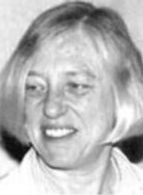
Juliet Mitchell was born in Christchurch, New Zealand, when her mother, a botanist, went there on a research project. In 1944 they returned to England and Juliet Mitchell went to the progressive co-educational King Alfred School in London until the age of seventeen. She attended St Anne's College in Oxford from 1958 to 1962 and was then a lecturer in English literature at the universities of Leeds (1962/63) and Reading (1965-1971). In 1962 she married Perry Anderson (*1938), the editor of The New Left Review. She was the only woman on the editorial board of The New Left Review at its inception in 1963 and played an active part in the British New Left. In the late 1960s she was one of the founding members of the Anti-University of London and worked with David Cooper, Ronald D. Laing and the anti-psychiatry movement.
Juliet Mitchell was the first Anglo-Saxon feminist who used psychoanalysis as a tool to liberate women. Struck by American feminists' attacks on Sigmund Freud's theories about sexuality, Mitchell became interested in psychoanalysis. As a response she published in 1974 her famous book Psychoanalysis and Feminism, in which she stressed, that psychoanalysis was no glorification of the patriarchal system, but its analysis. Anti-Freudian feminists would often ignore, that Freud - e. g. with regard to penis envy - spoke of unconscious mechanisms and not of what was conscious and "normal". In spite of some mistakes, Freud had delivered a theoretical instrument to help understand and to fight the oppression of women. Mitchell's conclusion from her implicitly Lacanian reading of Freud was, that he had much more to offer to the feminist movement than the apparently more radical approaches of Wilhelm Reich and Ronald D. Laing.
After publishing her main work, Mitchell began psychoanalytic training at the London Institute of Psychoanalysis in 1974. Her training analyst was Enid Balint. In 1978 she became an associate member and in 1988 a full member of the British Psychoanalytical Society, where she joined the Independent Group. From 1978 to 1996 she operated a psychoanalytic practice in London.
Juliet Mitchell is Professor Emeritus of Psychoanalysis and Gender Studies at the University of Cambridge and Emeritus Fellow of Jesus College, Cambridge. In addition she has been a visiting professor and lecturer at more than twenty universities. (Top of the article)
- SELECTED WORKS
- Frauenemanzipation: Antiautoritäres Mißverständnis oder Beitrag zur Konsolidierung der Arbeiterbewegung? München 1970
- Women's Estate. New York; Harmondsworth 1971 [Frauenbewegung, Frauenbefreiung. Frankfurt/M. 1981]
- Psychoanalysis and Feminism. Freud, Reich, Laing and Women. New York 1974 [Psychoanalyse und Feminismus. Freud, Reich, Laing und die Frauenbewegung. Frankfurt/M. 1976]
- Women - the Longest Revolution. Essays on Feminism, Literature and Psychoanalysis. New York 1984 [Frauen - die längste Revolution. Feminismus, Literatur, Psychoanalyse. Frankfurt/M. 1987]
- (ed.) The Selected Melanie Klein. Harmondsworth 1986
- Interview with Enid Balint. In E. Balint: Before I was I. Psychoanalysis and the Imagination. Ed. by Juliet Michell and Michael Parsons. London; New York 1993, 221-236
- Gender and sexual orientation in the age of Postmodernism. The plight of perplexed clinician. Gender & Psychoanalysis 1, 1996, 45-74
- Psychoanalysis and Feminism. A Radical Reassessment of Freudian Psychoanalysis. New York 2000
- Mad Men and Medusas. Reclaiming Hysteria and the Effect of Sibling Relations on the Human Condition. London; New York 2000
- Siblings. Sex and Violence. Cambridge 2003
- Fratriarchy. The Sibling Trauma and the Law of the Mother. London; New York 2023
- (and Ann Oakley) (eds) The Rights and Wrongs of Women. Harmondsworth 1976
- (and Jacqueline Rose) Feminine Sexuality. Jacques Lacan and the Ecole Freudienne. New York 1982
- (and Ann Oakley) (eds) What is Feminism? Oxford 1986
- (and Ann Oakley) (eds) Who's Afraid of Feminism? Seeing Through the Backlash. London 1997
- REFERENCES
- Baruch, Hoffman Elaine and Lucienne J. Serrano: Women Analyze Women, in France, England and the United States. New York; London 1988
- Boyle Spelman, Margaret: The Evolution of Winnicott's Thinking. Examining the Growth of Psychoanalytic Thought over Three Generations. London 2013
- Davies March, Rosemary: Juliet Mitchell. British Institute of Psychoanalysis 2016 (2017-07-21)
- Kurzweil, Edith: The Freudians. A Comparative Perspective. New Haven 1989
- Jesus College (2022-05-19)
- Singh, Sunit: Emancipation in the heart of darkness. An interview with Juliet Mitchell. The Playtypus Review 38, 2011 (2014-02-14)
- PHOTO: Cornell Chronicle 29 (26), 1998. With kind permission of Juliet Mitchell
Adele Mittwoch (1925-2011)
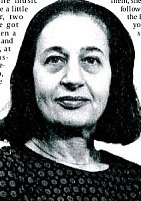
Adele Mittwoch, a British group analyst, was born into a German Jewish family in Berlin. She was one of three sisters. Her father Eugen Mittwoch was an eminent Orientalist and director of the Seminary for Oriental Languages in Berlin University. Her mother Hermine née Lipmann qualified in medicine but did not practise. In 1939 the family left Nazi Germany and emigrated to England.
Adele Mittwoch studied chemistry, physics and mathematics and obtained her master's degree in organic chemistry. She first worked in the food industry as a research chemist and subsequently as a member of the scientific staff of the Medical Research Council in London. In 1961 she began psychoanalytic training with the British Association of Psychotherapists. A decade later, she was in the first cohort to train as a group analyst at the Institute of Group Analysis (IGA) in London, which was founded in 1971.
Having become a member of the Group Analytic Society (GAS) and the British Association of Psychotherapists, Adele Mittwoch worked as a training analyst and supervisor at the IGA and the London Centre for Psychotherapy. Like Liesel Hearst she participated in the mid-1970s in establishing GRAS (Gruppenanalyseseminare) in Germany. As an associate member she worked for many years in the Group Analytic Practice, adept at working with difficult patients. She was treasurer of IGA and a member of the Institute's Ethics Committee. In addition she belonged to the editorial board of the journal Group Analysis. In 2001 Adele Mittwoch held the 25th Foulkes Lecture of GAS in London on the theme Our place in the world of science. What is at stake? (Top of the article)
- SELECTED WORKS
- From fantasy towards reality. Case history of a silent borderline patient in group analysis. Group Analysis 15 (1), 1982, 15-16
- Aspects of guilt and shame in psychotherapy. Group Analysis 20 (1), 1987, 33-42
- Getting better, staying well. Group Analysis 20 (4), 1987, 335-342
- Crowding, or the complexity of group relationships. Group Analysis 23, 1990, 325-327
- Sind Gruppen gutartig oder bösartig? Ein Blick in meine Vergangenheit. Gruppenanalyse 1 (1), 1991, 83-88
- The once weekly groups. In J. Roberts and M. Pines (eds): The Practice of Group Analysis. London 1991, 83-95
- The patient who "refuses" to change. An innovative approach. Group Analysis 24, 1991, 479-481
- Difficulties and conflicts. In M. Sharpe (ed.): The Third Eye. Supervision of Analytic Groups. London; New York 1995, 51-59
- Groups: Benign or malignant? A look into my past (1990). GASi Contexts 85, 2019 (2021-10-11) [Sind Gruppen gutartig oder bösartig? Ein Blick in meine Vergangenheit. Gruppenanalyse 1 (1), 1991, 83-88]
- Annäherung und Abstand. Eine Fallstudie aus der Gruppenanalyse. Gruppenanalyse 7 (2), 1997
- Our place in the world of science. What is at stake? Group Analysis 34 (4), 2001, 431-448 [Unser Platz in der wissenschaftlichen Welt. Was steht auf dem Spiel? Gruppenanalyse 11 (2), 2001
- REFERENCES
- Behr, Harold: A tribute to Adele Mittwoch. GASi Contexts 85, 2019 (2021-10-11)
- Deutsche Biographie: Eugen Mittwoch (2019-07-16)
- Mittwoch, Ursula: Adele Mittwoch. Jewish Chronicle, 13 May 2011 (2018-05-24)
- Pines, Malcolm: Obituary Adele Mittwoch (1926-2011). Group Analysis 44 (2), 2011, 243-244
- Roberts, Jeff, and Malcolm Pines: The Practice of Group Analysis. London 1991
- Wikipedia (2008-02-17 deleted for incomprehensible reasons)
- PHOTO: The Jewish Chronicle, 13 May 2011
Lois Munro (1907-1973)
The British psychoanalyst Lois Mary Munro was born in Birkenhead, Cheshire, the eldest daughter of Arthur Donald Munro and Annie Kirkpatrick neé Jones. Her father was a wood broker. Lois Munro studied medicine and obtained her medical qualifications in 1931 at the London School of Medicine for Women. In the 1930s she trained as a psychotherapist at the Tavistock Clinic and subsequently at the London Institute of Psychoanalysis, where she was analysed by the Kleinian Paula Heimann. She qualified as an associate member of the British Psychoanalytical Society in 1948, becoming a member in 1951. In 1955 Lois Munro was a co-founder of the Melanie Klein Trust. From 1960 to 1969, she served as the director of the London Clinic of Psychoanalysis, and in 1971 she was a founder member of the Royal College of Psychiatry. At the time of her death, she was the Hon. Treasurer of the European Psychoanalytical Federation.
Lois Munro was an "independent Kleinian" and highly esteemed for her intuition and empathy, but also for her talent as a storyteller. Elizabeth Bott Spillius underwent training analysis with her in the 1950s. One of her last analysands at the beginning of the 1970s was Clare Winnicott. She also advocated for psychoanalysis on an international level: In the 1950s, Lois Munro promoted psychoanalysis in Czechoslovakia by maintaining contact between the illegal psychoanalytic group in Prague and their Western colleagues. As a member of a Sponsoring Committee of the IPA she supported the formation of a psychoanalytic Study Group in Australia in the late 1960s. (Top of the article)
- SELECTED WORKS
- Analysis of a cartoon in a case of hypochondria. IJP 29, 1948, 53-57
- Clinical notes on internalization and identification. IJP 33, 1952, 132-143
- Steps in ego-integration observed in play analysis. IJP 35, 1954, 202-205 + in Melanie Klein et al. (eds): New Directions in Psycho-Analysis. London 1955, 109-139
- Contribution to Memorial Meeting for Joan Riviere of the British Psycho-Analytical Society, London, 3 October 1962. IJP 44, 1963, 233-235
- Comment on the paper by Alexander and Isaacs on the psychology of the fool. IJP 49, 1968, 424-425
- REFERENCES
- Dicks, Henry V.: Fifty Years of the Tavistock Clinic. London; New York 1970
- Heimann Paula: Obituary Lois Munro 1907-1973. IJP 56, 1975, 99-100
- MyHeritage (2025-02-21)
- Winnicott, Clare: A personal tribute: Dr Lois Munro. In Face to Face with Children. The Life and Work of Clare Winnicott. London 2004
Jessie Murray (1867-1920)
Jessie Margaret Murray was not a formally trained analyst, but as the co-founder and director of the Medico-Psychological Clinic she played an important role in the history of psychoanalysis in Britain. As the eldest of three sisters, she was born in Hazaribagh, northeast India, where her father, Hugh Murray, was serving as a lieutenant in the Royal Artillery. In 1880 the family returned to Britain. In 1900 Jessie Murray began to study at the London School of Medicine for Women, graduating MB, BS in 1909 at the University of Durham. Her bachelor's degree included studies in psychological medicine. After graduating, she attended lectures on clinical psychology given by Pierre Janet in Paris. Between 1908 and 1920, she also had three periods of studying psychology at University College London. She was awarded an MD by the University of Durham in 1919.
In 1913 Jesse Murray, her companion Julia Turner, and others founded the Medico-Psychological Clinic in London, later known as the Brunswick Square Clinic, which was lead by Murray until her death. The Medico-Psychological Clinic was the first public clinic in Britain to offer psychoanalytic therapy and training in psychoanalysis - to the wrath of Ernest Jones who saw the institution as a rival to his London Psycho-Analytical Society. In 1915 Jesse Murray established the first psychoanalytic training programme, a three-year course, which included undergoing a personal analysis. A number of famous British psychoanalysts, including Nina Searl, Susan Isaacs, Sylvia Payne, James Glover, Mary Chadwick and Ella Freeman Sharpe, received their first analysis or training there. The majority of the students were not medically qualified. Most of them had their analysis with Jessie Murray or Julia Turner.
Jessie Murray was also a member of the Society for Psychical Research, the British Society for the Study of Sex Psychology and the Women's Freedom League. She died prematurely of ovarian cancer. Two years after her death the heavily indebted Medico-Psychological Clinic was closed in 1922. (Top of the article)
- SELECTED WORKS
- Nervous Functional Diseases from the Point of View of Modern Clinical Psychology. Durham, Thesis (MD) 1919
- Introduction to Marie Charlotte Carmichael Stopes and Mrs. Humphrey Verdon Roe: Married Love, a New Contribution to the Solution of Sex Difficulties. London 1920
- (and Henry Noel Brailsford) The Treatment of the Women's Deputations by the Metropolitan Police. London 1911
- REFERENCES
- Alexander, Sally: Psychoanalysis in Britain in the early twentieth century. An introductory note. History Workshop Journal 45, 1998, 134-143
- Hinshelwood, Robert Dayles: The organizing of psychoanalysis in Britain. Psychoanalysis & History 1, 1999, 87-102
- Obituary Jessie Margaret Murray, M. D., B.S. Durham. British Medical Journal, Nov. 6, 1920, 723
- Raitt, Suzanne: Early British psychoanalysis and the Medico-Psychological Clinic. History Workshop Journal 58, 2004, 63-85
- Valentine, Elizabeth R.: "A brilliant and many-sided personality": Jessie Margaret Murray, founder of the Medico-Psychological Clinic. Journal of the History of the Behavioral Sciences 45 (2), 2009, 145-161
- Wikipedia (2018-10-17)
Edna Oakeshott née Yates (1904-1999)
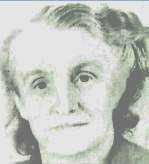
Edna Mary Yates was born in Didsbury, a suburb of Manchester. The daughter of Percy Yates, a seed merchant, and his wife Edith, née Wright, she had an elder brother, Frank Yates, who became an eminent statistician, and three younger sisters. In 1928 she married Lindley Henshaw (1893-1977), with whom she had three daughters.
In the early 1940s Edna Henshaw was appointed as an educational psychologist to the Mental Health Emergency Committee, to investigate and report on juvenile delinquency in State and Church schools in Bradford. She had a PhD and taught as an assistant in pedagogy at the University of Manchester. In 1941, she began psychoanalytic training at the newly founded Manchester Training Centre, underwent her training analysis with Michael Balint (1896-1970) and became a member of the British Psychoanalytical Society. She divorced her first husband and married Michael Balint in 1944. They moved to London, but the marriage deteriorated and after divorcing Balint in 1952, she married Stephen Oakeshott five years later.
Edna Oakeshott specialised in lecturing on the "Education of Maladjusted Children" at the Institute of Education, University of London, and was awarded the O.B.E. for her work in this field. A memoir of Edna Oakeshott was published by her daughter Joanna Rotberg in 2003. (Top of the article)
- SELECTED WORKS
- [Edna M. Henshaw] Report on juvenile delinquency. Bradford 1942
- Childhood in Autobiography. Cambridge 1960
- [Jocelyn Peters, Pseud.] Growing-up World. Children in Families. London 1966
- The Child under Stress. London 1973
- REFERENCES
- Hopkins, Philip: Balint, Michael Maurice (1896-1970). Oxford Dictionary of National Biography, vol. 3. Oxford, New York 2004, 550-553
- Moreau Ricaud, Michelle: Michael Balint: an introduction. Am J Psychoanal 62, 2002, 17-24
- Lewis, Joseph: The Ten Commandments. New York, N.Y. 1946
- Nat Gold Website (2021-01-07)
- Rotberg, Joanna Henshaw: Intrepid Woman, my Mother. A Memoir. Lexington, Mass. (private printing) 2003
- PHOTO from Joanna Henshaw Rotberg 2003
Edna O'Shaughnessy née Rutovitz (1924-2022)
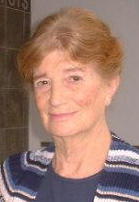
Edna O'Shaughnessy was born in South Africa as the older of two children of Philip and Minnie Rutovitz. Her parents’ families, both Jewish, had emigrated from Eastern Europe. Her father owned a soap factory in Johannesburg. Edna Rutovitz enrolled at the University of the
Witwatersrand in Johannesburg before moving to Great Britain in the early 1950s, along with her husband, the neurobiologist Harold (Harry Max) Daitz (1923-1952). She studied philosophy at Oxford University and subsequently taught this subject there. After her first husband died, she married in 1954 Brian O'Shaughnessy (1925-2010), an Australian philosopher. They had three children, Ben, Kathy and Rosalind.
Edna O'Shaughnessy moved to London, where she taught at Bedford College, London University, and joined the training in child psychotherapy at the Tavistock Clinic. Her cases were supervised by Esther Bick, Betty Joseph and Hanna Segal. She also attended seminars of Melanie Klein and Wilfred R. Bion. In 1954, she entered into analysis with Charles Anderson. He died two years into her analysis, and she then went to Roger Money-Kyrle. In the 1960s, she trained at the British Psycho-Analytical Society (BPAS), supervised by Herbert Rosenfeld and Hanna Segal, and became a training analyst for children and adults. She belonged to the Kleinian Group in the BPAS and was a co-editor of the Writings of Melanie Klein, published in 1975.
She taught in the Department of Child Development at the Institute of Education, London University, founded by Susan Isaacs. In addition she worked as a supervisor at the Fitzjohn’s Unit and the Child and Family Department in the Tavistock Clinic. Her theoretical and technical thinking was grounding in philosophy and logic and is characterised by epistemologically valid conceptualisation as well as by clinical immediacy. Influenced by Melanie Klein and Wilfred R. Bion, she concentrated on the exploration of unconscious phantasies, which she understood - in the sense of Klein respectively Isaacs - as the primary content of all psychic processes. For her the fundamental aim of psychoanalytic therapy was putting into words the phantasies emerging in the dynamic of transference and counter-transference. (Top of the article)
- SELECTED WORKS
- The absent object. J Child Psychother 1, 1964, 34-43
- The picture theory of meaning. In I. M. Copi and R. W. Beard (eds): Essays on Wittgenstein's Tractatus. London 1966, 115-131
- A clinical study of a defensive organization. IJP 62, 1981, 359-369 [Klinische Untersuchung einer Abwehrorganisation. In E. B. Spillius (ed.): Melanie Klein heute, Bd. 1. München u.a. 1990, 367-390]
- W. R. Bion's theory of thinking and new techniques in child analysis. J Child Psychother 7, 1981, 181-189 [W. R. Bions Theorie des Denkens und neue Techniken der Kinderanalyse. In Spillius (ed.) 1990, Bd. 1, 237-256]
- Words and working through. IJP 64, 1983, 281-289 [Durchsprechen und Durcharbeiten. In Spillius (ed.) 1990, Bd. 1, 186-204]
- A 3½-year-old boy's melancholic identification with an original object. IJP 67, 1986, 173-179 [Die melancholische Identifikation eines 3 1/2jährigen Knaben mit einem ursprünglichen Objekt. In O'Shaughnessy 1998, 44-59]
- Can a liar be psychoanalysed? IJP 71, 1990, 187-195 [Kann ein Lügner analysiert werden? In O'Shaughnessy 1998, 60-82]
- Psychosis: not thinking in a bizarre world. In R. Anderson (Hg.): Clinical Lectures on Klein and Bion. London 1992, 85-97
- Enclaves and excursions. IJP 73, 1992, 603-611
- What is a clinical fact?. IJP 75, 1994, 939-947
- Kann ein Lügner analysiert werden? Emotionale Erfahrungen und psychische Realität in Kinder- und Erwachsenenanalysen. Tübingen 1998
- Relating to the superego. IJP 80, 1999, 861-870 [Die Beziehung zum Über-Ich. Jb Psychoanal 41, 1999]
- A dream to dream. History Workshop Journal 49, 2000, 171-176
- Eine invasive projektive Identifizierung. Wie Patienten in Denken und Fühlen des Analytikers eindringen. Jb Psychoanal 46, 2003
- Whose Bion? IJP 86, 2005, 1523-1528
- Ein Blick zurück auf Heinrich Rackers „Ethik und Psychoanalyse und die Psychoanalyse der Ethik“. Jb Psychoanal 65, 2012, 145-155
- Inquiries in Psychoanalysis. Collected papers of Edna O'Shaughnessy. London 2014
- (with Ronald Britton and Michael Feldman) Oedipus Complex Today. Clinical Implications. London 1989 [Der Ödipuskomplex in der Schule Melanie Kleins. Stuttgart 1998
- REFERENCES
- British Institute of Psychoanalysis: Encounters Through Generations. DVD 2012 (Trailer) (2024-08-09)
- Find a Grave (2024-05-21)
- Klinckwort, Gisela: Erinnerung an Edna O´Shaughnessy. DPG (2022-05-20)
- McGinley, Eileen: Edna O'Shaughnessy. Melanie Klein Trust 2012 / 2022 (2022-05-20)
- Rusbridger, Richard: Obituary for Edna O’Shaughnessy. IJP 103 (3), 524-530
- Edna O'Shaughnessy in conversation with Jean Arundale. Brit J Psychother 20, 2003, 527-539
- Wikipedia: Edna O'Shaughnessy; Brian O'Shaughnessy (2024-05-21)
- PHOTO: Courtesy of the Melanie-Klein-Trust, London
Grace W. Pailthorpe (1883-1971)
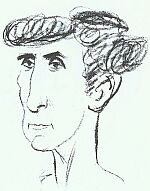
Grace Winifred Pailthorpe, a surrealist artist and a psychoanalyst, was born in Sutton, Surrey. She was the third of ten children of Edward Pailthorpe and Anne Lavinia née Green. Her mother was a seamstress and her father was a stockbroker. She studied medicine at the London School of Medicine and the University of Durham in Newcastle where she qualified as MB/BS in 1914. Subsequently she served in the French and British Red Cross during World War I.
After the war, she traveled abroad and practised between 1919 and 1921 in Australia and New Zealand. Back in England in 1922, Grace Pailthorpe began psychoanalytic training at the London Institute of Psychoanalysis. Between 1923 and 1930 she underwent training analysis with Ernest Jones, becoming an associate member of the British Psychoanalytical Society (BPAS) in 1923. In 1925 she graduated from the University of Durham and received her MD.
Grace Pailthorpe specialised in psychological medicine and became a pioneer of psychoanalytic criminology. In the 1920s she investigated the psychology of women in prisons and in preventive and rescue homes for five years. The results of her psychoanalytic study were published in her books Studies in the Psychology of Delinquency and What We Put in Prison and in Preventive and Rescue Homes. In 1931 Grace Pailthorpe initiated the Association for the Scientific Treatment of Criminals, from which emerged, with the assistance of Edward Glover and Kate Friedländer, the Institute for the Scientific Treatment of Delinquency. In 1933 the Institute established the Psychopathic Clinic, later renamed the Portman Clinic.
In 1935 Grace Pailthorpe met the artist Reuben Mednikoff (1906-1972), with whom she began her research into automatic drawing and painting as a therapeutic means. In her article The scientific aspect of surrealism she argued that the final goals of surrealism and psychoanalysis were the same: the liberation of the individual. Through surrealist techniques unconscious fantasies could be set free and subsequently reintegrated with the conscious. In 1936 she took part in the International Surrealist Exhibition in London, where her drawings were admired by André Breton.
Pailthorpe's work was greatly influenced by the ideas of Melanie Klein. In 1938 she produced a series of drawings and paintings, called the Birth Trauma Series, which emphasised the early relationship between the mother and child. That same year she gave a lecture on the „Birth Trauma Series" to the BPAS. In 1941 her paper Deflection of energy, as a result of birth trauma was published, in which she pleaded for greater attention to be paid to the trauma of birth in the analysis.
In 1940 Pailthorpe and Mednikoff left Britain for New York before moving to California, in 1940 and to Vancouver, Canada, in 1942. From 1942 to 1943 Pailthorpe worked at the Essondale Mental Health hospital in British Columbia and in 1944 she and Mednikoff had a joint exhibition at the Vancouver Art Gallery. In 1946 the couple returned to England. In the beginning of the 1950s, Grace Pailthorpe set up private practice as an analyst in London and established along with Mednikoff the first art therapy school in Dorking. In the 1960s they turned to Eastern mysticism. Grace Pailthorpe died of cancer at the age of 89. (Top of the article)
- SELECTED WORKS
- Studies in the Psychology of Delinquency. London 1932
- What we Put in Prison and in Preventive and Rescue Homes. London 1932
- The analysis of a poem. IJP 19, 1938, 221-225
- The scientific aspect of surrealism. London Bulletin 7, 1938/1939, 10-16
- Deflection of energy, as a result of birth trauma, and its bearing upon character formation. Psychoanal Rev 28, 1941, 305-326
- Primary processes of the infantile mind demonstrated through the analysis of a prose-poem. IJP 22, 1941, 44-59
- Grace Pailthorpe’s Writings on Psychoanalysis and Surrealism. Hg. von Alberto Stefana und Lee Ann Montanaro. London; New York 2023
- (and M. Hamblin Smith) Mental tests for delinquents, and mental conflict as a cause for delinquency. The Lancet, July 21, 1923
- REFERENCES
- Canadian Army Medical Corps (2015-10-15)
- Chadwick, Whitney: Women Artists and the Surrealist Movement. London 1985
- Lück, Helmut E., and Elke Mühlleitner (eds): Psychoanalytiker in der Karikatur. München 1993
- Maclagan, David: Between psychoanalysis and surrealism: Grace Pailthorpe and Reuben Mednikoff. Free Associations 3 (25), 1992, 33-50
- Montanaro, Lee Ann: The Collaboration of Grace Pailthorpe and Reuben Mednikoff. PhD, University of Edinburgh 2010 + pdf (2015-10-16)
- Rosemont, Penelope (ed.): Surrealist Women. An International Anthology. London 1998
- Tate Gallery London (2021-01-08)
- Walsh, Nigel, and Andrew Wilson (eds): Sluice Gates of the Mind. The Collaborative Work of Dr Grace W. Pailthorpe and Reuben Mednikoff. Leeds 1998
- Warren, Richard: Tag Archives: Grace Pailthorpe, June 1, 2014 (2015-10-15)
- The Tavistock and Portman NHS Foundation Trust: Grace Pailthorpe - the early years (2021-01-08)
- Wikipedia (2021-0108)
- FIG.: Olga Székely-Kovács (1924); Photo: Canadian Army Medical Corps (2015-10-15)
Sylvia Payne née Moore (1880-1976)
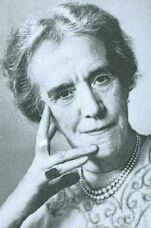
Sylvia May Payne was born in Wimbledon, Surrey, where she grew up as one of nine children of Reverend Edward William Moore and his wife Letitia. She went to Wimbledon High School and wanted to enter a musical college at the age of thirteen, but finally decided to become a physician. She attended Westfield College and studied medicine at the London School of Medicine for Women. In 1906 she graduated and subsequently worked as a house surgeon und assistant anesthetist at the Royal Free Hospital. In 1908 she married a surgeon, John Ernest Payne (1877-1956), with whom she had three sons: John, Kenneth and Anthony.
During World War I Sylvia Payne was Commandant and Medical Officer in charge of Torquay Red Cross Hospital. While working with shell-shocked patients, she first heard about the work of Sigmund Freud. After the war she started analysis in London with James Glover, and in 1920 she went to Berlin to have analysis with Hanns Sachs. Back in London she became an associate member of the British Psychoanalytical Society (BPAS) in 1922, and a member in 1924.
She established a psychoanalytic practice in Eastbourne, where her husband was working as a general practitioner. In 1926 she joined the staff of the London Clinic of Psycho-Analysis. In 1927 she was elected to the training committee of the BPAS; in 1929 she replaced John Rickman as Secretary of the Institute of Psychoanalysis, and she was elected Business Secretary of the BPAS.
In the controversies between Anna Freudians and Kleinians during the 1940s, Sylvia Payne took an independent role, although she sympathized with the ideas of Melanie Klein. In her article Some observations on the ego development of the fetishist, for instance, she based her discussion of fetishism centred on a Kleinian model of early ego development and internal objects. Payne moved the development of fetishism back from the stage of phallic castration anxiety to a much earlier stage of ego development, when part objects of the mother and father are introjected into the internal world of girls as well as boys.
During the Second World War, Ernest Jones, who left London, entrusted Sylvia Payne with the administration of the BPAS, when the Freud-Klein Controversies reached its height. She managed to broker an agreement between the Anna Freudians and Kleinians, and thanks to her efforts at mediation, the BPAS did not split after the war. Sylvia Payne served as president of the BPAS from 1944 to 1947 and again from 1954 to 1956. (Top of the article)
- SELECTED WORKS
- The myth of the barnacle goose. IJP 10, 1929, 218-227 [Der Mythos von der Bernikel-Gans. IZP 15, 1929, 319-328]
- A concept of femininity. Brit J Med Psychol 15, 1935, 18-33 [Zur Auffassung der Weiblichkeit. IZP 22, 1936, 19-39]
- Some observations on the ego development of the fetishist. IJP 20, 1939, 167-170
- Contribution in the discussion of the fundamentals of technique. In P. King and R. Steiner (eds): The Freud-Klein-Controversies 1941-1945. London 1943, 648-652
- The principles and methods of the training of child psycho-analysis. IJP 24, 1943, 61-63
- Notes on the theory of psycho-analytical therapy and its connection with the theory of technique. IJP 27, 1946, 12-19
- Ella Freeman Sharpe. An appreciation. IJP 28, 1947, 54-56
- Dr. John Rickman. IJP 33, 1952, 54-60
- Dr. Ernest Jones. IJP 39, 1958, 307-310
- The nonhuman environment in normal development and in schizophrenia. IJP 44, 1963, 236-238
- REFERENCES
- Archives of the British Psychoanalytical Society (2017-02-21)
- Grosskurth, Phyllis: Melanie Klein. New York 1986; Stuttgart 1993
- Hoffer, Willi: To Sylvia Payne on the occasion of her seventy-fifth birthday. IJP 36, 1955, 24
- King, Pearl: Payne, Sylvia May. In Dictionnaire international de la psychanalyse (2002). Ed. by A. de Mijolla. Paris 2005, 1250 [International Dictionary of Psychoanalysis. Detroit u. a. 2005, 1245-1246]
- Lück, Helmut E., and Elke Mühlleitner (eds): Psychoanalytiker in der Karikatur. München 1993
- Ogilvie, Marilyn B., and Joy D. Harvey (eds): The Biographical Dictionary of Women in Science, vol. 2. New York; London 2000
- Royal College of Surgeons of England (2021-01-11)
- Wikipedia (2014-03-17)
- PHOTO: The Archives of the British Psychoanalytical Society have granted me kind permission to reproduce this photograph.
Irma Brenman Pick née Lief (1934-2023)
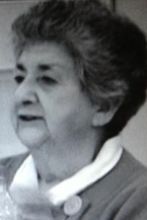
The Kleinian psychoanalyst Irma M. Brenman Pick was born Irma Marion Lief in Pretoria, South Africa, the third child of Jewish-Latvian emigrants. Her father Joseph Lief worked in a furniture factory. After his early death, her mother Min née Jacobs set up what became a successful secretarial college. Aged 17, Irma Lief began her study at the Social Science Faculty at the University of the Witwatersrand in Johannesburg where she graduated with distinction.
In 1955 she married Abe Pick (1925-1961), a medical practitioner. In the same year, the couple moved to London, where they undertook psychoanalytic training. Irma Pick trained as a child psychotherapist at the Tavistock Clinic from 1956 to 1960 and subsequently as an adult and child analyst at the British Psychoanalytical Society (BPAS). Her training analyst was the Kleinian Hans Thorner.
In 1960 her son Daniel was born, who later became also a psychoanalyst. The following year Abe Pick died at the age of only 35. In 1975 Irma Pick married her colleague, the British psychiatrist and psychoanalyst Eric Brenman (1920-2012).
Irma Brenman Pick is a training analyst and supervisor and was a president of the BPAS from 1997 to 2000. In addition she was a chairwoman of the International Psychoanalytical Association's Committee on Psychoanalytic Education. In her best-known paper Working through in the countertransference she stressed the necessity for the analyst to use his understanding of his own countertransference responses to the patient's projections in order to make effective interpretations. Every interpretation aims, according to Brenman Pick, at a move from the paranoid-schizoid to the depressive position, which is true not only for the patient, but for the analyst.
Irma Brenman Pick died of lung cancer at the age of 89. (Top of the article)
- SELECTED WORKS
- On stealing. J Child Psychother 2 (l), 1967, 67-79
- Breakdown in communication. On finding the child in the analysis of an adult. Psychoanal Psychother 1, 1985, 57-62
- Working through in the countertransference. IJP 66, 1985, 157-166
- Development of the concepts of transference and counter-transference. Psychoanal Psychother 1, 1985, 13-23
- Male sexuality. A clinical study of forces that impede development IJP 66, 1985, 415-422
- Adolescence. Its impact on patient and analyst. Int Rev Psycho-Anal 15, 1988, 187-194
- Analysing real issues in the analysand's life. Scand Psychoanal Rev 18, 1995, 131-145
- Concern. Spurious or real. IJP 76, 1995, 257-270
- Authenticity in the Psychoanalytic Encounter. The Work of Irma Brenman Pick. London 2018 [Authentizität in der psychoanalytischen Begegnung. Ausgewählte Schriften. Gießen 2021]
- REFERENCES
- Brearley, Michael: Irma Brenman Pick obituary. The Guardian, 11 Sep 2023 (2023-11-13)
- Bull Int Psycho-Anal Assn 48, 1967, 175
- Davids, Fakhry: Irma Brenman Pick. Melanie Klein Trust 2014; revised 2023 (2023-11-13)
- DPG: Nachruf auf Irma Brenman Pick (2023-11-13)
- Johannesburg Marriage Register 1955 (FamilySearch 2023-11-13)
- Melanie Klein Trust: Irma Brenman Pick on her 80th birthday. Institute of Psychoanalysis, June 2015. Video (2015-10-21)
- Obituary A. PICK, M.B., B.Ch., D.P.M. Br Med J, 58 JULY 1, 1961 (2014-11-13)
- Sandler, Joseph et al. (eds): Clinical and Observational Psychoanalytic Research. Roots of a Controversy. London; New York 2000
- Taylor, Anne: Eric Brenman. Psychoanalyst who emphasised the relationship with the patient. British Medical Journal 344 (7861), 2012, 37
- Wikipedia (2023-11-13)
- Young, Robert M.: The unconscious in the therapeutic process (2001). Psychoanalysis and Psychotherapy (2019-07-22)
- PHOTO: The Psychoanalytic Center of California 2014
Dinora Pines (1918-2002)
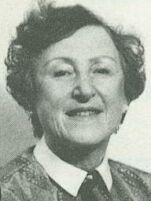
Dinora Pines was born in Lutsk (then in Russia) as the eldest of three children in a Jewish family. Her father Noe Pines was an ophthalmic surgeon, her mother Rebecca Jaschunsky had also studied medicine. Her brother Malcolm Pines, like her, became a psychoanalyst. During the Russian Civil War, the family moved to Antwerp, and from there in 1921 to London, where her father worked as a general practitioner. After graduating in modern languages at the University College London, Dinora Pines began in 1940 her medical training at the London School of Medicine for Women and qualified as a doctor in 1945. She then worked as a dermatologist at the Elizabeth Garrett Anderson Hospital for women in London, where she met Hilda Abraham and became interested in psychoanalysis.
In 1947 Dinora Pines married Anthony Lewison (?-1993), a lawyer, with whom she had two sons. While working as a general practitioner in London, she began psychoanalytic training with Anna Freud at the Hampstead Child Therapy Course and Clinic in 1959, qualifying in 1965. From then on she worked in a private psychoanalytic practice and as a training analyst and supervisor at the London Institute of Psychoanalysis. In addition she worked at the Brent Consultation Centre for Adolescents. In the BPAS she belonged to the Anna Freudian B-Group.
A number of Dinora Pines' papers dealt with the bodily experiences of women. She wrote on pregnancy, infertility, abortion etc. and discussed the ways in which bodily experiences can, if fuelled by deprivation, pain or fear, result in physical disorders. These articles are collected in her book A Woman's Unconscious Use of her Body, published in 1993. Another main theme of her writings was her work with women who had survived the Holocaust. Pines described their survival strategies and the effects of their experiences on their children. (Top of the article)
- SELECTED WORKS
- Pregnancy and motherhood. Interaction between fantasy and reality. Brit J Med Psychol 45, 1972, 333-343
- Hilda Abraham (1906-1971). IJP 53, 1972, 331
- Skin communication. Early skin disorders and their effect on transference and countertransference. IJP 61, 1980, 315-323
- The relevance of early psychic development to pregnancy and abortion. IJP 63, 1982, 311-319
- Early female development. IJP 65, 1984, 234-238
- Working with women survivors of the Holocaust. Affective experiences in transference and countertransference. IJP 67, 1986, 295-306
- Emotional aspects of infertility and its remedies. IJP 71, 1990, 561-567 [dt. in Pines 1997, 135-149]
- Pregnancy, miscarriage, and abortion. IJP 71, 1990, 301-307 [dt. in Pines 1997, 118-134]
- A Woman's Unconscious Use of her Body. London 1993 [Der weibliche Körper. Eine psychoanalytische Perspektive. Stuttgart 1997]
- REFERENCES
- Baruch, Hoffman Elaine, and Lucienne J. Serrano: Women Analyze Women. New York; London 1988
- Johns, Jennifer: Dinora Pines. Psychoanalyst specialising in women and Holocaust survivors. The Guardian, 8 March 2002 (2009-12-08)
- Pines, Malcolm: Autobiographie. In L. M. Hermanns (ed.): Psychoanalyse in Selbstdarstellungen, Bd. IV. Tübingen 1998, 339-367
- Schachter, Joan: Dinora Pines. British Institute of Psychoanalysis 2015 (2017-02-21)
- Wikipedia (2023-11-14)
- PHOTO: Craft, Hampstead, in Baruch/Serrano 1988, 257
Ruth Riesenberg-Malcolm (1929-2011)
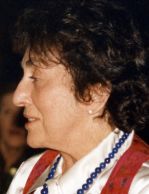
Ruth Riesenberg was born in Suwalki in Poland, the eldest of two sisters. Her father had studied chemistry, but then turned to left-orientated politics and journalism. Her mother had studied literature. After her father was forced to leave Poland for political reasons in 1935, the family emigrated to Chile. Several of her relatives who remained in Poland perished in the Holocaust.
In Chile Ruth Riesenberg attended an English college and studied psychology. Subsequently she underwent psychoanalytic training at the institute of the Asociación Psicoanalítica Chilena (APCh). Her training analyst was Ramón Ganzarain. In the early 1960s, she spent a year in London to train as a child analyst at the Tavistock Clinic. She completed her training analysis in Chile and became a member of the APCh, where she was one of the first child analysts.
In 1963 Ruth Riesenberg moved to Great Britain, to work as a child therapist, initially in Essex and then in London, where she set up private practice as an analyst. She underwent a second analysis with Betty Joseph and became a member and training analyst of the British Psychoanalytical Society (BPAS). In England, Ruth Riesenberg met her husband, the American philosopher Norman Malcolm (1911-1990), who taught at Cornell University in New York. They married in the U.S. and lived there for two years until Norman Malcolm became a Visiting Professor at the King's College London in 1978.
Ruth Riesenberg-Malcolm belonged to the group of Kleinians in the BPAS. She was a member of the BPAS Training Committee and the Melanie Klein Trust. Since the 1970s she also worked as a control analyst of the Sociedad Española de Psicoanálisis in Barcelona. Her book On Bearing Unbearable States of Mind (1999) is a collection of the most important papers written by Riesenberg-Malcolm over the period 1970 to 1998. Basing on the theories of Melanie Klein and Wilfred R. Bion, Ruth Riesenberg was especially interested in the fragmentations and defence constellations which are major obstacles in the analysis - such as hyperbolic behaviour, as-if response, self-punishment, pseudo-compliance or meaningful forgetting. (Top of the article)
- SELECTED WORKS
- El espejo: una fantasia sexual perversa en una mujer, vista como defensa contra un derrumbe psicotico. Rev Psicoanál 27, 1970, 793-826 [The mirror: a perverse sexual phantasy in a woman seen as a defence against psychotic breakdown. In E. B. Spillius (ed.): Melanie Klein Today, Vol. 2. 1988; Der Spiegel: die perverse Sexualphantasie einer Frau, betrachtet als Abwehr eines psychotischen Zusammenbruchs. In E. B. Spillius (ed.): Melanie Klein heute, Bd. 2. München 1991 + in Riesenberg 2003]
- Das Werk von Melanie Klein. In D. Eicke (ed.): Die Psychologie des 20. Jahrhunderts III: Freud und die Folgen (2). Zürich 1977, 210-249
- La expiación como defensa. Revista Psicoanálisis (APdeBA) 3 (2-3), 1981, 385-417 + in Riesenberg 2004 [Self-punishment as a defence. In Riesenberg 1999; Selbstbestrafung als Abwehr. In Riesenberg 2003]
- Technical problems in the analysis of a pseudo-compliant patient. IJP 62, 1981, 477-484 + in Riesenberg 1999 [Technische Probleme in der Analyse einer pseudokooperativen Patientin. In Riesenberg 2003]
- Interpretation: The past in the present. Int Rev Psychoanal 13, 1986, 433-443 + in E. B. Spillius (ed.): Melanie Klein Today, Vol. 2. London 1989 [Deutung: Die Vergangenheit in der Gegenwart. In E. B. Spillius (ed.): Melanie Klein heute, Bd. 2. München 1991 + in Riesenberg 2003]
- The constitution and operation of the super ego. Psychoanal Psychother 3, 1988, 149-159 + in Riesenberg 1999 [Aufbau und Aktivität des Über-Ichs. In Riesenberg 2003; La constitución y operatividad del superyó. In Riesenberg 2004]
- As-if: the phenomenon of not learning. IJP 71, 1990, 385-392 + in Riesenberg 1999 [Als-ob: das Phänomen des Nicht-Lernens. In Riesenberg 2003]
- Conceptualisation of clinical facts in the analytic process. IJP 75, 1994, 1031-1040 + in Riesenberg 1999 [Die Konzeptualisierung klinischer Fakten im analytischen Prozeß. In Riesenberg 2003]
- The three 'W's: what, where and when. The rationale of interpretation. IJP 76, 1995. 447-456 + in Riesenberg 1999 [Die drei W's: was, wo und wann. Die logische Grundlage der Deutung. In Riesenberg 2003; ¿Qué?, ¿Dónde?, y ¿Cuándo? Los fundamentos de la interpretación. In Riesenberg 2004]
- How can we know the dancer from the dance? Hyperbole in hysteria. IJP 77, 1996, 679-688 + in Riesenberg 1999 [Hysterie als Hyperbel: "Wie scheiden wir den Tänzer von dem Tanz?" In Riesenberg 2003]
- On Bearing Unbearable States of Mind. London 1999 [Unerträgliche seelische Zustände erträglich machen. Psychoanalytisches Arbeiten mit extrem schwierigen Patienten. Stuttgart 2003; Suportando estados mentais insuportaveis. Rio de Janeiro 2004]
- Bedeutsames Vergessen. Eine klinische Untersuchung. Jb Psychoanal 48, 2004, 9-26
- (and Donald Meltzer) The Psychoanalytic Process. London 1967
- REFERENCES
- Arrué, Omar: Chile. In Psychoanalysis International, Vol. 2: America, Asia, Australia. Further European Countries. Stuttgart-Bad Cannstatt 1995, 74-93
- Arrué, Omar: Chili. In Dictionnaire international de la psychanalyse (2002). Ed. by A. de Mijolla. Paris 2005 [International Dictionary of Psychoanalysis. Detroit u. a. 2005, 284-285]
- Castell, Esperança, et al.: Entrevista a Ruth Riesenberg Malcolm. Revista Catalana de Psicoanálisis 24 (1/2), 2007, 73-82
- Folch Mateu, Pere: Ruth Riesenberg-Malcolm. In Memoriam. Temas de Psicoanálisis. Revista de la Sociedad Española de Psicoanálisis, 2.7.2011 (2011-08-24)
- Martinich, Aloysius, and David Sosa: A Companion to Analytic Philosophy. Malden, Mass. 2001
- Mercer, Michael: Ruth Riesenberg-Malcolm. Melanie Klein Trust 2012 (2022-05-24)
- Pualuán, Liliana, and Mario Gomberoff: Una contribución al estudio de los antecedentes del psicoanálisis de niños en Chile. Psikis (2018-05-25)
- PHOTO: Melanie Klein Trust
Joan Riviere née Verrall (1883-1962)
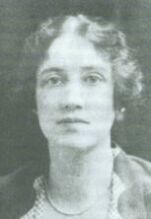
Joan Riviere was born in Brighton, Sussex, the eldest of three siblings. Her father, Hugh John Verrall, a member of an old county family of considerable intellectual standing, was an unconventional, publicly spirited solicitor. Her mother, Anna Hodgson, daughter of a country parson, worked as a governess before marrying. Joan Hodgson Verrall was very attached to her father, but had a distant relationship with her mother. She was educated at the prestigious girls' boarding school Wycombe Abbey. At the age of seventeen, she spent a year in Gotha, Germany, to learn the German language. Then she served for a period as a court dressmaker with the firm of Ada Nettleship in London.
Instead of going to university, Joan Verrall received her academic education from her uncle, Arthur W. Verrall, and his wife Margret Verrall. They were both classics scholars and lecturers at the University of Cambridge, and members of the Society for Psychical Research where Joan Verrall's interest in psychoanalysis was stimulated. She was also associated with the Bloomsbury Group and involved in suffragette activity.
In 1906 she married Evelyn Riviere (1876-1945), a barrister; they had their only child, Diana, two years later. When her father died in 1909, Joan Riviere suffered a breakdown, followed by further illness, which led her to seek help from Ernest Jones. In 1916 she began a therapeutic analysis with Jones, which later was converted into a training analysis and ended in 1921. The analysis failed, and in 1922 Joan Riviere went to Vienna for analysis with Sigmund Freud - with evident success.
In 1919 Riviere was a founding member of the British Psycho-Analytical Society (BPAS). From 1920 to 1937 she worked as translation editor of the International Journal of Psychoanalysis and together with James and Alix Strachey she translated the first English edition of Freud's work, the Collected Papers, published in 1924/25. Riviere's translations are seen to be particularly successfull because of her eloquent literary style, which characterized her own writings too.
Joan Riviere's friendship with Melanie Klein began in 1924. She translated Klein's works into English and became an articulate proponent of her ideas. In 1927 she first attacked the positions of Anna Freud in her paper Symposium on child analysis. Among other aspects she contradicted Anna Freud's view that in child analysis there can be no transference to the analyst, because in children the Oedipus situation is still active in relation to the original objects - the parents. However, Riviere stated that the objects of Oedipal and pregenital phantasies are not the real father and mother at all, but the unconscious imagos of them, which are transferred to the real parents. On account of this view Sigmund Freud accused her of taking a path to the derealization of analysis.
Joan Riviere became a training analyst and member of the BPAS training committee in 1930. Her lectures given in collaboration with Melanie Klein at the London Institute of Psychoanalysis were published in 1937 under the title Love, Hate, and Reparation. Prior to Melanie Klein, in her paper Jealousy as a mechanism of defense (1932), Riviere found jealousy to be a defense against envy aroused by the primal scene, and she was the first to develop the concept of reparation in 1936. Her paper On the genesis of psychical conflict in earliest infancy, read in Vienna, in which she described the inner world of the "Kleinian infant", is considered to be one of the most brilliant essays on Kleinian thinking.
In her paper Womanliness as a masquerade (presumably her best known work today) she examined the intellectually and professionally successful type of woman, who at the same time seems to be completely feminine. Joan Riviere declared that the exhibition of "masculine" skills, equated with the castration of the father's penis, causes a fear of retribution, against which this type of woman wants to protect herself by assuming a particularly feminine role. Womanliness therefore can be worn as a mask to hide the possession of masculinity. Most notably, Riviere's conclusion that there is no difference between genuine womanliness and the mask of womanliness, inspired Jacques Lacan and the gender discussions of the 1990s.
At the end of 1938, Joan Riviere withdrew, due to illness, from her leading positions in the BPAS, but continued her teaching and training activities. She remained in the background during the Freud-Klein Controversies in the 1940s. In the 1950s her relationship with Melanie Klein became more reserved, for example she did not share Klein's interest in the analysis of psychotics.
Joan Riviere died from pulmonary emphysema. (Top of the article)
- SELECTED WORKS
- Symposium on child analysis. IJP 8, 1927, 370-377
- Womanliness as a masquerade. IJP 10, 1929, 303-313 [Weiblichkeit als Maske. IZP 15, 1929, 285-296]
- Jealousy as a mechanism of defense. IJP 13, 1932, 414-424 [Eifersucht als Abwehrmechanismus. IZP 22, 1936, 177-197]
- On the genesis of psychical conflict in earliest infancy. IJP 17, 1936, 395-422 [Zur Genese des psychischen Konfliktes im frühen Lebensalter. IZP 22, 1936, 487-512]
- A contribution to the analysis of the negative therapeutic reactions. IJP 17, 1936, 303-320
- Hate, greed and aggression. In Melanie Klein and Joan Riviere: Love, Hate and Reparation. London 1937 [Haß, Gier und Aggression. In Melanie Klein und Joan Riviere: Seelische Urkonflikte. Liebe, Haß und Schuldgefühl. München 1974]
- The bereaved wife. In Susan Isaacs (ed.): Fatherless Children. London 1945
- The unconscious fantasy of an inner world as reflected in examples from literature. IJP 33, 1952, 160-172
- The inner world in Ibsen's Master-builder. IJP 33, 1952, 173-180
- A character trait of Freud's. In J. M. Sutherland: Psycho-Analysis and Contemproaray Thought. London 1958, 145-149
- The Inner World and Joan Riviere. Collected Papers 1920-1958. Ed. by Athol Hughes. London; New York 1991
- Ausgewählte Schriften. Ed. by Lilli Gast. Tübingen 1996
- (and Melanie Klein) Love, Hate, and Reparation. London 1937 [Seelische Urkonflikte. Liebe, Haß und Schuldgefühl. München 1974]
- (with Melanie Klein, Paula Heimann and Susan Isaacs): Developments in Psychoanalysis. London 1952
- REFERENCES
- Appignanesi, Lisa, and John Forrester: Freud`s Women. London 1992 [Die Frauen Sigmund Freuds. München 1996]
- Bakman, Nina: She can be put to work. Joan Riviere as translator between Freud and Jones. Psychoanal Hist 10 (1), 2008, 21-36
- Bakman, Nina: Fünf Psychoanalytikerinnen. Frauen in der Generation nach Sigmund Freud. Gießen 2022
- Bower, Marion: The Life and Work of Joan Riviere. Freud, Klein and Female Sexuality. London; New York; Abingdon 2019
- Butler, Judith: Lacan, Riviere and the strategies of masquerade. In: Judith Butler: Gender Trouble. Feminism and the Subversion of Identity. New York, London 1999
- Freud, Sigmund und Ernest Jones: Briefwechsel 1908-1939. Frankfurt/M. 1993
- Gast, Lilli: Joan Riviere und die englische Psychoanalyse. In Riviere 1996, 9-79
- Gast, Lilli: "Ein gescheites, überscharfes Frauenzimmer...". Joan Riviere, die Grande Dame der englischen Psychoanalyse. Werkblatt 13 (Nr. 37), 1996, 47-72
- Grosskurth, Phyllis: Melanie Klein. New York 1986; Stuttgart 1993
- Heimann, Paula: Obituary Joan Riviere (1883-1962). IJP 44, 1963, 230-233
- Hughes, Athol: Joan Riviere. Her life and work. In Riviere 1991
- Hughes, Athol: Riviere-Hodgson Verrall, Joan. In Dictionnaire international de la psychanalyse (2002). Ed. by Alain de Mijolla. Paris 2005, 1572f [International Dictionary of Psychoanalysis. Detroit u. a. 2005, 1507-1508]
- Hughes, Athol: Joan Riviere. Melanie Klein Trust (2019-07-22)
- Meisel, Perry, and Walter Kendrick (eds): Bloomsbury/Freud. The Letters of James and Alix Strachey 1924-1925. New York 1985
- Munro, Lois: Obituary Joan Riviere (1883-1962). IJP 44, 1963, 233-235
- Roudinesco, Elisabeth, and Michel Plon: Wörterbuch der Psychoanalyse (1997). Wien, New York 2004
- Strachey, James: Obituary Joan Riviere (1883-1962). IJP 44, 1963, 228-230
- Weissberg, Liliane (ed.): Weiblichkeit als Maskerade. Frankfurt/M. 1994
- Wikipedia (2021-01-11)
- PHOTO: from Joan Riviere: Ausgewählte Schriften. Tübingen 1996, p. 8; s. a. Instituto Português de Psicoterapia Integrativa (2012-02-15) + Wikipedia (2019-07-22)
Dina Rosenbluth (1919-1983)
Dina Rosenblüth was born in Berlin-Wilmersdorf. Her father Felix Rosenblüth (Pinchas Rosen), a judge in Berlin, emigrated to Palestine in 1926 and became Israel's first Minister of Justice in 1948. After the seizure of power by the Nazis in 1933, Dina Rosenbluth, her mother Annie Lesser and her brother Hans emigrated to England. Dina attended King Alfred School and then studied psychology at University College London (UCL).
In 1950 Dina Rosenbluth started training as a child psychotherapist with Esther Bick at the Tavistock Clinic, where she learned the technique of psychoanalytic infant observation. Along with James Robertson and Mary Boston, she was one of the founder members of the Separation Research Unit at the Tavistock Clinic, founded in 1948 by John Bowlby, the pioneer of attachment theory, to study the effects on personality development of separation from the mother in early childhood. In their study A two-year old goes to hospital, based on written records and a film, Dina Rosenbluth and James Robertson documented their systematic observation of a two-and-a-half-year-old girl separated from her mother during her eight-day hospital stay. Their observational records showed that even short-term separations may cause serious emotional disturbances.
After an initial analysis with Harold Bridger at the Tavistock Institute, Dina Rosenbluth undertook a second analysis with the Kleinian Herbert Rosenfeld. She trained at the Institute of Psychoanalysis in the late 1950s and became a member of the British Psychoanalytical Society. Like her friend Martha Harris, she was an adherent of Melanie Klein. Dina Rosenbluth continued to work at the Tavistock until 1970, taking responsibility for training child psychotherapists, before she left the Tavistock for fulltime practice. (Top of the article)
- SELECTED WORKS
- The Kleinian theory of depression. J Child Psychother 1 (3), 1965, 20-25
- “Insight” as an aim of treatment. J Child Psychother 2 (2), 1968, 5-17
- Your Baby. London 1969
- Transference in child psychotherapy. J Child Psychother 2 (4), 1970, 72-87 [Übertragung in der Kinderpsychotherapie. Analytische Kinder- und Jugendlichen-Psychotherapie 26 (87), 1995, 245ff]
- Psychotherapy with the pre-school child. A psychoanalytic approach. In Ved P. Varma (Hg.): Psychotherapy Today. London 1974
- (with John Bowlby and James Robertson) A two-year old goes to hospital. Psychoanal Study Child 7, 1952, 82-94 (Extract clip)
- (and John Bowlby) The social and psychological backgrounds of tuberculous children. Brit Med J 1 (4919), 1955, 946-949
- (with John Bowlby, Mary Ainsworth and Mary Boston) The effects of mother-child separation. A follow-up study. Brit J Med Psychol 29, 1956, 211-247
- REFERENCES
- Brockbank, Conor: The Evacuated German and Austrian Students and Staff of University College London in Aberystwyth during the Second World War: 1. UCL Students not interned. Aberystwyth University 3.5.2023 (2024-12-11)
- Freud, Anna: A two-year-old goes to Hospital. Scientific Film by James Robertson. IJP 34, 1953, 284-287
- Harris, Martha: Obituary of Dina Rosenbluth. The Tavistock Gazette 11, 1983, 14-15 + pdf (2024-12-11)
- Wikipedia: Pinchas Rosen (2024-12-11)
- PHOTO: Tavistock Clinic 1949/1950 (James Robertson); aus Esther Bick: Surviving Space. Papers on Infant Observation. London 2002, xxiv
Isca Salzberger-Wittenberg (1923-2023)
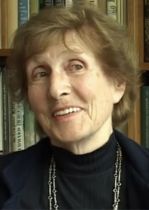
© Association of Jewish
Refugees
Isca Salzberger was born in Frankfurt/Main as the youngest of three daughters of Rabbi Georg Salzberger and his wife Natalie "Nenny" Caro. From 1910 to 1937, her father was rabbi at the liberal Westend-Synagogue in Frankfurt. She attended the Philanthropin, a school of the Israelite Community in Frankfurt, until her family had to emigrate to England in 1939.
In the early 1940s, Isca Salzberger completed a one-year training as a children's nurse in Yorkshire and then took a job at a war-time nursery in Hemel Hempstead. In 1943 she was sponsored by the Jewish Refugee Committee to study Social Sciences at Birmingham University and graduated with a BA. In 1956, she joined the Child Psychotherapy course established by John Bowlby at the Tavistock Clinic in London, where she attended Esther Bick's seminar on the practice and theory of psychoanalytic Infant Observation.
Like Esther Bick, Isca Salzberger became a follower of the Melanie Klein school. She underwent analysis with the Kleinian analyst Sonny S. Davidson for four and a half years. After his death she continued her analysis with Wilfred R. Bion from 1962 until 1968. She later also trained as an adult therapist.
In 1965, Isca Salzberger-Wittenberg became a staff member of the Tavistock Clinic and worked there for twenty-five years. She was its Vice-Chairman for ten years, a Senior Tutor in the clinical training of child psychotherapists and a teacher of Infant Observation. She officially retired from the Tavistock Clinic in 1988, but continued to work part-time at the Clinic and in private practice. Her book Psycho-Analytic Insight and Relationships: A Kleinian Approach gained particular recognition. In this classic text, she demonstrates the application of Melanie Klein's concepts in the practice of social casework.
After the death of her sister Lore, Isca Salzberger took care of her nephews Raphael and Jonathan. In 1963 she married Lore's widower, the Polish-born mechanical engineer Adolf "Adi" Wittenberg (1921-2007). She died in december 2023, at the age of 100 years. (Top of the article)
- SELECTED WORK
- Resistance in treatment as a means of avoiding inner conflict. J Child Psychother 1 (1), 1963, 26-34
- Psycho-Analytic Insight and Relationships. A Kleinian Approach. London 1970 [Die Psychoanalyse in der Sozialarbeit. Stuttgart 1973; Psychoanalytisches Verstehen von Beziehungen. Ein Kleinianischer Ansatz. Wien 2002]
- The use of here and now experiences in a teaching conference on psychotherapy as a means of gaining insight into the nature of the helping relationship. J Child Psychother 4 (4), 1978, 33-50
- Die emotionale Bedeutung des Lehrens und Lernens. Jb Psychoanal Päd 5, 1993, 43-53
- Brief therapeutic work with parents of infants. In S. Miller und R. Szur (Hg.): Extending Horizons. Psychoanalytic Psychotherapy with Children, Adolescents and Families. London 1991 [Kurztherapeutische Arbeit mit Eltern und Kleinkindern. Jb Psychoanal Päd 10, 1999, 84-100]
- Was ist psychoanalytisch am Tavistock-Modell der Babybeobachtung? Hat sie das psychoanalytische Wissen bereichert? AKJP 38 (3), 2007, 305-323
- Experiencing Endings and Beginnings. London 2013 [Beginnen und Beenden im Lebenszyklus. Stuttgart 2019]
- Auf der Flucht vor Hitler von Frankfurt nach London. Von der Sozialarbeit zur Psychoanalyse. In L. M. Hermanns (Hg.): Psychoanalyse in Selbstdarstellungen. Bd. XIV. Frankfurt/M. 2023, 159-180
- (with Gianna Williams and Elsie Osbourne) The Emotional Experience of Learning and Teaching. London 1983 [Die Pädagogik der Gefühle. Emotionale Erfahrung beim Lernen und Lehren. Wien 1997]
- REFERENCES
- AJR Refugee Voices: Isca Wittenberg (2024-08-08)
- Geni (2023-08-29)
- Kaufhold, Roland: Den Schmerz der anderen verstehen. Die jüdische Kindertherapeutin Isca Salzberger-Wittenberg (4.3.1923 – 23.12.2023) verstarb im Alter von 100 Jahren. HaGalil, 16.1.2024 + (and Angelika Rieber) Isca Salzberger. Den Schmerz der anderen verstehen. Projekt Jüdisches Leben in Frankfurt am Main (extended version) (2025-03-03)
- O'Rourke, Jane: Interview with Isca Wittenberg. MINDinMIND 2019 (2024-08-24)
- Salzberger-Wittenberg, Isca: Auf der Flucht vor Hitler von Frankfurt nach London. Von der Sozialarbeit zur Psychoanalyse. In L. M. Hermanns (ed.): Psychoanalyse in Selbstdarstellungen. Bd. XIV. Frankfurt/M. 2023, 159-180
- Stadlmayer, Tina: „Das Problem sind die Erwachsenen“. Interview mit Isca Salzberger-Wittenberg. taz, 15.7.2023 (2023-08-29)
- Stolperstein Frankfurt Eschersheimer Landstraße 67 (2023-08-29)
- The Tavistock and Portman NHS Foundation Trust, 7 July 2023 (2024-08-12)
- Wachmann, Doreen: Rabbi's epic walk with a blogging dog for company. Jewish Telegraph 2013
- Wikipedia (2023-08-29)
- PHOTO: Screenshot from AJR Refugee Voices Archive Interview 3 August 2006. Courtesy of AJR Refugee Voices
Anne-Marie Sandler née Weil (1925-2018)
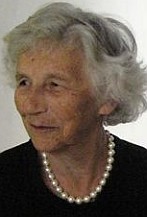
Anne-Marie Weil was born in Geneva into a Jewish family who came from Germany. Her father Otto Weil started as an elevator boy and became general manager of a department store in Geneva; her mother Hildegard Oberdorf was a French teacher in Hamburg before she married. Anne-Marie Weil studied psychology in Geneva and worked from 1947 to 1950 as an assistant of Jean Piaget. Under his supervision, she investigated the emergence of national stereotypes in children an behalf of the UNESCO.
In 1950 she went to London to train in child analysis with Anna Freud at the Hampstead Clinic. She underwent training analysis with Augusta Bonnard and qualified as a child analyst in 1954. Subsequently she worked at the Child Department at St George's Hospital and participated in a research project on blind children. In 1957 she married Joseph (Joe) Sandler (1927-1998), a Jewish psychoanalyst born in South Africa. They had two children, Catherine (*1958) and Paul (*1962), in addition to Sandler's daughter Trudy from his first marriage. Between 1965 and 1968 Anne-Marie Sandler trained as an adult psychoanalyst and had another training analysis with Edith Gyömröi. She became a training and supervising analyst of the British Psychoanalytical Society (BPAS) and established a psychoanalytic practice in London.
In 1979 Joe Sandler was appointed to the Sigmund Freud Chair at the Hebrew University of Jerusalem, and the following year Anne-Marie Sandler also moved to Jerusalem, where they lived until 1985. Anne-Marie and Joseph Sandler collaborated on a number of papers and engaged in promoting the European Psychoanalytical Federation (EPF). She was president of the EPF from 1983 to 1987, president of the BPAS from 1990 to 1993, and director of the Anna Freud Centre from 1993 to 1996. She is also an honorary member of the Deutsche Psychoanalytische Gesellschaft and the Sigmund-Freud-Institut in Frankfurt.
Although a loyal follower of Anna Freud, she has been inspired by the ideas of Melanie Klein too. Her book Internal Objects Revisited, which includes key contributions by Joseph and Anne-Marie Sandler, provides a theoretical basis for integrating the Kleinian internal object relations into an post-ego-psychological frame of reference.
In 1998 Anne-Marie Sandler received the Sigourney Award for outstanding achievement in psychoanalysis. (Top of the article)
- SELECTED WORKS
- Aspects of passivity and ego development in the blind infant. Psa Study Child 18, 1963, 343-360
- Comments on the significance of Piaget's work for psychoanalysis. Int Rev Psycho-Anal 2, 1975, 365-377
- Beyond eight-month anxiety. IJP 58, 1977, 195-208
- On interpretation and holding. Scand Psychoanal Rev 7, 1984, 161-176
- Problems of development and adaptation in an elderly patient. Psa Study Child 39, 1984, 471-489
- Aspects of the analysis of a neurotic patient. IJP 69, 1988, 317-326
- Comments on phobic mechanisms in childhood. Psa Study Child 44, 1989, 101-114
- The psychoanalytic legacy of Anna Freud. Psa Study Child 51, 1996, 270-284
- Konflikt und Versöhnung. In L. M. Hermanns (ed.): Psychoanalyse in Selbstdarstellungen, Bd. X. Frankfurt/M. 2015, 221-287
- ([A.-M. Weil] and Jean Piaget) Le développement, chez l'enfant, de l'idée de patrie et des relations avec l'étranger. Bulletin International des Sciences Sociales 3 (3), 1951, 605-621
- (and Peter Fonagy) Zur Übertragung und ihrer Deutung. Analytische Kinder- und Jugendlichen-Psychotherapie, Heft 96, 1997, 373-396
- (and Joseph Sandler) Internal Objects Revisited. Madison, Conn. 1998 [Innere Objektbeziehungen. Entstehung und Struktur. Stuttgart 1999]
- (and Rosemary Davies) (eds) Psychoanalyse in Großbritannien. Göttingen 2003
- (with Hanna Segal, Gigliola Fornari-Spoto and Leslie Sohn) Formen der Übertragung. Wien 2004
- REFERENCES
- Anne-Marie Sandler in extended conversation with Luis Rodriguez de la Sierra. Conference Proceedings "Between knowing and not-knowing", Tavistock Centre März 2004
- British Institute of Psychoanalysis: Meeting Anne Marie Sandler. Encounters Through Generations. DVD 2012 (Trailer) (2015-11-30)
- Focke, Ingo, and Josef Bernd Gutmann: Begegnungen mit Anne-Marie Sandler. Praxis und Theorie ihrer Behandlungstechnik. Gießen 2019
- Fonagy, Peter: Obituary Joseph Sandler (1927-1998). IJP 82, 2001, 815-817
- Goode, Erica: Joseph J. Sandler Dies at 71; Leading British Psychoanalyst. New York Times, 11.10.1998 (2015-02-26)
- Grabska, Klaus: In Memoriam Anne-Marie Sandler. DPG (2018-10-17)
- Ludwig-Körner, Christiane: Wiederentdeckt - Psychoanalytikerinnen in Berlin. Gießen 1999
- Oehler, Regina: Interview with Anne Marie Sandler. hr2: Doppel-Kopf, 2013-05-13
- Orbach, Susie: Anne-Marie Sandler obituary. The Guardian, 9 August 2918 (2018-10-17)
- Perelberg, Rosine Jozef: Anne Marie Sandler. BPAS Institute of Psychoanalysis 2015 (2017-07-21)
- Sandler, Anne-Marie: Konflikt und Versöhnung. In L. M. Hermanns (ed.): Psychoanalyse in Selbstdarstellungen, Bd. X. Frankfurt/M. 2015, 221-287
- Telegraph Obituaries, 24 October 2018: Anne-Marie Sandler, psychoanalyst and protégé of Anna Freud (2024-08-12)
- Wikipedia (2021-10-11)
- PHOTO: British Institute of Psychoanalysis
Melitta Schmideberg née Klein (1904-1983)
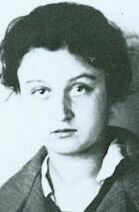
Melitta Klein was born in Rosenberg, then in the Austro-Hungarian Empire. The oldest of three siblings, she was the only daughter of the psychoanalyst Melanie Klein and the chemical engineer Arthur Klein. In 1910 the family moved to Budapest, where Melanie Klein began to analyse Melitta ("Lisa") and her brothers. At the age of fifteen, Melitta Klein was allowed to attend the meetings of the Budapest Psychoanalytic Association, of which her mother was a member.
In 1921 Melanie Klein went to Berlin, where Melitta Klein joined her, to study medicine. In Berlin Melitta Klein met the Austrian psychoanalyst Walter Schmideberg (1890-1954), whom she married in 1924. She graduated in 1927 and presented her thesis Geschichte der homöopathischen Bewegung in Ungarn [The history of the homeopathic movement in Hungary] in 1929. In 1928 she started her psychoanalytic training with Karen Horney, qualifying as an associate member of the Deutsche Psychoanalytische Vereinigung in 1931.
In view of the National Socialist threat, the Schmidebergs emigrated to London, where Melanie Klein had been living since 1926. From 1930 Melitta Schmideberg attended the scientific meetings of the British Psychoanalytical Society (BPAS) and went into analysis with Edward Glover, an opponent of Melanie Klein. In 1933 she was elected a full member of the BPAS and eventually became a training analyst.
Initially she often made use of her mother's ideas in her papers, but in her membership paper The play analysis of a three-year-old girl, she already differed from them by ascribing the girl's problems to a failure of her mother, so to real exterior factors. During her analysis with Glover she became estranged from her mother. She began to attack her in public and questioned the empiric basis of the Kleinian views. Her desire to become independent from her mother resulted in an unforgiving hatred.
In 1945 Melitta Schmideberg went to New York, where she worked with juvenile delinquents and helped to found the Association for the Psychiatric Treatment of Offenders in 1950. She developed her own form of psychotherapy, and in 1962, a year after her return to London, she resigned her membership of the BPAS. She devoted herself to the treatment and reintegration of delinquents and founded in 1957 the International Journal of Offender Therapy, of which she was the managing editor. (Top of the article)
- SELECTED WORKS
- Geschichte der homöopathischen Bewegung in Ungarn. Leipzig 1929
- Psychotic mechanisms in relation to the development of civilisation. IJP 11, 1930, 387-418
- Psychoanalytisches zur Menstruation. Z psa Päd 5, 1931, 190-202
- A contribution to the psychology of persecutory ideas and delusions. IJP 12, 1931, 331-367
- Einige unbewußte Mechanismen im pathologischen Sexualleben und ihre Beziehung zur normalen Sexualbetätigung. IZP 18, 1932, 51-85 [Some unconscious mechanisms in pathological sexuality and their relation to normal sexual activity. IJP 14, 1933, 225-260]
- Zur Psychoanalyse asozialer Kinder und Jugendlicher. IZP 18, 1932, 474-527 [The psycho-analysis of asocial children. IJP 16, 1935, 22-48]
- Ein Prüfungstraum. IZP 19, 1933, 198-202
- The play-analysis of a three-year-old girl. IJP 15, 1934, 245-264
- Zur Wirkungsweise der psychoanalytischen Therapie. IZP 21, 1935, 46-54
- Bad habits in childhood. Their importance in development. IJP 16, 1935, 455-461
- Reassurance as a mean of analytic technique. IJP 16, 1935, 307-324
- A note on suicide. IJP 17, 1936, 1-5
- On motoring and walking. IJP 18, 1937, 42-53
- After the analysis. S ome phantasies of patients. Psa Quart 7, 1938, 122-142
- Intellectual inhibition and disturbances in eating IJP 19, 1938, 17-22
- On querulance. Psa Quart 15, 1946, 472-502
- Children in Need. London 1948
- Infant memories and constructions. Psa Quart 19, 1950, 468-481
- Delinquent acts as perversions and fetishes. IJP 37, 1956, 422-424
- The dilemma of the analyst. Samiska 2, 1957, 189-206
- Zur Dynamik der durch die Strafe ausgelösten psychischen Vorgänge. In Günther Bittner et al. (eds): Psychoanalyse und Erziehung. München 1970
- A contribution to the history of psycho-analytical movement in Britain. British Journal of Psychiatry No. 118, 1971, 61-68
- My experience of psychotherapy. Journal of Contemporary Psychotherapy 6, 1974, 121-127
- REFERENCES
- Brühmann, Horst: Metapsychologie und Standespolitik. Die Freud/Klein-Kontroverse. Luzifer-Amor 9 (17), 1996, 49-112
- Cassullo, Gabriele: The psychoanalytic contributions of Melitta Schmideberg Klein. More than Melanie Klein's rebel daughter. Am J Psychoanal 76 (1), 2016, 18-34
- Grosskurth, Phyllis: Melanie Klein. New York 1986; Stuttgart 1993
- King, Pearl H. M.: Schmideberg-Klein, Melitta. In Dictionnaire international de la psychanalyse (2002). Ed. by Alain de Mijolla. Paris 2005, 1612f [International Dictionary of Psychoanalysis. Detroit u. a. 2005, 1542-1543]
- Roudinesco, Elisabeth, and Michel Plon: Wörterbuch der Psychoanalyse (1997). Wien, New York 2004
- Schröter, Michael: 129 dokumentierte Ausbildungskandidaten am Berliner Psychoanalytischen Institut 1924-1932: Tabelle. Luzifer-Amor 33 (66), 2020 (2020-12-11)
- Shapira, Michal: Melitta Schmideberg. Her life and work encompassing migration, psychoanalysis, and war in Britain. Psychoanal Hist 19 (3), 2017, 323-348
- Simkin, John: Melitta Schmideberg. Spartacus Educational 1997/2018 (2019-07-22)
- Spillius, Elizabeth: Melitta and her mother. Psa Quart 78 (4), 2009, 1147-1166
- Wikipedia (2017-12-13)
- PHOTO: Courtesy of Melanie Klein Trust, London
Anneliese Schnurmann (1908-2006)
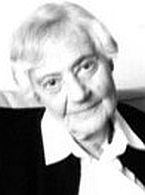
Anneliese Schnurmann was born into a wealthy Jewish manufacturer family in Karlsruhe. She lost her parents early - her father Jacob Schnurmann died shortly after her birth, her mother Alice née Auerbach died from tuberculosis in 1915. She was cared for by her sister Leonore who was eleven years older. In the early 1920s she moved with her sister to Berlin, where she became friends with the Bonhoeffer family. With Dietrich Bonhoeffer, she created in 1932 the "Jugendstube" in Berlin-Charlottenburg, a day shelter for unemployed young people.
After training as a housekeeper and reading modern languages (Heidelberg 1929) and economics (Geneva 1930), Anneliese Schnurmann decided to study at Karl Mannheim's Sociology Seminar at the University of Frankfurt. When Mannheim was ousted from his professorship in 1933, she continued her studies in Geneva, graduating in Sciences Sociales in 1935. After this followed postgraduate studies in psychology and education in Geneva and Basel.
In 1939, she emigrated to London, where she worked from 1942 to 1945 in Anna Freud's Hampstead War Nurseries offering refuge for children made homeless in the bombing raids on London. In 1947, she was among the first group of candidates who trained as "psychoanalytical child experts" at the Hampstead Child Therapy Courses, qualifying in 1950. From 1945 to 1949, she was in training analysis with Kate Friedländer.
Between 1948 and 1956 she was employed as a child therapist, first at the Child Guidance Clinic in East London and then in Chichester. From 1952 on, she worked at the Hampstead Child Therapy Course and Clinic and became a training analyst and supervisor in the training of psychoanalytical child experts. From 1961 until 1965 she trained as adult psychoanalyst at the British Psychoanalytical Institute, her training analyst was Konrad Gomperts. Subsequently she carried out psychoanalysis and psychotherapies in private practice until her retirement in 1983. In 2001 she returned to Switzerland, where she died at the age of 98 in Bern. (Top of the article)
- SELECTED WORKS
- Observation of a phobia. Psa Study Child 3-4, 1949, 253-270
- (with Anne-Marie Sandler and Elizabeth Daunton) Inconsistency in the mother as a factor in character development. A comparative study of three cases. Psa Study Child 12 (1), 1957, 209-225
- REFERENCES
- Ludwig-Körner, Christiane: Wanderin zwischen den Welten - Anneliese Schnurmann (1908-2006). Forum Psychoanal 29 (3), 2013, 343-355
- Ludwig-Körner, Christiane: Und sie fanden eine Heimat. Leben und Wirken der Mitarbeiterinnen von Anna Freud in den Kriegskinderheimen. Stuttgart 2022
- Malberg, Norka T., and Joan Raphael-Leff (eds): The Anna Freud Tradition. Lines of Development - Evolution and Theory and Practice over the Decades. London 2012
- Menès, Martine: La phobie ordinaire, l'ordinaire de la phobie. La lettre de l'enfance et de l'adolescence Nr. 56, 2004, 37-42 (2017-11-23)
- Tendlarz, Silvia Elena: Childhood Psychosis. A Lacanian Perspective. London; New York 2003
- Wyler von Ballmoos, Anna: Anneliese Schnurmann. Kinderanalyse 22 (4), 2014, 358-363
- PHOTO: With kind permission of Christiane Ludwig-Körner
Nina Searl (1883-1955)
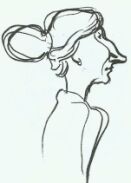
Mary Nina Searl was born in Forest Gate, Chippenham, Wiltshire. She was educated at Sidcup High School in London before entering the University of London in 1901. She received her psychoanalytic training at the Brunswick Square Clinic in London and had been analysed by Hanns Sachs in Berlin. She was particularly interested in the application of psychoanalysis to education and was an early pioneer of child analysis in the British Psychoanalytical Society (BPAS). In 1920 she conducted her first analysis with a six-year-old girl, even before Melanie Klein's studies on child analysis became known in Great Britain. She was presumably the first to present a paper to the BPAS on the technique of child analysis.
Nina Searl was a training analyst and supervisor at the London Institute of Psychoanalysis and a significant contributor to the scientific discussion, publishing fourteen articles from 1924 to 1938. After 1925 she was an adherent of Melanie Klein and became her comrade-in-arms in the controversies with Anna Freud. Among her supervisees were John Bowlby, Donald Winnicott and Clifford Scott.
In 1934 Nina Searl gave a lecture on "Infantile ideals" at the IPA Congress in Luzern. Her psychoanalytic career ended abruptly, when she resigned from the BPAS in 1937. Melitta Schmideberg accused the Kleinians of leading a crusade against Searl since 1932. Nina Searl herself gave as a reason for her decision, among others, that in her opinion psychoanalysis should leave room for the expression of a higher religious ideal, and that she wished to co-operate with a group interested in spiritual healing. It is said, that Nina Searl's life ended with her being a nun or a resident in a convent.
One of her last papers, Some queries on principles of technique (1936), an exposition on the significance of resistance analysis, is considered as a pre-eminent example of an ego psychological approach to the psychoanalytic process, a remarkable historical document that anticipated later developments. (Top of the article)
- SELECTED WORKS
- Some analytical illustrations from a child's behaviour. IJP 5, 1924, 358-362
- Thump-sucking, ear-pulling and left-handedness. IJP 5, 1924, 363-364
- A case of stammering in a child. IJP 8, 1927, 65-69
- Symposium on child analysis. IJP 8, 1927, 377-380
- Difficulties in child development. IJP 10, 1929, 476-480
- Die Flucht in die Realität. IZP 15 (2/3), 1929, 259-270
- The rôles of ego and libido in development. IJP 11, 1930, 125-149
- A note on depersonalization. IJP 13, 1932, 329-347
- The psychology of sreaming. IJP 14, 1933, 193-202
- Play, reality and aggression. IJP 14, 1933, 310-320
- A note on symbols and early intellectual activity. IJP 14, 1933, 391-397
- Some queries on principles of technique. IJP 17, 1936, 471-493 + Michigan Mental Health Networker (2009-03-24)
- Zur Problematik der technischen Prinzipien. IZP 23 (1), 1937, 133-155
- A note on the relation between physical and psychical differences in boys and girls. IJP 19, 1938, 50-62
- (with Susan Isaacs, Melanie Klein, Merell P. Middlemore and Ella F. Sharpe) On the Bringing Up of Children. London 1936
- REFERENCES
- Busch, Fred: Neglected classics: M. N. Searl's "Some queries on principles of technique". Psa Quart 64, 1995, 326-344
- Grosskurth, Phyllis: Melanie Klein. New York 1986; Stuttgart 1993
- Kahr, Brett: Tea with Winnicott. London 2016
- King, Pearl, and Riccardo Steiner (eds): The Freud-Klein Controversies 1941-45. London, New York 1991
- Lück, Helmut E., and Elke Mühlleitner (eds): Psychoanalytiker in der Karikatur. München 1993
- Meisel, Perry, and Walter Kendrick (eds): Bloomsbury/Freud. The Letters of James and Alix Strachey 1924-1925. New York 1985
- Scott, W. C. M.: A neglected classic IV: M. Nina Searl's "The psychology of screaming". J Phila Assn Psychoanal 3, 1976, 117-119
- Wikipedia (2021-01-11)
- Young-Bruehl, Elisabeth: Anna Freud. A Biography. London 1989
- FIG.: Olga Székely-Kovács (1924)
Hanna Segal née Poznanska (1918-2011)
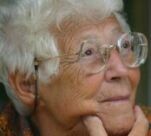
Hanna Segal is one of the most distinguished Kleinian thinkers. She was born in Lodz, Poland, in a well-assimilated Jewish family. She grew up in Warsaw, where her father, Czeslaw Poznanski, was a lawyer. Her mother, Isabelle Weintraub, was a friend of the psychoanalyst Eugénie Sokolnicka whom Hanna met, when she was a child. After her father's practice had gone bankrupt, the family settled in Geneva in 1931, where he took up a post as the editor of a journal.
In 1934 Hanna Poznanska returned to Warsaw to finish her schooling there and to study medicine. At the outbreak of the Second World War she happened to be in Paris, where her parents had been living since 1938. She continued her medical studies in France until she had to flee from the invading German army in 1940. She escaped to Britain, where she graduated as a doctor from the Polish Medical School at Edinburgh University in 1943.
In Edinburgh she spent one year in analysis with the Kleinian David Matthew. In 1943 she moved to London to begin her formal psychoanalytic training at the Institute of Psychoanalysis. She worked as a surgeon at Paddington Green Hospital for children and as a psychiatrist at Long Grove Hospital. Her training analyst was Melanie Klein. She qualified in 1945, and in 1949 she became a full member of the British Psychoanalytical Society, after presenting her membership paper Some aspects of the analysis of a schizophrenic. Since 1952 she has been a training analyst. In 1946 she married Paul Segal (?-1996), a mathematician, with whom she had three sons.
Hanna Segal is known both for her lucid expositions of Melanie Klein's work, and for her own seminal contributions to psychoanalytic theory and technique. It was Segal who created one of the clearest Kleinian definitions of the death instinct - not as a biological drive to return to the inorganic but as a psychological wish to annihilate the sudden change brought about by birth. Segal was one of the first to analyse psychotics using Kleinian concepts. She developed the notion of "symbolic equation" to characterize the psychotic's lack of capacity to distinguish between the symbol and the object symbolised. Developing Klein's theory of symbolism, she described the important role of the depressive position in symbol formation and in artistic creativity. In her contributions on aesthetics she shed light on the creative use of symbols in ordinary life and works of art.
Hanna Segal held numerous important positions within the BPAS, including being president from 1977 to 1980. In 1977 she was appointed to the Freud professorship at University College London. She received the Sigourney Award for her contributions to psychoanalysis in 1992. (Top of the article)
- SELECTED WORKS
- Some aspects of the analysis of a schizophrenic. IJP 31, 1950, 268-278 [Aspekte der Analyse eines schizophrenen Patienten. In E. B. Spillius (ed.): Melanie Klein Heute, Bd. 2: Anwendungen. München u.a. 1991]
- A psycho-analytical approach to aesthetics. IJP 33, 1952, 196-207
- Notes on symbol formation. IJP 38, 1957, 391-397 [Bemerkungen zur Symbolbildung. In E. B. Spillius (ed.): Melanie Klein Heute, Bd. 1: Beiträge zur Theorie. München u.a. 1990]
- Introduction to the Work of Melanie Klein. London 1964; 1988 [Melanie Klein. Eine Einführung in ihr Werk. München 1974; Tübingen 2004]
- Delusion and artistic creativity. Some reflections on reading "The Spire" by William Golding. Int Rev Psychoanal 1, 1974, 135-141 [Wahnsinn und künstlerische Kreativität. In Segal 1992, 261-272]
- Psychoanalysis and Freedom of Thought. London 1978
- Melanie Klein. Modern Master Series. London 1979
- The Work of Hanna Segal. A Kleinian Approach to Clinical Practice. London 1981 [Wahnvorstellung und künstlerische Kreativität. Ausgewählte Aufsätze. Stuttgart 1992]
- Joseph Conrad and the mid-life crisis. Int Rev Psycho-Anal 11, 1984, 3-9
- Silence is the real crime. Int Rev Psychoanal 14, 1987, 3-12
- Dream, Fantasy, and Art. London 1990 [Traum, Phantasie und Kunst. Stuttgart 1996]
- On the clinical usefulness of the concept of death instinct. IJP 74, 1993, 55-61
- Phantasy and reality. IJP 75, 1994, 395-401
- Salman Rushdie and the sea of stories. A not-so-simple fable about creativity. IJP 75, 1994, 611-618
- From Hiroshima to the Gulf War and after. In A. Elliot and S. Frosch (eds): Psychoanalysis in Context. London 1995
- Psychoanalysis, Literature, and War. Papers 1972-1995. London u.a. 1997
- Yesterday, Today and Tomorrow. Ed. by Nicola Abel-Hirsch. London; New York 2007
- REFERENCES
- Abel-Hirsch, Nicola: Hanna Segal. Melanie Klein Trust 2012 (2019-07-22)
- Aguayo, Joseph: Interview mit Hanna Segal. fort da 5 (1), 1999, 50-58
- Baruch, Elaine Hoffman, and Lucienne J. Serrano: Women Analyze Women. New York, London 1988
- Bell, David (ed.): Reason and Passion. A Celebration of the Work of Hanna Segal. London 1997
- Bell, David, und John Steiner: Hanna Segal obituary. The Guardian, 14 July 2011 (24.8.2011)
- British Institute of Psychoanalysis: Meeting Hanna Segal. Encounters Through Generations. DVD 2012 (Excerpt) (2015-11-30)
- Grosskurth, Phyllis: Melanie Klein. New York 1986; Stuttgart 1993
- Henley, Jon: Queen of darkness. The Guardian, 2008-09-08 (2009-03-23)
- Kossowski, Zbigniew: Hanna Segal im Gespräch. Psyche 59, 2005, 55-65
- Paciuk, Saúl: In memoriam Hanna Segal. RUP Nr. 114, 2012, 175-182 (2015-01-15)
- Pérez Sánchez, Antonio: Hanna Segal. In Memoriam. Temas de Psicoanálisis, 2.7.2011
- Pick, Daniel, and Lyndal Roper: Psychoanalysis, dreams, history. An interview with Hanna Segal. History Workshop Journal 49 (Spring) 1999, 161-170
- Quinodoz, Jean-Michel: Listening to Hanna Segal. Her Contribution to Psychoanalysis. London 2008
- Sayers, Janet: Kleinians. Psychoanalysis inside out. Cambridge 2000
- Steiner, Riccardo: Hanna Segal 1918-2011. IJP 93, 2012, 457-469
- Weiß, Heinz, und Raimund Rumpeltes (Hg.): Hanna Segal revisited. Frankfurt/M. 2017
- Wikipedia (2015-03-07)
- PHOTO: Courtesy of Melanie Klein Trust, London; see also: Photo by Stan Lipsitz
Ilse Seglow née Seligmann (1900-1984)
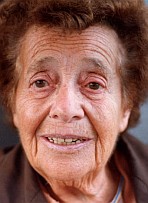
Ilse Seglow, a pioneer of group analysis, was born in Hamburg as Ilse Magdalene Seligmann, daughter of the liberal Rabbi Caesar Seligmann and Ella née Kauffmann. She had two older brothers and a younger sister. When she was two years old, the family moved to Frankfurt am Main, where she attended school. Ilse Seligmann became a kindergarten teacher, worked as a social worker and trained as an actress with Louise Dumont in Düsseldorf.
In 1926 she married the physician Martin Goldner (1902-1987) and moved with him to Berlin. In 1930 she began studying sociology, psychology and history at the Berlin University. After divorcing Goldner in 1931 she went to Frankfurt to study sociology with Karl Mannheim.
Her doctoral thesis on "Schauspiel und Gesellschaft" was supervised by Norbert Elias. In order to become a psychoanalyst she began analysis with Karl Landauer in 1932. After Hitler came to power she could neither finish her dissertation nor her analytical training in Germany.
In 1933 Ilse fled the Nazis to Paris. In 1934 she married the dramaturge Joseph Ziegellaub (1905-1949), their son Peter was born the same year. With false papers the family moved back to Frankfurt and in 1935 to Berlin, where Ilse Ziegellaub worked in the psychoanalytical seminar for kindergarten teachers of her friend Nelly Wolffheim. In 1937 the Ziegellaubs emigrated to England, Ilse Ziegellaub completed a training as a psychiatric social worker at the London School of Economics and then worked in various educational advice centers and schools. She divorced Ziegellaub in 1944 and gave herself the surname "Seglow".
From 1944 on, Ilse Seglow underwent analysis with Hilde Maas in London, before she moved to Vienna in 1949. With a training analysis with Otto Fleischmann and supervised by August Aichhorn, she wanted to become a member of the Vienna Psychoanalytic Society. But her attempt failed because of Aichhorn’s death and Fleischmann’s emigration to the USA. She returned to London and worked in the following years as a psychiatric social worker and, since 1960, as a psychotherapist in private practice.
In 1952, Ilse Seglow attended the first group analytic sessions of S. H. Foulkes and became a member of the Group Analytic Society founded the same year. She was, in 1952, a co-founder of the British Association of Psychotherapists (BAP), a professional association of non-physician psychotherapists, renamed London Centre for Psychotherapy (LCP) in 1971. After a split within the BAP, Ilse Seglow formed the new LCP in 1973 and led the Centre until her old age. Group analysis meant to her not only a therapy, but also a socio-critical approach. (Top of the article)
- SELECTED WORKS
- Psychodrama groups in a day school for maladjusted children. Association of Psychotherapists Bulletin 6, 1965, 23-24
- Some thoughts on the boundaries between therapeutic groups and training groups. Group Analysis 1, 1968, 91-98
- An intensive course in the behaviour of small groups. Group Analysis 4, 1971, 178-181
- Group therapy. Problems of gender. Group Analysis 7 (3), 1974
- Work at a research programme. In P. R. Gleichmann, J. Goudsblom and H. Korte (eds): Human Figurations. Aufsätze für Norbert Elias. Amsterdam 1977, 16-22
- Michael Foulkes remembered. Group Analysis 14, 1981, 220-222
- REFERENCES
- Geni (2023-11-16)
- Gfäller, Georg R., and Grete Leutz (eds): Gruppenanalyse, Gruppendynamik, Psychodrama. Quellen und Traditionen - Zeitzeugen berichten. Heidelberg 2004; 2006
- Herman, Nini: Ilse Seglow in her time. Reflections on her life and work. Brit J Psychother 5, 1989, 431-441
- HyperElias (2008-03-29)
- Mit Freud in Berlin (2020-10-20)
- Schaumann, Claudia: Ilse Seglow - Skizzen zu ihrem Lebenslauf. Gruppenanalyse 2 (1), 1992
- Wikipedia (2017-12-13)
- Wormser Juden (2023-11-16)
- PHOTO: Wikipedia; s. a. Mit Freud in Berlin
Ella Freeman Sharpe (1875-1947)
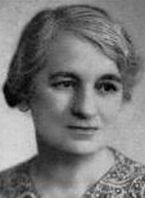
Ella Agnes Freeman Sharpe, one of the first child analysts in Britain, was born in Sudbury, Suffolk, the eldest daughter of Mary Ann Freeman and the silk weaver Frank Sharpe. When Ella Sharpe was six, the family moved to Nottingham where her father ran a café until his death in 1910. She was closely attached to her father, with whom she shared a love of Shakespeare and of English literature. Ella Sharpe attended a pupil teacher training school in Nottingham and studied literature, drama, and poetry at Nottingham University. Subsequently she taught English literature at a number of schools, finally at the Hucknall Teachers' Training College from 1904 to 1916.
Ella Sharpe moved to London in 1917 to seek treatment at the Medico-Psychological Clinic in Brunswick Square for depression prompted by the dissolution of a close friendship and the death of many of her former pupils in World War I. She was treated successfully by Julia Turner and James Glover and became interested in psychoanalysis. In 1917 she gave up teaching to study psychoanalysis at the Brunswick Square Clinic. Two years later, Ella Sharpe became, along with Turner and Glover, responsible for analysing the trainees. In 1920 she went to Berlin to be analysed by Hanns Sachs - just like later Mary Chadwick, Sylvia Payne and Nina Searl. She was elected an associate member of the British Psychoanalytical Society in 1921, and a full member in 1923.
Ella Sharpe became a valued training analyst of the London Institute of Psychoanalysis. When World War II broke out, she was a director of the Institute and played a role as an intermediary in the 1940s Controversial Discussions between Anna Freudians and Melanie Kleinians. Although she admired Melanie Klein's insight into the unconscious phantasy life of children and adults, she did not appreciate her radical departure from Sigmund Freud’s thinking. She pursued her own path between Freud and Klein and was assigned to the Middle Group of the independents.
Ella Sharpe was one of the first to highlight the role of counter-transference in her lectures on psychoanalytic technique. She was also interested in the conditions of artistic creativity, especially in the differences between the artist and the neurotic. She believed that there is a reality system in the artist, which enables him to externalise the creatures of his fantasy instead of assuming the part of them in real life, like the neurotic does. Her greatest contribution to psychoanalytic theory was her work on Dream Analysis. She was the first to state in 1937 that the mechanisms of dream work and symbolisation have their exact counterparts in poetic diction - an observation which twenty years later Jacques Lacan took up again in his formula "l'inconscient est structuré comme un langage".
Ella Freeman Sharpe died of a heart attack. (Top of the article)
- SELECTED WORKS
- Francis Thompson: a psycho-analytic study. Brit J Med Psychol 5, 1925, 329-344
- Contribution to "Symposium on child analysis". IJP 8, 1927, 380-384
- The impatience of Hamlet. IJP 10, 1929, 270-279
- The technique of psychoanalysis. Seven lectures. IJP 11, 1930, 251-277, 361-386; 12, 1931, 24-60
- Certain aspects of sublimation and delusion. IJP 11, 1930, 12-23
- The technique of psychoanalysis. IJP 11, 1930, 251-277, 361-386 and IJP 12, 1931, 24-60
- Similar and divergent unconscious determinants underlying the sublimations of pure art and pure science. IJP 16, 1935, 186-202
- Dream Analysis. A Practical Handbook for Psychoanalysts. London 1937 [Traumanalyse. Frankfurt/M. 1994]
- Psycho-physical problems revealed in language. An examination of metaphor. IJP 21, 1940, 201-213
- Cautionary tales. IJP 24, 1943, 41-45
- From "King Lear" to "The Tempest". IJP 27, 1946, 19-30
- Collected Papers on Psycho-Analysis. Ed. by Marjorie Brierley. London 1950
- (with Susan Isaacs and Joan Riviere) Fatherless Children. A Contribution to the Understanding of Their Needs. London 1945
- REFERENCES
- Grosskurth, Phyllis: Melanie Klein. New York 1986; Stuttgart 1993
- King, Pearl H. M.: Sharpe, Ella Freeman. In Dictionnaire internationale de la psychanalyse (2002). Ed. by Alain de Mijolla. Paris 2005, 1658f [International Dictionary of Psychoanalysis. Detroit u. a. 2005, 1599-1600]
- Lauth, Marie-Lise (ed.): Ella Sharpe lue par Lacan. Textes choisis et commentaires. Paris 2007
- Netzer, Carol: Annals of psychoanalysis: Ella Freeman Sharpe. Psychoanal Rev 69 (2), 1982, 207-219
- Oxford Dictionary of National Biography (2023-11-17)
- Payne, Sylvia: Ella Freeman Sharpe. An appreciation. IJP 28, 1947, 54-56
- Robinson, Ken: Ella Sharpe. Being Independent, following Freud. In E. Wolf and B. Antonis (Eds): Independent Women in British Psychoanalysis. Creativity and Authenticity at Work. London; New York 2023, 49-69
- Roudinesco, Elisabeth, and Michel Plon: Wörterbuch der Psychoanalyse (1997). Wien, New York 2004
- Wahl, Charles William: Ella Freeman Sharpe, 1875-1947. In Franz Alexander et al. (eds): Psychoanalytic Pioneers. New York 1966, 265-271
- Whelan, Maurice (ed.): Mistress of Her Own Thoughts. Ella Freeman Sharpe and the Practice of Psychoanalysis. London 2000
- Whelan, Maurice: Ella Sharpe. British Institute of Psychoanalysis 2015 (2017-07-21)
- Wikipedia (2012-02-15)
- PHOTO: Courtesy of the British Psychoanalytical Society
Helen Sheehan-Dare (1885-1980?)
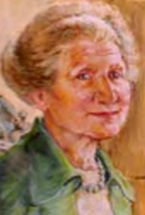
Helen Sheehan-Dare, an early child psychoanalyst in England, was born in Hatfield, Hertfordshire. Her father John Raymond Sheehan-Dare was a music teacher and director of a boys' boarding school in Hatfield, where her mother Caroline Eliza née Angell Lane (elder sister of Norman Angell, the recipient of the Nobel Peace Prize in 1933) ran a girls' school. Helen Sheehan-Dare took a bachelor's degree in Modern Languages from the University of London.
In 1912, she founded, along with her sister May Jacoby, St Etheldreda’s School for girls in Bexhill. In 1922 the school moved to Battle to become Battle Abbey School, of which she was Headmistress until the end of the 1950s (probably with interruptions). During World War I, she undertook industrial welfare work as a member of the Ministry of Munitions’ panel of trained welfare supervisors.
During the late 1920s and early 1930s Helen Sheehan-Dare trained at the London Institute of Psychoanalysis. She was one of the first members of the Institute for the Scientific Treatment of Delinquency initiated by Grace Pailthorpe in 1931. In 1932 she was elected a member of the British Psychoanalytical Society (BPAS) and became a training analyst and supervisor in 1935. She supervised, among others, Donald Winnicott, Charles Rycroft and Ignacio Matte Blanco. Specializing in child psychoanalysis, Helen Sheehan-Dare accepted many ideas of Melanie Klein, but refused to be described as an adherent of hers. During the 1930s and 1940s, she wrote numerous reviews of publications on child psychoanalysis in the International Journal of Psychoanalysis.
Helen Sheehan-Dare died between August 1979 and July 1981. (Top of the article)
- SELECTED WORKS
- On making contact with the child patient. IJP 15, 1934, 435-439
- Notes on a case of stammering (Lecture). BPAS 3.12.1930
- The purpose of fetishism (Lecture). BPAS 2.3.1932
- Technique in relation to phantasy (Lecture). BPAS 17.10.1934
- Homicide during a schizophrenic episode. IJP 36, 1955, 43-52
- REFERENCES
- Archives of the British Psychoanalytical Society (2017-11-28)
- A Celebration of Battle Abbey School 1912-2012, 44-55 (2021-10-12)
- Bull Int Psycho-Anal Assn 63, 1982, 103
- Ceadel, Martin: Living the Great Illusion. Sir Norman Angell, 1872-1967. Oxford; New York 2009
- Grosskurth, Phyllis: Melanie Klein. New York 1986; Stuttgart 1993
- IZP 22 (1), 1936, 109 + 23 (2), 1937, 332
- Kahr, Brett: Reminiscences by John Bowlby: Portraits of Colleagues, 1935-1945 (Previously Unpublished). Attachment: New Directions in Psychotherapy and Relational Psychoanalysis 6 (1), 2012, 27-49
- Kahr, Brett: Tea with Winnicott. London 2016
- Our Hatfield 2014 (2017-11-28)
- King, Pearl, and Riccardo Steiner (eds): The Freud-Klein Controversies 1941-45. London, New York 1991 [Die Freud/Klein-Kontroversen 1941-1945. 2 Bde. Stuttgart 2000]
- Rudnytsky, Peter L.: Psychoanalytic Conversations. Interviews with Clinicians, Commentators, and Critics. Hillsdale, NJ 2000
- Wikipedia: Battle Abbey School (2017-11-28)
- FIG.: A Celebration of Battle Abbey School 1912-2012, 50 (2022-05-24)
Elizabeth Bott Spillius (1924-2016)
Elizabeth Bott was born in Canada, the youngest of three daughters of the psychologists Helen McMurchie Bott and Edward Alexander Bott. She studied psychology in Toronto and anthropology in Chicago, where she earned an MA in 1949. The same year she went to London to do further work in anthropology at the London School of Economics and the Tavistock Institute of Human Relations (TIHR). In 1956 she was awarded her PhD, her doctoral research Family and Social Network soon became a standard work in anthropology.
During her research activity at the TIHR she came into contact with the ideas of Melanie Klein, and in 1957 she began training at the London Institute of Psychoanalysis. Her training analyst was Lois Munro. From 1958 to 1960 she interrupted her psychoanalytic training and joined her husband, the Canadian anthropologist James Spillius, to do anthropological field-work in the kingdom of Tonga, South Pacific.
In 1964 she became a full member of the British Psychoanalytical Society, and in 1975 a training and supervising analyst. Besides her lecturing to students, she took an active part in the Training Committee of the BPAS, where she initiated the systematic integration of Esther Bick's method of infant observation into psychoanalytic training. From 1988 to 1998 she was general editor of the series New Library of Psychoanalysis, published by Routledge in cooperation with the Institute of Psychoanalysis.
Elizabeth Bott Spillius occupied a unique position among Kleinian psychoanalysts. The main characteristics of her writings are the dual viewpoints of a psychoanalyst and an anthropologist. She was internationally known by her brilliant and comprehensible introductions to the work of Melanie Klein. In addition, she participated with her own studies in the further development of the Kleinian theory and technique. (Top of the article)
- SELECTED WORKS
- Family and Social Network. Roles, Norms, and External Relationships in Ordinary Urban Families (1957). London; New York 2008
- Psycho-analysis and ceremony (1968). In Melanie Klein Today, vol. 2, 1988 [Psychoanalyse und Zeremonie. In Melanie Klein heute, Bd. 2. München u. a. 1991, 346-378]
- Asylum and society (1976). In E. Trist and H. Murray (eds): The Social Engagement of Social Science. Philadelphia 1990, 586-612
- Tongan Society at the Time of Captain Cook's Visits. Discussions with her Majesty Queen Salute Tupou. Wellington 1982
- (ed.) Melanie Klein Today, vol. 1 and 2. London 1988 and 1989 [Melanie Klein heute, Bd. 1 und 2. München u. a. 1990 und 1991]
- Varieties of envious experience. IJP 74, 1993, 1199-1212
- Developments in Kleinian thoughts. Overview and personal view. Psychoanal Inq 14, 1994, 324-364 [Entwicklungslinien des kleinianischen Denkens. Ein Überblick und meine persönliche Sicht. In Spillius 2002, 27-84]
- On formulating clinical facts to the patient. IJP 75, 1994, 1121-1132 [Das Formulieren klinischer Tatsachen für den Patienten. In Spillius 2002, 206-230]
- Freud and Klein on the concept of phantasy. IJP 82, 2001, 361-374 [Der Phantasiebegriff bei Freud und Klein. In Spillius 2002, 85-197]
- Kleinianische Theorie in klinischer Praxis. Schriften von Elizabeth Bott-Spillius. Ed. by Claudia Frank and Heinz Weiß. Stuttgart 2002
- Anthropology and psychoanalysis. A personal concordance. Sociological Review 53 (4), 2005, 658-671 + in Spillius 2007
- Encounters with Melanie Klein. Selected Papers of Elizabeth Spillius. London; New York 2007
- Melitta and her mother. Psa Quart 78 (4), 2009, 1147-1166
- (et al.) The New Dictionary of Kleinian Thought. London 2011
- REFERENCES
- Frank, Claudia, and Heinz Weiß: Über das Verstehen klinischer Fakten in der psychoanalytischen Situation. In Spillius 2002, 7-23
- Milton, Jane: Elizabeth Spillius. Melanie Klein Trust 2012/2016 (2019-07-22)
- Spillius, Elizabeth Bott: On becoming a British psychoanalyst. Psychoanal Inq 29 (3) 2009, 204-222
- The Telegraph, 8 August 2016: Elizabeth Spillius, social anthropologist and Melanie Klein scholar - obituary (2017-02-28)
- Wikipedia (2014-11-13)
- PHOTO: Courtesy of the Melanie Klein Trust
Karin Stephen née Costelloe (1889-1953)
Catherine Elizabeth "Karin" Stephen was the youngest daughter of Frank Costelloe, a Northern Irish convert to Roman Catholicism, and Mary Whitall Smith, a Philadelphia Quaker. Her mother was an art historian, who deserted the family and married the art historian Bernard Berenson in 1900. Karin's adored father died, when she was ten (Fig.1). So she and her sister Ray were brought up by their Quaker grandmother. Both of them attended Newnham College (for women only) in Cambridge, where Karin Costelloe was a pupil of her uncle, Bertrand Russell, and the philosopher George Edward Moore. In 1912 she was elected to membership of the Aristotelian Society. Probably she wrote her book on Henri Bergson, The Misuse of Mind, at about this time.
She joined the Bloomsbury Group and in 1914 she married Adrian Stephen (1883-1948), a younger brother of Virginia Woolf (Fig.2). Her two daughters Ann and Judith were born in 1915 and 1918 (Fig.3). Karin and Adrian Stephen sympathised with socialist and pacifist ideas and spent the First World War working on a farm in Essex. After the war they both applied to be trained as psychoanalysts, but Ernest Jones made them take a medical degree first. They went into analysis with James Glover. After he died, Karin Stephen underwent training analysis with Sylvia Payne and became in 1927 an associate and in 1931 a full member of the British Psychoanalytical Society. In 1927 she went for a time to Baltimore, to work at the Sheppard and Enoch Pratt Hospital and had a second analysis with Clara Thompson. After the Freud-Klein Controversies in the 1940s, Karin and Adrian Stephen joined the Middle Group, later called the Independent Group.
Karin Stephens was especially interested in presenting psychoanalysis to non-analysts. She gave the first course of lectures on psychoanalysis ever given at Cambridge University, a highly regarded introduction to medical students, which was published in 1933 under the title Psychoanalysis and Medicine. In her remarkable essay on Relations between the superego and the ego she considered that the super-ego as a separate admonishing and punishing function is essentially pathological, while self-awareness is a normal ego-function. Furthermore she stated that the Kleinian internal objects are a fiction imposed by the analyst.
Since her student days at Cambridge, Karin Stephen suffered from an increasingly severe deafness and had to use an ear trumpet. In addition, an operation intended to improve her ear trouble resulted in a partial facial paralysis. Suffering from depression, she finally committed suicide. (Top of the article)
- SELECTED WORKS
- The Misuse of Mind. A Study of Bergson's Attack on Intellectualism. London 1922; Project Gutenberg (2010-01-03)
- Pain, love and fear. Psychoanal Rev 17, 1930, 126-139
- Psychoanalysis and Medicine. A Study of the Wish to Fall Ill. Cambridge 1933
- Introjection and projection. Guilt and rage. Brit J Med Psychol 14, 1934, 316-331
- The development of infantile anxiety in relation to frustration, aggression and fear. Journal of Mental Science 84, 1938, 1068
- Aggression in early childhood. Brit J Med Psychol 18, 1939, 178-190
- Relations between the superego and the ego (1945). Psychoanal Hist 2 (1), 2000, 11-28
- Discussion on the treatment of obsessional neurosis. Proceedings of the Royal Society of Medicine 43, 1950, 1002-1007
- On Human Misery. Unpublished Ms.
- REFERENCES
- King, Pearl, and Riccardo Steiner (eds): The Freud-Klein Controversies 1941-45. London, New York 1991
- Lee, Hermione: Virginia Woolf. Ein Leben (1996). Frankfurt/M. 1999
- Milner, Marion: Obituary Karin Stephen (1889-1953). IJP 35, 1954, 432-434
- National Portrait Gallery (2012-02-16)
- Wikipedia: Karin Stephen; Adrian Stephen; Mary Berenson (2017-12-13)
Alix Strachey née Sargant-Florence (1892-1973)
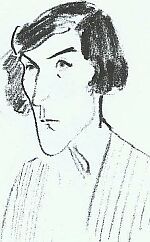
Alix Strachey was born in Nutley, an artist's colony in New Jersey. Shortly after Alix's birth, her father Harry Smyth-Florence, an American musician, drowned, and her mother Mary Sargant, a British painter, returned with Alix and her elder brother Philip to Britain. From 1911 to 1914 Alix Sargant-Florence studied modern languages at Newnham College, Cambridge. She was known even then for her cutting wit and ironic intelligence, but presumably suffered from anorexia and became melancholic at the age of twenty. Living with her brother in Bloomsbury during World War I, she took part in the life of the Bloomsbury Group around Lytton Strachey and Virginia Woolf. There she met James Strachey (1887-1967), whom she married in 1920.
That year Alix and James Strachey went to Vienna, to undergo analysis with Sigmund Freud, which lastet until 1922. It was during this period that they began to translate Freud's work into English. Alix Strachey became an associate member of the British Psycho-Analytical Society in 1922 and a full member in 1923. On the recommendation of Freud she went to Berlin for further analysis with Karl Abraham in 1924. Her famous correspondence with James Strachey, in which she drew a lively picture of the Berlin psychoanalyst's scene, dates from that time. There she met Melanie Klein, whose ideas strongly impressed her. Due to her suggestion, the BPAS invited Melanie Klein for a series of lectures at the London Institute in 1925. Alix Strachey translated some of her papers into English, e. g. Klein's most important book The Psycho-Analysis of Children.
After Abraham's death Alix Strachey continued her analysis in London with Edward Glover in 1926 and later with Sylvia Payne. In the course of the controversies between Kleinians and Anna Freudians in the BPAS she felt a growing uneasiness with the development of the Kleinian theory, which she described in her paper A note on the use of the word internal. Like her husband she joined the Middle Group, later known as Independent Group.
From the end of the 1940s, Alix and James Strachey worked on the Standard Edition of Sigmund Freud's works, translating the major part of it. In addition Alix Strachey translated, in collaboration with Douglas Bryan, a selection of papers by Karl Abraham, and compiled a complete index of psychoanalytic terms.
Alix Strachey was particularly interested in the psychosocial conditions relating to war, to which belonged the behaviour of people in groups. In her book The Unconscious Motives of War she described the regressive and potentially destructive group mentality, on which institutions like public schools, the church, the army and the national sovereign state were based: The person in a group loses his super-ego and an external authority takes its place. The group induces an unrealistic state of mind, and indifference as well as outright hostility to those outside the group. Strachey believed that knowledge of the theory of psychoanalysis might moderate such destructive tendencies. (Top of the article)
- SELECTED WORKS
- A note on the use of the word internal. IJP 22, 1941, 37-43
- The Unconscious Motives of War. London 1957
- REFERENCES
- Appignanesi, Lisa, and John Forrester: Freud's Women. London 1992
- De Clerck, Rotraut: "Der Traum von einer bess'ren Welt". Vorwort in Meisel/Kendrick 1995, 9-40
- Grosskurth, Phyllis: Melanie Klein. New York 1986; Stuttgart 1993
- Khan, Masud M.: Mrs. Alix Strachey (1892-1973). IJP 54, 1973, 370
- Meisel, Perry, and Walter Kendrick (eds): Bloomsbury/Freud. The Letters of James and Alix Strachey 1924-1925. New York 1985
- Munsch, Matthias: Psychoanalyse in der englischen Moderne. Die Bedeutung Sigmund Freuds für die Bloomsbury Group und Lytton Stracheys biographisches Schreiben. Marburg an der Lahn 2004
- National Portrait Gallery (2012-02-17)
- Ogilvie, Marilyn B., and Joy D. Harvey (eds): The Biographical Dictionary of Women in Science, vol. 2. New York; London 2000
- Roudinesco, Elisabeth, and Michel Plon: Wörterbuch der Psychoanalyse (1997). Wien, New York 2004
- Steiner, Riccardo: Strachey-Sargant, Alix. In Dictionnaire international de la psychanalyse (2002). Ed. by Alain de Mijolla. Paris 2005, 1726 [International Dictionary of Psychoanalysis. Detroit u. a. 2005, 1663-1664]
- Wikipedia (2017-12-13)
- FIG.: Robert Berény (1924); Photo see National Portrait Gallery (2024-11-26)
Ruth Thomas (1902-1983)
Ruth Thomas was born in Sydney, Australia. After graduating in psychology at the University of Sydney she taught at Claremont Teacher Training College in Perth from 1924 until 1933, the year she moved to London. In London she lectured at St. Gabriel's College in Camberwell, and subsequently worked in the London Child Guidance Training Centre. When war broke out in 1939, Ruth Thomas joined the staff of the Central Association for Mental Welfare (later National Association for Mental Health) to advise on the needs of children who were separated from their families by the war. In the 1940s, she was in charge of a residential hostel for difficult children and helped popularise psychoanalytic ideas about children by means of lectures, radio talks and parent guidance pamphlets.
In 1939 she began training at the London Institute of Psychoanalysis and chose Anna Freud as her analyst. She became a member of the British Psychoanalytical Society, where she adhered to an ego-psychological position and belonged to Anna Freud's B Group. She was a training analyst and supervisor at the Hampstead Child Therapy Clinic and Course and the director of training from 1950 to 1976. Ruth Thomas was a founding member of the Association of Child Psychotherapists (ACP) in 1949 and played a major part in the development of acceptable standards for the training of child psychotherapists. (Top of the article)
- SELECTED WORKS
- The importance of mothering. BBC, 4 December 1942
- Children who dislike their food. London 1946 + BBC, 13 February 1946
- Children without homes. London 1946
- Fears and jealousies. London 1946
- The search for a sexual identity in a case of constitutional sexual precocity. Psa Study Child 18, 1963, 636-662
- (et al.) Comments on some aspects of self and object representation in a group of psychotic children. An application of Anna Freud's Diagnostic Profile. Psa Study Child 21, 1966, 527-580
- (and Kenneth Brill) Children in Homes. London 1964
- REFERENCES
- Dyer, Raymond: Anna Freud & Education. Studies in the History, Philosophy, Science and Application of Child Psychoanalysis. Phil. Diss. University of Sheffield 1960 (2017-12-04)
- Freud in Oceania, 2012-11-19 (2017-12-04)
- Model, Elizabeth E.: Ruth Thomas 1902-1983. An appreciation. J Child Psychother 9, 1983, 5-6
- Ruth Thomas. Bulletin of the Anna Freud Centre 6 (2), 1983, 219-222
Margret Tönnesmann (1924-2014)
Margret Tönnesmann or Tonnesmann was born in Düsseldorf in Germany. She started her medical study in Göttingen, and continued it after the end of World War I in Bonn and Hamburg, where she passed her state examination in 1951. From 1950 to 1951 she studied psychology in Kiel and subsequently three semesters of psychology and sociology in Zürich. In 1958 she graduated as a doctor of medicine from the University of Zürich. That same year she edited along with René König, a renowned sociologist, Probleme der Medizin-Soziologie, a special issue of the Kölner Zeitschrift für Soziologie und Sozialpsychologie, which marked the beginning of medical sociology in Germany. In it, she published under the title Einige Aspekte zur Entwicklung einer Medizinsoziologie und Sozialpsychologie in Deutschland an inventory of medical-sociological research since 1945.
In 1959 Margret Tönnesmann moved to London, to specialise as a psychiatrist and to undergo psychoanalytic training. She became a member of the British Psychoanalytical Society, where she belonged to the "Middle Group" of independents aligned to neither Anna Freud nor Melanie Klein. She worked as a psychoanalyst in private practice and as a lecturer and supervisor at the Institute of Psychoanalysis. Her teaching extended to such institutions as the Tavistock Clinic, University College London and the British Association of Psychotherapists as well as regular teaching assignments in Frankfurt, Darmstadt, Düsseldorf and Zürich.
Tönnesmann was a proponent of the psychoanalytic object relations theory, in particular by Donald W. Winnicott. In 1989 she was the editor of Paula Heimann's writings from the years 1942 to 1980, commented by her and published under the title About Children and Children-No-Longer. She was especially interested in the history of psychoanalysis and published several papers on this subject.
After more than half a century in London, Margret Tönnesmann returned, seriously ill, to Germany, where she died at the age of 89 in Bonn. (Top of the article)
- SELECTED WORKS
- Übersicht über die verschiedenen neueren Persönlichkeitstheorien und ihre Anwendung auf den kranken Menschen. Med. Diss. Kiel 1958
- Einige Aspekte zur Entwicklung einer Medizinsoziologie und Sozialpsychologie in Deutschland. In R. König und M. Tönnesmann (Hg.): Probleme der Medizinsoziologie. Sonderheft 3 der Kölner Zeitschrift für Soziologie und Sozialpsychologie 1958, 294-336
- Adoleszent re-enacting, trauma and reconstruction. J Child Psychother 6, 1980, 23-44
- The third area of experience in psychoanalysis. Winnicott Studies Nr. 8, 1993, 3-16
- Early emotional development: Ferenczi to Winnicott. Bulletin of the British Psychoanalytical Society 30 (2), 1995, 14-19
- Donald W. Winnicott's diagram of the transitional object, and other figures. In B. Burgoyne (ed.): Drawing the Soul. Schemas and Models in Psychoanalysis. London 2000, 22-33
- Die Arbeiten von Donald W. Winnicott. Beiträge zur Theorie und Praxis der Psychoanalyse. Luzifer-Amor 15 (30), 2002, 46-61
- Heimann, Paula. In Dictionnaire international de la psychanalyse (2002). Ed. by A. de Mijolla. Paris 2005, 765f [International Dictionary of Psychoanalysis. Detroit u. a. 2005, 729-730]
- Transference and countertransference. An historical approach. In S. Budd and R. Rusbridger (eds): Introducing Psychoanalysis. Essential Themes and Topics. London; New York 2005, 185-199
- Michael Balint and Donald Winnicott: Contributions to the treatment of severley disturbed patients in the Independent Tradition. In L. Caldwell (ed.): Winnicott and the Psychoanalytic Tradition. London 2007, 128-140
- Towards the structural model of the mind. In R. J. Perelberg (ed.): Freud. A Modern Reader. London 2005
- Theoretische und klinische Entwicklungen in der "Independent Tradition" der Psychoanalyse. Jb Psychoanal 57, 2008, 161-182
- (and René König) (eds) Probleme der Medizinsoziologie. Sonderheft 3 der Kölner Zeitschrift für Soziologie und Sozialpsychologie 1958
- REFERENCES
- Grosz-Ganzoni, Ita, Sylvia von Arx and Susanne Staub: Nachruf Dr. med. Margret Tönnesmann, 1924-2014. PSZ, 17.3.2014 (2018-05-28)
- Traueranzeige in der Rheinischen Post, 20.2.2014
- Wikipedia (2015-03-13)
Julia Turner (1863-1946)
Julia Turner was not a formally trained analyst, but as the co-founder of the Medico-Psychological Clinic she played an important role in the history of psychoanalysis in Britain. She was born in Dagenham, Essex, the daughter of Alfred and Marianne (née Venton) Turner. Her father was a solicitor. She studied at University College London, graduating with a BA in classics in 1889. From 1900 to 1904 she was co-principal of Fir Grove House Ladies' School in Godalming. Like her companion Jessie Murray, she was a supporter of the suffragist movement.
In 1913 Jessie Murray, Julia Turner, and others founded the Medico-Psychological Clinic in London, later known as the Brunswick Square Clinic. The Medico-Psychological Clinic was the first public clinic in Britain to offer psychoanalytic therapy and training in psychoanalysis. They soon incurred the wrath of Ernest Jones, who saw the institution as a rival to his London Psycho-Analytical Society.
Most of the analyses were conducted by Jessie Murray and Julia Turner. After the premature death of Murray in 1920, Julia Turner and her analysand James Glover took over the direction of the Brunswick Square Clinic. However, there was a split between them: Julia Turner was also interested in Jungian ideas, while Glover - now formally analysed by Karl Abraham in Berlin - wanted to make the Clinic purely psychoanalytic. Julia Turner withdrew from the Clinic and founded the Psychological Aid Society in 1921. The break and overwhelming financial problems accelerated the end of the Medico-Psychological Clinic, which was closed in 1922. (Top of the article)
- SELECTED WORKS
- The Psychology of Self-Consciousness. London 1923; 1999; New York 1923
- The Dream and the Anxiety Hypothesis. London 1923
- Human Psychology as Seen Through the Dream. London 1924
- REFERENCES
- Alumnos de 1º de Psicología de la Universidad de Sevilla (2023-11-20)
- Alexander, Sally: Psychoanalysis in Britain in the early twentieth century. An introductory note. History Workshop Journal 45, 1998, 134-143
- Hinshelwood, Robert Dayles: The organizing of psychoanalysis in Britain. Psychoanalysis & History 1,1999, 87-102
- Raitt, Suzanne: Early British psychoanalysis and the Medico-Psychological Clinic. History Workshop Journal 58, 2004, 63-85
- Valentine, Elizabeth R.: "A brilliant and many-sided personality": Jessie Margaret Murray, founder of the Medico-Psychological Clinic. Journal of the History of the Behavioral Sciences 45 (2), 2009, 145-161
- Wikipedia (2023-11-20)
Frances Tustin née Vickers (1913-1994)
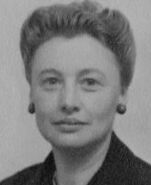
The child analyst Frances Tustin was born in Darlington, North East England. She was the only child of two deeply religious parents, who separated in 1926. Frances lived henceforth with her mother and would not see her beloved father again for some fifteen years. From 1932 to 1934 she trained as a teacher at Whitelands College in Putney, London. In 1938 she married John Taylor, a Town Hall official, whom she divorced in 1946. Two years later she married Arnold Tustin (1899-1994), an eminent physicist.
Frances Tustin worked as a teacher for several years, before she became introduced to psychoanalysis while attending courses of Susan Isaacs in 1943. In 1950, after the death of her first child, she began a three-year child psychotherapy training at the London Tavistock Clinic. She entered into analysis with Wilfred Ruprecht Bion, a Kleinian analyst; her analysis lasted (with two interruptions) fourteen years. In 1953 she went to Boston for an internship at the James Putnam Center, one of the first treatment centres for autistic children, which was directed by Beata Rank and Marian Putnam.
Frances Tustin was a member of the British Psychoanalytical Society and the Association of Child Psychotherapists and she taught at the Tavistock Clinic. She expanded Melanie Klein's theories to account for the treatment of autistic children and became an internationally renowned authority in the field of autism. Based on Kleinian and neo-Kleinian principles Tustin had developed a typology of autism in 1972, which is still considered as classical.
In Tustin's view infantile autism is a two-stage-illness: the first stage being an unduly close association with the mother, the father often being absent or excluded. The second stage is when this child becomes prematurely aware of bodily separation from its mother at a time when it cannot yet symbolise the absence. The child feels as if it were experiencing not just loss of the object but also the sensation of being bodily uprooted. Against this traumatic experience of annihilation the child then erects defense mechanisms, which consists of autistic forms and objects and the construction of an autistic shell. (Top of the article)
- SELECTED WORKS (for more, see: The Frances Tustin Memorial Trust)
- A Group of Juniors. A Study of Latency Children's Play. London 1951
- Anorexia nervosa in an adolescent girl. Brit J Med Psychol 31, 1958, 184-200
- Autism and Childhood Psychosis. London, New York 1972
- Autistic objects. Int Rev Psychoanal 7, 1980, 27-40
- Autistic States in Children. London 1981 [Autistische Zustände bei Kindern. Stuttgart 1989]
- Thoughts on autism with special reference to a paper by Melanie Klein. J Child Psychother 9, 1983, 119-131
- Autistic shapes. Int Rev Psychoanal 11, 1984, 279-290
- Autistic Barriers in Neurotic Patients. London 1986 [Autistische Barrieren bei Neurotikern. Frankfurt/M. 1988; Tübingen 2005]
- The black hole - a significant element in autism. Free Associations No. 11, 1988
- Psychotherapy with children who cannot play. Int Rev Psychoanal 15, 1988, 93-106
- The Protective Shell in Children and Adults. London 1990 [Der autistische Rückzug. Die schützende Schale bei Kindern und Erwachsenen. Tübingen 2008]
- Revised understandings of psychogenic autism. IJP 72, 1991, 585-592
- On psychogenic autism. Psychoanal Inq 13, 1993, 34-41
- REFERENCES
- Houzel, Didier: Tustin, Frances. In Dictionnaire international de la psychanalyse (2002). Ed. by Alain de Mijolla. Paris 2005, 1873-1875 [International Dictionary of Psychoanalysis. Detroit u. a. 2005, 1808-1810]
- Hunter, Virginia: An interview with Francis Tustin. Psychoanal Rev 79, 1992, 1-24
- Mitrani, Theodore, and Judith L. Mitrani (eds): Encounters With Autistic States. A Memorial Tribute to Frances Tustin. Northvale, N.J. 1997
- Rhode, Maria: Frances Tustin. Melanie Klein Trust 2017 (2019-07-22)
- Spensley, Sheila: Frances Tustin. London; New York 1994
- The Frances Tustin Memorial Trust (2024-08-12)
- PHOTO: Courtesy of The Frances Tustin Memorial Trust (2024-08-12)
Clare Winnicott née Nimmo Britton (1906-1984)
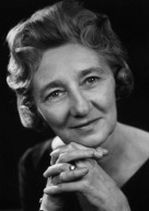
Clare Winnicott was born in Scarborough, Yorkshire, the oldest of four children. Her father James Nimmo Britton, housepainter or plumber, had become a minister in the Baptist church, her mother Elsie Clare Slater was also actively involved in Baptist church activities. After completing high school, Clare Britton attended Selly Oak School, a teacher-training college in Birmingham, from 1929 to 1930. Subsequently she worked for the Young Women's Christian Association (YWCA). In 1937 she began a training in social work by enrolling on a one-year Social Science course at the London School of Economics (LSE). In 1940 she attended the thirteen-month Mental Health Course at the LSE.
During World War II Clare Britton worked with evacuated children in Oxfordshire, who had been separated from their families and who were often traumatized. At this occasion she met her future husband, the psychoanalyst Donald Woods Winnicott (1896-1971), who then worked as psychiatric consultant to hostels for difficult children. From 1947 to 1958 she was lecturer in charge of the Child Care Course, a programme for training social workers at the LSE established by the British Home Office. Donald W. Winnicott, too, taught on this programme. After the Child Care Course was ended in 1958, Clare Winnicott continued to teach on the Applied Social Studies Course at the LSE until 1964.
In 1951 she married Winnicott, with whom she was very close due to shared interests, temperament and mutual inspiration. Important ideas like the concept of the transitional object were described by Clare Winnicott in her case studies, prior to its theoretical formulation by Donald Winnicott. In 1948, she began an analysis with the Kleinian Clifford Scott and continued with Melanie Klein after Scott had left for Canada in 1954. Although she was impressed by the Kleinian approach, Clare Winnicott criticised Klein's disregard of environmental influences and her insistence on focusing on the negative aspects in the transference.
In 1960 Clare Winnicott became a member of the British Psychoanalytical Society, but did not engage in an analytic practice at that time. From 1964 to 1971, as Director of Child Care Studies at the Home Office, she was in charge of the training of child care workers. After the death of her husband, Clare Winnicott had further analysis with Lois Munro and set up a psychoanalytic practice in London in 1972. In addition she supervised and taught for ten years at the British Association of Psychotherapists, a training centre in psychoanalytic psychotherapy.
In her day Clare Winnicott exerted great influence on British child care and social work with her psychoanalytically inspired approach to social work. General topics of her writings are: understanding the intrapsychic life of children, especially those who have suffered loss and separation; techniques for communicating with children; the role of the social worker as a "transitional participant"; and the counter-transference responses in helping relationships.
Clare Winnicott died of skin cancer in 1984. (Top of the article)
- SELECTED WORKS
- (C. Britton) Children who cannot play. In New Educational Fellowship (ed.): Play and Mental Health. London 1945, 12-17
- Remarks in "The Oxfordshire Hostels Scheme". Report of Child Guidance Inter Clinic Conference. 1946, 29-35, 42-43
- Child care. In C. Morris (ed.): Social Work in Great Britain. London 1950
- Casework techniques in the child care services. Social Casework, 36 (1), 1955, 3-13
- (C. Winnicott) Child Care and Social Work. A Collection of Papers Written between 1954 and 1963. Hertfordshire 1964
- Communicating with children (I). Child Care Quarterly Review 18 (3), 1964, 85-93
- Communicating with children (II). Social Work Today 8 (26), 1977, 7-11
- Fear of breakdown. A clinical example. IJP 61, 1980, 351-357
- Donald W. Winnicott. A reflection. In S. Grolnick and L. Barkin (eds): Between Fantasy and Reality. Transitional Objects and Phenomena. New York 1978, 15-33
- Face to Face with Children. The Life and Work of Clare Winnicott. Ed. by Joel Kanter. London; New York 2004
- (C. Britton and D. W. Winnicott) The problem of homeless children. The New Era in Home and School 25, 1944, 155-161
- Residential management as treatment for difficult children. Human Relations 1 (1), 1947, 2-12
- REFERENCES
- Elkan, Irmi: Tribute to Clare Winnicott. British Psycho-Analytical Society Bulletin 7, 1984, 12-13
- Grosskurth: Melanie Klein. New York 1986; Stuttgart 1993
- Kanter, Joel: Clare Winnicott. Her life and legacy. In Winnicott 2004, 1-94
- Kanter, Joel: "Let’s never ask him what to do". Clare Britton’s tranformative impact on Donald Winnicott. Am Imago 61, 2004, 457-481
- Kanter, Joel: The untold story of Clare and Donald Winnicott: How social work influenced modern psychoanalysis. Clinical Social Work Journal, 28 (3), 2000, 245-261 + Psychanalyse.lu (2007-08-23)
- King, Pearl: Tribute to Clare Winnicott. British Psycho-Analytical Society Bulletin,
- 7, 1984, 15-16
- Milner, Marion: Obituary Clare Winnicott, O.B.E. Winnicott Studies 1, 1985, 4
- Wikipedia (2021-01-12)
- PHOTO: in Clare Winnicott: Face to Face with Children. London; New York 2004 (Marc Gerson). Courtesy of Karnac Books