Women Psychoanalysts in France
Geschichte

Liliane Abensour (1932-2011)
Liliane Abensour was a lecturer in English Literature at the University of Paris VII, before she underwent psychoanalytic training at the Société Psychanalytique de Paris (SPP). One of her control analysts was Évelyne Kestemberg, under whose supervision she began to analyse psychotic patients in the late 1970s. She then worked at the Centre de psychanalyse et de psychothérapie Évelyne et Jean Kestemberg (CEJK) in Paris, devoting herself to the treatment of psychosis until her retirement. In 2001 she participated in founding the Centre's journal Psychanalyse et Psychose, to which she was editor-in-chief (until 2009 together with Antoine Nastasi). She became a training analyst of the SPP in 2000.
Motivated by her love of English literature, Liliane Abensour was particularly interested in the British school of psychoanalysis, i.e. the Kleinian school, represented by Wilfred Bion, Hanna Segal and Herbert Rosenfeld. Her analytic work with psychotic patients was especially related to the approaches of Evelyne Kestemberg and Piera Aulagnier. In her best-known book, Psychotic Temptation, Liliane Abensour stated that every human being possesses the potentiality to be tempted by the psychotic solution as a response to deal with the traumatic dimension of psychic development. According to her, the psychotic delusion draws from what she called the "liminal" sphere, the space between the preconscious and the conscious. From that space, cut off from all contact with a regressive unconscious, comes "liminal writing", a kind of writing that Abensour compared to that of poetry. Writing then becomes an anti-traumatic act.
Liliane Abensour was also interested in the metapsychological definition of the maternal. In her study L'ombre du maternel (The Shadow of the Maternal), she dealt with the undecidable quality of the maternal: orientated both towards origins until an elusive vanishing point and towards a mode of functioning and relationship. Its two-directional nature gives rise to various theoretical models.
Liliane Abensour lived in Paris, where she died of leukaemia on 19 August 2011. (Top of the article)
- SELECTED WORKS (for more, see BSF)
- Rêves et analyse subliminale. RFP 58 (4), 1994, 1033-1040
- Temps et révélation. Pour une approche de l' homosexualité primaire. RFP 60 (4), 1996, 1011-1022
- Écritures du moi. Trans Nr. 9, 1998, 59-68
- Évelyne Kestemberg. Paris 1999
- L'impossible du transfert négatif. Le transfert clivé. RFP 64 (2), 2000, 407-417
- Présence de l'objet et effet de réel dans le psychodrame. In SPASM (Hg.): Conférences et colloque 2004: Le sexuel et la sexualité au psychodrame. Paris 2004, 125-144
- Sensations, hallucinations, délire. À propos de "La chute de la Maison Usher" d'Edgar Allan Poe. Psychanalyse et Psychose Nr. 5, 2005, 123-131
- Le psychodrame psychanalytique individuel. Le Carnet/PSY Nr. 102, 2005 (7), 20-21
- La haine des origines et son ombre portée. In A. Fine et al. (eds): La haine. Haine de soi, haine de l’autre, haine dans la culture. Paris 2005, 59-71
- Tentation délirante et pensée imaginante. Psychanalyse et Psychose Nr. 6, 2006, 105-117
- La brillance du contre-transfert. RFP 70 (2), 2006, 405-413
- L'attraction vers l'illimité. Sensation océanique, psychose et temporalité. RFP 71 (4), 2007, 1061-1076
- La tentation psychotique. Paris 2008 [Psychotic Temptation. London 2013]
- La santé comme illusion. Rev fr psychosom Nr. 36, 2009, 55-67
- L'ombre du maternel. Bulletin de la SPP Nr. 98, 2010, 29-95
- L'ombre du maternel. Ed. by Marilia Aisenstein and Josette Garon. Paris 2013
- REFERENCES
- Aisenstein, Marilia, und Josette Garon (Hg.): Liliane Abensour. L'ombre du maternel. Paris 2013
- Chervet, Bernard: Foreword in "La tentation psychotique" von Liliane Abensour. Oedipe (2016-11-09)
- Garon Léonard, Josette: Liliane Abensour, une femme engagée. Bulletin de la Société Psychanalytique de Montréal 23 (3), 2011, 35-37
- Hommage Liliane Abensour. Psychanalyse et psychose Nr. 14 bis, 2014
- Oedipe: Décès de Liliane Abensour (2016-11-09)


Annie Anzieu née Péghaire (1922-2019)
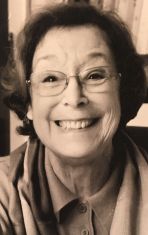
Annie Anzieu studied philosophy and psychology (with Daniel Lagache) in Paris after the end of World War II. In 1947 she married her fellow student Didier Anzieu (1923-1999); their daughter Christine was born in 1950, their son Patrick in 1953. Didier Anzieu was the son of Marguerite Anzieu, née Pantaine, who was hospitalised at Sainte-Anne in 1931 and became known as Jacques Lacan's famous case of "Aimée". Didier Anzieu, who had no idea of this connection, began analysis with Lacan in 1949.
Annie Anzieu worked as a psychologist and taught philosophy, before she became a logopedist and psychotherapist at the Salpêtrière hospital in Paris in 1958. Together with Daniel Widlöcher she founded the Department of Psychotherapy for Children at the Salpêtrière, which she led for many years. She underwent training analysis with Georges Favez and became a member of the Association Psychanalytique de France, founded in 1964. She specialised in child analysis and created with Florence Guignard, in 1984, the Association pour la psychanalyse de l'enfant, of which she was president, and, in 1994, the Société Européenne pour la Psychanalyse de l'Enfant et de l'Adolescent (SEPEA).
Daniel Lagache, Melanie Klein and Donald Winnicott influenced the thinking of Annie Anzieu. In cooperation with Didier Anzieu she developed the concept of the skin ego. In addition to child analysis, she is especially interested in female sexuality. In her book La femme sans qualité (The woman without qualities) she argued that a woman's psyche is influenced by the representations of her body's interior, formed by a sexual cavity. In her opinion femininity does not connote the lack of a penis, but the notions of orifice and passage.
Annie Anzieu's daughter, Christine Anzieu-Premmereur, is also a psychoanalyst. (Top of the article)
- SELECTED WORKS
- Le psychanalyste dans son fauteuil. In G. Favez et al.: Être psychanalyste. Paris 1976, 148-166
- Psychanalyse et langage. Du corps à la parole. Paris 1977
- La femme sans qualité. Esquisse psychanalytique de la féminité. Paris 1989; 2004
- La famille: l'individu-plus-un. Approche psychanalytique et approche systémique. Boucherville, Québec 1990
- Beunruhigende Weiblichkeit. Zum Thema Adoleszenz. Psyche 49, 1995, 886-902
- Le travail du psychothérapeute d'enfant. Paris 2003
- Hysterie als Erregungshülle. In B. Brosig and U. Gieler (eds.): Die Haut als psychische Hülle. Gießen 2004
- Propos sur la féminité. RFP 69 (4), 2005, 1103-1116
- Quelques reflexions sur une psychanalyse possible des bébés. La Psychiatrie de l'enfant 50 (2), 2007, 417-422
- Le travail du psychothérapeute d'enfant. Paris 2014
- (with Simone Daymas and Christine Anzieu-Premmereur) Le jeu en psychothérapie de l'enfant. Paris 2000 [Das Spiel in der Kinderpsychotherapie. Tübingen 2006]
- (with Loïse Barbey, Jocelyne Bernard-Nez, and Simone Daymas) Le travail du dessin en psychothérapie de l'enfant. Paris 1996; 2002
- (and Christian Gérard) (eds) Traumatisme et contre-transfert. Paris 2004
- REFERENCES
- Anzieu-Premmereur, Christine: Hommage à Annie Anzieu. Filigrane 28 (2), 2019 (2020-04-12)
- Braconnier, Alain: Entretien avec Annie Anzieu. Le Carnet PSY Nr. 91, 2004, 22-30 (2013-11-16)
- Didier, Béatrice, Antoinette Fouque und Mireille Calle-Gruber (Hg.): Le Dictionnaire universel des créatrices. Paris 2013
- Roudinesco, Elisabeth: Jacques Lacan. Esquisse d'une vie, histoire d'un système de pensée. Paris 1993 [Jacques Lacan. An Outline of a Life and a History of a System of Thought. Oxford 1999
- Segal, Naomi: Consensuality. Didier Anzieu, Gender and the Sense of Touch. Amsterdam; New York 2009
- Wikipedia (2018-10-12)
- PHOTO: Courtesy of Christine Anzieu-Premmereur
Jenny Aubry née Weiss (1903-1987)
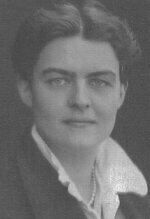
Jenny Aubry was a pioneer of child psychoanalysis in France. She was born into an educated upper-middle-class family in Paris; her mother, Jeanne Javal, was of Jewish origin and her father, the engineer Paul Louis Weiss, was Protestant. Her older sister, Louise Weiss, was a famous suffragette. Urged on by her mother and against the wish of her father, Jenny Weiss studied medicine, neurology and child psychiatry. In 1928 she married Alexandre Roudinesco (1883-1974), a paediatrician who had emigrated from Romania, by whom she had three children. Her daughter Elisabeth Roudinesco also became a psychoanalyst.
Jenny Roudinesco interned with the neurologist Clovis Vincent and was an assistant with the child psychiatrist Georges Heuyer from 1935 to 1939. At that time she met the child analyst Sophie Morgenstern. After obtaining the title of a hospital doctor in 1939, she worked as a physician at the Salpêtrière hospital, the hospice in Brévannes and the Enfants-Malades hospital. During the German occupation she joined the Resistance and, protected by false papers, she used her position to hide Jewish children and to prepare certificates of tuberculosis for young men likely to be sent to forced labour camps.
In 1946 Jenny Roudinesco became Chief of Paediatrics at the Ambroise Paré hospital, to which the Fondation Parent-de-Rosan was attached. This public welfare warehouse was the home to young children abandoned by their mothers. Confronted with the children's suffering from hospitalism, she became interested in the psychoanalytic concepts of René Spitz and John Bowlby. Encouraged by Anna Freud and a study visit in the United States, she finally began psychoanalytic training in 1948. She underwent training analysis with Michel Cénac and Sacha Nacht. One of her supervising analysts was Jacques Lacan, whom she followed into the Société de Psychanalyse Freudienne (SPF) in 1953 and subsequently into the École Freudienne de Paris (EFP). In 1952 she divorced Alexander Roudinesco and married Pierre Aubry (?-1972), a mathematician.
In her book Enfance abandonée, published in 1953, Jenny Aubry described her work with hospitalised children and the success of psychoanalysis in the prevention and treatment of psychosis. She engaged in pioneering work by introducing psychoanalysis into the world of non-psychiatric hospitals. While working at the polyclinic on the Boulevard Ney from 1952 onwards, she expanded her activities to the prevention of school problems and developed a sort of group therapy for kindergartens.
From 1963 to 1968 Jenny Aubry was Head of the Paediatrics Department at the Hôpital des Enfants Malades in Paris, where she established the first psychoanalytic consultation service in France. After her retirement to Aix-en-Provence in 1968, she helped promote Lacanianism in the south of France. After the death of Pierre Aubry in 1972, she returned to Paris, where she served as a training analyst. An anthology of her papers was published in 2003 under the title Psychanalyse des enfants séparés. Etudes cliniques 1952-1986. (Top of the article)
- WORKS
- Enfance abandonée (1953). Paris 1983
- Quelques pas sur le chemin de Françoise Dolto. Paris 1988
- Psychanalyse des enfants séparés. Etudes cliniques 1952-1986. Paris 2003
- REFERENCES
- Association Jenny Aubry (2024-07-02)
- Geber, Marcelle : Hommage à J. Roudinesco. Enfance 49 (1), 1996, 75-78 (2024-07-02)
- Geber, Marcelle: Aubry Weiss, Jenny. In Dictionnaire international de la psychanalyse (2002). Ed. by A. de Mijolla. Paris 2005, 161f [International Dictionary of Psychoanalysis. Detroit u. a. 2005, 128-129]
- Roudinesco, Élisabeth: Généalogies. Paris 1994
- Roudinesco, Élisabeth: Histoire de la psychanalyse en France, Bd. 2: 1925-1985. Paris 1986; 1994 [Jacques Lacan & Co. A History of Psychoanalysis in France, 1925-1985. Chicago 1990]
- Roudinesco, Elisabeth, and Michel Plon: Wörterbuch der Psychoanalyse (1997). Wien, New York 2004
- PHOTO: Courtesy of Elisabeth Roudinesco
Piera Aulagnier née Spairani (1923-1990)
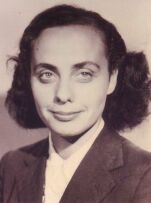
Piera Aulagnier was born in Milan, the daughter of a sixteen-year-old mother. After spending her first years in Egypt, she grew up with her grandparents in Italy. She studied medicine in Rome and moved to Paris in 1950, where she completed her studies in psychiatry. From 1955 to 1961 she underwent training analysis with Jacques Lacan and became a member of the Société française de psychanalyse. She later underwent a second analysis with Serge Vidermann.
In 1964 she followed Lacan into the École Freudienne de Paris, but left the EFP in 1969 after Lacan had proposed the "pass", a more subjective procedure of nominating a training analyst. The same year she founded, along with her colleagues François Perrier and Jean-Paul Valabrega, the Organisation psychanalytique de langue française (OPLF), the so-called Quatrième Groupe. In 1967 Piera Aulagnier founded, together with Conrad Stein und Jean Clavreul, the review L'Inconscient, and two years later the journal Topique.
After separating from her first husband, the businessman André Aulagnier, with whom she had her son Claude, Piera Aulagnier married Cornelius Castoriadis (1922-1997), a philosopher-psychoanalyst of Greek origin, in 1975. They divorced in 1984.
Piera Aulagnier specialised in the treatment of psychotics and worked at the Sainte-Anne hospital in Paris, where she read a weekly seminar from 1962 to 1990. Many of her publications were linked with this seminar. Aulagnier's work, which stands in the tradition of Lacan, is considered to be one of the most important French contributions to psychoanalytic theory; however, it is not easy to understand. Her starting point is the communication of the psychotic and the question of the meaning of psychosis. Aulagnier stated that the specific factor underlying psychosis is an insoluble discordance between what the small child experiences and the meaning imposed by the mother's discourse. The system of delusional thinking is the attempt to resolve this contradiction.
Based on her clinical experience with psychosis Piera Aulagnier enlarged on the Freudian metapsychology and established a new theorization of the I: The agency called I is constituted by discourse and its task is the production of sense. She developed a number of new conceptions such as the "primal process" (processus originaire), which precedes the primary and secondary processes. All three are processes of psychic "metabolisation": they transform that which is not psychical into something psychical by specific forms of representation. The representational mode is different for each of the three processes: the primal process represented by "pictograms", the primary process represented by unconscious fantasies, and the secondary process represented by verbal announcements. When the primary and secondary processes fail to function normally, the individual regresses to the archaic level of the primal process, which infiltrates the mind and subsequently becomes the source of psychotic thought processes.
Piera Aulagnier died of lung cancer at the age of 66. (Top of the article)
- SELECTED WORKS (for more, see Quatrième Groupe)
- Remarques sur la structure psychotique. La Psychanalyse 8, 1964, 47-67
- Le désir de savoir dans ses rapports à la transgression. L'Inconscient No. 1, 1967, 109-125
- Remarques sur la féminité et ses avatars. In P. Aulagnier, J. Clavreul, F. Perrier, G. Rosolato, and J.-P. Valabrega: Le désir et la perversion. Paris 1967, 53-79
- La perversion comme structure. L'Inconscient No. 2, 1967, 11-41
- Comment peut-on ne pas être Persan? L'Inconscient No. 8, 1968, 27-45
- Sociétés de psychanalyse et psychanalystes de société. Topique No. 1, 1969, 7-46
- Le sens perdu (ou le "schizo" et la signification). Topique No. 7/8, 1971, 49-83
- La violence de l'interprétation. Du pictogramme à l'énoncé (1975). Paris 2003 [The Violence of Interpretation. From Pictogram to Statement. Hove, East Sussex 2001]
- Les destins du plaisir. Aliénation, amour, passion. Paris 1979
- L'apprenti-historien et le maître-sorcier. Du discours identifiant au discours délirant (1984). Paris 2004
- Naissance d'un corps, origine d'une histoire. In Corps et histoire, IVème rencontre psychanalytique d'Aix en Provence. Paris 1985, 99-141
- Un interprète en quête de sens (1986). Paris 2001
- Sources somatique et discursive de nos représentations de la réalité. J psychanal enf No. 3, 1987, 247-271
- Voies d'entrée dans la psychose. Topique No. 49, 1992, 7-29
- Topique No. 74, 2001: Piera Aulagnier. L'esprit du temps
- REFERENCES
- Benheim, David: Piera Aulagnier et le concept de violence primaire. Actes du 2e Congrès mondial de l'Asevico, Violence et Coexistence Humaine à Montréal 1992, Vol. IV. Montréal 1995 + Rouge & Noir (2015-02-26)
- Bonnel, Jacqueline, and Hélène Troisier: Piera Aulagnier. Paris 1998
- Leiser, Eckart: Piera Aulagnier oder der Ursprung des Subjekts im Körper. In ders.: Das Schweigen der Seele. Das Sprechen des Körpers. Psychoanalytische Zugänge zum Körper und dessen Leiden. Gießen 2007
- Leiser, Eckart: Piera Aulagnier - Das Piktogramm als Erweiterung von Freuds Metapsychologie. JB Psychoanal 76, 2018
- McDougall, Joyce, and Nathalie Zaltzman: Preface to Aulagnier, The Violence of Interpretation, 2001, xvi-xxiv
- Mijolla-Mellor, Sophie de: Penser la psychose. Une lecture de l'œuvre de Piera Aulagnier. Paris 1998
- Mijolla-Mellor, Sophie de: Aulagnier-Spairani, Piera, ex-Castoriadis-Aulagnier. In Dictionnaire international de la psychanalyse (2002). Ed. by A. de Mijolla. Paris 2005, 164f [International Dictionary of Psychoanalysis. Detroit u. a. 2005, 129-130]
- Mijolla-Mellor, Sophie de: Quatrième Groupe (O.P.L.F.). In Dictionnaire international de la psychanalyse (2002). Ed. by A. de Mijolla. Paris 2005, 1441-1443
- Quatrième Groupe (2010-02-12)
- Rother de Hornstein, Cristina: Biografía Piera Aulagnier. docplayer (2023-11-05)
- Roudinesco, Elisabeth, and Michel Plon: Wörterbuch der Psychoanalyse (1997). Wien, New York 2004
- Roudinesco, Elisabeth: Histoire de la psychanalyse en France, vol. 2: 1925-1985. Paris 1986; 1994 [Jacques Lacan & Co. A History of Psychoanalysis in France, 1925-1985. Chicago 1990]
- PHOTO: Courtesy of Jacques Sédat
Marie Balmary (*1939)
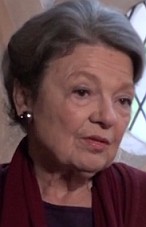
Marie Balmary, born into a Catholic family in Brittany, studied psychology at the Sorbonne in Paris. She received her psychoanalytic training at the Ecole Freudienne de Paris founded by Jacques Lacan and Françoise Dolto. Her doctorate thesis on the subject La prise de conscience, submitted to the university in 1974, was not accepted due to her questioning of some basic ideas of Sigmund Freud. Marie Balmary published her findings five years later under the title L'homme aux statues [Psychoanalyzing Psychoanalysis. Freud and the Hidden Fault of the Father (1982)]. Using Lacanian theory to psychoanalyse Freud, she explored his own family secrets. In particular she referred to Freud's rejection of the seduction theory (sexual abuse) in favour of the Oedipus theory (infantile sexuality). According to Balmary, Freud developed a truncated conception of the Oedipus complex, in which the attempted filicide of Oedipus by his father Laius is expunged, in order to hide the transgressions of his own father: Jacob Freud's hidden fault was to have driven his second wife, Rebekka, to commit suicide because he wanted to marry Freud's mother, Amalie, who was already pregnant with young Sigmund. Other Freud historians, however, declared that Balmary's assumptions were purely speculative.
From the 1980s, Marie Balmary's work centres on the task of enriching psychoanalysis with a spiritual dimension. She reads the work of Freud and the Bible in parallel and explores the analogies between them. For this purpose, she learned Hebrew in order to undergo a real exposure to the biblical texts closest to its original form.
Marie Balmary practises psychoanalysis in Paris. She is married and has two children. (Top of the article)
- SELECTED WORKS
- L'homme aux statues. Freud et la faute cachée du père. Paris 1979 [Psychoanalyzing Psychoanalysis. Freud and the Hidden Fault of the Father. Baltimore 1982]
- Le sacrifice interdit. Freud et la Bible. Paris 1986 [Das verbotene Opfer. Freud und die Bibel. Wien 2012]
- La divine origine. Dieu n'a pas créé l'homme. Paris 1993
- Le sacrifice du fils dans les trois monothéismes. Paris 1996
- Abel ou la traversée de l'Eden. Paris 1999
- Je serai qui je serai. Brüssel 2001
- Le moine et la psychanalyste. Paris 2005
- Lire la différence des sexes. Projet Nr. 287, 2005, 23-29
- Freud jusqu'à Dieu. Paris 2010
- REFERENCES
- Djenane, Kareh Tager: Marie Balmary. Le Monde des Religions Nr. 14, 1.11.2005
- Marie Balmary, psychanalyste inspirée. Le Figaro, 17 August 2006
- Raitiere, Anna: Psychoanalyzing Psychoanalysis: Freud and the Hidden Fault of the Father. Marie Balmary. Translated by Ned Luckacher. Baltimore: Johns Hopkins University Press, 1982. 184 pp. $15.95. Modern Psychoanalysis 8, 1983, 109-112
- Révillon, Bertrand: La psychanalyse et la Bible. Interview with Marie Balmary. Psychologies, February 2013 (2015-08-27)
- Robinson, Paul A.: Freud and his Critics. Berkeley 1993 + UC Press E-Books Collection (2021-10-1)
- Roudinesco, Elisabeth, und Michel Plon: Wörterbuch der Psychoanalyse (1997). Wien, New York 2004 (key word: Rebekka Freud)
- Sanchís, Ima: Marie Balmary, psicoanalista. Interview with Marie Balmary. Fragmenta, 26 March 2008 (2023-10-25)
- Senk, Pascale: On devient humain par la relation. Interview with Marie Balmary. Psychologies, Octobre 2005 (2012-06-12)
- Stein, Dominique: Une lecture psychanalytique de la Bible. Le sacrifice interdit de Marie Balmary. Revue de Sciences philosophiques et théologiques 72, 1988, 95-108
- Tornay, Alain: Marie Balmary. Main basse sur la Bible. Paris 2019
- Wikipedia: französisch; spanisch; englisch (2024-07-02)
- PHOTO: Still from Collège des Bernardins: Marie Balmary, psychanalyste, parle de Maurice Clavel, 15 mars 2016 (2018-10-15)
Ilse Barande née Rothschild (1928-2012)
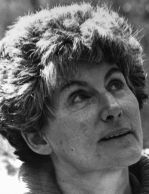
Ilse Rothschild was born in Mannheim, the only daughter of a German-Jewish family, who emigrated to France after Hitler's rise to power in 1933. She studied medicine and psychology in Paris, graduated in psychology in 1953 and specialised in psychiatry. After qualifying as a doctor of medicine, she worked from 1955 to 1960 as a senior physician in psychiatry. In 1953 she started her training at the Société psychanalytique de Paris (SPP). She was elected an associate member of the SPP in 1962, and a full member in 1965.
In 1946 Ilse Rothschild met Robert Barande (1926-2001), a French psychoanalyst, who also studied medicine and psychology in Paris. They married in 1954 and had two children. Together they wrote a number of psychoanalytic texts, among others, on the history of psychoanalysis in France.
Ilse Barande worked as a psychoanalyst in private practice in Paris and at the SPP Centre de Consultations et de Traitements Psychanalytiques. One of her analysands in the 1970s was Julia Kristeva. From 1967 to 1988 she was affiliated with the editorial board of the Revue française de psychanalyse (RFP), between 1984 and 1988 as editor-in-chief. She served as a child psychiatrist and psychotherapist at the Théophile Roussel Hospital in Montesson and, since the late 1960s, in the children's and youth guidance centre of the psychiatric hospital Henri-Rousselle (in the hospital complex Sainte-Anne, Paris), led by her from 1988 to 1993.
In 1972 Ilse Barande published her book on Sándor Ferenczi who, at that time, was little known in France. In 1977 she published Le maternel singulier (reissued in 2011 under the title: Le Maternel au masculin), a study on the autobiographical content of Sigmund Freud's Leonardo da Vinci and a Memory of his Childhood. In it, she highlighted the "singular maternal" in creativity, which is hidden behind the father theme and above differences of sex and generations. In 2009 appeared L'appétit d'excitation, a selection of her RFP articles. The central theme is the human "appetite of excitation", on which Barande based her discussion of the evolutionary neoteny or lifelong incompleteness of man. Ilse Barande also translated the complete works of Karl Abraham into French. (Top of the article)
- SELECTED WORKS (for more, see BSF)
- Le vu et l'entendu dans la cure. RFP 32 (1), 1968, 67-96
- Sándor Ferenczi. Paris 1972; 1996
- Originalité de l'écoute ferenczienne. RFP 38 (4), 1974, 547-556
- Le maternel singulier. Freud et Léonard de Vinci. Paris 1977
- Poursuite du dialogue avec Nicolas Abraham. Etudes freudiennes Nr. 13-14, 1978, 49-52
- Traumatologies - Traumatophilie. Perspectives Psychiatriques 92, 1983, 187-190
- Das einzigartig Mütterliche. Jb Psychoanal 16, 1984, 73-92
- De l'assassinat de Moïse comme immolation de l'instinct de mort. RFP 48 (4), 1984, 967-986 [Das Verbrechen an Moses ersetzt den Todestrieb. Jb Psychoanal 21, 1987, 13-30]
- Freud im Zauderrhythmus. Bulletin. Die Zeitschrift der Wiener Psychoanalytischen Vereinigung Nr. 10, 1998
- De l'après-coup et de la traumatophilie. RFP 70 (3), 2006, 737-744
- L'appétit d'excitation. Paris 2009
- L'appétit d'excitation, donnée anthropologique. La néoténie humaine et la traumatophilie. RFP 67 (4), 2009, 1239-1259
- Le maternel au masculin. Freud et Léonard de Vinci. Paris 2011
- (and Robert Barande) Histoire de la psychoanalyse en France. Toulouse 1975
- (and Robert Barande) Psychoanalyse in Frankreich. In Dieter Eicke (ed.): Die Psychologie des 20. Jahrhunderts III: Freud und die Folgen (2). Zürich 1977, 1-54
- (and Robert Barande) Antinomie du concept de perversion et épigenèse de l'appétit d'excitation (notre duplicité d'être inachevé ou la mère-version). RFP 47 (1), 1983, 143-282
- (and Robert Barande) De la perversion. Notre duplicité d'être inachevé. Lyon 1987
- (with Robert Barande et al.) La sexualité perverse. Études psychanalytiques. Paris 1979
- REFERENCES
- Urribarri, Fernando: Julia Kristeva repasa su vida paseando por Buenos Aires. Pagina/12: RADAR, 20.11.2011
- Wikipedia: Ilse Barande; Robert Barande (2013-08-07)
- PHOTO: Wikipedia (2013-08-07)
Laurence Bataille (1930-1986)
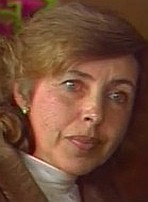
Laurence Bataille was the only child of the writer and philosopher Georges Bataille (Fig.) and Sylvia Maklès, a French actress of Romanian-Jewish descent. Her parents separated in 1934 but did not divorce until 1946. Starting in the late 1930s, Sylvia Bataille was a companion of the psychoanalyst Jacques Lacan, whom she married in 1953, and with whom she had a daughter, Judith Bataille-Lacan.
Laurence grew up close to her stepfather with her half-sister Judith. At the age of sixteen, she became the mistress of the painter Balthus, who made several portraits of her. Laurence Bataille first entered an actress career. After a tour with her theatre company in Algeria in 1954, she was a temporary member of the Communist Party and involved in promoting Algeria's independence. In 1960 she was imprisoned for six weeks for aiding the National Liberation Front, FLN. In 1961 she married Andrè Basch (*1933), a physician and her comrade in the FLN. They had one daughter, Sandra, and divorced in 1971.
Familiar with the ideas of Lacan since her youth, Laurence Bataille studied medicine and entered into training analysis with Conrad Stein in 1963. She became a member of the École Freudienne de Paris, which was dissolved by Lacan in 1980. After Lacan's death, she joined the Ecole de la Cause Freudienne (ECF) directed by her brother-in-law Jacques-Alain Miller. From 1976 to 1978 she acted as director of the Lacanian journal Ornicar?, where some of her articles and reviews were published. In 1982 she left the ECF, because she disapproved of the fact that Jacques-Alain Miller used Lacan's circular letters posthumously as legal texts.
Laurence Bataille, whom Lacan called his loyal Antigone, died of liver cancer in 1986. A year after her death, a small anthology of her essays was published under the title L'ombilic du rêve. In her paper of the same title, she described the work of interpretation using as an example a dream which played an important role in her own analysis. (Top of the article)
- SELECTED WORKS
- Emma ou la fonction d'un fantasme. Ornicar? No. 8, 1976, 21-31
- Désir de l'analyste et désir d'être l'analyste. Ornicar? Nr. 20/21, 1980, 71-73 [Das Begehren des Analytikers und das Begehren, Analytiker zu sein. Der Wunderblock Nr. 15, Oktober 1986, 5-8 + in Bataille 1988, 11-14]
- Fantasme et interprétation. Ornicar? No. 25, 1982, 75-79
- D'une pratique. Études freudiennes No. 25, 1985 [Von einer Praxis. In Bataille 1988, 75-197]
- Incidences de l'oeuvre de Lacan sur la pratique de la psychanalyse. Compte rendu des Journées Figuration du Féminin. Études freudiennes No. 25, 1985
- L'ombilic du rêve. D'une pratique de la psychanalyse. Paris 1987 [Der Nabel des Traums. Von einer Praxis der Psychoanalyse. Weinheim; Berlin 1988]
- REFERENCES
- Friedmann, Daniel: Entretien avec Laurence Bataille. CNRS audiovisuell 1983 (2018-06-19)
- Geneanet (2022-05-12)
- Haas, Norbert: Laurence Bataille. Der Wunderblock, Heft 15, Oktober 1986, 3-4
- Roudinesco, Elisabeth: Histoire de la psychanalyse en France, Bd. 2: 1925-1985. Paris 1986; 1994 [Jacques Lacan & Co. A History of Psychoanalysis in France, 1925-1985. Chicago 1990]
- Roudinesco, Elisabeth: Jacques Lacan. Esquisse d'une vie, histoire d'un système de pensée. Paris 1993 [Jacques Lacan. An Outline of a Life and a History of a System of Thought. Oxford 1999]
- Simon-Goulletquer, Catherine: Algérie, les années pieds-rouges. Des rêves de l'indépendance au désenchantement, 1962-1969. Paris 2009
- Wikipedia: Sylvia Bataille (2013-7-16)
- PHOTO: Still from Friedmann: Entretien avec Laurence Bataille (1983)
Anne Berman (1889-1979)
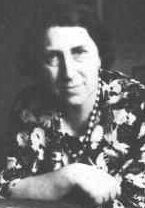
Anne (Annette) Berman was born into a Jewish family. A university-trained pharmacist, she worked in the laboratory of Édouard Toulouse at the Sainte-Anne hospital in Paris until 1924. That year she bought a pharmacy in Paris, where she worked until 1940. She graduated as a doctor in 1926, the subject of her thesis was the family of Boraginaceae. In 1928 she joined the Soroptimist Club, an international organization for business and professional women.
In 1927 Anne Berman was accepted as the first associate member of the Société Psychanalytique de Paris (SPP). After undergoing analysis with Marie Bonaparte from 1930 to 1932, she became her personal secretary in 1933. She was administered the secretariat of the Institut de Psychanalyse from its inception in 1934 and held the post as secretary of the Revue Française de Psychanalyse from 1948 to 1969. Although no practising analyst, she was elected a full member of the SPP in 1949.
Anne Berman became known as a translator of numerous psychoanalytical works. Among others, she translated several of Sigmund Freud's works into French: Neue Folge der Vorlesungen zur Einführung in die Psychoanalyse (1936), Der Mann Moses und die monotheistische Religion (1948), Abriß der Psychoanalyse (1949), and Freud's and Josef Breuer's Studien über Hysterie (1956). Anna Freud's Das Ich und die Abwehrmechanismen (1949) and Ernest Jones' The life and work of Sigmund Freud (1958) were also translated by her.
Anne Berman had a lengthy affair - until the end of the 1930s - with Adrien Borel (1886-1966), a French psychiatrist and in 1926 co-founder of the SPP. (Top of the article)
- SELECTED WORKS (besides translations)
- Recherches sur la structure anatomique du fruit des borraginacées. Thesis (Pharm.) Paris 1926
- REFERENCES
- Amouroux, Rémy: Marie Bonaparte. Entre biologie et freudisme. Rennes 2012
- Amouroux, Rémy: Anne Berman (1889-1979), une "simple secrétaire" du mouvement psychanalytique français? Gesnerus 73 (2), 2016, 360-375 (2024-07-02)
- Bourgeron, Jean-Pierre: Berman, Anne. In Dictionnaire international de la psychanalyse (2002). Ed. by A. de Mijolla. Paris 2005, 206 [International Dictionary of Psychoanalysis. Detroit u. a. 2005, 166-167]
- Lebovici, Serge: Anne Berman. RFP 43 (3), 1979, 557
- Mespoulhès, Nadine: Borel, Adrien Alphonse Alcide. In Dictionnaire international de la psychanalyse (2002). Ed. by A. de Mijolla. Paris 2005, 233 [International Dictionary of Psychoanalysis. Detroit u. a. 2005, 204-205]
- Roudinesco, Elisabeth, and Michel Plon: Wörterbuch der Psychoanalyse (1997). Wien, New York 2004
- Wikipedia (2018-10-12)
- PHOTO: Unkown right holder (AEJCPP 2008-04-09)
Marie Bonaparte (1882-1962)
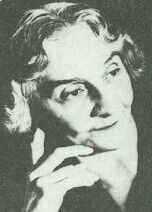
Princess Marie Bonaparte, Sigmund Freud's representative in France, was born in Saint-Cloud, near Paris. She was the great-granddaughter of a brother of Napoleon Bonaparte. Her mother Marie-Félix Blanc, the daughter of the wealthy entrepreneur of the casino in Monte Carlo, died of tuberculosis a few weeks after Marie's birth and bequeathed a vast fortune to her husband, Prince Roland Bonaparte. Marie Bonaparte grew up in the care of nannies and governesses and under the severe regiment of her grandmother. As a little girl she believed that her father, whose love she tried in vain to win, had collaborated with the evil grandmother in murdering her mother out of greed. In addition she felt herself responsible by her birth for her mother's death. From the age of seven onwards, she filled five notebooks with cruel fantasy tales, which served later as a basis of her analysis with Sigmund Freud.
Her wish to study medicine remained unfulfilled. Submitting to her family's expectation she married Prince George of Greece and Denmark (1869-1957) in 1907, with whom she had two children, Eugénie and Pierre. She was suffering from melancholia and somatic disorders when she met the French psychoanalyst René Laforgue in 1923, who wrote to Freud on her behalf. Her meeting with Freud in 1925 was not only the beginning of an analysis, but also of a close, lifelong friendship between them. Her analysis lasted until 1929, followed by a top-up with Rudolph Loewenstein and further tranches with Freud in Vienna until 1938. In 1926, she was a co-founder of the Société Psychanalytique de Paris (SPP) and was elected vice president of the SPP in 1934.
With her wealth Marie Bonaparte financed many psychoanalytic institutions, among others the Institut de psychanalyse in Paris and the Revue Française de Psychanalyse. She saved Freud's correspondence with Wilhelm Fliess from destruction and helped Sigmund Freud and his family emigrate from Vienna to London after the "Anschluss" in 1938. When the Germans occupied France in 1940, she decided that there would be no "rescue" of psychoanalysis like in Germany. The SPP stopped all its activity, and Marie Bonaparte went into exile in Greece and South Africa. Returning to Paris in 1945, she saw herself as the bearer of the Freudian word, and like Anna Freud she opposed the theories of Jacques Lacan and Melanie Klein. She translated Freud's work into French and as a vice president of the IPA she championed lay analysis.
The writings of Marie Bonaparte are seen to be not as considerable as her eminent role in the history of French psychoanalytic movement. The subject of one of her finest papers, published in 1927, was the case of Marie-Félicité Lefebvre, who murdered her pregnant daughter-in-law. Bonaparte interpreted this murder as an unconscious death wish against the own mother put into action, and she pleaded for a therapy of psychologically disturbed criminals.
Bonaparte's study on Edgar Allen Poe is considered to be her most important contribution. She interpreted Poe's oevre as an attempt to come to terms with his dead mother who obsessed over him and rendered him impotent. Her interpretation of Poe implied a self-analysis: the ambivalent attachment to a dead mother was also a childhood trauma of her own and her frigidity a lifelong problem. In 1924, in her article Considérations sur les causes anatomiques de la frigidité chez la femme, she argued that frigidity in women often has an anatomic cause - a too great distance between clitoris and vagina. She stressed that the transition from clitoral fixation to vaginal pleasure could only be reached by a mixture of psychoanalytic treatment and surgical intervention - an operation which she underwent several times without success.
In her later essays on female sexuality Marie Bonaparte continued to take a psycho-biological approach. She was the first to observe an active phallic stage in the young girl, in which the clitoris corresponds to the phallus. This phallic activity toward the mother is sandwiched between two stages of passivity, first toward the mother, then toward the father. For Bonaparte libidinal fixation on the "masculine" clitoris corresponds to a basically biological masculine character incorporated in the feminine organism. She saw this bisexual constitution of woman as a main obstacle to the development of normal sexuality.
Marie Bonaparte died of leukaemia at the age of eighty. (Top of the article)
- SELECTED WORKS
- Guerres militaires et guerres sociales. Méditations. Paris 1920
- (pseudonym A. E. Narjani) Considérations sur les causes anatomiques de la frigidité chez la femme. Bruxelles médicales 27, 1924
- Le cas de Mme Lefebvre. RFP 1, 1927, 149-198 [Der Fall Lefebvre. Psychoanalyse einer Mörderin. Imago 15, 1929, 15-62]
- Du symbolisme des trophées de tête. RFP 1, 1927, 677-732 [Über die Symbolik der Kopftrophäen. Imago 14, 1928, 100-141]
- L' identification d' une fille à sa mère morte. RFP 2, 1928, 541-565 [Die Identifizierung einer Tochter mit ihrer toten Mutter. Intern Zschr ärztl Psychoanal 15, 1929]
- De la prophylaxie infantile des névroses. RFP 4, 1930, 85-111 [Die Sexualität des Kindes und die Neurosen der Erwachsenen. Z psa Päd 5, 1931, 369-412]
- Aus der Analyse einer mutterlosen Tochter. Zwei Beispiele zur psychoanalytischen Kasuistik. Wien 1931
- Edgar Poe: Sa vie - son oevre. Étude psychanalytique, vol. 1 and 2. Paris 1933; 1958 (3 vols) [The Life and Works of Edgar Allan Poe. London 1949]
- La pensée magique chez le primitif. RFP 7, 1934, 3-18 [Das magische Denken bei den Primitiven. Almanach 1935]
- Passivité, masochisme et féminité. RFP 8, 1935, 208-216 [Passivität, Masochismus und Weiblichkeit. IZP 21, 1935, 23-29]
- Cinq cahiers écrits par une petite fille entre sept ans et demi et dix ans et leur commentaires, vol. 1: Paris 1939; vol. 2: London 1948; vol. 3 and 4: London 1951 [Five copy-books written by a little girl between the ages of seven-and-a-half and ten, vols 1-4. London 1950-1953]
- Mythes de guerre. Paris 1946
- De la sexualité de la femme. RFP 13, 1949, 1-52 + 161-227; Paris 1951 [Female Sexuality. London 1953]
- Monologues devant la vie et la mort. Paris 1951
- Introduction à la théorie des instincts et prophylaxie infantile des névroses. Paris 1952
- Chronos, Eros, Thanatos. Paris 1952
- Psychanalyse et biologie. Paris 1952
- Psychanalyse et anthropologie. Paris 1952
- (and Sigmund Freud) Correspondance intégrale: 1925-1939. Paris 2022
- REFERENCES
- Amouroux, Rémy: Marie Bonaparte. Entre biologie et freudisme. Rennes 2012
- Amouroux, Rémy, und Hanna Stouten: Als Marie Bonaparte sich taub stellte... Luzifer-Amor 27 (53), 2014, 122-140
- Appignanesi, Lisa, and John Forrester: Freud's Women. London 1992 [Die Frauen Sigmund Freuds. München 1996]
- Bertin, Célia: La dernière Bonaparte. Paris 1982; 1999 [Marie Bonaparte. A Life. New York/London/San Diego 1982; Die letzte Bonaparte. Freuds Prinzessin. Ein Leben. Freiburg 1989]
- Marie Bonaparte im Wartezimmer Sigmund Freuds (2022-05-12)
- Bourgeron, Jean-Pierre: Bonaparte, Marie Léon. In Dictionnaire international de la psychanalyse (2002). Ed. by A. de Mijolla. Paris 2005, 231f [International Dictionary of Psychoanalysis. Detroit u. a. 2005, 199-201]
- Roudinesco, Elisabeth: Wien - Paris. Die Geschichte der Psychoanalyse in Frankreich, Bd.1: 1885-1939. Weinheim, Berlin 1994
- Roudinesco, Elisabeth, and Michel Plon: Wörterbuch der Psychoanalyse (1997). Wien, New York 2004
- Stein-Monod, Claude: Marie Bonaparte 1882-1962. The problem of female sexuality. In F. Alexander et al. (ed.): Psychoanalytic Pioneers. New York 1966, 399-414
- Stephan, Inge: Die Gründerinnen der Psychoanalyse. Stuttgart 1992
- Stouten, Hanna: Marie Bonaparte 1882-1962. Freuds prinses zoekt haar dode moeder. Amsterdam 2011
- Thompson, Nellie L.: Marie Bonaparte's theory of female sexuality. Fantasy and biology. American Imago 60, 2003, 343-378
- Wikipedia German; English; French (2013-7-19)
- PHOTO: Collection privee de la Princesse Eugenie de Grece; in C. Bertin: Die letzte Bonaparte. Freiburg 1989, 351
Denise Braunschweig (1918-1998)
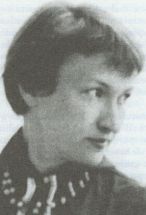
© PUF
Denise Braunschweig-Demay was a proponent of the psychoanalytic psychosomatics in France. She studied law, psychology and medicine, before she turned towards psychoanalysis and became a member of the Société Psychanalytique de Paris. She worked several years in child psychiatry, e. g. at the Centre Georges-Amado in Vitry and, with Serge Lebovici, at the Hôpital de jour du 13e arrondissement in Paris.
In 1972 she founded, together with Pierre Marty, Catherine Parat, Michel d'Uzan, Michel Fain and Christian David, the Institut de psychosomatique, where she worked until the end of her life. In addition, she was an editorial member of the Revue Française de Psychosomatique starting in 1991. Standing in the classic tradition of Sigmund Freud, Denise Braunschweig made an essential contribution to the psychoanalytic theory of female sexuality. Her writings, mostly published along with Michel Fain, focused on subjects like narcissism, fetishism, object change in girls, cathexis of the female sexual organs, and the impact of sexual difference on the relationship to reality.
Denise Braunschweig and Michel Fain conceived the notion of "censoring the lover in her" [censure de l'amante], which means that a mother's life as a lover "censors" the erotic feelings aroused by maternal care. Her daydreams about her love life with the father of the child introduce the third party into the mother-child relation. This early state of triangulation is the basis for the infant's future Oedipal organisation. (Top of the article)
- SELECTED WORKS
- Le narcissisme. Aspects cliniques. RFP 29, 1965, 589-600
- Psychanalyse et réalité. RFP 35, 1971, 655-800
- Réflexions sur "L'état amoureux" de Christian David. RFP 36, 1972, 307-323
- Traces de Jung dans l'évolution théorique de Freud. RFP 47, 1983, 1027-1044
- Fantasme originaire et surmoi. La phylogenèse. RFP 55, 1991, 1253-1264
- Implications techniques de la théorie en psychosomatique. Rev fr psychosom No. 3, 1993, 21-32
- Variation de la nosographie. À propos du trait de caractère. Rev fr psychosom No. 11, 1997, 19-28
- (with Serge Lebovici and H. van Thiel-Godfrind) La psychopathie chez l'enfant. Psychiatrie de l'enfant 12, 1969, 5-106 [Arbeiten zur Kinderpsychotherapie. München, Basel 1979]
- (and Michel Fain) Eros et antéros. Réflexions psychanalytiques sur la sexualité. Paris 1971
- (and Michel Fain) La nuit, le jour. Essai psychanalytique sur le fonctionnement mental. Paris 1975
- (and Michel Fain) The phallic shadow. In D. Breen (ed.): The Gender Conundrum. Contemporary Psychoanalytic Perspectives on Femininity and Masculinity. London; New York 1993, 130-144
- REFERENCES
- Ody, Michel: Denise Braunschweig. Paris 2000
- Ody, Michel: Nécrologie: Denise Braunschweig-Demay. Bulletin de la SPP No. 50, 1998, 195-197
- Ody, Michel, and Laurent Danon-Bioleau: censure de l'amante. In Dictionnaire international de la psychanalyse (2002). Ed. by A. de Mijolla. Paris 2005, 303f ["Censoring the lover in her": International Dictionary of Psychoanalysis. Detroit u. a. 2005, 262]
- Wikipedia (2016-11-10)
- PHOTO: Courtesy of Presses Universitaires de France
Elsa Breuer (1888-1967)
Élise "Elsa" Breuer was born into a Hungarian Jewish family. She studied medicine at the university of Budapest, where she qualified as a doctor. In about 1935 she underwent training analysis with Marie Bonaparte in Paris and became an associate member of the Société Psychanalytique de Paris (SPP) in 1936. She survived the German occupation in Bordeaux, where she stayed with a friend of her family.
After the end of the war Elsa Breuer returned to Paris, where she worked as a training analyst of the SPP. One of her analysands was the philosopher and sociologist Georges Lapassade. On the recommendation of Daniel Lagache, he began an analysis with Elsa Breuer at the end of the 1940s, which took about nine years.
In 1952 the French Medical Association accused Elsa Breuer - like Margaret Clark Williams before her - of unlawfully practising medicine: She had made the mistake of treating panel patients and signing the forms with "Dr. Breuer". Elsa Breuer lost the trial, because her Hungarian doctorate was not recognised in France, and she was also defeated on appeal in 1954. The Paris Court of Appeal stated that, according to the law, only physicians were allowed to perform psychoanalysis and that there was no regulation for lay analysts.
Elsa Breuer stayed a member of the SPP until 1965.
- REFERENCES
- Amouroux, Rémy : Marie Bonaparte, l'analyse pratiquée par les laïques et les psychologues. Bulletin de psychologie Nr. 497, 2008, 485-493 + Cairn-info (2014-04-09)
- Amouroux, Rémy: Marie Bonaparte. Entre biologie et freudisme. Rennes 2012
- Bertin, Célia: La dernière Bonaparte. Paris 1982; 1999 [Marie Bonaparte. A Life. New York/London/San Diego 1982]
- Gauléjac, Vincent de (Hg.): Itinéraires de sociologues. Paris 2007
- Gougoulis, Nicolas: La Psychanalyse et l'État: quelques aperçus historiques. Topique Nr. 101, 2007, 27-33 (2019-06-07)
- Hess, Remi, und Charlotte Hess: Georges Lapassade. Vie, œuvres, concepts. Paris 2010
- Lagache, Daniel: Elsa Breuer (1888-1967). In memoriam. Bulletin de l'Association Psychanalytique de France Nr 3, 1967, 309-311
- RFP 29 (5-6), 1965, 638
Elsa Cayat (1960-2015)

The psychiatrist and psychoanalyst Elsa Cayat was born into a Jewish family in Tunisia. Her father, Georges Khayat, was a gastroenterologist, her mother worked in the legal profession. She grew up in Vincennes, a suburb of Paris, and studied medicine. Qualified as a doctor by the age of 21, she subsequently began her psychiatric training as an "Interne des Hôpitaux de Paris". She underwent psychoanalytic training and became a Lacanian analyst running a successful private practice in the 16th arrondissement of Paris. She also worked as a writer and columnist. Among others, she wrote Charlie Divan, a fortnightly column with a wide range of psychological and social issues in the French satirical magazine Charlie Hebdo. Elsa Cayat published two books, Un homme une femme + = quoi? and (along with her Charlie Hebdo colleague Antonio Fischetti) Le désir et la putain, dealing with sexual questions and gender relations.
On 7 January 2015, Elsa Cayat was the only female victim murdered by the brothers Kouachi in their attack on the offices of Charlie Hebdo - presumably because she was Jewish. She left behind her companion, the Dutch shoe designer Paulus Bolten, and their daughter Hortense. (Top of the article)
- SELECTED WORKS
- Un homme + une femme = quoi? Paris 1998; 2007
- En quoi la fétichisation de la science par la technocratie aboutit-elle à la négation de l'homme et à l'éradication de la pensée? In L. Khaïat and C. Marchal (eds): Enfance dangereuse, enfance en danger? Ramonville Saint-Agne 2007, 189-202
- L'écart entre le droit et la loi. In C. Marchal and L. Khaïat (eds): Maîtrise de la vie. Les procréations médicalement assistées interrogent l'éthique et le droit. Toulouse 2012
- Die Fähigkeit, (sich) zu lieben. Werkblatt 32 (74), 2015, 6-10
- (and Antonio Fischetti) Le désir et la putain. Les enjeux cachés de la sexualité masculine. Paris 2007
- REFERENCES
- Hommage à la psychanalyste Elsa Cayat morte dans l'attentat contre Charlie Hebdo: Éric Reignier; Alice Ferney. La Croix, 9.1.2015 (2015-01-20)
- Horvilleur, Delphine: Elsa Cayat. The psychologist of Charlie Hebdo. Le Coq-héron 220 (1), 2015, 132-134
- Koellreuter, Anna: In Memoriam Elsa Cayat, 9.3.19607.1.2015. Psychoanalytikerin und Kolumnistin von Charlie Hebdo. Werkblatt 32 (Nr. 74), 2015, 3-5
- Métraux, Alexandre: Joooooo! rief sie aus. Junge Welt, 17.1.2015 (2015-01-20)
- Piret, Charlotte: Procès des attentats de janvier 2015. Elsa Cayat, la seule femme victime de Charlie Hebdo. France inter 20 août 2020 (2020-12-17)
- Reignier, Eric, und Alice Ferney: Hommage à la psychanalyste Elsa Cayat morte dans l'attentat contre Charlie Hebdo. La Croix, 9.1.2015 (2016-11-10)
- Terre de Colibris (2015-01-20 - no more existing)
- The Independent, 12.1.2015 (2015-01-20)
- Wikipedia German; French; English (2018-05-12)
- PHOTO: Wikipedia (2018-05-12)
Janine Chasseguet-Smirgel (1928-2006)
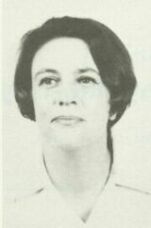
Janine Chasseguet-Smirgel, the daughter of immigrant parents from Russia and Poland, was born in Paris. Her father, Jules Smirgel (or Smirguel), was an engineer and a painter. Her mother was frequently ill and partially replaced by Janine`s admired aunt Anne, a pneumologist. Following the war, Janine Chasseguet studied political science (diploma in 1952) and psychology at the Sorbonne. From 1953 to 1956 she underwent psychoanalysis with Bela Grunberger (1903-2005), her future husband. She completed her qualifying training in 1958 and became a training analyst of the Société Psychanalytique de Paris (SPP) in 1965. She served as president of the SPP from 1975 to 1977 and as a vice president of the IPA from 1983 to 1989. She obtained her doctoral degree in 1982, and in 1982/83 she was invited to take the Freud Memorial Chair at the University of London. From 1992 until her retirement in 1996 she was Professor of Clinical Psychology and Psychopathology at the Charles-de-Gaulle-Universität in Lille.
The thinking of Janine Chasseguet-Smirgel was influenced by Sándor Ferenczi, Bela Grunberger and Melanie Klein. Her work has focused on female sexuality, creativity and perversion, narcissism and the ego ideal as well as the application of psychoanalysis to art, literature, film, and politics. In one of her first papers Feminine guilt and the Oedipus complex she criticised Sigmund Freud's concept of a female penis envy by claiming that girls do not envy the penis for its own sake, but as a revolt against the omnipotent mother. The wish to appropriate the paternal phallus and to depose the mother is the source of female guilt for Chasseguet-Smirgel.
In her essays about creativity and perversion, Janine Chasseguet-Smirgel compared the authentic work of an artist with the fetishistic "false" object of a pervert. Creativity of an artist implies that he overcomes his regressive desire to return to the perfection of primary narcissism by projecting his ego ideal on paternal models. The pervert, however, succumbs to the "malady of the ideal" and preserves, often confirmed by his mother, the infantile illusion to own the idealized pregenital (anal) phallus and thus to be equal and even superior to his father.
Chasseguet-Smirgel stressed a structurally necessary polarity of an anal-phallic-destructive maternal world of regression and perversion and a paternal world of structure, law and creativity. The integration of these two worlds by Oedipal maturity, however, fails mostly. The rebellion against father and law is marked by traits of perversion and regression - and according to the diagnosis of Chasseguet-Smirgel and Bela Grunberger (under the pseudonym "André Stéphane") this was the case with the 1968 student revolt and its theorists.
Sensitised by the fate of her own Jewish relatives who died in the Holocaust, Janine Chasseguet-Smirgel was particularly interested in psychoanalytic explanations of National Socialism. She interpreted the national socialist race ideology as the wish to expel aliens from the womb and to melt with the omnipotent mother represented by the group.
Janine Chasseguet-Smirgel died of leukaemia at the age of 77. (Top of the article)
- SELECTED WORKS
- Notes de lecture en marge de la révision du cas Schreiber. RFP 30, 1966, 41-61
- (ed.) Recherches psychanalytiques nouvelles sur la sexualité féminine. Paris 1964 [Female Sexuality. New Psychoanalytic Views. Ann Arbour 1970; Psychoanalyse der weiblichen Sexualität. Frankfurt/M. 1974]
- La culpabilité feminine. In Chasseguet-Smirgel, Recherches psychanalytiques nouvelles sur la sexualité féminine, 1964 [Feminine guilt and the Oedipus complex. In Chasseguet-Smirgel, Female Sexuality, 1970; Die weiblichen Schuldgefühle. In Chasseguet-Smirgel, Psychoanalyse der weiblichen Sexualität, 1974]
- Pour une psychanalyse de l'art et de la créativité. Paris 1971 [Kunst und schöpferische Persönlichkeit. Anwendungen der Psychoanalyse auf den außertherapeutischen Bereich. München, Wien 1988]
- L'idéal du moi. Essai psychanalytique sur la "maladie d'idéaliser". Paris 1975 [The Ego Ideal. A Psychoanalytic Essay on the "Malady of the Ideal". New York 1984; Das Ichideal. Psychoanalytischer Essay über die "Krankheit der Idealität". Frankfurt/M. 1987]
- Le corps chez Sade. In J. Guillaumin (ed.): Corps, création. Entre lettres et psychanalyse. Lyon 1981 [De Sade. Der Körper und der Mord an der Realität. Psyche 35, 1981, 237-252]
- Creativity and perversion. London 1984 [Kreativität und Perversion. Frankfurt/M. 1986]
- Éthique et esthéthique de la perversion. Seyssel 1984 [Die Anatomie der menschlichen Perversion. Stuttgart 1989]
- Sexuality and Mind. New York, London 1986
- L'acting out. Quelques réflexions sur la carence d'élaboration psychique. RFP 51, 1987, 1083-1100
- Überlegungen zum Hamburger Kongreß. Jb Psychoanal 20, 1987, 89-113
- Les deux arbres du jardin. Essais psychanalytiques sur le rôle du père et de la mère dans la psyché. Paris 1988 [Zwei Bäume im Garten. Zur psychischen Bedeutung der Vater- und Mutterbilder. München, Wien 1988]
- Essai sur la perte de l'activité symbolique dans la pensée nazie. In M. Colin (ed.): La crime contre l'humanité. Ramonville Saint-Agne 1996, 163-174
- Das helle Antlitz des Narzißmus und seine schattigen Tiefen - Einige Reflexionen. In O. F. Kernberg (ed.): Narzißtische Persönlichkeitsstörungen. Stuttgart, New York 1996, 233-247
- Le corps comme miroir du monde. Paris 2003 [The Body as Mirror of the World. London 2005]
- [Stéphane, André (i.e. J. Chasseguet-Smirgel and B. Grunberger)] L'univers contestationnaire ou les nouveaux chrétiens. Paris 1969
- (et al.) Les chemins de l'Anti-Oedipe. Paris 1974 [Wege des Anti-Ödipus. Frankfurt/M. u. a. 1978]
- (and Béla Grunberger) Freud ou Reich? Psychanalyse et illusion. Paris 1976 [Freud oder Reich? Psychoanalyse und Illusion. Frankfurt/M. u.a. 1979; Freud or Reich? Psychoanalysis and Illusion. London 1986]
- REFERENCES
- Baruch, Hoffman Elaine, and Lucienne J. Serrano: Women Analyze Women, in France, England and the United States. New York, London 1988
- Bourdin, Dominique: Janine Chasseguet-Smirgel. Paris 1999
- Bourdin, Dominique: A brief biographical sketch of Janine Chasseguet-Smirgel. J Clin Psychoanal 8, 1999, 301-305
- Eickhoff, Friedrich Wilhelm: Nachruf auf Janine Chasseguet-Smirgel. Z psychoanal Theorie Praxis 21 (2/3), 2006, 147-148
- Moré, Angela: Überlegungen zur Theorie des Unbewußten bei Chasseguet-Smirgel. Psyche 54, 2000, 599-618
- Moré, Angela: Psyche zwischen Chaos und Kosmos. Die psychoanalytische Theorie Janine Chasseguet-Smirgels. Eine kritische Rekonstruktion. Gießen 2001
- Olea-Brig: Jules Smirgel (2014-10-28)
- Pragier, Georges: Janine Chasseguet-Smirgel. Le Monde, 14 März 2006
- Pragier, Georges: Quelques éléments de biographie. Le Carnet PSY Nr. 108, 2006, 22 (2014-01-21)
- Springer-Kremser, Marianne: Chasseguet-Smirgel, Janine. In G. Stumm et al. (eds): Personenlexikon der Psychotherapie. Wien; New York 2005, 86-88
- Zagermann, Peter: Ich-Ideal, Sublimierung, Narzissmus. Die Theorie des Schöpferischen in der Psychoanalyse - diskutiert an Janine Chasseguet-Smirgels Arbeit "Das Ich-Ideal. Psychoanalytischer Essay über die Krankheit der Idealität". Darmstadt 1985
- Wikipedia French; English; German (2008-03-06)
- PHOTO: Baruch/Serrano 1988, 107
Maryse Choisy (1903-1979)
The journalist, psychoanalyst and author Maryse Choisy was born in Saint-Jean-de-Luz in France. She grew up in the château of her aunt, Comtesse Anne de Brémond, who associated with celebrities like Oscar Wilde, Gabriele d'Annunzio and Picasso. At the end of the First World War, Maryse and her aunt moved to London, where she entered Girton College and studied philosophy and psychology. She wrote her dissertation on Samkhya philosophy (Les systèmes de philosophie Samkhya).
In 1925 she began an analysis with Sigmund Freud in Vienna. After three sessions she broke off the treatment when Freud deduced from her dream that she was an illegitimate child - a fact that was confirmed by her aunt. She never learned who her parents were and assumed the name "Choisy" ("Chosen"). In 1925 she became a journalist with the magazine L'Intransigeant and occupied an important position in the intellectual and art world of Paris. Maryse Choisy was a pioneer of investigative journalism and researched undercover in a brothel for her book about prostitution, Un mois chez les filles, which caused a scandal upon its publication. As a leftist and feminist she fought for the women's right to vote.
Maryse Choisy married the journalist Maxime Clouzet, the father of her daughter, Colette, born in 1932. At the end of the 1930s, she met Teilhard de Chardin and converted to Catholicism. She then found her way back to psychoanalysis and went into analysis with Charles Odier, René Laforgue (1944) and Maurice Bouvet (1955). Choisy became a member of the Société Psychanalytique de Paris and devoted her efforts to bringing together religion and psychoanalysis. The result of her search for a benediction for psychoanalysis from the Catholic Church was that Pius XII issued an approval of a "serious psychotherapy" as long as it did not look for sexual causes and violate the confession.
In 1946 Maryse Choisy founded the Centre d'etudes des sciences de l'homme - with numerous luminaries such as Pierre Janet, René Laforgue and Teilhard de Chardin - and its organ Psyché. She hoped this review of psychoanalysis and the human sciences would counter the Freudian atheism with a synthesis of psychoanalysis and spirituality. Psyché was inspired by the journal Imago and attempted to find a larger public with well-known authors such as Laforgue, Françoise Dolto, Juliette Favez-Boutonier and Octave Mannoni. Besides psychoanalytic topics, the review discussed the subjects acupuncture, graphology, eastern religions and cultural events. Psyché closed down in 1959 (with one special issue in 1963).
Maryse Choisy published numerous books, novels, poems, essays and reports as well as works popularising psychoanalysis. (Top of the article)
- SELECTED WORKS (for more, see BSF)
- Presque... quasi roman. Paris 1924
- La chirologie. Paris 1927
- Un mois chez les filles. Paris 1928 [In den Tiefen von Paris. Leipzig 1930; A Month among the Girls. New York 1960]
- Un mois chez les hommes. Paris 1929 [A Month among the Men. New York 1962]
- L'amour dans les prisons. Reportage. Paris 1930
- Dames seules (1932). Textes de Maryse Choisy avec des dessins de Marcel Vertès. Présenté par Nicole Albert. Cahier Gay Kitch Camp No. 23, 1994
- Savoir être maman ou l'éducation des parents. Paris 1941
- Les systèmes de philosophie Samkhya. Paris 1946
- Symboles et mythes. Psyché No. 8, 1947
- Yogas et psychanalyse. Genf 1949
- Qu'est-ce que la psychanalyse? Paris 1950
- Psychanalyse et catholicisme. Paris 1950
- Le scandale de l'amour. Paris 1954
- Conscience de la féminité. Paris 1954
- Problèmes sexuels de l'adolescence. Paris 1954
- Qu'est-ce qu'ils en feront? Souvenirs de mes visites à Freud. Psyché 10, 1955 [Memories of my visits with Freud. In M. H. Ruitenbeek (Hg.): Freud as We Knew Him. Detroit 1973, 291-295; Mémoire des rendez-vous avec Sigmund Freud. Bloc-notes Nr. 2, 1982, 71-78]
- Psychoanalysis of the Prostitute. New York 1961
- Kunst und Sexualität. Opladen 1962
- Sigmund Freud. A New Appraisal. London 1963
- L'être et le silence. Genf 1965
- Exercices de yoga. Genf 1968
- Mes enfances. Mémoires 1903-1924. Genf 1971
- Sur le chemin de Dieu, on rencontre d'abord le diable. Mémoires 1925-1939. Paris 1977
- REFERENCES
- Appignanesi, Lisa, and John Forrester: Freud's Women. London 1992
- Cosnier, Jacqueline: Choisy, Maryse. In Dictionnaire international de la psychanalyse (2002). Ed. by A. de Mijolla. Paris 2005, 319-321 [International Dictionary of Psychoanalysis. Detroit u. a. 2005, 289-290]
- Cosnier, Jacqueline: Psyché, revue internationale de psychanalyse et des sciences de l'hoimme. In Dictionnaire international de la psychanalyse. Ed. by A. de Mijolla. Paris 2005, 1371-1372 [International Dictionary of Psychoanalysis. Detroit u. a. 2005, 1349-1350]
- Guillemain, Bernard: Maryse Choisy ou l'Amoureuse sagesse. Paris 1959
- Maryse Choisy Blog (2016-11-10)
- Mijolla, Alain de: La psychanalyse en France (1893-1965). In R. Jaccard: Histoire de la psychanalyse, vol. 2. Paris 1982, 5-118
- Ohayon, Annick: Maryse Choisy et Psyché - Psychanalyse et mondanités. Topique No. 71, 2000, 87-107
- Roudinesco, Elisabeth: Histoire de la psychanalyse en France, Bd. 2: 1925-1985. Paris 1986; 1994 [Jacques Lacan & Co. A History of Psychoanalysis in France, 1925-1985. Chicago 1990]
Anne Clancier née Gravelat (1913-2014)
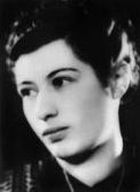
Anne Clancier was born Anne Marie Yvonne Gravelat in Limoges in the Limousin region (Haute-Vienne). She studied at the École de Médecine and at the Conservatoire d'art dramatique in Limoges. In 1940, she wrote her doctoral thesis about superstition, legends, manners and customs in in the Limousin region. She worked at the hospital of Limoges (under Joseph de Léobardy) and as a general practitioner, before she became medical health inspector in 1940.
In 1939 Anne Gravelat married Georges-Emmanuel Clancier (1914-2018), a poet and novelist born in Limoges, the father of their two children, Juliette and Sylvestre. They moved to Paris, but returned to the Limousin at the outbreak of World War II. Anne Clancier specialised in psychiatry and after the end of the war, she was appointed assistant physician at the psychiatric hospitals Ayné-le-Château (Allier) and Chezal-Benoit (Cher). Since 1950 she worked at the Centre médico-psycho-pédagogique at the Institute Claparède de Neuilly-sur-Seine for a couple of years. During this time, she began her psychoanalytic training at the Société Psychanalytique de Paris (SPP). She was trained by Sacha Nacht, Maurice Bouvet, Marie Bonaparte, Jacques Lacan and others, and underwent supervision with Donald Winnicott in London. In 1966 she was became a member of the SPP.
Anne Clancier was particularly interested in the relationship between psychoanalysis and literature, which was also the subject of her lectures at the University of Nanterre and of numerous publications. Drawing on Charles Mauron's method of "psychocritique", a psychoanalytic literary criticism, she analysed the unconscious fantasies and personal myths of an author. In analogy to the term of "contre-transfert", countertransference, she created the notion of "contre-texte", referring to the reader's reactions to the unconscious of the author. (Top of the article)
- SELECTED WORKS (for more, see: BSF)
- De quelques manifestations de la mentalité primitive en Limousin. Thesis (MD) Paris 1940
- Parents sans défauts. Paris 1971
- Psychanalyse et critique littéraire. Toulouse 1973
- Une histoire à dormir debout. RFP 41 (4), 1977, 663-667
- Figures du néant dans la poésie contemporaine. RFP 43 (3), 1979, 497-508
- Fantasmes et souvenirs dans la création littéraire. RFP 43 (4), 1979, 689-702
- Le corps et ses images dans la création poétique. In J. Guillaumin (ed.): Corps création. Entre lettres et psychanalyse. Lyon 1980, 183-202
- La création poétique et le préconscient. RFP 51 (2), 1987, 681-688
- La mode des thèmes psychiatriques dans la littérature. Evolution Psychiatrique 52 (4), 1987, 859-868
- Mythe et biographie. De la clinique à la littérature. RFP 52 (1), 1988, 51-65
- De la psychocritique au contre-texte. Le Coq-Héron Nr. 126, 1992, 40-47
- Raymond Queneau et la psychanalyse. Paris 1994
- Virgina Woolf et la bisexualité. RFP 58 (1) 1994, 231-236
- Travail en coesthésie et transformations psychiques. RFP 66 (5), 2002, 1555-1557
- Guillaume Apollinaire. Les incertitudes de l'identité. Paris 2006
- La traversée. Contes et récits. Paris 2009
- (and Jeannine Kalmanovitch) Le paradoxe de Winnicott. De la naissance à la création. Paris 1984 [Winnicott and Paradox. From Birth to Creation. London; New York 1987]
- (and Cléopâtre Athanassiou Popesco) (eds): Mythes et psychanalyse. Paris 1997
- REFERENCES
- Bédère, Serge: Décès d'Anne Clancier. OEdipe (2016-04-01)
- Clancier, Georges-Emmanuel: Le temps d'apprendre à vivre. Mémoires 1935-1947. Paris 2016
- Compère, Sylvain: Anne Clancier. Le Populaire, 13.2.2014 (2016-04-01)
- SPP (2016-04-01 - no more existing)
- Interview mit Anne Clancier über Raymond Queneau (1994-11-21). France 3 (2016-04-01)
- Wikipedia: Anne Clancier; Georges-Emmanuel Clancier (2013-05-23)
- PHOTO: Yvon Généalogie (2016-04-01)
Margaret Clark-Williams (1910-1975)
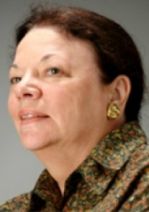
Margaret Clark-Williams was born in the United States of America. On the invitation of her aunt, she came for the first time to France at the age of 21. In 1931/32 she spent the winter in Vienna, where she made her initial contacts in psychoanalytic circles, before she went back to the United States. She was first analysed by the Swiss analyst Raymond de Saussure, who practised in New York from 1940 to 1952. After marrying and a period in the United States with her two children, she returned to France in 1945. Margaret Clark-Williams studied psychology with Daniel Lagache and received clinical training from the child psychiatrist Georges Heuyer. She underwent training analysis with Georges Parcheminey, her supervising analyst was John Leuba. In 1950 she became an associate member of the Société Psychanalytique de Paris.
Margaret Clark-Williams was working as a child therapist at the Centre psychopédagogique de Claude-Bernard in Paris, when the Order of Physicians made a complaint against the non-medical analyst, accusing her of illegal practice of medicine due to the fact that she practised psychoanalysis. Marie Bonaparte, who herself was a "lay analyst" without medical training, and Juliette Favez-Boutonier, the former medical director of the Claude-Bernard Centre, supported the case of Margaret Clark-Williams. The trial beginning in 1951 caused a sensation. Clark-Williams was first acquitted, but a second verdict in 1953 found her guilty - a disaster for lay analysis.
Margaret Clark-Williams was a long-standing colleague of André Berge until she retired in 1973. (Top of the article)
- REFERENCES
- Amouroux, Rémy : Marie Bonaparte, l'analyse pratiquée par les laïques et les psychologues. Bulletin de psychologie 5 (Nr. 497), 2008, 485-493 (2019-06-07)
- Amouroux, Rémy: Marie Bonaparte. Entre biologie et freudisme. Rennes 2012
- Berge, André: Margaret Clark Williams. RFP 39 (4), 1975, 669-670
- Bertin, Célia: Marie Bonaparte. A Life. New York/London/San Diego 1982
- Perron, Roger: Histoire de la Psychanalyse et de la psychothérapie en France après la seconde guerre mondiale. SPP (2022-05-12)
- Roudinesco, Elisabeth: Histoire de la psychanalyse en France, Bd. 2: 1925-1985. Paris 1986; 1994 [Jacques Lacan & Co. A History of Psychoanalysis in France, 1925-1985. Chicago 1990]
- Schopp, Georges: L'affaire Clark-Williams ou la question de l'analyse laïque en France. Rev int hist psychanal 3, 1990, 199-239
- Schopp, Georges: Clark-Williams, Margaret. In Dictionnaire international de la psychanalyse (2002). Ed. by A. de Mijolla. Paris 2005, 331f [International Dictionary of Psychoanalysis. Detroit u. a. 2005, 303-304]
- Talagrand, Chantal: Margaret Clark-Williams. Le Dictionnaire universel des Créatrices (2022-05-12)
- Wikipedia (2018-10-15)
- PHOTO: Le Dictionnaire universel des Créatrices (2022-05-12)
Odette Codet née Maugé (1892-1964)
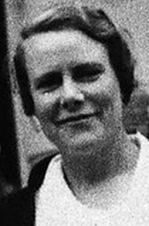
Odette Maugé was born in Rosny-sous-Bois in France. She started her study of medicine in the beginning of World War I, during which time she was married to the psychiatrist and psychoanalyst Henri Codet (1889-1939). In 1925, Odette and Henry Codet were founding members of the first Freudian group in France around the review L'Évolution psychiatrique. Odette Codet completed her doctorate on the subject of baby diet in 1931. During the 1930s she worked in Édouard Pichon's outpatient department at Bretonneau hospital in Paris, where Françoise Marette became her assistant in 1938.
Odette Codet underwent training analysis with Marie Bonaparte and became an associate member of the Société Psychanalytique de Paris (SPP) in 1934 and a full member in 1935. In 1940 the SPP ceased its activities in occupied France and Odette Codet continued working in private practice. After her first husband died in an automobile accident in 1939, she married the architect Pierre Laurent-Lucas-Championnière.
In 1953 she, along with Marie Bonaparte and Georges Parcheminey, were opponents of a medicalisation of psychoanalysis by Sacha Nacht, then nominated director of the new Institut de Psychanalyse. Together with the liberal group of Daniel Lagache, Jacques Lacan and others, they formed a majority against Nacht, but the differences with Lacan were too great. During a decisive session of the SPP, Odette Codet called for a motion of non-confidence against Lacan, which led to his dismissal as President of the SPP and the withdrawal of numerous members. Odette Codet herself was elected President of the SPP in 1959, but due to illness she had to retire a year later.
In her article À propos de trois cas d'anorexie mentale (1939) Odette Codet described the cases of three anorectic girls between the ages of three and fifteen. In it she highlighted the fact that conflicts increase in complexity with the age of the girl, and stressed that parental attitudes have a primordial role in the genesis and treatment of such conflicts. (Top of the article)
- WORKS
- Étude d'un régime alimentaire varié chez l'enfant de six à dix-huit mois. Thesis (MD) Paris 1931
- Énurésie, symptôme psychogène. L'Évolution psychiatrique 8 (3), 1936, 27-42
- À propos de trois cas d'anorexie mentale (1939). RFP 11 (2), 1939, 253-272; RFP 12 (1), 1948, 81-100 [On three cases of anorexia nervosa. With an intervention by J. Lacan (1939). European Journal of Psychoanalysis 6 (2), 2019]
- REFERENCES
- Bourgeron, Jean-Pierre: Laurent-Lucas-Championnière-Maugé, Odette. In Dictionnaire international de la psychanalyse (2002). Ed. by A. de Mijolla. Paris 2005, 963f [International Dictionary of Psychoanalysis. Detroit u. a. 2005, 948-949]
- Geissman, Claudine, and Pierre Geissmann: A History of Child Psychoanalysis. London; New York 1998
- Held, René-Raphaël: In memoriam: Odette Laurent-Lucas-Championnière. RFP 28 (5/6), 1964, 637-638
- Mijolla, Alain de: La psychanalyse en France (1893-1965). In R. Jaccard (ed.): Histoire de la psychanalyse, Bd. 2. Paris 1982, 5-118
- Roudinesco, Elisabeth: Histoire de la psychanalyse en France, Bd. 2: 1925-1985. Paris 1986; 1994 [Jacques Lacan & Co. A History of Psychoanalysis in France, 1925-1985. Chicago 1990]
- PHOTO: 15th IPA Congress Paris 1938 (Collection Jean-Pierre Bourgeron)
Myriam David (1917-2004)

Myriam David was born into a Jewish family in Paris. In 1933 she began the study of medicine in Paris, with the focus on paediatrics, and graduated in 1942. The same year she fled from Nazi persecution to Southern France, where she joined the Résistance. She was arrested at the end of 1943 and deported to Auschwitz-Birkenau, but she survived the concentration camp and returned to Paris in 1945.
In 1946 Myriam David went to the United States to specialise in child psychiatry, first with Leo Kanner at the Johns Hopkins Hospital, then at the Judge Baker Guidance Clinic in Boston and the James Jackson Putnam Children's Centre guided by Marian Putnam and Beata Rank. Simultaneously she received her psychoanalytic training at the Boston Psychoanalytic Institute. She returned to Paris in 1950 and, supported by Jenny Aubry, she established a psychotherapeutic consultation service at the Enfants Malades hospital. In 1966 she set up a therapeutic institution of foster family placements in Soisy-sur-Seine, which she directed until 1983. In 1976 she founded a children's unit within the Fondation Rothschild based on the model of the J. J. Putnam Children's Center.
Myriam David, who herself lost her mother at an early age, was a pioneer of infant psychiatry in France and was particularly interested in the consequences of an early separation from the mother. In the 1950s she researched this subject in the child care centres Parent-de-Rosan and Amyot, here along with John Bowlby. In 1962, together with her friend, the psychologist Geneviève Appell, she undertook a long-term study of children who had been separated from their mothers within the first three months after their birth. The researchers accompanied these children until their fourth year. Myriam David used the notion of "empty behaviour" to describe depressed babies, which seemed to lack an internal world of representations and fantasies. In 1973 David and Appell gave a report on the successful pedagogical approach of Emmi Pikler in Lóczy, a residential home for abandoned infants and young children in Budapest.
In 2002 Myriam David received the Serge Lebovici Award. She died two years later in Paris at the age of 88. (Top of the article)
- SELECTED WORKS
- Étude clinique sur la néphrite aiguë infectieuse de l'enfant. Paris, Thesis (MD) 1942
- L'enfant de 0 à 2 ans. Vie affective, problèmes familiaux. Toulouse 1956
- L'enfant de 2 à 6 ans. Vie affective, problèmes familiaux. Toulouse 1956
- Souvenirs d'un médecin à Auschwitz-Birkenau (avril-septembre 1944). In Christian Bernadac: Les mannequins nus. Paris 1971, 211-221
- Le placement familial. De la pratique à la théorie. Paris 1989; 2004
- (ed.) Le bébé, ses parents, leurs soignants. Ramonville Saint-Agne 1997
- (and Geneviève Appell) Lóczy ou le maternage insolite. Paris 1973 [Lóczy. Mütterliche Betreuung ohne Mutter. München 1995; Lóczy. An Unusual Approach to Mothering. Budapest 2001]
- (and Irène Lézine) Early Child Care in France (1974). London 1975
- REFERENCES
- Barraco de Pinto, Marthe: Hommage à Myriam David (1917-2004). Dialogue 1 (167), 2005, 121-124 (2010-03-24)
- Cuisiniez, Jacqueline: Myriam David et le service social. Le Carnet PSY 1, Nr. 96, 2005, 37 (2012-01-31)
- Carnet/Psy Nr. 96, 2005: Hommage à Myriam David
- Dugravier, Romain, und Antoine Guedeney: Contribution de quatre pionnières à l'étude de la carence de soins maternels. La psychiatrie de l'enfant 49 (2), 2006, 405-442 (2016-04-15)
- Golse, Bernard: Myriam David, pionnière de la santé mentale de la petite enfance. Le Monde, 2005-01-06 (2010-03-06)
- Guédeney, Antoine: Myriam David: la pionnière discrète. Devenir 18 (2), 2006, 93-98 (2010-03-25)
- Hommage à Myriam David. Enfances & Psy 2 (27), 2005, 127-130 (2008-04-09)
- Myriam David, une vie pour la petite enfance. Lien social No. 736 (01-13) 2005
- Paroles des libérés (2018-10-15)
- Wikipedia (2008-04-09)
- PHOTO: Le Carnet/PSY 1, Nr. 96, 2005, 37; s. a. Paroles de libérés (2024-07-04)
Monique David-Ménard (*1947)
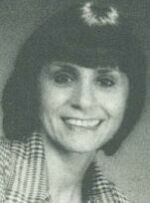
The work of Monique David-Ménard, born in Lyon, focuses on the relation between philosophy and psychoanalysis. She completed a master's degree in philosophy with Paul Ricœur (Université de Nanterre, 1968), a doctorate in psychopathology and psychoanalysis with Pierre Fédida (Université Paris VII, 1978), and a doctorate in philosophy with Jean-Marie Beysade (Sorbonne Nouvelle Paris IV, 1990).
From 1969 to 1974 Monique David-Ménard was professor of philosophy in Reims at the Lycée classique et moderne, and from 1974 to 2007 in Paris at the Lycée Lakanal and the Lycée Janson de Sailly. She received her psychoanalytic training at the École Freudienne de Paris (EFP) led by Jacques Lacan, and was a member of the EFP from 1979 to 1980. From 1982 to 1994 she was a member of the Centre de Formation et de Recherches Psychanalytiques (CFRP). In 1994 she became a member of the Société de Psychanalyse Freudienne. She was directrice of the Collège International de Philosophie in Paris from 1992 to 1995, and vice president from 1995 to 1998. From 1999 to 2011 she was appointed Professor of Psychopathology and Psychoanalysis at the Université Denis Diderot, Paris VII, where she was also head of the Centre d'Études du Vivant (2005-2011). She is a founding member of the Société Internationale de Philosophie et Psychoanalyse.
Monique David-Ménard's main interest centres on the manner in which fantasies and sexuality operate actively in the production of philosophical discourse. Using psychoanalysis as a critical lever, she highlights, for instance, the weak points in the notion of the universal and shows that the construction of universality in Kant and other thinkers depends on a masculine anthropology of sexual desire. According to David-Ménard, the logic of the universal implying the equality of subjects refers to a seriality of equivalent objects of desire, which does not exist in women. (Top of the article)
- SELECTED WORKS
- Pour une épistémologie de la métaphore biologique en psychanalyse. La conversion hystérique. Thesis (PhD) Paris 1978
- Lacanians against Lacan. Social Text 6, 1982, 86-111
- L'hystérique entre Freud et Lacan. Corps et langage en psychanalyse. Paris 1983 [Hysteria from Freud to Lacan. Body and Language in Psychoanalysis. Ithaca, N.Y. 1989]
- La folie dans la raison pure. Kant lecteur de Swedenborg. Paris 1990
- Lacan mit Kant? In H.-D. Gondek and P. Widmer (eds): Ethik und Psychoanalyse. Vom kategorischen Imperativ zum Gegensatz des Begehrens: Kant und Lacan. Frankfurt/M. 1994, 169-191
- Les constructions de l'universel. Psychanalyse, philosophie. Paris 1997 [Konstruktionen des Allgemeinen. Psychoanalyse, Philosophie. Wien 1999]
- Kant et Freud pensent-ils dans la même langue? In O. Bloch (ed.): Philosophies de la nature. Paris 2000, 35-38
- Kant's "An Essay on the Maladies of the Mind" and "Observations on the Feeling of the Beautiful and the Sublime". Hypatia 15, 2000, 82-98
- Tout le plaisir est pour moi. Paris 2000
- Les pulsions sexuelles ignorent-elles l'esprit? Université de tous les savoirs, 11.10.2001 (2024-07-04)
- Les pulsions caractérisées par leurs destins. Freud s'éloigne-t-il du concept philosophique de Trieb? Revue germanique internationale 18, 2002
- Sexual alterity and the alterity of the real for thought. Angelaki 8 (2), 2003, 137-150
- Was tun mit dem organlosen Körper? In E. Alliez and E. von Samsonow (eds): Biographie des organlosen Körpers. Wien 2003
- Is it necessary to look for the universal in the difference between the sexes? The "formulae of sexation" in Lacan. In K. Oliver and L. Walsh (eds): Contemporary French Feminism. Oxford; New York 2004
- The structures of desire and the concept of the universal. In C. Howells (ed.): French Women Philosophers. A Contemporary Reader. London; New York 2004
- Deleuze et la psychanalyse. L'altercation. Paris 2005 [Deleuze und die Psychoanalyse. Zürich 2009]
- Eloge des hasards dans la vie sexuelle. Paris 2011
- Errancy, contingency, immanence (lecture). ICI Berlin Institute for Cultural Inquiry, 5.10.2015 (2021-10-04)
- Wie kommen wir aus den russischen Puppen des Nihilismus heraus? RISS Nr. 88, 2018, 17-24
- REFERENCES
- Baruch, Hoffmann Elaine, and Lucienne J.Serrano: Women Analyse Women. New York, London 1988
- Centre de Formation et de Recherches Psychanalytiques (2024-07-04)
- Centre d'Etudes du Vivant (2018-10-15)
- PHOTO: Woymel, Paris; in Baruch/Serrano 1988, 49
Françoise Dolto née Marette (1908-1988)
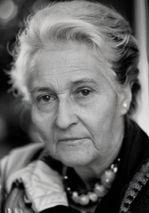
Françoise Dolto is considered to be the second most important figure in the history of psychoanalysis in France after Jacques Lacan. Born as the fourth of seven children into a Catholic family of the great Parisian middle class, she grew up in a sexually repressive milieu characterised by nationalism and anti-Semitism. Her father, Henri Marette, was an engineer and artillery captain and her mother, Suzanne Demmler, was a trained nurse. A traumatic childhood experience was the death of her elder sister, the favourite of her mother, who became depressed as a result, regretting that her less-beloved daughter was still alive. Françoise spent her youth in a climate of grief and guilt; a serious neurosis was the consequence.
After completing a nursing diploma, Françoise Marette began, like her younger brother Philippe, to study medicine in 1932 - with the aim to become an "education doctor". In 1938, she became Odette Codet's assistant in Edouard Pichon's outpatient department at Bretonneau Hospital. From 1934 to 1937, she underwent training analysis with René Laforgue. During her analysis she was able to emancipate herself from her familiar background, with the exception of her Catholic beliefs. In 1938 she became an associate member, in 1939 a full member of the Société psychanalytique de Paris (SPP). Three years prior she met Jacques Lacan, whose ideas she shared on the central role of language and the linguistic structure of the unconscious. After the war, they became close friends.
As a non-resident student 1936/37 at Georges Heuyer's unit of infantile neuropsychiatry, Françoise Marette worked together with Sophie Morgenstern, who introduced her to child psychoanalysis. Referring to Morgenstern's approach, she explained her technique of child analysis in her medical thesis on the subject of psychoanalysis and paediatrics in 1939. For her, child analysts should be a spokesperson for children and employ the language of childhood in analysing the child's thoughts. Dolto's educational thinking was inspired by Célestin Freinet, Alfred Adler and Alexander S. Neill. An important mentor was Édouard Pichon, whose consultancy at the Trousseau hospital in Paris she took over in 1940 and ran until 1978. In 1942 she married Boris Dolto (1899-1981), a Russian émigré doctor, with whom she had three children: Yves-Chrisostome, Grégoire and Catherine.
In 1953 Françoise Dolto, Lacan and others quit the SPP in protest against the stronger regimentation of psychoanalytical training and founded the Société Française de Psychanalyse. Ten years later the IPA forbade Françoise Dolto to train analysts, arguing that she influencds her pupils like a guru and did not respect the training rules of the IPA. As a result she and Lacan founded the École Freudienne de Paris in 1964.
At a colloquium on childhood psychosis in 1967, Françoise Dolto presented the famous case of Dominique, a 14-year-old schizophrenic patient whom she successfully treated. Her report on her analysis is a classical text in the field of child analysis. Dolto evolved a personal theory focused on the concepts of the "unconscious body image" and the "symbol-generating castrations"
The body image is the unconscious symbolic incarnation of the desiring being, before it is able to say "I". It is a representation without words reflecting the first relational experiences that develop from physical and psychical needs. Symbol-generating castrations mean the necessary separations from beloved partial objects and the renunciation of the symbiotic participation in the mother's body linked with archaic fantasies of omnipotence - for Dolto the condition of symbolization. By means of these castrations, the child becomes a social being able to verbalise, with an unconscious body image corresponding to its physical ripeness. Psychoses, however, are connected with a mutilated body image, they originate in failed castrations, i. e. fixations or regressions on a former state of object relation.
In 1979 Dolto opened the first Maison Verte in Paris, where children from birth to age three learn to deal with separation experiences in a protected way. The model set a precedent and today there are Maisons Vertes in many countries. Due to her radio programs published in Lorsque l'enfant paraît, Françoise Dolto became the most popular French psychoanalyst. She died at the age of 79 from a serious lung disease. (Top of the article)
- SELECTED WORKS
- Psychanalyse et pédiatrie (1939). Paris 1971 [Psychoanalyse und Kinderheilkunde. Frankfurt/M. 1973]
- Le cas Dominique. Paris 1971 [Der Fall Dominique. Frankfurt/M. 1973; Dominique. Analysis of an Adolescent. New York 1973]
- L'éveil de l'esprit de l'enfant. Paris 1977
- Lorsque l'enfant paraît, vol. 1-3. Paris 1977-1979 [Die ersten fünf Jahre. Alltagsprobleme mit Kindern. Weinheim, Basel 1982 + Wenn die Kinder älter werden. Alltagsprobleme in Schule, Familie und Freizeit. Weinheim, Basel 1984]
- La difficulté de vivre. Paris 1981
- Au jeu du désir. Paris 1981 [Über das Begehren. Die Anfänge der menschlichen Kommunikation. Stuttgart 1988]
- Séminaire de psychanalyse d'enfants. Paris 1982 [Praxis der Kinderanalyse. Stuttgart 1985]
- La sexualité féminine. La libido génitale et son destin féminin. Paris 1982 [Weibliche Sexualiät. Die Libido und ihr weibliches Schicksal. Stuttgart 2000]
- L'image inconsciente du corps. Paris 1984 [Das unbewußte Bild des Körpers. Weinheim, Berlin 1987]
- La cause des enfants. Paris 1985 [Mein Leben auf der Seite der Kinder. München 1989]
- Séminaire de psychanalyse d'enfants (2). Paris 1985 [Fallstudien zur Kinderanalyse. Stuttgart 1989]
- Enfances. Paris 1986 [Enfances - Erinnerungen an die Kindheit. Weinheim, Berlin 1987]
- La cause des adolescents. Paris 1988
- Tout est langage. Paris 1987 [Alles ist Sprache. Kindern mit Worten helfen. Weinheim, Berlin 1989]
- Quand les parents se separent. Paris 1988 [Scheidung, wie ein Kind sie erlebt. Stuttgart 1990]
- L'inconscient et destins. Séminaire de psychanalyse d'enfants (3). Paris 1988 [Das Unbewußte und das Schicksal des Kindes. Stuttgart 1995]
- L'échec scolaire. Essais sur l'éducation. Paris 1989
- Libido féminin. Paris 1989
- Autoportrait d'une psychanalyste. Paris 1989 [Selbstporträt einer Psychoanalytikerin. Weinheim, Berlin 1991]
- Correspondance 1913-1938. Paris 1991
- Les étapes majeurs de l'enfance. Articles et conférences (1). Paris 1994 [Kinder stark machen- Die ersten Lebensjahre. Weinheim 1997]
- Les chemins de l'éducation. Articles et conférences (2). Paris 1994
- Le sentiment de soi. Aux sources de l'image du corps. Paris 1997
- Parler de la mort. Nizza 1998
- Le féminin. Articles et conférences. Paris 1998
- Parler de la solitude. Paris 2005
- Une vie de correspondances 1938-1988. Paris 2005
- REFERENCES
- Aubry, Jenny, et al.: Quelques pas sur le chemin de Françoise Dolto. Paris 1988
- Binet, Eric: Françoise Dolto (1908-88). Prospects. The Quarterly Review of Comparative Education 29 (3), 1999, 445-454
- Buhmann, Christiane: Kind - Körper - Subjekt. Therapie, Erziehung und Prävention im Werk von Françoise Dolto. Gießen 1997
- Halmos, Claude: La planète Dolto. In L'enfant et la psychanalyse. Paris 1993
- Le Coq-héron Nr. 168, 2002: Françoise Dolto et la transmission de la psychanalyse. Cairn.info (2017-09-13)
- Ledoux, Michel-Henri: Indroduction à l'oeuvre de Françoise Dolto. Paris, Marseille 1990
- Roudinesco, Elisabeth, and Michel Plon: Wörterbuch der Psychoanalyse (1997). Wien, New York 2004
- Roudinesco, Elisabeth: Jacques Lacan. Esquisse d'une vie, histoire d'un système de pensée. Paris 1993 [Jacques Lacan. An Outline of a Life and a History of a System of Thought. Oxford 1999]
- Sauverzac, Jean-François de: Françoise Dolto. Itinéraire d'une psychanalyste. Paris 1993
- This, Bernard: Dolto-Marette, Françoise. In Dictionnaire international de la psychanalyse (2002). Ed. by Alain de Mijolla. Paris 2005, 489f [International Dictionary of Psychoanalysis. Detroit u. a. 2005, 426-429]
- Wikipedia (2024-11-19)
- PHOTO: Wikimedia Commons (2024-11-19)
Judith Dupont née Dormandi (*1925)
Judith Dupont, the granddaughter of Vilma Kovács and niece of Alice Balint, was born in Budapest. Her mother, Olga Székely-Kovácz, was a painter and sculptor who portrayed numerous psychoanalysts. Her father, László Dormandi, was the owner of the Hungarian publishing house Pantheon and the author of several novels. In the mid-1920s, her parents, whose ancestors were Alsatian and Spanish Jews, converted to the Christian faith.
Judith Dormandi grew up in the house of her grandfather Frédéric Kovács in Budapest, the residence of the psychoanalytic polyclinic and also the home of the Balint family. In 1938, the year of the "Anschluss" of Austria by Nazi Germany, the Dormandis emigrated to Paris, where they survived the German occupation. After the end of the war Judith Dormandi studied medicine in Paris and graduated in pathological anatomy in 1955. One of her fellow students was Jacques Dupont (*1927), a left-wing printer, in whose printing house she had worked and whom she married in 1952. Together they have two children, Hélène (*1955) and Pierre (*1956).
Judith Dupont specialised as a pediatrician before starting a four-year training analysis with Daniel Lagache in 1954. Her supervisors were Juliette Favez-Boutonier, Françoise Dolto and Georges Favez. She became a member of the Association Psychanalytique de France and worked as a child analyst in different institutions, among others at the Centre de Guidance de l'Aisne (directed by Marcelle Geber) and the Centre Etienne-Marcel in Paris. In addition, she established a private practice where she treated adult patients.
In 1969 she founded the journal Le Coq-Héron, where she was a co-editor for many years. One of the journal's main themes is the history of psychoanalysis, namely Hungarian psychoanalysis. Judith Dupont is a French co-translator of the writings of Michael Balint and Sándor Ferenczi and of the correspondence between Sigmund Freud and Ferenczi. She administered the heritage of Ferenczi in France as well as internationally and, like Maria Torok and Nicolas Abraham, she has fostered the high appreciation of Ferenczi in France. In 2013 she received the Sigourney Award for outstanding achievement in psychoanalysis. (Top of the article)
- SELECTED WORKS
- (pseudon. Jeanne Van den Brouck) Manuel à l'usage des enfants qui ont des parents difficiles. Paris 1979; 1990 [Handbuch für Kinder mit schwierigen Eltern. Stuttgart 1981; 1996]
- Ce "fou" de Ferenczi. Le Coq-Héron No. 104, 1987, 44-52 [Ferenczi's "madness". Contemp Psychoanal 24, 1988, 250-261]
- La relation Freud-Ferenczi á la lumière de leur correspondance. Rev int hist psychanal 2, 1989, 181-200
- Entre Freud et Ferenczi: Groddeck. Le Coq-Héron No. 123, 1992, 51-56
- Freud's analysis of Ferenczi as revealed by their correspondence. IJP 75, 1994, 301-320
- The story of a transgression. JAPA 43, 1995, 823-834
- Humor in the Freud-Ferenczi correspondence. In J. W. Barron (Hg.): Humor and Psyche. Psychoanalytic Perspectives. Hillsdale, NJ 1999, 161-176 [L'humour dans la correspondance Freud-Ferenczi. In S. Michaud (Hg.): Correspondances de Freud. Paris 2007, 59-68]
- La notion de trauma selon Ferenczi et ses effets sur la recherche psychanalytique ultérieure. Le Coq-Héron No. 154, 1999, 42ff + filigrane 9 (1), 2000 [Der Traumabegriff nach Ferenczi und sein Einfluß auf die spätere psychoanalytische Forschung. Psyche 5, 1999, 419-431]
- Introduction of the Balint issues. Am J Psychoanal 62 (1), 2002, 1-6
- Kovács-Prosznitz, Vilma. In Dictionnaire international de la psychanalyse (2002). Ed. by A. de Mijolla. Paris 2005, 941f [International Dictionary of Psychoanalysis. Detroit et al. 2005, 922-923]
- L'exile avant l'exile. Michael et Alice Balint. Topique No. 80, 2002, 95-102
- L'introduction de Ferenczi en France. Le Coq-Héron No. 180, 2005
- Meine Begegnungen mit der Psychoanalyse. In L. M. Hermanns (ed.): Psychoanalyse in Selbstdarstellungen, Bd. V. Frankfurt/M. 2007, 59-105
- Au fil du temps... Un itinéraire analytique. Paris 2015 (Review) [As Time Goes By. An Analytic Journey. New York 2019]
- (and Eva Brabant) (eds.) La correspondance Ernest Jones-Michael Balint. Ramonville Saint-Agne 2004
- REFERENCES
- Gallissot, René: Dupont, Jacques (Dictionnaire Algérie). Le Maitron (2024-07-05)
- Landa, Fabio: Interview de Judith et Jacques Dupont. Le Coq-Héron Nr. 189, 2007, 69-81 (2015-10-26)
- Olga Dormandi (2020-12-17)
- Peeters, Benoit: Entretien avec Judith Dupont, 23.6.2020 (2024-07-05)
- Roudinesco, Elisabeth, and Michel Plon: Wörterbuch der Psychoanalyse (1997). Wien, New York 2004
- Sigourney Award (2020-12-17)
- Wikipedia: French; German (2024-07-05)
- PHOTO in J. Dupont: Meine Begegnungen mit der Psychoanalyse. Frankfurt/M. 2007, 61. Courtesy of Judith Dupont
Micheline Enriquez née Joly (1931-1987)
Micheline Enriquez was born in Châlons-sur-Marne. She studied psychology in Paris from 1950 to 1954 and subsequently was appointed a psychologist at the mental health clinic of the Faculté de médecine in Paris and at the Versailles Hospital. From 1960 to 1962 she taught projective techniques at the Institute of Psychology at the Sorbonne.
She underwent her training analysis with Serge Leclaire of the Société Française de Psychanalyse, and her supervising analyst was Piera Aulagnier. Later she had a second analysis with Serge Viderman. She became a member of the École Freudienne de Paris (EFP) founded by Jacques Lacan in 1964. In 1969 she left the EFP and joined the Quatrième Groupe, where she became president in 1986. As well, she was a member of the International Association for the History of Psychanalysis since its foundation in 1985. In 1978 she was awarded the Maurice Bouvet Prize in psychoanalysis for three of her articles published in the review Topique during the 1970s.
In her book Aux carrefours de la haine published in 1984, re-issued in 2001 under the title La souffrance et la haine, Micheline Enriquez provided new insights into paranoia, masochism, and what she referred to, after the Marquis de Sade, as apathy. She showed that paranoiacs and masochists eroticize suffering and hatred, while those who are apathetic reject affects in order to maintain a distance from others, which is essential for them.
Micheline Enriquez was married to Eugène Enriquez (*1931), a pioneer of psychosociology. She died at the age of 56 in an automobile accident.
- SELECTED WORKS (for more, see Quatrième groupe)
- D'un corps à l'autre. Réflexions sur le masochisme. Topique No. 7-8, 1971, 85-118
- Fantasmes paranoïaques. Différence des sexes, homosexualité, loi du père. Topique No. 13, 1974, 23-58 [Paranoiac fantasies. Sexual difference, homosexuality, law of the father. In D. B. Alison et al. (eds): Psychosis and Sexual Idenity. Toward a Post-Analytic View of the Schreber-Case. Albany 1988]
- Analyse possible ou impossible. Topique No. 18, 1977, 49-62
- Libres pensées. In R. Barande (ed.): Comment l'interpretation vient au psychanalyste. Paris 1977, 95-104
- Du corps de souffrance au corps en souffrance. Topique No. 26, 1980, 5-27
- Aux carrefours de la haine. Paranoïa, masochisme, apathie. Paris 1984 [Nas encruzilhadas do ódio. Paranóia, masoquismo, apatia. São Paulo 1999]
- L'enveloppe de mémoire et ses trous. In D. Anzieu et al. (eds): Les enveloppes psychiques. Paris 1987
- Le délire en héritage + Incidence du délire parental sur la mémoire des descendants. In R. Kaës et al. (eds): Transmission de la vie psychique entre générations. Paris 1993
- La souffrance et la haine. Paranoïa, masochisme et apathie. Paris 2001
- (with Thérèse Lamperière, Jacques Perse and Pierre-Bernard Schneider) Symptômes hystériques et personnalité hystérique. Paris 1965
- (and Eugène Enriquez) Le psychanalyste et son institution. Topique No. 6, 1971
- REFERENCES
- Enriquez, Eugène: Biographie de Micheline Enriquez. Quatrième groupe (2012-10-08)
- Enriquez, Eugène: Enriquez-Joly, Micheline. In Dictionnaire international de la psychanalyse (2002). Ed. by A. de Mijolla. Paris 2005, 545f [International Dictionary of Psychoanalysis. Detroit u. a. 2005, 506-507]
- Wikipedia: Eugène Enriquez (2014-04-10)
Solange Faladé (1925-2004)
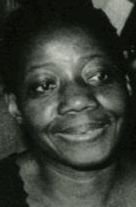
Solange Adelola Faladé, one of the first African psychoanalysts, was born in Dahomey (now called the Republic of Benin). She was a granddaughter of Behanzin, the last independent king of Abomey. In 1933 she and her brother Max Faladé were sent to attend school in France. Solange Faladé studied medicine in Paris in the beginning of the 1950s and graduated as a doctor in 1955. The subject of her thesis was the psychomotor development of African children from Senegal. Fighting for the independence of the African states, she founded the Fédération des étudiants d'Afrique noire francophone (FEANF) in 1950 and was its first president.
In 1952 Solange Faladé met Jacques Lacan and became his disciple and intimate friend. She underwent her training analysis with Lacan as a candidate of the Société Française de Psychanalyse (SFP), her supervising analyst was Françoise Dolto. Another important teacher was Jenny Aubry, whose consultancy at the Fondation Parent-de-Rosan she attended.
At the split of the SFP in 1964, Faladé followed Lacan into the newly established École Freudienne de Paris (EFP), where she was a member of the board from 1967 to 1980. After the dissolution of the EFP and Lacan's death in 1981, she was a co-founder of the only short-lived Centre d'etudes et de recherches freudiennes (CERF), before founding her own school in 1983, the École Freudienne (EF), which she directed until the end of her life. The EF stands in the tradition of Lacan's return to Freud.
Solange Faladé was active in the Organisation mondiale de la santé (OMS), she founded the Institut d'ethno-psychopathologie africaine in Paris and was a researcher in anthropology and ethnology at the Centre Nationale de Recherche Scientifique. In 2003 transcriptions of her seminar held at the EF in 1991/92 and 1992/93 were published under the titel Clinique des névroses. (Top of the article)
- SELECTED WORKS
- Contribution à une étude sur le développement de l'enfant d'Afrique noire, le développement psycho-moteur du jeune Africain originaire du Sénégal au cours de sa première année. Thesis (MD) Paris 1955
- Le nourrisson africain du Sénégal dans son milieu socio-culturel. London, Bukavu 1959
- Femmes de Dakar et de son agglomération. In D. Paulme (ed.): Femmes d'Afrique noire. Paris, Den Haag 1960, 207-218 [Women of Dakar and the surrounding urban area. In D. Paulme (ed.): Women of Tropical Africa. Berkeley; London 1963, 217-229]
- Rapport sur le fonctionnement de l'Institut d'ethno-psychopathologie africaine. Cahiers d'études africaines 16, 1964, IV-4
- Sur l'identification a l'analyste. Ornicar? No. 10, 1977
- Une lettre de Solange Faladé. Ornicar? No. 17/18, 1979
- Repères structurels des névroses, psychoses et perversions. Paris 1986
- Clinique des névroses. Paris 2003
- Le moi et la question du sujet. Paris 2008
- Autour de la Chose. Paris 2012
- REFERENCES
- Delaroche, Patrique: Solange Faladé: Clinique des névroses. Figures de la psychanalyse 1 (11), 2005, 226-232 (2016-11-10)
- Dieng, Amady Aly: Hommage à Solange Faladé (2005). kemit black civilisation (2006-02-02 - no more existing)
- Mary, Bernard: Preface in Clinique des névroses. Paris 2003
- Roudinesco, Elisabeth: Histoire de la psychanalyse en France, vol. 2: 1925-1985. Paris 1986; 1994 [Jacques Lacan & Co. A History of Psychoanalysis in France, 1925-1985. Chicago 1990]
- Samacher, Robert: Hommage à Solange Faladé. Ècole Freudienne 2013 (2018-10-15)
- Wikipedia (2023-11-05)
- PHOTO: Psychanalyse à Nantes (2010-09-08). Courtesy of Max Faladé
Juliette Favez-Boutonier (1903-1994)
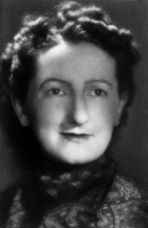
Juliette Boutonier, a daughter of teachers, was born in Grasse in the south of France. She attended school in Grasse and Nice and subsequently studied philosophy at the Sorbonne in Paris. In 1926 she was one of the first women to take the state doctoral exam in philosophy. She taught at schools in Chartre and Dijon, while studying medicine in Dijon. In 1935 she obtained a job in Paris teaching philosophy and there she met the psychiatrist Daniel Lagache and began psychoanalysis with René Laforgue. She received her training in clinical psychopathology at the Sainte-Anne Hospital in Paris with Georges Heuyer. In 1938 she wrote her medical dissertation on ambivalence, and in 1945 she qualified as a doctor of philosophy. Her award-winning thesis about anxiety - Contribution à la psychologie et à la métaphysique de l'angoisse (published under the title L'angoisse) - was directed by Gaston Bachelard.
In 1946 Juliette Boutonier was elected a member of the Société Psychanalytique de Paris (SPP). That same year she founded along with Georges Mauco the Centre psychopédagogique de Claude-Bernard, an institution for children with school problems, where she was medical director in 1946. In 1947 she took over the chair of psychology from Daniel Lagache at the University of Strasbourg. Like Lagache she strived for a synthesis of psychology and psychoanalysis.
In 1952 she married the psychoanalyst Georges Favez (1901-1981). A year later they both left the SPP in protest against the "dictatorship" of Sacha Nacht and his medicalization of psychoanalysis. Together with Lagache, Jacques Lacan, Françoise Dolto and others they founded the Société Française de Psychanalyse (SFP). As President of the SFP, Juliette Favez-Boutonier fought for the recognition of the SFP by the IPA, but finally participated in the creation of the Association Psychanalytique de France (APF) in 1964, recognized by the IPA in 1965.
In 1955 Juliette Favez-Boutonier was appointed professor of psychology at the Sorbonne. Her main interest was clinical psychology. Like Lagache, she represented the values of a tradition inherited by Pierre Janet. In 1959 she established the first Laboratory of clinical psychology at the Sorbonne, which she led until her retirement in 1974. In 1969 she helped with the creation of the department of Sciences Humaines Cliniques, which was opened at the University of Paris VII. (Top of the article)
- SELECTED WORKS
- L'angoisse. Paris 1945
- La notion d'ambivalence. Étude critique, valeur séméiologique. Thesis (MD) Paris 1938; Paris 2004
- Les défaillances de la volonté. Paris 1945
- Les dessins des enfants. Paris 1953
- Problèmes de psychologie générale. Paris 1956
- Problèmes de psychologie générale (suite). Paris 1957
- L'homme et son milieu. Paris 1958
- La psychologie clinique. Objet, méthode, problème. Paris 1959
- Questions de psychologie générale. Paris 1963
- Personnalisation et luttes de classes. Paris 1963
- La mémoire et l'oubli. Paris 1963
- L'imagination. Paris 1963
- La personnalité. Paris 1964
- Le langage. Paris 1967
- Réflexions sur l'autobiographie d'un criminel. Bulletin de Psychologie 49 (432), 1996, 246-261
- (et al.) Psychanalyse et sciences de l'homme. Paris 1957
- REFERENCES
- Brun, Danièle: Entretien avec Juliette Favez-Boutonier. Études freudiennes No. 36, Janvier 1995
- Doz-Schiff, Claire: In memoriam Juliette Favez-Boutonier (1903-1994). Bulletin du Centre de documentation Henri F. Ellenberger 5, 1er trimestre 1994
- Golse, Bernard: Favez-Boutonier, Juliette. In Dictionnaire international de la psychanalyse (2002). Ed. by A. de Mijolla. Paris 2005, 615f [International Dictionary of Psychoanalysis. Detroit u. a. 2005, 559-560]
- Hommage à Juliette Favez-Boutonier. Bulletin de Psychologie 49 (432), 1996
- Mijolla, Alain de: La psychanalyse en France (1893-1965). In R. Jaccard (ed.): Histoire de la psychanalyse, vol. 2. Paris 1982, 5-118
- Roudinesco, Elisabeth, and Michel Plon: Wörterbuch der Psychoanalyse (1997). Wien; New York 2004
- Wikipedia (2018-10-15)
- PHOTO: Unkown right holder; AEJCPP (2008-04-09)
Marcelle Geber (1919-2020)
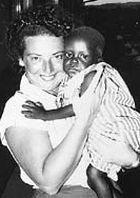
Marcelle Geber was born in Pavillons-sous-Bois, a suburb of Paris, as the younger of two sisters. In 1936 she began her medical study in Paris, specialising in psychiatry under Jean Delay and Georges Heuyer. Shocked by methods of psychiatric treatment like straitjacket and insulin coma therapy, she preferred to specialise in paediatrics. After the end of the war, she returned to psychiatry and was a resident in child psychiatry at the Ambroise Paré hospital in Paris from 1947 to 1950. In 1950 she wrote her doctoral thesis L'échec scolaire des enfants surdoués under the supervision of Jenny Aubry.
From 1948 to 1952 Marcelle Geber carried out investigation on the effects of deficient maternal care in early childhood, together with Jenny Aubry and the team of John Bowlby. At the same time she explored, on behalf of the World Health Organization, the development of young children in urban and rural milieu. In 1950 she founded the first of three child guidance clinics in Aisne and was director of the Centre de Guidance de l'Aisne until 1969. She was president of the Association pour la Santé Mentale de l'Enfance and medical director of the Centre Médico-Psycho-Pédagogique at Suresnes (1970-1987).
Marcelle Geber became especially known for her research on comparative developmental psychology in Africa between 1954 and 1992. She started in Kampala, Uganda, where she explored the psychological factors in the aetiology of kwashiorkor (a nutritional deficiency disease), by comparing sick and healthy children. In the following years she continued her research in several African countries, becoming part of an international comparative long-term study. Parallel studies were run by Solange Faladé in Senegal. Marcelle Geber found that African children were in a more advanced state of psychomotor development than European children, particularly marked in the first year of life. She suggested that the difference is attributable to the close body contact between African mothers and their babies throughout the first year. Geber was the first to emphasize that kwashiorkor is not only associated with malnutrition but also with a disturbed mother-child relationship.
Marcelle Geber was married to the Israeli artist Ben Banay (1915-2005). (Top of the article)
- SELECTED WORKS
- Développement psychomoteur de l'enfant africain. Courrier 6, 1956, 17-29
- The psycho-motor development of African children in the first year, and the influence of maternal behavior. Journal of Social Psychology 47 (2) 1958, 185-195
- Tests de Gesell et de Terman-Merrill appliqués en Uganda. Enfance 11 (1), 1958, 63-67
- Problèmes posés par le développement du jeune enfant africain en fonction de son milieu social. Travail Humain 23 (1/2), 1960, 97-111
- Développement psychomoteur des petits Baganda de la naissance à six ans. Journal Suisse de Psychologie 20, 1961, 345-357
- Longitudinal study and psychomotor development among Baganda children. Proceedings of the XIV International Congress of Applied Psychology 3, 1962, 50-60
- Psychomotor development from birth to 6 years. In A. G. Shaper et al. (eds): Medicine in a Tropical Environment. London 1972, 247-261
- L'environnement et le développement des enfants africains. Enfance 26 (3/4), 1973, 145-174
- Psychothérapie d'un enfant atteint de Kwashiorkor. Psychopathologie africaine 22 (2), 1989, 171-190 + Devenir 8 (4), 1996, 23-42
- Le devenir des enfants atteints du kwashiorkor. Devenir 3 (1), 1991, 36-54
- L'enfant africain dans un monde en changement. Étude ethno-psychologique dans huit pays africains. Paris 1998
- L'abandonnisme en Afrique sud-saharienne. Paris 1999
- Aubry Weiss, Jenny. In Dictionnaire international de la psychanalyse (2002). Ed. by A. de Mijolla. Paris 2005, 152-153 [International Dictionary of Psychoanalysis. Detroit u. a. 2005, 128-129]
- De la tradition africaine à la France. Réflexions de quarante ans de terrain. L'Autre 5 (3), 2004, 417-421
- (and Reginald Francis Alfred Dean) Psychological factors in the etiology of kwashiorkor. Bull WHO 12, 1955, 471-475
- (and R. F. A. Dean) The psychological changes accompanying kwashiorkor. Courrier 6, 1956, 3-15
- (and R. F. A. Dean) Gesell tests on African children. Pediatrics 20 (6), 1957, 1055-1065
- REFERENCES
- Ainsworth, Mary D. Salter: Infancy in Uganda. Infant Care and Growth of Love. Baltimore 1967
- Ben Banay Website (22.7.2013)
- Dugravier, Romain, and Antoine Guedeney: Contribution de quatre pionnières à l'étude de la carence de soins maternels. La psychiatrie de l'enfant 49 (2), 2006, 405-442 (2016-04-15)
- Entretien avec Marcelle Geber-Banay. Video Mairie d'Asnières-Sur-Seine 2015 (2017-07-20)
- Géry, Marion, and Marie Rose Moro: Marcelle Geber, une femme libre et solaire. L'Autre 13 (3), 2012, 340-344
- Géry, Marion: Tu reviens quand ? Marcelle Geber est partie... L'autre (2024-07-05)
- Reichmayr, Johannes, Ursula Wagner, Caroline Ouederrou and Binja Pletzer: Psychoanalyse und Ethnologie. Biographisches Lexikon der psychoanalytischen Ethnologie, Ethnopsychoanalyse und interkulturellen psychoanalytischen Therapie. Gießen 2003, 140-143
- Roudinesco, Élisabeth: La mort de Marcelle Geber. Blog Olivier Douville, 21. Mai 2020 (2024-07-05)
- Wikipedia (16.4.2010)
- PHOTO in M. Geber: Psychothérapie d'un enfant atteint de Kwashiorkor. Devenir 8 (4), 1996, 23-42
Florence Guignard (*1934)
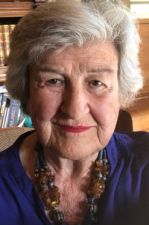
Florence Guignard was born in Geneva, the daughter of Charles Guignard and Marcelle Rau. Her father was a physician, her mother a violinist and music professor. Florence Guignard took singing and piano lessons, before she studied clinical psychology at the University of Geneva. She worked alongside with Jean Piaget and directed research for the Fonds national suisse pour la recherche scientifique in the 1960s. In particular, she led a study on symbolization disorders in children with a mental disability.
She started her psychoanalytic training in Geneva at the Société Suisse de Psychanalyse (SSPsa), with Raymond de Saussure, Olivier Flournoy and René Spitz. Then she married Jean Bégoin (*1925), a member of the SSPsa since 1965, with whom she had two children. They moved to Paris, where Florence Bégoin-Guignard continued her psychoanalytic training with Serge Lebovici, René Diatkine, Michel Fain, Joyce McDougall and Pierre Luquet. In 1979 she became a member and in 1982 a training analyst of the Société Psychanalytique de Paris (SPP), of which
she was two times the vice-president. She and Jean Bégoin belong to the small group of Kleinians in France and engaged in promoting the understanding of the theories of Melanie Klein and the post-Kleinian thinkers such as Wilfred R. Bion, Herbert Rosenfeld and Donald Meltzer.
With Annie Anzieu, Florence Guignard created, in 1984, the Association pour la Psychanalyse de l'Enfant and, in 1994, the Société Européenne pour la Psychanalyse de l'Enfant et de l'Adolescent. A member of the IPA Committee on Child and Adolescent Psychoanalysis (COCAP) since its creation in 1997, she was its chair from 2008 to 2014. In addition, she was the chair of the editorial board of the Review L’Année psychanalytique internationale during six years. Florence Guignard worked in Paris as a psychoanalyst for children, adolescents and adults, before retiring to Chandolin, Switzerland, in 2013. The focus of her work lies in the sense of identity, femininity and maternity, the genesis of mental disturbances and problems of the psychoanalytic technique. (Top of the article)
- SELECTED WORKS (for more see Biblio Generale)
- Activité interprétative et espace psychique. RFP 47 (3), 1983, 745-752
- Adolescence de la féminité. Adolescence 2 (2), 1984, 221-235
- Ballade au préconscient. RFP 49 (5), 1985, 1391-1400
- À l'aube du maternel et du féminin. Essai sur deux concepts aussi évidents qu'inconcevables. RFP 51 (6), 1987, 1491-1503
- De certains concepts psychanalytiques vus de ma fenêtre. RFP 53 (3), 1989, 911-917
- Une introduction à la pensée de Mélanie Klein, Wilfred R. Bion, Donald Meltzer. Interview mit Florence Bégoin-Guignard. Video von Jean Belair. CECOM Europe, Lorquin 1989
- OEdipe et la horde primitive. Culpabilité et mentalité de groupe. Psychanalyse dans la Civilisation No. 6, Mai 1992 (2008-04-09)
- Différence des sexes et théories sexuelles. Désir et danger de connaître. RFP 57 (Numéro spécial), 1993, 1697-1699
- Quelles fins pour l'analyse d'enfants? Filigrane 2, 1993, 11-28
- L'enfant dans le psychanalyste. RFP 58 (3), 1994, 649-659
- Les pièges de la représentation dans l'interprétation psychanalytique. J psychanal enf 15, 1994
- Au vif de l'infantile. Reflexions sur la situation analytique. Lausanne, Paris 1996
- Épître à l'objet. Paris 1997
- De l'infantile à la névrose infantile. SPP 2001
- Mütterlich oder weiblich? Der "gewachsene Fels" als Wächter über das Inzesttabu mit der Mutter. In S. Heenen-Wolff (ed.): Neues vom Weib. Französische Beiträge. Göttingen 2000
- Le sexuel statufié. RFP 65 (4), 2001, 1325-1336
- Mourning and mental development. In L. Glocer Fiorini et al. (eds): On Freud's "Mourning and Melancholia". London 2007
- Le temps de la maturation psychique chez l'enfant. Conférence Nr. 26, printemps 2008
- Envy in Western society: today and tomorrow. In P. Roth and A. Lemma (eds): Envy and Gratitude Revisited. London 2008
- A child is playing, a child is dreaming. In S. Teicher and M. Gunter (eds): Dream and Fantasy in Child Analysis. London 2015
- (et al.) Maternité, féminité. Paris 1987
- (and Thierry Bokanowski) (eds) La relation mère-fille. Entre partage et clivage. Paris 2002
- (and Thierry Bokanowski) (eds) Actualité de la pensée de Bion. Paris 2007
- REFERENCES
- L'année psychanalytique internationale (2016-03-22)
- Reed, Gail S., and Howard B. Levine (eds): On Freud's "Screen Memories". London 2015
- Reignier, Sylvie: À l'écoute du développement de la pensée humaine. Rencontre avec Florence Guignard. Toulouse 2023 (Video 2024-03-24) (2024-07-08)
- Roth, Priscilla, and Alessandra Lemma (eds): Envy and Gratitude Revisited. London 2008
- Teicher, Samy, and Michael Gunter (eds): Dream and Fantasy in Child Analysis. London 2015
- Wikipedia: Florence Guignard; Jean Bégoin (2024-07-09)
- PHOTO: IPA 2021 (2024-07-08)
Dominique Guyomard (19?-2015)

Dominique Guyomard studied psychology and received her psychoanalytic training from Octave Mannoni and Françoise Dolto. An important motive in her decision of becoming an analyst was her childhood experience of not having been able to get access to her insane grandmother, whose speaking made no sense to her. Dominique Guyomard became a member of the École Freudienne de Paris founded by Jacques Lacan and later dissolved by him in 1980. She helped to set up the Centre de Formation et de Recherches Psychanalytiques (CFRP), which was founded by her husband Patrick Guyomard in 1982, together with Octave and Maud Mannoni. After the dissolution of the CFRP in 1994, she was a founding member of the Société de Psychanalyse Freudienne (SPF), which refers to Lacan's return to Freud and takes greater account of the Anglo-Saxon school.
Dominique Guyomard located her theoretical position between Lacan on the one side and Donald W. Winnicott and Melanie Klein on the other. The focus of her work lies in questions of femininity. She stresses that the feminine super-ego is a maternal superego and women are always in danger to remain riveted to the pre-Oedipal mother in the desire for omnipotence. In her book L'effet-mère, published in 2009, Guyomard dealt with the problems of motherhood and the development of motherliness. In order to understand the narcissistic bond which is characteristic of motherliness, Guyomard created the notion of the "narcissism of bond" ["narcissisme du lien"], situated in the mother-child-dyade and differentiated from the narcissistic object relation [relation narcissique d'objet]. (Top of the article)
- SELECTED WORKS
- A propos de Oedipe-roi selon Freud. Revue des Psychanalystes, March 1982
- Questions sur l'espace et le transfert dans une cure psychanalytique. Revue de Psychiatrie Française, April 1984
- Filiation et engendrement. Topique Nr. 35/36, 1985
- L'enfant adopté. Bloc-notes No. 11, 1992
- La folie maternelle, un paradoxe? In H. David et al.: La folie maternelle ordinaire. Paris 2006
- L'effet-mère. L'entre-mère-et-fille, du lien à la relation. Paris 2009
- (et al.) Invention du féminin. Paris 2002
- REFERENCES
- Baruch, Hoffmann Elaine, and Lucienne J. Serrano: Women Analyse Woman. New York, London 1988
- Hommage à Dominique Guyomard. Les Lettres de la SPF, Nr. 37, 2017, 9-12
- Laval-Hygonenq, Marie-Françoise: Review of "L'effet-mère". Oedipe le Salon, Jan. 2000 (2022-16-05)
- SPF (2016-11-11)
- PHOTO: Facultad de Ciencias Sociales de la Universidad de Chile (2013) (2024-11-19)
Luce Irigaray (*1930)
Luce Irigaray, whose work had a remarkable influence on the feminist movement in Europe and the USA, was born in Blaton in Belgium. In 1955 she graduated in philosophy and arts at the Catholic University of Louvain and taught French and Classics in Charleroi and Brussels from 1956 to 1959. Subsequently she moved to Paris to study psychology - with a focus upon psychopathology - and linguistics. At this time she participated in Jacques Lacan's psychoanalytic seminars and became a disciple of his.
She underwent training analysis with Serge Leclaire and became a member of the École Freudienne de Paris (EFP) directed by Lacan. She qualified as a doctor of linguistics in 1968 (Le langage des déments) and in psychology in 1974. Her thesis Spéculum de l'autre femme (Speculum of the Other Woman), a deconstruction of the phallo- and logocentrism of Sigmund Freud, Jacques Lacan and Western philosophy, was inspired by Jacques Derrida and earned her recognition as a leading feminist theorist and continental philosopher. The EFP, however, expelled Irigaray and terminated her teaching position at the University of Vincennes (1970-1974).
In 1964 Luce Irigaray started working at the CNRS, a research centre in Paris, where she became Director of Research in Philosophy in 1986. In the 1980s she conducted research on the difference between the language of women and the language of men. In 1982 she held the International Chair in Philosophy at the Erasmus University in Rotterdam, which resulted in the publication of her book Éthique de la différence sexuelle (An Ethics of Sexual Difference) in 1984.
In addition to her teaching activities and her psychoanalytic private practice, she was active in the feminist movement, working together with numerous circles of women from different countries and cultures. In the 1980s and 1990s she concentrated on the conversion of her theoretical ideas into political practice.
Luce Irigaray critiques the phallocentric logic of identity, according to which femininity is the negation of the male subject - psychoanalytically: a cavity of the penis. Irigaray deconstructs this mirror image of sexual difference and develops "femininity" as the radically other independent of the logos and his power of definition, taking on ever-new forms between the concepts and images. According to Irigary the girl is "expatriated" to the phallic order through the object change from the mother toward the father. Thus she loses the possibility of a female genealogy and a female desire. The only way out for a woman is the strategy of mimesis, which means submitting herself to the masculine views of women in a playful way. The unfaithful repetition of the views makes visible that women are something other than the view expressed. For Irigaray the autoerotic body experiences of women evade the phallocentric binary oppositions. The result is the "fluidity" and ambiguity of woman's language.
While Irigaray first tried to avoid a definition of femininity by consciously using ambiguities, she later sketched essential formulations of femininity. In An Ethics of Sexual Difference she pleaded for a non-complementary sexual difference, regarding each of the sexes as a whole and different from another. To attain a female subject position, women must create their own species by way of female genealogies and a positive mother/daughter relationship. Luce Irigaray even goes so far as to put into play the urgency of female divinity. (Top of the article)
- SELECTED WORKS
- Le langage des déments. The Hague 1973
- Speculum de l'autre femme. Paris 1974 [Speculum. Spiegel des anderen Geschlechts. Frankfurt/M. 1980; Speculum of the Other Woman. Ithaca, N.Y. 1985]
- Waren, Körper, Sprache. Der ver-rückte Diskurs der Frauen. Berlin 1976
- Unbewußtes, Frauen, Psychoanalyse. Berlin 1977
- Ce sexe qui n'est pas un. Paris 1977 [Das Geschlecht, das nicht eins ist. Berlin 1979; This Sex which is Not One. Ithaca, N.Y. 1985]
- Et l'une ne bouge pas sans l'autre. Paris 1979 [Eine bewegt sich nicht ohne die andere. Freibeuter 2, 1979, 72-78]
- Le corps-à-corps avec la mère. Montréal 1982
- Passions élémentaires. Paris 1982
- La croyance même. Paris 1983
- L'oubli de l'air chez Martin Heidegger. Paris 1983
- Éthique de la différence sexuelle. Paris 1984 [Ethik der sexuellen Differenz. Frankfurt/M. 1991; An Ethics of Sexual Difference. London 1993; Ithaca, N.Y. 1993]
- Parler n'est jamais neutre. Paris 1985
- Sexes et parentés. Paris 1987 [Genealogie der Geschlechter. Freiburg 1989; Sexes and Genealogies. New York 1993]
- Le sexe linguiste. Paris 1987
- Zur Geschlechterdifferenz. Interviews und Vorträge. Wien 1987
- Sexes et genres à travers les langues. Eléments de communication sexuée. Paris 1990
- Je, tu, nous - Pour une culture de la différence. Paris 1990 [Je, tu, nous - Toward a Culture of Difference. New York 1993]
- Genealogie und Traditionen. Vorträge. Frankfurt/M. 1990
- The Irigaray Reader. Oxford 1991
- Le temps de la différence. Pour une révolution pacifique. Paris 1990 [Die Zeit der Differenz. Für eine friedliche Revolution. Frankfurt/M. 1991]
- J'aime à toi - Esquisse d'une félicité dans l'histoire. Paris 1992
- Genres culturels et interculturels. Paris 1993
- Le souffle des femmes. Paris 1996 [Der Atem von Frauen. Luce Irigaray präsentiert weibliche Credos. Rüsselsheim 1997]
- Être deux. Paris 1997 [To be two. New York 2001]
- Entre Orient et Occident. De la singularité à la communauté. Paris 1999
- Die Zeit des Atmens. Rüsselsheim 1999
- Prières quotidiennes. Paris 2004 [Daily prayers. Newcastle upon Tyne 2005]
- Luce Irigaray. Key Writings. London 2004
- REFERENCES
- Baruch, Hoffmann Elaine, and Lucienne J. Serrano: Women Analyze Women. New York; London 1988
- Contemporary Literary Criticism, Vol. 326. Detroit, Mich. 2012
- Deuber-Mankowsky, Astrid: Von neuen Welten und weiblichen Göttern. Zu Luce Irigarays "Ethique de la différence sexuelle". In Weiblichkeit in der Moderne. Ed. by J. Conrad and U. Konnertz. Tübingen 1986, 62-74
- Holland, Bridget: Luce Irigaray. A Biography (1998). Collaboratory for Digital Discourse and Culture (2008-04-08)
- Internet Encyclopedia of Philosophy (2010-04-21)
- Rullmann, Marit: Philosophinnen, vol. 2: Von der Romantik bis zur Moderne. Frankfurt/M. 1998, 257-226
- Sigmund-Wild, Irene: Anerkennung des Ver-rückten. Zu Luce Irigarays Entwurf einer "Ethik der sexuellen Differenz". Marburg 2000
- Whitford, Margaret: Luce Irigaray. Philosophy in the Feminine. London 1991
- Wikipedia: German; English; French (2008-04-08)
Évelyne Kestemberg née Hassin (1918-1989)
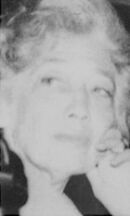
© PUF
Évelyne Kestemberg was born in Constantinople as the daughter of a French merchant and his Jewish-Russian wife. Soon after her birth her parents moved to Paris, where Évelyne Hassin attended high school with Juliette Favez-Boutonier as her philosophy teacher. She earned a university degree in philosophy, before emigrating from occupied France to Mexico in 1942. In Mexico she met Jean Kestemberg (1912-1975), a Polish Jew and Spanish Civil War combatant, who also fled the Nazis and soon became her husband.
In 1945 Évelyne and Jean Kestemberg returned to France, where they joined the Communist Party and took up psychoanalytic training. When the party leaders required the members to dissociate themselves from the Freudian theory, the Kestembergs as well as Serge Lebovici signed a manifesto in 1949, in which psychoanalysis was condemned to be a reactionary ideology. Later they retracted their position and left the Communist party.
Évelyne Kestemberg underwent training analysis with Marc Schlumberger and became a member of the Société Psychanalytique de Paris (SPP) in 1953. The same year she and her husband adopted a little girl, Catherine, who later became herself an analyst. Although she had no medical training, Évelyne Kestemberg was appointed training analyst in 1963.
She practised as a child analyst at the Centre psychopédagogique Claude-Bernard and worked closely with Serge Lebovici and René Diatkine at the Centre Alfred-Binet, a psychiatric department for children and adolescents founded in 1956. She was a co-founder of the European Federation of Psychoanalysis in 1966 and President of the SPP from 1971 to 1973. After the death of her husband she continued his task at the Centre de psychanalyse et de psychothérapie du XIIIe for psychotic patients, which she directed until 1988.
The work of Évelyne Kestemberg was influenced by the ego psychology. She integrated techniques of group therapy into her analytic practice and together with Diatkine, Lebovici and others created individual psychoanalytic psychodrama. In her writings she devoted herself particularly to the problems of adolescents, the anorexia and the "cold psychosis", i. e. mental disorders with a splitting of the ego but without delusions.
The concept of the cold or non-delusional psychosis was introduced by Jean and Évelyne Kestemberg and Simone Decobert in their book La faim et le corps, which deals with the mental anorexia, the model of the cold psychosis. Typical for the anorexia is the denial of the real body and its idealizing as an unreal and inaccessible object. The satisfactory incorporation is replaced by the lust of hunger and emptiness. With the cold psychosis the ego is pervaded by the ideal ego, and the external object constitutes a projection of the ideal ego. The only possible relation is a fetishistic relation to the object. (Top of the article)
- SELECTED WORKS
- Quelques notions sur le psychodrame chez les enfants, 1 und 2. Le médecin français No. 9 and 19, 1949
- L'identité et l'identification chez l'adolescent. Problèmes théoriques et techniques. La psychiatrie de l'enfant 5 (2), 1962, 441-522
- La relation fétichique à l'objet. Quelques notations. RFP 42 (2), 1978, 195-214 [Die Fetisch-Objektbeziehung. In G. Lempa und E. Troje (eds): Psychoanalytische Psychosentherapie im romanischen Sprachraum. Göttingen 2006
- Notule sur la crise de l'adolescence. De la déception à la conquête. RFP 44, 1980, 523-530 [A note on the crisis of adolescense. From disappointment to conquest. In M. Perret-Catipovic and F. Ladame (eds): Adolescence and Psychoanalysis. The Story and the History. London 1998]
- Le personnage tiers, sa nature, sa fonction. Les Cahiers du Centre de psychanalyse et de psychothérapie No. 3, 1981, 1-55
- "Astrid" ou Homosexualité, identité, adolescence. Quelques propositions hypothétiques. Les Cahiers du Centre de psychanalyse et de psychothérapie No. 8, 1984, 1-30
- Quelques notes sur la "phobie du fonctionnement mental". RFP 50 (5), 1986, 1339-1344
- L'adolescence à vif. Choix de textes. Paris 1999
- La psychose froide. Choix de textes. Paris 2001 [Review]
- (with Serge Lebovici and René Diatkine): Bilan de dix ans de pratique de psychodrame analytique chez l'enfant et l'adolescent. Psychiatrie de l'enfant 1 (1), 1958, 63-179
- (with Jean Kestemberg and Simone Decobert): La faim et le corps. Une étude psychanalytique de l'anorexie mentale. Paris 1972
- (et al.): Autrement vu. Des psychanalystes observent les relations mère-enfant. Paris 1981 [Schauplatz Familie. Psychoanalytiker beobachten frühe Mutter-Kind-Beziehungen im Alltag. Stuttgart 1986]
- (and Philippe Jeammet) Le psychodrame psychoanalytique. Paris 1987
- REFERENCES
- Abensour, Liliane: Évelyne Kestemberg. Paris 1999
- Abensour, Liliane: Kestemberg-Hassin, Evelyne. In Dictionnaire international de la psychanalyse (2002) Ed. by A. de Mijolla. Paris 2005, 933f [International Dictionary of Psychoanalysis. Detroit u. a. 2005, 911-912]
- Fondation Evelyne et Jean Kestemberg (2016-11-11)
- Nastasi, Antoine: The relevance of Evelyne Kestemberg today. IJP 99 (4), 2018, 993-1002
- Struchen, Maud: Nécrologie: Évelyne Kestemberg (1918-1989). Psychothérapies 9 (4), 1989
- PHOTO: Didier Thimonier. Courtesy of Presses Universitaires de France
Julia Kristeva (*1941)

Julia Kristeva stands as one of the foremost French proponents of post-structuralism. She was born in Sliven in Bulgaria as the daughter of Stoyan and Christine Kristev; her father was a physician and a theologian. After studying linguistics at the University of Sofia, she came to Paris at the end of 1965. Under the supervision of Lucien Goldmann she completed her doctoral thesis Le texte du roman in 1968.
She joined Tel Quel, a literary journal inspired by Jacques Derrida, and was a leading member of the editorial board from 1970 to 1982, the year of the journal's discontinuation. In 1967 she married Philippe Sollers (1936-2023), the chief editor of Tel Quel. Hoping to connect the aesthetic avant-garde with the revolutionary political movement, the Tel Quel group was in contact with the Communist Party and visited Mao's China in 1974. Following this trip Julia Kristeva wrote her book Des chinoises, in which she compared the role of women in Chinese and Western culture.
In 1973 Julia Kristva finished her habilitation thesis La révolution du langage poétique and became Professor of Linguistics at the University Paris VII-Denis Diderot. In the midst of the 1970s she went into analysis with Ilse Barande. In 1987 she became an associate member, in 1997 a full member of the Société Psychanalytique de Paris.
Kristeva's theoretical work centres on the investigation of the social symbolic systems. With the help of psychoanalysis and self-reflective structural linguistics, she explores the unconscious mechanisms of symbolic structures, especially those of the language. For Kristeva the symbolic is not a static system but a process, which only functions by excluding something that she identifies, like Lacan, with the feminine. The excluded undermines the structures and evades a positive definition.
Julia Kristeva presented the basic ideas of her complex thoughts in her most comprehensive theoretical work, Revolution in Poetic Language, which gave her an international reputation. Starting from the poetry of Lautréamont and Mallarmé as well as the theories of Freud and Lacan, she sketches a thinking of heterogeneity by creating concepts like "the semiotic", "intertextuality" and "subject-in-process" which break open the ostensible coherence of the phallic structured symbolic order. Thus she makes visible the trace of the pre-symbolic - the bodily ground of speech and desire - within the symbolic.
According to her, the unconscious is not only structured like a language, as Lacan postulated, but in addition it also contains the memory of the pre-lingual. Kristeva called this infantile pre-symbolic - first undifferentiated and then accentuated by drive cathexis - the semiotic maternal "chora". After the entry into the symbolic order, the ego remains furthermore exposed to the operations of the semiotic - a source of psychosis as well as of creativity. Based on her distinction between the semiotic and the symbolic, Kristeva developed her theory of abjection in the 1980s. Abjection originates in the primal repression, when the child has to separate from the mother in order to become subject of the symbolic. What has been the mother, will turn into an abject. The abject, i. e. everything that is filthy and produces feelings of loathing, confronts us with the fragile boundary between me and other.
Kristeva's later texts are more concrete and more personal: Psychoanalytic case studies and literary analysis complement each other. Her studies on famous women, especially her trilogy Female genius about the philosopher Hannah Arendt, the psychoanalyst Melanie Klein and the writer Colette, as well as her novels can also be read as autobiographical projects. According to Kristeva, the analyst writes his "secret autobiography" as metamorphized in each of his interpretations (The secrets of an analyst). (Top of the article)
- SELECTED WORKS
- Semeiothiké. Recherches pour une sémanalyse. Paris 1969 [Desire in Language. A Semiotic Approach to Literature and Art. Oxford 1980]
- La révolution du langage poétique. Paris 1974 [Die Revolution der poetischen Sprache. Frankfurt/M. 1978; Revolution in Poetic Language. New York 1984]
- Des chinoises. Paris 1974 [About Chinese Women. London 1977; Die Chinesin. Die Rolle der Frau in China. Frankfurt/M. u. a. 1982]
- Polylogue. Paris 1977
- Pouvoir de l'horreur. Essai sur l'abjection. Paris 1980 [Powers of Horror. An Essay on Abjection. New York 1982 + pdf; Mächte des Grauens. Ein Versuch über den Abscheu. Frankfurt/M. 2000]
- Histoires d'amour. Paris 1983 [Tales of Love. New York 1987; Geschichten von der Liebe. Frankfurt/M. 1989]
- Au commencement était l'amour. Psychanalyse et foi. Paris 1985 [In the Beginning Was Love. Psychoanalysis and Faith. New York 1987]
- Soleil noir. Dépression et mélancolie. Paris 1987 [Black Sun. Depression and Melancholia. New York 1989; Schwarze Sonne. Depression und Melancholie. Frankfurt/M. 2007]
- Etrangers à nous-même. Paris 1988 [Fremde sind wir uns selbst. Frankfurt/M. 1988; Strangers to Ourselves. New York 1991]
- Les samouraïs. Paris 1990
- Le vieil homme et les loups. Paris 1991
- Nations without Nationalism. New York 1993
- Les nouvelles maladies de l'âme. Paris 1993 [Die neuen Leiden der Seele. Hamburg 1994; New Maladies of the Soul. New York 1995]
- Le temps sensible. Proust et l'expérience littéraire. Paris 1994
- The secrets of an analyst. On Helene Deutsch's autobiography. In Julia Kristeva: New Maladies of the Soul. New York 1995, 189-200
- Possessions. Paris 1996
- Sens et non-sens de la révolte. Paris 1996
- The Portable Kristeva. Ed. by Kelly Oliver. New York 1997; 2002 (updated ed.)
- L'avenir d'une révolte. Paris 1998 [Die Zukunft einer Revolte. Frankfurt/M. 2016]
- Le génie féminin. La vie, la folie, les mots, 1: Hannah Ahrendt. Paris 1999; 2: Melanie Klein. Paris 2000; 3: Colette. Paris 2002 [Das weibliche Genie. Das Leben, der Wahn, die Wörter, 1: Hannah Arendt. Berlin; Wien 2001; 2: Melanie Klein. Gießen 2008; Female Genius. Life, Madness, Words, 1: Hannah Arendt. New York 2001; 2: Melanie Klein. New York 2001; 3: Colette. New York 2004]
- Crisis of the European Subject. New York 2000
- Le plaisir des formes. Paris 2003
- Meurtre à Byzance. Paris 2004 [Murder in Byzantium. New York 2006]
- La haine et le pardon. Paris 2005 [Hatred and Forgiveness. New York u.a. 2010]
- Seule, une femme. La Tour-d'Aigues 2007
- Cet incroyable besoin de croire. Paris 2007 [This Incredible Need to Believe. New York 2009]
- Thérèse mon amour. Sainte Thérèse d'Avila. Paris 2008
- The Severed Head. Capital Visions. New York; Chichester 2011 [Visions capitales. Arts et rituels de la décapitation. Paris 2013]
- Pulsions du temps. Paris 2013 [Passions of Our Time. New York 2019]
- Je me voyage. Mémoires. Entretiens avec Samuel Dock. Paris 2016
- (and Catherine Clément) Le féminin et le sacré. Paris 1998 [Das Versprechen. Vom Erwachen der Frauen. München 2000; The Feminine and the Sacred. New York 2001]
- REFERENCES
- Chronologie Julia Kristeva (2013-7-24)
- Fletcher, J., and A. Benjamin (eds): Abjection, Melancholia and Love. The Work of Julia Kristeva. London, New York 1990
- Jardine, Alice: At the Risk of Thinking. An Intellectual Biography of Julia Kristeva. London et al. 2020
- Julia Kristeva: La révolution - de la lecture - du langage poétique. Philippe Sollers Website (2016-11-11)
- Julia Kristeva: Seltsame Fremde. Porträt von François Caillat. Video, ARTE 2005-12-02
- Kristeva Website (2010-04-26)
- Lechte, John: Julia Kristeva and thought in revolt. Times Literary Supplement, January 29, 2018 (2018-02-05)
- Roudinesco, Elisabeth: Histoire de la psychanalyse en France, vol. 2: 1925-1985. Paris 1986; 1994 [Jacques Lacan & Co. A History of Psychoanalysis in France, 1925-1985. Chicago 1990]
- Rullmann, Marit: Philosophinnen, vol. 2: Von der Romantik bis zur Moderne. Frankfurt/M. 1998
- Schmitz, Bettina: Arbeit an den Grenzen der Sprache. Julia Kristeva. Köngistein-Taunus 1998
- Suchsland, Inge: Julia Kristeva zur Einführung. Hamburg 1992
- Thomä, Dieter, Ulrich Schmid und Vincent Kaufmann: Der Einfall des Lebens. Theorie als geheime Autobiographie. München 2015
- Urribarri, Fernando: Julia Kristeva repasa su vida paseando por Buenos Aires. Pagina/12: RADAR, 20.11.2011
- Wikipedia (2008-04-08)
Paulette Laforgue née Erickson (1897-1983)

Paulette Erickson [Erichson, Erikson, Ericson], the daughter of a pharmacist in Colmar in Alsace, was a teacher before she began practising psychoanalysis. In the early 1920s she was associated with the Theosophical Society in Strasbourg, where she met René Laforgue (1894-1962), psychiatrist and later a co-founder and president of the Société Psychanalytique de Paris (SPP). They married in 1922 and moved to Paris, where René Laforgue entered in analysis with Eugénie Sokolnicka.
In 1925 Paulette Laforgue had to undergo a hysterectomy and subsequently could no longer bear children. At the instigation of her husband she also underwent analysis with Sokolnicka. After supervision with Heinz Hartmann, she became a member of the SPP in 1929, where she was the only pedagogue during the first years. She worked along with Sophie Morgenstern at Georges Heuyer's clinic for infantile neuropsychiatry at La Salpêtrière in Paris. Like Marie Bonaparte and Anne Berman she translated Sigmund Freud's texts into French. In 1938 René Laforgue divorced her and later married his former patient Délia Clauzel. Paulette Laforgue was listed as a member of the SPP until 1957. (Top of the article)
- REFERENCES
- Bourgeron, Jean-Pierre: Laforgue, René. In Dictionnaire international de la psychanalyse (2002). Hg. von A. de Mijolla. Paris 2005, 949-950 [International Dictionary of Psychoanalysis. Detroit u. a. 2005, 933-935]
- Ohayon, Annick: Psychanalyse et éducation, une histoire d’amour et de désamour. 1908-1968. Cliopsy Nr. 1, 2009, 25-40
- RFP 8, 1935, 191 + RFP 21, 1957, 876
- Roudinesco, Elisabeth: Histoire de la psychanalyse en France, vol. 1: 1885-1939. Paris 1982; 1994 [Wien - Paris. Die Geschichte der Psychoanalyse in Frankreich, Bd. 1: 1885-1939. Weinheim, Berlin 1994]
- Roudinesco, Elisabeth, and Michel Plon: Wörterbuch der Psychoanalyse (1997). Wien, New York 2004
- Sigmund Freud Home Movies - Friends and family in Grundlsee, Austria (2021-10-05)
- Vallejo Orellana, Reyes, und Antonio Sánchez-Barranco Ruiz: El trío psicoanalítico Francés: Eugénie Sokolnicka, Sophie Morgenstern y Marie Bonaparte. Revista de la Asociación Española de Neuropsiquiatría 23 (87), 2003, 127-140 + pdf (2016-11-11)
- PHOTO: Still from "Sigmund Freud at Grundlsee, Austria and Pötzleinsdorf, Vienna, Austria - home movies". Library of Congress; s. a. Collection Jean-Pierre Bourgeron (2024-07-10)
Ruth Lebovici née Roos (1913-2003)
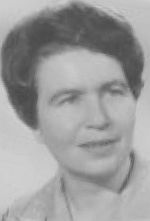
The French analyst Ruth Lebovici was born in Alsace as the daughter of Jewish parents. She first taught mathematics, when she married Serge Lebovici (1915-2000) in 1942, who later became a psychiatrist, psychoanalyst and president of the IPA. Their daughters Marianne and Élisabeth were born in 1943 and 1953. During the German occupation, Ruth and Serge Lebovici joined the Résistance. After the liberation in 1945 they both became temporary members of the French Communist Party - as well as Jean and Évelyne Kestemberg.
After the end of the war Ruth Lebovici decided to train as a psychoanalyst. She underwent training analysis with Marc Schlumberger and was supervised by Jacques Lacan. She became, like her husband, a member of the Société Psychanalytique de Paris and stayed there after the 1953 split. Serge Lebovici and Sacha Nacht adopted a radical position in favor of strict medically-oriented standards for training and were opposed to Daniel Lagache, Lacan and the cofounders of the Société française de psychanalyse.
Particularly known is Ruth Lebovici's paper Perversion sexuelle transitoire au cours d'un traitement psychanalytique about a patient with phobia, who developed a transitory sexual perversion in the course of a psychoanalytic treatment. Lacan discussed in an exemplary way Lebovici's case study in his Seminar IV on object-relations (1956-1957), proposing that the analyst's interpretation of the transference triggered the acting out of the patient's perverse fantasy. Such sort of "artefacts pervers", he argued, were the outcome of an analysis in which the place of the symbolic in the relation analyst-analysand was ignored. (Top of the article)
- SELECTED WORKS
- Perversion sexuelle transitoire au cours d'un traitement psychanalytique. Bulletin d'Activités de l'Association des Psychanalystes de Belgique No. 25, 1956, 1-17 [Transitory sexual perversion in the course of a psychoanalytic treatment. Journal for Lacanian Studies 2 (1), 2004, 118-140]
- (und Serge Lebovici) A propos de la névrose actuelle. Contribution à la discussion sur la réalité en psychanalyse. RFP 35 (5-6), 1971, 983-992
- REFERENCES
- Bruno, Pierre: La passe. Toulouse 2003
- Lacan, Jacques: Le Séminaire IV: La relation d'objet (1956-1957). Paris 1994, 88-92
- Lirot, Frédéric: Lacan "contrôleur", ou la pratique éclairée. Cartello Nr 4, 2014
- Mijolla, Alain de: Lebovici, Serge Sindel Charles. In Dictionnaire international de la psychanalyse (2002). Hg. von Alain de Mijolla. Paris 2005, 965-967 [International Dictionary of Psychoanalysis. Detroit u. a. 2005, 954-956]
- Missonnier, Manuelle: Hommage à notre amie Ruth Lebovici. Le Carnet/Psy No. 84, 2003, 27 (2014-10-28)
- Nobus, Denis: Drawing the urinary trait: Fantasy and analytic technique in Lebovici's 'treatment' of a transitory perversion. Journal for Lacanian Studies 2 (1), 2004, 141-152
- PHOTO: Courtesy of Manuelle Missonnier
Rosine Lefort (1920-2007)
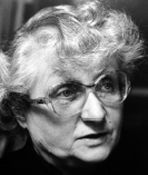
The French child analyst Rosine Lefort, a daughter of the well-known journalist Geneviève Tabouis, began her analysis with Jacques Lacan in 1950. At the same time she worked at the Fondation Parent de Rosan in Paris, a public institution for the temporary care of young children who had been abandoned by their mothers. Within the frame of a research project on hospitalism directed by Jenny Aubry, Rosine Lefort conducted the treatment of several psychotic and autistic infants, beginning in 1951: Nadia, Marie-Françoise, Robert the "wolf child", and Maryse. Two of these cases (Nadia and Robert) were presented by Rosine Lefort at Lacan's Seminar, and they are regarded as remarkably lucid examples of the clinical application of Lacanian concepts.
Rosine Lefort worked closely together with her husband, the psychoanalyst Robert Lefort (1923-2007), with whom she published her books. Rosine Lefort's case reports show clearly the existential function of the signifier in the subjectivation. According to the Lacanian terminology, the psychotic is stuck in an unmediated relationship with the Real and cut off from meaningful structures, which proceed via the signifier of the Other. For Lefort the analysis of the preverbal infant is particularly suited to show that the subject, before it speaks, "speaks in the Other", where it finds its significant place.
Rosine Lefort was a member of the École de la Cause freudienne and participated in the foundation of the Centre d'étude et de recherche sur l'enfant dans le discours analytique (Cereda), an international network of Lacanian child analysis. (Top of the article)
- WORKS
- (and Robert Lefort) Naissance de l'Autre. Deux psychanalyses: Nadia (13 mois) et Marie-Françoise (30 mois). Paris 1980 [Die Geburt des Anderen. Bericht einer Kinderanalyse aus der Lacan-Schule. Stuttgart 1986; Birth of the Other. Urbana; Chicago 1994]
- (and Robert Lefort) L'enfant et la jouissance, suivi de: L'enfant sans le savoir. Paris 1987
- (and Robert Lefort) Les structures de la psychose. L'enfant au loup et le president. Paris 1988
- (and Robert Lefort) Das Reale, das Symbolische, das Imaginäre in der Dialektik des Anderen und des Objektes im Laufe der analytischen Kur. arbeitshefte kinderpsychoanalyse Heft 10, September 1989
- (and Robert Lefort) La sexuation de la petite fille. Paris 1994
- (and Robert Lefort) Maryse devient une petite fille. Psychanalyse d'une enfant de 26 mois. Paris 1995
- (and Robert Lefort) La distinction de l'autisme. Paris 2003
- REFERENCES
- Leiser, Eckart: Zum Begriff des Signifikanten in der psychoanalytischen Praxis. Texte 16 (2), 1996, 7-21
- Miller, Judith: Hommage à Robert et Rosine Lefort. AMP Blog, 2007-09-17 (2021-10-05)
- Miller, Judith (Hg.): L'avenir de l'autisme avec Rosine et Robert Lefort. Paris 2010
- Roudinesco, Elisabeth: Histoire de la psychanalyse en France, Bd. 2: 1925-1985. Paris 1986; 1994 [Jacques Lacan & Co. A History of Psychoanalysis in France, 1925-1985. Chicago 1990]
- Thibaudeau, Laure : Hommage à Rosine Lefort. Psychanalyse 2 (9), 2007, 125-126 (2014-10-28)
- PHOTO: Blog de l'Asociación Mundial de Psicoanálisis (AMP), 4.9.2007 (2024-11-19)
Anne Levallois (1935-2006)
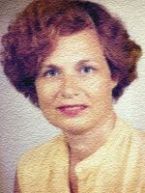
Anne Levallois was a jurist before she turned to psychology, anthropology and psychoanalysis in the early 1960s. The mother of three children (her married name was Colot), she participated at that time in literacy campaigns in Senegal. She began to study psychology at Dakar, where she became a disciple of the philosopher Edmond Ortigues and worked along with the psychoanalyst Marie-Cécile Ortigues at the Fann Psychiatric Clinic.
After her return to Paris she completed her diploma in clinical psychology and trained as an analyst with Serge Leclaire. Together with Myriam David and others she explored the relation of single mothers to their first child and subsequently worked as a psychologist at a Salvation Army institution for single mothers. In 1972 she established a psychoanalytic practice in Paris, shortly before she divorced. Anne Levallois was a Lacanian analyst and member of the École Freudienne de Paris (EPF). During the resolution phase of the EPF, however, she belonged to the critics of Jacques Lacan. In 1980 she was a founding member of the Collège de psychanalystes, of which she was Vice President from 1980 to 1984 and President from 1985 to 1987. From 1983 to 1985 she directed the journal Psychanalystes.
Anne Levallois, whose companion for thirty-five years was the historian Dominique Iogna-Prat (*1952), was particularly interested in the relation between psychoanalysis, biography and history. Together with the historian Michel Levallois she conducted research into the life of their great-grand-uncle, the Saint-Simonist Ismaÿl Urbain, son of a Frenchman and a Guyanese woman, who converted to Islam and became an adviser of Napoleon III. Levallois' study on Urbain elucidated the effects of traumatising social conditions on subjectivation.
Further main points of Anne Levallois were tranference phantasies and the signifiers of femininity. An anthology of her texts between 1974 and 2005 was published posthumously under the title Une psychanalyste dans l'histoire. (Top of the article)
- SELECTED WORKS (for more, see BSF)
- (Colot, Anne) Sénégal. La scolarisation de la nouvelle génération. L'École des parents Nr. 6. 1964, 26-38
- Biographie, Psychohistorie und Psychoanalyse. Der Stand der Forschung in Frankreich. In H. Röckelein (ed.): Biographie als Geschichte. Tübingen 1993
- Psychanalyse et histoire. Le règne éphémère de la psychohistoire et l'avènement de la biographie en France. In D. Le Boeuf et al. (eds): Construire l'histoire. Paris 1998
- Le retour de la biographie historique. L'histoire et la psychanalyse s'y rejoindraient-elles? International Association of Labour History Institutions (IALHI) 146, 2002, 127-140
- L'École de Lacan. In M. Bouraux-Hartemann et al.: Retour à Lacan? Paris 1981
- Les écrits autobiographiques d'Ismayl Urbain. Homme de couleur, saint-simonien, musulman (1812-1884). Paris 2004
- Une passion pour la vie. Cliniques méditerranéennes No. 69, 2004
- Je et moi dans l'expérience psychanalytique et dans l'écriture autobiographique. In J.-F. Chiantaretto et al. (eds): Autobiographie, journal intime et psychanalyse. Paris 2005
- Une psychanalyste dans l'histoire. Paris 2007
- REFERENCES
- Anheim, Étienne: L'historien et la psychanalyste. Revue d’histoire moderne & contemporaine No 58-4, 2011, 134-159 (2020-12-17)
- Roudinesco, Elisabeth: Histoire de la psychanalyse en France, vol. 2: 1925-1985. Paris 1986; 1994 [Jacques Lacan & Co. A History of Psychoanalysis in France, 1925-1985. Chicago 1990]
- Wikipedia: Michel Levallois (2020-12-18)
- PHOTO: in Levallois 2007; Éditions Campagne Première, Société de Psychanalyse Freudienne
Maud Mannoni née van der Spoel (1923-1998)
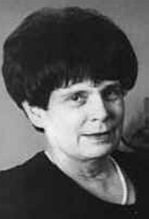
Maud Mannoni was born Magdalena van der Spoel in the Belgian city of Courtrai. She spent her early childhood in Colombo, Ceylon, where her father was general consul of the Netherlands. The return of her family to Europe in 1929 signified for the little girl the loss of her childhood paradise. She forgot her mother tongue English and the Singhalese words of her nurse when she lived with her French speaking grandfather, and in her unloved new residence in Amsterdam she had to learn Dutch. These experiences shaped Maud Mannoni's central question: how to refind the lost language of childhood.
After attending a convent school in Antwerp, Magdalena van der Spoel studied criminology in Brussels. During World War II she worked with psychotic adolescents at a psychiatric clinic and decided to train as a psychoanalyst. She underwent training analysis with Maurice Dugautiez, the founder of the Association des Psychanalystes de Belgique (later the Société Belge de Psychanalyse), of which she became a member in 1948. The same year she moved to Paris to continue her training with the child analyst Françoise Dolto at the Trousseau hospital. In 1948 she married the philosopher and psychoanalyst Octave Mannoni (1899-1989), an analysand of Jacques Lacan and a left-wing intellectual. During the 1960s Maud Mannoni and her husband engaged in fighting for the independence of Algeria.
In 1950 she met Jacques Lacan, with whom she had her second analysis, and became a Lacanian. She was a member of the Société Française de Psychanalyse, before she followed Lacan into the École Freudienne de Paris (EFP) in 1964. During a stay in London she became acquainted with the concepts of Donald W. Winnicott and Melanie Klein and the anti-psychiatry of Ronald D. Laing. Maud Mannoni did not share Laing's radical anti-institutional attitude, developing her own approach of the "exploded institution" ("institution éclaté"), i. e. an institution open to the outer world, but staying at the same time a protected space.
Maud Mannoni was able to realise her ideas in 1969 by founding the Experimental school of Bonneuil along with Robert Lefort, a residential community for psychotic, retarded and troubled children and adolescents in Bonneuil-sur-Marne. It was the only anti-psychiatric project in France inspired by the British model. As the directrice of this school she put into practice Lacanian psychoanalysis, anti-psychiatric ideas and Winnicott's concept of a "supporting environment".
For Mannoni the disturbed child is a "spokesperson" for the dysfunctional family, whose history is written in the child's symptoms and expressions. In her view this pathogenic development is reinforced by social exclusion mechanisms. At Bonneuil the children were encouraged to give voice to their fears, destructive feelings and fantasies. Central to Mannoni's therapeutic approach is the cultivation of the capacity to play that makes loss bearable. She seeks to free the child from the suffocating effect of the anxiety and desires of the Other - first of all his mother - by helping him find a personal language in the symbolic order.
In 1982, two years upon the dissolution of the EFP, Maud Mannoni established, together with Octave Mannoni and Patrick Guyomard, the Centre de Formation et de Recherches Psychanalytiques (CFRP) in Paris. During the dissolution process of the CFRP in 1994, Maud Mannoni founded her own association, Éspace analytique, which she directed until her sudden death from heart disease. (Top of the article)
- SELECTED WORKS
- L'enfant arriéré et sa mère. Paris 1964 [Das zurückgebliebene Kind und seine Mutter. Olten, Freiburg 1972; The Backward Child and his Mother. New York 1972; The Retarded Child and the Mother. London 1973]
- L'enfant, sa "maladie" et les autres. Paris 1967 [The Child, his "Illness," and the Others. London 1970]
- Le psychiatre, son "fou" et la psychanalyse. Paris 1970 [Der Psychiater, sein Patient und die Psychoanalyse. Olten, Freiburg 1973]
- Education impossible. Paris 1973 ["Scheißerziehung". Von der Antipsychiatrie zur Antipädagogik . Frankfurt/M. 1976]
- Un lieu pour vivre. Paris 1976 [Ein Ort zum Leben. Die Kinder von Bonneuil, ihre Eltern und das Team der "Betreuer". Frankfurt/M. 1978]
- La théorie comme fiction. Freud, Groddeck, Winnicott, Lacan. Paris 1979
- D'un impossible à l'autre. Paris 1982
- Le symptome et le savoir. Paris 1982
- Un savoir qui ne se sait pas. L'experience analytique. Paris 1985
- De la passion de l'Être à la "Folie" de savoir. Freud, les Anglo-Saxons et Lacan. Paris 1988
- Ce qui manque à la vérité pour être dite. Paris 1988 [Autobiography]
- Amour, haine, séparation. Renouer avec la langue perdue de l'enfance. Paris 1991 [Separation and Creativity. Refinding the Lost Language of Childhood. New York 1999]
- Le nommé et l'innommable. Le dernier mot de la vie. Paris 1991
- Les mots ont un poids, ils sont vivants. Que sont devenus nos enfants fous? Paris 1995
- Devenir psychanalyste. Les formations de l'inconscient. Paris 1996
- Elles ne savent pas ce qu'elles disent. Paris 1998
- REFERENCES
- Buhmann, Christiane: Nachruf auf Maud Mannoni. arbeitshefte kinderpsychoanalyse Nr. 26, 1998
- Erich, Theresia: Mannoni, Maud. In G. Stumm et al. (eds): Personenlexikon der Psychotherapie. Wien, New York 2005, 306-307
- Gaudemar, Antoine de: Maud Mannoni dans la nuit. La psychanalyste spécialiste des enfants est morte dimanche à 74 ans. Libération, 1998-03-17 (2021-10-05)
- Kaufhold, Roland, and Judith Roedel: Bonneuil oder: Das Drama des zurückgebliebenen Kindes. Zum Tod der Kinderanalytikerin Maud Mannoni (Ceylon, 22.10.1923 - Paris, 15.3.1998). psychosozial 21 (72), 1998, 121-127
- Malet, Nicole Maya: Maud Mannoni. Ramonville Saint-Agne 2000
- Morgan, Sian: Review of Maud Mannoni: Separation and Creativity: refinding the lost language of childhood. International Journal of Psychotheraphy 6 (1), 2001, 77-82 (2012-10-8)
- Roedel, Judith: Das heilpädagogische Experiment Bonneuil und die Psychoanalyse in Frankreich. Eschborn 1986
- Roudinesco, Elisabeth: Maud Mannoni, un lacanisme à visage humain. Le Monde, 18.3.1998
- Sédat, Jacques: Mannoni-Van der Spoel, Maud (Magdalena). In Dictionnaire international de la psychanalyse (2002). Ed. by A. de Mijolla. Paris 2005, 1014f [International Dictionary of Psychoanalysis. Detroit u. a. 2005, 1010-1011]
- Wikipedia (2019-06-10)
- PHOTO: Wikipedia (2024-11-19)
Joyce McDougall née Carrington (1920-2011)
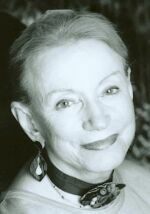
© Éditions Gallimard
Hilary Joyce Carrington was born in Dunedin, New Zealand, the elder of two daughters of the merchant Harold Carrington. Her father was a New Zealander, her mother Lillian Blackler an Englishwoman. Following her study of psychology in Dunedin, Joyce Carrington worked as a vocational and family counsellor in Dunedin and Auckland. In 1941 she married the educationist Jimmy McDougall (†1996), their son Martin was born in 1952, their daughter Rohan three years later.
In 1950 the family settled in England. Joyce McDougall began to train as a child analyst with Anna Freud in London and entered into analysis with John Pratt. She met Donald W. Winnicott and attended his course in woman's psychosexuality. When her husband was offered an education job with Unesco in 1952, the family moved to Paris, where Joyce McDougall continued her training at the Société Psychanalytique de Paris (SPP). She underwent training analysis with Marc Schlumberger and was appointed training and supervising analyst of the SPP in 1961. In 1969 she became the scientific secretary of the SPP. She underwent another analysis with Michel Renard.
In the early 1950s she met Sidney Stewart (1920-1997), an American writer and psychoanalyst, who became her second life partner after her separation from Jimmy McDougall. She established a child-therapeutic practice and analysed, under the supervision of Serge Lebovici, a nine-and-a-half-year-old psychotic boy, whose case she described in her book Dialogue with Sammy.
The thinking of Joyce McDougall was most of all influenced by the ideas of Donald Winnicott and Jacques Lacan. Main themes in here writings are: female homosexuality - for the first time discussed by her in her study Homosexuality in women, as well psychosomatic illness and issues of sexual identity and creativity.
In her first book Plea for a Measure of Abnormality she suggested her renowned revision of the Freudian concept of perversion. In Joyce McDougall's view the classical division into neurosis, psychosis and perversion is too rigid to understand sexual deviations, which are linked with narcissistic personality disorders. Instead of "perversion" she prefered the term "neosexualities", i. e. innovative sexual creations as attempts at self-cure. Joyce McDougall was convinced that all sexual behaviour so bizarre and strange as it might be serves for psychic survival. She pleaded to accept "deviant" sexuality and not to adapt it to norms by psychoanalysis.
In Joyce McDougall's work psychic reality appears like a stage on which the narcissistic and oedipal dramas are played out. Referring to Melanie Klein and Piera Aulagnier, she conceived the metaphor of an inner theatre particularly in her books Theaters of the Mind and Theaters of the Body. Her book The Many Faces of Eros deals with the varied forms of human sexuality basing on an inborn bisexuality. For McDougall female homosexuality, for instance, is no pathological deviation, because homosexual wishes of a girl toward her mother are a fundamental component of female development. Only the shaping of these wishes is different in the lives of homosexual and heterosexual women.
Joyce McDougall was a member of the Center for Advanced Psychoanalytic Studies and the New York Freudian Society. She died at the age of 91 in London. (Top of the article)
- SELECTED WORKS
- Considérations sur la relation d'objet dans l'homosexualité féminine. In J. Chasseguet-Smirgel (ed.): Recherches psychanalytiques nouvelles sur la sexualité féminine. Paris 1964, 221-274 [Homosexuality in women. In J. Chasseguet-Smirgel (ed.): Female Sexuality. New Psychoanalytic Views. Ann Arbour 1970]
- Plaidoyer pour une certaine anormalité. Paris 1978 [Plea for a Measure of Abnormality. New York 1980; Plädoyer für eine gewisse Anomalität. Frankfurt/M. 1985]
- Théâtres du Je. Paris 1982 [Theaters of the Mind. Illusion and Truth on the Psychoanalytic Stage. New York 1985; London 1986; Theater der Seele. München 1988]
- Identifications, néobesoins et néosexualités. Topique No. 39, 1987, 7-28 [Identifizierungen, neuartige Bedürfnisse und neuartige Formen der Sexualität. Psyche 40, 1986, 1007-1029]
- Théâtres du corps. Le psychosoma en psychanalyse. Paris 1989 [Theaters of the Body. A Psychoanalytic Approach to Psychosomatic Illness. New York 1989; Theater des Körpers. Weinheim 1991]
- The Many Faces of Eros. A Psychoanalytic Exploration of Human Sexuality. New York 1995 [Eros aux mille et un visages. La sexualité humaine en quête de solutions. Paris 1996; Die Couch ist kein Prokrustesbett. Zur Psychoanalse der menschlichen Sexualität. Stuttgart 1997]
- Donald Winnicott the Man. Reflections and Recollections. London 2003
- (and Serge Lebovici) Un cas de psychose infantile. Étude psychanalytique. Paris 1960 [Dialogue with Sammy. A Psychoanalytic Contribution to the Understanding of Child Psychosis. London; New York 1969; Eine infantile Psychose. Fallstudie eines schizophrenen Kindes. München 1979]
- REFERENCES
- Baruch, Hoffman Elaine, and Lucienne J. Serrano: Women Analyze Women, in France, England and the United States. New York; London 1988
- Bonnefont-Tort, Laure: Joyce McDougall, 1920-2011. IJP 93, 2012, 1533-1540 [Internationale Psychoanalyse 9, 2014, 231-244]
- Diatkine, Gilbert: Obituary Joyce McDougall (1920-2011). IPA-Newsletter October/November 2011
- Duparc, François (ed.): Joyce aux mille et un visages. L'oeuvre de Joyce McDougall. Lausanne 2000
- Menahem, Ruth: Joyce McDougall. Paris 1997
- Miqueu-Baz, Christine: Obituary Hilary Joyce McDougall, 26 April 1920 - 24 August. BPAS (16.1.2013 - removed)
- Miqueu-Baz, Christine: Obituary Joyce McDougall. The Guardian, 24 October 2011 (2017-02-16)
- Porret, Philippe: Joyce McDougall. Une écoute lumineuse. Paris 2005
- Rohde-Dachser, Christa: Rezension von Joyce McDougalls "Die Couch ist kein Prokrustesbett". Psyche 12, 1998, 1235-1238
- Wikipedia (2018-10-16)
- PHOTO: Jacques Sassier
Judith Miller née Bataille (1941-2017)

Judith Sophie Miller was born in Cagnes-sur-Mer as the daughter of the psychoanalyst Jacques Lacan and Sylvia Bataille, née Maklès, a French actress of Romanian-Jewish descent. At the time of Judith's birth her mother was still married to Georges Bataille, whom she divorced in 1946. She married Jacques Lacan in 1953. Unlike her half-sister Laurence Bataille who had received formal psychoanalytic training, Judith Bataille-Lacan did not undergo analysis, but formed part of the circle of Lacan's disciples since her teens.
She attended the Collège Sévigné in Paris and was placed at the top of her year in the philosophy agrégation in 1966. That same year she married the psychoanalyst Jacques-Alain Miller (*1944), father of her children Eve and Luc. In 1969, she began lecturing at the philosophy department of the new experimental university Paris VIII (Vincennes). Her involvement in the Gauche Prolétarienne and her commitment to Maoism in a press interview led to her dismissal from Vincenne in 1970, which was only lifted under the socialist government in 1981.
Judith Miller played an important role in the Lacanian movement. She directed the Fondation du Champ freudien, established by Lacan in 1979, and like Jacques-Alain Miller she was one of the leading figures in the École de la Cause freudienne (ECF), founded in 1981. In 1982, along with Robert and Rosine Lefort, she initiated Céréda, an international network of Lacanian child analysis.
- SELECTED WORKS
- Métaphysique de la physique de Galilée. Cahiers pour l'Analyse 9, 1968, 138-146
- (ed.) Le Champ freudien à travers le monde. Textes recueillis. Paris 1986
- Album Jacques Lacan. Visages de mon père. Paris 1991
- Interview with Pierre Klossowski. In Hervé Castanet: Pierre Klossowski. La pantomine des esprits. Nantes 2007
- (ed.) L'avenir de l'autisme avec Rosine et Robert Lefort. Paris 2010
- REFERENCES
- Hunt, Jamer Kennedy: Absence to presence. The life history of Sylvia [Bataille] Lacan. Phil. Diss. Houston, Texas 1995
- Lacan Quotidien Nr. 755, 2017 (2023-10-25)
- Miller, Gérard: Rendez-vous chez Lacan: Judith Miller. Video 2013 (2018-06-18)
- Radio Lacan, 8.1.2018: Special Issue. In Memoriam. Tribute to Judith Miller
- Roudinesco, Elisabeth: Histoire de la psychanalyse en France, Bd. 2: 1925-1985. Paris 1986; 1994 [Jacques Lacan & Co. A History of Psychoanalysis in France, 1925-1985. Chicago 1990]
- Roudinesco, Elisabeth: Jacques Lacan. Frankfurt/M. 1999
- Roudinesco, Elisabeth: Judith Miller, dernière fille de Jacques Lacan, est morte. Le Monde, 8.12.2017
- Wikipedia: Judith Miller German; English (2024-11-19)
- Wikipedia: Sylvia Bataille (2024-11-19)
- PHOTO: Cita en las Diagonales (2024-11-19)
Catherine Millot (*1944)
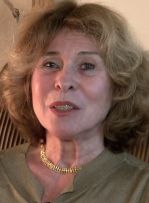
The Lacanian psychoanalyst and author Catherine Millot, born in the French départment of Ain, spent her childhood and youth in the capitals of Europe, where her father André Millot was accredited as an ambassador. She studied philosophy at the Sorbonne in Paris, before she began an analysis with Jacques Lacan in 1971, which lasted eight years. During her analysis she became his lover. From 1977 until 1980 she was a member of the École Freudienne de Paris (EFP). After its dissolution she became a member of the École de la Cause Freudienne (ECF), where she underwent control analysis with Michel Silvestre and a second analysis with Brigitte Lemérer. She left the ECF in 1989.
Catherine Millot became already known beyond the borders of France for her thesis published in 1979 under the title Freud anti-pédagogue. She stated that pedagogy which bases on psychoanalysis must end up in a blind alley, because the position of a child analyst is not compatible with that of a pedagogue. The latter cannot represent a neutral mirror, for he always has - consciously or unconsciously - an educational intention. Unlike the pedagogue, a psychoanalyst has no certainties or solutions to offer, unless it is the realization of an indelible lack and thus the liberation from depending on the look of the Other. In her partly autobiographical book Abîmes ordinaires Catherine Millot shows that emptiness and loss of self can become the source of inner peace and renewal.
Well known are Millot's theses on transsexuality. In her essay on transsexuality, Horsexe, she maintains that a woman's transsexuality reveals a hysterical process, while a man's transsexuality bases on a psychotic identification with the ideal woman, i. e. an inaccessible completeness.
Further subjects of Catherine Millot's work are the conditions of literary creativity as well as perversion or homosexuality in the literature. Beside her books she published numerous articles in the Lacanian journals Sicilet and Ornicar?. Since 1975 she has been Professor of Psychoanalysis at the University of Paris-VIII. (Top of the article)
- SELECTED WORKS
- Freud, anti-pédagogue. Paris 1979 [Freud, Anti-Pädagoge. Berlin, Wien 1982]
- Horsexe. Essai sur le transsexualisme. Paris 1983 [Horsexe. Essay on Transsexuality. New York 1990]
- Nobodaddy. L'hystérie dans le siècle. Paris 1988
- Die Hysterie an der Grenze. Fragmente No. 34, 1990, 35-40
- Not yet virgin. The function of masochism in Joyce. James Joyce Quarterly 1, 1991, 43-46
- La vocation de l'écrivain. Paris 1991
- The real presence. October 58, 1991, 109-137
- Das totalitäre Phänomen. Zu Hanna Ahrendt. In J. Prasse and C.-D. Rath) (eds): Lacan und das Deutsche. Die Rückkehr der Psychoanalyse über den Rhein, Freiburg i. Br. 1994, 160-166
- Gide, Genet, Mishima. L'intelligence de la perversion. Paris 1997
- Ein perverses Talent. In A. Michels et al. (eds): Perversion, vol. 1. Tübingen 1998, 205-212
- Abîmes ordinaires. Paris 2001
- The eroticism of desolation. In T. Dean and C. Lane (eds): Homosexuality & Psychoanalysis. Chicago 2001
- La vie parfaite. Jeanne Guyon, Simone Weil, Etty Hillesum. Paris 2006
- Ô solitude. Paris 2011 (Video presentation)
- La logique et l'amour et autres textes. Nantes 2015 (Video presentation)
- La vie avec Lacan. Paris 2016 (Video presentation) [Ein Leben mit Lacan. Wien 2017; Life with Lacan. Cambridge; Medford, MA 2018]
- REFERENCES
- Agacinski, Sylviane: Rezension von Catherine Millot "Abîmes ordinaires". Le Monde des Livres, 2001-10-18 (2008-04-09)
- Baruch, Hoffman Elaine, and Lucienne J. Serrano: Women Analyze Women, in France, England and the United States. New York, London 1988
- Roudinesco, Elisabeth: Jacques Lacan. Esquisse d'une vie, histoire d'un système de pensée. Paris 1993 [Jacques Lacan. An Outline of a Life and a History of a System of Thought. Oxford 1999]
- Wikipedia (2018-04-17)
- PHOTO: Wikipedia (2024-11-19)
Michèle Montrelay née Navratil (1934-2023)
Michèle Montrelay was the eldest of three children of Charlotte Lebaudy and Michel Navratil, professor of philosophy and psychology, who was a survivor of the sinking of Titanic. She studied philosophy and worked as a graphologist and model before she turned to psychoanalysis. She underwent training analysis with Serge Leclaire, supervisory analysis with Françoise Dolto, and became a member of the Lacanian society École Freudienne de Paris (EFP) in 1965. The same year she presented her paper on Marguerite Duras' novel Le Ravissement de Lol V. Stein in the Seminar of Jacques Lacan, which was the beginning of her theoretical examination of femininity. In 1970 her most important study Recherches sur la féminité (Inquiry into femininity) appeared in Jacques Derrida's journal Critique. In it, Montrelay takes up the 1920s Freud-Jones controversy about femininity from a structural psychoanalytic perspective and sketches her concept of a precocious "concentric" (circular oral-anal-vaginal) femininity.
She shows that the girl, in contrast to the boy, cannot differentiate herself from the body of the mother, because the real of the maternal body remains present in her own body. Thus the symbolic castration i. e. the exclusion of the maternal body as an object of desire, a repression that inaugurates the symbolization, is incomplete in women. The result is a concentric psychic economy, which is, according to Montrelay, characterized by idle representations and plenitude in the real. Instead of a lack, which initiates the economy of wishing and speaking, there is an object in excess and the symbolic order only a façade. The privileged relationship of women to the body however implies also a frightening too great closeness to the objects. The women's access to symbolization depends on the transition into the phallocentric economy by substituting the phallic signifier for the concentric representatives. Thus femininity is repressed and can be symbolized.
Michèle Montrelay's essays on femininity, published in 1977 under the title L'ombre et le nom, transcend Lacan's phallocentrism. In 1979 Lacan forbade her to conduct a seminar on male sexuality at his institute at the University of Vincennes, declaring that if women are not entirely governed by the phallic function, they can have nothing to say about it.
After Lacan had dissolved the EFP in 1980, Michèle Montrelay no longer belonged to a psychoanalytic association. From 2016 to 2018 she held seminars at the Cercle Freudien. She was married to her colleague Robert Montrelay and had three children. (Top of the article)
- SELECTED WORKS
- Sur "Le ravissement de Lol V. Stein". In Montrelay, L'ombre et le nom, 1977, 7-23
- Recherches sur la féminité. Critique 26, 1970, 654-674 [Inquiry into femininity. M/F 1, 1978, 83-101]
- L'ombre et le nom. Sur la féminité. Paris 1977
- Affolées d'ecriture. Sorcières 7, 1977, 43f
- The story of Louise. In S. Scheiderman (ed.): Returning to Freud. Clinical Psychoanalysis in the School of Lacan. New Haven 1980
- L'effet de bande. Confrontation No.3, 1981, 159-167
- L'appareillage. Confrontation No. 6, 1981, 33-43
- Lieux et génies. Confrontation No. 1, 1983, 111-126
- On folding and unfolding. An example of dream interpretation in analysis. Psychoanalytic Inquiry 4 (2) 1984, 193-219
- Der schwarze Kontinent. Fragmente No. 34, 1990, 15-23
- Une autre pratique de l'inconscient. Entretien. Rue Descartes No. 25, 1999, 81-96
- La portée de l'ombre. Paris 2009
- Séminaire: Castration, phallus, jouissance. Che vuoi? Nr. 8, 2023
- (and François Montrelay) Entretien avec O. Herrenschmidt. Cahiers Confrontation Nr. 13, 1985, 9-23
- (et al.) Le psychanalyste, le physicien et le réel. Paris 1987
- (with Dominique Guyomard, Patrick Guyomard and Janine Chasseguet-Smirgel) Invention du féminin. Paris 2006
- REFERENCES
- Le Cercle Freudien: En memoire de Michele Montrelay, 27 juin 2023 (2024-07-11)
- Chapsal, Madeleine: La jalousie. Paris 1977
- Courtes, Huguette: Éloge du professeur Michel Navratil. Bulletin de l'Académie des sciences et lettres de Montpellier, 6 octobre 2003, 319-331 (2020-12-22)
- David-Ménard, Monique: Lacanians against Lacan. Social Text 6, 1982, 86-111
- Familia, Nitzan: A critique of Michèle Montrelay’s theorizations of masculine and feminine sexuality. On psychoanalysis, queer theory, and the “queer” signifier. European Journal of Psychoanalysis 10 (2), 2024 (2024-07-11)
- Löchel, Elfriede: Verschiedenes. Untersuchung zum Umgehen (mit) der Differenz in Theorien zur Geschlechtsidentität. Thesis (PhD) Bremen 1987
- Löchel, Elfriede: Umgehen (mit) der Differenz. Psyche 44, 1990, 826-847
- Oedipe le Salon, 8 mars 2010 (2022-05-17)
- Roudinesco, Elisabeth: Histoire de la psychanalyse en France, vol. 2: 1925-1985. Paris 1986; 1994 [Jacques Lacan & Co. A History of Psychoanalysis in France, 1925-1985. Chicago 1990]
- Whitworth, Stephen W.: Rethinking the archaic. Montrelay, maskulinity, and the analyst as (m)other. Journal for Lacanian Studies 4 (2), 2006, 325-348
- Who's who in France. Paris 1969, 1101
Sophie Morgenstern née Kabatschnik (1875-1940)
Sophie Morgenstern, one of the pioneering figures of child psychoanalysis in France, was born into a Jewish family in Grodno in Poland. She was married to Abraham Morgenstern, her daughter Laure was born in 1897. In 1906 Sophie Morgenstern began her medical studies at Zurich and graduated with a thesis on the subject of mineral elements of the thyroid glands (Ueber einige mineralische Bestandteile der Schilddrüse) in 1912. She then left Switzerland for Russia and Poland but returned to Zurich in 1915 in order to work as an assistant physician at the psychiatric asylum of Burghölzli under Eugen Bleuler. In 1924 she moved to France, where she became the assistant of Georges Heuyer at his clinic for infantile neuropsychiatry at La Salpêtrière in Paris. She held the position from 1925 until her death in 1940.
Sophie Morgenstern underwent training analysis with Eugénie Sokolnicka and became a full member of the Société Psychanalytique de Paris (SPP) in 1929. She was also a member of the group Évolution psychiatrique. She taught about infantile neuroses at the Institute of Psychoanalysis of the SPP. Her most illustrious student was Françoise Dolto.
Like Anna Freud, she believed that children's neurosis had the same structure and the same origins as those of adults. In her 1927 study on a case of a child suffering from psychogenic mutism (Un cas de mutisme psychogène), she described the use of drawings as a new technique for treating children. She stressed that the children's drawings gave the analyst access to their unconscious and psychic conflicts in a similar way as the dreams and free associations of an adult would do - an insight less familiar at her time than nowadays. The symbolic sense of the imaginative creations of the child was the subject of her main work Psychanalyse infantile, published in 1937 and dedicated to her daughter Laure.
Laure Morgenstern had died during an operation in 1936, and Sophie Morgenstern never got over the loss of her only child. Her husband was already dead, the rest of her family lived in the Polish city of Lwów when Poland was invaded by Nazi Germany in 1939. On 13 June 1940 she committed suicide, one day before German troops entered Paris. (Top of the article)
- WORKS
- Un cas de mutisme psychogène. RFP 1, 1927, 492-504
- La psychanalyse infantile et son rôle dans l'hygiène mentale. RFP 4, 1930/31, 136-162
- Quelques aperçus sur l'expression du sentiment de culpabilité dans les rêves des enfants. RFP 6, 1933, 155-174
- Psychanalyse et éducation. Evol psychiatr 3, 1933, 45-64 [Psychoanalyse und Erziehung. Z psa Päd 11, 1937, 162-180]
- Les bourreaux domestiques. Évol psychiatr 4, 1934, 39-58
- La pensée magique chez l'enfant. RFP 7, 1934, 98-115 [Das magische Denken beim Kinde. Z psa Päd 11, 1937, 102-118]
- Psychanalyse infantile. Symbolisme et valeur clinique des créations imaginatives chez l'enfant. Paris 1937
- Über das Traum- und Phantasieleben des Kindes. Z psa Päd 11, 1937, 181-211
- Contribution au problème de l'hystérie chez l'enfant. Evol psychiatr 7, 1937, 3-33
- La structure de la personnalité et ses déviations. Paris 1939; 2003
- L'oeuvre complète de Sophie Morgenstern, vol. 1-3: Psychanalyse infantile; La structure de la personnalité et ses déviations; Articles et contributions à la Revue française de psychanalyse. Paris 2003
- (and Georges Heuyer) La psychanalyse infantile et son rôle dans l'hygiène mentale. Paris 1932
- REFERENCES
- Dolto, Françoise: Autoportrait d'une psychanalyste. Paris 1989 [Selbstporträt einer Psychoanalytikerin. Weinheim, Berlin 1991]
- Fessaguet, Dominique: De Sophie Morgenstern l'oubliée à Françoise Dolto la tapageuse. Topique Nr. 115, 2011, 79-82 (2016-11-11)
- Fleury, Mireille: Sophie Morgenstern. Eléments de sa vie et de son oeuvre. Mémoire Université Bordeaux-II, 1988
- Geissmann, Claudine, and Pierre Geissmann: Histoire de la psychanalyse de l'enfant. Mouvements, idées, perspectives. Paris 1992; 2004 [A History of Child Psychoanalysis. London 1998]
- Jacquemain, Frédérique: Morgenstern-Kabatschnik, Sophie. In Dictionnaire international de la psychanalyse (2002). Ed. by A. de Mijolla. Paris 2005, 1100 [International Dictionary of Psychoanalysis. Detroit u. a. 2005, 1073-1074]
- Matrikeledition der Universität Zürich (2019-06-06)
- Parcheminey, Georges: Nos morts: Sophie Morgenstern. Evol psychiatr 1, 1947, 12-13 + Histoire de la psychiatrie en France (2013-10-1)
- Prameshuber, Ursula: Eugenia Sokolnicka and Sophie Morgenstern. The intertwining of life, work, and death. In K. Naszkowska (Ed.): Early Women Psychoanalysts History, Biography, and Contemporary Relevance. London 2024
- Roudinesco, Elisabeth, and Michel Plon: Wörterbuch der Psychoanalyse (1997). Wien, New York 2004
- Roudinesco, Elisabeth: Histoire de la psychanalyse en France, Bd. 2: 1925-1985. Paris 1986; 1994 [Jacques Lacan & Co. A History of Psychoanalysis in France, 1925-1985. Chicago 1990]
- PHOTO: IPA Congress Oxford 1929 (detail). Library of Congress (2024-11-25)
Marie Moscovici née Bromberg (1932-2015)
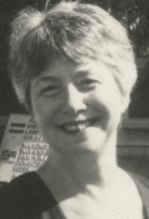
Marie Moscovici was the daughter of Jewish-Polish parents who immigrated to France shortly before her birth. The Bromberg family survived the German occupation in Paris under a false name ("Bataille"). Marie Bromberg studied psychology and philosophy at the Sorbonne attending lectures and seminars of Maurice Merleau-Ponty, Claude Lévi-Strauss and Jacques Lacan. She was working as a sociological research intern at the Centre national de la recherche scientifique (CNRS) in Paris, when she married Serge Moscovici (1925-2014), a Romanian-Jewish social psychologist with whom she had two sons. Their eldest son Pierre, later a well-known politician, was born in 1957.
In 1965 Marie Moscovici graduated with a thesis about social change and family organisation. She became a member of the Association Psychanalytique de France and was associated with the journals Cahiers de Confrontation and Novelle Revue de Psychanalyse before she founded, together with Jean-Michel Rey, the journal L'Écrit du temps in 1982. In 1994 she created, in collaboration with Pierre Fédida and Patrick Lacoste, L'Inactuel, a journal for "untimely meditations" on psychoanalysis and cultural subjects, where Marie Moscovici was the editor.
The concept of inactuality, understood as the continuance of a past event in the unconscious, was one of the main subjects of Marie Moscovici's writings. Referring to Sigmund Freud's thoughts about murder, war and violence, she explored the inscription of historical events into individual histories and its unconscious transmission from one generation to the next. (Top of the article)
- SELECTED WORKS
- Le changement social en milieu rural et le rôle des femmes. Revue francaise de sociologie 1 (3), 1960, 314-322
- Changement social et organisation familiale. Thesis (PhD) Paris 1965
- Mise en pièces du père dans la pensée freudienne, imposture ou pas? Confrontation 1, 1979, 19-63
- (ed.) Questions de judaisme. Paris 1984
- Un meurtre construit par les produits de son oublie. L'Ecrit du temps No. 10, 1985, 387-418
- Préface. In Sigmund Freud: L'homme Moïse et la religion monothéiste. Trois essais. Paris 1986, 15-53
- L'ombre de l'objet. Sur l'inactualité de la psychanalyse. Paris 1989
- Il est arrivé quelque chose. Approches de l'évènement psychique. Paris 1989; 1991
- Les paroles restent. L'Inactuel No. 1, 1994
- Un fait divers chez Proust. L'Inactuel No. 2, 1994
- Le meurtre et la langue. Paris 2002
- Les analystes ne parlent pas beaucoup du silence. In S. Périac Daoud and D. Platier-Zeitoun: Silences. Paroles de psychanalystes. Ramonville Saint-Agne 2004, 169-177
- (et al.) Ecritures de l'autobiographie. Paris 1983
- (and Jean-Michel Rey) Oedipe. Paris 1986
- (et al.) Figures de la mélancolie. Paris 1987
- REFERENCES
- Le Dictionnaire universel des Créatrices (2023-11-06)
- Libération, 23 octobre 2015
- Mijolla, Alain de: France. In Dictionnaire international de la psychanalyse (2002). Ed. by A. de Mijolla. Paris 2005, 663-679 [International Dictionary of Psychoanalysis. Detroit u. a. 2005, 607-614]
- Safran, Serge: Marie Moscovici, une femme de parole. Magazine Littéraire No. 350, 1997-01-01
- Wikipedia: Marie Moscovici; Serge Moscovici; Pierre Moscovici (2020-12-22)
- PHOTO: Institut Mémoires de l'Édition Contemporaine (IMEC) (2024-11-20)
Ilse Odier-Ronjat née Loebell (1883-1965)
Ilse Odier-Ronjat was born Ilse Henriette Catherine Loebell in Freiburg, the daughter of a physician. In 1907, she married the French lawyer and linguist Jules Ronjat (1864-1925), who was from Vienne sur le Rhône. She moved with him to Vienne, where their son Louis was born in 1908. Their second son Pierre died shortly after his birth in 1910.
With the outbreak of World War I, Ilse Ronjat, being German, could not remain in France. She and her husband emigrated to Switzerland and settled in Geneva in 1914, where Jules Ronjat taught linguistics at the university until his death in 1925. In 1929, Ilse Ronjat married the Swiss psychiatrist and psychoanalyst Charles Odier (1886-1954), who was a co-founder of the Société psychanalytique de Genève in 1920 and of the Société psychanalytique de Paris (SPP) in 1926.
In the 1920s, Ilse Ronjat was a candidate at the Berlin Psychoanalytic Institute and underwent control analysis with Karen Horney in 1928. In the same year she became a member of the Schweizerische Gesellschaft für Psychoanalyse (SGPsa) and a pedagogical associate of the Schweizerische Ärztegesellschaft für Psychoanalyse. Also in 1928, she became a full member of the SPP and moved to Paris with her husband in 1930.
After the beginning of World War II, Ilse and Charles Odier returned to Switzerland and settled in Lausanne. In 1948 her SPP membership was transferred back to the SGPsa. In Lausanne, Charles Odier separated from his wife and lived with the psychoanalyst Germaine Guex until his death. Ilse Odier-Ronjat passed away at the age of 82 in Emmendingen.
In her psychoanalytic work, she particularly addressed the mother-daughter relationship. The term "défoulement" (release) complementary to "refoulement" (repression) originated from Ilse Ronjat, coined by her in her study Le cas de Jeannette. In 1934, together with Charles Odier, she translated Sigmund Freud's work Das Unbehagen in der Kultur into French (Malaise dans la civilisation). (Top of the article)
- SELECTED WORKS
- [Ilse Jules Ronjat] Le cas de Jeannette: Psychanalyse et guérison d'une jeune fille hystérique opérée sept fois. RFP 1 (2), 1927, 210-323
- Contribution à l'étude du surmoi féminin. RFP 4 (4), 1930, 650-676
- Mutterbindung des Weibes. Beitrag zum Studium des weiblichen Über-Ichs. IZP 18 (4), 1932, 429-449
- Freud, Sigmund: Malaise dans la civilisation. Traduit par Ch. et I. Odier. RFP 7 (4), 1934, 692-769 + RFP 34 (1), 1970, 9-80
- REFERENCES
- Bonaparte, Marie, und Sigmund Freud: Correspondance intégrale. Paris 2022
- Bonwitt-Hepner, Lizi: Rezension von Ilse Jules Ronjat, Der Fall Jeannette. Z psychoanal Päd 2, 1928, 238
- Eitingon Nachlass (with thanks to Michael Schröter)
- Escudé, Pierre: Jules Ronjat, Maître de la linguistique occitane! (2022) Être ethnolinguiste en Gascogne (24.9.2024)
- Flournoy, Olievier: Raymond de Saussure, Henri Flournoy, Charles Odier. Reflets d’une époque. (1995) Les Flournoy (24.9.2024)
- Geneanet (24.9.2024)
- IZP 16 (3-4), 1930, 558
- Kurz, Thomas: Sezession 1928. Die Geschichte der Schweizerischen Ärztegesellschaft für Psychoanalyse. Luzifer-Amor 30, 2017, 31-89
- Pichon, Edouard: Ve Conférence des Psychanalystes de Langue Française (Paris). RFP 4, 1930, 170-184
- RFP 3, 1929, 150 + RFP 12, 1948, 156
- Roudinesco, Elisabeth: Histoire de la psychanalyse en France, Bd.1: 1885-1939. Paris 1982; 1994
- Schröter, Michael: 129 dokumentierte Ausbildungskandidaten am Berliner Psychoanalytischen Institut 1924-1932. Luzifer-Amor 33 (66), 2020
- Wikipedia: Jules Ronjat; Charles Odier (24.9.2024)
Marie-Cécile Ortigues geb. Gélinier (1915-2008)
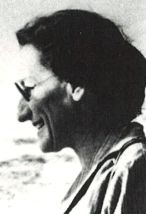
Marie-Cécile Ortigues was born in Corbigny (Nièvre), the daughter of Xavier Gélinier and Philomène Bernasse. Her father worked as a mining engineer all over the world, and Marie-Cécile and her brother Octave spent their childhood in Portugal and Mexico. In 1927 the family returned to France and settled in Paris.
Marie-Cécile Gélinier attended an arts and crafts school in Paris and received her nurse diploma in Lyon (1943) before studying psychology at the Sorbonne in Paris from 1948 to 1957. At the same time, she received psychoanalytic training from the Société Psychanalytique de Paris. Starting in 1947, she underwent analysis with Octave Mannoni, followed by analyses with Odette Codet and Marc Schlumberger. Particularly interested in child analysis, she worked at the Centre psychopédagogique de Claude-Bernard in Paris. Her supervisor was the child analyst Françoise Dolto.
In 1954 she married the theologian and philosopher Edmond Ortigues (1917-2005), her daughter Isabelle was born in 1958, her son Vincent in 1960. In 1961 she and her husband went to Senegal, where Edmond Ortigues became a professor of philosophy at the University of Dakar. Marie-Cécile Ortigues worked from 1962 to 1966 in the team of Henri Collomb at the Fann Psychiatric Clinic in Dakar. In 1966 Edmond Ortigues was made professor at the University of Rennes, and in 1976 the couple finally settled in Paris. In addition to her clinical work in psychiatry and psychoanalytic private practice, Marie-Cécile Ortigues carried out training in transcultural psychotherapy for psychologists, psychiatrists and pediatricians.
Her dissertation Le complexe d’Œdipe et acculturation (1965) and the book Œdipe africain (1966) she wrote with her husband were primarily based on her clinical experiences as an analyst in Senegal. Marie-Cécile and Edmond Ortigues, taking a Lacanian-inspired approach, concluded that the Oedipus complex structure exists in Africa, but not in the same way as in Europe. Special features are for example the assimilation of the father figure with ancestors and spirits and the displacement of rivalry onto the "brothers", the importance of a person’s position in the social and mythical structure, and the establishment of the symbolic order by initiation and other rituals. (Top of the article)
- SELECTED WORKS
- Le complexe d’Œdipe et acculturation. Une étude de psychologie clinique au Sénégal. Phil. Diss. Paris 1965
- (and Jenny Aubry) Maternal deprivation, psychogenic deafness and pseudo-retardation. In G. Caplan (ed.): Emotional Problems of Early Childhood. New York 1957, 231-247 (with Paul Martino and Henri Collomb) Intégration des données culturelles africaines à la psychiatrie de l’enfant dans la pratique clinique au Sénégal. Psychopathologie africaine 2 (3), 1966, 441-450
- (and Edmond Ortigues) Œdipe africain. Paris 1966; 1984
- (and Edmond Ortigues) L’universalité du Complexe d’Œdipe. Revue de Psychologie et des Sciences de l’Éducation 4 (3), 1969, 241-253
- (and Edmond Ortigues) Comment se décide une psychothérapie d'enfant? Paris 1986; 2005 (3. rev. ed.)
- (and Edmond Ortigues) Que cherche l'enfant dans les psychothérapies? Toulouse 1999
- (and Edmond Ortigues) L’évolution d’une pratique de psychothérapie. Psychopathologie africaine 30 (3), 2000, 299-315
- (and Edmond Ortigues) Besessenheitsriten. Zeitschrift für Medienwissenschaft 9 (17), 2017, 95-101
- REFERENCES
- Gerber, Simone: Edmond Ortigues (25 mai 1917 - 12 mai 2005). Le Coq-héron Nr. 184, 2006, 155-157 (2020-05-28)
- Marty, François: Marie-Cécile et Edmond Ortigues, "La donne familiale" in Comment se décide une psychothérapie d‘enfant? (1986), Heures de France, 2005, 48-66. In D. Drieu (Hg.): 46 commentaires de textes en clinique institutionnelle. Paris 2013
- Ortigues-Marty, Isabelle: À la mémoire de Marie-Cécile Ortigues. Le Coq-héron Nr. 197, 2009, 105-107 (2020-12-25)
- Ott, Michaela: Einführung in "Œdipe africain". Zeitschrift für Medienwissenschaft 9 (17), 2017, 87–94 + media/rep/ (2020-05-28)
- Reichmayr, Johannes, et al.: Psychoanalyse und Ethnologie. Biographisches Lexikon der psychoanalytischen Ethnologie, Ethnopsychoanalyse und interkulturellen psychoanalytischen Therapie. Gießen 2003
- PHOTO: from Ortigues, Edmond and Marie-Cécile: Œdipe africain. Paris 1984 (Cover). Courtesy of Editions L'Harmattan
Gisela Pankow (1914-1998)
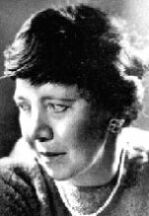
Gisela Pankow was born in Düsseldorf and grew up in a liberal anti-fascist family. She studied mathematics and physics (plus geography and philosophy) at the University of Berlin, worked as a private teacher and statistic researcher, before she began in 1943 her medical training in Tübingen. Since 1946 she participated in the constitutional biological research of Ernst Kretschmer, whose assistant she became in 1949 after qualifying as a doctor at the University of Tübingen. In 1951 she went to Paris and continued her research at the Hôpital de la Pitié and the University of Paris, where she obtained the French doctorate in science in 1953.
In 1944 Gisela Pankow took up psychoanalytic training in Tübingen, first with Luise Weizsäcker, then with Käthe Weizsäcker-Hoss, an anthropologically oriented Jungian - both were members of the German Institute for Psychological and Psychotherapeutic Research (Göring Institute) - and finally with Ernst Blum in Berne. In France she conducted a number of supervised analyses with Jacques Lacan, Françoise Dolto and Daniel Lagache and became a member of the Société Française de Psychanalyse (SFP) in 1953.
In the 1950s Gisela Pankow converted to Catholicism. After giving a series of conferences in Australia and spending a year of research and teaching in the United States, she returned to Paris in 1957. There she introduced a private seminar on Psychothérapie analytique des psychoses in 1958 and broke with the SFP in 1959. She taught at the University Saint-Antoine (1957-1981) and the Sainte Anne Hospital (1981-1992) in Paris as well as at the University of Bonn (1960-1970).
Gisela Pankow's main area of interest was the analysis of psychosis. Basing on the Freudian theory and on phenomenology, she developed her conception of an "image of the body", which was inspired by Françoise Dolto's idea of the unconscious body image. According to Pankow the body image serves two symbolic functions: The first ensures the recognition of spatial and formal structure (incorporating a dialectic of inside and outside, and part and whole), the second involves the content and meaning of that structure. Thus the body image is the basis of the ego and its relation to the other.
The body image of a psychotic is disturbed. It is radically dissociated in "nuclear psychoses" (schizophrenia) with disturbances of the first function, whereas in "marginal psychoses" (hysterical psychoses), which concern the second function, the body image is only partially affected. The objective of the cure is the restoration of the symbolic structures of the body image through a reintegration of the excluded. For this purpose Gisela Pankow introduced her original technique involving modelling clay as a mediating element. (Top of the article)
- SELECTED WORKS
- Untersuchungen über die Schädelbasisknickung beim Menschen. Ein Beitrag zur mehrdimensionalen Behandlung konstitutionsbiologischer Fragen. Thesis (MD) Tübingen 1948
- Les rapports métriques entre la base du crâne et la partie supérieure de la face. Thesis (MD) Paris 1953
- Structuration dynamique dans la schizophrénie. Contribution à une psychothérapie analytique de l'expérience psychotique du monde. Bern 1956
- Dynamische Strukturierung in der Psychose. Beiträge zur analytischen Psychotherapie. Bern 1957 [Structuration dynamique dans la psychose. Contribution à la psychothérapie analytique. Paris 2010]
- Die Erarbeitung des Körperbildes als Grundlage der Zeiterfahrung beim Geisteskranken. Jahrbuch für Psychologie und Psychotherapie 7, 1960, 258-274
- Gesprengte Fesseln der Psychose. Aus der Werkstatt einer Psychotherapeutin. München 1968 [L'homme et sa psychose. Paris 1969]
- Structure familiale et psychose. Paris 1973 [Familienstruktur und Psychose. Frankfurt/M. 1984]
- The body image in hysterical psychosis. IJP 55, 1974, 407-414
- Rejection and identity. Int Rev Psycho-Anal 7, 1980, 319-332
- L'être-là du schizophrène. Paris 1981 [Schizophrenie und Dasein. Beiträge zur analytischen Psychotherapie der Psychosen. Stuttgart-Bad Cannstatt 1990]
- Körperbild, Übergangsobjekt und Narzißmus. Jb Psychoanal 14, 1982, 84-109
- Die Dynamik des Raumes und die gelebte Zeit. Jb Psychoanal 15, 1983, 253-268
- (ed.) Ving-cinq années de psychothérapie analytique des psychoses. Paris 1984
- Forms and their structurizing power in psychosis. International Journal of Psychology 20, 1985, 439-448
- L'homme et son espace vécu. Analyses littéraires. Paris 1986
- Der absurde Mensch und sein Raum. Fragmente 23/24, 1987, 47-62
- Strukturierende Phantasmen in der Psychose. Jb Psychoanal 21, 1987, 177-204
- Présence de Gisela Pankow. Ed. by M.-L. Lacas et al. Paris 2004
- Les dangers du "on-dit" et autres réflexions. Abord analytique de la parole de l'autre. Paris 2006
- REFERENCES
- Anzieu, Didier: A discussion of the paper by Gisela Pankow on "The body image in hysterical psychosis". IJP 55, 1974, 415-416
- Association Internationale Gisela Pankow (AiGP) (2014-09-09)
- Corveleyn, Jozef: Psychosis. Phenomenological and Psychoanalytical Approaches. Leuven 2003
- Lacas, Marie-Lise: Gisela Pankow: filiations dans la psychanalyse des psychoses. Topique 3 (76), 2001, 41-48 (2010-07-22)
- Lacas, Marie-Lise: Pankow, Gisela. In Dictionnaire international de la psychanalyse (2002). Ed. by A. de Mijolla. Paris 2005, 1228f [International Dictionary of Psychoanalysis. Detroit u. a. 2005, 1222-1223]
- Lacas, Marie-Lise: Gisela Pankow. Une humanisme au-delà de la psychose. Paris 2014
- Seidel, Peter: Probleme des Zugangs bei Schizophrenen. Zum Verständnis des Beitrages von Gisela Pankow. Jb Psychoanal 25, 1990
- Troje, Elisabeth: Nachruf auf Gisela Pankow. In G. Lempa and E. Troje (eds): Andere Methoden der Psychosenbehandlung aus psychoanalytischer Sicht. Göttingen 2001, 85- 89
- PHOTO: Association Internationale des Amis de Gisela Pankow (2008-04-08)
Catherine Parat (1917-2014)
Catherine J. Luquet-Parat, born in Paris, was a member of the Société Psychanalytique de Paris (SPP) until 2011. She was married to the psychoanalyst Pierre Luquet (1918-2000). In 1972 she founded, together with Pierre Marty, Michel d'Uzan, Michel Fain, Denise Braunschweig and Christian David, the Institut de Psychosomatique de Paris. Her study L'ordinaire du psychosomaticien is considered as an eminent contribution to the psychosomatic metapsychology.
Catherine Parat's work centres on masochism, female sexuality, and the importance of the affect. A collection of her papers was published in 1995 under the title L'affect partagé. Best known is Catherine Parat's conception of "basic transference" ("transfert de base"), designating the patient's spontaneous positive cathexis of the person of the analyst. Parat stressed the kinship between such a transference cathexis and Sigmund Freud's narcissistic object-choice.
One of her earlier essays, Le changement d'objet, published in 1964 in the illustrious volume Recherches psychanalytiques nouvelles sur la sexualité féminine (Female Sexuality), dealt with the girl's change from the maternal to the paternal object. Based on a Kleinian approach, Catherine Parat stated a normal feminine masochistic move at the time of the Oedipus complex. According to Parat, femininity is achieved when the girl adopts actively the passive or receptive aim, thus diverting earlier active sadistic impulses directed toward the father's penis.
Catherine Luquet-Parat served as a training analyst of the SPP until 1997. One of her analysands was André Green, who dedicated his famous study La mère morte to her. (Top of the article)
- SELECTED WORKS (for more, see BSF)
- La place du mouvement masochique dans l'évolution de la femme. RFP 23, 1959, 305-336
- La structure obsessionelle. RFP 25, 1961, 309-317
- Le changement d'objet. In J. Chasseguet-Smirgel (ed.): Recherches psychanalytiques nouvelles sur la sexualité féminine. Paris 1964, 115-127 [The change of object. In J. Chasseguet-Smirgel (ed.): Female Sexuality. New Psychoanalytic Views. Ann Arbour 1970]
- L'organisation oedipienne du stade génital. RFP 31, 1967, 743-911
- A propos de la co-excitation libidinale. RFP 51, 1987, 925-936
- Dynamique du sacré. Meyzieu 1988
- A propos de la thérapeutique analytique. RFP 55, 1991, 303-324
- Avatars du "courant tendre" freudien. RFP 56, 1992, 777-791
- L'ordinaire du psychosomaticien. Rev fr psychosom No. 3, 1993, 5-20
- Le phallique féminin. RFP 59, 1995, 1239-1257
- L'affect partagé. Paris 1995
- A propos de l'amour et de l'amour de transfert. RFP 60, 1996, 643-662
- La répression chez l'analyste. RFP 65, 2001, 141-143
- L'inconscient et le sacré. Paris 2002
- REFERENCES
- Denis, Paul: transférentielle (relation -). In Dictionnaire international de la psychanalyse (2002). Ed. by A. de Mijolla. Paris 2005, 1830f ["tranference relationship": International Dictionary of Psychoanalysis. Detroit u. a. 2005, 1788-1790]
- Smadja, Claude, und Gérard Szwec: Hommage à Catherine Parat. Revue française de psychosomatique 2 (48), 2015, 5-6 (2023-10-25)
- Szwec, Gérard: Interview mit Catherine Parat. Revue française de psychosomatique No. 18, 2000, 123-137
- Wikipedia (26.2.2015)
Ginette Raimbault née Girardey (1924-2014)
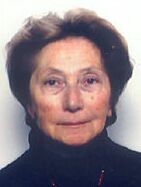
The French psychiatrist and psychoanalyst Ginette Raimbault, born in Belfort (Algiers) as the daughter of a teacher, passed her childhood in Algeria. After receiving a M.Sc. from Columbia University in New York, she studied psychology (diploma in 1949) and medicine in Paris and graduated with a thesis on natural birth in 1956. While studying medicine, she trained as a psychoanalyst and underwent training analysis with Jacques Lacan. In 1951 she was admitted to the Société psychanalytique de Paris, after the split in 1953 she changed to the Société française de psychanalyse and finally became a member of the Lacanian École Freudienne de Paris.
Ginette Raimbault took up her psychiatric training with Jenny Aubry, with whom she worked together for about twenty years. In 1954 she met Michael Balint, and both she and her husband, the psychoanalyst Émile Raimbault (1923-1998), became enthusiastic about Balint's ideas. In 1960 she attended Balint's seminar at the Tavistock Clinic in London and subsequently started, along with her husband, one of the first Balint groups in France. In 1971 she received her licence as a psychiatrist. Since 1961 she worked at the Institut national des sciences et de la recherche médicale (INSERM) in Paris, where she was Directrice of Research beginning in 1985 until her retirement in 1990.
Ginette Raimbault's main area of interest is the psychology of the ill child. She was working with dying children in the nephrology clinic of the Hopital des Enfants-Malades in Paris since 1965 and published several books on themes like mourning, illness and death from the point of view of children and parents. In her book Lorsque l'enfant disparaît, for instance, she reported the traumatic experience of well-known personalities of the 19th and 20th century, who had lost their child, and analysed the various phases and forms of mourning work.
Ginette Raimbault was suffering from Alzheimer's and died at the age of 89 in Paris. (Top of the article)
- SELECTED WORKS
- L'accouchement naturel. Mise en application pratique à la maternité de l'Hôpital Saint-Antoine. Thesis (MD) Paris 1956
- Médecins d'enfants. Paris 1973 [Arzt - Kind - Eltern. Erfahrungen von Kinderärzten in einer Balint-Gruppe. Frankfurt/M. 1977]
- L'enfant et la mort. Des enfants parlent de la mort. Problèmes de la clinique du deuil. Paris 1975; 1996 [Kinder sprechen vom Tod. Klinische Probleme der Trauer. Frankfurt/M. 1980]
- Clinique du réel. La psychanalyse et les frontières du médical. Paris 1982
- Lorsque l'enfant disparaît. Paris 1996 [Trauernde Eltern. Isadora Duncan, Sigmund Freud, Gustav Mahler, Eric Clapton - Wie sie den Tod eines Kindes erlebten. Berlin 1997]
- Curieuse. Un parcours lacanien. Paris 2003
- Parlons du deuil. Paris 2004
- "Qui ne voit que la grâce...". Analyse, aventure et liberté. Entrentiens avec Anna Feissel-Leibovici. Paris 2005
- (and Radmila Zygouris) Corps de souffrance, corps de savoir. Lausanne 1976
- (and Caroline Eliacheff) Les indomptables. Figures de l'anorexie. Paris 1989
- (and Jenny Aubry) Intermittence de l'autre scansion des ruptures et destin des pulsions. Bloc-notes No. 12, 1993
- (with Luc Massardier and Patrick Ayoun) Questions d'inceste. Paris 2005
- REFERENCES
- Degoy, Lucien: Jenny Aubry dans le texte. Entretiens avec Ginette Raimbault. L'Humanité, 2003-11-05
- Friedmann, Daniel: Entretien avec Ginette Raimbault. CNRS audiovisuell 1983 (2018-06-19)
- Guillerault, Gérard: Interview mit Ginette Raimbault. Apertura 6, 1991
- INSERM (2023-11-06)
- Moreau Ricaud, Michelle: Raimbault, Émile. In Dictionnaire international de la psychanalyse (2002). Ed. by A. de Mijolla. Paris 2005, 1454
- Moreau Ricaud, Michelle: Ginette Raimbault (1924-2014). Le Coq-héron Nr. 218, 2014, 151-152
- -Les psychanalystes: Ginette Raimbault. Film of Jérôme Blumberg and Daniel Friedman. CNRS audiovisuell 1983
- Roudinesco, Elisabeth: Ginette Raimbault (1924-2014), psychanalyste, spécialiste des enfants malades. Le Monde, 19.2.2014 (2014-04-11)
- Roudinesco, Elisabeth : Adieu à Ginette Raimbault (1924-2014). Blog Olivier Douville, 23.2.2014 (2014-04-11)
- PHOTO: Canal-U (2010-08-04)
Blanche Reverchon-Jouve (1879-1974)
Blanche Reverchon, born in Paris, studied philosophy and medicine and later specialised in neurology under Joseph Babinski. She practised as a psychiatrist in Geneva, when she met the poet Pierre Jean Jouve (1887-1976) in 1921. In 1923 they settled in Paris and were married in 1925. At this time Blanche Reverchon-Jouve qualified as a doctor and entered into analysis with Eugénie Sokolnicka. After visiting Sigmund Freud in Vienna, who obviously encouraged her to become an analyst, she continued her psychoanalytic training supervised by Rudolph Loewenstein. Later she went into further analysis with René Laforgue.
In 1923 Sigmund Freud's essays on sexual theory were published in France, translated by Blanche Reverchon-Jouve (Trois essais sur la théorie de la sexualité). In 1928 she was accepted as a member of the Société Psychanalytique de Paris. At the time of the 1953 split, Reverchon-Jouve, although a physician herself, was one of the opponents of the medicalization of psychoanalytic training. Together with Daniel Lagache, Jacques Lacan and Françoise Dolto she left the SPP and became a member of the newly founded Société Française de Psychanalyse.
Blanche Reverchon-Jouve introduced her husband to psychoanalysis and supplied him with the clinical material from her psychoanalytic practice, which he transformed to his novels about mad women. His novel Vagadu, for instance, is drawn from his wife's analyses with Sokolnicka and Loewenstein and from the case history of Mademoiselle H., which was also the subject of Blanche and Pierre Jean Jouve's article Moments d'une psychanalyse, published in 1933.
Blanche Reverchon-Jouve's analysands were mainly wealthy patients and artists, among them the Belgian author and psychotherapist Henry Bauchau, who depicted her as "La Sybille" in his first novel La dechirure. (Top of the article)
- WORKS
- Contribution à l'étude des contractures parkinsoniennes. Thesis (MD) Paris 1924
- (and Pierre Jean Jouve) Moment d'une psychanalyse. NRF 15 (234), 1933, 353-385
- REFERENCES
- À la Recherche de Blanche. Site Pierre Jean Jouve (2010-08-05)
- Bauchau, Henry: La dechirure (1966). Arles 2003
- Bauchau, Henry: Sur Pierre Jean Jouve. Sur Blanche Jouve. Académie royale de langue et de littérature françaises de Belgique, Brüssel 1993 (2.2.2012)
- Bauchau, Henry: Pierre et Blanche. Souvenirs sur Pierre Jean Jouve et Blanche Reverchon. Arles 2012
- Bonhomme, Béatrice: Pierre Jean Jouve ou la quête intérieure. Paris 2008
- Bourgeron, Jean-Pierre: Reverchon-Jouve, Blanche. In Dictionnaire international de la psychanalyse (2002). Ed. by A. de Mijolla. Paris 2005, 1558 [International Dictionary of Psychoanalysis. Detroit u. a. 2005, 1492-1493]
- Louis-Lambert, Jean-Paul: La lecture Blanche. Site Pierre Jean Jouve 2009 (2010-08-05)
- Roudinesco, Elisabeth: Histoire de la psychanalyse en France, Bd. 2: 1925-1985. Paris 1986; 1994 [Jacques Lacan & Co. A History of Psychoanalysis in France, 1925-1985. Chicago 1990]
- Wikipedia (2010-08-05)
Élisabeth Roudinesco (*1944)
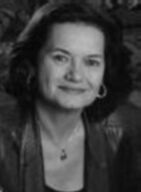
Élisabeth Roudinesco is best known for her contributions to the history of psychoanalysis. She was born in Paris as the daughter of the psychoanalyst Jenny Aubry and her first husband Alexander Roudinesco. Her father was an immigrated Romanian-Jewish physician, who had converted to Catholicism. When she was a child, her mother sent her into analysis with Françoise Dolto, and at the age of nine she first met Jacques Lacan.
She received her secondary education in Paris at Collège Sévigné and subsequently worked as a teacher in Algeria (1966-1967), before she studied philosophy and literature at the Sorbonne with a minor in linguistics. Her master degree was supervised by Tzvetan Todorov, and her doctoral thesis by Jean Levaillant at the Université Paris VIII-Vincennes in 1975. Élisabeth Roudinesco was admitted to the Lacanian École freudienne de Paris (EFP) in 1969 and underwent analysis with Octave Mannoni. She was a member of the EPF until Lacan dissolved his school in 1980. During the same time she was a member of the KPF.
Roudinesco was affiliated to the editorial board of the journals Action poétique (1969-1979) and L'homme (1997-2002). From 1986 to 1996 she wrote articles for the newspaper Libération, and since then for Le Monde. In 1991 she completed her habilitation on Études d'histoire du freudisme (published in 1994 under the title Généalogies). Since 1991 she has been the Director of Research in History at the University Paris VII. From 2001 to 2007 she was Director of Studies at the École Pratique des Hautes Études. She was elected as Vice President of the Société internationale d'histoire de la psychiatrie et de la psychanalyse (SIHPP) in 1990, and President in 2007.
Some of her most important books are a history of psychoanalysis in France, the biography of Jacques Lacan and a dictionary of psychoanalysis (with Michel Plon). Her historical approach refers to the works of Henry Ellenberger, Georges Canguilhem, and Michel Foucault. Élisabeth Roudinesco defends the importance of psychoanalysis against the talk of its "becoming obsolete" and against the hegemony of scientific efficiency criteria.
Since 1986, Élisabeth Roudinesco has been married to Olivier Bétourné (*1951), who was the CEO of Les Éditions du Seuil until 2018. Together they created the Institut Histoire et Lumières de la Pensée in 2021. (Top of the article)
- SELECTED WORKS
- Initiation à la linguistique générale. Paris 1967
- Pour une politique de la psychanalyse. Paris 1977
- Histoire de la psychanalyse en France, vol. 1: 1885-1939. Paris 1982; 1994 [Wien - Paris. Die Geschichte der Psychoanalyse in Frankreich, vol.1: 1885-1939. Weinheim, Berlin 1994]
- Histoire de la psychanalyse en France, vol. 2: 1925-1985. Paris 1986; 1994 [Jacques Lacan & Co. A History of Psychoanalysis in France, 1925-1985. Chicago 1990]
- René Laforgue und Matthias Göring. Psyche 42, 1988, 1041-1080
- Théroigne de Méricourt. Une femme mélancholique sous la Rèvolution. Paris 1989 [Théroigne de Méricourt. A Melancholic Woman during the French Revolution. London 1991]
- Penser la folie. Essais sur Michel Foucault. Paris 1992
- Jacques Lacan. Esquisse d'une vie, histoire d'un système de pensée. Paris 1993 [Jacques Lacan. Bericht über ein Leben, Geschichte eines Denksystems. Köln 1996; Frankfurt/M. 1999; Jacques Lacan. An Outline of a Life and a History of a System of Thought. Oxford 1999]
- Généalogies. Paris 1994
- Pourquoi la psychanalyse? Paris 1999 [Wozu Psychoanalyse? Stuttgart 2002; Why Psychoanalysis? New York 2002]
- L'analyse, l'archive. Paris 2001
- La famille en désordre. Paris 2002 [Die Familie ist tot - Es lebe die Familie. Stuttgart 2008]
- Le patient, le thérapeute et l'état. Paris 2004
- Philosophes dans la tourmente. Paris 2005 [Philosophy in Turbulent Times. New York 2008]
- La part obscure de nous-mêmes. Paris 2007 [Our Dark Side. A History of Perversion. Cambridge 2009]
- Retour sur la question juive. Paris 2009
- Mais pourquoi tant de haine? Paris 2010
- Lacan, envers et contre tout. Paris 2011 [Lacan: In Spite of Everything. London; New York 2014]
- Sigmund Freud en son temps et dans le nôtre. Paris 2014 [Freud in His Time and Ours. Cambridge, Mass.; London 2016]
- (and Michel Plon) Dictionnaire de la psychanalyse. Paris 1997 [Wörterbuch der Psychoanalyse. Wien, New York 2004]
- (and Élisabeth Kapnist) Sigmund Freud, l'invention de la psychanalyse. BFC Productions 1997
- (and Élisabeth Kapnist) Jacques Lacan, la psychanalyse réinventée. INA, Arte France 2001
- (and Jacques Derrida) De quoi demain ... Dialogue. Paris 2001 [For what Tomorrow... A Dialogue. Stanford, Calif 2004; Woraus wird Morgen gemacht sein? Ein Dialog. Stuttgart 2006]
- REFERENCES
- Chercheurs de notre temps. Élisabeth Roudinesco im Gespräch mit Dominique Bollinger. Video (CNDP) Paris 2000
- Hölzer, Klaus: Rezension von Élisabeth Roudinecso und Michel Plon: Wörterbuch der Psychoanalyse. Wien, New York 2004. PPFI October 2005 (2008-04-09)
- Institut Histoire et Lumières de la Pensée (2024-07-15)
- Roudinesco, Élisabeth: Généalogies. Paris 1994
- Wikipedia French; English (2012-06-18); German (2014-11-05)
- PHOTO: Courtesy of Élisabeth Roudinesco
Monique Schneider (*1935)
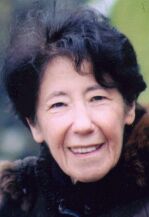
Monique Schneider was born in Mirecourt in Lorraine. She studied philosophy in Nancy and Paris and passed her agrégation de philosophie at the École Normale Supérieure in 1958. She subsequently taught philosophy at the Lycée Stendhal in Grenoble and since 1965 she was assistant at the Faculty of Arts, University of Grenoble. In 1970, she was appointed researcher at the Centre Nationale de la Recherche Scientifique (CNRS) in Paris. She graduated under the supervision of Paul Ricoeur in 1981, her thesis La réflexion émotionnelle explored the connections between affect and the process of learning.
At the beginning of her teaching career she suffered from insomnia caused by diabolical phantasmas from her childhood, which led to her first analysis. She trained as a psychoanalyst at the Société Psychanalytique de Paris during the 1970s. In 1980 she became a member of the Collège de Psychanalystes, an association founded by practitioners representing various currents of contemporary psychoanalysis. Affiliated with the Lacanian association École de la Cause Freudienne, she practices psychoanalysis in Paris. In addition she taught philosophy at the University Paris VII. She was Directrice of Research at the CNRS until she became an emerita in 2000.
Monique Schneider works at the intersections of psychoanalysis, cultural critique, and philosophy. She has been concerned with questions of trauma, the status of constructions of sexual difference in social discourse and practices of exclusion by psychoanalysis as a patriarchal theory. In her book Généalogie du masculin, for instance, she explored the contradictions of masculinity. Patriarchal metaphors reduce masculinity to phallic symbols of verticality by excluding a devaluated feminine, which is associated with uncontrollability. The result of this is a gap between a man's representation of pleasure as a conquest and his experience of it as an absence of mastery.
In Le paradigme féminin Monique Schneider showed that Freud in his earlier texts used the feminine topography - an opening into an inner room, where "foreign bodies" can be accepted or excluded - as a paradigm of the psychic apparatus and the repression. This "supplementary room" allows another symbolism of femininity than the devaluating phallic metaphor of the feminine sex as a cavity. (Top of the article)
- SELECTED WORKS
- Le féminin expurgé. De l'exorcisme à la psychanalyse. Paris 1979
- La parole et l'inceste. Paris 1980
- Freud et le plaisir. Paris 1980
- La réflexion émotionnelle. Phil. Diss. Paris X 1981
- Le temps du conte et le non-temps de l'inconscient. Recherches sur la philosophie et le langage No. 2, 1982
- "Père, ne vois-tu pas...?" Le père, le maître, le spectre dans l'interpretation des rêves. Paris 1985
- Le trauma et la filiation paradoxale. Paris 1988
- L'approche du trauma. Bloc-notes No. 8, 1988
- Der weibliche Blick und die theoretische Schrift. Psyche 43, 1989, 331-338
- Les ambiguïtés de Freud aux prises avec le fantastique. In Colloque de Cerisy: La littérature fantastique, 1991, 221-233
- La castration comme trompe-l'œil. Cahiers internationaux de symbolisme No. 65-67, 1990
- En deçà du miroir. Bloc-notes No. 11, 1992
- La part de l'ombre. Approche d'un trauma féminin. Paris 1992
- Don Juan et le procès de la séduction. Paris 1994
- L'urgence d'une négation. Bloc-notes No. 13, 1995
- Généalogie du masculin. Paris 2000
- Le trauma et son impact sur le "creux de la mère". In J.-C. Rouchy (ed.): La psychanalyse avec Nicolas Abraham et Maria Torok. Paris 2001
- Von Freud zu Ferenczi. Ein verschobener Anfang. Integrative Therapie 29 (3/4), 2003, 320-340
- Le paradigme féminin. Paris 2003
- Genealogy of masculinity. In K. Oliver and L. Walsh (eds): Contemporary French Feminism. Oxford 2004, 128-158
- Repudiating the feminine. In C. Howells (ed.): French Women Philosophers. A Comtemporary Reader: Subjectivity, Identity, Alterity. London 2004, 201-217
- La cause amoureuse. Freud, Spinoza, Racine. Paris 2008
- La détresse, aux sources de l'éthique. Paris 2011
- REFERENCES
- Baruch, Hoffmann Elaine, and Lucienne J. Serrano: Women Analyse Women. New York, London 1988
- Duruz, Nicolas: Laudatio Monique Schneider 2003. Université de Lausanne 2002 (2008-04-09)
- Watteau, Diane: Sur Le paradigme féminin de Monique Schneider: "Tu ne me verras plus si tu me vois", dit-il. Savoirs et clinique 1 (6), 2005, 241-246 (2020-12-26)
- Wikipedia (2010-08-15)
- PHOTO: Courtesy of Monique Schneider
Eugénie Sokolnicka née Kutner (1884-1934)
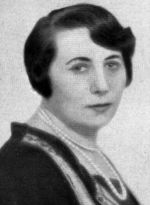
Eugénie Sokolnicka, born in Warsaw in 1884 (or 1876), was the first practising psychoanalyst in France and a pioneer of child psychoanalysis. She came from a cultivated Jewish family that fought for the Polish independence. Her mother Paulina Flejszer played such an important role in the 1863 uprising that she was honoured with a state funeral. Eugenia Kutner's father, Maurycy Kutner, was a bank clerk.
In 1899 she came to Paris, where she studied biology at the Sorbonne (Lic. ès scienc. 1902) and attended Pierre Janet's lectures on psychology at the Collège de France. She became involved in the Paris section of the Polish Socialist Party, where she met Michal Sokolnicki (1880-1967), a Polish landowner and future historian, politician and private secretary to Józef Piłsudski. She returned with him to Warsaw and they married in 1903. In the following years she wrote a Polish textbook on wildlife and was active in the Polish National Organization (Polska Organizacja Narodowa) and the local League of Women.
In 1911 Eugenia Sokolnicka went to study at the psychiatric clinic of Burghölzli in Zürich and became a member of the Zürich IPA group in 1912. She met Carl Gustav Jung and probably became his student and maybe even his analysand. After Jung's break with Sigmund Freud she decided to go to Vienna and began in 1914 her analysis with Freud. This lasted three months and was broken off by Freud, who did not like her. Sokolnicka attended the sessions of the Vienna Psychoanalytic Society and became a member in 1916. During this period she separated from her husband.
In 1914, on Freud's advice, she moved to Munich, where Felix Böhm underwent analysis with her. During the First World War she practised in Warsaw and Zürich. In 1917 she tried to found a psychoanalytic society in Warsaw but failed. After the war she traveled to Budapest in 1920 and underwent analysis with Sándor Ferenczi, which lasted about a year. According to Ferenczi, Sokolnicka showed, among others, a strong feeling of superiority as well as depressive and suicidal tendencies. But he also described her as a sensitive and technically gifted analyst.
In 1921 she returned to Paris to organize the psychoanalytic movement in France. As the only training analyst before Rudolph Loewenstein's arrival in 1925, she trained the first generation of French analysts. Among others, René Laforgue and Paulette Laforgue, Édouard Pichon, Paul Schiff, Blanche Reverchon-Jouve and Sophie Morgenstern were her analysands. She delivered lectures at the École des Hautes Études Sociales between 1922 and 1923 and was admitted to the Sainte-Anne psychiatric hospital by Georges Heuyer. In 1926 Sokolnicka was one of the founders of the Société Psychanalytique de Paris, where she was appointed Vice-President, a post she held for two years.
Eugénie Sokolnicka was especially welcomed by the literary milieu of Paris. A circle of authors of the Nouvelle Revue Française met at her home each week to discuss psychoanalytic questions with her. Among them was André Gide, who had a few analysis sessions with Sokolnicka in 1922 and depicted her as "Doctoresse Sophroniska" in his novel The Counterfeiters. In it he referred to Sokolnicka's famous healing of a childhood obsessional neurosis (1920), which he turned into an abject failure.
Eugénie Sokolnicka's patient was a ten year-old boy from Minsk, who suffered from a touch phobia and had developed extremely restrictive rituals with which he reduced his mother to a state of slavery. During a six-week analysis Sokolnicka revealed the sexual implication of the boy's symptoms, which disappeared after that. This rapid cure encouraged Sokolnicka to create a minimal analysis, which sees as its end the disappearance of symptoms, while a maximal analysis includes the freeing of the ability to love and the avoidance of repetition.
Although she was regarded as a gifted clinician, Eugénie Sokolnicka lost her position at Sainte-Anne in 1923. She was removed from the hospital by the new director Henri Claude, who did not accept non-physician analysts. Sokolnicka focused on her own private practice, but her clientele diminished over the years. In the beginning of the 1930s she played no longer an important role in the psychoanalytic movement. The position of Freud's legitimate representative in France was taken over by Marie Bonaparte. Poverty, growing depressions, the threat from Nazism in Germany and a sense of rootlessness weighed on her and, in 1934, she took her own life. (Top of the article)
- WORKS
- Analyse einer infantilen Zwangsneurose. IZP 6, 1920, 228-241 [Analysis of an obsessional neurosis in a child. IJP 3, 1920, 306-319; L'analyse d'un cas de névrose obsessionnelle infantile. Revue de neuro-psychiatrie infantile 16 (5/6), 1968]
- On the diagnosis and symptomatology of the psycho-analytical theory of the neuroses. Bulletin of the International Psychoanalytic Association 1, 1920, 342-362
- Quelques problèmes de technique psychanalytique. RFP 3, 1929, 1-49
- Sur un cas de guérison rapide. RFP 5, 1932, 440
- À propos de l'article de M. René Laforgue. RFP 6, 1933, 361-363
- REFERENCES
- Appignanesi, Lisa, and John Forrester: Freud's Women. London 1992
- Duhamel, Pascale: Eugénie Sokolnicka (1884-1934), entre l'oubli et le tragique. Thesis (MD) Bordeaux-II 1988
- Freud, Sigmund, and Sándor Ferenczi: The Correspondence, vol. 3: 1920-1933 (4.6.1920). Cambridge, Mass. 2000
- Geissmann, Claudine, and Pierre Geissmann: A History of Child Psychoanalysis (1992). London 1998
- Genealogia Potomków Sejmu Wielkiego (2012-02-02)
- Gide, André: Les faux-monnayeurs. Paris 1925 [The Counterfeiters. London 1928]
- Gourévitch, Michel: Eugénie Sokolnicka, pionnier de la psychanalyse et inspiratrice d'André Gide. Médicine de France No. 219, 1971, 17-22
- Groth, Jaroslaw: Przyczynek do historii polskiej psychoanalizy - Eugenia Sokolnicka. Polskie Forum Psychologiczne 18 (1), 2013, 112-131
- Groth, Jaroslaw: Eugenia Sokolnicka. A contribution to the history of psychoanalysis in Poland and France. Psychoanal Hist 17 (1), 2015, 59-86
- Groth, Jaroslaw: Polnische Freudianerinnen - Ludwika Karpinska, Helene Deutsch & Eugenia Sokolnicka. In P. Dybel, E. Kobylinska-Dehe und L. M. Hermanns (Hg.): Zwischen Hoffnung und Verzweiflung. Psychoanalyse in Polen im polnisch-deutsch-jüdischen Kulturkontext 1900-1939. Gießen 2018, 101-120
- Heenen-Wolff, Susann: Eugénie Sokolnicka (1884-1934). In E. Federn and G. Wittenberger (eds): Aus dem Kreis um Sigmund Freud. Frankfurt/M. 1992, 155-157
- May, Ulrike: Freuds Patientenkalender: Siebzehn Analytiker in Analyse bei Freud (1910-1920). Luzifer-Amor 19 (37), 2006, 43-97
- Mijolla, Alain de: Sokolnicka-Kutner, Eugénie. In Dictionnaire international de la psychanalyse (2002). Ed. by A. de Mijolla. Paris 2005, 1692f [International Dictionary of Psychoanalysis. Detroit u. a. 2005, 1633-1634]
- Moreau Ricaud, Michelle: Eugénie Sokolnicka et Marie Bonaparte. Topique Nr. 115, 2011, 83-92
- Mühlleitner, Elke: Biographisches Lexikon der Psychoanalyse. Tübingen 1992
- Pichon, Edouard: Eugénie Sokolnicka (14 juin 1884-19 mai 1934). RFP 7, 1934, 589-603
- Prameshuber, Ursula: Eugenia Sokolnicka and Sophie Morgenstern. The intertwining of life, work, and death. In K. Naszkowska (Ed.): Early Women Psychoanalysts History, Biography, and Contemporary Relevance. London 2024
- Roudinesco, Elisabeth: Histoire de la psychanalyse en France, vol. 1: 1885-1939. Paris 1994
- Roudinesco, Elisabeth, and Michel Plon: Wörterbuch der Psychoanalyse (1997). Wien, New York 2004
- Wikipedia: Eugénie Sokolnicka French; Polish (2020-07-31)
- Wikipedia: Michal Sokolnicki (2013-8-8)
- PHOTO: Wikipedia (2020-08-04)
Anne-Lise Stern (1921-2013)

The child analyst Anne-Lise Stern was born in Berlin and grew up in Mannheim. When Hitler came to power, her father Heinrich Stern, a Jewish-German psychiatrist and Marxist, emigrated with his family to France in 1933. Anne-Lise Stern began to study medicine, but in 1944 she was arrested and deported to Auschwitz-Birkenau. From there she was sent to Bergen-Belsen, Raguhn and Theresienstadt. She survived the concentration camp and returned to France in 1945.
After the end of the war, Anne-Lise Stern studied psychology and trained as a psychoanalyst, initially with Maurice Bouvet, then with Françoise Dolto and finally with Jacques Lacan. She became an adherent of Lacan and member of the École Freudienne de Paris. For Anne-Lise Stern Lacan's "return to Freud" is the psychoanalysis for the After-Auschwitz.
She worked with psychotic, hospitalised or abandoned children, first at the Bichat hospital and from 1953 to 1968 at the Hôpital des Enfants Malades in Paris, where she cooperated with Jenny Aubry. Inspired by the 1968 student movement, she participated from 1969 to 1972 in the Laboratoire de psychanalyse in Paris for the treatment of patients without means, financed with German reparation money. From 1972 to 1978 she was appointed as a psychotherapist in the department for drug addicts led by Claude Olievenstein at the Marmottan hospital.
The upsurge of Holocaust negationism in France caused Anne-Lise Stern to establish a seminar in 1979, where actual contemporary documents and its relations to the Holocaust were discussed. Since 1991, the bi-monthly seminar called Camps, histoire, psychanalyse - leur nouage dans l'actualité européenne has taken place at the Maison des Sciences de l'Homme in Paris.
In 1994 Stern`s book Le savoir-déporté was published, containing besides her main articles from 1963 to 2003 a report of her experiences in the concentration camp. (Top of the article)
- SELECTED WORKS
- Un lapsus de SS. Nouvel Observateur, 3.6.1969 + in Stern, Le savoir-déporté, 2004
- Passe - du camp chez Lacan. Passe - Vom Lager zu Lacan. In J. Prasse and C.-D. Rath (eds): Lacan und das Deutsche. Die Rückkehr der Psychoanalyse über den Rhein. Freiburg 1994, 203-216
- "Mending" Auschwitz, through psychoanalysis? Strategies. Journal of theory, culture and politics No. 8, 1995/96
- La France hospitalière - Drancy avenir. Essaim No. 1, 1998, 139-149
- Früher mal ein deutsches Kind...passée du camp chez Lacan. Versuch einer Hinübersetzung. Berliner Brief No. 2, 1999
- Point de suture [about "La vie est belle" by R. Benigni]. Carnets de l'Ecole de psychanalyse Sigmund Freud No. 21/22, 1999
- Psychanalyste après Auschwitz. Essaim No. 4, 1999
- Le savoir-déporté. Camps, histoire, psychanalyse. Paris 2004; 2007
- Sois déportée...et témoigne! Psychanalyser, témoigner: doublebind? In Anne-Lise Stern: Le savoir-déporté. Paris 2004, 105-113 [Be Deported...and Bear Witness! Psychoanalysing, Bearing Witness: A Double Bind? Sitegeist Nr. 12, 2016
- Früher mal ein deutsches Kind. Auschwitz, Geschichte, Psychoanalyse. Gießen 2020
- REFERENCES
- Broudic, Jean-Yves: Naître après. À propos du livre: "Le savoir-déporté. Camps, Histoire, Psychanalyse", par Anne-Lise Stern. JY Broudic (2014-11-05)
- Disparition: Anne-Lise Stern (1921-2013): Psychanalyste de la poubelle des camps. Marianne, 9.5.2013 (2020-12-26)
- Dorland, Michael: Psychoanalysis after Auschwitz? The "Deported Knowledge" of Anne-Lise Stern. Other Voices 2 (3), 2005 (2010-08-30)
- Fresco, Nadine, and Martine Leibovici: Entendre. Une vie à l'œuvre. In Anne-Lise Stern: Le savoir-déporté. Paris 2004
- Millot, Catherine: Présentation du livre d'Anne-Lise Stern: Le savoir-déporté. Essaim Nr. 13, 2004, 179-184
- Parks, Val: Introduction to Anne-Lise Stern: Be Deported... and Bear Witness! A new translation by Dorothée BonnigalKatz. Sitegeist 12, 2016, 8691 (2017-11-28)
- Roudinesco, Elisabeth: Histoire de la psychanalyse en France, vol. 2: 1925-1985. Paris 1986; 1994 [Jacques Lacan & Co. A History of Psychoanalysis in France, 1925-1985. Chicago 1990]
- Roudinesco, Elisabeth: Anne Lise Stern, psychanalyste du "Savoir-déporté". Le Monde, 7.5.2013 (2013-7-22)
- Wikipedia (2013-7-23)
- PHOTO: Wikipedia; s. a. Stern: Le savoir-déporté. Paris 2007 (20.11.2014)
Maria Torok (1925-1998)
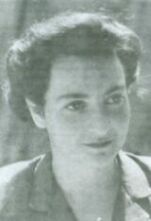
Maria Torok's work stands in the tradition of the Hungarian psychoanalyst Sándor Ferenczi. Mária Török, the daughter of a Jewish grand bourgeois family, was born in Budapest, where she grew up and survived the German occupation during the war. In 1947 she moved to Paris, where she trained and worked as a chemical technical assistant. In the beginning of the 1950s she studied psychology at the Sorbonne, received a bachelor's degree in 1955 and then worked as a psychological counsellor in nursery schools.
She went into analysis with Bela Grunberger, who also came from Hungary, and later with Margaret Clark-Williams. In 1956 she became a member of the Société Psychanalytique de Paris (SPP) and worked as a child analyst in social-service agencies until 1967.
In 1950 she met the Hungarian-Jewish philosopher and analyst Nicolas Abraham (1919-1975), who became her companion. Torok and Abraham developed a phenomenological psychoanalysis and taught it in a seminar they led together from 1959 to 1961 in Paris. Originating in the work of Ferenczi, they conceived their theory of the "crypt" and the "phantom", in order to explain the psychopathogenic potential of unspoken secrets and traumas transmitted to the next generation. Those unbearable experiences are removed from associative links to the rest of psychic life by "preservative repression" and entombed in a "crypt" that functions within the ego as a false unconscious. The children, who unwittingly inherit the secret of their parents by "endocryptic indentification", are haunted by phantoms which cause great disruption in their psychic life.
In her well-noticed essay The illness of mourning and the fantasy of the exquisite corpse Maria Torok described the "illness of mourning" as an effect of unspoken "incorporations" with traumatic effects, by which a subject tries to regain a lost or prohibited object through the magic of hallucinatory. In contrast to the introjection that allows a process of mourning, the incorporation blocks the libidinal cathexis of new objects and thus the psychic development.
Sympathizing with Jacques Derrida's approach of deconstruction, Maria Torok wrote numerous articles for the journal Confrontation. Like Ferenczi she championed a closer contact with the patient, a position that upset her fellow members of the SPP. She made an important contribution to the critic of Freud's concept of femininity with her early paper The meaning of the "penis envy" in women, where she stressed the symptomatic character of the penis envy: The "false" wish for an idealized penis is a defence against masturbatory fantasies by which the girl appropriates the position of her mother.
In 1983 Maria Torok began to collaborate with Nicholas Rand, an American analyst and professor of French literature, whom she married in 1990. She died from leukaemia at the age of 73. (Top of the article)
- SELECTED WORKS
- Phantasie. Versuch einer begrifflichen Klärung ihrer Struktur und Funktion (1959). Psyche 51 (1), 1997, 33-45
- La signification de l'"envie du pénis" chez la femme. In J. Chasseguet-Smirgel (ed.): Recherches psychanalytiques nouvelles sur la sexualité féminine. Paris 1964 [The significance of penis envy in women. In J. Chasseguet-Smirgel (ed.): Female Sexuality. New Psychoanalytic Views. London 1970]
- Maladie du deuil et fantasme du cadavre exquis. RFP 32 (4), 1968, 229-251 [The illness of mourning and the fantasy of the exquisite corpse. In Torok/Abraham, The Shell and the Kernel, 1994]
- L'os de la fin. Confrontation No. 1, 1979
- Théorêtra. Confrontation No. 8, 1982 [Théoretra. Psyche 53, 1999, 211-214]
- L'occulté et l'occultisme. Confrontation No. 1, 1983
- La correspondance Ferenczi-Freud. La vie de la lettre dans l'histoire de la psychanalyse. Confrontation No. 12, 1984, 79-99
- Restes d'effacement. Confrontation No. 16, 1985
- Freud's "uncanny" and the return of the secret. The sandman looks at Sigmund Freud. Speculations, October 26-28, 1990
- Lignes et couleurs. Paris 2000
- Une vie avec la psychanalyse. Inédits et introuvables présentés et annotés par Nicholas T. Rand. Paris 2002
- (and Nicolas Abraham) Cryptonymie. Le verbier de l'homme aux loups. Paris 1976 [The Wolf Man's Magic Word. A Cryptonymy. Minneapolis 1986]
- (and Nicolas Abraham) L'écorce et le noyau. Paris 1978 [The Shell and the Kernel. Chicago 1994]
- (and Nicolas Abraham) Rythme: de la philosophie, de la psychanalyse et de la poésie. Paris 1985
- (and Nicolas Abraham) Das verlorengegangene Objekt-Ich. Anmerkungen zur endokryptischen Identifikation. In PSZ (ed.): Sexualität. Frankfurt/M. 1986, 61-87
- (and Nicholas Rand) Die Geschichte der Psychoanalyse als Erinnerungsspur. In K. Brede (ed.): Was will das Weib in mir. Freiburg 1989, 23-54
- (and Nicholas Rand) Questions à Freud. Du devenir de la psychanalyse. Paris 1995 [Questions for Freud. The Secret History of Psychoanalysis. Cambridge, Mass.; London 1997]
- (and Nicholas Rand) Freuds und Ferenczis Traumaforschung - eine Gegenüberstellung. Psyche 53, 1999, 441-456
- (and Nicolas Abraham) Die Topik der Realität. Bemerkungen zu einer Metapsychologie des Geheimnisses. Psyche 55, 2001, 539-544
- RFERENCES
- Association Européenne Nicolas Abraham et Maria Torok (2010-09-13)
- Bonomi, Carlo: Psychoanalysis, Language and Deconstruction in the Work of Nicolas Abraham and Maria Torok. Interview with Nicholas Rand. Psychoanalysis & History 1 (2), 1998
- Dupont, Judith: Der Traumabegriff nach Ferenczi und sein Einfluß auf die spätere psychoanalytische Forschung. Psyche 53, 1999, 419-423
- Le Coq-héron Nr. 186, 2006 (3): Symboles, cryptes et fantômes. (10.4.2020)
- Rand, Nicholas T.: Maria Torok (1925-1998), éléments biographique. In M. Torok: Une vie avec la psychanalyse. Paris 2002, 257-260
- Rouchy, Jean-Claude (ed.): La psychanalyse avec Nicolas Abraham et Maria Torok. Ramonville-Saint-Agne 2001
- Roudinesco, Elisabeth: Histoire de la psychanalyse en France, vol. 2: 1925-1985. Paris 1986; 1994 [Jacques Lacan & Co. A History of Psychoanalysis in France, 1925-1985. Chicago 1990]
- Sédat, Jacques: Torok, Maria. In Dictionnaire international de la psychanalyse (2002). Ed. by A. de Mijolla. Paris 2005, 1814f [International Dictionary of Psychoanalysis. Detroit u. a. 2005, 1764-1765]
- Wikipedia (2015-05-28)
- Yassa, Maria: Nicolas Abraham and Maria Torok - The inner crypt. Scand Psychoanal Rev 25 (2), 2002, 1-14
- Zeul, Mechthild: Maria Torok 1925-1998. Psyche 53, 1999, 215-219
- PHOTO in Torok 2002; courtesy of Nicholas Rand
Nathalie Zaltzman (1933-2009)
Nathalie Zaltzman was born in Paris as the only daughter of Russian-Jewish immigrants. Her family survived the Second World War hidden in the south of France. Nathalie's father Abram Zaltzman, who had been a lawyer in St. Petersburg, owned a papeterie in Paris and a large private library. In the course of the 1950s, Nathalie Zaltzman worked for several years as a Russian translator at UNESCO in Paris, before she began studying psychology at the Sorbonne. In 1963 she married the psychiatrist and analyst François Perrier (1922-1990). They divorced in 1968, a year after their son Alexis was born.
Nathalie Zaltzman received her psychoanalytic training from the Société française de psychanalyse (SFP). After the dissolution of the SFP in 1964 she became a member of the École freudienne de Paris (EFP) founded by Jacques Lacan that same year. Her training analyst was Serge Leclaire. In 1970 she left the EFP and joined the Quatrième groupe founded by Piera Aulagnier, François Perrier and Jean-Paul Valabrega in 1969. Beginning in 1972, Nathalie Zaltzman occupied several positions in the group and was elected President in 1986. From 1974 to 1998 she was an influential member of the editorial committee of the group's journal Topique, where most of her texts were published. Later she was affiliated to the editorial board of the journal Penser/rêver created in 2002.
Nathalie Zaltzman's articles dating back over a period of twenty years were collected and published in 1998 under the title De la guérison psychanalytique. Her main interest centered on the effects of the psychoanalytic cure and the connection between individual and collective destinies. She renewed Sigmund Freud's notion of "Kulturarbeit" (cultural work) as a basis of psychoanalytic healing. For Zaltzman cultural work means an intrapsychic and trans-individual process that modifies individual development and the evolution of human beings in general.
With reference to totalitarian systems, Zaltzman pointed out in La résistance de l'humain that even under inhuman conditions there is an indestructible rest of humanity, which is guaranteed by the psychic-collective heritage of cultural work. Starting again from the idea of cultural work, Nathalie Zaltzman examined in her book L'esprit du mal the dimensions of evil as an unevolving constant of the human condition and the concept of a "crime against humanity". (Top of the article)
- SELECTED WORKS
- Un mot primitif: la chimère du sexe. Topique No. 20, 1977, 19-40
- La pulsion anarchiste. Topique No. 24, 1979, 25-64
- L'épisode hypomane en cours d'analyse. Topique No. 39, 1987, 29-48
- Hommage à Piera Aulagnier. Topique No. 45, 1990, 5
- Faire une analyse et guérir: de quoi? Topique, Numéro spécial 1993, 73-93
- Le normal, la maladie et l'universel humain. RFP 60 (4), 1996, 1123-1135
- De la guérison psychanalytique. Paris 1998
- (ed.) La résistance de l'humain. Paris 1999
- De surcroît...? Le travail de culture? La guérison? L'analyse elle-même? In A. Green (ed.): Le travail psychanalytique Paris 2003, 211-219
- Entre Freud et Dostoïevski. La question du mal. In F. Richard and F. Urribarri (eds): Autour de l'oeuvre d'André Green. Enjeux pour une psychanalyse contemporaine. Paris 2005, 109-122
- L'esprit du mal. Paris 2007
- REFERENCES
- Benhaim, David: Histoire et Kulturarbeit, de Piera Aulagnier à Nathalie Zaltzman. Spirale No. 177, 2001 (Mars-Avril) + Réflexions psychanalytiques (2015-10-27)
- Moreau Ricaud, Michelle: Nathalie Zaltzman (1933-2009) une psychanalyste passionnée. Le Coq-Héron No. 196, 2009, 152-153 (2020-12-26)
- Villa, François, and Eva Weil: L'Esprit du mal [The Spirit of Evil] by Nathalie Zaltzman, Editions de l'Olivier, Paris 2007. IJP 91, 2010, 667-674
- Wikipedia (2010-06-10)