Women Psychoanalysts in Germany
Geschichte

Hilda Abraham (1906-1971)

Hilda (Hildegard, Hilde) Clara Abraham was born in Zurich and grew up in Berlin. She was the daughter of Karl Abraham, the pioneer of German psychoanalysis, and his wife Hedwig, née Bürgner. As a child, Hilda showed a pronounced tendency to daydreaming, which led her father to analyse his seven-year-old daughter, following the example of Sigmund Freud’s analysis of “Little Hans.” When her concentration problems did not improve, he sent her in 1922 to the Dutch psychoanalyst Johan van Ophuijsen, who was in Berlin at the time. After Karl Abraham's premature death in 1925, Hilda continued her analysis with van Ophuijsen in The Hague.
Hilda Abraham studied medicine in Berlin, Heidelberg, and Vienna, passing her medical exams in Berlin in 1932, where she also received her doctorate in 1934. In 1933, she began a training analysis with Werner Kemper at the Berliner Psychoanalytisches Institut. After Hitler came to power, she emigrated to England with her mother and her brother Gerd (Grant Allan). She underwent further analysis with Hilde Maas, completed her psychoanalytic training at the London Institute of Psychoanalysis, and became a member and training analyst of the British Psycho-Analytical Society. She practised as a psychoanalyst in London and worked for many years as a psychiatrist at the British Hospital for Functional Nervous Disorders (Camden Clinic), and after its closure in 1962, at the Paddington Clinic and Day Hospital.
Like her friend Dinora Pines, Hilda C. Abraham was a follower of Anna Freud. Although Karl Abraham had been Melanie Klein's mentor in Berlin, his daughter remained a determined opponent of Klein’s ideas. Her main interest lay in the psychology of women. In a paper read by Hilda Abraham before the 19th International Psychoanalytical Congress in Geneva, she reported on the psychotherapeutic treatment of about 50 patients at the South London Hospital for Women, whose sexual problems manifested in "unconsummated marriage". She published her findings in 1956 in her studies Therapeutic and psychological approach to cases of unconsummated marriage and A contribution to the problems of female sexuality.
Hilda Abraham dedicated herself to extending her father's work throughout the English-speaking world by translating his publications. Together with Ernst Freud, she published the correspondence between Sigmund Freud and Karl Abraham in 1965. Her biography of Karl Abraham remained unfinished, when she died in London at the age of 65 after a long illness. (Top of the article)
- SELECTED WORKS
- Über die Phrenicusexhairese. Med. Diss. Berlin 1934
- Twin relationship and womb fantasies in a case of anxiety hysteria. IJP 34, 1953, 219-227
- Therapeutic and psychological approach to cases of unconsummated marriage. Br Med J, April 14, 1956, 837-839
- A contribution to the problems of female sexuality. IJP 37, 1956, 351-353
- Die Anfänge der psychoanalytischen Vereinigung in Berlin. In Psychoanalyse in Berlin. Meisenheim 1971, 11-25
- Die Anfänge von Karl Abrahams wissenschaftlicher Arbeit in Berlin. In H. Abraham et al.: Psychoanalyse in Berlin. Beiträge zur Geschichte, Theorie und Praxis. 50-Jahr-Gedenkfeier des Berliner Psychoanalytischen Instituts (Karl Abraham-Institut). Meisenheim 1971, 97-105
- Karl Abraham. An unfinished biography. Int Rev Psycho-Anal 1, 1974, 17-72
- Karl Abraham. Sein Leben für die Psychoanalyse - Eine Biografie. München 1976
- (et al.) A controlled clinical trial of imipramine (Tofranil) with out-patients. Brit J Psychiat 109 (59), 1963, 286-293
- REFERENCES
- Abraham, Karl: Einige Belege zur Gefühlseinstellung weiblicher Kinder gegenüber den Eltern. IZP 4 (3), 1916, 154-155
- Abraham, Karl: Little Hilda. Daydreams and a symptom in a seven-year-old girl. Int Rev Psycho-Anal 1, 1974, 5-14 [Klein Hilda. Tagträume und ein Symptom bei einem siebenjährigen Mädchen. In H. Abraham: Karl Abraham. München 1976]
- Bental, Vicky: In memory of Dr. Hilda Abraham. Isr Ann Psychiat Rel Sci 9 (3), 1971, 265-266
- Bentinck van Schoonheten, Anna: Karl Abraham. Leben und Werk. Gießen 2020
- Freud, Anna: On Hilda Abraham's biography of Karl Abraham. Int Rev Psycho-Anal 1, 1974, 15
- Obituary Hilda C. Abraham. Br Med J, 13 November, 1971, 433 (2018-03-09)
- Pines, Nora: Hilda Abraham (1906-1971). IJP 53, 1972, 331
- Stroeken, Harry: Johan van Ophuijsen, Padang/Indonesien 1882 - New York 1950. Luzifer-Amor, 22 (44), 2009, 7-44
- Wikipedia (2016-06-08)
- Zienert-Eilts, Karin: Karl Abraham. Eine Biografie im Kontext der psychoanalytischen Bewegung. Gießen 2013
- PHOTO: Courtesy of Karin Zienert-Eilts


Elli Achelis-Lehbert (1886-1968)
Elli Augusta Cathrine Lehbert was born in Reval, Estonia, as the eldest daughter of Carl Rudolph Georg Lehbert and Ebba, née Faehlmann. Her father was a pharmacist and botanist. Elli (also spelled Elly) Lehbert attended the Nikolai Gymnasium in Reval and passed the governess examination in 1904 and the examination to become a private home-school teacher in 1911.
In 1915, she married the German painter Theodor Schultze-Jasmer (1888–1975) and moved with him to Leipzig, where their son Jens was born in 1918. The marriage was dissolved shortly thereafter. From 1923 to 1925, Elli Lehbert underwent a training analysis (“Lehrbehandlung”) with the Jungian analyst Milla von Prosch and began practicing as a psychotherapist in Berlin in 1926. In 1927, she married Werner Achelis (1897–1982), who also underwent training analysis with Milla von Prosch from 1924 to 1926 and maintained a psychotherapeutic practice in Berlin. Together with others, they formed the so called Achelis Circle, which was also attended by the physician Waldtraut Dyck Achelis, Werner Achelis’s second wife.
During the Nazi period, Elli Achelis-Lehbert served as a training analyst at the Deutsches Institut für Psychologische Forschung und Psychotherapie (DI), the Nazi successor organization to the dissolved Deutsche Psychoanalytische Gesellschaft (DPG). Although she had undergone a Jungian training analysis and, in 1938, a second analysis with the Jungian Herta Lübbeke, she was counted among the Freudians of the "Arbeitsgruppe A" at the DI. Werner Achelis, who had entered the NSDAP in 1933, headed the division "Weltanschauung" at the DI.
After the end of the Second World War, Elli Achelis-Lehbert opened a private practice as a psychotherapist in Göttingen. In 1945, she was a founding member of the Berliner Psychoanalytische Gesellschaft, re-named DPG in 1950, and in 1954 she co-founded the Göttingen Institut für Psychoanalyse und Psychotherapie (since 1994, the Lou Andreas-Salomé Institute). In the 1950s, Ruth Vanselow was among her training analysands. (Top of the article)
- SELECTED WORKS
- Von der Liebe zu unseren Kindern. Ein nachdenkliches Buch für alle. Leipzig 1928; Du und das Kind. Antworten auf brennende Erziehungsfragen. Stuttgart 1949 (erw. Neuaufl.)
- Einige Erziehungsfragen vom Standpunkt der Psychoanalyse. Lecture DPG, 15 Dec. 1930
- Ein Fall von Konversionshysterie. Lecture DPG, 26 Nov.1937
- [Androgynic phantasies of paranoiac expressed in drawings]. Lecture DPG, 20 Jan. 1939
- [Difficulties in the course of treatment]. Lecture Arbeitsgruppe A, Deutsches Institut für Psychologische Forschung und Psychotherapie, 24 May 1941
- [On the problem of incest]. Lecture, Reichsinstitut für Psychologische Forschung und Psychotherapie, 27 Jan. 1943
- Rezension: Psychotherapie: Besold, F.: Die Wirkungsmechanismen der psychoanalytischen Therapie. Psychiatrie, Neurologie und medizinische Psychologie, 1. Jahrg., Heft 12, Seite 347 bis 380. Psyche 5, 1951, 72
- REFERENCES
- BBLd Baltisches Biografisches Lexikon (2026-08-06)
- Bernhardt, Heike, und Regine Lockot (Hg.): Mit ohne Freud. Zur Geschichte der Psychoanalyse in Ostdeutschland. Gießen 2000
- Bull Int Psycho-Anal Assn 29, 1948, 196-200
- Find a Grave (2026-08-06)
- Geneanet (2026-08-06)
- Lockot, Regine: Chronik zur Geschichte der Psychotherapie und zur Psychoanalyse von 1918 bis 1975. DGPT (2026-08-06)
- Lockot, Regine: Die Reinigung der Psychoanalyse. Die Deutsche Psychoanalytische Gesellschaft im Spiegel von Dokumenten und Zeitzeugen (1933-1951). Tübingen 1994
- Lou Andreas-Salomé Institut (2026-08-06)
- Ludwig-Körner, Christiane: Wiederentdeckt - Psychoanalytikerinnen in Berlin. Gießen 1999; 2014
- Ludwig-Körner, Christiane: Pionierinnen der Analytischen Psychologie. Acht Porträts außergewöhnlicher Frauen. Gießen 2025
- MyHeritage (2026-08-06)
- Revalsche Zeitung, 14.Dezember 1904
- Päewaleht 15 detsember 1911
- Schröter, Michael: Auf eigenem Weg. Geschichte der Psychoanalyse in Deutschland bis 1945. Göttingen 2023
- Wikipedia: Theodor Schultze-Jasmer; Werner Achelis (2026-08-06)
Lou Andreas-Salomé (1861-1937)

Lou Andreas-Salomé was already a well-known writer when, at the age of fifty, she turned to psychoanalysis.
Louise von Salomé was born and raised in St. Petersburg as the only girl among five older brothers. Her father, Gustav von Salomé, was a wealthy Baltic German of Huguenot descent; her mother, Luise Wilm, was the daughter of a rich sugar manufacturer from Hamburg.
Louise von Salomé’s first intellectual mentor was Hendrik Gillot, an unorthodox Dutch preacher. His marriage proposal, which she rejected, ended their relationship. In 1880, Lou von Salomé moved to Zurich to study theology, philosophy, and art history. Two years later, while in Rome, she met the philosophers Paul Rée and Friedrich Nietzsche, both of whom fell in love with her. After her dream of living in an intellectually fraternal "Dreierbund" failed, Lou settled in Berlin with Rée in 1882. In 1887, she married the Göttingen professor of Oriental studies, Friedrich Carl Andreas (1846–1930), with whom she maintained a lifelong platonic marriage. In 1897, she met Rainer Maria Rilke; their romantic relationship lasted several years and eventually developed into a deep friendship.
Lou Andreas-Salomé pursued a career as an independent writer and became a prominent figure in the literary circles of Berlin and Munich. Love, sexuality, and female self-discovery were central themes in many of her novels and stories, including Fenitschka, which celebrated spontaneous sexuality liberated from the constraints of marriage. In her essays, she portrayed women as integral, complete, living in a unity of soul, mind, body, and feeling, while men, in her view, were differentiated to a greater extent and driven by dissatisfaction in a constant need to prove themselves.
In 1911, Lou Andreas-Salomé attended the Psychoanalytic Congress in Weimar. The following year, she traveled to Vienna to be trained as a psychoanalyst by Sigmund Freud. From 1912 to 1913, she participated in the weekly meetings of the Wiener Psychoanalytische Vereinigung (WPV). Her impressions of this period were recorded in her diary In der Schule bei Freud. A close friendship soon developed between Andreas-Salomé and Freud, who regarded her as a "Versteherin par excellence". The 200 letters they exchanged over 25 years testify to their mutual respect and affection. At Freud’s request, she assisted in his analysis of his daughter, Anna Freud, becoming her "maternal friend."
After publishing her first psychoanalytic work Vom frühen Gottesdienst in 1913, Lou Andreas-Salomé opened her own psychoanalytic practice in Göttingen. In 1922, she became a full member of the WPV. In 1923–24, she also practised in Königsberg, where she helped Otto Bruns establish a psychoanalytic outpatient clinic and conducted analyses with medical professionals.
Gender relations and narcissism were central themes in Lou Andreas-Salomé’s writings, whose poetic and metaphorical language earned her the title “poet of psychoanalysis.” Her main contributions to the fields of psychoanalysis and femininity can be found in her essay Zum Typus Weib, in which she argued for the acknowledgment of sexual difference. Her most significant psychoanalytic essay is considered to be Narzißmus als Doppelrichtung. For Andreas-Salomé, narcissism is always both self-love and self-surrender — not merely a developmental stage or pathological state as in Freud's view, but a positively valued emotional identification with the world and the origin of love, art, and ethics.
The positive image of the narcissistic woman that Freud drew corresponds to Andreas-Salomé’s vision of woman as the narcissist par excellence, characterised by independence and self-sufficiency. Lou Andreas-Salomé's own narcissism played a key role in her sessions with Freud, who took her as a model for his 1914 essay Zur Einführung in den Narzißmus.
Despite suffering from serious illnesses — diabetes, breast cancer, and blindness — Lou Andreas-Salomé continued working as a psychoanalyst until her cancer surgery in 1935. She died two years later of kidney failure. (Top of the article)
- SELECTED WORKS (s. a. MedienEdition Welsch)
- (Henri Lou) Im Kampf um Gott. Leipzig, Berlin 1885
- Henrik Ibsens Frauengestalten. Jena 1892
- Friedrich Nietzsche in seinen Werken. Wien 1894
- Ruth. Stuttgart 1895
- Fenitschka. Eine Ausschweifung. Stuttgart 1898
- Menschenkinder. Novellensammlung. Stuttgart 1898
- Im Zwischenland. Fünf Geschichten aus dem Seelenleben halbwüchsiger Mädchen. Stuttgart 1902
- Die Erotik. Frankfurt/M. 1910
- Von frühem Gottesdienst. Imago 2, 1913, 457-467
- Zum Typus Weib. Imago 3, 1914, 1-14
- "Anal" und "Sexual". Imago 4, 1915/16, 249-273
- Psychosexualität. Zeitschrift für Sexualwissenschaft April-Juni 1917, 1-12 und 49-57
- Narzißmus als Doppelrichtung. Imago 7, 1921, 361-386
- Ródinka. Eine russische Erinnerung. Jena 1923
- Rainer Maria Rilke. Leipzig 1928
- Mein Dank an Freud. Wien 1931
- Lebensrückblick. Grundriss einiger Lebenserinnerungen. Zürich 1951
- In der Schule bei Freud. Tagebuch eines Jahres 1912/13. Zürich 1958
- Das "zweideutige" Lächeln der Erotik. Texte zur Psychoanalyse von Lou Andreas-Salomé. Freiburg 1990
- Sigmund Freud / Lou Andreas-Salomé: Briefwechsel. Frankfurt/M. 1980
- Lou Andreas-Salomé / Anna Freud: "...als käm ich heim zu Vater und Schwester". Briefwechsel 1919-1937. Göttingen 2001; München 2004
- Werke und Briefe von Lou Andreas-Salomé in Einzelbänden, Bd. 1-17. Taching am See 2010ff
- REFERENCES
- Appignanesi, Lisa, and John Forrester: Die Frauen Sigmund Freuds. München 1996
- Brinker-Gabler, Gisela: Lou Andreas-Salomé - Bild im Umriss. Eine Lektüre. Würzburg 2017
- Decker, Kerstin: Lou Andreas-Salomé. Der bittersüße Funke Ich. Berlin 2010
- Freud, Sigmund: Zur Einführung in den Narzißmus. Jahrbuch der Psychoanalyse 6, 1914, 1-24; GW X, 137-170
- Freud, Sigmund: Nachruf auf Lou Andreas-Salomé (1937). GW XVI, 270
- Gropp, Rose-Marie: Lou Andreas-Salomé mit Sigmund Freud. Grenzgänge zwischen Literatur und Psychoanalyse. Weinheim u.a. 1988
- Hülsemann, Irmgard: Mit dem Mut einer Löwin - Lou Andreas-Salomé. München 2000
- Kablitz-Post, Cordula: Lou Andreas-Salomé. Spielfilm 2016
- Klemann, Manfred, und Inge Weber: "... daß Jung ihm unsern Vortrag widerrechtlich in der Zeit verkürzte". Zu Entstehungsgeschichte und Schicksal eines verschollenen Textes von Victor Tausk und Lou Andreas-Salomé. Luzifer-Amor 26 (52) 2013, 62-83
- Koepcke, Cordula: Lou Andreas-Salomé. Leben, Persönlichkeit, Werk. Eine Biographie. Frankfurt/M. 1986
- Livingstone, Angela: Lou Andreas-Salomé. London 1984
- MedienEdition Welsch (8.3.2018)
- Mühlleitner, Elke: Biographisches Lexikon der Psychoanalyse. Tübingen 1992
- Peters, Heinz F.: Lou Andreas-Salomé. Das Leben einer ungewöhnlichen Frau. München 1964
- Roudinesco, Elisabeth, and Michel Plon: Wörterbuch der Psychoanalyse (1997). Wien, New York 2004
- Salber, Linde: Lou Andreas-Salomé. Reinbek 1990
- Weber, Inge: Andreas-Salomé, Louise, dite Lou. In Dictionnaire international de la psychanalyse (2002). Hg. von A. de Mijolla. Paris 2005, 104f [International Dictionary of Psychoanalysis. Detroit u. a. 2005, 83-84]
- Weber, Inge: "... ich vergesse nie die Gabe, womit Sie in meinem Leben als der Freund dastanden!" Lou Andreas-Salomés Briefe an Max Eitingon (1911-1933). Luzifer-Amor 28 (55), 2015, 39-63
- Welsch, Ursula, and Michaela Wiesner: Lou Andreas-Salomé. Vom "Lebensurgrund" zur Psychoanalyse. München, Wien 1988
- Wieder, Christiane: Die Psychoanalytikerin Lou Andreas-Salomé. Ihr Werk im Spannungsfeld zwischen Sigmund Freud und Rainer Maria Rilke. Göttingen 2011
- Wiesner-Bangard, Michaela, und Ursula Welsch: Lou Andreas-Salomé - "...wie ich Dich liebe, Rätselleben". Leipzig 2002
- Wikipedia: deutsch; englisch; französisch (2024-11-13)
- PHOTO: Atelier Elvira, München (Wikipedia 2024-11-13)
Thea Bauriedl née Kraus (1938-2022)
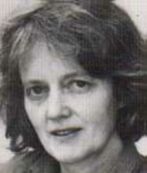
Thea Bauriedl, the founder of "Beziehungsanalyse" (Relational Analysis), was born Theodore Johanna Kraus in Berlin, the youngest daughter of Ernst Kraus, geology professor, and Theodore, née Baer. She attended schools in Tyrol, Upper Bavaria, and Munich, and after her Abitur in 1956, she studied music in Munich and languages in Geneva. In 1960, she married Ruprecht Bauriedl (1927–2018), a music publisher, with whom she had two daughters. They divorced in 1975.
From 1966 to 1970, Thea Bauriedl studied psychology, philosophy, and psychopathology at the University of Munich, where she subsequently worked as an assistant at the Institute of Psychology. In 1975, she earned her doctorate with a dissertation on ego psychological diagnostics (Theoretische Probleme der ichpsychologischen Diagnostik). From 1971 to 1978, she completed her psychoanalytic training at the Akademie für Psychoanalyse und Psychotherapie in München (APPM). In 1982, she married the psychoanalyst Friedrich Wölpert (1949–2018), in the same year their son Jonas was born.
Since 1989, Thea Bauriedl had been active as a lecturer, training and supervisng analyst analyst at the APPM. From 1981 to 1995 and again from 1999 onward, she headed the APPM department of analytic couple and family therapy (Abteilung für Analytische Paar- und Familientherapie), founded by her and Friedrich Wölpert. From 1995 to 1999, she served as chair of the APPM and was later named an honorary member. In 1986, together with colleagues, she founded the private Institut für Politische Psychoanalyse. She was head of the institute and co-edited its journal Anmerkungen aus dem Institut für Politische Psychoanalyse München. In addition, she founded and led the Arbeitskreis Beziehungsanalyse München (AKBAM) and served on the scientific advisory boards of professional journals as well as political organisations such as Attac and the Humanist Union.
Thea Bauriedl's focus was on epistemological foundations of psychoanalysis, applied psychoanalysis — especially couple and family therapy — political psychoanalysis, and psychoanalytic peace and conflict research. Based on a systems-theoretical understanding of Freudian thought and psychoanalytic object relations theory, she developed her concept of relational analysis since 1970. At its core is the unconscious relational dynamics within families, groups, and institutions, with particular emphasis on the symmetrically interactive relationship between analyst and analysand.
Thea Bauriedl emphasised the dialectical-emancipatory principle of psychoanalysis and its cultural-critical potential. Her aim was to use psychoanalytic insights on unconscious processes in politics and society to raise awareness, make collective repressions conscious, and thereby enable new orientations and change.
Thea Bauriedl-Wölpert died in Munich at the age of 84. (Top of the article)
- SELECTED WORKS
- Theoretische Probleme der ichpsychologischen Diagnostik. Phil. Diss. München 1975
- Beziehungsanalyse. Das dialektisch-emanzipatorische Prinzip der Psychoanalyse und seine Konsequenzen für die psychoanalytische Familientherapie. Frankfurt/M. 1980
- Zwischen Anpassung und Konflikt. Theoretische Probleme der ichpsychologischen Diagnostik. Göttingen 1982
- Geht das revolutionär e Potential der Psychoanalyse verloren? Gedanken zur politischen Bedeutung der Psychoanalyse und zum politischen Engagement der Psychoanalytiker. Psyche 38, 1984, 489-515
- Psychoanalyse ohne Couch. München 1985
- Die Wiederkehr des Verdrängten. Psychoanalyse, Politik und der einzelne. München 1986
- Das Leben riskieren. Psychoanalytische Perspektiven des politischen Widerstands. München 1988
- Wege aus der Gewalt. Analyse von Beziehungen. Freiburg 1992; 2001 (neu bearb.)
- Zur Psycho-Ökologie der Gewalt. In Ch. Rohde-Dachser (ed.): Beschädigungen. Psychoanalytische Zeitdiagnosen. Göttingen 1992
- Auch ohne Couch. Psychoanalyse als Beziehungstheorie und ihre Anwendungen. Stuttgart 1994
- Verstehen und doch nicht einverstanden sein. Zur Psychodynamik und Soziodynamik des Umgangs mit Rechtsradikalen in Deutschland. In F. M. Rudel (ed.): Rechtsextremismus bekämpfen. Essen 1995, 9-31
- Leben in Beziehungen. Von der Notwendigkeit, Grenzen zu finden. Freiburg 1996
- (and Astrid Brundke) (eds) Psychoanalyse in München. Eine Spurensuche. Gießen 2008
- REFERENCES
- Akademie für Psychoanalyse und Psychotherapie in München (APPM) (2022-05-05)
- FamilySearch (2025-09-10)
- Postpischil, Stefan: Nachruf auf Dr. Friedrich Wölpert. Psychoanalytische Familientherapie 20 (Nr. 38), 2019, 113-115
- Wikipedia (2008-07-31)
- Zimansl, Simone: Thea Bauriedl. In G. Stumm et al. (eds): Personenlexikon der Psychotherapie. Wien, New York 2005, 34f
- PHOTO: Utopie1 (9.4.2008 - in the meantime deleted)
Sophinette Becker (1950-2019)

Sophinette Becker was born in Lindau as the only girl among six children of Antoinette Mathis, a German-French children's and youth book author, and Hellmut Becker, a jurist and educational researcher. After attending a nuns' boarding school, she began studying law in Berlin in 1968, but then turned to study psychology in Frankfurt/Main. She specialised in psychosomatics and received her diploma in 1978.
From 1979 to 1988, she was an assistant at the psychosomatic clinic of the University of Heidelberg, founded by Alexander Mitscherlich and led by Walter Bräutigam since 1968. The clinic's assistants completed their training analysis at the cross-school Institut für Psychoanalyse und Psychotherapie Heidelberg-Mannheim, which was established in 1969 as a training seminar of the Deutsche Gesellschaft für Psychotherapie und Tiefenpsychologie (DGPT). Sophinette Becker's life partner, the psychiatrist and psychoanalyst Waltraud Kruschitz, also attended the Heidelberg Institute.
In 1988, Sophinette Becker became a board member of the Deutsche Gesellschaft für Sexualforschung. A year later, she took a position as a research assistant at the Institut für Sexualwissenschaft (IfS), founded by Volkmar Sigusch at the University Clinic Frankfurt, where Reimut Reiche and Martin Dannecker were colleagues of hers. From 1994 to 2011, she headed the Sexualmedizinische Ambulanz there, which survived the closure of the IfS in 2006 but was itself closed in 2011. Afterward, Becker worked in private practice
Sophinette Becker, who was closely associated with the Frankfurt School and the Independent Group of British Psychoanalysis, advocated for a socially critical connection between sexology and psychoanalysis. Her main focuses were gender identity, transsexuality, perversions, and the societal changes in sexuality. In 2006, she completed her doctoral dissertation on gender identity and its disorders (Die Unordnung der Geschlechter). Since 1988, she had been an associate editor of the Zeitschrift für Sexualforschung and, since 2012, of the sexual science book series Beiträge zur Sexualforschung. (Top of the article)
- SELECTED WORKS
- Psychosomatik, Psychoanalyse, Kulturkritik. Zu Alexander Mitscherlichs Gesammelten Schriften. Psyche 38 (11), 1984, 1045-1052
- AIDS. Die Krankheit zur Wende? Psychologie heute 11, 1988, 60–65
- Bewußte und unbewußte Identifikationen der 68er Generation. In B. Rauschenbach (Hg.): Erinnern, Wiederholen, Durcharbeiten. Zur Psycho-Analyse deutscher Wenden. Berlin 1992, 269–275.
- Pädophilie zwischen Dämonisierung und Verharmlosung. Werkblatt 14 (38), 1997, 5-21
- Zur Funktion der Sexualität im Nationalsozialismus. Z Sexualforsch 14 (1), 2001, 130–145 + Psychoanalyse im Widerspruch Nr. 27, 2002, 61-77
- Weibliche Perversion. Z Sexualforsch 15 (4), 2002, 281-301
- Das weibliche Körperselbst und die Perversion. Forum Psychoanal 21 (3), 2005, 242-254
- Weibliche und männliche Sexualität. In I. Quindeau und V. Sigusch (Hg.): Freud und das Sexuelle. Neue psychoanalytische und sexualwissenschaftliche Perspektiven. Franfurt/M.; New York 2005, 63-79
- Die Unordnung der Geschlechter. Klinische und sozialpsychologische Beiträge zur Geschlechtsidentität und ihren Störungen. Phil. Diss. Hannover 2006
- Poststrukturalismus und Geschlecht: Ein Blick zurück. Z Sexualforsch 20 (1), 2007, 52-68
- Sexuelle Verhältnisse im gesellschaftlichen Wandel. Vortrag. AG Politische Psychologie Leibniz Universität Hannover (2012) (2024-06-18)
- Bisexuelle Omnipotenz als „Leitkultur“? Sexuelle Verhältnisse im gesellschaftlichen Wandel. Psychoanalyse im Widerspruch Nr. 49, 2013, 7-25 + pdf (2024-06-18)
- Sex mit Kindern - Diskurse und Realitäten. texte. psychoanalyse. aesthetik. Kulturkritik 33 (2), 2013, 76-91
- Identität. Vortrag, Böll Analytics 4.12.2018. Heinrich-Böll-Stiftung Hessen (2024-06-18)
- Leidenschaftlich analytisch. Texte zu Sexualität, Geschlecht und Psychoanalyse. Gießen 2021
- (and Hans Becker) Der Psychoanalytiker im Spannungsfeld zwischen innerer und äußerer Realität. Psyche 41 (4), 1987, 289-306
- (and Walter Bräutigam) Kooperationsformen somatischer und psychosomatischer Medizin. Aufgabe – Erfahrungen – Konflikte. Berlin; Heidelberg 1988
- (with Margret Hauch and Helmut Leiblein) (eds) Sex, Lügen und Internet. Sexualwissenschaftliche und psychotherapeutische Perspektiven. Gießen 2009
- (and Julia König) „Sexualität die stört“. Ein Gespräch. Freie Assoziation 19 (1), 2016, 113-127
- (and Margret Hauch) Von Lüsten, »Honorarweibern« und den Mühen der Ebenen. Ein Gespräch. In P. Briken (ed.): Perspektiven der Sexualforschung. Gießen 2019, 159-176
- REFERENCES
- Becker, Hans: Nachruf auf Sophinette Becker, gestorben am 24. Oktober 2019 in Frankfurt. Eine persönliche Würdigung. Psychoanalyse im Widerspruch Nr. 63, 2020, 111-114
- Feddersen, Jan: „Wir sind nicht fluide“. Nachruf auf Sophinette Becker. taz, 6.11.2019
- Herzog, Dagmar: Sophinette Becker. An Introduction. Psychoanal Hist 23, 2021, 7-14
- Herzog, Dagmar: Geleitwort. In Sophinette Becker: Leidenschaftlich analytisch. Gießen 2021, 7-12
- Institut für Psychoanalyse Frankfurt (deleted)
- Kruschitz-Matt, Waltraud: Psychoanalyse in Heidelberg: 1968 – Ende oder Anfang? Psychoanalyse im Widerspruch Nr. 1, 1989, 6-11
- l'Amour laLove, Patsy: Nachruf auf Sophinette Becker. Denken, Sprechen, Handeln. Jungle World, 12. November 2019 (2024-06-18)
- Wikipedia: Sophinette Becker; Antoinette Becker; Hellmut Becker (2024-06-18)
- PHOTO: Still from Pro7-Magazin „Liebe Sünde“ 1996 (2024-06-18)
Therese Benedek née Friedmann (1892-1977)
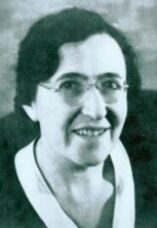
Therese Benedek, a pioneer of psychoanalytic psychosomatics, was born in the Hungarian small town of Eger. Teréz Friedmann was the third of four children of a traditional Jewish family. Her father was Ignatius Friedmann, a merchant, and her mother was Charlotte, née Link. In 1898, the family moved to Budapest.
In 1911, Therese Friedmann began to study medicine at the University of Budapest, where she also attended lectures by Sándor Ferenczi. She frequented left-wing intellectual circles, which included later analysts Barbara Lantos, Imre Hermann, and Jenö Harnik. After completing her studies in 1916, she specialised in pediatrics and did her residency in children's hospitals in Budapest and Pressburg (Bratislava).
Between 1918 and 1919, she underwent a five-month analysis, with some sessions held by Sándor Ferenczi. In 1919, she married Tibor Benedek (1892–1974), a dermatologist with whom she had two children, Thomas (*1926) and Judith (*1929). At the rise of the reactionary regime of Miklos Horthy, Therese and Tibor Benedek left Hungary and emigrated to Germany in 1920. They settled in Leipzig, where Therese Benedek worked as an assistant physician at the Neurological-Psychiatric Clinic of the University of Leipzig from 1920 to 1925.
In 1921, she opened up the first private psychoanalytic practice in Leipzig. She attended meetings of the Berliner Psychoanalytische Vereinigung and became an associate member in 1923 and a full member in 1924. Benedek played a key role in establishing the Leipziger psychoanalytische Arbeitsgemeinschaft, which was incorporated into the Deutsche Psychoanalytische Gesellschaft (DPG) in 1927 and led by her until 1936. Among her analysands during this time were personalities as diverse as Gerhart Scheunert, who joined the Nazi Party in 1933, Ewald Roellenbleck, Fritz Riemann, and the left-wing-oriented Barbara Lantos.
From 1933, Therese Benedek was a training and supervising analyst of the DPG at the Berliner Psychoanalytische Institut. Two years after Hitler came to power, the DPG discussed the "voluntary" resignation of its Jewish members in an attempt to "save" German psychoanalysis. Therese Benedek initially rejected this idea, but like her eight Jewish colleagues, she was forced to resign from the DPG in 1935.
In 1936, the Benedeks emigrated to the United States, settling in Chicago, where Therese Benedek succeeded Karen Horney as a training analyst at the Chicago Institute for Psychoanalysis. Head of the institute was Franz Alexander, whose psychosomatic orientation accommodated her own interests. From 1958 to 1959, she was president of the Chicago Psychoanalytic Society. In Chicago, she developed her studies on the psychosexuality of women, which made Therese Benedek internationally known.
Researching the influence of the hormonal cycle on a woman's psyche, she considered that female identity was shaped by a biological need to bear children. Opposing to Freud, she asserted that psychosexual maturity in women was not defined by vaginal orgasm but by motherhood and the development of motherliness. In 1949, she was the first to use the term "symbiosis" for the primary mother-child unit. However, she was not a good example of her own psychobiological theory, as she largely left her two children to a governess.
Other focal points of her writings included the concept of the depressive constellation, the parent-child relationship within the framework of changing family structures, and the phases of lifelong personality development. Her most important works are included in the anthology Psychoanalytic Investigations, published in 1952.
In her later years, Therese Benedek was increasingly affected by a loss of hearing, which caused her great distress, as she maintained a private practice after her retirement in 1969. Three years after her husband’s death, she died of a heart attack. (Top of the article)
- SELECTED WORKS
- Aus der Analyse eines Falles von Erythrophobie. IZP 11, 1925, 88-95
- Über die psychischen Prozesse bei Basedow-Psychosen. IZP 19, 1933, 507-526
- Die überwertige Idee und ihre Beziehung zur Suchtkrankheit. IZP 22, 1936, 59-71
- Abwehrmechanismen und Ichstruktur. IZP 23, 1937, 490-508
- Adaption to reality. Psa Quart 7, 1938, 200-215
- The correlations between ovarian activity and psychodynamic processes, I und II. Psychosom Med 1, 1939, 245-270 und 1, 1939, 461-485
- Insight and Personality Adjustment. A Study of the Psychological Effects of War. New York 1946
- The psychosomatic implications of the primary unit: mother-child. Am J Orthopsychiat 19 (4), 1949, 642-654
- Climacterium: a developmental phase. Psa Quart 19, 1950, 1-27
- Die Funktionen des Sexualapparates und seine Störungen. In F. Alexander (Hg.): Psychosomatische Medizin. Grundlagen und Anwendungsgebiete. Berlin 1951; 1985
- Infertility as a psychosomatic defense (1952). In Benedek 1973, 286-292
- Personality development. In F. Alexander und H. Ross (Hg.): Dynamic Psychiatry. Chicago 1952, 63-113
- Psychosexual Functions in Women. New York 1952
- Rezension über Simone de Beauvoir: The Second Sex. Psa Quart 22, 1953, 264-267
- Dynamics of countertransference. Bull Menninger Clin 17, 1953, 201-208
- Toward the biology of the depressive constellation. JAPA 4, 1956, 389-427
- Psychobiological aspects of mothering. Am J Orthopsychiat 26, 1956, 272-278
- Sexual functions in women and their disturbances. In S. Arieti (Hg.): American Handbook of Psychiatry. New York 1959, 727-748
- Parenthood as a developmental phase. JAPA 7, 1959, 389-417 [Elternschaft als Entwicklungsphase. Ein Beitrag zur Libidotheorie. Jb Psychoanal 1, 1960, 35-61]
- Über Orgasmus und Frigidität. Jb Psychoanal 3, 1963, 11-29
- The psychobiology of pregnancy. In Benedek und Anthony 1970, 137-151
- Psychoanalytic Investigations. Selected Papers. New York 1973
- On the psychobiology of gender identity. JAPA 4, 1976, 117-162
- The polarity of the sexes and its decline. JAPA 5 (1), 1977, 31-41
- (and Boris Rubinstein): The Sexual Cycle in Women. The Relation between Ovarian Function and Psychodynamic Processes. Washington D.C. 1942
- (and Joan Fleming) Psychoanalytic Supervision. New York; London 1966
- (and E. James Anthony) Parenthood: Its Psychology and Psychopathology. Boston 1970
- (and E. James Anthony) Depression and Human Existence. Boston 1975
- REFERENCES
- Borgos, Anna: Holnaplányok. Nők a pszichoanalízis budapesti iskolájában. Budapest 2018
- Borgos, Anna: Women in the Budapest School of Psychoanalysis. Girls of Tomorrow. London 2021
- Brecht, Karen, et al. (eds): "Hier geht das Leben auf eine sehr merkwürdige Weise weiter..." Zur Geschichte der Psychoanalyse in Deutschland. Hamburg 1985
- Jewish Women's Archive (8.6.2016)
- May, Ulrike: Therese Benedek (1892-1977). Freudsche Psychoanalyse im Leipzig der zwanziger Jahre. In H. Bernhardt and R. Lockot (eds): Mit ohne Freud. Zur Geschichte der Psychoanalyse in Ostdeutschland. Gießen 2000, 51-91
- Peters, Uwe H.: Therese Benedek. In ders.: Psychiatrie im Exil. Düsseldorf 1992, 343-351
- Sächsisches Institut für Psychoanalyse und Psychotherapie – Therese Benedek (2020-11-23)
- Schilton, Delphine: Benedek, Therese. In Dictionnaire international de la psychanalyse (2002). Hg. von A. de Mijolla. Paris 2005, 199f [International Dictionary of Psychoanalysis. Detroit u. a. 2005, 159-160]
- Schmidt, Erika: Therese Benedek. Shaping psychoanalysis from within. Ann Psychoanal 32, 2004, 217-231
- Schröter, Michael: Verschüttete Anfänge. Therese Benedek und die Leipziger Psychoanalytische Arbeitsgemeinschaft 1919-1936. Psyche 66 (12), 2012, 1167-1209
- Weidemann, Doris: Leben und Werk von Therese Benedek (1892-1977). Weibliche Sexualität und Psychologie des Weiblichen. Frankfurt/M. 1988
- PHOTO: Unknown rights holder; from Brecht et al. 1985, 11
Ina Böhlendorf (1903-1987)
Ina Böhlendorf, a native of the Rhineland, was a teacher before studying medicine in Berlin. She passed her state examination in 1939 and received her medical license a year later. At the same time, she completed psychoanalytic training at the Deutsches Institut für Psychologische Forschung und Psychotherapie ("Göring Institute"). Her training analyst was Carl Müller-Braunschweig, with whom she was in analysis from 1935 to 1939. It is likely that she also underwent a Jungian analysis. In the early 1940s, she taught courses for social workers at the Göring Institute and gave lectures in the department of child therapy.
After the war, Ina Böhlendorf participated in the re-establishment of the Deutsche Psychoanalytische Gesellschaft and in the reconstruction of psychoanalytic institutes in Berlin and Stuttgart. From 1948 to 1950, she headed the outpatient clinic for adults at the Stuttgarter Institut für Psychotherapie und Tiefenpsychologie, which had been founded in 1948 and was led by Hermann Gundert, Felix Schottlaender, and Wilhelm Bitter. During this time, she was particularly interested in the development of work therapy.
At the end of 1951, Ina Böhlendorf moved to Hanover, where she played a key role in establishing psychoanalytic training. In 1952, she was appointed as a lecturer and training analyst at the Psychotherapeutisches Institut und Erziehungsberatungsstelle für das Land Niedersachsen (Child Guidance Clinic), which had been founded in 1951 based on the model of the London Tavistock Clinic (later: Institut für Analytische Kinder- und Jugendlichen-Psychotherapie für das Land Niedersachsen). Ina Böhlendorf set up the training department at the institute and organised the further education in psychoanalytic therapy, particularly for physicians and psychologists, until 1964. In 1958 and 1959, she was also a board member of the Deutsche Gesellschaft für Psychoanalyse, Psychotherapie, Psychosomatik und Tiefenpsychologie (DGPT).
In 1958, Ina Böhlendorf founded the Ärztliche Arbeitsgemeinschaft für Psychotherapie and thus promoted the further institutionalisation of analytical psychotherapy training in Hanover, which resulted in the establishment of the independent Lehrinstitut für Psychoanalyse und Psychotherapie in 1965. That same year, however, after years of internal disputes with the institute's leadership, Ina Böhlendorf was dismissed — having already been forced to hand over her position as director of training to Ilsabe von Viebahn back in 1964. She died lonely at the age of 84 in Hanover. (Top of the article)
- REFERENCES
- Hänsel, Dagmar: Karl Tornow als Wegbereiter der sonderpädagogischen Profession. Die Grundlagen des Bestehenden in der NS-Zeit. Bad Heilbrunn 2008
- Lockot, Regine: Die Reinigung der Psychoanalyse. Die Deutsche Psychoanalytische Gesellschaft im Spiegel von Dokumenten und Zeitzeugen (1933-1951). Tübingen 1994; Gießen 2013
- Ludwig-Körner, Christiane: Wiederentdeckt - Psychoanalytikerinnen in Berlin. Gießen 1999; 2014
- Oberborbeck, Klaus: Ina Böhlendorf und die Anfänge der psychoanalytischen Aus- und Fortbildung in Hannover. Eine Zusammenstellung zum Jubiläum des "Lehrinstituts für Psychoanalyse und Psychotherapie e.V.". Hannover 1995 (unveröff.)
Viveka Böök (1920-2020)
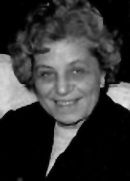
Viveka Böök was born in Lund, Southern Sweden, as the youngest of five children of Fredrik Böök, a professor of literary history, and his wife Tora, née Olsson. In 1938, she married the physician Birger Axelsson Ekman (1915-1996), with whom she had three sons: Hampus (*1941), Pontus (*1943) and Lukas (*1947). The marriage ended in divorce in 1955.
Viveka Böök studied with the cultural anthropologist Margaret Mead at the Columbia University in New York before moving to Munich in 1951. She underwent six years of analysis with Fritz Riemann at the Munich Institut für psychologische Forschung und Psychotherapie which saw itself as the successor to the Deutsches Institut für Psychologische Forschung und Psychotherapie ("Göring Institute"). She then completed a training analysis with the Swiss psychoanalyst Harold Winter and became a member of the Swiss Society of Psychoanalysis. In the 1960s, she joined the working circle around Fritz Friedmann, who criticised the cross-school depth psychology represented by the Munich Riemann Institute and sought to pursue an "authentic" psychoanalysis. From this circle, the Psychoanalytische Arbeitsgemeinschaft München (PAM) emerged in 1973, and Viveka Böök became a member and training analyst of PAM in 1978.
Böök’s literary interest is reflected in her essay "Negative capability" bei Keats und bei Bion. The concept of "negative capability" was coined by the English poet John Keats and later adopted by the psychoanalyst Wilfred R. Bion. It means being able to bear uncertainties, mysteries, and doubts without any hasty reaching after fact and reason. Both Keats and Bion sought to counter the exclusive dominance of critical reason with this concept.
Viveka Böök passed away shortly before her 100th birthday in Lund. (Top of the article)
- SELECTED WORKS
- "Negative capability" bei Keats und bei Bion. Jb Psychoanal 44, 2002, 224-230
- REFERENCES
- Gravar.se (30.9.2021)
- Pabst, Reinhard: Die Psychoanalytische Arbeitsgemeinschaft München e.V. (PAM) - Institut der DPV. Eine geschichtliche Skizze. In T. Bauriedl und A. Brundke (ed.) Psychoanalyse in München. Eine Spurensuche. Gießen 2008, 278-304
- Vem är Vem? Fredrik Böök (2011-01-04)
- Vem är Vem? Birger Ekman (2011-01-04)
- Wikipedia: Fredrik Böök (2021-09-29)
- Zimmermann, Ingeborg: Die wiedergefundene Welt. In L. M. Hermanns (Hg.): Psychoanalyse in Selbstdarstellungen, Bd. IV. Tübingen 1998, 431-465
- PHOTO from Astrid Brundke, Karin Dittrich, Andreas Hamburger, Marianne März und Christine Peyerl: Vom Reichsinstitut zur Akademie. Dokumente und Bilder zur Geschichte der Psychoanalyse in München. Ausstellung zur 50-Jahr-Feier der Akademie für Psychoanalyse und Psychotherapie München 1996 (2017-07-19)
Gertrud Bondy née Wiener (1889-1977)

Gertrud Bondy was born into an upper middle class Jewish family in Prague, then part of Austria. She was the youngest daughter of Gustav Wiener, who managed several textile factories, and his wife Olga Lauer. After her father's death in 1907, the family moved to Vienna, where her mother remarried. Although Gertrud Wiener had originally wanted to become a concert pianist, she began studying medicine at the University of Vienna in 1914.
In 1916, she married her cousin Max Bondy (1892–1951), born in Hamburg and a proponent of the German Youth Movement. Their daughters Annemarie and Ursula were born in 1918 and 1921, their son Heinz in 1924. In 1919, the Bondy family moved to Erlangen, where Max Bondy earned a doctorate in art history in 1919 and Gertrud Bondy awarded her medical doctorate in 1921. While still in Vienna, Gertrud Bondy had attended lectures by Sigmund Freud and had begun psychoanalytic training. In 1921, she underwent an analysis with Otto Rank, which, however, remained incomplete.
Max and Gertrud Bondy became known through the founding of several schools in the tradition of Reform Pedagogy. In 1920, they founded the Freie Schul- und Werkgemeinschaft Sinntalhof in Brückenau, a private Reform school, whose staff included the later psychoanalyst Harald Schultz-Hencke. In 1923, they founded the School Community Gandersheim in Niedersachsen, which in 1929 was moved to Marienau, south of Hamburg. The Marienau School became one of the boldest school experiments of that time, conceived as a countermodel to the prevailing authoritarian school system.
Gertrud Bondy combined reform pedagogical methods with psychoanalytic insights. She paid particular attention to "difficult" pupils and sought to channel their aggression into constructive use through "Hilfe zur Sublimation" (assistance with sublimation). The psychoanalysts in Berlin, however, condemned such a "Verquickung der analytischen Bestrebungen mit den unerquicklichsten Formen der Jugendbewegung“ (mixture of analytical methods with the most unpleasant forms of the youth movement).*
After the Nazis came to power, Max Bondy was stripped of the leadership of Marienau in 1937. The Bondys first went to Switzerland, where they established the school Les Rayons in Gland. In 1939, they emigrated to the United States, where they founded the Windsor Mountain School, continuing their progressive educational work first in Windsor and Manchester, Vermont, and then from 1944 onward in Lenox, Massachusetts. (Top of the article)
- * Rundbrief, 1.4.1922 from Berlin (signed by Abraham-Sachs-Eitingon)
- SELECTED WORKS
- Über die Beeinflussung der blutbildenden Organe durch kolloides Eisen, Terpentinöl und Abrin. Med. Diss. Erlangen 1921
- Headmistress Gertrude Bondy welcoming Windsor Mt School students back from vacation (1963). Originally recorded on vinyl (2019-01-30)
- A personal history (1969). Windsor Mountain School (2019-01-02)
- REFERENCES
- Ärztinnen im Kaiserreich. Institut für Geschichte der Medizin und für Ethik in der Medizin, Charité Berlin 2015 (2019-01-02)
- The Berkshire Eagle, May 2,1977
- Dudek, Peter: "Vorweggelebtes Leben". Die Erinnerungen des kommunistischen Reichstagsabgeordneten Ernst Putz an seine Wickersdorfer Schulzeit. In G. Fiedler et al. (eds): Sammeln - erschließen - vernetzen. Jugendkultur und soziale Bewegungen im Archiv. Göttingen 2014, 161-182
- Hasenclever, Wolf-Dieter (ed.): Pädagogik und Psychoanalyse. Marienauer Symposion zum 100. Geburtstag Gertrud Bondys. Frankfurt/Main; Berlin; New York; Paris 1990
- Kersken, Barbara: Gertrud und Max Bondy - Wegbereiter der modernen Erlebnispädagogik? Lüneburg 1991
- Kersken, Barbara: Max und Gertrud Bondy in Marienau. Die Geschichte einer verdrängten Pädagogik. Dahlem 2012
- Marienau: Geschichte (2021-09-30)
- Rick On Theater (2019-01-02)
- Roeper, Annemarie: Marienau. A Daughter's Reflections. Berkeley, Calif. 2012
- Ruff, Marcia: The Origins of the Roeper School. Roeper School (2021-09-30)
- Theilemann, Steffen: Harald Schultz-Hencke und die Freideutsche Jugend. Biografie bis 1921 und die Geschichte einer Bewegung. Gießen 2018
- Wikipedia: Gertrud Bondy; Max Bondy; Windsor Mountain School (2024-06-20)
- Windsor Mountain School (2019-01-02)
- Wittenberger, Gerhard, and Christfried Tögel (eds): Die Rundbriefe des "Geheimen Komitees", Bd. 3: 1922. Tübingen 2003
- PHOTO: Wikipedia (2024-11-13)
Karen Brecht (1936-2001)
Karen Brecht was born in Hamburg. After the early death of her parents - her mother was killed during the bombing of Hamburg in 1943 - she was raised by her aunt and grandmother. After completing her Abitur, she trained as a foreign language stenographer, but in 1957 she began studying medicine in Hamburg. After passing the preliminary medical examination (Vorphysikum), she went to Homburg in Saarland, and in 1960 to Heidelberg. There, she met her future husband, Thomas Brecht (1933?–2000), who would later become one of the leading angiologists. Their daughter Judith, born in 1961, died of leukemia in 1976.
From 1967 to 1973, Karen Brecht studied psychology at the University of Heidelberg. She then underwent psychoanalytic training from 1974 to 1981 at the Sigmund Freud Institute in Frankfurt. She opened a private practice in Heidelberg and was admitted as a full member to the Deutsche Psychoanalytische Vereinigung (DPV) in 1990, and as a training and supervising analyst in 1884. Karen Brecht lectured at the Psychoanalytic Institute Heidelberg-Karlsruhe, where she served on various committees. She chaired the local continuing education committee and was a member of the DPV’s ethics commission.
A major focus of Karen Brecht’s work was the recent history of psychoanalysis and the German-Jewish relationship. She maintained close contact with émigré analysts in Great, the Netherlands, Israel, and the United States, and participated in the renowned exhibition on the history of psychoanalysis in Germany, "Here life goes on in a most peculiar way...", which was first shown in 1985 on the occasion of the 34th Psychoanalytic Congress in Hamburg. (Top of the article)
- SELECTED WORKS
- Der "Fall Edith Jacobson". Politischer Widerstand, ein Dilemma der IPA. PsA-Info Nr. 28, 1987, 3-8
- Adaptation and restistance. Reparation and the return of the repressed. Psychoanal Contemp Thought 11, 1988, 233-248
- Eine Ausstellung der DPV? - Zur Entstehung der Ausstellung. In H. Luft und G. Maas (Hg.): Das Erbe Sigmund Freuds in Deutschland. Arbeitstagung der DPV, Wiesbaden vom 1.-4. November 1989. Frankfurt/M. 1990, 121-134
- Paranoid-schizoide Aspekte im Institutionalisierungsprozeß der Psychoanalyse und seiner Kritik. In J. Wiesse (Hg.): Chaos und Regel. Die Psychoanalyse in ihren Institutionen. Göttingen 1992, 51-55
- Vom Gebrauch der Psychoanalyse durch Alexander Mitscherlich und vom Gebrauch Alexander Mitscherlichs durch die DPV in den Nachwirren des Dritten Reiches. In R. Holm-Hadulla (Hg.): Vom Gebrauch der Psychoanalyse heute und morgen. Frühjahrstagung der DPV, Heidelberg vom 24.-27. Mai. Frankfurt/M. 1995, 85-96
- In the aftermath of Nazi-Germany. Alexander Mitscherlich and psychoanalysis - Legend and legacy. American Imago 52 (3), 1995, 291-312
- Die Teilung der psychoanalytischen Gemeinschaft in Deutschland und ihre Folgen. DPV-Informationen 21, 1997, 29-33
- (und Sybille Drews) Psychoanalytische Ich-Psychologie. Grundlagen und Entwicklung. Frankfurt/M. 1975
- (mit Volker Friedrich, Ludger M. Hermanns, Isidor Kaminer und Dierk H. Jülich) (Hg.) "Hier geht das Leben auf eine sehr merkwürdige Weise weiter...". Zur Geschichte der Psychoanalyse in Deutschland. Hamburg 1985; Gießen 2010; DVD zum Buch. Gießen 2009
- REFERENCES
- Bollinger, Alfred: Zum Abschied von Professor Dr. med Thomas Brecht. Vasa 29 (4), 2000, 301
- Liepmann, Mirjam: Zum Tod von Karen Brecht (1936-2001). Psychoanalyse im Widerspruch 26 (1), 2001, 107-111
Hildegard Buder née Schenck (1895-1984)
Hildegard Buder-Schenck was born in Bonn, the daughter of botany professor Heinrich Schenck and his wife Marie, née Schwarz. From 1914 to 1916, she studied philology and economics in Marburg and Berlin, and continued her studies in Heidelberg after the end of the war, where she earned her doctorate in 1921. After working in adult education and factory welfare, Hildegard Schenck taught from 1925 to 1932 at the Wohlfahrtsschule Verein Jugendheim in Berlin-Charlottenburg and directed the Soziales Institut, which had been founded there in 1928. In 1931, she married agricultural engineer Raimund Buder (1901–1974); their daughter Marianne was born in 1928. The marriage was later dissolved.
From 1929 to 1933, Hildegard Buder-Schenck underwent psychoanalytic training at the Berliner Psychoanalytisches Institut (BPI). Her training analysis was conducted by Theodor Reik and Jenö Hárnik, followed by further training with Therese Benedek and Werner Kemper. In 1936, she became a member of the Deutsche Psychoanalytische Gesellschaft. After the BPI was incorporated into the coordinated (gleichgeschaltet) Deutsches Institut für Psychologische Forschung und Psychotherapie in 1936, Hildegard Buder-Schenck worked there in the department led by Gustav Richard Heyer, which was responsible for training “therapeutic psychologists.” She aligned herself with the school of C. G. Jung and pursued additional training in Analytical Psychology under the Jungian Wolfgang M. Kranefeldt.
In 1944, she fled the devastated city of Berlin with her daughter Marianne, first to her sister in Stuttgart, then to Tübingen, where in 1946 she founded the Tübinger Arbeitsgruppe für Psychotherapie. Alongside the Jungian Adolf Weizsäcker, she served as a training analyst for the Tübingen group and as a lecturer at the Stuttgart Institute for Psychotherapy, founded in 1948. Like other members around Wilhelm Bitter, she advocated an integrative approach and sought to bring together the teachings of Freud and Jung. In her essay Goethes Traum vom Fasanenkahn, for example, she compared a Freudian and a Jungian interpretation. Among her training analysands in Tübingen was Ulrich Ehebald, who later became director of the Michael Balint Institute in Hamburg.
In 1949, Hildegard Buder moved to Bremen, where Heinrich Schulte, director of the Municipal Psychiatric Hospital, offered her a position as assistant and training analyst. Under her leadership, psychotherapy training was conducted for the first time at a psychiatric hospital in Germany. She initiated the development of the Institute for Psychotherapy and participated in the founding of the Bremer Arbeitsgruppe für Psychotherapie in 1951. Until 1961, she served as the group’s executive chair and as director of the institute, which opened in 1952. She was also a member of the Deutsche Gesellschaft für Analytische Psychologie.
From 1972, Hildegard Buder lived once again in Stuttgart. She died in Darmstadt at the age of 88. (Top of the article)
- * I would like to thank Michael Schröter for this information
- SELECTED WORKS
- Der Begriff der Persönlichkeit bei Lorenz von Stein. Phil. Diss. Heidelberg 1921
- Psychoanalyse und Pädagogik. Vortrag, Soziales Institut, März 1932
- Goethes Traum vom Fasanenkahn. Psyche 3 (7), 1949, 507-512
- Der Faktor „Zeit“ in der Psychotherapie. Bremer Ärzteblatt 4 (Juli), 1951, 12-16
- Die psychotherapeutische Ausbildung. Die Bremische Nervenklinik 1904-1954. Bremen 1954, 183-197
- (und Ursula Graf) Die tiefenpsychologische Bewegung. Vortrag, Soziales Institut, März 1932
- REFERENCES
- Danckwardt, Joachim F.: Von den Anfängen der Psychoanalyse in Stuttgart-Tübingen bis zu ihrer Entfaltung durch Wolfgang Loch. Ein Rückblick. DPV-Informationen Nr. 17, 1995, 9-16 + pdf (2021-08-25)
- Laessig, Ursula: Kind des Jahrhunderts. In H. Schmid (Hg.): Wege zur Identität. Jutta von Graevenitz und Ursula Laessig zu ehren. Würzburg 1983, 33-50
- Lockot, Regine: Die Reinigung der Psychoanalyse. Die Deutsche Psychoanalytische Gesellschaft im Spiegel von Dokumenten und Zeitzeugen (1933-1951). Tübingen 1994
- MyHeritage (2021-08-25)
- Platte, Hans-Otto: Psychoanalytische Erkenntnisse zugänglich machen. Sechzig Jahre Psychoanalyse und Psychotherapie in Bremen. Zur Geschichte der Bremer Arbeitsgruppe für Psychoanalyse und Psychotherapie e.V. 1951-2011. Bremen 2011
- Schreiber, Marianne: Zur Erinnerung an Hildegard Buder. Analyt Psychol 15, 1984, 221-223
- Schröter, Michael: Psychoanalyse im Fortbildungsangebot für Sozialberufe, Berlin 1930-1933 (Verein Jugendheim). Luzifer-Amor 18 (35), 2005, 46-81
- Schröter, Michael: 129 dokumentierte Ausbildungskandidaten am Berliner Psychoanalytischen Institut 1924-1932: Tabelle. Luzifer-Amor 33 (66), 2020 (2021-08-25)
- Wikipedia: Heinrich Schenck (2021-08-25)
Suzanne Cassirer-Bernfeld (1896-1963)
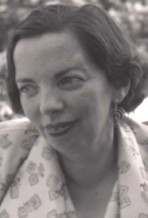
Suzanne Aimée Cassirer, born in Brussels into a Jewish family, was the daughter of the well-known Berlin publisher and art dealer Paul Cassirer and his first wife, Lucie Oberwarth. After her parents separated in 1904, she initially stayed in Berlin with her father, but followed her mother to Munich three years later. Her mother married Ermanno Ceconi in 1907 and published several books on Italian culture under the name Lucie Ceconi-Oberwarth.
After the end of World War I, Suzanne Cassirer studied philosophy and art history in Marburg and Hamburg. In 1923, she married her fellow student Hans Paret (1896-1973), a year later her son Peter was born and in 1926 her daughter Renate. After the suicide of her father that same year, she underwent a personal analysis and decided to study medicine at the psychiatric clinic of the Berlin Charité. In 1932, she separated from Paret and began training analysis with Hanns Sachs, who emigrated shortly after to the US. Suzanne Cassirer went to Vienna and continued her analysis from 1932 to 1934 with Sigmund Freud. Her control analysis with Siegfried Bernfeld (1892–1953), at that time one of the first Freudo-Marxists, was discontinued after she fell in love with him. Despite Freud's disapproval, they became a couple and married in 1934.
In the face of the rise of National Socialism, Suzanne and Siegfried Bernfeld moved to France in 1934 with their children from previous marriages. In 1935, during a brief stay at Bernfelds' apartment in Berlin, Suzanne Bernfeld was taken into custody following the arrest of the apartment's tenant, Edith Taglicht. Suzanne Bernfeld was released only through the intervention of the press attaché at the Italian Embassy. When the Bernfelds were denied a further residence permit for France in 1936, they decided to leave Europe and emigrate to California.
They settled in San Francisco in 1937, where Suzanne Bernfeld practiced as a psychoanalyst and Siegfried Bernfeld helped establish the San Francisco Psychoanalytic Society (SFPS). Nevertheless, because he was a non-medically trained "lay analyst," he was granted only honorary membership in the SFPS. Suzanne Bernfeld was initially denied both full membership and admitment as a training analyst because she had been unable to complete her psychoanalytic training in Berlin and Vienna due to the political circumstances. She, too, was granted only honorary membership.
In 1944, the first of the biographical studies on Sigmund Freud by Suzanne and Siegfried Bernfeld was published, laying the groundwork for scholarly Freud biographics. With her essay Freud and archaeology, Suzanne Cassirer Bernfeld was one of the first to draw attention to the significance of archaeology in Freud's work. (Top of the article)
- SELECTED WORKS
- Freud and archaeology. American Imago 8, 1951, 107-128 [Freud und die Archäologie. In Bausteine der Freud-Biographik, 1981, 237-259]
- (and Siegfried Bernfeld) Freud's early childhood. Bull Menninger Clin 8, 1944, 107-115 [Freuds frühe Kindheit. In Bausteine der Freud-Biographik, 1981, 78-92]
- (and Siegfried Bernfeld) Freuds first year in practise. Bull Menninger Clin 16 (2), 1952, 37-49 [Freuds erstes Praxisjahr. In Bausteine der Freud-Biographik, 1981, 181-197]
- (and Siegfried Bernfeld) Bausteine der Freud-Biographik. Ed. by I. Grubrich-Simitis. Frankfurt/M. 1981
- REFERENCES
- Bauschinger, Sigrid: Die Cassirers - Unternehmer, Kunsthändler, Philosophen. Biographie einer Familie. München 2015
- Benveniste, Daniel: The early history of psychoanalysis in San Francisco. Psychoanal Hist 8 (2), 2006, 195-233
- Benveniste, Daniel: Siegfried Bernfeld in San Francisco. A conversation with Nathan Adler. Fort Da 18 (1), 2012
- Brameijer, Leontine: Looking over Freud's shoulder through Kleinian spectacles. The case of Suzanne Cassirer. IJP Open - Open Peer Review and Debate 7, 2020, 1-19
- Dudek, Peter: "Er war halt genialer als die anderen." Biografische Annäherungen an Siegfried Bernfeld. Gießen 2012
- Eissler, Kurt: Interviews mit Suzanne Cassirer Bernfeld 1953, 1959. Library of Congress (2021-05-03)
- Fallend, Karl, und Johannes Reichmayr (Hg.): Siegfried Bernfeld oder die Grenzen der Psychoanalyse. Basel 1992
- Mit Freud in Berlin (2021-05-03)
- Trosman, Harry, und Ernest S. Wolf: The Bernfeld collaboration in the Jones biography of Freud. IJP 54, 1973, 227-233
- Walser, Robert: Die kleine Berlinerin. Berlin 2018
- Wikipedia: Suzanne Cassirer-Bernfeld; Siegfried Bernfeld; Peter Paret (2023-11-02)
- PHOTO: Ernst Wolff. Courtesy of Daniel Benveniste
Frances Deri née Hertz (1881-1971)
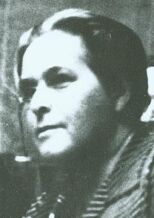
Frances Deri was born Franziska Rosa Hertz in Vienna. Her father, Otto Hertz, was a Jewish merchant from Hamburg, who ran a mother-of-pearl trading business in Vienna. Her Catholic mother, Franziska Neußer, was the daughter of a soap maker master and mayor of Perchtoldsdorf near Vienna. Franziska Hertz, her twin sister Henrietta and her older brothers Ernst and Friedrich, were baptised and brought up Catholic.
Franziska Hertz began studying psychology and sociology at the University of Vienna in 1900 and passed the state examination for teaching degree in 1903. She then moved to Berlin, where she married the physician Bruno S. Sklarek (1874–1927), with whom she had two sons, Rolf (*1906) and Hubert (*1907). Franziska "Francis" Sklarek was the founder and the director of a welfare organisation in Berlin, she trained and supervised social workers and published numerous articles on sociological and psychological topics. She was active in the women's movement and a member of the Bund für Mutterschutz und Sexualreform and of the Deutsche Gesellschaft für Mutter- und Kindesrecht. Her marriage with Sklarek ended in divorce in 1918.
In the same year, she married the art historian and critic Max Deri (born Deutsch) (1878–1938). Interested in psychoanalysis and motivated by her experiences in social work, Franziska Deri underwent analysis with Karl Abraham from 1921 to 1922. For financial reasons, she did not begin training until 1926 at the Berliner Psychoanalytisches Institut, including a three-year training analysis with Hanns Sachs. Her supervising analyst was Karen Horney. In 1928, she opened a private practice in Berlin, and in 1930 she became an assistant to Ernst Simmel at his psychoanalytic Sanitarium Schloß Tegel. She was a guest and probably from 1932 a member of the Deutsche Psychoanalytische Gesellschaft (DPG), where she belonged to the inner circle around the Freudo-Marxist Otto Fenichel.
After Hitler's rise to power, Frances Deri emigrated to Prague in 1933. Supported by Annie Reich and Steff Bornstein, she established the Prague Psychoanalytic Study Group, which was led by her until 1935. The Prague group was affiliated with the Wiener Psychoanalytische Vereinigung (WPV), and Deri's membership was transferred from the DPG to the WPV in 1934. She participated in translating Freud’s writings into Czech, gave lectures in Prague and Brno, and chaired a symposium at the Four-Countries-Conference in Vienna in 1935. Among her analysands was Emanuel Windholz, the pioneer of the psychoanalytic movement in Czechoslovakia.
In 1935, Frances Deri emigrated to the USA, Max Deri and her sons Rolf and Hubert followed two years later. At the invitation of Ernst Simmel, who had emigrated to the USA in 1934, Frances Deri settled in Los Angeles and joined the Psychoanalytic Study Group Los Angeles, which was founded by Simmel and open to non-medical psychoanalysts. When the Los Angeles group was affiliated with the San Francisco Psychoanalytic Society in 1942, Deri, as a "lay analyst" without medical training, was only admitted as an honorary member. In 1946, the Los Angeles Group officially became independent as the Los Angeles Psychoanalytic Society and Institute (LAPSI), and Frances Deri became training and supervising analyst at LAPSI. Representing a classical Freudian position, she played a key role in shaping the direction of the institute in its early years. (Top of the article)
- SELECTED WORKS
- On sublimation. Psa Quart 8, 1939, 325-334
- Neurotic disturbances of sleep. A symposium. IJP 22, 1942, 177-183
- [Francis Sklarek] (and Regine Deutsch) (eds): Zur Krise im Bund für Mutterschutz. Berlin 1910
- (und Franz Alexander) Psychoanalyse und Medizin. „Harvey Lecture“ in der Academy of Medicine in New York, am 31. Januar 1931. IZP 17, 1931, 212-233
- REFERENCES
- Braune, Asja: Konsequent den unbequemen Weg gegangen. Adele Schreiber (1872-1957), Politikerin, Frauenrechtlerin, Journalistin. Phil. Diss. Berlin 2003
- Jeffrey, William: The Prague Psychoanalytic Study Group 1933-1939. Amer Psychoanal 25, 1991, 17-24
- Kandelin, Albert: Interviews with Frances Deri. 3. 2. und 31. 5. 1963 in Los Angeles for the History Committee, Los Angeles Psychoanalytic Society
- Los Angeles, Cemetery Records, 1884-2002 (FamilySearch 2025-10-08)
- May, Ulrike: Psychoanalyse in Berlin: 1920-1936. Jb Psychoanal 57, 2008, 13-39
- Mühlleitner, Elke: Biographisches Lexikon der Psychoanalyse. Die Mitglieder der Psychologischen Mittwoch-Gesellschaft und der Wiener Psychoanalytischen Vereinigung (1902-1938). Tübingen 1992
- Mühlleitner, Elke: Ich - Fenichel. Das Leben eines Psychoanalytikers im 20. Jahrhundert. Wien 2008
- Müller, Reinhard: Friedrich Otto Hertz (1878-1964). Dokumentationsarchiv des österreichischen Widerstandes: Jahrbuch 1994, 58-74 (2025-10-08)
- Nachlass Friedrich O(tto) Hertz (2025-10-08)
- Naszkowska, Klara: Pszichoanalitikus, zsidó, nő, feleség, anya, kivándorló. A pszichoanalízis emigráns alapító anyái az Egyesült Államokban. Imágó Budapest 10 (3), 2021, 8-32 [Psychoanalyst, jew, woman, wife, mother, emigrant. The émigré foremothers of psychoanalysis in the United States. European Judaism 55 (1), 2022, 112-137]
- Riecke, Erhard: Deutscher Dermatologenkalender. Leipzig 1929
- Schröter, Michael: 129 dokumentierte Ausbildungskandidaten am Berliner Psychoanalytischen Institut 1924-1932: Tabelle. Luzifer-Amor 33 (66), 2020 (2020-12-9)
- Šebek, Michael: Wer war der Psychoanalytiker Emanuel Windholz (1903–1986)? Luzifer-Amor 34 (68), 2021, 27-52
- Wikipedia: Frances Deri; Max Deri (2023-07-11)
- PHOTO: Tim N. Gidal; from Karen Brecht et al. (eds): "Hier geht das Leben auf eine sehr merkwürdige Weise weiter...". Hamburg 1985, 9
Käthe Dräger (1900-1979)

Käthe Dräger was born in Berlin as the eldest of three children. Her father, Friedrich Dräger, was a left-liberal middle school teacher. She trained as a teacher in Berlin and worked as a private tutor on an estate in Mecklenburg from 1921 to 1924. From 1926 to 1933, she taught at the Lebensgemeinschaftsschule, a reform school in Berlin-Neukölln. During this time, she joined the Communist Party of Germany KPD and later the Communist Party Opposition KPD(O), which went underground after Hitler came to power. In 1937, she assumed a leadership role in the Berlin committee of the KPD(O).
Sensitised through her teaching activities, Käthe Dräger developed an interest in psychological questions. She became acquainted with psychoanalysis through Siegfried Bernfeld, a pioneer of psychoanalytic pedagogy, and through Paula Heimann, the wife of a comrade. In 1931, she began training at the Berliner Psychoanalytisches Institut (BPI) and underwent training analysis with Ada Müller-Braunschweig. In 1936, she became a member of the Deutsche Psychoanalytische Gesellschaft (DPG). However, she kept her political activities secret, as the DPG required its members to abstain from political engagement.
After the DPG was dissolved in 1938, Käthe Dräger continued her psychoanalytic practice privately and at the coordinated (gleichgeschaltet) Deutsches Institut für Psychologische Forschung und Psychotherapie ("Göring Institute"). In 1942, still working as a teacher, she was transferred as a disciplinary measure to Katowice in occupied Poland due to "political unreliability." It was not until 1944 that she was able to work again as a psychotherapist in Berlin. After the war, she initially became involved in East Berlin, but soon came into conflict with the Sozialistische Einheitspartei Deutschlands. In 1950, she finished with teaching at the Friedrich Fröbel House in Berlin-Pankow and took over the management of the child guidance center of the Charlottenburg Youth Welfare Office in West Berlin, where she remained until her retirement in 1961.
In contrast to the reestablished DPG and as a supposedly unburdened new beginning, Carl Müller-Braunschweig founded the Deutsche Psychoanalytische Vereinigung (DPV) in 1950 together with representatives of a classical Freudian orientation — among them Käthe Dräger and Margarete Steinbach. When John Rickman of the British Psycho-Analytical Society reviewed leading members of the DPG in 1946 on behalf of the British government, he attested to Käthe Dräger and Margarete Steinbach personal integrity and suitability for the psychoanalytic profession, while judging Carl Müller-Braunschweig and Felix Boehm to be unfit.
Käthe Dräger played a significant role in the DPV. From 1956 to 1964, she headed the DPV's Education Committee, and from 1964 to 1968, she held the same position at the BPI. From 1968 to 1970, she served as the DPV’s vice president. Starting in 1960, she was also co-editor of the Jahrbuch der Psychoanalyse. A major focus of her theoretical and practical work was the dissocial behavior of children and adolescents. In the early 1970s, special attention was paid to her essay Psychoanalysis in Hitler Germany. (Top of the article)
- SELECTED WORKS
- Praktische Psychologie als Voraussetzung der täglichen Unterrichts- und Erziehungsarbeit. Leipzig 1946
- Der Lehrer im Dorf. Neue Schule 2 (4), 1947
- Probleme der Verwahrlosung. Aus der Sicht des psychoanalytischen Erziehungsberaters. Jb Psychoanal 2, 1962
- Übersicht über psychoanalytische Auffassungen von der Entwicklung der weiblichen Sexualität. Psyche 22, 1968, 410-422
- Bemerkungen zu den Zeitumständen und zum Schicksal der Psychoanalyse und der Psychotherapie in Deutschland zwischen 1933 und 1949. Psyche 25, 1971, 255-286 [Psychoanalysis in Hitler Germany, 1933-1949. American Imago 29, 1972, 199-214]
- Beitrag der Psychoanalyse zum Verständnis asozialen Verhaltens (1972). PsA-Info Nr. 27, September 1986, 14-23
- REFERENCES
- Lockot, Regine: Die Reinigung der Psychoanalyse. Die Deutsche Psychoanalytische Gesellschaft im Spiegel von Dokumenten und Zeitzeugen (1933-1951). Tübingen 1994; Gießen 2013
- Ludwig-Körner, Christiane: Wiederentdeckt - Psychoanalytikerinnen in Berlin. Gießen 1999; 2014
- Lürssen, Ernst: In memoriam Käte Dräger 1900-1979. Jb Psychoanal 11, 1979, 171-174
- PsA-Info Nr. 27, September 1986: Schwerpunkt Käthe Dräger
- Wikipedia (26.5.2011)
- Winkelmann, Ilka: Käthe Dräger (1900-1979). Ein Leben als Psychoanalytikerin, Pädagogin und Kommunistin. Jb Psychoanal 55, 2007, 83 -111
- PHOTO: Hella Ippen. Courtesy of Regine Lockot
Annemarie Dührssen (1916-1998)

Annemarie Dührssen was born in Berlin-Lankwitz, the eldest of the three children of Rudolf Dührssen and Frieda, née Brandt. Her father was a jurist. She studied medicine in Berlin, Bonn, and Munich and passed her state medical examination in 1940. Subsequently she completed an internal medicine residency at the psychiatric clinic of the Berlin Charité and earned her doctorate under Richard Siebeck in 1943. After the war, she additionally specialised in psychiatry at the Charité.
From 1942 to 1945, Annemarie Dührssen received training as a psychotherapist at the Deutsches Institut für Psychologische Forschung und Psychotherapie, the so-called Göring Institute, which sought a synoptic integration of depth-psychological schools. Her instructors at the institute were former members of the dissolved Deutsche Psychoanalytische Gesellschaft (DPG), organised in the Referentenkreis für Kasuistik und Therapie, most notably Harald Schultz-Hencke. In 1945, Annemarie Dührssen joined Schultz-Hencke's Neopsychoanalytic Association and became a member of the reestablished DPG that same year.
From 1949, she worked at the Zentralinstitut für psychogene Erkrankungen der Versicherungsanstalt Berlin, headed by Schultz-Hencke. She was appointed head of the institute's department for children and adolescents in 1951 and served as director of the entire institute from 1965 to 1984. She taught at the Berlin Institute for Psychotherapy and was co-founder of the journal Praxis der Kinderpsychologie und Kinderpsychiatrie (1952) and the Zeitschrift für psychosomatische Medizin und Psychoanalyse (1954). From 1971 to 1975, she served as president of the DPG, and from 1976 until her retirement in 1985, she was professor of psychosomatic medicine and psychotherapy at the Charlottenburg Clinic of the Free University of Berlin.
In the 1950s, Annemarie Dührssen developed "Dynamic Psychotherapy" (Dynamische Psychotherapie), a special form of depth psychological psychotherapy that is based on the clients' everyday experiences and focuses more on current conflicts than on the transference relationship. Her interests were particularly in child psychiatry and psychotherapy for children and adolescents. Her 1954 textbook Psychogene Erkrankungen bei Kindern und Jugendlichen became a standard reference in the field. Other focal points of her work included comparative psychotherapy research as well as the development of a risk index providing an overview of the main biographical factors that influence the emergence of psychogenic diseases. Her catamnestic studies on the efficiency of psychotherapeutic treatment significantly contributed to the inclusion of psychotherapy in Germany’s statutory health insurance coverage scheme in 1967.
In 1994, Annemarie Dührssen's final book, Ein Jahrhundert Psychoanalytische Bewegung in Deutschland (A Century of the Psychoanalytic Movement in Germany), was published. In it, she expressed the view that German psychoanalysis had not been destroyed during the National Socialist period, but had instead been able to free itself from the constraints of being a specifically Jewish science. After intense controversy over antisemitic passages in her book, Dührssen renounced her honorary membership in the DPG in 1997. (Top of the article)
- SELECTED WORKS
- Zur Kenntnis der Fibrome der Tunica vaginalis testis. Med. Diss. Berlin 1943
- Psychopathie und Neurose. Psyche 2, 1949, 380-400
- Psychogene Erkrankungen bei Kindern und Jugendlichen. Eine Einführung in die allgemeine und spezielle Neurosenlehre. Göttingen 1954
- Heimkinder und Pflegekinder in ihrer Entwicklung. Göttingen 1958
- Psychotherapie bei Kindern und Jugendlichen. Göttingen 1960
- Katamnestische Ergebnisse bei 1004 Patienten nach analytischer Psychotherapie. Zeitschrift für psychosomatische Medizin 8, 1962, 94-113
- Analytische Psychotherapie in Theorie, Praxis und Ergebnissen. Göttingen 1972
- Die biographische Anamnese unter tiefenpsychologischem Aspekt. Göttingen 1981
- Dynamische Psychotherapie. Ein Leitfaden für den tiefenpsychologisch orientierten Umgang mit Patienten. Berlin 1988; Göttingen 1995
- Ein Jahrhundert Psychoanalytische Bewegung in Deutschland. Die Psychotherapie unter dem Einfluß Freuds. Göttingen 1994
- (and Klaus Lieberz) Der Risiko-Index. Ein Verfahren zur Einschätzung und Gewichtung von psychosozialen Belastungen in Kindheit und Jugend. Göttingen 1999
- REFERENCES
- Bielicki, Julian S.: Antisemitismus in deutscher Psychoanalyse / Anti-Semitism in German psychoanalysis (2014) (2023-03-13)
- Blumenberg, Ygal: Rezension von Annemarie Dührssen: Ein Jahrhundert Psychoanalytische Bewegung in Deutschland. Luzifer-Amor 8 (15), 1995, 153-175
- Cocks, Geoffrey: "Rechts um die Ecke rum". Wichmannstraße, Berggasse, Keithstraße, 1933-1945. In M. G. Ash (Hg.): Psychoanalyse in totalitären und autoritären Regimen. Frankfurt/M. 2010, 35-57
- Duckheim, Simon: "...daß jedes Besser ein Feind des Guten ist..." Zu Annemarie Dührssens Plädoyer für eine realitätsgerechte Psychoanalyse vor dem Hintergrund ihrer Wirksamkeitsstudien. Luzifer-Amor 34 (67), 2021, 49-76
- Kreuzer-Haustein, Ursula, und Günther Schmidt: Kritischer Kommentar zu Annemarie Dührssen, Ein Jahrhundert Psychoanalytische Bewegung in Deutschland. Psyche 50, 1996, 564-574
- Lockot, Regine: Die Reinigung der Psychoanalyse. Die Deutsche Psychoanalytische Gesellschaft im Spiegel von Dokumenten und Zeitzeugen (1933-1951). Tübingen 1994; Gießen 2013
- Lockot, Regine: Psychoanalytiker eignen sich ihre deutsche Geschichte an. In A.-M. Schlösser und K. Höhefeld (Hg.): Psychoanalyse als Beruf. Gießen 2000, 135-162
- Remschmidt, H.: Nachruf auf Annemarie Dührssen. Zeitschrift für Kinder- und Jugendpsychiatrie und Psychotherapie 27 (1), 1999, 76
- Rudolf, Gerd, and Ulrich Rüger: Psychotherapie in sozialer Verantwortung. Annemarie Dührssen und die Entwicklung der Psychotherapie. Stuttgart 2016
- Rüger, Ulrich: In memoriam Annemarie Dührssen (1916-1998). Der Nervenarzt 70, 1999, 482-483
- Schultz-Venrath, Ulrich: Der Mißbrauch von Geschichte als transgenerationelles Traumatisierungsphänomen. Zu Annemarie Dührssens »Ein Jahrhundert Psychoanalytische Bewegung in Deutschland«. Psyche 49, 1995, 392-403
- Söhner, Felicitas: Dührssen, Annemarie. Biographisches Archiv der Psychiatrie 2021 (2025-10-20)
- Wikipedia (2010-12-10)
- PHOTO: Vandenhoeck und Ruprecht Verlag
Marianne von Eckardt née Jaffé (1905-1991)
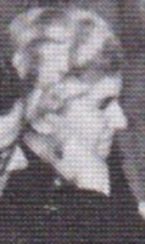
Marianne von Eckardt-Jaffé* was born in Heidelberg into an illustrious family. Her mother, Else von Richthofen, earned her doctorate under Max Weber and became the first female factory inspector in Germany. Her father, the economist Edgar Jaffé, the son of wealthy Jewish parents, was co-editor of the Archiv für Sozialwissenschaften und Sozialpolitik and served as minister of finance for the short-lived People's State of Bavaria from 1918 to 1919.
In the second half of the 1920s, Marianne Jaffé began studying medicine in Heidelberg. In 1931, she married the Riga-born Hans von Eckardt (1890–1957), who had been professor of political science and principal of the Institute of Journalism at the University of Heidelberg since 1927. The couple had three children. When the National Socialists came to power in 1933, Hans von Eckardt was dismissed for political reasons, and Marianne von Eckardt-Jaffé as a "first-degree Mischling" was not permitted to continue her studies. However, they remained in Germany. Marianne von Eckardt worked for a "non-Aryan" Christian relief organisation and accompanied two groups of the Kindertransporte to England in 1938/39.
After the war, Marianne von Eckardt completed her medical studies and became a member of the Department of Psychosomatic Medicine, founded by Alexander Mitscherlich at the Heidelberg University Clinic in 1949. She was Mitscherlich’s first assistant and underwent training analysis with him. In 1951, she attended the first post-war International Psychoanalytic Congress with German participation in Amsterdam, and from 1952 to 1958, she was an editorial board member of the journal Psyche edited by Mitscherlich. In 1988, she took part in founding the journal Psychoanalyse im Widerspruch, published by the Institute for Psychoanalysis and Psychotherapy Heidelberg-Mannheim.
Marianne von Eckardt who never joined a psychoanalytic association, translated numerous psychoanalytic texts from English into German, including works by Erik H. Erikson, Heinz Hartmann, and David Rapaport. Her German translation of Erikson's term "basic trust" introduced the concept of "Urvertrauen" into German academic literature. She also translated Herbert Marcuse’s Eros and Civilization into German (Triebstruktur und Gesellschaft, 1957). (Top of the article)
- * Some sources confuse Marianne von Eckardt with Marianne Horney Eckardt.
- SELECTED WORKS
- Psychologenkongress in München (1. bis 5. Oktober 1949). Psyche 3 (9), 1949, 716-720
- REFERENCES
- Becker, Hans, et al.: Zur Gründungsgeschichte der Zeitschrift. Psychoanalyse im Widerspruch 30 (Nr. 60), 2018, 9–11
- Blank's Genealogy (2023-07-31)
- Bocks, Wolfgang: Jaffe, Elisabeth. Badische Biographien Neue Folge, Bd. 2. Stuttgart 1987, 149-150 + LEO-BW (31.7.2023)
- Center for Jewish History - Leo Baeck Institute: Else Richthofen-Jaffé Letters (2023-07-31)
- Christopher Jeffrey Collection (2023-07-31)
- Geni (2023-07-31)
- Lockot, Regine: Die Reinigung der Psychoanalyse. Die Deutsche Psychoanalytische Gesellschaft im Spiegel von Dokumenten und Zeitzeugen (1933-1951). Tübingen 1994; Gießen 2013 [bei der hier erwähnten M. von Eckardt handelt es sich nicht um die Tochter von Karen Horney, sondern um Marianne von Eckardt-Jaffé (pers. Mitteilung von Regine Lockot)]
- Psyche 75 (1), 2021, Impressum
- Rohr, Anna: Dr. Heinrich Spiero (1876–1947). Sein Wirken für die Christen jüdischer Herkunft unter dem NS-Regime. 2015
- Roth, Guenther: Edgar Jaffé and Else von Richthofen in the mirror of newly found letters. Max Weber Studies 10 (2), 2010, 151-188
- Vogt, Rolf: Laudatio zum 75. Geburtstag von Herrn Prof. Dr. med. Hans Becker. Psychoanalyse im Widerspruch 32 (Nr. 64), 2020, 115-120
- Wikipedia: Else von Richthofen; Edgar Jaffé; Hans von Eckardt (2023-07-31)
- POTO: Detail from "Mitglieder der Psychosomatischen Klinik Heidelberg (ca. 1952)"; in Karen Brecht et al. (ed.): "Hier geht das Leben auf eine sehr merkwürdige Weise weiter..." Zur Geschichte der Psychoanalyse in Deutschland. Hamburg 1985, 208
Charlotte Feibel (1901-1973)
Charlotte “Lotte” Feibel came from Posen and attended the Sociale Frauenschule of Alice Salomon in Berlin, where she earned her qualification as a youth welfare worker in 1921. She then worked in Berlin as a welfare worker at the Prenzlauer Berg district office, as an educator in a home for difficult-to-educate children, and from 1925 to 1933 as a welfare worker at the Neukölln district office. During this time, she undertook psychoanalytic training at the Berliner Psychoanalytisches Institut (BPI), finishing in 1932. She was interested in psychoanalytic pedagogy and an active member of the Pädagogische Arbeitsgemeinschaft at the BPI, led by Siegfried Bernfeld. Her training analysis was probably conducted by Otto Fenichel or Edith Jacobson, and her control analyst was Max Eitingon.
When the National Socialists came to power, Charlotte Feibel emigrated to France in 1933. After presenting her paper Un cas de masturbation obsessionnelle, she became an associate member of the Société Psychanalytique de Paris (SPP) in 1938. She practised as a psychoanalyst in Paris until the German forces occupied the city in 1940. Following a six-week internment, Charlotte Feibel managed to flee to the unoccupied zone in southern France. She worked for two months with Varian Fry’s Emergency Rescue Committee before emigrating to the United States in June 1941.
Charlotte Feibel continued to practice as a member of the SPP in New York until the end of her life. She was an assistant in Clinical Psychology at the College of Medicine of the New York University-Bellevue Medical Center, where, in the 1950s, she participated in a treatment program for the alcoholic in industry at the Department of Psychiatry and Industrial Medicine. She conducted group therapy with alcoholics, whose personality structure was characterised by an archaic ego with primitive unstable defenses, predominately denial and regression. As a result, the ego of the alcoholics could be strengthened through group therapy.
During a holiday trip to the Caribbean with her friend Cläre Fenichel, Lotte Feibel died by drowning. (Top of the article)
- SELECTED WORKS
- Un cas de masturbation obsessionnelle. Lecture. 21 March 1938, Xe Conférence des Psychanalystes de Langue Française
- The archaic personality structure of alcoholics and its implications for group therapy. International Journal of Group Psychotherapy 10, 1960, 39-45
- (with Arnold Z. Pfeffer et al.) A treatment program for the alcoholic in industry. Journal of the American Medical Association 161 (9), 1956, 827-836
- REFERENCES
- Kestenberg, Judith: Kinder von Überlebenden der Naziverfolgungen. Psychoanalytische Beiträge. Psyche 28 (3), 1974, 249-265
- Kloocke, Ruth, and Elke Mühlleitner: Lehren oder lernen? Siegfried Bernfeld und die »Pädagogische Arbeitsgemeinschaft« am Berliner Psychoanalytischen Institut. Luzifer-Amor 17 (34), 2004, 35-58
- Menaker, Esther: Early struggles in lay psychoanalysis. New York in the thirties, forties, and fifties. Psychoanal Rev 75 (3), 1988, 373-379
- Mühlleitner, Elke: Ich - Fenichel. Das Leben eines Psychoanalytikers im 20. Jahrhundert. Wien 2008
- New York University Bulletin 57 (39), 1957, 78
- RFP 10 (4), 1938, 770f; 11 (1), 1939, 161; 41 (1-2), 1977, 315
- United States Social Security Death Index (FamilySearch 17.7.2021)
- PHOTO: Varian Fry (detail); from Varian Fry: La liste noire. Paris 1999
Hanna Fenichel née Heilborn (1897-1975)
Johanna "Hanna" Heilborn, born in Berlin, was the eldest daughter of Ernst Heilborn, a director of the Allgemeine Elektricitäts-Gesellschaft (AEG), and Antonie, née Diamant. After attending Ida Klockow's private lyceum and the Sprengelsche Frauenschule in Berlin, she trained as a social worker at the Sozialpädagogisches Seminar of the Verein Jugendheim Charlottenburg, finishing in 1916. She then worked for several years in social welfare before obtaining her Abitur and enrolling in electrical engineering at the Technische Hochschule of Berlin in 1922. A year later, she switched to studying chemistry at the Friedrich-Wilhelms-Universität, where she received her doctorate in 1932.
In the early 1930s, Hanna Heilborn began her training at the Berliner Psychoanalytisches Institut. When Hitler came to power, she emigrated to Paris in 1933 and a year later to Prague, where she continued her training with Frances Deri at the Prague Psychoanalytic Study Group. Otto Fenichel (1897-1946), who later became her husband, was her control analyst. The Prague group was affiliated with the Wiener Psychoanalytische Vereinigung (WPV), and after presenting her paper Zur Problematik der archaischen Objektbeziehungen, Hanna Heilborn became a member of the WPV in 1938.
After the Anschluss of Austria to Nazi Germany, she emigrated to the United States in 1938 and settled in Los Angeles. In 1940, she married Otto Fenichel, after he had separated from his first wife, Cläre Fenichel. Hanna Fenichel became in 1950 a member and in 1951 a training analyst of the Los Angeles Psychoanalytic Study Group and worked as a psychoanalyst in private practice in LA. She became particularly known for her work in the field of early childhood development. The Hanna Fenichel Center for Child Development, founded in 1975 by the San Diego Psychoanalytic Society, was named in her honor. (Top of the article)
- SELECTED WORKS
- Über die Gründe des verschiedenartigen Verhaltens anologer Dimethylglyoximhaltiger Verbindungen der zweiwertigen Metalle Kobalt, Nickel und Kupfer. Phil. Diss. Berlin 1932
- (und David Rapaport) (Hg.) The Collected Papers of Otto Fenichel. Serie 1 und 2. New York 1953-1954
- REFERENCES
- Geni (10.11.2025)
- Lebenslauf in Heilborn 1932
- Lockot, Regine: Erinnern und Durcharbeiten. Zur Geschichte der Psychoanalyse und Psychotherapie im Nationalsozialismus. Frankfurt/M. 1985
- Ludowyk-Gyömröi, Edit: Erinnerungen an Otto Fenichel und an die Deutsche Psychoanalytische Gesellschaft. Luzifer-Amor 8, 1995, 117-123 [ungarisch: Thalassa 16 (2-3), 2005, 195-202]
- Ludwig-Körner, Christiane: Wiederentdeckt - Psychoanalytikerinnen in Berlin. Gießen 1999; 2014
- Mühlleitner, Elke: Ich - Fenichel. Das Leben eines Psychoanalytikers im 20. Jahrhundert. Wien 2008
- Otto Fenichel and Hanna Fenichel Papers. Library of Congress (9.6.2016)
- Wikipedia (2025-11-10)
- PHOTO: Hanna Pitkin Collection; from Elke Mühlleitner: Ich - Fenichel. Wien 2008, 363. Courtesy of Hanna Pitkin
Grete Frankenstein (1889-1976)
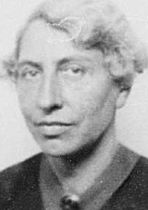
Grete Frankenstein (from 1941 Greta Frankley) was born in Hamburg as the daughter of the merchant Robert Frankenstein and his wife Henriette, née Fleck. From 1913 to 1919, she studied medicine in Berlin, Heidelberg, and Munich, and subsequently completed her internship at the Eppendorf Hospital in Hamburg. During this time, she was befriended with Sophie Halberstadt, Sigmund Freud’s daughter. Beginning in 1920, Grete Frankenstein worked as an assistant physician at the Heidelberg University Psychiatric Clinic, the Frankfurt Neurological Institute, and the psychiatric department of the Charité University Hospital in Berlin, before emigrating to the United States in 1923.
In the US, she first worked as a physician at a state tuberculosis sanatorium in North Dakota and later as a psychiatrist at the Michael Reese Dispensary and other institutions in Chicago. In 1926, she returned to Berlin for family reasons. After working in the psychiatric-neurological department of the Hufeland Hospital, she became a school physician in 1928 in the working-class district Berlin Wedding, where she established a “psychopath welfare service.” Since 1927, she had been a member of the Association of Socialist Physicians. In 1933, she was dismissed from her position at the Wedding District Office due to her Jewish heritage and emigrated permanently to the United States in 1936.
Grete Frankenstein began her psychoanalytic training in 1923 at the Berliner Psychoanalytisches Institut (BPI), undergoing training analysis with Felix Boehm. After returning from her first stay in the US, she continued her training at the BPI and was in analysis with Franz Alexander from 1927 to 1928. She belonged to the circle around the Freudo-Marxist Otto Fenichel and was listed as a “permanent guest” in the Deutsche Psychoanalytische Gesellschaft until her emigration.
After obtaining the US license to practice medicine, Grete Frankenstein worked from 1936 to 1939 at the Home for Crippled Children in New York. Between 1939 and 1941, she underwent a further analysis with Annie Reich at the New York Psychoanalytic Institute and completed her psychoanalytic training in 1944. In 1945, Greta Frankley became an associate member and, in 1946, a full member of the New York Psychoanalytic Society.
In 1945, she married Karl Gerstenberg (1891–1965), a native Berliner who had been director of Karstadt AG in Hamburg until 1933 and emigrated to the United States in 1936. Greta Frankley-Gerstenberg worked as a psychoanalyst in private practice in New York and was a member of various psychoanalytic and psychiatric associations in the United States. (Top of the article)
- SELECTED WORKS
- Psychiatrische Sozialarbeit in den Vereinigten Staaten von Amerika. Zeitschr ges Neurol Psychiatr 110, 1927, 325-336
- (Rezension) W. Reich, Die Sexualität im Kulturkampf. Kopenhagen: Sexpol Verlag, 1936. Psa Quart 6, 1937, 262-265
- REFERENCES
- Bull Int Psycho-Anal Assn 27, 1946, 175
- Doetz, Susanne, und Christoph Kopke: "und dürfen das Krankenhaus nicht mehr betreten". Der Ausschluss jüdischer und politisch unerwünschter Ärzte und Ärztinnen aus dem Berliner städtischen Gesundheitswesen 1933-1945. Berlin 2018
- Gerstenberg, Karl: Memoiren (Typoskript). New York 1965; Center for Jewish History (2020-12-02)
- King, Pearl H. M.: List of members of the Component and Affiliate Societies of the International Psycho-Analytical Association 1960-1961. Bul Int Psychoanal Assn 42, 1961, 133-196
- II. List of Members of the International Psycho-Analytical Association. Bul Int Psychoanal Assn 27, 1946, 172-185
- MyHeritage (2.12.2020)
- Röder, Werner, und Herbert A. Strauss (Hg.): Biographisches Handbuch der deutschsprachigen Emigration nach 1933, Bd. 1: Politik, Wirtschaft, Öffentliches Leben. München 1980
- Schröter, Michael: Neues zum Tod von Sophie Halberstadt, geb. Freud. Mit einer Skizze über Greta Frankley/Frankenstein (1889-1976). In L. M. Hermanns und A. Hirschmüller (Hg.): Vom Sammeln, Bedenken und Deuten in Geschichte, Kunst und Psychoanalyse. Gerhard Fichtner zu Ehren. Jb Psychoanal, Beiheft 25, 2013, 349-358
- Verfolgte Ärztinnen und Ärzte des Berliner Städtischen Gesundheitswesens (1933-1945). Institut für Geschichte der Medizin, Charité Berlin 2013 (2019-01-24)
- PHOTO: New York, Southern District, U.S District Court Naturalization Records, 1824-1946. National Archives at New York (FamilySearch (2021-08-02)
Frieda Fromm-Reichmann (1889-1957)
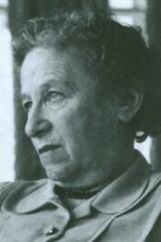
© Erich-Fromm-Archiv
Frieda Reichmann was born in Karlsruhe into an educated Orthodox Jewish family, the eldest of three sisters. Her father, Adolf Reichmann, was an ironmonger and later a bank personnel manager. Her mother, Klara née Simon, was a teacher. Frieda grew up in Königsberg, where the family had moved in 1893. Thanks to a private girls' secondary school course established by her mother, Frieda Reichmann was able to earn her Abitur and, in 1908, became one of the first women in Königsberg to be admitted to medical studies. She focused on psychiatry and graduated in 1913 with a dissertation on pupillary disorders in dementia praecox, supervised by Kurt Goldstein.
During the First World War, as an assistant to Ernst Meyer at the Psychiatric Clinic of the University of Königsberg, Reichmann ran a neurological military hospital, where she treated soldiers with brain injuries and published several studies on the subject. From 1918 to 1920, she was assistant of Kurt Goldstein at his Frankfurt Institut zur Erforschung der Folgeerscheinungen von Hirnverletzungen (Institute for Research into the Consequences of Brain Injuries). Goldstein’s holistic neurology became a model for her own work. Subsequently, she worked until 1923 at the private sanatorium "Weißer Hirsch" in Dresden, where she carried out her first psychotherapies using autogenic training developed by its director, Johannes Heinrich Schultz.
In 1922, Frieda Reichmann began an analysis with Wilhelm Wittenberg, which she continued in 1923 as a training analysis with Hanns Sachs at the Berliner Psychoanalytisches Institut. In 1924, she opened a private psychoanalytic sanatorium in Heidelberg for patients from Orthodox Jewish families. This “Therapeuticum” was humorously nicknamed the “Thorapeuticum” because of its strict observance of Jewish rituals. It failed in 1928 due to the inner conflict between religion and psychoanalysis, as well as financial difficulties. Reichmann's most important mentor during this period was the “wild analyst” Georg Groddeck.
In 1926, Frieda Reichmann married her analysand Erich Fromm (1900–1980). They separated five years later and divorced in the United States in 1942. Nevertheless, they remained lifelong friends, and Frieda Fromm-Reichmann also adopted Erich Fromm’s Neo-Freudian theory. In 1922, both were founding members of the Südwestdeutsche Psychoanalytische Arbeitsgemeinschaft, from which the Frankfurt Psychoanalytic Institute (FPI) emerged in 1929. Frieda Fromm-Reichmann gave seminars at the FPI on the psychology of dreams and fairy-tales and on psychoanalytic drive theory. Around 1931, she underwent further analysis with Philipp Sarasin in Basel.
After Hitler’s rise to power, the Frankfurt Institute was forced to close. Frieda Fromm-Reichmann emigrated in 1933 with her friend Gertrud Jacob, first to Strasbourg, then a year later to Palestine, and finally in 1935 to the United States. She became Director of Psychotherapy at Chestnut Lodge, a private mental hospital in Rockville, Maryland, where she remained for the rest of her life and, together with Harry Stack Sullivan, revolutionised the treatment of schizophrenia. She was a training analyst and, from 1939 to 1941, president of the Washington-Baltimore Psychoanalytic Society, taught at the Washington School of Psychiatry, and played a major role in introducing psychoanalysis into American psychiatry.
Like Karen Horney and Clara Thompson, Frieda Fromm-Reichmann belonged to the Neo-Freudian school. She regarded her approach as a further development of Sigmund Freud’s ideas but believed that Sullivan’s interpersonal theory and Erich Fromm’s social psychology were more appropriate to the social nature of human beings than Freud’s drive theory. Drawing on Sullivan’s ideas, but with a stronger psychoanalytic focus, she created her own psychoanalytic psychotherapy of schizophrenia, which she described in her book Principles of Intensive Psychotherapy. She became particularly known for her now controversial theory of the overprotective but basically rejecting “schizophrenogenic mother,” who caused her child to become schizophrenic.
Unlike Freud, Frieda Fromm-Reichmann considered psychoses to be treatable psychoanalytically. She rejected Freud’s demand for the analyst’s detachment and instead emphasised an empathetic, accepting, “maternal” attitude. Free association and dream interpretation also seemed to her unsuitable for psychotic patients. The nature and success of her therapeutic method were described by one of her former patients, Joanne Greenberg (Hannah Green), in her autobiographical novel I Never Promised You a Rose Garden.
Frieda Fromm-Reichmann died of a heart attack at the age of 67. (Top of the article)
- SELECTED WORKS
- Ueber Pupillenstörungen bei Dementia praecox. Med. Diss. Königsberg 1913
- Zur Soziologie der Neurosen. Zschr gesamte Neurol Psychiatr 89, 1923, 60-67
- Das jüdische Speiseritual. Imago 13, 1927, 235-246
- Contribution to the psychoanalysis of migraine. Psychoanal Rev 24, 1937, 26-33
- Transference problems in schizophrenia. Psa Quart 8, 1939, 412-426
- Notes on the mother role in the family group. Bull Menninger Clin 4, 1940, 132-148 [Bemerkungen über die Rolle der Mutter in der Familiengruppe. In Fromm-Reichmann 1978, 340-359]
- Remarks on the philosophy of mental disorder. Psychiatry 9, 1946, 293-308
- Problems of therapeutic management in an psychoanalytic hospital. Psa Quart 16, 1947, 325-356 [Probleme der Durchführung der Behandlung in einer psychoanalytischen Klinik. In Fromm-Reichmann 1978, 164-189]
- Notes on the development of treatment of schizophrenics by psychoanalytic psychotherapy. Psychiatry 11, 1948, 263-273 [Bemerkungen über die Entwicklung der Behandlung von Schizophrenen mit psychoanalytischer Psychotherapie. In Fromm-Reichmann 1978, 190-207]
- Intensive psychotherapy of manic-depressives (1949). In Fromm-Reichmann 1959, 221-226 [Intensive Psychotherapie bei Manisch-Depressiven. In Fromm-Reichmann 1978, 258-264]
- Principles of Intensive Psychotherapy. Chicago 1950 [Intensive Psychotherapie. Grundzüge und Technik. Stuttgart 1959]
- Psychotherapy of schizophrenia. Am J Psychiatry 111, 1954, 410-419 [Die Psychotherapie der Schizophrenie. In Fromm-Reichmann 1978, 228-246]
- Über die Einsamkeit (1959). Psyche 79, 2025, 317-340
- Autobiographical Interview 1954 (unpublished). Transkript im Erich Fromm Dokumentationszentrum, Tübingen
- Psychoanalysis and Psychotherapy. Selected Papers of Frieda Fromm-Reichmann. Chicago 1959 [Psychoanalyse und Psychotherapie. Eine Auswahl aus ihren Schriften. Stuttgart 1978]
- (und Kurt Goldstein) Über praktische und theoretische Ergebnisse aus den Erfahrungen an Hirnschussverletzten. Berlin 1920
- (und Jacob L. Moreno) (Hg.) Progress in Psychotherapy. New York 1956
- REFERENCES
- Ärztinnen im Kaiserreich. Institut für Geschichte der Medizin und für Ethik in der Medizin, Charité, Berlin 2015 (25.1.2019)
- Bateson, Gregory: Language and psychiatry: Frieda Fromm-Reichmann's last project. Psychiatry 21, 1958, 90-100
- Bruch, Hilde: Personal reminiscences of Frieda Fromm-Reichmann. Psychiatry 45, 1982, 98-104
- Chronik der DPG (1907-1958) (11.4.2014)
- Engel, Ursula: Vom "Thorapeutikum" nach Chestnut Lodge. Frieda Fromm-Reichmann (1889-1957). In T. Plänkers et al. (Hg.): Psychoanalyse in Frankfurt. Tübingen 1996, 141-152
- Green, Hannah: I Never Promised you a Rose Garden. New Yok 1964 [Ich habe dir nie einen Rosengarten versprochen. Reinbek 1978]
- Hoff, Sylvia G.: Frieda Fromm-Reichmann. The early years. Psychiatry 45, 1982, 115-120
- Hoffmann, Klaus: Frieda Fromm-Reichmann. Brückenschlag zwischen Psychiatrie und Psychoanalyse. Luzifer-Amor 8 (16), 1995, 22-31
- Hornstein, Gail A.: To Redeem one Person is to Redeem the World. The Life of Frieda Fromm-Reichmann. New York 2000 [Review]
- Peters, Uwe H.: Frieda Fromm-Reichmann und die psychoanalytisch orientierte Psychotherapie der Schizophrenie. In ders.: Psychiatrie im Exil. Düsseldorf 1992, 173-188
- Roudinesco, Elisabeth, und Michel Plon: Wörterbuch der Psychoanalyse (1997). Wien, New York 2004
- Schönhagen, Angelika: Frieda Fromm-Reichmann. Leben und Werk. Med. Diss. Mainz 1980
- Schröter, Michael: Neue Details über die psychoanalytische Ausbildung von Erich Fromm (und Frieda Fromm-Reichmann). Fromm Forum 19, 2015, 112-115
- Siebenhüner, Gerda: Frieda Fromm-Reichmann. Pionierin der analytisch orientierten Psychotherapie von Psychosen. Gießen 2005
- Silver, Ann-Louise S.: Fromm-Reichmann, Frieda. In Dictionnaire international de la psychanalyse (2002). Hg. von A. de Mijolla. Paris 2005, 703f [International Dictionary of Psychoanalysis. Detroit u. a. 2005, 652-653]
- Weigert, Edith: In memoriam Frieda Fromm-Reichmann, 1889-1957. Psychiatry 21, 1958, 91-95
- Wikipedia German; English (20.6.2024)
- PHOTO: Courtesy to Rainer Funk
Adelheid Fuchs-Kamp (1890-1978)
Adelheid Fuchs-Kamp was born in Oldenburg, the daughter of high school teacher Heinrich Kamp and his wife Frieda, née Müller. In 1912, she began a Studium Generale (primarily in economics, but also in psychology and art history), first in Heidelberg, then in Munich and finally in Freiburg. In 1914, she married the lawyer Hermann Fuchs (1891–1917), a year later, their daughter Dorothea was born, who would also become a psychoanalyst.
After the death of her husband, who was killed in World War I, Adelheid Fuchs-Kamp began studying psychology in Cologne in 1925, with minors in pedagogy and psychiatry. In 1928, she graduated as Dr. Phil. with the dissertation Lebensschicksal und Persönlichkeit ehemaliger Fürsorgezöglinge, which was largely based on her work at the psychiatric observation ward of the Fürsorgeerziehungsanstalt Flehingen in Baden (Flehingen Welfare Reformatory), during the years 1924 and 1925.
She then moved to Berlin, where from 1928 to 1930 she taught psychology and pedagogy to social workers and kindergarten teachers at the Social Pedagogical Seminar of the Jugendheim Charlottenburg Association. She subsequently took up a research position at the Deutscher Verein zur Fürsorge für jugendliche Psychopathen (German Association for the Welfare of Adolescent Psychopaths) and published several papers on this subject. In her 1934 article Zur aktiven Therapie des schwererziehbaren Kindes, she advocated a middle path between an open educational style and rigid discipline.
In 1932, Adelheid Fuchs-Kamp began psychoanalytic training at the Berliner Psychoanalytisches Institut (BPI). She had already entered training analysis in 1931 with the Adlerian psychologist Arthur Kronfeld, but continued it from 1933 to 1934 with Harald Schultz-Hencke, whose neopsychoanalytic approach she adopted. In 1935, she opened the Pflegestelle für psychologische Sonderbetreuung, a psychotherapeutic children’s ward, where she treated severely disturbed children, some of whom might otherwise have fallen victim to euthanasia.
In 1936, Adelheid Fuchs-Kamp became a member of the "Aryanized" successor to the BPI, the Deutsches Instituts für Psychologische Forschung und Psychotherapie ("Göring-Institut"), which aimed at a synoptic integration of depth-psychological schools. Through her involvement on the Education Committee and as a board member, she played a significant role in shaping the institute. Topics of her seminars held in the Abteilung für Erziehungshilfe included, among others, Probleme der Verwahrlosung, Störungen intentionaler Bezogenheit, and Die Psychopathologie in der Literatur von Dostojewski.
After the war, Adelheid Fuchs-Kamp worked closely with Schultz-Hencke in establishing the polyclinic of the Institut für Psychopathologie und Psychotherapie, renamed the Zentralinstitut für psychogene Erkrankungen at the Versicherungsanstalt Berlin in 1946, as well as the Institut für Psychotherapie e. V. Berlin, founded in 1947. Along with Margarete Seiff and Annemarie Dührssen, she was a member of the Neopsychoanalytic Association, founded in 1945 by Harald Schultz-Hencke. Although her medical colleagues denied her formal qualifications as a "lay analyst," Adelheid Fuchs-Kamp specialised in the treatment of psychoses. She continued to practice as a psychoanalyst in Berlin until the age of eighty. (Top of the article)
- SELECTED WORKS Lebensschicksal und Persönlichkeit ehemaliger Fürsorgezöglinge. Phil. Diss. Köln 1928; Berlin 1929
- Entwicklung psychopathischer Jugendlicher I und II. Zeitschrift für Kinderforschung 37, 1930, 339-391 und 38, 1931, 275-364
- Zur aktiven Therapie des schwer erziehbaren Kindes. Waisenhilfe. Zeitschrift des Deutschen Erziehungsbeirates für verwaiste Jugend e.V., Heft 10, 1934, 75-79
- Jugendliche Fortläufer und Diebe. Praxis der Kinderpsychologie und Kinderpsychiatrie 1, 1952, 109-114, 133-137, 177-180
- Ein katatoner Erregungszustand und sein Erlebnishintergrund. Z Psychosom Med 1 (4), 1954/55, 269-277
- Analyse der Vergiftungsangst eines pubertierenden Mädchens in Verbindung mit Übertragungsproblemen. Psychother Psychosom 3 (Suppl. 1), 1955, 109–115
- Hebephrenie. Grundsätzliches zu Struktur und Therapie. 2. Int. Symposium über Psychotherapie der Schizophrenie, Zürich 1959. Basel, New York 1960
- REFERENCES
- FamilySearch (2025-10-30)
- Gleiss, Irma: Zur Vorgeschichte und Geschichte des Instituts für Psychotherapie e. V. Berlin. Eine chronologische Skizze. In I. Kohte-Meyer (Hg.): Über die Schwierigkeit, die eigene Geschichte zu schreiben. 50 Jahre Institut für Psychotherapie Berlin. Tübingen 1998, 208-284
- Ludwig-Körner, Christiane: Wiederentdeckte Psychoanalytikerinnen in Berlin. Gießen 1999; 2014
- Lockot, Regine: Die Reinigung der Psychoanalyse. Die Deutsche Psychoanalytische Gesellschaft im Spiegel von Dokumenten und Zeitzeugen (1933-1951). Tübingen 1994; Gießen 2013
- Wikipedia (2023-11-02)
- POTO: Dorothea Fuchs-Kamp; in Ludwig-Körner 1999, 113
Gertrud Fuhge (1890-1963)
Gertrud Fuhge was born in Königsberg, the daughter of Justizrat Fuhge and his wife Constanze, née Zancke. She completed her Abitur in Königsberg in 1909 and went on to study medicine in Königsberg, Heidelberg, and Munich. She passed her state examination in Königsberg in 1914. In 1916, she received her doctorate under Ernst Moro in Heidelberg with a dissertation on a case of congenital skin disease. After working as an assistant physician at the municipal hospital in Dresden in 1917, she established herself as a physician in Berlin in 1919. In 1930, she was officially recognised as a specialist in nervous diseases.
From 1926 to 1931, Gertrud Fuhge underwent training analysis with Karen Horney. She participated in the meetings of the Deutsche Psychoanalytische Gesellschaft (DPG) and the “Kinderseminar” and held consultations at the outpatient clinic of the Berliner Psychoanalytisches Institut (BPI). After 1936, she became a member of the coordinated (gleichgeschaltet) Deutsches Institut für Psychologische Forschung und Psychotherapie (“Göring Institute”), into which the BPI had been incorporated under the Nazi regime. As a Freudian, she belonged to the institute’s “Working Group A”, where she presented a paper on Karen Horney in April 1940.
After the war, Gertrud Fuhge initially rejoined the reconstituted DPG and was also a member of the Zentralinstitut für psychogene Erkrankungen, headed by Werner Kemper and Harald Schultz-Hencke. However, she later joined the Deutsche Psychoanalytische Vereinigung (DPV), founded in 1950 by Carl Müller-Braunschweig, where she remained a member until 1962. Gertrud Fuhge practised as a private specialist in nervous diseases and psychotherapy in Berlin. (Top of the article)
- SELECTED WORKS
- Ein Fall angeborener Hauterkrankung (sogenannte Ichthyosis sebacea). Med. Diss. Heidelberg 1916
- Eine Stoffwechseluntersuchung an Kindern im Alter von 6-14 Jahren im 3. Kriegsjahr. (Aus dem Großen Friedrichs-Waisenhause der Stadt Rummelsburg). Jahrbuch für Kinderheilkunde, Bd. 88, H. 1 [zit. nach Münchner Medizinische Wochenschrift 65, 1918, 1251]
- Untersuchungen über den Einfluß des Basensäurenverhältnisses auf den Eiweißbedarf. Archiv für Kinderheilkunde, Bd. 67 [zit. nach Münchner Medizinische Wochenschrift 66, 1919, 727]
- Verstehende Entwicklungshilfe oder Affekthandlung in der Erziehung? Psyche 4 (2), 1950, 138-143
- REFERENCES
- Ärztinnen im Kaiserreich. Institut für Geschichte der Medizin, Charité Berlin 2015 (2019-01-25)
- Brecht, Karen, et al. (Hg.): "Hier geht das Leben auf eine sehr merkwürdige Weise weiter...". Zur Geschichte der Psychoanalyse in Deutschland. Hamburg 1985
- Bull Int Psycho-Anal Assn 43, 1962, 618 + 47, 1966, 87)
- Dührssen, Annemarie: Ein Jahrhundert psychoanalytische Bewegung in Deutschland. Göttingen 1994
- Hermanns, Ludger M.: E-mail vom 14.10.2021
- IZP 21 (2), 1935, 312
- Schröter, Michael: 129 dokumentierte Ausbildungskandidaten am Berliner Psychoanalytischen Institut 1924-1932: Tabelle. Luzifer-Amor 33 (66), 2020 (2020-12-09)
- Theilemann, Steffen: Das Kinderseminar von Otto Fenichel und Harald Schultz.Hencke. Luzifer-Amor 33 (65), 2020, 7-30
Gertrud Goebel
Gertrud Goebel (Göbel) completed her psychoanalytic training at the Berliner Psychoanalytisches Institut (BPI) in the 1920s. Her training analyst was the Freudo-Marxist Siegfried Bernfeld, and her control analyst was Jenö Hárnik, who had emigrated from Budapest to Berlin. In 1933, Gertrud Goebel became an associate member, and in 1935 a full member, of the Deutsche Psychoanalytische Gesellschaft (DPG). After the BPI was incorporated in 1936 into the “Aryanised” Deutsches Institut für Psychologische Forschung und Psychotherapie (“Göring Institute”), Gertrud Goebel belonged to “Working Group A,” i.e. the Freudian faction within the institute.
After the end of the Second World War, Gertrud Goebel rejoined the DPG in 1946. When Carl Müller-Braunschweig and seven other DPG members left the society in 1950 to found the Deutsche Psychoanalytische Vereinigung (DPV), Gertrud Goebel was among the analysts who remained with the DPG. Nothing further is known about her life. (Top of the article)
- SELECTED WORKS
- Über einen Fall von ungewöhnlich starkem Penisneid einer Frau. Vortrag DPG, 28.3.1933
- Schwierigkeiten eines Falles. Vortrag DPG, 13.2.1934
- Analytische Unterhaltungen mit einer 75jährigen Frau. Vortrag DPG, 6.3.1935
- Seelische Hintergründe einer „Drüsenschwäche“. Vortrag Arbeitsgruppe A am Deutschen Institut für Psychologische Forschung und Psychotherapie, 7.3.1942
- Wie können seelische Erkrankungen entstehen? Erfahrungen aus der psychotherapeutischen Sprechstunde. Berlin-Zehlendorf 1951
- REFERENCES
- Brecht, Karen, et al. (Hg.) "Hier geht das Leben auf eine sehr merkwürdige Weise weiter...". Zur Geschichte der Psychoanalyse in Deutschland. Hamburg 1985
- Bull Int Psycho-Anal Assn, 16, 1935, 525 + 29, 1948,19
- IZP 19 (4), 1933, 638; IZP 20, 1934, 282; IZP 21, 1935, 324
- Lockot, Regine: Die Reinigung der Psychoanalyse. Die Deutsche Psychoanalytische Gesellschaft im Spiegel von Dokumenten und Zeitzeugen (1933-1951). Tübingen 1994
- Schröter, Michael: 129 dokumentierte Ausbildungskandidaten am Berliner Psychoanalytischen Institut 1924-1932: Tabelle. Luzifer-Amor 33 (66), 2020 (2024-06-20)
Erna Göring née Zambona (1885-1962)
Erna Göring was born Erna Hildegard Charlotte Zambona in Brandenburg an der Havel. She was the youngest of three daughters of the manufacturer Heinrich Emil Zambona and his first wife, Helene, née Dynse. Erna’s mother died in 1895. Her father remarried and had three more daughters. The eldest of Erna’s half-sisters, Edith, was married to Heinrich Carl Göring, a half-brother of Reichsmarschall Hermann Göring, while the youngest, Ilse Jutta, was married to the writer Erich Maria Remarque.
Erna Zambona originally trained and worked as a surgical nurse. In 1907, she married the neurologist Matthias Heinrich Göring (1879–1945), who was also a relative of Hermann Göring. The couple had three children: Peter (*1908), Ernst (*1910), and Mathilde (*1912). Like her husband, Erna Göring underwent analysis with the Adlerian psychologist Leonhard Seif and, from 1927 onward, worked as a child psychotherapist in private practice.
Erna Göring became a member of the “Aryanised” Deutsches Institut für Psychologische Forschung und Psychotherapie in Berlin, which was directed by Matthias H. Göring from 1936 to 1945 and also known as the “Göring Institute.” Erna Göring was initially a determined opponent of the Freudian theory represented by the “Working Group A" at the Göring Institute. Her anti-Freudian setting changed, however, during her training as a psychagoguist and through a perennial training analysis with the Freudian Werner Kemper. Her son Ernst also underwent Freudian analysis, while Matthias Göring remained a follower of Alfred Adler’s individual psychology.
Matthias Göring was interned by the Russians in 1945 and died of dysentery in a Red Army field hospital in Poznan. In 1948, Erna Göring applied for readmission to the newly founded Münchner Institut für Psychologische Forschung und Psychotherapie, which regarded itself as the successor to the Göring Institute. However, her application was rejected because of the unresolved professional status of non-medical psychotherapists. (Top of the article)
- REFERENCES
- Brecht, Karen, et al. (eds): "Hier geht das Leben auf eine sehr merkwürdige Weise weiter...". Zur Geschichte der Psychoanalyse in Deutschland. Hamburg 1985
- Cocks, Geoffrey: Psychotherapy in the Third Reich. The Göring Institute. New York 1985
- Fallend, Karl: Abgerissene Fäden. Psychoanalyse in Österreich nach 1938. Biographische Einsichten. Werkblatt 20 (Nr. 51), 2003, 78-119
- Grunert, Johannes: Zur Geschichte der Psychoanalyse in München. Psyche 38, 1984, 865-904
- Kemper, Werner in L. J. Pongratz (Hg.): Psychotherapie in Selbstdarstellungen. Bern, Stuttgart, Wien 1973, 259-345
- Liechtensteiner Volksblatt, 1.9.1927: Death Notice of Peter Göring (I would like to thank Adalbert Saurma for this reference)
- Lockot, Regine: Erinnern und Durcharbeiten. Zur Geschichte der Psychoanalyse und Psychotherapie im Nationalsozialismus. Frankfurt/M. 1985
- Lockot, Regine: Die Reinigung der Psychoanalyse. Die Deutsche Psychoanalytische Gesellschaft im Spiegel von Dokumenten und Zeitzeugen (1933-1951). Tübingen 1994; Gießen 2013
- Oberborbeck Klaus W.: Zur Geschichte der Psychagogik und „Erziehungshilfe“. Psychotherapie bei Kindern und Jugendlichen am „Deutschen Institut“ Berlin 1936 bis 1945. Analytische Kinder- und Jugendlichen-Psychotherapie 87, 1995, 177–244
- Röhrig, Anna Eunike: Ilse Jutta Zambona - eine biographische Skizze. Erich Maria Remarques zweimalige Ehefrau stammte aus Hildesheim. In Erich Maria Remarque-Jahrbuch 16, 2006, 90-94
- Roudinesco, Elisabeth, and Michel Plon: Wörterbuch der Psychoanalyse (1997). Wien, New York 2004
- Schmuhl, Hans-Walter: Die Gesellschaft Deutscher Neurologen und Psychiater im Nationalsozialismus. Berlin: Heidelberg 2016
- Schultz-Hencke, Harald: Tagebuch Januar bis Juni 1938. Hg von Steffen Theilemann (unter Mitwirkung von Michael Schröter). Luzifer-Amor 37 (73), 2024, 33-61
- Wikipedia: Matthias Heinrich Göring (2025-11-03)
- PHOTO: World Vital Records (Internet Archive 2024-11-14)
Ilse Grubrich-Simitis (1936-2024)
Ilse Grubrich-Simitis was an internationally recognised authority in the field of Freud studies. From 1955 to 1959, she studied in the Department of Information at the Hochschule für Gestaltung Ulm, where she earned her diploma with a thesis entitled Zur Theorie der Propaganda und der Werbung. In 1963, she married the lawyer and data protection expert Spiros Simitis (1934-2023).
After completing her studies, she became a publishing editor at S. Fischer Verlag, where she was responsible for the publication of Sigmund Freud’s works from the 1960s onward. She co-edited Sigmund Freud: Sein Leben in Bildern und Texten (1977), Freud's Werkausgabe in zwei Bänden (1978), the supplementary volume to Freud's Studienausgabe (1975), and the addendum to his Gesammelte Werke (1987), as well as the five volumes of the Brautbriefe between Sigmund Freud and his fiancée Martha Bernays (2011-2025).
Ilse Grubrich-Simitis underwent psychoanalytic training between 1972 and 1978 at the Sigmund Freud Institute in Frankfurt (SFI), then directed by Alexander Mitscherlich, and was supervised by Lutz Rosenkötter. She was a member, training analyst, and supervisor of the Deutsche Psychoanalytische Vereinigung and co-editor of the Jahrbuch der Psychoanalyse. Her main interests lay in Freud biography and the historiography of psychoanalysis. For example, in her book Zurück zu Freuds Texten, she offered new insights into the “workshop” of the founder of psychoanalysis by tracing the development of Freud’s thinking through little-known or previously unpublished original manuscripts, including handwritten notes, drafts, fair copies, and textual variants. Another focus was her examination of the after-effects of the Holocaust on the second generation.
In 1998, Ilse Grubrich-Simitis received both the Mary S. Sigourney Award and the Sigmund-Freud-Preis für wissenschaftliche Prosa provided by the German Academy for Language and Literature. (Top of the article)
- SELECTED WORKS
- Sigmund Freuds Lebensgeschichte und die Anfänge der Psychoanalyse. In S. Freud: Selbstdarstellung. Edited by I. Grubrich-Simitis. Frankfurt/M. 1971
- Extremtraumatisierung als kumulatives Trauma. Psyche 33, 1979, 991-1023
- Siegfried Bernfeld: Historiker der Psychoanalyse und Freud-Biograph. Psyche 35, 1981, 397-434 + In S. Bernfeld und S. Cassirer Bernfeld: Bausteine der Freud-Biographik. Hg. von I. Grubrich-Simitis. Frankfurt/M. 1981
- Vom Konkretismus zur Metaphorik. Gedanken zur psychoanalytischen Arbeit mit Nachkommen der Holocaust-Generation. Psyche 38, 1984, 1-28 [From concretism to metaphor. Thoughts on some theoretical and technical aspects of the psychoanalytic work with children of Holocaust survivors. Psa Study Child 39, 1984, 301-319]
- Metapsychologie und Metabiologie. Zu Sigmund Freuds Entwurf einer "Übersicht der Übertragungsneurosen". In S. Freud: Übersicht der Übertragungsneurosen. Ein bisher unbekantes Manuskript. Edited by I. Grubrich-Simitis. Frankfurt/M. 1985, 83-128
- Six letters of Sigmund Freud and Sándor Ferenczi on the interrelationship of psychoanalytic theory and technique. Int Rev Psycho-Anal 13, 1986, 259-277
- Trauma oder Trieb - Trieb und Trauma. Psyche 41, 1987, 992-1023
- Zur Geschichte der deutschsprachigen Freud-Ausgaben. Psyche 43, 1989, 773-802 + 889-917
- Freuds Moses-Studie als Tagtraum. Ein biographischer Essay. Weinheim 1991
- Zurück zu Freuds Texten. Stumme Dokumente sprechen machen. Frankfurt/M. 1993 [Back to Freud's Texts. Making Silent Documents Speak. New Haven 1996; Freud: Retour aux manuscrits. Faire parler des documents muets. Paris 1997]
- Early Freud and Late Freud. Reading New Studies on Hysteria and Moses and Monotheism. London; New York 1997
- Michelangelos Moses und Freuds "Wagstück". Eine Collage. Frankfurt/M. 2004
- Realitätsprüfung an Stelle von Deutung. Eine Phase in der psychoanalytischen Arbeit mit Nachkommen von Holocaust-Überlebenden. Psyche 62, 2008, 1091-1121
- Keime psychoanalytischer Grundkonzepte. Zu den Brautbriefen von Sigmund Freud und Martha Bernays. Psyche 66, 2012, 385-407 [Germes de concepts psychanalytiques fondamentaux. À propos des lettres de fiancés de Sigmund Freud et Martha Bernays. RFP 76 (3), 2012, 779-795]
- Wie wir trotzdem lernen lernten – Studium an der Abteilung Information der Ulmer Hochschule für Gestaltung. In D. Oswald et al. (Hg.): Rückblicke. Die Abteilung Information an der hfg ulm. Lemgo 2015
- Entretien avec Ilse Grubrich-Simitis. RFP (19.8.2024)
- (mit Jean Starobinski und Mark Solms) (ed.): Hundert Jahre "Traumdeutung" von Sigmund Freud. Frankfurt/M. 1999
- REFERENCES
- Barande, Ilse: Du "retour aux textes de Freud" de Ilse Grubrich-Simitis à l'actualité de leur traduction. RFP 59 (2), 1995, 579-583
- S. Fischer Verlag
- Freie Waldorfschule Oberursel (3.12.2020 - deleted)
- Hochschule für Gestaltung Ulm (19.8.2024)
- Wikipedia: Ilse Grubrich-Simitis; Spiros Simitis (2024-08-19)
Irene Hänel-Guttmann née Süßkind (1901-1941)
Irene Hänel-Guttmann (Haenel) was born in Stuttgart as the daughter of ophthalmologist Jacob Süßkind and Hedwig, née Capauner. She was first married to the psychiatrist Erich Guttmann (1896–1948), with whom she had two children, Renate (*1921) and René (*1930). Irene Guttmann studied medicine and received her doctorate in Breslau in 1924. In 1928, as a research associate at the Deutsches Forschungsanstalt für Psychiatrie am Kaiser Wilhelm-Institut in Munich, she participated in a project on epilepsy research.
In the mid-1920s, Irene Guttmann underwent a training analysis with Sándor Radó at the Berliner Psychoanalytisches Institut. Her second husband, the physician Joachim Hänel (1902–1987), was analysed by Otto Fenichel. After presenting her paper on the "Therapie der Schizophrenie" in 1934, Irene Hänel-Guttmann became an associate member of the Deutsche Psychoanalytische Gesellschaft (DPG) that same year. She belonged to the assistants of Ernst Simmel at the psychoanalytic clinic Schloss Tegel in Berlin, directed by him between 1927 and 1931. After the clinic’s closure in 1931, Hänel, like Simmel, worked at the Schlomersche Kuranstalten, a private neuropsychiatric clinic in Berlin-Westend, until it was “Aryanised” in 1937.
In 1935, Irene Hänel-Guttmann, like the other remaining Jewish members, was forced to “voluntarily” resign from the DPG. In 1938, Irene and Joachim Haenel emigrated to the United States with their children and settled in Los Angeles. They joined the Los Angeles Psychoanalytic Study Group, which at that time operated under the aegis of the Topeka Psychoanalytic Society. Both were part of the circle around Otto Fenichel until a rift occurred over the Haenels’ opposition to lay analysis.
Irene Haenel maintained a successful private practice in Los Angeles; among her analysands was Jean Lyle, who later became the second wife of Karl Menninger. She was a co-initiator of the San Francisco Psychoanalytic Society, but did not live to see its official founding in 1942: a year earlier — when her youngest son was only six months old — she died of cancer. (Top of the article)
- SELECTED WORKS
- Über den Einfluss des Adrenalins auf den Gesamtkalk und seinen filtrierbaren Anteil im menschlichen Blutserum. Med. Diss. Breslau 1924
- Beitrag zur Epilepsiestatistik. Zschr gesamte Neurol Psychiatr 118, 1929, 500-515
- REFERENCES
- VIII. Bericht über die Deutsche Forschungsanstalt für Psychiatrie, Kaiser Wilhelm-Institut in München, zur Stiftungsratssitzung vom 10. März 1928. Zschr gesamte Neurol Psychiatr 115 (1), 1928
- Bernhardt, Heike, and Regine Lockot (eds): Mit ohne Freud. Zur Geschichte der Psychoanalyse in Ostdeutschland. Gießen 2000
- Brecht, Karen, et al. (eds): "Hier geht das Leben auf eine sehr merkwürdige Weise weiter...". Zur Geschichte der Psychoanalyse in Deutschland. Hamburg 1985
- Faulkner, Howard J., and Virginia D. Pruitt: The unpublished Menninger: Divorce, marriage, and analyses. American Imago 64 (2), 2007, 145-211
- Geni (2025-11-04)
- Hermanns, Ludger M.: Unpublished interview with Joachim Haenel, 7. March 1985
- IZP 21 (1), 1935, 152
- Mühlleitner, Elke: Ich - Fenichel. Wien 2008
- Notes. Psa Quart 11, 1942, 611-613
- Obituary Listing. JAMA 259 (11), 1988, 1737-1741
- Schröter, Michael: 129 dokumentierte Ausbildungskandidaten am Berliner Psychoanalytischen Institut 1924-1932: Tabelle. Luzifer-Amor 33 (66), 2020 (2020-12-09)
Clara Happel née Pincus (1889-1945)

Clara Happel was born in Berlin as the eldest daughter of Theodor Pincus and Johanna, née Heilmann. Her father, in addition to his professional work as a banker, was a supporter of charitable institutions, including the Jewish aid organisation "Gesellschaft der Freunde". Clara Pincus studied medicine in Berlin, Munich, Göttingen, Vienna, and Bern, passed her state examination in Berlin in 1915, and earned her doctorate there in 1920. She likely came into contact with Sigmund Freud during her studies in Vienna. In 1919, she married the internist Paul Happel (1893–1971), with whom she had two children, Erika (*1920) and Peter (*1922).
From 1915 to 1920, she worked as a physician at the Berlin Augusta Hospital and at the psychiatric clinic of the Charité. In 1920, she began her training at the Berlin Psychoanalytic Polyclinic, from 1923 known as the Berliner Psychoanalytisches Institut (BPI). In 1921, she became a member of the Berliner Psychoanalytische Vereinigung (BPV), renamed the Deutsche Psychoanalytische Gesellschaft (DPG) in 1926. Her training analyst was Hanns Sachs. From 1920 to 1927, she practised in Frankfurt, where she participated in establishing the Psychoanalytic Institute. During this period, Fritz Perls underwent his training analysis with her. From 1928 to 1930, Clara Happel worked at the BPI. In 1931, she moved to Hamburg, where she and August Watermann, together with Nathan Costa, set up the city’s first psychoanalytic study group.
Clara Happel was among the few members who sharply criticised the policy of self-coordination (Gleichschaltung) of the DPG after 1933. In 1934, Paul Happel divorced her, presumably because, as the husband of a Jewish woman, he risked his position as senior physician at the Barmbek hospital. Around the same time, within just six months, her sister, mother, and father all died. In 1936, Clara Happel decided to emigrate with her two children to the United States.
She settled in Detroit, where she opened a private practice and gave lectures and seminars at the Detroit Psychoanalytic Society. However, she had few patients and suffered from homesickness, isolation, and the antisemitic climate in Detroit. In 1941, she was arrested as an “enemy alien” and spent six weeks in prison after being denounced as a supposed spy by a schizophrenic patient.
Subsequently, her financial situation became even more precarious. At the end of 1943, she sought treatment from Therese Benedek in Chicago for a depressive crisis. She moved to New York in 1944, where she tried to establish herself as a practicing psychoanalyst. Since her German qualifications were not recognised in the US, she planned to register for the US medical licensing examination. However, she never did: on September 16, 1945, Clara Happel ended her life by taking an overdose of sleeping pills.
Three psychoanalytic publications by Clara Happel are known, including her essay Der Mann in der Kloake. The subject is the case of a man who, after a romantic disappointment, disappeared and lived for years in the Paris sewer system. Happel interpreted his subterranean existence as an attempt to return to the protective maternal womb. A paper on Pinocchio, which she completed in Detroit, has been lost. (Top of the article)
- SELECTED WORKS
- Der Einfluss der Kriegsernährung auf die Harnsekretion. Med. Diss. Berlin 1920
- Onanieersatzbildungen. IZP 9, 1917, 206-209
- Aus der Analyse eines Falles von Päderastie. IZP 11, 1925, 206-211 [Communication: notes on an analysis of a case of paederasty. IJP 7, 1926, 229-236]
- Der Mann in der Kloake. Z psa Päd 2, 1927, 86-89
- REFERENCES
- Brecht, Karen, et al. (Hg.): "Hier geht das Leben auf eine sehr merkwürdige Weise weiter...". Zur Geschichte der Psychoanalyse in Deutschland. Hamburg 1985
- Ärztinnen im Kaiserreich. Institut für Geschichte der Medizin und für Ethik in der Medizin, Charité Berlin 2015 (2019-01-25)
- Friedrich, Volker: Briefe einer Emigrantin. Die Psychoanalytikerin Clara Happel an ihren Sohn Peter (1936-1945). Psyche 42, 1988, 193-215
- Mijolla, Alain de: Happel-Pinkus, Klara. In Dictionnaire international de la psychanalyse (2002). Hg. von A. de Mijolla. Paris 2005, 762f [International Dictionary of Psychoanalysis. Detroit u. a. 2005, 725-726]
- MyHeritage (2025-11-05)
- Pieper, Christine: Die Sozialstruktur der Chefärzte des Allgemeinen Krankenhauses Hamburg-Barmbek 1913 bis 1945. Ein Beitrag zur kollektivbiographischen Forschung. Münster; Hamburg; London 2003
- Roudinesco, Elisabeth, und Michel Plon: Wörterbuch der Psychoanalyse (1997). Wien, New York 2004
- Schröter, Michael: Vor der Schwelle zum Lehrinstitut, oder: Zwischen lokaler Selbstbehauptung und zentralistischer Unterordnung. Karl Landauer und das alte Frankfurter Psychoanalytische Institut. Psyche 68, 2014, 122-161
- Villiez, Anna von: Hamburgs erste Psychoanalytiker und ihre Schicksale nach 1933 (Teil 1). Hamburger Ärzteblatt 60 (12), 2006, 652-653 (19.6.2020)
- Villiez, Anna von: Mit aller Kraft verdrängt. Entrechtung und Verfolgung nichtarischer Ärzte in Hamburg von 1933 bis 1945. Hamburg 2009
- PHOTO J. Peter Happel; from Brecht et al. 1985, 80
Annelise Heigl-Evers (1921-2002)
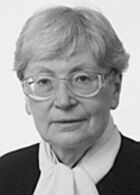
Annelise Heigl-Evers was born in Einbeck, Lower Saxony. Between 1938 and 1944, she first studied German literature and art history, and later medicine in Jena, Tübingen, Gießen, and Göttingen, where in 1944 she earned her doctorate with a dissertation on the question of medical negligence. She initially practised as a cardiologist but soon turned to psychosomatic medicine. She worked for many years at the psychosomatically oriented Niedersächsisches Landeskrankenhaus Tiefenbrunn near Göttingen, where she became a collaborator of Werner Schwidder and conducted group psychotherapies from 1959 onward. Between 1957 and 1962, she underwent psychoanalytic training in Göttingen and was admitted to the Deutsche Psychoanalytische Gesellschaft (DPG).
In 1959, she married the psychoanalyst Franz Heigl (1920–2001), with whom she developed the “Göttinger Modell” of applying psychoanalysis to groups in the 1960s. In 1967, Annelise Heigl-Evers founded the Deutscher Arbeitskreis für Gruppenpsychotherapie und Gruppendynamik (DAAG), serving as its first chairperson and co-editor of its journal Gruppenpsychotherapie und Gruppendynamik. From 1969 onward, she was a training and supervising analyst of the Deutsche Gesellschaft für Psychoanalyse, Psychotherapie, Psychosomatik und Tiefenpsychologie (DGPT).
In 1974, Heigl-Evers was appointed professor at the University of Göttingen, where she headed the Forschungsstelle für Gruppenprozesse until 1977. From 1977 to 1986, she was Professor of Psychotherapy and Psychosomatics at the University of Düsseldorf, where in 1978 she founded the Klinik für Psychosomatische Medizin und Psychotherapie, serving as its medical director until 1989. In 1981, under her direction, the Weiterbildungsinstitut für Psychoanalyse und Psychotherapie was established in Düsseldorf, and in 1985 she was among the founders of the Arbeitsgemeinschaft für die Anwendung der Psychoanalyse in Gruppen.
Annelise Heigl-Evers devoted particular attention to patients with structural disorders such as borderline and pre-psychotic disorders, severe narcissistic personality disorders, as well as dependency and addiction disorders. For their treatment, she developed the "psychoanalytisch-interaktionelle Methode" (psychoanalytic-interactional method), which focuses not on the patient’s subjective and unconscious experience, but on their relational difficulties in social situations. Its goal is to make interpersonal dynamics transparent for the patient and to foster social relationships that promote development. (Top of the article)
- SELECTED WORKS
- Zur Frage der ärztlichen Fahrlässigkeit. Med. Diss. Göttingen 1944
- Trauminterpretation in der analytischen Behandlung. Z Psychosom Med 7, 1961, 193-204
- (ed.) Psychoanalyse und Gruppe. Göttingen 1971
- Konzepte der analytischen Gruppenpsychotherapie. Göttingen 1972; 1978
- Das Irrationale in der Psychoanalyse. Theoretische und klinische Aspekte. Göttingen 1972
- (ed.) Gruppendynamik. Göttingen 1973
- (ed.) Sozialpsychologie, Bd. 1: Die Erforschung der zwischenmenschlichen Beziehungen; Bd. 2: Gruppendynamik und Gruppentherapie. In: Die Psychologie des 20. Jahrhunderts VIII: Lewin und die Folgen. Weinheim u.a. 1979
- Lehrbuch der Psychotherapie. Stuttgart 1993; Lübeck 1997
- (ed.) Suchtkranke in ihrer inneren und äußeren Realität. Praxis der Suchttherapie im Methodenvergleich. Göttingen 1995
- Entstehung des deutschen Arbeitskreises für Gruppenpsychotherapie und Gruppendynamik (DAGG). In G. R. Gfäller und G. Leutz (eds): Gruppenanalyse, Gruppendynamik, Psychodrama. Heidelberg 2004; 2006, 34-44
- (and Franz Heigl) Lieben und Geliebtwerden in der Ehe. Eine tiefenpsychologische Studie über Ursachen und Auswirkungen von Partnerschaftskonflikten. Stuttgart 1969; Frankfurt/M. 1987
- (et al.) (eds) Handbuch der Ehe-, Familien- und Gruppentherapie, Bd.1-3. München 1973
- (et al.) (eds) Ursprünge seelisch bedingter Krankheiten. Eine Untersuchung an 100 + 9 Zwillingspaaren mit Neurosen und psychosomatischen Erkrankungen, Bd. 1: Wege, Probleme und Methoden; Bd. 2: Ergebnisse. Göttingen 1980; 1981
- (und Brigitte Weidenhammer) Der Körper als Bedeutungslandschaft. Die unbewusste Organisation der weiblichen Geschlechtsidentität. Bern u.a. 1988; 1997
- (et al.) (eds) Suchttherapie: psychoanalytisch, verhaltenstherapeutisch. Göttingen 1991
- (and Jürgen Ott) (eds) Die psychoanalytisch-interaktionelle Methode. Theorie und Praxis. Göttingen 1994
- (and Brigitte Boothe) Psychoanalyse der frühen weiblichen Entwicklung. München 1996
- (et al.) (eds) Die Person des Therapeuten in der Behandlung Suchtkranker. Persönlichkeit und Prozeßqualität. Göttingen 1997
- (et al.) (eds) Therapien bei Sucht und Abhängigkeiten. Psychoanalyse, Verhaltenstherapie, systemische Therapie. Göttingen 2002
- REFERENCES
- Arbeitsgemeinschaft für die Anwendung der Psychoanalyse in Gruppen (25.10.2023)
- Heinrich-Heine-Universität Düsseldorf (2021-08-30)
- Gfäller, Georg R.: In memoriam Annelise Heigl-Evers. Gruppenanalyse 12, 2002, 91-93
- Wikipedia (2008-04-09)
- PHOTO: Vandenhoeck & Ruprecht Verlag
Else Heilpern née Fuchs (1896-1971)
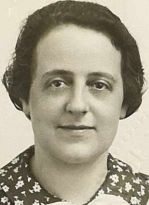
Else Pauline Fuchs was born into a Jewish family in Berlin, the youngest daughter of Sanitätsrat Dr. Paul Fuchs and his wife Gertrud, née Boas. She was a remedial teacher by profession and worked as a general and maternity nurse before beginning her training at the Berliner Psychoanalytisches Institut (BPI) in the late 1920s. Her training analyst was Jenö Harnik.
Else Fuchs was among the recipients of Otto Fenichel’s Rundbriefe and took part in the meetings of the Pädagogische Arbeitsgemeinschaft at the BPI, led by Siegfried Bernfeld, where in 1933 she presented a paper on “Neid und Freßgier.” Sigmund Freud, whose son Oliver was married to Else’s older sister Henny, supported her admission to the Deutsche Psychoanalytische Gesellschaft (DPG), where she became an associate member in 1933. Themes of her lectures held at the DPG in 1933/34 were the psychoanalysis of stuttering and the experience of suffocation under anesthesia.
After Hitler’s rise to power, life in Germany became dangerous for Else Fuchs and her Jewish life partner, Edmund Heilpern (1892-1980), a Viennese-born chemist, journalist, and advertising expert. In 1934, Heilpern was expelled from Germany for his “anti-state attitude,” and the couple moved to Vienna, where they married later that year. Else Heilpern's membership was transferred from the DPG to the Wiener Psychoanalytische Vereinigung in 1935. After Austria’s annexation by Nazi Germany in 1938, she emigrated with her husband and daughter Gertrud to the United States.
They settled in Topeka, Kansas, where Else Heilpern worked at the Menninger Clinic until 1940. She then opened her own psychoanalytic practice in Topeka and served as a consulting psychologist for Friends University in Wichita, Kansas. Her special subjects, eating and speech disorders, remained the focus of her writings and lectures in the US as well. In a guest lecture given to the Chicago Psychoanalytic Society in 1939, she underscored the importance of a traumatic event in the onset of stuttering. Her analysis of a black intellectual suffering from self-doubt, published under the name "Hillpern", met with a mixed reception. (Top of the article)
- SELECTED WORKS
- Verweigerte Nahrungsaufnahme. Z psa Päd 4, 1930, 128-133
- Neid und Freßgier. Z psa Päd 7, 1933, 220-223
- Zur Psychoanalyse des Stotterns. IZP 20, 1934, 375-389
- A case of stuttering. Psa Quart 10, 1941, 95-115
- Psychological problems of stepchildren. Psychoanal Rev 30, 1943, 163-176
- [Hillpern, Else P.] (mit Edmund P. Hillpern and Irving A. Spaulding) Bristow Rogers: American Negro. A Psychoanalytic Case History. New York 1949
- REFERENCES
- Aufbau, July 23, 1943: Todesanzeige Dr. Paul Fuchs
- biografiA (2025-11-11)
- Garz, Detlef: Von den Nazis vertrieben. Autobiographische Zeugnisse von Emigrantinnen und Emigranten. Opladen; Toronto 2021
- IZP 19 (4), 1933
- Lawrence Journal-World - 22. Febr. 1941, 5 (2024-06-26)
- Mühlleitner, Elke: Biographisches Lexikon der Psychoanalyse. Die Mitglieder der Psychologischen Mittwoch-Gesellschaft und der Wiener Psychoanalytischen Vereinigung (1902-1938). Tübingen 1992
- Mühlleitner, Elke: Heilpern, Else geb. Fuchs. In B. Keintzel und I. Korotin (Hg.): Wissenschaftlerinnen in und aus Österreich. Leben - Werk – Wirken. Wien 2002, 277f
- Ross, Nathaniel: Bristow Rogers: American Negro. A Psychoanalytical Case History. By Else P. Hillpern, Irving A. Spaulding, Edmund P. Hillpern. New York: Hermitage House, Inc., 1949. 184 pp.. Psa Quart 20, 1951, 122-123
- Seeber, Ursula: Asyl wider Willen. Exil in Österreich 1933-1938. Wien 2003
- University of Iowa Digital Library: Edmund Heilpern (2020-12-07)
- US Social Security Death Index + Hillpern Family History (2025-11-12)
- PHOTO: United States, Missouri, Naturalization Records, 1843-1991. National Archives at New York (FamilySearch 2023-11-02)
Karen Horney née Danielsen (1885-1952)
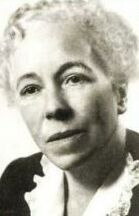
Karen Horney, like Erich Fromm, Frieda Fromm-Reichmann, and Clara Thompson, belonged to the Cultural or Neo-Freudian (Neo-Analytic) School of psychoanalysis. She was born in Hamburg as the daughter of Berndt Wackels Danielsen, a German-Norwegian captain of the HAPAG, and Clotilde Marie van Ronzelen, who came from a wealthy Dutch family. In 1906, Karen Danielsen, together with her friend Josine Ebsen, entered medical school at the University of Freiburg, continuing her studies in Göttingen and Berlin, where she passed her medical examination in 1911.
In 1909, she married Oskar Horney (1882–1947), an economic and political scientist, who made a career as Secretary General of the Stinnes Corporation. They had three daughters: Brigitte (*1911), Marianne (*1913), and Renate (* 1916); they would divorce officially in 1938. For personal and professional reasons, Karen Horney began an analysis with Karl Abraham in 1910, which she continued with interruptions until 1918. In 1912, she became a member of the Berliner Psychoanalytische Vereinigung and participated in establishing the Berliner Psychoanalytisches Institut (BPI).
Karen Horney completed her neurological-psychiatric residence in 1912 at the City Hospital Urban and at the psychiatric sanatorium Berolinum in Lankwitz, and subsequently worked as an assistant physician at the neurological outpatient clinic of Hermann Oppenheim. In 1913, she began working at the Berlin Charité under Karl Bonhoeffer, who in 1915 supervised her doctoral thesis on post-traumatic psychoses following head injuries. From 1914 to 1918, she again worked at the Berolinum before establishing herself in 1919 as a specialist in psychoanalysis. In 1920/1921, she underwent training analysis with Hanns Sachs and then served as training analyst at the BPI until 1932.
At the 1922 IPA Congress in Berlin, Karen Horney presented her paper Zur Genese des weiblichen Kastrationskomplexes, in which she critically discussed Karl Abraham’s essay Äußerungsformen des weiblichen Kastrationskomplexes and for the first time challenged Sigmund Freud’s theory of penis envy. Freud responded in 1925 with his essay Einige psychische Folgen des anatomischen Geschlechtsunterschieds. It was the beginning of the so-called Freud–Jones debate on female sexuality, with Freud and Horney as its principal antagonists.
In the 1920s and 1930s, Karen Horney developed her own concept of the castration complex in women. She acknowledged an early, anatomically based primary penis envy, which, however, does not hinder a womanly love-relation to the father. Whereas Freud’s concept of penis envy is based on the non-discovery of the vagina, Horney assumed the girl's awareness of early vaginal sensations. Dread of vaginal injury and disappointment at a rejecting father give rise to the castration complex, accompanied by repression of the vagina and a flight from womanhood. The identification with the mother is replaced by identification with the father, and penis envy is revived, only now unfolding its full strength in defense against the female Oedipal attachment. According to Horney, the denial of the vagina serves men to ward off their envy of women's ability to give birth, while for women it means the adoption of culturally fixed male values and the renunciation of self-realisation.
In 1932, Karen Horney went to the United States at the invitation of Franz Alexander to assist in establishing a psychoanalytic institute in Chicago. After differences with Alexander, she moved to New York in 1935 and became a member of the New York Psychoanalytic Society (NYPS) and a training analyst at the Washington–Baltimore Institute. She joined the “Zodiac Club” around Harry Stack Sullivan, whose members included Clara Thompson and Erich Fromm. Her Neo-Freudian ideas met with criticism in the NYPS, and she was only granted a limited status as a training analyst. Consequently, she and other Zodiac members resigned from the NYPS in 1941 and founded the American Institute for Psychoanalysis (AIP) and the Association for the Advancement of Psychoanalysis (AAP).
Karen Horney was editor of the American Journal of Psychoanalysis and president of the AIP till the end of her life. She opposed “lay analysis," and when, at her insistence, the non-physician Erich Fromm was denied to teach at the AIP, Fromm, Sullivan, Thompson, Fromm-Reichmann, and others left the AAP and founded the New York branch of the Washington School of Psychiatry in 1943.
In the United States, Karen Horney increasingly distanced herself from Freud’s positions and questioned not only his conception of femininity but his entire drive theory. In her view, it is not sexual but cultural factors that are decisive in the development of neuroses. The neurotic would have experienced culturally conditioned difficulties in an especially intense form during childhood and would respond with the basic anxiety characteristic of him.
In her later years, Karen Horney turned to Zen Buddhism. She died at the age of 67 from carcinoma of the gall bladder. (Top of the article)
- SELECTED WORKS (s. a. International Karen Horney Society)
- Ein kasuistischer Beitrag zur Frage der traumatischen Psychosen. Med. Diss. Berlin 1915
- Zur Genese des weiblichen Kastrationskomplexes. IZP 9, 1923, 12-26 [On the genesis of the castration complex in women. IJP 5, 1924, 50–65]
- Flucht aus der Weiblichkeit. Der Männlichkeitskomplex der Frau im Spiegel männlicher und weiblicher Betrachtung. IZP 12, 1926, 360-374 [The flight from womanhood. The masculinity-complex in women as viewed by men and by women. IJP 7, 1926, 324-393]
- Die prämenstruellen Verstimmungen. Z psa Päd 5, 1931, 161-167
- Über den "Männlichkeitskomplex der Frau". Zeitschrift für ärztliche Fortbildung 25, 1928, 88ff
- Das Mißtrauen zwischen des Geschlechtern. Die psychoanalytische Bewegung 2, 1930, 521-537
- Die Angst vor der Frau. IZP 18, 1932, 5-18
- Die Verleugnung der Vagina. Ein Beitrag zur Frage der spezifisch weiblichen Genitalängste. IZP 19, 1933, 372-384 [The denial of the vagina. A contribution to the problem of genital anxieties specific to women. IJP14, 1933, 57-70]
- The Neurotic Personality of our Time. New York 1937 [Der neurotische Mensch unserer Zeit. Stuttgart 1951; Gießen 2014]
- New Ways in Psychoanalysis. New York 1939 [Neue Wege in der Psychoanalyse. Stuttgart 1951]
- Self-Analysis. New York 1942 [Selbstanalyse. München 1974]
- Our Inner Conflicts. New York 1945 [Unsere inneren Konflikte. München 1973]
- Neurosis and Human Growth. New York 1950 [Neurose und menschliches Wachstum. Das Ringen um Selbstverwirklichung. München 1975]
- Feminine Psychology. New York 1967 [Die Psychologie der Frau. Frankfurt/M. 1977]
- The Adolescent Diaries of Karen Horney. New York 1989
- Final Lectures. New York u.a. 1987 [Analytische Technik. Die letzten Vorlesungen. Frankfurt/M. 1990]
- The Therapeutic Process. Essays and Lectures. New Haven u.a. 1999
- REFERENCES
- Ärztinnen im Kaiserreich. Institut für Geschichte der Medizin und Ethik in der Medizin, Charité Berlin 2015 (2018-01-25)
- Eckardt, Marianne Horney: Karen Horney. A portrait. Am J Psychoanal 65, 2005, 95-101 + 66, 2006, 105-108
- International Karen Horney Society (2025-11-13)
- Kozlik-Voigt, Babette: Karen Horney. Auf der Suche nach dem verlorenen Selbst. Bad Rappenau 2015
- Mit Freud in Berlin (2020-10-21)
- Paris, J. Bernard: Karen Horney. Leben und Werk. Freiburg 1996
- Paris, Bernard: Horney-Danielsen, Karin. In Dictionnaire international de la psychanalyse (2002). Hg. von A. de Mijolla. Paris 2005, 795-797 [International Dictionary of Psychoanalysis. Detroit u. a. 2005, 758-760]
- Peters, Uwe Henrik: Karen Horney. In ders.: Psychiatrie im Exil. Düsseldorf 1992, 189-201
- Quinn, Susan: A Mind of her Own. The Life of Karen Horney. New York 1987
- Roudinesco, Elisabeth, and Michel Plon: Wörterbuch der Psychoanalyse (1997). Wien, New York 2004
- Rubins, Jack L.: Karen Horney. Sanfte Rebellin der Psychoanalyse. Frankfurt/M. 1983
- Schädlich, Susanne: Karen Horney. Die Rivalin Freuds. Stuttgart 2006
- Stephan, Inge: Gründerinnen der Psychoanalyse. Stuttgart 1992
- PHOTO: Jacobi? Yale University Library: Manuscripts and Archives Digital Images Database
Gertrud Jacob (1893-1940)
The artist and psychoanalyst Gertrud Jacob was born into an orthodox Jewish family in Kiel, the oldest of five daughters of a well-known physician. After studying art with Georg Burmester in Kiel and Lovis Corinth in Berlin, she decided to go into medicine with the intention of becoming a psychiatrist. She studied at the Medical Schools of Kiel, Berlin and Göttingen from 1919 to 1924 and received her doctorate in Kiel in 1926. She then worked as an assistant physician at the Psychiatric-Neurological University Clinic in Heidelberg and was admitted as a neurologist in 1930. During this time, and while hospitalised in Hamburg, she created most of her portraits of psychotic patients, through which Gertrud Jacob became known.
From 1929 to 1930, she underwent training analysis with Frieda Fromm-Reichmann in Heidelberg, with whom she became close friends. Her control analysts were Max Eitingon and Clara Happel. In 1930, Gertrud Jacob opened a private practice as a psychiatrist and psychoanalyst in Hamburg and joined the psychoanalytic study group around August Watermann and Clara Happel. In 1933, a few days before Hitler came to power, she moved to Alsace, where she worked at a psychiatric private sanatorium in Guebwiller. A year later, she emigrated to Palestine with Frieda Fromm-Reichmann and, in 1935, to the United States.
Gertrud Jacob worked for several months as an analyst at the psychiatric Michell Sanitarium in Peoria, Illinois, before accepting a position at the Menninger Clinic in Topeka, Kansas, in October 1935. In 1936, she had to give up this position when a tuberculosis infection, which she had contracted in Heidelberg, became acute again. Frieda Fromm-Reichmann brought her friend to Chestnut Lodge in Rockville, where Gertrud Jacob — apparently sufficiently recovered — treated patients at the private mental hospital headed by Fromm-Reichmann. In 1938, she became a member of the Washington-Baltimore Psychoanalytic Society and was appointed to the institute's training committee the following year.
When her health again failed, Gertrud Jacob moved to New Mexico in 1939, in the hope that a drier climate might help. She built up a psychoanalytic practice in Santa Fe and was planning to lecture on psychoanalysis. However, in early 1940, she had another TBC relapse which required surgical treatment in the course of which she died. (Top of the article)
- SELECTED WORKS
- Experimentelle Veränderungen des reticulo-endothelialen Systems durch Infektionserreger. Med. Diss. Kiel 1926
- Analyse eines Falles von seniler Demenz (Störungen der Orientierung des Denkes, der Realitätserfassung). Zschr gesamte Neurol Psychiatr 116, 1928, 25-43
- Notes on a manic-depressive. Vortrag. Washington-Baltimore Psychoanalytic Society, Mai 1938
- Melancholia, 1927. The American Magazine of Art 30, Nr. 8, 1937; Psa Quart 9, 1940, 548
- Beyond hope and despair. Bulletin of the Menninger Clinic 4 (5), 1940, 130
- REFERENCES
- Bulletin of the Menninger Clinic 4 (5), 1940, 130f (2024-06-20)
- Bullard, Dexter Means : Gertrud Jacob, M.D., 1893-1940. Psychiatry 2, 1942, 175
- Fromm-Reichmann, Frieda: In Memoriam Gertrud Jacob, 1893-1940. Psa Quart 9, 1940, 546-548
- Holmes, Maren: Psychoanalytikerin ohne reguläre Ausbildung. Das "Curriculum Vitae" von Gertrud Jacob (1893-1940). Luzifer-Amor 22 (43), 2009, 144-150
- Hornstein, Gail A.: To Redeem One Person is to Redeem the World. A Life of Frieda Fromm-Reichmann. New York 2000
- Siebenhüner, Gerda: Frieda Fromm-Reichmann. Pionierin der analytisch orientierten Psychotherapie von Psychosen. Gießen 2005
- Silverberg, William V.: The art of Gertrud Jacob, 1893-1940. Portraits of psychotics. Psychiatry 4, 1941, 157-160
Edith Jacobson (1897-1978)

Edith Jacobssohn — Jacobson after her emigration — is one of the most important representatives of Object relations theory within Ego psychology. She was born in Haynau, Silesia; her father, Jacques Jacobssohn, was a general practitioner, and her mother, Pelagia, née Pulvermann, was a gifted musician. Beginning in 1917, Edith Jacobssohn studied medicine in Jena, Heidelberg, and Munich, where she passed her state medical examination in 1922. She specialised in pediatrics in Heidelberg and earned her doctorate in 1923 with a dissertation on tuberculosis in infants and young children. From 1925 to 1927, she completed her neurological-psychiatric training at Hermann Oppenheim's Neurology Polyclinic and at the psychiatric clinic of the Charité in Berlin. There she met the psychiatrist Paul Jossmann (1891–1978), with whom she later had a long-standing love affair. In 1929, she opened a private practice as a neurologist in Berlin.
In 1925, Edith Jacobssohn began her psychoanalytic training at the Berliner Psychoanalytisches Institut (BPI), her training analyst was Otto Fenichel. She joined Fenichel's circle of Marxist analysts and worked in a sexual health counseling service in Berlin-Charlottenburg, headed by Wilhelm Reich. Jacobssohn became a member of the Deutsche Psychoanalytische Gesellschaft (DPG) in 1930, and a supervising and training analyst in 1933. From 1930 to 1935, she lectured at the BPI and at the Soziales Institut of the Verein Jugendheim Charlottenburg. Her psychoanalytic-pedagogical publications from this period established her reputation as a significant pioneer of child analysis.
Edith Jacobssohn was one of the few Jewish analysts who initially remained in Germany after Hitler came to power in 1933. Although the DPG required its members to abstain from political activity, she was active in the resistance group "Neu Beginnen". When the group was targeted by the Gestapo and one of her analysands got captured, Jacobssohn herself was arrested in 1935, receiving a sentence of two and a quarter years in prison. In 1938, she became seriously ill and was transferred to a hospital in Leipzig. She was able to escape and, with the help of a global network around Thomas Rubinstein ((Annie Reich's husband) and Otto Fenichel, managed to emigrate to Prague and then via Paris to the United States.
Personal notes from her prison stay were recently rediscovered and published in 2015. While still in prison, Edith Jacobssohn wrote her essay Ways of female superego formation and the female castration conflict, in which she criticised Freud’s thesis that the female superego, compared with that of the male, is organised rather weakly due to the absence of castration anxiety. In contrast, she described the formation of an independent female superego by accepting the vagina as a fully valued and libidinally cathected genital.
In 1938, Edith Jacobson settled in New York, where she became a member of the New York Psychoanalytic Society (NYPS) in 1941, and a training analyst a year later. She served as president of the NYPS from 1954 to 1956. In the United States she wrote her major works, through which she became internationally known. Influenced by the ego psychology of Otto Fenichel and later Heinz Hartmann, she undertook an integration of instinct theory and object relations theory and shifted her interest from instinctual vicissitudes to intrapsychic structures.
Her 1964 book The Self and the Object World is regarded as one of the most important works in psychoanalytic literature. Jacobson traces the progressive structural differentiation in the development of identity: from an unstructured primal psychophysiological self through the genesis of self- and object representations to the formation of the ego and superego. Jacobson stressed that establishing a coherent self requires firm boundaries between self and object representations and the cathexis of the self-representations. The image of the self issues from a direct awareness of inner experiences and from perception of the self as an object.
Also among the classic texts is Jacobson’s comparative study of normal, neurotic, and psychotic-depressive states (1971), which are all associated with a loss of self-esteem. According to her, depression is based on a narcissistic conflict, caused by early childhood trauma, between the desired self-image and the image of the failing devalued self. This results in an unstable separation between self and object representations and a tendency toward regression, which is less pronounced in normal or neurotic depression, whereas in psychotic depression regression may extend to the dissolution of the boundary between self and object. (Top of the article)
- SELECTED WORKS
- Zur Prognose der Säuglings- und Kleinkindertuberkulose. Med. Diss. Heidelberg 1923
- Beitrag zur asozialen Charakterbildung. IZP 16, 1930, 210-235
- Warum fällt es der Mutter schwer, ihr Kind sexuell aufzuklären? Die Warte 2 (6), 1932
- Lernstörungen beim Schulkind durch masochistische Mechanismen. IZP 18, 1932, 242-251
- Zum Heilungsproblem in der Kinderanalyse. IZP 21, 1935, 131-132
- Beitrag zur Entwicklung des weiblichen Kindwunsches. IZP 22, 1936, 371-379
- Depression. The oedipus conflict in the development of depressive mechanisms. Psa Quart 12, 1943, 541-560
- Wege der weiblichen Über-Ich-Bildung. IZP 23 (3), 1937, 402-412 [Ways of female superego formation and the female castration conflict. Psa Quart 45 (4), 1976, 525-538]
- The effect of disappointment on ego and superego formation in normal and depressive development. Psychoanal Rev 33, 1946, 129-147
- Observations on the psychological effect of imprisonment on female political prisoners. In K. R. Eissler (Hg.): Searchlight on Delinquency. New York 1949, 341-368
- Development of the wish for a child in boys. Psa Study Child 5, 1950, 139-152
- Contribution to the metapsychology of cyclothymic depression. In P. Greenacre (Hg.): Affective Disorders. New York 1953, 49-83
- The affects and their pleasure-unpleasure qualities in relation to the psychic discharge processes. In R. M. Loewenstein (Hg.): Affects, Drives, Behaviour. New York 1953, 38-66
- Metapsychological difference between the manic-depressive and schizophrenic processes of identification. Annual Survey of Psycho-Analysis 4, 1953, 91-93
- The self and the object world: vicissitudes of their infantile cathexes and their influence on ideational and affective development. Psa Study Child 9, 1954, 75-127
- On psychotic identifications. IJP 35, 1954, 102-107
- Denial and repression. JAPA 5, 1957, 61-92
- Depersonalization. JAPA 7, 1959, 581-610 [Depersonalisierung. Psyche 28, 1974, 193 - 219]
- Adolescent moods and the psychic structures in adolescence. Psa Study Child 16, 1961, 164-183
- The Self and the Object World. New York 1964 [Das Selbst und die Welt der Objekte. Frankfurt/M. 1973]
- Psychotic Conflict and Reality. New York 1967 [Psychotischer Konflikt und Realität. Frankfurt/M. 1972]
- Depression. Comparative Study of Normal, Neurotic, and Psychotic Conditions. New York 1971 [Depression. Eine vergleichende Untersuchung normaler, neurotischer und psychotisch-depressiver Zustände. Frankfurt/M. 1977]
- Gefängnisaufzeichnungen. Hg. von J. Kessler und R. Kaufhold. Gießen 2015
- REFERENCES
- Ärztinnen im Kaiserreich. Institut für Geschichte der Medizin und Ethik in der Medizin, Charité Berlin 2015 (2019-01-25)
- Brecht, Karen et al. (Hg.): "Hier geht das Leben auf eine sehr merkwürige Weise weiter...". Zur Geschichte der Psychoanalyse in Deutschland. Hamburg 1985
- Edith-Jacobson-Institut (2024-11-14)
- Kaufhold, Roland: Edith Jacobson (10.9.1897 – 8.12.1978). psyalpha (20.6.2024) Kaufhold, Roland, and Galina Hristeva: »Das Leben ist aus. Abrechnung halten!« Eine Erinnerung an vertriebene Psychoanalytiker unter besonderer Berücksichtigung von Wilhelm Reichs epochemachenden Faschismus-Analysen. Psychoanalyse im Widerspruch Nr. 66, 2021, 7-66
- Kaufhold, Roland: „Ich habe nie verstanden, wie man über seine eigenen Probleme schreiben kann“. Vor 45 Jahren starb die Berliner Psychoanalytikerin und Widerständlerin Edith Jacobson in New York. haGalil, 8.12.2023 (2024-01-12)
- Kaufhold, Roland: Edith Jacobson als bedeutsame Pionierin in der Geschichte der Kinderanalyse. Kinderanalyse 32 (1), 2024, 40-58
- Kessler, Judith: Das schwarze Heft. Wie ich ein Vierteljahrhundert auf Edith Jacobsons Gefängnisnotizen saß. In Edith Jacobson: Gefängnisaufzeichnungen. Gießen 2015, 11–44
- Kronold, Edward: Edith Jacobson 1897-1978. Psa Quart 49, 1980, 505-507
- Kunstreich, Tjark: Edith Jacobson und Herbert Rosenfeld, ein impliziter klinischer Dialog. Luzifer-Amor 28 (56), 2015, 90-107
- Lockot, Regine: Die Reinigung der Psychoanalyse. Die Deutsche Psychoanalytische Gesellschaft im Spiegel von Dokumenten und Zeitzeugen (1933-1951). Tübingen 1994; Gießen 2013
- Luzifer-Amor 18 (35), 2005: Edith Jacobson in Berlin
- May, Ulrike, und Elke Mühlleitner (Hg.): Edith Jacobson. Sie selbst und die Welt ihrer Objekte. Leben, Werk, Erinnerungen. Gießen 2005
- Milrod, David: Interviews mit Edith Jacobson. Abraham A. Brill Library, New York Psychoanalytic Institute 1971
- Mit Freud in Berlin (2020-10-21)
- Reich Rubin, Lore: Erinnerungen an eine chaotische Welt. Mein Leben als Tochter von Annie Reich und Wilhelm Reich. Gießen 2019
- Reinke, Ellen: Edith Jacobson 1897-1978. Notizen zu Leben und Werk. Forum Psychoanal 13 (4), 1997, 353-363
- Rolnik, Eran: Freud auf Hebräisch. Geschichte der Psychoanalyse im jüdischen Palästina. Göttingen 2013
- Roudinesco, Elisabeth, and Michel Plon: Wörterbuch der Psychoanalyse (1997). Wien, New York 2004
- Schröter, Michael, Elke Mühlleitner and Ulrike May: Edith Jacobssohn. Ihre Jahre in Deutschland (1897-1938). Psyche 58, 2004, 544-560 [Edith Jacobson. Forty years in Germany (1897-1938). Ann Psychoanal 32, 2004, 199-215]
- Schröter, Michael: Das Werden einer Psychoanalytikerin. Familie, Ausbildung und Berufstätigkeit von Edith Jacobssohn bis Ende 1932. In U. May und E. Mühlleitner (Hg.): Edith Jacobson. Sie selbst und ihre Objekte. Leben, Werk, Erinnerungen. Gießen 2005, 19-48
- Schröter, Michael: Psychoanalyse im Fortbildungsangebot für Sozialberufe, Berlin 1930-1933 (Verein Jugendheim). Luzifer-Amor 18 (35), 2005, 46-81
- Thompson, Nellie L.: Jacobson, Edith. In Dictionnaire international de la psychanalyse (2002). Hg. von A. de Mijolla. Paris 2005, 901f [International Dictionary of Psychoanalysis. Detroit u. a. 2005, 883-884]
- Wikipedia German; English
- PHOTO: Mark Silvan; from Brecht et al. 1985, 110
Eva Jaeggi née Schaginger (*1934)
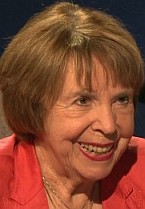
Eva-Maria Jaeggi was born in Vienna as the eldest daughter of Benno Schaginger and Maria, née Freund. Her father lost his position as a lawyer in the postal service following Austria’s Anschluss to Nazi Germany in 1938 and was briefly interned in Dachau because of his activities in the resistance. After the war, he became Director General of the Austrian Post and Telegraph Administration.
Eva Schaginger studied psychology, history, and philosophy at the University of Vienna from 1952 to 1957, completing her doctorate in 1957. Subsequently, she became a research assistant at the Social Research Center of the TU Dortmund. In 1961, she married the Swiss sociologist Urs Jaeggi (1931–2021) and moved with him to Bern, where she worked as an industrial psychologist at the Swiss Post and the academic career counselling. Their daughter Rahel was born in 1966. They divorced in the early 1980s.
After Urs Jaeggi's appointment to the Ruhr University Bochum, Eva Jaeggi worked from 1967 to 1972 at the university’s psychological student counseling service. In 1972, she followed her husband to Berlin, where she became an assistant professor at the Institute of Psychology of the Free University and habilitated in 1978. Subsequently, she accepted an appointment to the Technical University of Berlin, where she taught as Professor of Clinical Psychology until her retirement in 1999.
From the 1970s onward, Eva Jaeggi has also worked in private practice as a psychotherapist. She focused on the behavior therapy until she completed further training as a psychoanalyst in Berlin from 1987 to 1992. She served as a training and supervising analyst at the Berlin Institute for Psychotherapy and Psychoanalysis, and from 1997 to 2012 headed the training course "Tiefenpsychologisch fundierte Psychotherapie" at the Berlin Academy for Psychotherapy. She was also a guest lecturer at the Sigmund Freud Private University in Vienna.
Eva Jaeggi described her path from behavior therapist to psychoanalyst in her 1991 book Neugier als Beruf. Her scholarly publications focus on comparing different psychotherapeutic approaches and on questions concerning the psychotherapist profession. Her more popular books deal with themes such as love and aging. (Top of the article)
- SELECTED WORKS
- Aufmerksamkeitsschwankungen an komplexem Material. Phil. Diss. Wien 1957
- Kognitive Verhaltenstherapie. Kritik und Neubestimmung eines aktuellen Konzepts. Weinheim 1978
- Andere verstehen. Ein Trainingskurs für psychosoziale Berufe. Weinheim 1983
- Das präsentative Symbol als Wirkfaktor in der Psychotherapie. Oder: Der Patient als Künstler. Forum Psychoanal 5, 1989, 140-152
- Psychologie und Alltag. München 1989
- Neugier als Beruf. Autobiographie einer Psychotherapeutin. München 1991
- Ich sag' mir selber Guten Morgen. Single - eine moderne Lebensform. München 1992
- Die problematische Beziehungen zwischen Psychotherapeuten und Psychotherapieforschung. In M. B. Buchholz und U. Streeck (Hg.): Heilen - Forschen - Interaktion. Psychotherapie und qualitative Sozialforschung. Opladen 1994
- Zu heilen die zerstoßnen Herzen. Die Hauptrichtungen der Psychotherapie und ihre Menschenbilder. Reinbek 1995
- Viel zu jung, um alt zu sein. Das neue Lebensgefühl ab sechzig. Reinbek 1996
- Die Psychoanalyse bietet die differenzierteste und intelligenteste Art und Weise der Selbstaufklärung. In W. Mertens (Hg.): Der Beruf des Psychoanalytikers. Stuttgart 1997
- Liebesglück - Beziehungsarbeit. Warum das Lieben heute schwierig ist. Reinbek 1999
- Und wer therapiert die Therapeuten? Stuttgart 2001
- Kritische Psychologie und Kritik der Psychologie - eine Übersicht. J f Psych 10, 2002, 305-314
- Liebe und Heilung. Neue Perspektiven in der therapeutischen Beziehung. Düsseldorf; Zürich 2004
- Das Privatleben des Psychotherapeuten. In O. F. Kernberg (Hg.): Wir: Psychotherapeuten über sich und ihren "unmöglichen" Beruf. Stuttgart 2005
- Das Alter - Täuschungen und Selbsttäuschungen. J f Psych 14, 2006, 193-204
- Wer bin ich? Frag doch die anderen! Wie Identität entsteht und wie sie sich verändert. Bern 2014
- Liebe und andere Wagnisse. Über das Leben in Beziehungen. Munderfing 2016
- Die eigene Identität finden. WDR 5 Das philosophische Radio, 2024-12-30 (2025-12-03)
- (with Robert Rohner and Peter M. Wiedemann) Gibt es auch Wahnsinn, hat es doch Methoden. Eine Einführung in die Klinische Psychologie aus sozialwissenschaftlicher Sicht. München 1990
- (and Volker Riegels) Techniken und Theorie der tiefenpsychologisch fundierten Psychotherapie. Stuttgart 2008
- REFERENCES
- Deutsche Gesellschaft für Verhaltenstherapie (DGVT) (2024-06-24)
- Flügel, Steffen: DGVT-Interview mit Prof. Dr. Jarg Bergold und Prof. Dr. Eva Jaeggi, 16.12.2012. DGVT (2023-10-25)
- De Gregorio, Lea: Eine Querdenkerin, schonungslos. taz, 2019-06-03
- Hegener, Wolfgang, und Heidi Möller (Hg.): Psychotherapie - Profession oder Wissenschaft. Symposium zur Ehrung von Frau Prof. Dr. Eva Jaeggi. Berlin 2000 (2018-03-29)
- Wien Geschichte Wiki: Benno Schaginger (2018-10-11)
- Wikipedia (2018-03-29
- PHOTO: Still from "Leute". SWR1, 2017-10-05
Marie Kalau vom Hofe née Willms (1891-1976?)
Marie Willms was born in Dötlingen in Oldenburg as the daughter of Pastor Emil Willms and his wife Johanne, née Wieting. She grew up in Berlin, where she initially enrolled in art history and modern languages before studying medicine from 1911 to 1916 in Freiburg, Jena, and Munich. After passing her state examination, she worked as a medical intern in Königsberg at the Königliche Universitäts-Nervenklinik and the internal department of the Städtische Krankenanstalt. In 1918, she received her doctorate with a dissertation on cardiac hypertrophy. During this time she married the East Prussian farmer Friedrich Wilhelm Fabian Kalau vom Hofe (1891–?), and in 1919 their daughter Etta-Marie was born. The marriage was later dissolved (before 1945).
Marie (or Maria) Kalau vom Hofe worked from 1920 to 1923 at the psychiatric Staats-Krankenanstalt Friedrichsberg in Hamburg, before she moved to Berlin. In 1925, she began a two-and-a-half-year training analysis with Sándor Radó at the Berliner Psychoanalytisches Institut (BPI), continuing it with Felix Boehm*. From 1926 onward, she worked for the psychiatric clinic at the Charité and as a forensic psychiatrist for the Berlin Police Headquarters. In 1934, she became a member of the Deutsche Psychoanalytische Gesellschaft (DPG), but resigned the following year. She believed her position as a police surgeon was at risk as long as the DPG still had Jewish members, especially after Edith Jacobssohn had been arrested.
In 1937, she began working at the "Aryanised" successor of the BPI, the Deutsches Institut für Psychologische Forschung und Psychotherapie ("Göring-Institut"), where she belonged to the Freudians in the so called "Arbeitsgruppe A." As head of the institute's department of criminal psychological research and forensic psychiatry, she was responsible for the assessment and treatment of homosexuals, some of whom she apparently managed to protect from being sent to concentration camps.
After the end of the war, Kalau vom Hofe participated in the re-founding of the DPG in 1945, and in the founding of the Deutsche Gesellschaft für Psychotherapie und Tiefenpsychologie (DGPT) in 1949. Like several other medical psychotherapists, she advocated at the time for prohibiting psychotherapy by non-physicians. In the 1950s, she established herself as a neurologist and psychiatrist in Hamburg. All those interested in psychoanalysis in Hamburg in the first postwar years underwent analysis with the “iron countess,” as she was called, including such well-known figures as Arthur Jores and Hans Bürger-Prinz. (Top of the article)
- * For this information I thank Regine Lockot.
- SELECTED WORKS
- Ein Fall von Herzhypertrophie bei Dystrophia musculorum progressiva. Med. Diss. Königsberg 1918
- Kriminalpsychologie. Zentralblatt für Psychotherapie 14, 1942, 37-41
- REFERENCES
- Boehm, Felix: Kommentiertes Mitgliederverzeichnis der DPG vom 19.7.1951
- Brecht, Karen, et al. (eds): "Hier geht das Leben auf eine sehr merkwürdige Weise weiter...". Zur Geschichte der Psychoanalyse in Deutschland. Hamburg 1985
- Cocks, Geoffrey: Psychotherapy in the Third Reich. The Göring Institute. New York 1985
- Ärztinnen im Kaiserreich. Institut für Geschichte der Medizin und Ethik in der Medizin, Charité Berlin 2015 (2018-01-25)
- Ehebald, Ulrich: "Wünsch' dir eine lange Fahrt". In L. M. Hermanns (ed.): Psychoanalyse in Selbstdarstellungen, Bd. IV. Tübingen 1998, 73-163
- genealogienetz.de (2013-11-27)
- Gleiss, Irma: Zur Vorgeschichte und Geschichte des Instituts für Psychotherapie e. V. Berlin. Eine chronologische Skizze. In I. Kohte-Meyer (Hg.): Über die Schwierigkeit, die eigene Geschichte zu schreiben. 50 Jahre Institut für Psychotherapie Berlin. Tübingen 1998, 208-284
- Kerr, Philip: The Pale Criminal. London 1990 (In this book, Mrs. Kalau vom Hofe plays a role as a criminal psychological consultant.)
- Lockot, Regine: Erinnern und Durcharbeiten. Zur Geschichte der Psychoanalyse und Psychotherapie im Nationalsozialismus. Frankfurt/M. 1985
- Lockot, Regine: DPV und DPG auf dem dünnen Eis der DGPT. Psyche 64, 2010, 1206-1242
- Schoppman, Claudia: Nationalsozialistische Sexualpolitik und weibliche Homosexualität. Pfaffenweiler 1991
- Schröter, Michael: 129 dokumentierte Ausbildungskandidaten am Berliner Psychoanalytischen Institut 1924-1932: Tabelle. Luzifer-Amor 33 (66), 2020 (2020-12-11)
- Topp, Sascha: Deutsche Vereinigung für Jugendpsychiatrie. In H. Fangerau et al. (Hg.): Kinder- und Jugendpsychiatrie im Nationalsozialismus und in der Nachkriegszeit. Berlin 2017, 285-445
- Wikipedia (2025-12-04)
Ingeborg Kath (1906-1982)
The psychoanalyst and neurologist Ingeborg Kath was born in Berlin. She passed the state medical examination in 1932 and completed her residnecy in the internal medicine department, the pathological institute, and the infectious diseases department of the Rudolf Virchow Hospital in Berlin-Wedding. Starting in 1933, she worked as an assistant physician at the Heil- und Pflegeanstalt Berlin-Buch, where she was enmeshed in the National Socialist euthanasia program. According to her own account, she assigned diagnoses relevant to euthanasia on the registration forms only to elderly patients who “would have died soon anyway.” In 1939, she switched to the neurological department of the Ludwig Hoffmann Hospital in Berlin-Buch, where she earned her doctorate in 1944. From 1945 to 1947, she worked in Berlin as research assistant at the Neurological Clinic at Hansaplatz and then as head physician of the neurological department at Tempelhof Hospital.
Ingeborg Kath presumably received her psychoanalytic training at the Berliner Psychoanalytisches Institut or, after its dissolution in 1936, at the coordinated (gleichgeschaltet) Deutsches Institut für Psychologische Forschung und Psychotherapie (“Göring Institute”). One of her training analysts was Felix Boehm. After the war, she initially belonged to the reconstituted Deutsche Psychoanalytische Gesellschaft (DPG). In 1950, she was among the founding members of the Deutsche Psychoanalytische Vereinigung (DPV), together with Carl Müller-Braunschweig, Ada Müller-Braunschweig, Gerhard Scheunert, Käthe Dräger, Hans March, Marie Luise Werner, and Margarete Steinbach. She was also a member of the Deutsche Gesellschaft für Psychotherapie und Tiefenpsychologie.
In later years, Ingeborg Kath tended toward Jungian and esoteric concepts. From the mid-1960s onward, she lived in Celle, having gone blind, and died at the age of 76. (Top of the article)
- SELECTED WORKS
- Ein Beitrag zur Torulameningitis. Med. Diss. Berlin 1944
- REFERENCES
- Brecht, Karen, et al. (eds): "Hier geht das Leben auf eine sehr merkwürdige Weise weiter..." Zur Geschichte der Psychoanalyse in Deutschland. Hamburg 1985
- Hondros, Michael Christian: Die Geschichte der Neurologischen Klinik am Hansaplatz unter besonderer Berücksichtigung des Gesetzes zur Verhütung erbkranken Nachwuchses 1933/34. Med. Diss. Berlin 2015 (2019-06-06)
- Klee, Ernst: Deutsche Medizin im Dritten Reich. Karrieren vor und nach 1945. Frankfurt/M. 2001
- Lockot, Regine: Die Reinigung der Psychoanalyse. Die Deutsche Psychoanalytische Gesellschaft im Spiegel von Dokumenten und Zeitzeugen (1933-1951). Tübingen 1994
- Lockot, Regine: Chronik zur Geschichte der Psychotherapie und zur Psychoanalyse von 1918 bis 1975. DGPT (2020-12-08)
- Pabst, Reinhard: Die Psychoanalytische Arbeitsgemeinschaft München e.V. (PAM) - Institut der DPV. Eine geschichtliche Skizze. In T. Bauriedl und A. Brundke (eds) Psychoanalyse in München. Eine Spurensuche. Gießen 2008, 278-304
- Wirth, Ulrich: E-mail 2016-10-31
Salomea Kempner (1880-1943)
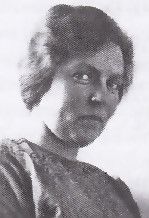
Salomea Kempner was born into a Jewish pharmacist family in Płock in Russian Poland. She was the second youngest of the seven children of Mojzesz Hersz (Heinrich) Kempner and Ella Ruchla, née Margulies. After qualifying as a private tutor, she began studying medicine in 1899 in Zurich and then in Bern, but interrupted her studies after five semesters due to family matters and returned to Poland.
She was a guest student at the medical faculty in Krakow before she resumed her medical studies in Zurich in 1906. She passed the state examination in 1908 in Zurich and received her doctorate on Versuche zum mikroskopischen Nachweis der Narkose der Nerven in 1909 - in the same year as her two years younger sister Felicja Kempner. Subsequently, Salomea Kempner worked in various clinics in Germany and Switzerland. From 1912 to 1921 she was an assistant physician at the Kantonale Irrenanstalt in Rheinau in Switzerland, where she met the Swiss physician and psychoanalyst Philipp Sarasin (1888-1968), who became her lifelong partner.
In 1911, Salomea Kempner joined the Ortsgruppe Zürich of the International Psychoanalytical Association (IPA), which dissolved with the resignation of C. G. Jung in 1914. In 1919, she underwent a short analysis with Hanns Sachs in Zurich and participated in the founding of the Schweizerische Gesellschaft für Psychoanalyse, to which she belonged until 1921. That year, she moved with Sarasin to Vienna, where both underwent training analysis with Sigmund Freud. In 1922, Salomea Kempner became a member of the Wiener Psychoanalytische Vereinigung (WPV). The following year, she gave a lecture on oral sadism at the WPV, which was published in 1925 under the title Some remarks on oral erotism. It was the case-history of an emancipated 25-year-old woman, a medical student, suffering from hysterical vomiting. Kempner traced the triggering sexual conflict back to a repressed autoeroticism of the oral zone, combined with the patient’s identification with her beloved early deceased father and his male role. By interpreting the symptoms as a pregenital regression to oral sadism, a cure was achieved.
In the autumn of 1923, Salomea Kempner moved to Berlin and began working as a psychoanalyst at the policlinic of the Berliner Psychoanalytisches Institut. In 1925, she became a member of the Berliner Psychoanalytische Vereinigung, renamed Deutsche Psychoanalytische Gesellschaft (DPG) in 1926. Her analysands included, among others, Adelheid Koch, Hjordis Simonsen, and Nic Waal. Together with Witold Zaniewicki, she provided the Polish translation of Freud’s Vorlesungen zur Einführung in die Psychoanalyse (Wstęp do psychoanalizy), published in Warsaw in 1935.
Salomea Kempner continued holding consultation hours at the Berlin policlinic until the end of 1933, when she was prohibited from doing so as a “foreign Jew.” After initial resistance, she finally agreed at the end of 1935 to the “voluntary resignation” that the DPG demanded of its Jewish members as part of its self-coordination as an "Aryanised" institution. From 1937 to 1941, she was listed as a direct member of the IPA and conducted control analysis in her Berlin apartment until 1938.
After all efforts to emigrate to Paris or Switzerland had failed, Salomea Kempner was forced in 1939 to move to German-occupied Warsaw. According to a 1946 report by Philipp Sarasin,* she died there on January 29, 1943, of pneumonia. (Top of the article)
- * For this information I thank Regine Lockot.
- SELECTED WORKS
- Versuche zum mikroskopischen Nachweis der Narkose des Nerven. Med. Diss. Zürich 1908/1909
- Beitrag zur Oralerotik. IZP 11, 1925, 69-77 [Some remarks on oral erotism. IJP 6, 1925, 419-429]
- REFERENCES
- Brecht, Karen et al. (eds): "Hier geht das Leben auf eine sehr merkwürige Weise weiter...". Zur Geschichte der Psychoanalyse in Deutschland. Hamburg 1985
- Hermanns, Ludger M.: Salomea Kempner - verschollen im Warschauer Ghetto? Der Beginn einer Spurensuche. In C.-P. Heidel (Hg.): Jüdinnen und Psyche. Frankfurt/M. 2016, 177-194
- Hermanns, Ludger M.: "Unsere letzte psychoanalytische Mohikanerin in Berlin". Die Berliner Jahre (1923–1939) der polnischen Psychoanalytikerin Salomea Kempner (1880–1943) und ihr "Verschwinden" in Warschau. In E. Kobylinska-Dehe, P. Dybel and L. M. Hermanns (eds): Im Schatten von Krieg und Holocaust. Psychoanalyse in Polen im polnisch-deutsch-jüdischen Kontext. Gießen 2019, 87-100
- Matrikeledition der Universität Zürich 1833-1924 (6.6.2019)
- Mühlleitner, Elke: Biographisches Lexikon der Psychoanalyse. Tübingen 1992
- Mühlleitner, Elke: Kempner, Salomea. In B. Keintzel and I. Korotin (eds): Wissenschaftlerinnen in und aus Österreich. Leben - Werk - Wirken. Wien 2002, 362f
- Lockot, Regine: Die Reinigung der Psychoanalyse. Die Deutsche Psychoanalytische Gesellschaft im Spiegel von Dokumenten und Zeitzeugen (1933-1951). Tübingen 1994; Gießen 2013
- Roudinesco, Elisabeth, and Michel Plon: Wörterbuch der Psychoanalyse (1997). Wien, New York 2004
- Sarasin, Philipp: Mitteilung an Carl Müller-Braunschweig am 22.12.1946. DPG-Archiv, Katwan-Bestand K4-345
- Wieser, Annatina: Zur frühen Psychoanalyse in Zürich, 1900-1914. Med. Diss. Zürich 2001 + Luzifer-Amor (17.10.2016)
- PHOTO: Karl Gehry, undated, ca. 1912 (detail). Estate of Karl Gehry, Archiv für Medizingeschichte der Universität Zürich (Signatur PN 295)
Lotte Köhler (1925-2022)
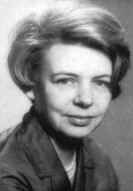
Lotte Köhler was born in Darmstadt as the daughter of the wealthy industrialist Wilhelm Köhler and the physician Irma, née Schmidt. In 1943, she began her medical studies in Frankfurt am Main, continuing after the war in Heidelberg, where she completed her doctorate in 1949. Following her divorce from her first husband, the surgeon Valentin Hottmann (1909–1977), she was appointed by her father in 1952 as general representative of the Darmstadt packaging printing company G. C. Klebe. At the same time, beginning in 1950, she studied chemistry at the Technical University of Darmstadt.
After her second marriage to Fritz Mühleis (1909–1984), the director of a pharmaceutical company, ended in divorce, Lotte Köhler moved to Munich in 1957. She took up a position as an assistant to Paul Matussek at the Max Planck Institute of Psychiatry and in 1958 began an analysis with Fritz Riemann at the Münchner Institut für Psychologische Forschung und Psychotherapie, which was subsequently continued as a training analysis. During this period she met her life partner Hans Kilian (1921–2008), later Professor of Social Psychology and Applied Psychoanalysis, who was also in analysis with Riemann. When this led to complications, she continued her training analysis with Hilde Troidl in 1963. At the same time, she took over the management of the Goebel machine factory from her father, a position she held until 1986.
From 1962 to 1969, Lotte Köhler was a member of Riemann’s Munich Institute, but she criticised its orientation toward a depth psychology inherited from the Nazi era. She undertook a second training analysis with Paul Parin from 1967 to 1970 and became a member of the Schweizerische Gesellschaft für Psychoanalyse in 1974 and, a year later, of the Deutsche Psychoanalytische Vereinigung (DPV). Like Viveka Böök, she joined the Riemann-critical circle around Fritz Friedmann and participated in 1973 in the founding of the DPV-institute Psychoanalytische Arbeitsgemeinschaft München, where she served as a training and supervising analyst until 1996.
Lotte Köhler made a significant contribution to introducing Heinz Kohut’s self psychology and the findings of modern infant and developmental research to the German-speaking world. Drawing on Kohut’s self psychology, René A. Spitz’s developmental psychology, Daniel Stern’s infant research, and John Bowlby’s attachment theory, she investigated the development of self and object representations and the emergence of memory in early childhood. She rejected the psychoanalytic idea of the infant as an antisocial bundle of drives in favor of the concept of a developmental line of mutual object relations that begins already in infancy.
In 2014, the Kilian–Köhler Center was established at Ruhr University Bochum, and since 2021 it has awarded, together with the Sigmund Freud Institute in Frankfurt, the Lotte Köhler-Preis for psychoanalytic developmental, cultural, and social psychology. (Top of the article)
- SELECTED WORKS
- Die Bedeutung der Hauterscheinungen für die Differenzierung der sogenannten akuten Leukämien in echte Leukosen („maligne einförmige Leukose“) und myeloblastische Reaktionen bei genuiner Knochenmarksinsuffizienz. Med. Diss. Heidelberg 1949
- Über einige Aspekte der Behandlung narzißtischer Persönlichkeitsstörungen im Lichte der historischen Entwicklung psychoanalytischer Theoriebildung. Psyche 32, 1978, 1001-1058
- Die amerikanische Psychoanalyse zwischen Ichpsychologie und Selbstpsychologie. Psyche 36, 1982, 344-354
- Neuere Ergebnisse der Kleinkindforschung. Ihre Bedeutung für die Psychoanalyse Erwachsener. Forum der Psychoanalyse 6, 1991, 32-51
- Formen und Folgen früher Bindungserfahrungen. Forum Psychoanal 8, 1992, 263-280
- Selbstpsychologie. In W. Mertens (ed.): Schlüsselbegriffe der Psychoanalyse. Stuttgart 1993, 115-120
- Anwendung der Bindungstheorie in der psychoanalytischen Praxis. Einschränkende Vorbehalte, Nutzen, Fallbeispiele. Psyche 52, 1998, 369-397
- Das Selbst im Säuglings- und Kleinkindalter. In P. Hartmann and W. Milch (eds): Das Selbst im Lebenszyklus. Frankfurt/M. 1998
- Einführung in die Entstehung des Gedächtnisses. In M. Koukkou-Lehmann et al. (eds): Erinnerte Wirklichkeiten. Psychoanalyse und Neurowissenschaft im Dialog. Stuttgart 1998
- Was erwartet die Psychoanalyse von der Bindungstheorie? In B. Strauß et al. (eds): Klinische Bindungsforschung. Theorien, Methoden, Ergebnisse. Stuttgart 2002, 3-8
- Entstehung von Beziehungen: Bindungstheorie. In T. von Uexküll et al. (eds): Psychosomatische Medizin. München 2002 (6), 233-244
- Frühe Störungen aus der Sicht zunehmender Mentalisierung. Forum Psychoanal 20, 2004, 158-174
- Zur Entstehung des autobiographischen Selbst und des autobiogaphischen Gedächtnisses. Implizite und explizite Aspekte. Selbstpsychologie 7, 2006. 96-114
- Psychonalyse und menschliche Entwicklung. In M. Ermann (ed.): Was Freud noch nicht wusste. Neues über die Psychoanalyse. Frankfurt/M. 2006, 39-52
- Der Reformpädagoge Adolph Diesterweg (1790-1866). Psychoanalytische Betrachtungen zu seiner Biografie. Ed. by H. F. Rupp. Gießen 2016
- (et al.) Kulturelle Evolution und Bewusstseinswandel. Hans Kilians historische Psychologie und integrative Anthropologie. Gießen 2011
- REFERENCES
- Bauriedl, Thea, and Astrid Brundke) (Hg.): Psychoanalyse in München. Eine Spurensuche. Gießen 2008
- Deutsches Stiftungszentrum: Nachruf auf Lotte Köhler (21.1.2022)
- Dittrich, Karin A.: Fritz Riemann und Fritz Friedmann — zur Nachkriegsgeschichte des Münchner Psychoanalytischen Instituts1. Luzifer-Amor 8, 1996, 66-76
- Grunert, Johannes: Zur Geschichte der Psychoanalyse in München. Psyche 38, 1984, 865-904
- Köhler, Lotte: "Umsonst war's nicht". Bericht einer betroffenen Zeitzeugin. In L. M. Hermanns (ed.): Psychoanalyse in Selbstdarstellungen, Bd. IV. Tübingen 1998, 165-230
- Schmid, Josef: Lotte Köhler - Psychoanalytikerin, Unternehmerin und Stifterin. Eine Biografie. Göttingen 2023
- Sonnabend, Michael: "Der Mensch ist ein auf Gegenseitigkeit angelegtes Wesen." Porträt Lotte Köhlers. Wirtschaft und Wissenschaft 3, 2004, 30-33 (15.6.2016)
- Wikipedia (21.1.2022)
- PHOTO: Goebel Historie. Courtesy of Lotte Köhler
Gisela Krichhauff (1911-1986)

Gisela Gerda Krichhauff was born into a Hamburg merchant family as the daughter of Otto Friedrich Krichhauff and Anna Maria Luise, née Strack. Her father held a doctorate in law and was a certified public accountant. In the early 1930s, she studied law in Hamburg, then turned to medicine and earned her doctorate in Berlin in 1943.
After the end of the war, Gisela Krichhauff underwent training analysis with the neopsychoanalyst Adelheid Fuchs-Kamp, with whom she was also personally acquainted. It is possible that she was also an analysand of the Freudian analyst Werner Kemper (1899–1975), who emigrated to Brazil in 1948. She worked as a psychoanalyst at the Zentralinstitut für psychogene Erkrankungen der Versicherungsanstalt Berlin, founded in 1945 by Werner Kemper and Harald Schultz-Hencke, as well as at the cross-school Institut für Psychotherapie (IfP), founded two years later.
Her experiences from this work resulted in her articles on a case of stuttering (1951), the inner world of an asthmatic (1955), and chronic endogenous eczema (1956). In her asthmatic patients, she observed a strong inhibition of oral and retentive impulses, the realisation of which is associated with breath-constricting feelings of guilt. In patients with eczema, she identified as the most important cause a severe restriction of milk in the early mother-child relation, whereby the original impulse to scratch open the breast of the withholding mother is displaced onto the own skin.
Gisela Krichhauff chosed group psychotherapy as her specialty. In 1957, she took part in the Second International Congress for Group Psychotherapy in Zurich, and in the 1960s, she conducted seminars on group psychotherapy at the IfP, together with Dorothea Fuchs-Kamp. She translated psychoanalytic writings from Spanish, including Übertragung und Gegenübertragung by Heinrich Racker (1978). When Werner Kemper returned to Germany in 1967 after separating from his wife Anna Kattrin Kemper in Brazil, Gisela Krichhauff became his life partner. (Top of the article)
- SELECTED WORKS
- Über die Heberdenschen Knoten. Med. Diss. Berlin 1943
- Therapeutische Möglichkeiten der Erstuntersuchung bei neurotischen Kindern. Ein Stotterfall. In: Analytische Psychotherapie und Erziehungshilfe. Arbeitstagung veranstaltet vom Senat von Berlin, Hauptjugendamt und dem Institut für Psychotherapie e. V. Berlin, 11-15. Juni 1951. Kongreßbericht. Berlin 1951
- Der Asthmatiker und seine Innenwelt. Z Psychosom Med 2 (2), 1955, 118-126
- Bemerkungen zu genetischen und neurosenstrukturellen Faktoren bei endogenen Ekzemen. Z Psychosom Med 2 (3), 1956, 184-192
- REFERENCES
- Füchtner, Hans: Psychoanalytiker, Mitläufer, Nazi, Gestapomann, militanter Marxist? Der Fall Werner Kemper. Jb Psychoanal 46, 2003, 137-191 + pdf (2019-01-18)
- Gedbas (2019-01-18)
- Hamburger Matrikelportal (2025-12-19)
- Kemper, Werner: Zur heutigen Gruppen-Psychotherapie. Psyche 11, 1958, 707-715
- Lockot, Regine: Die Reinigung der Psychoanalyse. Die Deutsche Psychoanalytische Gesellschaft im Spiegel von Dokumenten und Zeitzeugen (1933-1951). Tübingen 1994
- Ludwig-Körner, Christiane: Wiederentdeckt. Psychoanalytikerinnen in Berlin. Gießen 1999
- Medizinische Berufsakte Ärztin Gisela Krichhauff. Landesarchiv Berlin (2025-12-19)
- Notizen zur Hamburger Rotkreuzgeschichte Nr. 8, 2015, 14 (2019-06-06)
- PHOTO: Brasil, Cartões de Imigração, 1900-1965. Arquivo Nacional, Rio de Janeiro (FamilySearch 2024-06-21)
Ursula Laessig née Graf (1900-1991)
Ursula Laessig was born in Wuppertal-Elberfeld. Her father, who came from a family of Lutheran pastors and professors, was a lawyer and a member of the Nationalliberale Partei. Her mother, the daughter of a strictly Reformed banking family, divorced in 1913. In 1920, Ursula Graf enrolled at the University of Göttingen to study philosophy and art history, but also attended lectures in theology. She received her doctorate in Göttingen in 1926 with a dissertation on the problem of female education.
Suffering from depression, she entered psychotherapy with the Adlerian Arthur Kronfeld in 1927 and was successfully treated by him. She then worked for one year as a psychiatrist's assistant at the juvenile court in Los Angeles. After returning to Germany, she became a lecturer at the Soziales Institut of the Wohlfahrtsschule Verein Jugendheim in Berlin-Charlottenburg, founded in 1928. After the NS-Volkswohlfahrt took over and dissolved the Verein Jugendheim in 1934, she taught at the Pestalozzi-Fröbel House in Berlin.
At the end of 1930, Ursula Graf began a training analysis with Edith Jacobssohn and became a candidate at the Berlin Psychoanalytic Institute. After Jacobssohn was arrested in 1935, she continued her analysis with Werner Kemper and became a member of the Deutsche Psychoanalytische Gesellschaft (DPG) in 1936. After the dissolution of the DPG in 1938, she joined the “Aryanised” Deutsches Institut für Psychologische Forschung und Psychotherapie. During this time she had another, four-year analysis with the Jungian analyst Hildegard Buder-Schenck. In 1937, her daughter was born from her brief marriage to the Berlin opera singer Benno Arnold (?).
After the end of the war, the now remarried Ursula Laessig-Arnold resumed her work at the Pestalozzi-Fröbel House and became again a member of the DPG, which was re-established in 1945 as the Berliner Psychoanalytische Gesellschaft. In 1948, Wilhelm Bitter brought her to Stuttgart, where she worked for the next thirty years as a training analyst and lecturer at the Institut für Psychotherapie und Tiefenpsychologie, whose integrative orientation combining Freud, Jung, and Adler was one she shared. In 1949, Ursula Laessig and Wilhelm Bitter founded the association "Arzt und Seelsorger," from which the Internationale Gesellschaft für Tiefenpsychologie (igt) later emerged. Like its founders, the igt aims to combine religiosity, the search for meaning, and awareness of the soul’s unconscious contents. (Top of the article)
- SELECTED WORKS
- Das Problem der weiblichen Bildung. Phil. Diss. Göttingen 1926
- Zur Geschichte des Kindergartens. Breslau 1935
- Einleitung zu J. H. Pestalozzi: Pestalozzi über seine Anstalt in Stanz. Berlin ca. 1930
- Triebe und Triebschicksale nach Freud. In W. Bitter (ed.): Freud, Adler, Jung. Einführung in die Tiefenpsychologie für Theologen, Mediziner und Pädagogen. München 1951, 38-49
- Über den Heilungsvorgang in der Psychotherapie. In W. Bitter (ed.): Angst und Schuld in theologischer und psychotherapeutischer Sicht. Stuttgart 1953; München 1968
- Kind des Jahrhunderts. In H. Schmid (ed.): Wege zur Identität. Jutta von Graevenitz und Ursula Laessig zu ehren. Würzburg 1983, 33-50
- REFERENCES
- Haase, Anna Katharina: Dr. Ursula Laessig geb. Graf. Akten-Einsicht. Zeitschrift für Museum und Bildung 74, 2011/2012, 72- 83
- Kutter, Peter: Das Stuttgarter psychotherapeutische Institut, Wolfgang Loch und die Anfänge der DPV-Arbeitsgemeinschaft Stuttgart-Tübungen - historischer Versuch eines Zeitzeugen. Luzifer-Amor 19 (37), 2006, 115-133
- Laessig, Ursula: Kind des Jahrhunderts. In H. Schmid (Hg.): Wege zur Identität. Jutta von Graevenitz und Ursula Laessig zu ehren. Würzburg 1983, 33-50
- Encyklopedia Pomorza Zachodniego (2025-12-22)
- Schröter, Michael: Psychoanalyse im Fortbildungsangebot für Sozialberufe, Berlin 1930-1933 (Verein Jugendheim). Luzifer-Amor 18 (35), 2005, 46-81
Eva Landauer (1917-2004)
Eva Landauer was born in Heilbronn as the eldest daughter of the neurologist and psychoanalyst Karl Landauer and his wife Karoline “Lins” Kahn. Karl Landauer came from an Orthodox Jewish banking family and had received his psychoanalytic training with Sigmund Freud. In 1919, the family moved to Frankfurt am Main, where Karl Landauer practiced as an analyst and, from 1929, served as director of the Frankfurt Psychoanalytic Institute.
When Hitler came to power, the Landauers fled to the Netherlands in 1933. Eva Landauer began studying medicine in Amsterdam, but was forced to abandon her studies after the German occupation of the Netherlands in 1940. She worked as a school social worker for the Jewish Council until, in 1943, the entire Landauer family was arrested by the Gestapo. While her two younger siblings, Paul and Suse, managed to escape at the assembly point, Eva Landauer was taken with her parents to the transit camp of Westerbork and deported in 1944 to Bergen-Belsen concentration camp. Karl Landauer died there of starvation in early 1945. Eva Landauer and her mother were among the prisoners whom the SS loaded onto a train in April 1945 that got stranded in Tröbitz in Saxony (the so-called “Lost Transport”). They were liberated by the Red Army and handed over to the Americans. For a time they lived with friends in Amsterdam before emigrating to the United States.
Eva Landauer came to live in New York in 1947 and obtained a master’s degree in social work from Columbia University. She subsequently worked as a psychiatric social worker at the Council Child Development Center and in a psychiatric clinic for pre-school children. In 1955, she went to London to study at the London School of Economics and to train as a child analyst with Anna Freud at the Hampstead Child Therapy Course and Clinic.
After returning to New York, Eva Landauer joined the New York Society of Freudian Psychologists (later the New York Freudian Society), an association of non-medical “lay analysts” founded by Gisela Barinbaum in 1959, where she served as a lecturer and supervisor in child and adolescent analysis. She was also a member of the Association for Child Psychoanalysis and worked for many years at the Jewish Board of Family and Children’s Services, initially at the Child Development Center and later as senior supervisor in the Advanced Training Program. (Top of the article)
- SELECTED WORKS
- A description of some aspects of the clinical work at the child development center, New York. Journal of Child Psychotherapy 1 (4), 1966, 51-60
- Personal Tributes. Bulletin of the Anna Freud Centre 6, 1983, 68-69
- REFERENCES
- Gedenkstättenportal (2026-01-08)
- New York Times, February 22, 2004 (2008-04-09)
- Rothe, Hans-Joachim: Zur Erinnerung an Karl Landauer. Frankurt/M. 1987
- Rothe, Hans-Joachim: Ein exemplarisches Schicksal. Karl Landauer (1887-1945). In T. Plänkers et al. (Hg.): Psychoanalyse in Frankfurt am Main. Tübingen 1996, 87-108
- Stadt Frankfurt: Stolperstein-Biographien im Westend (2021-09-30)
Marianne Leuzinger-Bohleber (*1947)

Marianne Leuzinger was born in Davos and grew up in a mountain village in the Swiss canton of Glarus. From 1968 to 1975, she studied medicine, German studies and clinical psychology at the University of Zurich. She subsequently worked there until 1981 as an assistant to Ulrich Moser at the Institute of Psychology and earned her doctorate in 1980 with a dissertation on psychotherapeutic thought processes. Her training included behaviour therapy, talking therapy and music therapy before she turned to psychoanalysis following a personal psychotherapy. She received her psychoanalytic training in the 1970s at the Psychoanalytisches Seminar Zürich and became an associate member of the Schweizer Gesellschaft für Psychoanalyse in 1981 and a full member in 1987.
In 1981, she moved to Stuttgart and married the psychoanalyst Werner Bohleber (*1942), editor of the psychoanalytic journal Psyche. Their son Pascal was born in 1981, and their daughter Laura in 1984. Marianne Leuzinger-Bohleber became an associate member of the Deutsche Psychoanalytische Vereinigung (DPV) in 1982 and a full member in 1994. She taught at the DPV Institute in Stuttgart-Tübingen until 1988, when she moved with her family to Frankfurt am Main.
From 1988 to 2015, Marianne Leuzinger-Bohleber was Professor for Psychoanalytic Psychology at the University of Kassel. In 1996, she founded the University's Institute for Psychoanalysis, which she directed until 2002. Since 2002, she has been a training analyst and supervisor of the DPV and has taught at the Frankfurt Psychoanalytic Institute as well as at the Alexander Mitscherlich Institute in Kassel. From 2001 to 2016, she was Director of the Sigmund Freud Institute in Frankfurt. She then became Senior Scientist at the Sigmund Freud Institute and the Mainz University Medical Center.
Marianne Leuzinger-Bohleber's extensive and diverse professional and academic activities are documented in her Curriculum Vitae. Her main areas of research include clinical, conceptual and empirical research in psychoanalysis as well as the relation of psychoanalysis to neuroscience and bioethics. Among the honours she has received are the Mary Sigourney Award in 2016 and the Robert S. Wallerstein Fellowship (2022–2027). (Top of the article)
- SELECTED WORKS (s. a. Publikationsliste)
- Kognitive Prozesse bei der Indikation psychotherapeutischer Verfahren. Phil. Diss. Zürich 1980
- Psychotherapeutische Denkprozesse. Kognitive Prozesse bei der Indikation psychotherapeutischer Verfahren. Ulm 1984
- (ed.) Psychoanalytische Kurztherapien. Zur Psychoanalyse in Institutionen. Opladen 1985
- Veränderung kognitiver Prozesse in Psychoanalysen, Bd. 1: Eine hypothesengenerierende Einzelfallstudie. Berlin u. a. 1987; Bd. 2: Fünf aggregierte Einzelfallstudien. Berlin u. a. 1989
- (ed.) Psychoanalyse im Spannungsfeld zwischen Klinik und Kulturtheorie. Kassel 1998
- (ed.) Trauma, Beziehung und soziale Realität. Tübingen 2003
- (ed.) Psychoanalyse als Profession und Wissenschaft. Die psychoanalytische Methode in Zeiten wissenschaftlicher Pluralität. Stuttgart 2004
- Depression. Psychoanalytische Erkundungen einer Zeitkrankheit. Stuttgart 2005
- (ed.) Psychoanalyse - Neurobiologie - Trauma. Stuttgart 2008
- (ed.) Depression und Neuroplastizität. Frankfurt/M. 2010
- Psychoanalyse an der Universität. Persönliche Reflexionen ihrer Geschichte von 1971-2011 an der Gesamthochschule/Universität Kassel und am Sigmund-Freud-Institut, Frankfurt. Psychoanalyse im Widerspruch 47, 2012, 11-33
- Embodiment und Trauma. In E. Horn and H. Weiß (eds): Trauma und unbewusste Phantasie. Frankfurt/M. 2018
- (and Eugen Mahler) (eds) Phantasie und Realität in der Spätadoleszenz. Gesellschaftliche Veränderungen und Entwicklungsprozesse bei Studierenden. Opladen 1993
- (and Ralf Zwiebel) (eds) Psychoanalyse heute. Klinische und kulturtheoretische Perspektiven. Opladen 1996
- (and Ulrich Stuhr) (eds) Psychoanalysen im Rückblick. Methoden, Ergebnisse und Perspektiven der neueren Katamneseforschung. Gießen 1997
- (with Martha Koukkou and Wolfgang Mertens) (eds) Erinnerung von Wirklichkeiten, Bd. 1: Bestandsaufnahme; Bd. 2: Folgerung für die psychoanalytische Praxis. Stuttgart 1998
- (and Ariane Garlichs) Identität und Bindung. Die Entwicklung von Beziehungen in Familie, Schule und Gesellschaft. Weinheim, München 1999
- (and Ralf Zwiebel) Träume, Spielräume I: Aktuelle Traumforschung; II: Kreativität und Persönlichkeitsentwicklung. Göttingen 2002; 2003
- (et al.) "Forschen und Heilen" in der Psychoanalyse. Ergebnisse und Berichte aus Forschung und Praxis. Stuttgart 2002
- (and Ralf Zwiebel) (eds) Trauma, Beziehung und soziale Realität. Tübingen 2003
- (with Yvonne Brandl and Gerald Hüther) (eds) ADHS - Frühprävention statt Medikalisierung. Theorie, Forschung, Kontroversen. Göttingen 2006
- (with Rolf Haubl and Micha Brumlik) (eds) Bindung, Trauma und soziale Gewalt. Psychoanalyse, Sozial- und Neurowissenschaften im Dialog. Göttingen 2006
- (with Adelheid Staufenberg and Tamara Fischmann) (eds) ADHS - Indikation für psychoanalytische Behandlungen? Göttinger 2007
- (with Robert N. Emde and Rolf Pfeifer) (eds) Embodiment ein innovatives Konzept für Entwicklungsforschung und Psychoanalyse. Göttingen 2013
- (with Franz Resch and Inge Seiffge-Krenk) Chronische Depression, Trauma und Embodiment. Eine transgenerative Perspektive in psychoanalytischen Behandlungen. Göttingen 2017
- (with Manfred E. Beutel and Tamara Fischmann) Chronische Depression. Psychoanalytische Langzeittherapie. Göttingen 2022
- REFERENCES
- Bohleber, Werner: Psychoanalytiker werden im Schatten der Katastrophen des 20. Jahrhunderts. In L. M. Hermanns (Hg): Psychoanalyse in Selbstdarstellungen, Bd. XIII. Frankfurt/M. 2021, 9-65
- Leuzinger-Bohleber, Marianne: Universität Kassel (2026-01-08)
- Schäfer, Annette: Porträt von Marianne Leuzinger-Bohleber. Psychologie heute 12, 2008
- Sigmund-Freud-Institut (2018-10-12)
- Prominent Women Pioneers at the IPA (2023-02-09)
- Wikipedia (2023-06-10)
- PHOTO: Wikipedia (2024-11-26)
Lotte Liebeck-Kirschner (1896-1971)
Charlotte Eva “Lotte” Kirschner was born in Berlin, the daughter of the physician Isidor Kirschner and his wife Clara, née Loebinger. She studied medicine at the Friedrich Wilhelm University in Berlin and, after passing the state examination, worked in 1923 as a medical intern at the neurological clinic of the Berlin Charité. In 1924, she earned her doctorate with a dissertation on motor restlessness in children.
During the 1920s, Lotte Kirschner trained at the Berlin Psychoanalytic Institute (BPI). Her training analyst was Otto Fenichel, her control analyst Karen Horney. She attended the child analysis seminars held by Anna Freud in Berlin between 1928 and 1930 and specialised as a child analyst. In 1927, she became an associate member, and in 1929 a full member, of the Deutsche Psychoanalytische Gesellschaft (DPG). When teaching at the BPI was restricted to “Aryan” lecturers in 1936, Lotte Liebeck-Kirschner — by then married to the lawyer Siegfried Liebeck (1885–?) — , Edith Jacobssohn and Salomea Kempner, offered their courses as unofficial “Lesezirkel” devoted to Freud’s writings.
After the National Socialists came to power, Lotte Liebeck-Kirschner, like all Jewish physicians, was excluded from reimbursement for the treatment of "Aryan" patients. When, in 1935, Edith Taglicht, one of her training analysands and an active member of the resistance group “Neu Beginnen”, was arrested, Kirschner herself came under threat. With the help of Werner Kemper, she managed to flee first to Copenhagen and then to Oslo. In 1935, she was accepted as a DPG member into the Dansk-Norsk Psykoanalytisk Forening and joined the working group established by Wilhelm Reich in his exile in Oslo.
In order to be able to remain in Oslo after the German occupation of Norway, Lotte Liebeck entered a pro forma marriage with the Norwegian-Jewish psychiatrist Paul Bernstein (1903–1943), a candidate of the Dansk-Norsk Psykoanalytisk Forening. He was arrested in 1942, deported and murdered in Auschwitz a year later, while Lotte Bernstein could flee to Sweden in 1942. She taught psychology at Stockholm University and became a member of the Svenska Psykoanalytiska Föreningen in 1947. In 1951, she emigrated to the United States and joined the Chicago Psychoanalytic Society. She settled in Louisville, Kentucky, where she served as Clinical Director of the Child Guidance Clinic and taught psychiatry at the University of Louisville School of Medicine.
Lotte K. Bernstein died of heart failure at the age of 74. (Top of the article)
- SELECTED WORKS
- Die motorische Unruhe der Kinder. Med. Diss. Berlin 1924
- Analyse einer Konversionshysterie in vorgerücktem Lebensalter. IZP 14 (1), 1928, 98-110
- Eine Kinderbeobachtung. IZP 17, 1931, 521-525
- Kindliche "Charakterfehler". Ethische Kultur 39, 1931, 72-74 + 80-82
- Rezension von Anna Freud, Das Ich und die Abwehrmechanismen. Zeitschrift für politische Psychologie und Sexualökonomie - Organ der Sexpol 4, 1937, Heft 3 (14), 226 + LSR
- (Bernstein, Lotte, et al.) The use of a therapeutic nursery school in cooperation with clinical treatment of an acute separation problem. Am J Orthopsychiatry 24 (2), 1954, 291-306
- REFERENCES
- Alnæs, Randolf: The development of psychoanalysis in Norway. An historical overview. Scand Psychoanal Rev 3, 1980, 55-101
- Anthi, Per, und Svein Haugsgjerd: A note on the history of the Norwegian Psychoanalytic Society from 1933 to 1945. IJP 94, 2013, 715–724
- Bruland, Bjarte: Holocaust in Norwegen. Registrierung, Deportation, Vernichtung. Göttingen 2019
- Bul Amer Psychoanal Assn 28, 1972, 418
- Bul Int Psychoanal Assn 28, 1947, 213
- Geni (2026-01-11)
- IJP 33, 1952, 315 + 331
- IZP 13 (3), 1927, 367; IZP 15 (2-3), 1929, 368; IZP 16 (3-4), 1930, 553
- Journal of the American Medical Association 216 (9), 1971, 1493
- Journal of the Kentucky Medical Association 69 (1), 1971, 370 (27.6.2024)
- Jüdisches Adressbuch für Groß-Berlin 1931/1932 (2026-01-12)
- Kemper, Werner: Werner W. Kemper. In J. L. Pongratz (Hg.): Psychotherapie in Selbstdarstellungen. Bern u.a. 1973, 259-345
- Lockot, Regine: Erinnern und Durcharbeiten. Frankfurt/M. 1985
- Lockot, Regine: Die Reinigung der Psychoanalyse. Die Deutsche Psychoanalytische Gesellschaft im Spiegel von Dokumenten und Zeitzeugen (1933-1951). Tübingen 1994; Gießen 2013
- Moore, Nigel: Psychoanalysis in Scandinavia: Part One Sweden and Finland. Scand Psychoanal Rev 1, 1978, 9-64
- Mühlleitner, Elke: Edith Jacobssohns Widerstandsjahre: Politik und Psychoanalyse 1932 bis 1938. In U. May und E. Mühlleitner (Hg.): Edith Jacobson. Sie selbst und die Welt ihrer Objekte. Leben, Werk, Erinnerungen. Gießen 2005, 109-158
- Mühlleitner, Elke: Ich - Fenichel. Wien 2008
- Reich, Wilhelm: Jenseits der Psychologie. Briefe und Tagebücher 1934-1939. Köln 1997
- Schröter, Michael: »Hier läuft alles zur Zufriedenheit, abgesehen von den Verlusten …«. Die Deutsche Psychoanalytische Gesellschaft 1933-1936. Psyche 63 (11), 2009, 1085-1130
- Schröter, Michael: 129 dokumentierte Ausbildungskandidaten am Berliner Psychoanalytischen Institut 1924-1932: Tabelle. Luzifer-Amor 33 (66), 2020 (2020-12-09)
- Sletvold, Jon: The Embodied Analyst. From Freud and Reich to Relationality. London 2014
- Staatliches Museum Auschwitz-Birkenau (ed.): Sterbebücher von Auschwitz, Bd. 2: Namensverzeichnis A-L. München 1995
- Stolpersteine: Paul Bernstein (2026-01-12)
- US Social Security Death Index (FamilySearch 2.11.2023)
- Våre Falne: Paul Bernstein (2024-06-28)
Yela Löwenfeld geb. Herschkowitsch (1902-1988)

© Boston Psychoanalytic
Society & Institute
Yelena “Yela” Löwenfeld was born in Jena as Olga Herschkowitsch, the second of four children of Russian-Jewish parents. Her father, Mordko Herschkowitsch, was director of the physico-chemical laboratory at the Carl Zeiss Works in Jena. Her mother, Anaeta, née Lewiasch, was a piano teacher. Olga studied medicine in Jena, Munich and Heidelberg, and passed the state medical examination in Berlin in 1929. She then specialised in paediatrics at the Charité in Berlin and worked in child welfare services as well as at the Charité’s psychiatric clinic.
In 1929, Olga Herschkowitsch married her fellow student Heinrich Löwenfeld (1900–1985), who at the time was a senior physician at Lankwitz Hospital in Berlin and underwent training analysis with Sándor Radó. Their son Andreas was born in 1930. Yela and Heinrich Löwenfeld were part of the circle around the Freudomarxist Otto Fenichel and attended his „Kinderseminar“ at the Berliner Psychoanalytisches Institut.
After Hitler’s rise to power, the Löwenfelds left Berlin in 1933 and fled via France and Switzerland to Czechoslovakia, where they joined the Prager Psychoanalytische Arbeitsgemeinschaft. Yela Löwenfeld began a training analysis with Annie Reich, which she later completed in New York after both had emigrated. Following the annexation of Austria, the Prague group dissolved, and the Löwenfelds emigrated to the United States in May 1938.
They settled in New York, where Yela and Henry Lowenfeld became members of the New York Psychoanalytic Society and Institute in 1942. Yela Lowenfeld specialised in child and adolescent analysis and, in addition to running a private practice with her husband, worked at Mount Sinai Hospital. She was not a training analyst, but served, during the 1960s, on the Intake Committee at the New York Psychoanalytic Institute, which was responsible for selecting patients for training candidates.
Yela Lowenfeld's publications focused on the psychoanalysis of adolescence. Her 1970 article Our permissive society and the super-ego, co-authored with her husband and addressing the "sexual revolution" in the late 1960s, met with considerable response. Drawing on examples from Yela Lowenfeld’s clinical practice, they explore the question of how the sexual liberation in family and society has altered the development of the superego. According to their thesis, permissiveness has reduced the father's role as the strong and forbidding one. As a consequence, the Oedipus complex is not fully resolved and the superego remains incompletely developed, leaving it unable to sufficiently support the weak ego. Youths, therefore, have no choice other than to strive for group formations, to support one another, to create new ideals, and to strengthen their ego through the organising force of an ideology.
After her husband’s death in 1985, Yela Lowenfeld increasingly withdrew from professional and social circles. She died in New York at the age of 85. (Top of the article)
- SELECTED WORKS
- Eine Rettungsphantasie. In S. Drews et al. (eds): Provokation und Toleranz. Festschrift für Alexander Mitscherlich zum siebzigsten Geburtstag. Frankfurt/M. 1978, 249-253
- Borderline-Patienten. Psyche 39, 1985, 1130-1134
- Zur Genese des Tics eines neunjährigen Knaben. In K. Brede et al. (eds): Befreiung zum Widerstand. Aufsätze über Feminismus, Psychoanalyse und Politik. Margarete Mitscherlich zum 70. Geburtstag. Frankfurt/M. 1987, 127-130
- (und Henry Lowenfeld) Our permissive society and the super-ego. Some current thoughts about Freud's cultrual concepts. Psa Quart 39, 1970, 590-608
- (und Henry Lowenfeld) Die permissive Gesellschaft und das Überich. Freuds Gedanken zur Kulturentwicklung, vom Standpunkt der Gegenwart betrachtet. Psyche 24, 1970, 706-720
- (and Henry Lowenfeld) "Weihrauch und Giftgas" - Der Versuch, das Rätsel Hitler zu erklären. In H. Funke (ed.): Die andere Erinnerung. Gespräche mit jüdischen Wissenschaftlern im Exil. Frankfurt/M. 1989, 228-245
- REFERENCES
- Geni (2026-01-13)
- Müller, Thomas: Von Charlottenburg zum Central Park West. Henry Lowenfeld und die Psychoanalyse in Berlin, Prag, New York. Frankfurt/M. 2000
- Mueller, Thomas, und Dinah Zur: Escaping Nazi Germany. On forced migration of psychoanalysts. In Th. Beddies, S. Doetz und Ch. Kopke (Hg.): Jüdische Ärztinnen und Ärzte im Nationalsozialismus. Entrechtung, Vertreibung, Ermordung. Berlin; Boston, Mass. 2014
- Peters, Uwe Henrik: Psychiatrie im Exil. Die Emigration des dynamischen Psychiatrie aus Deutschland 1933-1939. Düsseldorf 1992
- Wikipedia: Mordko Herschkowitsch (2026-01-13)
- PHOTO from S. Gifford, D. Jacobs and V. Goldman (eds): Edward Bibring fotografiert die Psychoanalytiker seiner Zeit. Gießen 2005, 115. Courtesy of BPSI
Hilde Maas née Schüler (1893-1983)
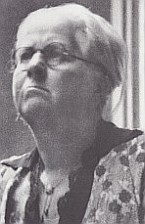
The German-Jewish physician Hilde Maas was born in Düsseldorf as Hildegard Henriette Schüler. In 1921, she married the neuroscientist Otto Ludwig Maas (1874-1956); their son Henry was born in 1929. Until 1933, both worked at the Städtisches Krankenhaus Pankow in Berlin, where Otto Maas served as Medical Director. From 1929 to 1933, Hilde Maas taught Neuroses and Psychopathies at the Deutsche Akademie für soziale und pädagogische Frauenarbeit in Berlin. She was a member of the Verein Sozialistischer Ärzte since 1926.
Hilde Maas completed her psychoanalytic training at the Berlin Psychoanalytic Institute in the 1920s. Her training analyst was Hanns Sachs, and her supervising analyst was Karen Horney. She had already attended a meeting of the Deutsche Psychoanalytische Gesellschaft as a guest in 1929, but her admission to the DPG never took place. Shortly after the National Socialists came to power, Hilde Maas and her husband emigrated to England, and in November 1933 she became a member of the British Psycho-Analytical Society.
In England, Hilde Maas supported emigrated German and Austrian colleagues in building a new existence. She tried to establish a psychoanalytic sanatorium in London (which was never realised) and was active in the Hospitality Committee for Colleagues from Austria. When Margaret Mahler spent a short period in England in 1938 on her way to the United States, she analysed Hilde Maas’s nine-year-old son Heino (Henry).
Hilde Maas’s analysands include Ilse Seglow as well as Hilda Abraham, the daughter of Karl Abraham, who had also emigrated to England. Hilde Maas assisted her in translating Karl Abraham’s Klinische Beiträge zur Psychoanalyse aus den Jahren 1907-1920 (Clinical Papers and Essays on Psycho-Analysis) and in completing the final chapters of the unfinished biography of her father. In 1956, Hilde Maas wrote the article on Sigmund Freud’s 100th birthday in the Association of Jewish Refugees Journal, AJR Information. (Top of the article)
- SELECTED WORKS
- A case of hysteria. Lecture at the British Psycho-Analytical Society, 21.2.1951
- Sigmund Freud Centenary. AJR Information 11 (5), 1956, 1-2
- REFERENCES
- AJR Information 38 (4), 1983, 8 (2018-03-19)
- Alice-Salomon-Archiv Berlin (2026-01-19)
- Brecht, Karen, et al. (Hg.): "Hier geht das Leben auf eine sehr merkwürdige Weise weiter..." Zur Geschichte der Psychoanalyse in Deutschland. Hamburg 1985; Gießen 2009
- Bull Int Psychoanal Assn 22, 1941, 320
- Charité Berlin: Verfolgte Ärztinnen und Ärzte des Berliner Städtischen Gesundheitswesens (1933-1945) (2026-01-16)
- Der Sozialistische Arzt 2 (2/3), 1926, 57
- Grotjahn, Martin: My Favorite Patient. The Memoirs of a Psychoanalyst. Frankfurt/M. 1987
- IZP 16 (2), 1930, 269 + IZP 26, 1941, 372
- Hamburg American Line: List of Passengers, 20.9.1935 (2026-01-16)
- Jüdisches Adressbuch für Gross-Berlin 1931/1932 (2026-01-16)
- Mahler, Margaret: The Memoirs of Margaret S. Mahler. New York 1988
- Mit Freud in Berlin (2026-01-16)
- MyHeritage (2026-01-16)
- Prisoners of War, 1715-1947: Hildegard Maas + Otto Ludwig Maas (2026-01-16)
- Schröter, Michael: Psychoanalyse im Fortbildungsangebot für Sozialberufe, Berlin 1930-1933 (Verein Jugendheim). Luzifer-Amor 18 (35), 2005, 46-81
- Schröter, Michael: 129 dokumentierte Ausbildungskandidaten am Berliner Psychoanalytischen Institut 1924-1932: Tabelle. Luzifer-Amor 33 (66), 2020 (2020-12-09)
- Steiner, Riccardo: It is a New Kind of Diaspora. Explorations in the Sociopolitical and Cultural Context of Psychoanalysis. London u. a. 2000
- The Complete Correspondence of Sigmund Freud and Ernest Jones, 1908-1939. Cambridge, Mass; London 1993
- The London Gazette, 14 June 1941, 3613 (2026-01-16)
- PHOTO from Tim N. Gidal and Volker Friedrich: Die Freudianer. Auf dem 13. Internationalen Psychoanalytischen Kongreß 1934 in Luzern. München/Wien 1990, Image 106
Veronica Mächtlinger née Thompson (1930-2024)
Veronica Mächtlinger was born in Dannhauser in the South African province of Natal. Her South African mother, Annie Jacoba Potgieter, was a great-granddaughter of Andries Hendrik Potgieter, a renowned Boer Voortrekker leader in the mid-nineteenth century. Her father, Andrew Thompson, was English. Veronica Joan Thompson studied psychology at the University of Natal in Pietermaritzburg, where she earned a MA in 1953. The subject of her Master’s thesis was a field study conducted by her in a Zulu village on the effects of sudden weaning on children at the age of eighteen months.
In 1954, she moved to England and enrolled in a two-year Postgraduate Program at the University of London. After completing an residency at the Maudsley Hospital, she was awarded the Postgraduate Diploma in Clinical Psychology. From 1956 to 1960, she trained as a child analyst at the Hampstead Clinic in London and underwent training analysis with Anna Freud. She became a member of the Association of Child Psychotherapists and worked as a psychotherapist at the Child Psychotherapy Clinic of King’s College Hospital.
Concerned for her mother in view of the anti-apartheid unrest, Veronica Thompson returned to South Africa in the early 1960s. She settled in Durban as a psychotherapist and taught developmental psychology at the Medical Faculty of the University of Durban. She then married Dieter Mächtlinger and moved with him to Berlin in 1973. She undertook further training as an adult analyst at the Berlin Psychoanalytic Institute (BPI) and became an associate member of the Deutsche Psychoanalytische Vereinigung in 1977, and a full member in 1982. She served as a training analyst and supervisor at the BPI respectively Karl Abraham Institute, and was a leading member of the Training Committee from 1992 to 1994.
Veronica Mächtlinger was a classical Freudian in the tradition of Anna Freud, but, unlike her, she emphasised the importance of child observation. She fought for the recognition of child analysis within the International Psychoanalytical Association and in the 1980s served as Chair of the European Section of the IPA Committee on Child and Adolescent Psychoanalysis (COCAP). Her most important writings focused on the role of the father in child development. Frequently cited is her essay on Karl Abraham’s Segantini study (1997), which she interpreted as the author's self-analysis.
In her later years, Veronica Mächtlinger lived with her husband in the Wendland region, where she died at the age of 93. (Top of the article)
- SELECTED WORKS
- The Effects of Sudden Weaning on Zulu Children. Masterthesis, University of Natal 1953
- The effects of sudden weaning on Zulu children. Brit J Med Psychol 29, 1956, 177-210 [Die Auswirkungen abrupten Abstillens. In V. Mächtlinger: Genau hinschauen. Gießen 2012, 19-48]
- Psychoanalytic theory: Preoedipal phases with special reference to the father. In M. E. Lamb (ed.): The Role of the Father in Child Development. New York 1976, 277-305
- Anna Freud. Einige persönliche Eindrücke. Jb Psychoanal 16, 1984, 9-17
- The role of the father in aiding the elaboration and consolidation of a differentiated gender identity in girls in the phallic-narcissistic phase. Bulletin of the Anna Freud Centre 7 (1), 1984, 25-40
- Analytisches Arbeiten mit Kindern und Erwachsenen. EPF Bulletin 29, 1987, 63-79
- The impact of some early developmental disturbances on the aims of child and adult analysis. Symbolization and the establishment of the treatment alliance. Bulletin of the Anna Freud Centre 13 (2), 1990, 85-102
- Einleitung zu Sigmund Freud: Analyse der Phobie eines fünfjährigen Knaben. Frankfurt/M. 1995, 7-38
- Karl Abraham und Giovanni Segantini. Ein psychoanalytischer Versuch. Luzifer-Amor 10 (20), 1997, 81-97
- Falldarstellung einer hochfrequenten Kinderanalyse. Analytische Kinder- und Jugendlichen-Psychotherapie 36 (2), 2005, 159-179
- Psychoanalytische Überlegungen zur späteren Entwicklung der sechs Kinder, die als Kleinkinder Theresienstadt überlebt haben (Die Kinder von Bulldogs Bank). In B. Nissen (ed.): Wendepunkte. Zur Theorie und Klinik psychoanalytischer Veränderungsprozesse. Gießen 2012
- Die Entwicklung der Kinderträume. Kinderanalyse 21 (3), 2013, 179-194 [The development of children's dreams. In S. Teicher and M. Günter (eds): Dream and Fantasy in Child Analysis. London 2015, 23-38
- Genau hinschauen - Frühe Verletzungen und Potenziale der Entwicklung. Psychoanalytische Schriften 1953-2013. Gießen 2023
- REFERENCES
- Hermanns, Ludger M.: Laudatio für Veronica Mächtlinger am 26.11.2010 im BPI. In Karl-Abraham-Institut (Hg.): Veronica Mächtlinger zu Ehren. Semester-Journal, Sondernummer November 2010, 9-16
- Hermanns, Ludger M.: »Ein äußerst angenehmer Wiener« als »Schirmherr« für die DPV. Über Willi Hoffer und seine Rolle beim Wiederaufbau der Psychoanalyse im Nachkriegsdeutschland*. Jb Psychoanal 67, 2013, 31-53
- Psychosozial Verlag (2023-11-03)
- South Africa, Church of the Province of South Africa, Parish Registers, 1801-2004 (FamilySearch 2026-01-23)
- Tagesspiegel, 5.10.2024 (2025-07-16)
- Trauerportal Lüchow-Dannenberg (2026-01-23)
Auguste Marcinowski née Gramatzki (1883-1960)
Auguste “Gustel” Marcinowski grew up with numerous siblings in a pious family in East Prussia. She was a qualified nurse when, in 1908, she came to the private sanatorium Haus Sielbeck at lake Uklei in Holstein. It had been founded the year before by the psychiatrist Johannes Jaroslaw Marcinowski (1868–1935) and was appreciated by Sigmund Freud as the first psychoanalytically oriented health institution in Germany. Auguste Gramatzki became Marcinowski’s close collaborator and in 1915 his second wife. They had four sons: Heinz, Hans Jürgen, Wulfdietrich and Gernot.
Johannes Marcinowski was a member of the Berliner Psychoanalytische Vereinigung from 1912 to 1919, and of the Wiener Psychoanalytische Vereinigung from 1919 to 1925. It remains unclear whether he underwent analysis and, if so, with whom. Auguste Marcinowski, on the other hand, had been in training analysis with the Viennese analyst Bernhard Dattner in 1912 and 1913. The psychoanalytic treatments at Haus Sielbeck were in part carried out jointly by the Marcinowski couple.
In 1919, the Marcinowskis moved to Bad Heilbrunn in Upper Bavaria, where they ran the Haus Sonnblick sanatorium until 1928. There, Auguste Marcinowski was now officially working as a psychotherapist. An attempt by Johannes and Auguste Marcinowski in 1920, together with Hans von Hattingberg and others, to establish a local psychoanalytic group in Munich proved unsuccessful. According to Karl Abraham, psychoanalysis à la Marcinowski was mixed "mit einem Gebräu von Mystik und allem möglichen" (a brew of mysticism and all manner of other things).
In 1929, the Marcinowskis opened the convalescent home "Ärztliche Genesungsheim Waldhausen" near Tübingen, which Auguste Marcinowski continued to run on her own after her husband’s death into the 1950s. In 1936, she joined the Deutsches Institut für Psychologische Forschung und Psychotherapie, which aimed at a synoptic integration of depth-psychological schools. A comparable orientation characterised the Tübinger Arbeitsgruppe für Psychotherapie, founded in 1946 by Hildegard Buder-Schenck, of which Auguste Marcinowski became a member after the war. (Top of the article)
- REFERENCES
- Abraham, Karl in: Die Rundbriefe des »Geheimen Komitees«, Bd. 1: 1913-1920. Ed. by G. Wittenberger and C. Tögel. Tübingen 1999
- Akademie für Psychoanalyse und Psychotherapie München (2024-05-27)
- Bernhardt, Heike, and Regine Lockot (eds): Mit ohne Freud. Zur Geschichte der Psychoanalyse in Ostdeutschland. Gießen 2000
- Bernhardt, Heike: Johann Jaroslaw Marcinowski (1868-1935) und sein Sanatorium Haus Sielbeck am Uklei. Psychoanalyse im klinischen Setting. Luzifer-Amor 24 (47), 2011, 133-168
- Cocks, Geoffrey: Psychotherapy in the Third Reich. The Göring Institute. New York 1985
- Danckwardt, Joachim F.: Von den Anfängen der Psychoanalyse in Stuttgart-Tübingen bis zu ihrer Entfaltung durch Wolfgang Loch. Ein Rückblick. DPV-Informationen Nr. 17, 1995, 9-16 + Institut für Psychoanalyse Stuttgart-Tübingen (2024-05-27)
- Freud, Sigmund: Zur Geschichte der psychoanalytischen Bewegung. GW 6, 1914, 43-113
- Lohmann, Hans-Martin, and Lutz Rosenkötter: Psychoanalyse in Hitlerdeutschland. Wie war es wirklich? Psyche 36, 1982, 961-988
- Ludwig-Körner, Christiane: Das Kinderheim in Kallinchen. Milla von Prosch geb. von Mücke. In H. Bernhardt and R. Lockot (eds): Mit ohne Freud. Zur Geschichte der Psychoanalyse in Ostdeutschland. Gießen 2000, 132-169
- Mühlleitner, Elke: Biographisches Lexikon der Psychoanalyse. Die Mitglieder der Psychologischen Mittwoch-Gesellschaft und der Wiener Psychoanalytischen Vereinigung (1902-1938). Tübingen 1992
- TÜpedia (27.5.2024)
- Wikipedia: Jaroslaw Marcinowski (2026-01-23)
Edeltrud Meistermann-Seeger née Lindner (1906-1999)

Edeltrud Meistermann-Seeger was born into a teacher's family in Cologne, the youngest of four children. Her father, Jakob Lindner, taught history, while her mother, Anna Maria, née May, taught needlework. Against her wishes, Edeltrud Lindner had to leave school at sixteen and begin a commercial apprenticeship. In 1926, she married the syndic of her training company, Friedrich “Fritz” Bingemer (1893-1976). One of their four children, Karl Bingemer, born in 1927, also became a psychoanalyst.
After the failure of this marriage in 1932, she started her own wholesale sugar business and entered a second marriage with Carlo Seeger (1908–1994). In 1942, she caught up on her Abitur and enrolled in psychology at the University of Cologne, finishing her study in 1944 with a dissertation on the Rorschach test. In 1947, Edeltrud Seeger met the painter Georg Meistermann (1911–1990), whom she married after divorcing her second husband. (Fig.)
In 1956, René König appointed her as a lecturer at the Faculty of Economics and Social Sciences at Cologne University, where Edeltrud Meistermann-Seeger became a honorary professor and head of the Psychoanalytic Department in 1963. Alongside her teaching activities, she completed psychoanalytic training and underwent training analysis with Michael Balint in London, which she concluded in 1958. She became a member of the Deutsche Psychoanalytische Vereinigung and in 1974 took part in founding the Psychoanalytische Arbeitsgemeinschaft Köln-Düsseldorf, where she was one of the first training analysts. In addition, she was a co-founder of the Jahrbuchs für Psychoanalyse in 1960.
Edeltrud Meistermann-Seeger’s special field was social analysis, i.e. the application of psychoanalysis to social issues. She founded the Deutsche Gesellschaft für Sozialanalytische Forschung in 1965, serving as its president until 1974. A major focus of her work was her research on the integration and disintegration of migrant workers ("Gastarbeiter") which she carried out in the 1960s using psychoanalytic methods. For clinical practice, building on Balint’s focal therapy, she developed her own form of brief therapy as well as focal training for analysts. (Top of the article)
- SELECTED WORKS
- Leitfaden der Bilder. Versuch einer neuen Grundlegung der Persönlichkeitserfassung durch den Rorschach-Test. Phil. Diss. Köln 1944
- Persönlichkeitstest und Verifizierung der Testergebnisse. Zu einem Testverfahren von Max Pfister. Psyche 7, 1954, 161-172
- Psychoanalyse. Beiträge zu klassischen Themen der Psychoanalyse. Kastellaun 1976
- Die Bedeutung der frühen Sozialbeziehung für die Entwicklung der Perversionen. Jb Psychoanal 9, 1976, 139-160
- Gestörte Familien. Familiendiagnose und Familientherapie. München 1976
- Der Beitrag der Psychoanalyse zur Sozialpsychologie. In: Die Psychologie des 20. Jahrhunderts II: Freud und die Folgen (1). Zürich 1976, 1059-1102
- Erste Begegnungen oder Ur-Sachen. In R. Frühmann (Hg.): Frauen und Therapie. Paderborn 1985
- Kurztherapie Fokaltraining - die Rückkehr zum Lieben. München 1986
- Wodurch kommt es zur Abtreibung? Diagnose einer psycho-biologischen Krise. Vortrag 25. Juni 1991 beim Katholischen Bildungswerk im Erftkreis + International Journal of Prenatal and Perinatal Psychology and Medicine 11 (3), 1999, 401-411
- Tage des Lichts. In L. M. Hermanns (Hg.): Psychoanalyse in Selbstdarstellungen, Bd. I. Tübingen 1992, 237-287
- Sozialanalyse: Der Beitrag der Psychoanalyse zur Soziologie. Schriften, Vorlesungen und Vorträge. Studienausgabe, Bd. 3. Koblenz 2010
- (mit Karl Bingemer und Edgar Neubert) Leben als Gastarbeiter. Geglückte und mißglückte Integration. Köln 1970
- (und Karl Bingemer) Psychologie des Automatenspiels. Köln 1971
- (und Karl Bingemer) Struktur und Strukturveränderungen ausländischer Arbeitnehme der Europäischen Gemeinschaften von 1960-1970. Köln (EWG-Drucksache Nr. V/342/72-D) 1972
- REFERENCES
- Blazy, Helga: In memoriam Edeltrud Meistermann. International Journal of Prenatal and Perinatal Psychology and Medicine 11 (3), 1999, 398-401 (2026-01-28)
- DGSF (21.6.2024)
- Juszczak, Marian, Wolfgang Kallwass, Bettina Meissner, Klaus Reinecke und Manfred Schmidt: Nachruf auf Edeltrud Meistermann (6.4.1906-9.10.1999). Jb Psychoanal 43, 2001, 259-266
- Mackscheidt, Klaus: In memoriam Edeltrud Meistermann-Seeger. Kölner Zeitschrift für Soziologie und Sozialpsychologie 52, 2000, 185-188
- Meissner, Günther (Hg.): Leidenschaft der Wahrnehmung. Festgabe für Edeltrud Meistermann-Seeger. München 1976
- Meistermann-Seeger, Edeltrud: Tage des Lichts. In L. M. Hermanns (ed.): Psychoanalyse in Selbstdarstellungen, Vol. I. Tübingen 1992, 237-287
- MyHeritage (2026-01-27)
- Wikipedia: Edeltrud Meistermann-Seeger; Friedrich Fritz Bingemer(2026-01-27)
- PHOTO from Edeltrud Meistermann-Seeger: Tage des Lichts. In L. M. Hermanns (ed.): Psychoanalyse in Selbstdarstellungen, Vol. I. Tübingen 1992, 239
Luise Meyer (1906-1993)
Luise Meyer was born in Kiel, the daughter of headmaster Heinrich Meyer and his wife Anna, née Doose. Her younger brother was the phytopathologist Eckart Meyer. Luise Meyer trained as a vocational teacher in Kassel, completing in 1927. After working in Bremerhaven and Lübeck, she came to Berlin in 1929, where she was occupied in the "Gefährdetenfürsorge" (welfare services for at-risk individuals) and adult education. She taught for twelve years at the vocational school for home economics in Berlin-Köpenick, and from 1943 at the Friedrich Fröbel House, Berlin’s municipal school for kindergarten teachers. Her pupils were underprivileged girls, some of whom were neglected.
After exploring the Adlerians, Luise Meyer began psychotherapeutic training in 1943 at the Deutsches Institut für Psychologische Forschung und Psychotherapie (“Göring Institute”). From 1944 to 1946 she underwent training analysis with Hans March, a member of the dissolved Deutsche Psychoanalytische Gesellschaft (DPG), who was among the Freudians grouped in "Arbeitsgruppe A“ at the Göring Institute.
In the post-war period, she briefly worked at the Fröbel House before taking over the direction of a vocational school in Berlin-Karlshorst. She gave up this post to become a staff member at the Zentralinstitut für psychogene Erkrankungen bei der Versicherungsanstalt Berlin, founded in 1945 by Werner Kemper and Harald Schultz-Hencke. Her first patients were neglected and neurotic children; from 1946 onwards she also treated adults. Her cases were supervised, among others, by Adelheid Fuchs-Kamp.
In 1947, she undertook a further analysis with Hans Schneider-Kassel and, like him, became a member and training analyst of the DPG. In the same year she was a founding member and later lecturer at the Institut für Psychotherapie Berlin, which, like the synoptic Göring Institute, followed an integrative, cross-school orientation and was directed by Harald Schultz-Hencke until 1953. Luise Meyer’s work focused on group psychotherapy and Balint groups. (Top of the article)
- REFERENCES
- Bernhardt, Heike, und Regine Lockot (Hg.): Mit ohne Freud. Zur Geschichte der Psychoanalyse in Ostdeutschland. Gießen 2000
- Hermanns, Ludger M.: Editorische Anmerkungen zu Margarete Seiff "Gruppentherapie bei psychosomatischen Störungen" (1951). Gruppenpsychotherapie und Gruppendynamik 55 (1), 2019, 68-74
- Lockot, Regine: Luise Meyer im Zeitfenster. „Die Jugend, die in dieser zerstörten Welt groß geworden ist, verzeiht es uns nie, dass wir Nazis gewesen sind.“. Forum Psychoanal 29 (3), 2013, 323–341
- MyHeritage (2026-01-30)
Margarete Mitscherlich née Nielsen (1917-2012)

Margarete Mitscherlich was born in Gravenstein/Gråsten in Denmark as the youngest daughter of the Danish physician Nils Peter Nielsen and the German teacher Grete, née Leopold. Her mother was active in the German women’s movement around Gertrud Bäumer. Margarete Nielsen studied German and English literature, history, and art history in Munich, with the aim of becoming a teacher. In 1938, following her father’s death, she switched to medicine and passed her medical state examination in Heidelberg in 1944.
In 1946, Margarete Nielsen moved to Switzerland, where she studied anthroposophical medicine, working in Rudolf Steiner sanatoria, and completed her residency in Zurich. In 1947, she met the physician and psychoanalyst Alexander Mitscherlich (1908–1982), who was still married at the time. They fell in love and in 1949 their son Mathias was born. In 1950, Margarete Nielsen received her doctorate in medicine from the University of Tübingen, and two years later she took up a position as a research assistant in the psychotherapeutic department for children and adolescents at Mitscherlich's Psychosomatic Clinic in Heidelberg.
Margarete Nielsen began her psychoanalytic training at the synoptic-integrative Stuttgarter Institut für Psychotherapie und Tiefenpsychologie. In 1950, she underwent her first analysis with the Romanian-born psychoanalyst Vilma Popescu, followed by another analysis with Felix Schottlaender. Finding German psychoanalysis outdated, she went to London in 1954 and completed a third analysis with Michael Balint. In 1955, she married Alexander Mitscherlich and became his colleague and lecturer at the Frankfurt Institut und Ausbildungszentrum für Psychoanalyse und Psychosomatik, which opened in 1960 and was directed by Mitscherlich until 1976. In 1964, it was renamed the Sigmund Freud Institute.
In 1967, their famous book Die Unfähigkeit zu trauern (The Inability to Mourn) was published, in which Margarete and Alexander Mitscherlich analysed the tendency of West German society to repress and deny its Nazi past. Out of fear of a depressive reaction, many Germans, they argued, were unable to mourn what had been lost and could not be repaired, thereby exposing themselves to the danger of a repetition compulsion. Margarete Mitscherlich-Nielsen also explored the psychological causes and consequences of National Socialism in later works, for example by describing an affinity between fascist and masculine values.
She became particularly well known for her writings on women in patriarchal society. In her widely discussed book Die friedfertige Frau (1979) (The Peaceable Sex), she advanced the thesis that women are not by nature more peaceable than men, but that through their learned willingness to adapt, they contribute in their own way to violence, war, and fascism. Because of their upbringing into femininity, they repress their aggression and direct it against themselves. They remain in a masochistic victim stance instead of turning their underlying aggression outward as criticism, in order to oppose male claims to domination and violence.
Margarete Mitscherlich was a training analyst and head of education within the Deutsche Psychoanalytische Vereinigung. From 1982 to 1997, she served as editor of the psychoanalytic journal Psyche, where many of her articles were also published. As a committed supporter of the women’s movement, she sought to build a bridge between feminism and psychoanalysis. Well into old age, she continued to practise as a psychoanalyst in Frankfurt and was a visiting scholar at the Frankfurt Sigmund Freud Institute. (Top of the article)
- SELECTED WORKS
- Die Ergebnisse der experimentellen Arbeiten von August Krogh. Med. Diss. Tübingen 1950
- Besonderheiten der Behandlungstechnik bei neurotischen Patientinnen. Psyche 15, 1962, 669-680
- Entwicklungsbedingte und gesellschaftsspezifische Verhaltensweisen der Frau. Zum Problem der Frauenemanzipation. Psyche 25, 1971, 911-931
- Müssen wir hassen? Über den Konflikt zwischen innerer und äußerer Realität. München 1972
- Probleme der Idealisierung. Psyche 27, 1973, 1106-1127
- Neid und Emanzipation. Neue Rundschau Nov. 1975, 574-594
- Sittlichkeit und Kriminalität. Psychoanalytische Bemerkungen zu Karl Kraus. Psyche 29, 1975, 131-153
- Psychoanalyse und weibliche Sexualität. Psyche 29, 1975, 769-788
- Psychoanalytische Bemerkungen zu Franz Kafka. Psyche 31, 1977, 60-83
- Das Ende der Vorbilder. Vom Nutzen und Nachteil der Idealisierung. München 1978
- Zur Psychoanalyse der Weiblichkeit. Psyche 32, 1978, 669-694
- Die friedfertige Frau. Eine psychoanalytische Untersuchung zur Aggression der Geschlechter. Frankfurt/M. 1979 [The Peaceable Sex. On Aggression in Women and Men. New York 1987]
- Die Lebensmitte der Frau. In H.-J. Schultz (ed.): Einsamkeit. Stuttgart, Berlin 1980, 202-215
- Die Jugend braucht Vorbilder. Hamburg 1981
- Gibt es einen Unterschied in der Identität von männlichen und weiblichen Psychoanalytikern? Psyche 26, 1982, 267-276
- Antisemitismus - eine Männerkrankheit? Psyche 37, 1983, 41-54
- Jenseits des Narzißmus - Psychoanalyse und Kulturwandel. In H.-M. Lohmann (ed.): Das Unbehagen in der Psychoanalyse. Frankfurt 1985, 60-70
- Erinnerungsarbeit. Zur Psychoanalyse der Unfähigkeit zu trauern. Frankfurt/M. 1987
- Theorie in der Krise. Psyche 41, 1987, 961-968
- Die Zukunft ist weiblich. Zürich 1987
- Überlegungen einer Psychoanalytikerin zum Hitlerreich - Über männliche und weibliche Werte damals und heute. In G. Stuchlik und L. v. Siegele-Wenschkewirz (eds): Frauen und Faschismus in Europa. Pfaffenweiler 1988
- Über die Mühsal der Emanzipation. Frankfurt/M. 1990
- Die (Un)Fähigkeit zu trauern in Ost- und Westdeutschland. Was Trauerarbeit heißen könnte. Psyche 46, 1992, 406-418
- Ist Partnerschaft überhaupt möglich? Zürich 1993
- Anmerkungen zu meinem Leben und meiner Zeit. In L. M. Hermanns (Hg.): Psychoanalyse in Selbstdarstellungen, Bd. II. Tübingen 1994, 313-342
- Identität, Geschlecht und Ideologie. Hörkassette (Walter) 2001
- Autobiografie und Lebenswerk einer Psychoanalytikerin. Vortrag im Rahmen der Wiener Vorlesungen in der Gesellschaft der Ärzte anlässlich der Verleihung des Erwin-Chargaff-Preises an Margarete Mitscherlich am 19. April 2005. Wien 2006
- Persönliche Erinnerungen und deren kritische Betrachtung. Zschr Psychoanal Theor Prax 23, 2008, 380-394
- Die Radikalität des Alters. Einsichten einer Psychoanalytikerin. Frankfurt/M. 2010
- (and Alexander Mitscherlich) Die Unfähigkeit zu trauern. Grundlagen kollektiven Verhaltens. München 1967 [The Inability to Mourn. Principles of Collective Behavior. New York 1975]
- (and Brigitte Burmeister) Wir haben ein Berührungstabu. Hamburg 1991
- (and Christa Rohde-Dachser) (eds) Psychoanalytische Diskurse über die Weiblichkeit von Freud bis heute. Stuttgart 1996
- REFERENCES
- 100 Jahre Margarete Mitscherlich (15.11.2024)
- Hoyer, Timo: Im Getümmel der Welt. Alexander Mitscherlich, ein Porträt. Göttingen 2008
- Köhler, Willi: Die zwei Passionen der M.M. In K. Brede et al. (eds): Befreiung zum Widerstand. Aufsätze über Feminismus, Psychoanalyse und Politik. Margarete Mitscherlich zum 70. Geburtstag. Frankfurt/M. 1987, 115-119
- Mitscherlich, Margarete: Anmerkungen zu meinem Leben, a. a. O.
- Moré, Angela: Psychoanalyse und kritische Sozialpsychologie aus feministischer Perspektive. Margarete Mitscherlichs Denken und Wirken. Gruppenanalyse 24 (2), 2014, 129-151
- Schönborn, Felizitas von: Margarete Mitscherlich. Zwischen Psychoanalyse und Feminismus. Frankfurt/M. 1997
- Zeugen des Jahrhunderts. Margarete Mitscherlich im Gespräch mit Wilfried Hoffer. Ed. by W. Homering. Berlin 1999
- Schwarzer, Alice: Tollkühn. In K. Brede et al. (eds) 1987, 213-216
- Schwarzer, Alice: Im Gespräch mit Margarete Mitscherlich. EMMA Sommer 2010, 98-107 (2014-04-11)
- scobel extra: Ein Gespräch mit Margarete Mitscherlich. 3sat, 2. April 2011
- Tsainis, Kathrin, Monika Held und Margarete Mitscherlich: Eine unbeugsame Frau. München 2007
- Wikipedia (2026-01-30)
- PHOTO: Courtesy of Felizitas von Schönborn
Melitta Mitscherlich née Behr (1906-1992)
Melitta Mitscherlich was born in Würzburg, the daughter of Valentin Behr and Erna, née Schlingmann. Her father, a physician oriented towards naturopathy, ran a sanatorium in Bad Kissingen. Melitta Behr studied medicine in Frankfurt, Freiburg and Munich, where she earned her doctorate in 1931. In 1929, she met the history student Alexander Mitscherlich (1908–1982), who, at her suggestion, also studied medicine and later became a psychoanalyst. They married in Berlin in 1932 and had two daughters: Monika (i.e. Monika Seifert), born in 1932, and Barbara, born in 1933. The couple separated in 1934 and divorced two years later.
Melitta Mitscherlich moved with her daughters to Bad Kissingen, where she took over the medical directorship of her father’s sanatorium. She entered a new relationship and in 1936 gave birth to a son. Alongside her professional work, she studied philosophy with Martin Heidegger in Freiburg during the war years. In 1950, she left Bad Kissingen to complete her residency in neurology and psychiatry at the Landeskrankenhaus Tiefenbrunn near Göttingen.
She received her psychoanalytic training in the 1950s at the Institut für Psychoanalyse und Psychotherapie in Göttingen. An institute of the Deutsche Psychoanalytische Gesellschaft (DPG), it was founded in 1954 by followers of the neo-analyst Harald Schultz-Hencke, among them Margarete Seiff, whose pupil Melitta Mitscherlich became. She joined the DPG, opened a private practice as a specialist in nervous disorders in Düsseldorf, and in 1958 participated in the founding of the Institut für analytische Psychotherapie im Rheinland.
Melitta Mitscherlich was especially interested in psychosomatic diseases, which she traced back to severe interactional disturbances in the early mother–child relationship and a failure of symbolisation. She understood the psychosomatic symptom as an unsuccessful attempt to break away from this symbiosis. This is particularly evident in torticollis spasticus (wry neck), which expresses a profound ambivalence of simultaneous turning towards and turning away from the mother’s breast. Mitscherlich developed an interactional therapeutic approach inspired by Heidegger’s existential philosophy, drawing on insights from ego psychology, the neo-analytic school, research into alexithymia, and Alfred Lorenzer’s theory of symbolism.
With her studies on the psychoanalysis of torticollis, Melitta Mitscherlich was a pioneer of psychosomatic medicine in Germany. In recognition of her outstanding achievements in this field, she was appointed Honorary Professor of Psychosomatic Medicine at the University of Düsseldorf in 1976. (Top of the article)
- SELECTED WORKS
- Die Stieldrehung der Adnexe. Med. Diss. München 1931
- Zwei Fälle von psychogenem Mutismus. Z Psychosom Med 7, 1960/61, 172-175
- Ein Fall von Torticollis spasticus. Z Psychosom Med 8, 1962, 255-267
- The psychic state of patients suffering from Parkinsonism. Adv Psychosom Med 1, 1960, 217-223
- Beitrag zur Psychologie des Tic und des Torticollis spasticus. Adv Psychosom Med 3, 1963, 203-207
- Die Neoanalyse Schultz-Henckes und ihre Beziehung zur Religion. In W. Bitter (ed.): Psychotherapie und religiöse Erfahrung. Ein Tagungsbericht. Stuttgart 1965, 112-116
- Zur Psychoanalyse des Torticollis spasticus. Nervenarzt 42, 1971, 420-426
- Spasmodic Torticollis. Psychotherapy and Psychosomatics 19 (1-2), 1971, 62-75
- Die Psychoanalyse im Rahmen der psychosomatischen Medizin. Z Psychosom Med Psyc 18, 1972, 220-232
- Analytische Behandlung von Hyperkinesen. Medizinische Welt 24, 1973, 1058-1062
- Das naturalistische Missverständnis der Psychoanalyse - ihre Folgen und ihre mögliche Überwindung. Psychotherapy and Psychosomatics 24, 1974, 444-448
- Der interaktionelle Ansatz im psychosomatischen Denken (1974). In G. Condrau and A. Hicklin (eds): Individuum, Familie, Gesellschaft im Spannungsfeld zwischen Zwang und Freiheit. Vorträge des 5. Internationalen Forums für Psychoanalyse, Zürich 1974. Göttingen 1977, 394-402
- Ein Beitrag zur Frage der Alexithymie. Therapiewoche 26, 1976, 909-915
- Die Bedeutung des Übergangsobjektes für die psychosomatische Theorie. In G. and A. Overbeck (eds): Seelischer Konflikt, körperliches Leiden. Reader zur psychoanalytischen Psychosomatik. Reinbek 1978, 195-200
- The theory and therapy of Hyperkineses (Torticollis). Psychotherapy and Psychosomatics 32, 1979, 306–312
- Zur Theorie und Therapie des Torticollis. In H. H. Studt (ed.): Psychosomatik in Forschung und Praxis. München et al. 1983
- Die Bedeutung des Übergangsobjekts für die Entfaltung des Kindes. In C. Eggers (ed.): Bindungen und Besitzdenken beim Kleinkind. München 1984, 185-203
- REFERENCES
- Aden-Grossmann, Wilma: Monika Seifert. Pädagogin der antiautoritären Erziehung. Eine Biografie. Frankfurt/M. 2015
- Dehli, Martin: Leben als Konflikt. Zur Biographie Alexander Mitscherlichs. Göttingen 2007
- DGPT: Chronik (2020-12-15)
- Institut für analytische Psychotherapie im Rheinland (2023-10-25)
- Kaul, Marco Bernhard: Elsässer, Günter. Von der Erbforschung zur Psychotherapie. Med. Diss. Gießen 2012
- Lou Andreas-Salomé Institut (2015-09-08)
- Seifert, Jürgen: Melitta Mitscherlich (1906-1992). Nachruf. Mitteilungen der Humanistischen Union, Nr. 138, 1992, 35-36
- Tagesgeschichte. Klinische Wochenschrift 55, 1977, 293–294
- Thomä, Helmut, and Horst Kächele: Psychoanalytische Therapie. Praxis. Heidelberg 1988; 1997; 2006
- Wikipedia (2015-08-09)
Emma Moersch née Haller (1923-2011)

Emma Moersch was born in Kehl into a pietistic family. She and her younger sister were brought up in a strictly religious manner by their mother. Her father was a railway worker. After the end of the war, she initially trained as a welfare worker and subsequently worked at employment offices in Freiburg and Achern. During the same time, she caught up on her Abitur and attended evening seminars at the Stuttgart Akademie für Tiefenpsychologie. In 1954, she married Wilhelm Moersch (?-1979), a statistician at the employment office in Baden-Baden.
After an analysis with a Jungian analyst, she began studying psychology in Heidelberg in 1953, but then switched to medicine, earning her medical doctorate in 1960. Emma Moersch completed her residency at the Psychosomatic University Clinic in Heidelberg, which was directed by Alexander Mitscherlich. She worked at the Psychiatric Clinic in Freiburg and, from 1966 onwards, under Lucien Israël at the University Psychiatric Clinic in Strasbourg, where she became acquainted with the psychoanalysis of Jacques Lacan.
Emma Moersch decided to undertake psychoanalytic training and began her training analysis with Wolfgang Auchter in Freiburg, continuing it with Clemens de Boor in Heidelberg. Following a position at the Heidelberg Psychosomatic Clinic from 1967 to 1969, she worked for two decades at the Sigmund Freud Institute in Frankfurt, first as Alexander Mitscherlich’s assistant and then as head of the department of Clinical Psychoanalysis. In addition, she took part in establishing the Psychoanalytisches Seminar Freiburg, founded in 1974.
In the 1970s, Emma Moersch was a member of the executive board of the Deutsche Psychoanalytische Vereinigung and served as Vice President for the German-speaking countries in the European Psychoanalytic Federation. She was particularly committed to mediating French psychoanalysis in Germany and, in 1973, translated Vocabulaire de la psychanalyse by Jean Laplanche and Jean-Bertrand Pontalis into German.. (Top of the article)
- SELECTED WORKS
- Die Antistaphylolysinreaktion in der inneren Klinik. Unter besonderer Berücksichtigung rheumatischer Erkrankungen. Diss. med. Heidelberg 1960
- Zum Begriff des Unbewußten bei Jacques Lacan. Psyche 28, 1974, 328-339
- Symbol, Repräsentation, Primärprozeß. Psyche 30, 1976, 503-533
- "Berührungsängste". Probleme im Verhältnis zu den Muslimen aus psychoanalytischer Sicht. In D. Kiesel et al. (eds): Fremdheit und Angst. Beiträge zum Verhältnis von Christentum und Islam. Frankfurt/M. 1988, 57-67
- Sozialpsychologische Reflexionen zum Symptomwandel psychischer Störungen. Psyche 32, 1978, 403-419
- Seelische Störungen im Klimakterium der Frau - Transkulturelle Betrachtungen und Krankengeschichten. Sexualmedizin 8, 1979, 61-63
- Zur Psychopatholgie von Herzinfarktpatienten. Psyche 34, 1980, 494-500 und 574-581
- Psychiatrie in Afrika zwischen Tradition und Moderne. Psyche 38, 1984, 673-695
- Analyse eines Arbeiters mit Tötungsimpulsen. Psyche 48, 1994, 191-247
- Forschung und Berufspolitik: Das Sigmund-Freud-Institut unter Clemens de Boor. In T. Plänkers et al. (eds): Psychoanalyse in Frankfurt am Main. Tübingen 1996, 413-449
- (and Clemens de Boor) Emmy von N. - eine Hysterie? Versuch einer Re-Evaluierung. Psyche 34, 1980, 265-279
- REFERENCES
- Bender, Thomas: Zur Geschichte des Psychoanalytischen Seminars Freiburg. Vortrag vom 24.6.2005 (2019-06-06)
- Bender, Thomas C.: Die Rückkehr der Begriffe Sigmund Freuds. 50 Jahre deutsche Übersetzung des "Vokabulars der Psychoanalyse" von Laplanche und Pontalis. Psyche 77 (8), 2023, 743-754
- Geißer, Michael (nephew of Emma Moersch): E-mail, 2011-08-11
- Moersch, Emma: Vom Arbeiterkind zur Psychoanalytikerin. In L. M. Hermanns (ed.): Psychoanalyse in Selbstdarstellungen, Vol. IV. Tübingen 1998, 231-303
- PHOTO from Moersch 1998, 233. Courtesy of edition diskord and Ludger M. Hermanns
Ada Müller-Braunschweig née Schott (1897-1959)

Ada Schott, a pioneer of child analysis, was born in Winkel in Thuringia as the daughter of Pastor Walter Schott and his wife Elisabeth Lang. After completing the "Mittlere Reife", she trained as a kindergarten teacher at the Pestalozzi-Fröbel House in Berlin. In 1914, she began a therapeutic analysis with Carl Müller-Braunschweig (1881–1958), which was converted into a training analysis after two years. In 1919/20, she attended in Vienna a course on "Psychoanalytische Heilpädagogik” by Hermine Hug-Hellmuth, from whom she received her training in child analysis.
Subsequently, Ada Schott worked with pre-school children at the Pestalozzi-Fröbel House, but gave up this activity in order to become a member of staff at the Psychoanalytic Polyclinic of the Berliner Psychoanalytische Vereinigung (BPV) in 1922, where she and Josine Müller-Ebsen were responsible for child analysis. In 1923, she became an associate member and in 1926 a full member of the BPV. She was a close confidante of Melanie Klein during Klein’s Berlin period and, like her, adopted Hermine Hug-Hellmuth's play therapy by using play materials and children’s drawings in the analysis of children instead of free association.
In 1925, Ada Schott married Carl Müller-Braunschweig after his divorce from his first wife, Josine Müller-Ebsen. A year later, their son Hans was born, who also would become a psychoanalyst, and in 1927 their daughter Elke. In the following years, Ada Müller-Braunschweig devoted herself to raising her children and documenting their development in a diary. She took a neurotic symptom of her son as an opportunity to write her paper Ein Fall von Schattenangst und Fragezwang (bei einem dreijährigen Knaben).
In 1933, Ada Müller-Braunschweig resumed her professional work. She conducted training analyses and gave educational seminars at the Berlin Psychoanalytic Institute (BPI), whose leadership had been assumed by Carl Müller-Braunschweig and Felix Boehm. After the BPI was incorporated in 1936 into the “Aryanised” Deutsches Institut für Psychologische Forschung und Psychotherapie, Ada Müller-Braunschweig was admitted to practise as a psychotherapist ("Behandelnder Psychologe") at the Institute. In 1938, Carl Müller-Braunschweig was expelled from the Institute because of a letter he had written to Anna Freud, which she had presented in her defense during a Gestapo interrogation. In the aftermath, Ada Müller-Braunschweig assumed a large part of the training and control analyses, though only with women.
In 1940, she entered a „Fortbildungsbehandlung“ (control analysis) with the Jungian analyst Käthe Bügler and increasingly turned towards the Analytical Psychology of C.G. Jung. After the war, she joined a Jungian working group initiated by Käthe Bügler, which existed until 1949. Then she became a member of the Deutsche Psychoanalytische Vereinigung, founded in 1950 by Carl Müller-Braunschweig together with other Freudians, and in the following years, she worked as a training analyst at the reopened BPI.
Ada Müller-Braunschweig was not a scientist and published little. A series of interviews she carried out after the war in a women’s and youth prison never resulted in a scholarly publication. She died of pneumonia at the age of 62. (Top of the article)
- SELECTED WORKS
- Zur Psychoanalyse eines stotternden Kindes. Neue Erziehung. Zeitschrift der Schulreformer 10, 1928, 113-115
- Ein Fall von Schattenangst und Fragezwang (bei einem dreijährigen Knaben). Z psa Päd 4, 1930, 134-145
- REFERENCES
- IZP 9 (2), 1923, 242; IZP 12 (2), 1926, 221
- Lockot, Regine: Die Reinigung der Psychoanalyse. Die Deutsche Psychoanalytische Gesellschaft im Spiegel von Dokumenten und Zeitzeugen (1933-1951). Tübingen 1994; Gießen 2013
- Ludwig-Körner, Christiane: Wiederentdeckt - Psychoanalytikerinnen in Berlin. Gießen 1999; 2014
- Müller-Braunschweig, Hans: Psychoanalyse - oder nicht? Erinnerungen. In L. M. Hermanns (Hg.): Psychoanalyse in Selbstdarstellungen, Bd. IX. Frankfurt/M. 2012, 119-186
- Overborbeck, Klaus W.: Kinderanalyse im Umfeld des Berliner Psychoanalytischen Instituts 1920 bis 1933. Luzifer Amor 7, 1994, 71–120
- Theilemann, Steffen: Das Kinderseminar von Otto Fenichel und Harald Schultz.Hencke. Luzifer-Amor 33 (65), 2020, 7-30
- Wikipedia: Ada Müller-Braunschweig; Carl Müller-Braunschweig (3.11.2023)
- PHOTO from Christiane Ludwig-Körner: Wiederentdeckt - Psychoanalytikerinnen in Berlin. Gießen 1999, 177
Josine Müller née Ebsen (1884-1930)
Josine Müller-Ebsen, one of the first child psychoanalysts in Germany, was born in Hamburg as the daughter of the merchant Hermann Ebsen. Since her mother died shortly after birth, she was very fixated on her father. In 1906, together with her friend Karen Horney, Josine Ebsen began studying medicine in Freiburg, where she met her future husband, Carl Müller (1881–1958), who later became a leading German psychoanalyst under the name Carl Müller-Braunschweig. In 1911, she passed her state examination in Freiburg.
Josine Ebsen worked in 1912 as a medical intern in the children's department at Hohenlychen Sanatorium and at Municipal Hospital Am Urban in Berlin. She carried out experiments in the biochemical laboratory at the Urban, which resulted in her doctoral thesis about fat reserve and ester cleavage in the blood. From 1913 to 1919, she served as an assistant physician in the paediatric, gynaecological, and infectious diseases department at Friedrichshain Hospital in Berlin. From 1915 to 1916, she also undertook further training in neurology and psychiatry at the Berolinum Sanatorium in Lankwitz. She then established herself as a general practitioner in Berlin.
Like Karen Horney and Carl Müller, whom she married in 1913, Josine Ebsen underwent analysis with Karl Abraham, which lasted from 1912 to 1913. After 1918, she was a regular guest of the Berliner Psychoanalytische Vereinigung (BPV), becoming a full member in 1922. Together with Ada Schott, she was responsible for child analysis at the Berlin Psychoanalytic Institute (BPI). She attended child analytic courses given by Hermine Hug-Hellmuth and Melanie Klein and, in 1924, she, Melanie Klein, and Ada Schott presented a joint interpretation of children’s drawings to the BPV. From 1923 to 1926, Josine Müller underwent a secondary analysis with Hanns Sachs.
In 1925, Carl Müller-Braunschweig divorced her and married Ada Schott in the same year. One reason for the failure of the marriage is said to have been their childlessness. Until her early death, Josine Müller practised as a specialist in nervous disorders in Berlin-Wilmersdorf and served as a training analyst at the BPI. Among her training analysands were Steff Bornstein, Käthe Misch-Frankl, and Kilian Bluhm.
In her paper A contribution to the problem of libidinal development of the genital phase in girls, Josine Müller took up Karen Horney's ideas concerning the masculinity-complex in women and supplemented them with her own observations on the female castration complex. Like Horney, she assumed a libidinal cathexis of the vagina in the infantile genital period. The girl would soon repress the vaginal sensations, which are linked to the Oedipal love for the father, defending against them through the libidinal cathexis of the clitoris and a male identification.
These reflections were really a précis of the main thesis of a comprehensive work planed by Josine Müller on the "study of femininity in the infant in the light of the illnesses of women of the narcissistic type." She was unable to complete her research, however, as she died of pneumonia during a sea voyage to the Canary Islands. (Top of the article)
- SELECTED WORKS
- Ueber den Verlauf der Fett- resp. Esterspaltung im Blut. Med. Diss. Berlin 1912
- Früher Atheismus und Charakterfehlentwicklung. IZP 11, 1925, 487-488 [Atheism in childhood and faulty character-development. IJP 8, 1927, 521-522]
- Ein Beitrag zur Frage der Libidoentwicklung des Mädchens in der genitalen Phase (1925). IZP 17, 1931, 256-262 [A contribution to the problem of libidinal development of the genital phase in girls. IJP 13, 1932, 361-368]
- REFERENCES
- Chasseguet-Smirgel, Janine (Hg.) Psychoanalyse der weiblichen Sexualität (1964). Frankfurt/M. 1974
- Ärztinnen im Kaiserreich. Institut für Geschichte der Medizin und Ethik in der Medizin, Charité Berlin 2015 (2018-01-25)
- Eitingon, Max, Hanns Sachs, Carl Müller-Braunschweig und Steff Bornstein: Josine Müller zum Gedächtnis. Ansprachen bei der Trauerfeier am 15. Februar 1931. Internet Archive (2026-02-27)
- Ludwig-Körner, Christiane: Wiederentdeckt - Psychoanalytikerinnen in Berlin. Gießen 1999; 2014
- Müller-Braunschweig, Carl: Dr. Josine Müller. IZP 17, 1931, 294-296
- Oberborbeck, Klaus: Kinderanalyse im Umfeld des Berliner Psychoanalytischen Instituts 1920 bis 1933. Luzifer-Amor 7, 1994, 71-120
- Sachs, Hanns: Nachruf auf Josine Müller. IZP 17, 1931, 293f
- Schröter, Michael: 129 dokumentierte Ausbildungskandidaten am Berliner Psychoanalytischen Institut 1924-1932: Tabelle. Luzifer-Amor 33 (66), 2020 (2023-07-17)
- Wikipedia: Josine Müller + Carl Müller-Braunschweig (2026-02-12)
- Fig.: Robert Berény (1924)
Elisabeth Naef née Rosenbaum (1888-1934)
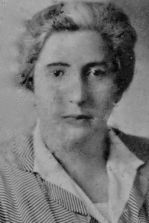
Elisabeth Naef was born in Minsk in the Russian Empire as the eldest daughter of Simon Rosenbaum and Johanna née Wolf. Her father was a Jewish activist and attorney, a member of the first State Duma of the Russian Empire and Lithuanian Minister for Jewish Affairs in the 1920s. Elisabeth Rosenbaum attended school in Berlin before moving to Geneva in 1902, where her mother had sought refuge with her two siblings from the pogroms in Russia.
In 1907, she married the Swiss zoologist and paleontologist Adolf Naef (1883–1949), their daughter Gerda was born the same year. Against her husband’s wishes, she began studying medicine at the University of Zurich in 1909. In 1910 their marriage was dissolved. Elisabeth Naef continued her medical studies in Berlin and Zurich, where she passed the state examination in 1914.
She then worked as an assistant physician at the cantonal hospitals in Münsterlingen and Schaffhausen, at the private surgical clinic of Albert Krecke in Munich, at the psychiatric and neurological clinic of the University of Königsberg, and at the neurological outpatient clinic in Berlin. In Königsberg, during the First World War, she worked with Frieda Reichmann and became friends with her. Elisabeth Naef had developed a morphine addiction as a result of severe migraine attacks, and Reichmann temporarily took care of her daughter Gerda.
In 1923, Elisabeth Naef earned her doctorate from the Friedrich Wilhelm University in Berlin and, like Salomea Kempner, began working as a neurologist at the polyclinic of the Berliner Psychoanalytische Vereinigung (BPV). In the same year, she was admitted to the BPV as a guest. She completed her training at the Berlin Psychoanalytic Institute, where she belonged to the circle around Otto Fenichel. Her training analyst was Karl Abraham. In 1926, she became an associate member and in 1927 a full member of the Deutsche Psychoanalytische Gesellschaft (DPG). She wrote reviews for Imago and the Internationale Zeitschrift für Psychoanalyse, and translated Vera Schmidt's essay Die Entwicklung des Wißtriebes bei einem Kinde from Russian, which was published in Imago in 1930.
In 1933, after Hitler’s rise to power, Elisabeth Naef, like Salomea Kempner, was dismissed from the polyclinic as a "foreign Jew" in the course of the DPG's self-imposed Aryanization. While most Jewish members left Germany, she did not see emigration as a solution for herself and committed suicide in April 1934. (Top of the article)
- SELECTED WORKS
- Ueber einen Fall von linksseitigem Stirnhirntumor mit psychischen Störungen. Med. Diss. Berlin 1923
- Rezension: Mayer-Groß, Wilhelm: Selbstschilderungen der Verwirrtheit. Die oneiroide Erlebnisform. Psychopathologisch-klinische Untersuchungen. Julius Springer, Berlin, 1924. IZP 11 (2), 1925, 239-240
- Rezension: Bericht über die dritte Tagung über Psychopathen fürsorge. Heidelberg, 17.-19. Sept. 1924. (Berlin, 1925, Verlag V. Julius Springer). IZP 12 (1), 1926, 102-104
- Rezension: Bruhn, Christian: Gelehrte in Hypnose. Zur Psychologie der Überzeugungen und des Traumdenkens. Verlag Parus, Hamburg 36. Imago 14 (4), 1928, 538-539
- REFERENCES
- Hermanns, Ludger M.: Salomea Kempner - verschollen im Warschauer Ghetto? Der Beginn einer Spurensuche. In C.-P. Heidel (Hg.): Jüdinnen und Psyche. Frankfurt/M. 2016, 177-194
- Hermanns, Ludger M.: "Unsere letzte psychoanalytische Mohikanerin in Berlin". Die Berliner Jahre (1923–1939) der polnischen Psychoanalytikerin Salomea Kempner (1880–1943) und ihr "Verschwinden" in Warschau. In E. Kobylinska-Dehe, P. Dybel und L. M. Hermanns (Hg.): Im Schatten von Krieg und Holocaust. Psychoanalyse in Polen im polnisch-deutsch-jüdischen Kontext. Gießen 2019, 87-100
- Holmes, Maren: Düsseldorf - Berlin - Ankara - Washington: Der Lebenslauf von Edith Weigert, geb. Vowinckel (1894-1982). Luzifer-Amor 20 (39), 2007, 7-52
- Kurz, Thomas: Unerkennbar, selbst für ihre Freunde. Biografisches zur Berliner Analytikerin Elisabeth Naef, geborene Rosenbaum, und ihrer Tochter Gerda. Luzifer-Amor 34 (68), 2021, 126-162
- Lebenslauf in Naef 1923
- Lockot, Regine: Paula Heimann im Gespräch mit Marlinde Krebs. Eingeleitet und kommentiert von Regine Lockot. Luzifer-Amor 8 (16), 1995, 134-160
- Matrikeledition der Universität Zürich (2019-06-06)
- Schröter, Michael: „Hier läuft alles zur Zufriedenheit, abgesehen von den Verlusten...“. Die Deutsche Psychoanalytische Gesellschaft 1933-1936. Psyche 63 (11), 2009, 1085-1130
- Siebenhüner, Gerda: Frieda Fromm-Reichmann. Pionierin der analytisch orientierten Psychotherapie von Psychosen. Gießen 2005
- Die Stimme. Jüdische Zeitung, 14.12.1934, 3
- Theilemann, Steffen: Das Kinderseminar von Otto Fenichel und Harald Schultz.Hencke. Luzifer-Amor 33 (65), 2020, 7-30
- Wikipedia: Adolf Naef; Simon Rosenbaum (2022-01-11)
- PHOTO: Passport photo, 18 Sept. 1933 (Landesarchiv Berlin, A Rep. 348 Nr. 11‘80); in T. Kurz: Unerkennbar, selbst für ihre Freunde. Luzifer-Amor 34 (68), 2021, 129. Courtesy of Thomas Kurz and Landesarchiv Berlin
Laura Perls née Posner (1905-1990)

Laura Perls was born as Lore Posner into a Jewish jewelry manufacturer family in Pforzheim, the eldest daughter of Rudolf Posner and Toni née Eber. In 1923, she began studying law in Frankfurt but eventually switched to psychology and philosophy in 1926. She attended lectures and seminars by Gestalt psychologists Max Wertheimer, Kurt Goldstein, and Adhemar Gelb, who later supervised her PhD thesis. She also studied phenomenology with Edmund Husserl, Paul Tillich, and Martin Buber. In 1926, she met Fritz Perls (1893–1970), who at the time was an assistant to Goldstein and had completed training analysis with Karen Horney.
Lore Posner started her psychoanalytic training in Frankfurt in 1927, first with Clara Happel and then with Karl Landauer. Her training analyst was Frieda Fromm-Reichmann. Later, in the United States, she underwent further analysis with Clara Thompson. She also trained in expressive dance and in movement work with Elsa Gindler. In 1930, Laura and Fritz Perls married and moved to Berlin. Their daughter Renate was born in 1931 and their son Steve in 1935. Laura Perls practiced as a psychoanalyst in Berlin, while Fritz Perls underwent further training analysis with Wilhelm Reich.
Upon the Nazis' rise to power in 1933, the Perls fled Germany for the Netherlands and in 1934 moved on to South Africa. While living in Johannesburg, they established the first South African Institute for Psychoanalysis and jointly wrote — although only Fritz Perls is named as the author — Ego, Hunger, and Aggression. In this book, published in 1942, they revised Freudian psychoanalysis from a phenomenological and holistic perspective, laying the foundation for the development of Gestalt therapy. Laura Perls’s contribution to the 1951 book Gestalt Therapy by Fritz Perls, Paul Goodman, and Ralph Hefferline also went unacknowledged.
In 1947, Laura and Fritz Perls emigrated to the United States and opened a private practice in New York. In 1952, together with Paul Goodman, they founded the New York Institute for Gestalt Therapy, which Laura Perls directed after 1964, when Fritz Perls moved to the Esalen Institute in California. In 1976, she gave up her private practice and devoted herself entirely to teaching. As a co-founder of Gestalt therapy, Laura Perls played a crucial role in its establishment, although she published little.
In 1990, she returned to Pforzheim, where she died at the age of 84. (Top of the article)
- SELECTED WORKS
- Die Erscheinungen des simultanen Kontrastes und der Eindruck der Feldbeleuchtung. PhD Frankfurt/M. 1932
- Leben an der Grenze. Essays und Anmerkungen zur Gestalttherapie. Hg. von M. Sreckovic. Köln 1989
- Living at the Boundary. Hg. von J. Wysong. Highland, N.Y. 1992
- Der Weg zur Gestalttherapie. Lore Perls im Gespräch mit Daniel Rosenblatt. Hg. von A. und E. Doubrawa. Wuppertal 1997; neu unter dem Titel: Meine Wildnis ist die Seele des Anderen. Der Weg zur Gestalttherapie. Laura Perls im Gespräch mit Daniel Rosenblatt u. a. Hg. von A. und E. Doubrawa. Wuppertal 2005
- (and Frederick S. Perls) Ego, Hunger, and Aggression (1942). London 1947 [Das Ich, der Hunger und die Aggression. Stuttgart 1978]
- REFERENCES
- Amendt-Lyon, Nancy (Hg.): Zeitlose Erfahrung. Laura Perls’ unveröffentlichte Notizbücher und literarische Texte 1946–1985. Gießen 2017
- Bocian, Bernd: Fritz Perls in Berlin 1893-1933. Expressionismus - Psychoanalyse - Judentum. Wuppertal 2007
- Geni (2026-04-14)
- Gestalt-Institut Köln (2008-04-09)
- Lexikon der Gestalttherapie: Stichworte Laura Perls und Fritz Perls (9.4.2008)
- Litt, Sheldon: Laura Perls (1905-1990): Co-Founder of Gestalt Therapy. Positive Health Magazine 50 (März), 2000 (2026-04-17)
- Lore Perl's Haus (2026-04-15)
- Litt, Sheldon: Laura Perls (1905-1990): Co-Founder of Gestalt Therapy. Positive Health Magazine 50 (März), 2000
- Wagner, Dietrich: Lore Perls - Gemeinsamkeiten, Verpflichtungen und eine so große Reise. Neulingen 2020
- Wagner, Dietrich: Dr. Lore Perls - die Grenzen Übertretende. In T. Trautwein (Hg.): Jüdisches Leben im Nordschwarzwald. Neulingen 2022 (2. überarb. Aufl.), 537–559 (pdf)
- Wikipedia: Laura Perls + Fritz Perls (2026-04-20)
- PHOTO: Theo Skolnik. Courtesy of The Gestalt Journal Press
Vilma Popescu (before 1906-?)
Vilma Popescu came from Romania and received her psychoanalytic training from adherents of Karl Abraham and Sándor Ferenczi. After the Soviet occupation of Romania in 1944, she emigrated to Germany and lived for several years in Stuttgart. She was a training analyst and a member of the Stuttgarter Institut für Psychotherapie und Tiefenpsychologie, founded in 1948 by Felix Schottlaender, Hermann Gundert, and Wilhelm Bitter. Vilma Popescu was a pupil of Schottlaender, who advocated the program of synoptic psychotherapy. In a seminar on children’s dreams, she presented her own method of interpreting the dreams of children in a child-appropriate way by transforming them into fairy tales. Among her analysands in the early 1950s were Margarete Mitscherlich and Tobias Brocher.
She was married to the judge Aurel Popescu, with whom she had a son, also named Aurel. When her husband had to leave Germany for unspecified political reasons, she emigrated with him to Canada in 1951. They settled in Montreal and Vilma Popescu became a member of the Canadian Psychological Association and the Canadian Psychoanalytic Society (CPS). During this period, she read a paper titled “A case of identical twins with secondary amenorrhea” before the CPS in Montreal in 1960.
In the early 1970s, Vilma Popescu returned to Germany with her husband. At the invitation of Helmut Thomä, she worked until around 1975 as a training analyst at the Psychoanalytische Arbeitsgemeinschaft Ulm (Institute of the DPV), where she represented an ego-psychological approach. Thereafter she went back to her family in Canada. Her granddaughter, Beaty Popescu, practices as a Jungian analyst in Halifax. (Top of the article)
- SELECTED WORKS
- (mit Tobias Brocher, Walter Gollner, Simone Mommer u. a.) Neurose - ein psychosoziales Problem. Aus Felix Schottlaenders Stuttgarter Kreis. Stuttgart 1960
- REFERENCES
- Bley, Simone: Felix Schottlaender. Leben und Werk. Frankfurt/M. 2010
- Bohleber, Werner: Geschichte der Psychoanalyse in Stuttgart. Psyche 40, 1986, 377-411
- Brocher, Tobias: Interkulturelle Begegnungen in einer sich wandelnden Welt. In L. M. Hermanns (ed.): Psychoanalyse in Selbstdarstellungen, Bd. IV, 1998, 11-72
- Canadian Medical Association Journal, Feb. 4. 1961, 44 (2017-02-20)
- Keppler, Lene: Autorität oder Clown? Ein Beitrag zum Problem der Kinderanalyse. Psyche 4 (5), 1950, 274-281
- King, Pearl: Reports of scientific activities of component and affiliate societies. IJP 42, 1961, 296-312
- Kutter, Peter: Das Stuttgarter psychotherapeutische Institut, Wolfgang Loch und die Anfänge der DPV-Arbeitsgemeinschaft Stuttgart-Tübungen - historischer Versuch eines Zeitzeugen. Luzifer-Amor 19 (37), 2006, 115-133
- Margarete Mitscherlich im Gespräch mit Kathrin Tsainis und Monika Held: Eine unbeugsame Frau. München 2007
- Margarete Mitscherlich im Gespräch mit Alice Schwarzer. Emma 7, 1985 (2021-09-30)
- Popescu, Beaty (granddaughter): Email 13 Jan. 2010
- Popescu, Beaty: Geni (2025-07-22) + Atlantic Contemplatice Centre (2026-04-21)
- Rotmann, Johann Michael (analysand of Vilma Popescu): Notification by email (February 2017)
Jutta Prasse (1941-2004)
Jutta Prasse was born in Schopfheim in Baden as the daughter of Max Prasse and Dora Trefzer. From 1960 onward, she studied German studies, Romance languages, and linguistics in Freiburg, Vienna, and Paris, and passed her state examination in Freiburg in 1966. Subsequently she moved to Milan, where she taught at the Goethe Institute and worked as a freelancer for several Italian publishing houses. In 1972, she earned her doctorate with a dissertation on the Milanese dialect.
In Italy, she turned from linguistics to psychoanalysis, particularly drawn to Jacques Lacan’s thesis that the unconscious is structured like a language. She undertook analysis with a Lacanian analyst in Milan and went to Paris for psychoanalytic training. From the mid-1970s onward, she practiced as a psychoanalyst in Milan until she settled in Berlin in 1981.
Jutta Prasse was among the first to advocate for Lacanian psychoanalysis in Germany. In 1978, at the first German Lacan symposium „Lacan lesen“ in Berlin, she gave a lecture on the reception of Lacan in Italy and participated in founding the Lacanian Sigmund-Freud-Schule Berlin. After its closure in 1987, she co-founded the Berliner Psychoanalytische Assoziation "Die Zeit zum Begreifen" (1988), of which she also served as president, the Freud-Lacan-Gesellschaft Berlin (1998), and the supraregional Assoziation für die Freudsche Psychoanalyse (1993).
Fourteen of her numerous psychoanalytic texts are collected in the posthumously published volume Sprache und Fremdsprache. Drawing on literary texts by Henry James, Gottfried Keller, Johann Peter Hebel, or Charles Dickens, she explored female and male desire, the ideal mother image, and the question of sexuality and knowledge, as well as the fundamentally human tendency toward a radical refusal to know. Alongside her psychoanalytic work, she translated novels from Italian, English, and French under the pseudonym Dora Winkler. (Top of the article)
- SELECTED WORKS
- L'anima d'on alter von Luigi Illica. Das Milanesische im 1. Akt einer Dialektkomödie des ausgehenden 19. Jahrhunderts. Phil. Diss. Freiburg 1971
- Zur Lacan-Rezeption in Italien. Der Wunderblock, Sondernummer. 1, 1978, 83-90
- Schreibend sich den Tod verdienen. Über Jean Rhys. Merkur, Nr. 398, 1981, 752-756
- Der blöde Signifikant und die Schrift - Stilfragen, 1. Teil. Der Wunderblock, Nr. 9, 1982, 3-22; 2. Teil. Der Wunderblock, Nr. 10, 1983, 37-49
- Sexualität und Wissen. Brief der Psychoanalytischen Assoziation "Die Zeit zum Begreifen" 1988, 4-11
- Die Hysterikerin und ihr Opfer. In G. Kohn-Waechter (ed.): Schrift der Flammen. Opfermythen und Weiblichkeitsentwürfe im 20. Jahrhundert. Berlin 1991, 261-272
- Das Ideal. Zur Frage der Autorisierung des Analytikers und der analytischen Institution. Brief der Psychoanalytischen Assoziation "Die Zeit zum Begreifen", Nr. 9, 1992, 38-51
- Wenn jemand spricht, wird es heller. fragmente, Heft 35/36, 1991, 23-30
- Seldwyla oder Eine ideale Mutter. Gottfried Kellers Frau Regel Amrain und ihr Jüngster. RISS. Zeitschrift für Psychoanalyse 7 (20), 1992, 36-49
- Ein Kind wird geschlagen. arbeitshefte kinderpsychoanalyse 17, 1993, 75-87
- Zum Untergang des weiblichen Ödipuskomplexes. arbeitshefte kinderpsychoanalyse 29/30, 2001, 125-142
- Lacan liest Freuds Traumdeutungen. Psychoanalyse - Texte zur Sozialforschung 7 (12), 2003, 97-113
- Sprache und Fremdsprache. Psychoanalytische Aufsätze. Bielefeld 2004 + pdf
- Die Wahnsinnigen bei Georg Büchner. Berliner Brief Nr. 7, Mai 2005
- (and Claus-Dieter Rath) (eds) Lacan und das Deutsche. Die Rückkehr der Psychoanalyse über den Rhein. Freiburg 1994
- REFERENCES
- Berliner Brief Nr. 7, Mai 2005
- Prasse, Jutta: Lebenslauf. In J. Prasse: L'anima d'on alter von Luigi Illica. Das Milanesische im 1. Akt einer Dialektkomödie des ausgehenden 19. Jahrhunderts. PhD Freiburg 1971
- Prasse, Jutta: Beitrag zu Jacques Lacans 80. Geburtstag. Der Wunderblock Nr. 8, 1981, 21f
- Rath, Claus-Dieter: Vorwort zu Prasse 2004, 7-9 + Freud-Lacan-Gesellschaft (2022-05-10)
Edith Raisich (1926-2018)
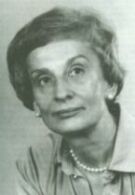
Edith Raisich was born in Gnadenfeld–Warmunthau in Upper Silesia as the youngest daughter of the director of a dairy cooperative. Her mother died two years after Edith’s birth. Like her two older sisters, she attended a convent boarding secondary school until it was forced to close after Hitler's rise to power. Fleeing from the Soviet army, Edith Raisich reached Upper Austria in 1945.
In the same year, she began studying medicine in Innsbruck and completed her study in Münster in 1953 with a doctoral degree. After working in a tuberculosis sanatorium, Edith Raisich, who until then had been a scientifically oriented physician, decided to pursue specialist training in internal medicine and psychotherapy at the Medical Polyclinic in Munich. In 1956, she entered analysis with Fritz Riemann, which was converted into a training analysis during her studies at the Münchner Institut für Psychologische Forschung und Psychotherapie. From 1958 to 1959, Edith Raisich worked as an internist in the psychosomatic department of the Munich Polyclinic, headed by Johannes Cremerius.
In 1961, she went to London for a nine-month scholarship, where she trained at the Tavistock Clinic under Michael Balint. She attended Anna Freud's Wednesday seminar and underwent a second analysis with Eva Rosenfeld. Afterwards, she continued her psychoanalytic training at the Hamburg Psychoanalytic Institute, while working from 1962 to 1964 as an assistant in the Psychosomatic Department of the Municipal Neurological Clinic in Bremen.
In 1963, she became a member and in 1971 a training and supervising analyst of the Deutsche Psychoanalytische Vereinigung. From 1964, she practiced as a psychoanalyst in Düsseldorf until she returned in 1974 to the Psychosomatic Department of the Bremen Neurological Clinic. The same year, she participated in founding the Psychoanalytische Arbeitsgemeinschaft Bremen, which was renamed the Bremer Psychoanalytische Vereinigung in 2002.
In 1977, Edith Raisich married the psychoanalyst Heinrich Jordt (1927–1984). However, the marriage ended in 1984 with the early death of her husband. (Top of the article)
- SELECTED WORKS
- Das pathologisch-anatomische Substrat der antibiotisch und chemotherapeutisch behandelten und klinisch geheilten Miliartuberkulose der menschlichen Lunge. Med. Diss. Münster 1953
- Persönliche Erinnerungen an Michael Balint. Therapiewoche 27, 1977, 6934-6945
- Beobachtungen und Überlegungen zum Schmerzerleben bei depressiven Patientinnen mit Störungen der Nahrungsaufnahme, insbesondere bei Anorexia nervosa. In E. Gattig und S. Zepf (Hg.): Selbstverständigungen. Berlin, Heidelberg 1988
- Mein psychoanalytischer Weg - als Psychoanalyse wieder möglich wurde. In L. M. Hermanns (Hg.): Psychoanalyse in Selbstdarstellungen, Bd. III. Tübingen 1995, 271-329
- REFERENCES
- Bremer Psychoanalytische Vereinigung (2016-06-17)
- Raisich-Jordt, Edith: Mein psychoanalytischer Weg - als Psychoanalyse wieder möglich wurde. In L. M. Hermanns (Hg.): Psychoanalyse in Selbstdarstellungen, Bd. III. Tübingen 1995, 271-329
- Weser-Kurier, 6.11.2018 (2020-11-30)
- PHOTO: Maria Holthaus; from E. Raisich-Jordt: Mein psychoanalytischer Weg - als Psychoanalyse wieder möglich wurde. In L. M. Hermanns (ed.): Psychoanalyse in Selbstdarstellungen, Bd. III. Tübingen 1995, 1995, 273
Ellen Reinke (1942-2025)
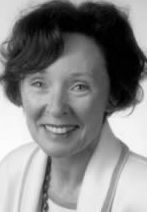
Ellen Katharina Reinke was born in Offenbach as the daughter of the photographer Josef Schott and his wife Antonie. After working for ten years as an office employee and foreign language correspondent, she obtained her Abitur in 1970 and studied psychology and sociology in Frankfurt am Main from 1971 to 1976. In 1981, she earned her doctorate in Bremen with the dissertation on the methodological reintroduction of individual subjectivity into social research.
In the mid-1970s, Ellen Reinke was a co-initiator and, until 1985, research director of the model project "Soziotherapie mit Delinquenten" in Frankfurt. This work led to her habilitation thesis Sozioanalyse am Beispiel der Soziotherapie mit Delinquenten in 1988. The socioanalytic approach she developed for the therapy of offenders with a dissocial syndrome was based on the interdisciplinary psychoanalysis of Alfred Lorenzer and his concept of “scenic understanding".
Parallel to this research project, she completed psychoanalytic training at the Sigmund Freud Institute in Frankfurt between 1981 and 1987. In 1987, she became a member of the Deutsche Psychoanalytische Vereinigung and thereafter practiced as a licensed psychoanalyst. From 1991 until her retirement in 2007, she taught as a professor of psychology at the University of Bremen. She was a member of the „Bremer Institut für Theoretische und Angewandte Psychoanalyse“ and director of the transfer center „DIALOG – Zentrum für Angewandte Psychoanalyse.” In addition, she edited several special issues of the journal Psychosozial. Her main research interests included sociotherapy, theories of female sexuality, psychoanalysis and attachment research, intergenerational transmission in connection with National Socialism, as well as methodological and interdisciplinary questions in psychoanalysis.
Ellen Reinke was married to Wolfgang Köberer, with whom she had a son, the architect Klaus Köberer. She later married Roland Lehmann. (Top of the article)
- SELECTED WORKS
- Psychologiestudium und Politisierung. Studentische Selbstorganisation als Kritik der Psychologie. Frankfurt/M. 1973
- Leiden schützt vor Strafe nicht. Soziotherapeutische Erfahrungen mit dem Gefangenen K. Frankfurt/M. 1977
- Zur heutigen Diskussion der weiblichen Sexualität in der psychoanalytischen Bewegung. Psyche 32, 1978, 695-731
- Zur methodischen Wiedereinführung individueller Subjektivität in der Sozialforschung. Phil. Diss. Bremen 1981
- Sexualität in der Psychoanalyse heute - ein Tabu? In H. M. Lohmann (ed.): Das Unbehagen in der Psychoanalyse. Eine Streitschrift. Frankfurt/M. 1983, 86-92
- Widersprüche in der sexuellen Entwicklung der Frau. In S. Anselm et al.: Theorien weiblicher Subjektivität. Frankfurt/M. 1985, 50-65
- Psychoanalytisches Verstehen im soziotherapeutischen Setting. Ein Modellprojekt mit Straftätern. Psyche 41, 1987, 900-914
- Die Subjektivität der Forscherin und die Psychoanalyse der weiblichen Sexualität. In F. Pfäfflin and E. Schorsch (eds): Sexualpolitische Kontroversen. Stuttgart 1987, 58-66
- Sozioanalyse am Beispiel der Soziotherapie mit Delinquenten. Habil. Thesis Frankfurt/M. 1988
- Zweite Generation- zweite Chance? Transgenerationelle Übermittlung von unbearbeiteten Traumen im Zusammenhang mit dem Nationalsozialismus. In K. Flaake and V. King (eds): Aufsätze zur weiblichen Adoleszenz. Frankfurt/M. 1992
- Zwischen Apologetik und Erinnern. Psychoanalyse und Vergangenheitsbewältigung. Psychosozial 15 (Nr. 51), 1992, 86-101
- Psychotherapie und Soziotherapie mit Straftätern. Klinik und Forschung. Gießen 1997
- Triadische Position und psychoanalytisches Konfliktverständnis: Zur gegenwärtigen Vermittlung von Beziehungs- und Bindungsqualitäten zwischen den Generationen. Psychosozial 22 (Nr. 76), 1999, 91-102
- Augensprache. Über die Entwicklung von Affekt- und Selbstkontrolle aus neuropsychoanalytischer Perspektive. Psychosozial 24 (Nr. 86), 2001, 81-98
- Reflexive Kompetenz. In P. Fonagy and M. Target (eds): Frühe Bindung und psychische Entwicklung. Beiträge aus Psychoanalyse und Bindungsforschung. Gießen 2003, 7-28
- (ed.) Alfred Lorenzer. Zur Aktualität seines interdisziplinären Ansatzes. Gießen 2013
- »Szenische Evidenz« und »Szenisches Verstehen«. Zur Vermittlung des Werks von Hermann Argelander und Alfred Lorenzer. Jb Psychoanal 66, 2013, 13-48
- Das psychoanalytische Erstinterview und seine Bedeutung für Diagnostik und Behandlung. Gießen 2017
- Das Öffnen der Blende. Psychoanalytische Streifzüge durch literarische Texte aus dem zerrissenen 20. Jahrhundert. Gießen 2021
- (and Klaus Horn) Einige Probleme beim Wiedereinführen individueller Subjektivität in die Wissenschaft. Methodische als politische Fragen. In K. Horn (ed.): Aktionsforschung. Balanceakt ohne Netz? Frankfurt/M. 1979, 54-67 (I), 245-277 (II)
- (and Christian Warrlich) (eds) Auf der Suche. Psychoanalytische Betrachtungen zum AD(H)S. Gießen 2007
- REFERENCES
- Blanck, Julian (DIALOG) (Hg.): Gehört-Haben und Erlebt-Haben: Die Psychoanalyse an der Universität. Festschrift zu Ehren von Prof. Dr. phil. habil. Ellen Reinke. Bremen 2007
- Wikipedia (2025-07-16)
- Ellen Reinke: Personal notice
- PHOTO: Private
Hannah Ries (1885-1973)
Hannah Ries came from a Jewish family and lived in Berlin until her emigration. She began her career as a psychoanalyst with therapeutic analyses under Kilian Bluhm (between 1929 and 1933) and, from 1934 onward, with Felix Boehm at the Berlin Psychoanalytic Institute (BPI). Her analysis with Boehm was converted into a training analysis, which she completed in 1938. Her supervising analyst was Ada Müller-Braunschweig.
In 1939, Hannah Ries emigrated to England with the support of Felix Boehm. She held his assistance in high regard and later defended Boehm when he came under fierce criticism in émigré circles for the “Aryanisation” of the Deutsche Psychoanalytische Gesellschaft (DPG) during his chairmanship. In 1940, she became an associate member of the British Psycho-Analytical Society (BPAS), where she belonged to the adherents of Anna Freud.
Following her lecture An ‘unwelcome child and her death instinct’, delivered in November 1945, Hannah Ries attained full membership of the BPAS in 1946. A year later, this paper was also presented before the DPG in the presence of the English psychoanalyst John Rickman. According to Rickman, Carl Müller-Braunschweig and Felix Boehm reacted with furious criticism, questioning both Hannah Ries’s analytic competence and that of the BPAS. Regine Lockot (1994) suggests that this issue must have triggered strong unconscious reactions, confronting the analytical “parents” in Germany with their guilt over the expulsion of the Jews as “unwelcome children.” Rickman pointed to possible feelings of envy toward Hannah Ries, a colleague highly esteemed by the BPAS, while Käthe Dräger and Margarete Steinbach drew the attention to misinterpretations and incorrect quotations of the two leading DPG members.
At the end of 1964, Hannah Ries moved to the United States, settling in Los Angeles, where she died at the age of 88. (Top of the article)
- SELECTED WORKS
- An 'unwelcome child and her death instinct'. IJP 26, 1945, 153-161
- A patient's castration dream in the light of his character deformation. Lecture, BPAS 6.12.1950
- A character analysis. Lecgture, BPAS 1953
- Die Analyse einer Patientin mit "gespaltener Persönlichkeit". Psyche 11, 1957, 220-240 [Analysis of a patient with a "split personality". IJP 39, 1958, 397-407]
- Fortsetzung der Analyse einer "Persönlichkeitsspaltung". Psyche 13, 1959, 63-79
- (for further works see Hannah Ries Collection)
- REFERENCES
- Brecht, Karen, et al. (eds): "Here life goes on in a most peculiar way...". Psychoanalysis before and after 1933. Hamburg 1985
- Bull Int Psycho-Anal Assn 21, 1940, 502 + 27, 1946, 180
- California Death Index, 1940-1997. FamilySearch (2021-10-01)
- Glover, Edward: Notes on the psychological effects of war conditions on the civilian population. IJP 23, 1942, 17-37
- Hannah Ries Collection, Archives of the British Psychoanalytical Society (2026-05-12)
- Lockot, Regine: Erinnern und Durcharbeiten. Frankfurt/M. 1985
- Lockot, Regine: Die Reinigung der Psychoanalyse. Die Deutsche Psychoanalytische Gesellschaft im Spiegel von Dokumenten und Zeitzeugen (1933-1951). Tübingen 1994; Gießen 2013
- United States, Index to Alien Case Files, 1940-2003 (FamilySearch 2026-05-12)
Christa Rohde-Dachser (*1937)

Christa Rohde-Dachser grew up in Kempten, Allgäu, as the eldest daughter of a Catholic family. Her father, Thomas Dachser, was a freight forwarding entrepreneur, while her mother was a businesswoman working in her husband’s company. From 1956 to 1959, Christa Dachser studied business administration in Munich and Freiburg and then worked for two years in her father’s company. After disputes with her father, she decided to study sociology and earned her doctorate in this field from the University of Munich in 1967.
At the Munich Department of Sociology, she met her first husband, the medical sociologist Johann Jürgen Rohde (1929–2001), with whom she had three children. In 1967, the family moved to Hanover, where Christa Rohde-Dachser trained as a psychoanalyst from 1971 to 1976 at the Lehrinstitut für Psychotherapie und Psychoanalyse of the Deutsche Psychoanalytische Gesellschaft (DPG). Her training analyst was Ilsabe von Viebahn. Subsequently, she served as a lecturer at the DPG Institute until 1987, and in 1981 she was appointed training and supervising analyst of the DPG. In 1982, she also completed further training as a psychodrama therapist at the Moreno Institute in Überlingen.
During the same time, from 1972 to 1987, she worked as a research associate at the Psychiatric Polyclinic of Hannover Medical School (MHH), where in 1976 she took over the leadership of psychotherapeutic training for physicians and psychologists. At MHH, she also met her second husband, the psychoanalyst Wolfgang Gephart (1943–2017). In 1981, she completed her habilitation at MHH with a thesis on borderline syndrome. In 1987, she was appointed to the former chair of Alexander Mitscherlich at the Institute of Psychoanalysis in the Department of Psychology at Goethe University in Frankfurt, where she taught until her retirement in 2002.
In 1994, Christa Rohde-Dachser founded the DPG Institut für Psychoanalyse in Frankfurt and served as its chairwoman until 2004. From 1992 to 2012, she was co-editor of the journal Psyche. In response to the displacement of psychoanalysis by behavioral therapy at German universities, she co-founded, together with Jürgen Körner, the International Psychoanalytic University Berlin in 2009, a state-recognized, private, non-profit university.
Among Rohde-Dachser’s best-known publications, besides her groundbreaking study on borderline disorders, is her book Expedition in den dunklen Kontinent. In this feminist critique of psychoanalysis, published in 1991, she describes the collective unconscious fantasies underlying both the definitions of femininity in patriarchal society and the psychoanalytic discourse on gender difference. Other topics of her publications include clinical questions, cultural studies and diagnoses of the times, as well as psychoanalytic film interpretations. (Top of the article)
- SELECTED WORKS (for more, see: Rohde-Dachser Website)
- Die Sexualerziehung Jugendlicher in katholischen Kleinschriften. Ein Beitrag zur Problematik der Moraltradierung in der komplexen Gesellschaft. Oec. publ. Diss. München 1967
- Struktur und Methode der katholischen Sexualerziehung. Ein Beitrag zur Problematik der Moraltradierung in der komplexen Gesellschaft. Stuttgart 1970
- Das Borderlinesyndrom. Bern 1979; 2004
- (ed.) Zerstörter Spiegel. Psychoanalytische Zeitdiagnosen. Göttingen 1990
- Bulimie und Borderline-Syndrom (Sinn und Problematik einer Diagnose). Frankfurt/M. 1991
- Expedition in den dunklen Kontinent. Weiblichkeit im Diskurs der Psychoanalyse. Berlin, Heidelberg, New York 1991
- (ed.) Beschädigungen. Psychoanalytische Zeitdiagnosen. Göttingen 1992
- Im Schatten des Kirschbaums. Psychoanalytische Dialoge. Bern 1994
- (ed.) Über Liebe und Krieg. Psychoanalytische Zeitdiagnosen. Göttingen 1995
- Über den Umgang mit Wünschen und Aggressionen in den Lebensentwürfen von Männern und Frauen. Münsterschwarzach 1997 (Tonträger)
- (ed.) Verknüpfungen. Psychoanalyse im interdisziplinären Gespräch. Göttingen 1998
- Neuere psychoanalytische Theorien zur geschlechtsspezifischen Entwicklung und ihre Auswirkung auf die psychotherapeutische Behandlung. Müllheim 2000 (Videokassette)
- (ed.) Unaussprechliches gestalten. Über Psychoanalyse und Kreativität. Göttingen 2003
- Spuren des Verlorenen. Beiträge zur klinischen Psychoanalyse und zur Geschlechterdifferenz. Gießen 2020
- Was sich verändert und was bleibt. Psychoanalytische Beiträge über Vergänglichkeit, den Wunsch nach Unsterblichkeit und das Leben im Augenblick. Gießen 2021
- (et al.) Männliche und weibliche Homosexualität. Düsseldorf 2001
- (and Franz Wellendorf) (Hg.) Inszenierungen des Unmöglichen. Theorie und Therapie schwerer Persönlichkeitsstörungen. Stuttgart 2004
- (and Wolfgang Gephart) Heimkehr im Strahlenkranz. Eine psychoanalytische Interpretation des Films "Dead Man". Psyche 61 (12), 2007, 1255-1263 + pdf
- (et al.) Psychologische Grundlagen, Entwicklung und Neurobiologie : Basiswissen Psychoanalyse, Bd. 1. Stuttgart 2007
- REFERENCES
- FAZ, 8.7.2017 (2021-10-01)
- Christa Rohde-Dachser Website: Vita (2016-05-23)
- Roedig, Andrea: Das Unbewußte will unsterblich sein. Metaphern des Todes - Eine psychoanalytische Sicht. Der Tagesspiegel, 25.08.1998, 27
- Rohde-Dachser, Christa: Interview. ARD alpha, 9.3.2016
- Rohde-Dachser, Christa: Mein Weg zur Psychoanalyse und die Bedeutung, die sie für mich hat. In L. M. Hermanns (ed.): Psychoanalyse in Selbstdarstellungen, Bd. XII. Frankfurt/M. 2019, 145-192
- Schäfer, Annette: Eine Vorliebe für unbequeme Pfade. Psychologie heute 34 (6), 2007, 62-67
- Schwab, Waltraud: "Ich will entscheiden, wofür ich kämpfe". Gespräch mit Christa Rohde-Dachser. taz, 7./8.5.2016, 22-23
- Wikipedia (2023-05-30)
- PHOTO: Psychosozial-Verlag. Courtesy of Christa Rohde-Dachser
Margarete Ruben née Lubarsch (1893-1980)
Margarete Eugenie “Grete” Ruben was born in Landsberg an der Warthe as the youngest daughter of the merchant Louis Lubarsch and his wife Rosalie, née Guttmann. She was married to the ophthalmologist Ludwig Ruben (1884–1924), who had been severely wounded during the First World War and died young. So she raised their only child, Miriam, born in 1921, on her own.
Margarete Ruben-Lubarsch presumably studied psychology in Berlin. In 1930, she published an article in the Zentralblatt für Psychotherapie about graphology as an aid for character studies, which was also the subject of courses she held in 1932 at the Verein Jugendheim Charlottenburg in Berlin. She completed her psychoanalytic training at the Berlin Psychoanalytic Institute. In 1935, she was among the Jewish members who, as part of the Aryanization of the Deutsche Psychoanalytische Gesellschaft, were forced to resign “voluntarily."
She emigrated to Italy and was a full member of the Società Psicoanalitica Italiana (SPI) from 1936 to 1940. In 1936, Vanda Shrenger Weiss underwent analysis with her. Before the outbreak of the Second World War, she gave up her psychoanalytic practice in Milan and emigrated from fascist Italy to England. In 1940, her SPI membership was transferred to the British Psycho-Analytical Society (BPAS), where she was among the followers of Anna Freud. From 1950 onward, she served as a training analyst and supervisor at the BPAS.
In 1950, Margarete Ruben moved to the United States, where her daughter Miriam Meyerhof was living with her family. She settled in Los Angeles and became a member of the Los Angeles Psychoanalytic Society and Institute (LAPSI) in 1953. She was a training analyst and supervisor and — like Hanna Fenichel — responsible for the training of child analysts. During the 1950s, Ruben and Fenichel jointly conducted seminars on child development, parental guidance, and the theory and technique of child analysis. In 1958, they were appointed to the Committee for Training in Child Analysis, with Margarete Ruben serving as chair. With her paper A contribution to the education of a parent (1945), she anticipated the model of indirect treatment of children through their parents, later developed by Anny Katan and others.
Margarete Ruben died at the age of 87 in Santa Barbara, California. (Top of the article)
- SELECTED WORKS
- Ueber den gegenwärtigen Stand der Graphologie. Zentralblatt für Psychotherapie 3, 1930, 275-281
- A contribution to the education of a parent. Psa Study Child 1, 1945, 247-261
- Delinquency – a defence against loss of reality. Psa Study Child 12, 1957, 335-355
- Parent Guidance in the Nursery School. Foreword by Anna Freud. New York 1960
- Trauma in the light of clinical experience. Psa Study Child 29, 1974, 369-387
- REFERENCES
- Boehm, Felix: Bericht vom 4.12.1935. In K. Brecht et al. (eds): "Hier geht das Leben auf eine sehr merkwürdige Weise weiter..." Zur Geschichte der Psychoanalyse in Deutschland. Hamburg 1985, 122
- Briester, Björn: Aby Warburg Briefe - Besprechung der Auswahlausgabe. Aby Warburg Blogspot, 29. August 2022 (2024-12-05)
- Bull Amer Psychoanal Assn 8, 1952, 70 + 256f + 9, 1953, 746
- Corsa, Rita: Vanda Shrenger Weiss. La prima psicoanalista italiana. La psicoanalisi a Roma in epoca fascista. Rom 2017
- FamilySearch: California, Southern District Court (Central) Naturalization Index, 1915-1976 + United Kingdom, Outgoing Passenger Lists, 1890-1960 + New York Passenger and Crew Lists, 1909, 1925-1957 + California Death Index, 1940-1997 (2024-12-05)
- Fichtner, Gerhard: Anmerkung zu "Letter from Ludwig Binswanger to Anna Freud, August 23, 1938". In G. Fichtner (ed.): The Sigmund Freud-Ludwig Binswanger Correspondence 1908-1938. London 2003, 216
- Geni (2026-05-21)
- Hermanns, Ludger M.: Die jüdischen Psychoanalytiker in Deutschland nach 1933. DPV-Informationen Nr. 55, 2013, 53-57
- Ludwig-Körner, Christiane: Wandlerin zwischen den Welten - Anneliese Schnurmann (1908-2006). Forum der Psychoanalyse 29 (3), 2013, 343-355
- Meyerhof, David: Obituary of Miriam Meyerhof, June 13, 2015 (2026-05-21)
- Schröter, Michael: Psychoanalyse im Fortbildungsangebot für Sozialberufe, Berlin 1930-1933 (Verein Jugendheim). Luzifer-Amor 18, 2005, 46-81
Lore Schacht (*1935)
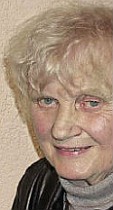
Born and raised in Krefeld, Lore Schacht studied medicine in Freiburg and Munich from 1954 to 1959 and subsequently specialised in psychiatry. Between 1965 and 1969, she trained as a psychoanalyst and became a member and training analyst of the Deutsche Psychoanalytische Vereinigung (DPV).
She worked as an assistant to Alexander Mitscherlich at the Psychosomatic Clinic in Heidelberg before moving to London in 1970 for three and a half years to complete additional training in child analysis at the British Institute of Psychoanalysis. She underwent a second analysis with Paula Heimann and attended seminars at Anna Freuds Hampstead Clinic, where she met Anne-Marie Sandler. Her most important teacher in England was Donald Winnicott, whose object-relations approach became of decisive importance to her work.
After returning to Germany, Lore Schacht worked at the Psychosomatic Clinic of the University of Ulm from 1973 to 1975. From 1975 onward, she was in private practice, first in Ulm and, from 1977, in Emmendingen near Freiburg. She also taught at the Psychoanalytisches Seminar Freiburg, founded in 1974. From 1989 to 1999, she chaired the Sigmund-Freud-Stiftung, and from 1990 to 1992 she was the first woman to serve as Chair of the DPV. As a member of the IPA Executive Board, she organised the International Psychoanalytic Congress in Amsterdam in 1993 together with Anne-Marie Sandler.
The capacity for creative symbolization, which was central to her psychoanalytic work with children, also gained increasing significance in her own life when, at the age of 65, she devoted herself more intensively to painting. Her drawings have been shown in several exhibitions. (Top of the article)
- SELECTED WORKS (s.a. BSF)
- Subjekt gebraucht Subjekt. Psyche 27 (2), 1973, 151-168
- Die Entfaltung des Arbeitsbündnisses in der Analyse eines Adoleszenten. Psyche 29 (1), 1975, 21-34
- Einführung zu Georg Groddeck: The Meaning of Illness. Selected Psychoanalytic Writings. New York 1977
- Die Entdeckung der Lebensgeschichte. Psyche 32 (2), 1978, 97-110
- Die Spiegelfunktion des Kinderanalytikers. Psyche 36 (1), 1982, 47-58
- Die früheste Kindheitsentwicklung und ihre Störungen aus der Sicht Winnicotts. In T. von Uexküll: Psychosomatische Medizin. München; Wien; Baltimore 1986, 68-80
- Der imaginäre Planet. Z psychoanal Theorie Praxis 2, 1987, 88-107
- Winnicott's position in regard to the self with special reference to childhood. Int Rev Psycho-Anal 15, 1988, 515-529
- Le déploiement du contre-transfert dans l'analyse d'un enfant. J Psychanal Enf Nr. 6, 1989, 152-181
- A river can't be green, can it? From the analysis of Boris. IJP 72, 1991, 511-524
- Laudatio für Wolfgang Loch. Z psychoanal Theorie Praxis 8, 1993, 103-105
- Baustelle des Selbst. Psychisches Wachstum und Kreativität in der analytischen Kinderpsychotherapie. Stuttgart 2001
- Die Fähigkeit überrascht zu sein. Jb Psychoanal 45, 2002, 69-85
- Tu aimes le soleil? Rencontre extra-analytique avec un enfant. RFP 67 (4), 2003, 1351-1368
- Das Paradox der Kreativität. EPF Bulletin 57, 2003, 62-70
- "L'inclination a fait son apparition comme un beau jour de printemps...". RFP 70 (1), 2006, 215-228
- Regard en arrière. Ma première rencontre avec Winnicott. J Psychanal Enf 5 (2), 2015, 43-48
- REFERENCES
- Ausstellungskatalog 2016 (2018-03-15)
- Bender, Thomas: : Zur Geschichte des Psychoanalytischen Seminars Freiburg. Vortrag vom 24.6.2005. PSF (2019-06-06)
- Holmes, Maren: Paula Heimann. Leben, Werk und Einfluss auf die Psychoanalyse. Gießen 2017
- Sandler, Anne-Marie: Konflikt und Versöhnung. In L. M. Hermanns (Hg.): Psychoanalyse in Selbstdarstellungen, Bd. X. Frankfurt/Main 2015, 221-287
- Prominent Women Pioneers at the IPA (2023-02-09)
- Vita Lore Schacht. Kulturkreis Emmendingen 2014
- PHOTO: Badische Zeitung, 11. November 2014 (2018-03-15). Courtesy of Karlernst Lauffer
Herta Seidemann (1900-1984)
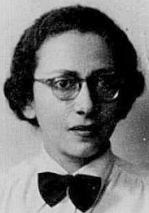
Herta Seidemann was born into a Jewish Orthodox family in Breslau as the sixth child of the furniture merchant Max Seidemann and his wife Luise, née Rosenthal. In 1918, she began studying medicine at the Schlesische Friedrich-Wilhelms-Universität in Breslau, where she specialised in psychiatry under Robert Wollenberg and earned her doctorate in 1925 with a dissertation on methods for testing memory ability.
She then went to Heidelberg to work at Frieda Reichmann’s private sanatorium, where she was introduced to psychoanalysis, primarily under the guidance of the child psychiatrist August Homburger. In 1927, she continued her psychoanalytic training with Hanns Sachs at the Berlin Psychoanalytic Institute while simultaneously working at the Psychiatric and Neurological Clinic of the Charité under Karl Bonhoeffer. There, together with Hans Scheller, she investigated the brain pathological causes of visual processing disorders. The results of their research were published in an extensive study in 1932.
After Hitler’s rise to power, Herta Seidemann emigrated to Switzerland in 1933 and worked at the Burghölzli University Psychiatric Clinic in Zurich. Dissatisfied with her analysis under the Freudian Hanns Sachs, she turned to the analytical psychology of C. G. Jung. In 1936, her work permit in Switzerland was not renewed, and she was forced to return to Germany. From there, she fled to the United States in 1938, where she obtained a position at New York’s Montefiore Hospital as an assistant to Kurt Goldstein, the German pioneer of neuropsychology.
From 1942, despite different analytical orientations, she worked for a few years with the Neo-Freudian Karen Horney. With Horney’s support, she succeeded in establishing a private practice as a psychiatrist in New York. She remained affiliated with the Jungian school and traveled annually to the Eranos conferences in Ascona between 1948 and 1958.
Herta Seidemann died of lung cancer at the age of 83. (Top of the article)
- SELECTED WORKS
- Zusammenstellung von Methoden, Merkfähigkeitsstörungen festzustellen, bes. Gedächtnisstörungen für jüngste Ereignisse. Diss. Med. Breslau 1925
- Einfache klinische Testmethode zur Prüfung der Merkfähigkeit. Archiv füf Psychiatrie 78, 1926, 614-635
- (and Heinrich Scheller) Zur Frage der optisch-räumlichen Agnosie. Monatsschrift für Psychiatrie und Neurologie 81 (3-4), 1932, 97-188
- (and Norman Q. Brill) The electroencephalogram of normal children. Effect of Hyperventilation. Am J Psychiatry 98 (2), 1941
- (with Norman Q. Brill, Helen Montague, and Ben H. Balser) Electroencephalographic studies in delinquent behavior problem children. Am J Psychiatry 98 (4), 1942
- REFERENCES
- Center for Jewish History: Herta Seidemann Collection (2026-03-26)
- Focke, Wenda: Begegnung, Herta Seidemann – Psychiatrin-Neurologin 1900-1984. Konstanz 1986; 2025
- Geni (2026-03-26) Herrn, Rainer: Herta Seidemann. GeDenkOrt Charité (2026-03-26)
- Kaufhold, Roland: Herta Seidemann 24.6.1900 (Breslau) – 21.3.1984 (New York). Hagalil, 24. Juni 2025 (2026-03-26)
- Prüter-Schwarte, Christian: Herta Seidemann: Psychiaterin, Neurologin und Psychotherapeutin. Nervenheilkunde 44 (7/8), 2025, 475-483
- PHOTO: Southern District of New York Petitions for Naturalization, 26.8.1938 (FamilySearch 2026-03-26)
Margarete Seiff née Kranz (1896-1976)
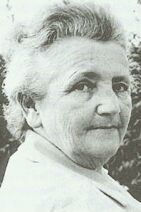
The neo-analyst Margarete Seiff was born in Shanghai as the eldest of four children. Her father, Paul Kranz, was a German pastor and missionary in imperial China, while her mother, Emma Algar, was the daughter of an English tailor who had emigrated to Shanghai. In 1911, the Kranz family returned to Germany and settled in Bielefeld. In 1917, Margarete Kranz began studying law in Munich, but later moved to Jena, where she studied national economy and/or philosophy and psychology.
In Jena, she met the agricultural scientist Rudolf Seiff (1892–?), whose sister Margarete had been her friend since their school days. The couple married in the early 1920s and had six children between 1922 and 1938. In 1930, her husband, who at times suffered from depression, entered analysis with the neo-analyst Harald Schultz-Hencke. A year later, Margarete Seiff began a training analysis with Schultz-Hencke, which she completed in 1933. She undertook further so-called Fortbildungsbehandlungen with Edith Weigert-Vohwinkel.
In 1936, she became a member of the Deutsche Psychoanalytische Gesellschaft (DPG) and joined the “Aryanised” Deutsches Institut für Psychologische Forschung und Psychotherapie, where she worked in the educational counseling service (Erziehungshilfe) from 1939 and served as a training and supervising analyst from 1940. Like the other “Aryan” analysts at the cross-school Deutsches Institut, Margarete Seiff adapted her work to the National Socialist “Deutsche Seelenheilkunde" by merging psychoanalysis, pedagogy, and Nazi ideology. Her husband, then a senior civil servant in the Berlin Senate administration, began training as a “Behandelnder Psychologe” at the Deutsches Institut in 1941.
After the end of the war, Margarete Seiff was one of the closest collaborators of Harald Schultz-Hencke (alongside Adelheid Fuchs-Kamp, Otto Haseloff, Werner Schwidder, Annemarie Dührssen, and Julie Cellarius), with whom he formed the Neo-Analytic group in 1945. In 1947, she participated in establishing the Institut für Psychotherapie in Berlin, which was modeled on the Deutsches Institut, and served there as a training and supervising analyst. While working as an associate at the Berlin Zentralinstitut für psychogene Erkrankungen, Margarete Seiff introduced analytic group psychotherapy in 1949, a method that had previously been unknown in Germany, and organised the first analytic therapy group.
In 1951, she moved to Bonn, where Rudolf Seiff was appointed government director in the Bundesministerium für Wohnungsbau. In the following years, Margarete Seiff played a key role in establishing psychoanalytic institutes in Göttingen, Köln, Hannover, and Freiburg. In 1954, she was among the founders of the Institut für Psychoanalyse und Psychotherapie in Göttingen, and in 1958 she co-founded in Köln the Institut für analytische Psychotherapie im Rheinland. (Top of the article)
- SELECTED WORKS
- Elternerziehung. In R. Bilz (Hg.): Psyche und Leistung, Bericht über die 3. Tagung der Deutschen Allgemeinen Ärztlichen Gesellschaft für Psychotherapie in Wien, September 1940. Stuttgart 1941, 78-87
- The analysis of ambivalence as a character trait as an opening to the psychoanalytic therapy [Die Aufhellung der charakterlichen Ambivalenz als Zugang zur psychoanalytischen Therapie]. Paper read at the International Psychoanalytical Congress in Zürich 1949
- Gruppentherapie bei psychosomatischen Störungen. Analytische Psychotherapie und Erziehungshilfe 3, 1951, 70-73; Gruppenpsychotherapie und Gruppendynamik 55 (1), 2019, 75–82
- (and Hans Molinski) Einige psychische Reaktionen bei der Einnahme von Ovulationshemmern. Zeitschrift für Psychotherapie und medizinische Psychologie 17, 1967, 203-215
- REFERENCES
- Füchtner, Hans: "Fremdartiger bunter Vogel" oder "Große Dame der Psychoanalyse"? Zur atypischen Berufsbiographie von Anna Kattrin Kemper. Luzifer-Amor 20 (39), 2007, 80-118
- Hermanns, Ludger M.: Editorische Anmerkungen zu Margarete Seiff „Gruppentherapie bei psychosomatischen Störungen“ (1951). Gruppenpsychotherapie und Gruppendynamik 55 (1), 2019, 68–74
- Kaggl, Colin: Psychoanalyse, Deutsche Seelenheilkunde und NS-Biopolitik: Margarete Seiffs Erziehung der Volksgemeinschaft. Psyche 80, 2026, 93-121
- Kitlitschko, Susanne: Querelles allemandes? Zur Kontroverse zwischen Carl Müller-Braunschweig und Harald Schultz-Hencke. Luzifer-Amor 32, 2019, 52-69
- Lockot, Regine: Reinigung der Psychoanalyse. Die Deutsche Psychoanalytische Gesellschaft im Spiegel von Dokumenten und Zeitzeugen (1933-1951). Tübingen 1994; Gießen 2013
- Ludwig-Körner, Christiane: Wiederentdeckt - Psychoanalytikerinnen in Berlin. Gießen 1999; 2014
- Palmowski, Bernhard: Zur Bedeutung von Scham und Selbsterleben für Indikation und Verlauf in der analytischen Gruppenpsychotherapie. Forum Psychoanal 8, 1992, 134-146
- Wikipedia (2023-11-03)
- FOTO: Gelia und Werner Hopmann; aus Ludwig-Körner 1999, 203
Margarete Stegmann née Meier (1871-1936)

Anna Margarete Stegmann was born in Zürich-Enge as the twelfth child of a farmer and was orphaned at the age of sixteen. While working as a postal clerk, she completed her Abitur part-time and from 1904 studied medicine in Zurich and Bern. In 1910, she graduated at the Gerichtlich-Medizinische Institut of the University of Zurich with a dissertation on the psychology of infanticide. She expressed sympathy for women who committed infanticide, regarding them as victims of men and social circumstances. At the same time, however, she classified almost all of them as "feeble-minded" and therefore considered that their infanticides would cause no social harm. She then began her residency at the Schweizerische Anstalt für Epileptische in Zurich and continued it in 1911 at the Charité Hospital in Berlin.
In 1909, Margarete Meier (also: Meyer) married the Saxon neurologist and forensic physician Arnold Stegmann (1872–1914) and moved to Dresden. The marriage remained childless* and ended in divorce after four years. She subsequently became friends with the art historian Karl Adrian, who was eighteen years her junior, but the relationship ended prematurely with his death in 1915. She was a member of the Frauenbund zur Förderung der deutschen bildenden Kunst and an important collector of contemporary art.
Margarete Stegmann was introduced to psychoanalysis through her husband Arnold Stegmann, who had undergone analysis with Sigmund Freud and had been a member of the Berliner Psychoanalytische Vereinigung (BPV) since 1910. At the end of 1911, she attended four meetings of the Wiener Psychoanalytische Vereinigung as a guest and took part in the discussion following a lecture by Sabina Spielrein. She probably underwent her training analysis with Karl Abraham and became as full member of the BPV in 1912.
In 1920, Margarete Stegmann obtained her German medical license and practiced as a neurologist and general practitioner in Dresden until her death. After joining the Sozialdemokratische Partei Deutschlands (SPD) in 1918, she served from 1920 onward as an unpaid city councillor in Dresden and was a member of the Deutscher Reichstag from 1924 to 1930. She belonged to the Verein sozialistischer Ärzte and the Internationaler Frauenliga für Frieden und Freiheit, and in the 1924 Reichstag debate on the § 218 she advocated women's right to abortion. However, her support for abortion was also based on eugenic reasons, which shows that her socio-political commitment to women was not free of racial hygiene ideas.
Particularly noteworthy among her psychoanalytic publicationss is her essay on the psychogenesis of organic diseases (Die Psychogenese organischer Krankheiten und das Weltbild), where Margarete Stegmann developed as one of the first a psychoanalytic interpretation of cancer. She argued that, within the psychoanalytic worldview, organic diseases reflected a diseased psyche, illustrating this with the example of cancer patients: According to her, the cancer patient's conflict between his death wish and an excessively active will to live produced, like carcinoma itself, only a self-destructive imitation of healthy life. Also worth mentioning is her article on epileptic seizures in dreams (Darstellung epileptischer Anfälle im Traum), which is regarded as pioneering work in the psychosomatic understanding of epilepsy. In this essay, she explored the question of whether hysterical convulsions and epileptic seizures differ only in the degree of loss of control. (Top of the article)
- * According to some sources, they had a son.
- SELECTED WORKS
- Beitrag zur Psychologie des Kindsmords. Med. Diss. Zürich 1910; Leipzig 1910
- Zur Psychologie der Narkose. Vortrag Juni 1912. IZP 1, 1913, 112
- Ein Fall von Namenvergessen. Zbl Psychoanal 2, 1912, 650
- Ein Vexiertraum. IZP 1, 1913, 486-489
- Darstellung epileptischer Anfälle im Traum. IZP 1, 1913, 560f
- Identifizierung mit dem Vater. Zbl Psychoanal 1, 1913, 561f
- Form und Inhalt in der Psychoanalyse. Vortrag auf dem 6. Internationalen Psychoanalytischen Kongreß in Den Haag, 8. bis 11. September 1920. Korrespondenzblatt der Internationalen Psychoanalytischen Vereinigung Nr. 4, 1920. IZP 6, 1920, 401 (Zsfsg.)
- Die §§ 218/219 des Strafgesetzes. Vierteljahresschrift des Bundes Deutscher Ärztinnen 1(2), 1924, 27-30
- Die Psychogenese organischer Krankheiten und das Weltbild. Imago 12, 1926, 196-202
- Frauenblindheit der Männer - eine alte Krankheit. Die Genossin 6, 1929, 229f
- Stimmen gegen den § 218. Der Sozialistische Arzt 7, 1931, 100f
- REFERENCES
- Bernhardt, Heike, und Regine Lockot (Hg.): Mit ohne Freud. Zur Geschichte der Psychoanalyse in Ostdeutschland. Gießen 2000
- Ärztinnen im Kaiserreich. Institut für Geschichte der Medizin und Ethik in der Medizin, Charité Berlin 2015 (2019-01-25)
- Matrikeledition der Universität Zürich 1833-1924 (2026-07-14)
- Müller, Thomas, und Ludger M. Hermanns: Margarete Stegmann - Psychoanalytikerin, Reichstagsabgeordnete und Frauenrechtlerin. Luzifer-Amor 14 (27), 2001, 36-59
- Stegmann, Margarete: Darstellung epileptischer Anfälle im Traum. IZP 1, 1913, 561
- Wikipedia (2018-10-12)
- PHOTO: Reichstagshandbuch 1928
Margarete Steinbach (1894-1954)
Margarete Steinbach passed her teacher's examination in 1914 and taught at the German School in Madrid from 1921 to 1926. She then returned to Germany to study psychology in Berlin under Wolfgang Köhler and Kurt Lewin. At the same time, she began her training at the Berlin Psychoanalytic Institute and underwent training analysis with the Swiss psychiatrist Gustav Bally, who practiced in Berlin between 1926 and 1932. In 1936, she became a member of the now "Aryanized" Deutsche Psychoanalytische Gesellschaft (DPG). Following the dissolution of the DPG in 1938, she joined the Deutsches Institut für Psychologische Forschung und Psychotherapie, which sought a synoptic integration of depth-psychological schools ("Deutsche Seelenheilkunde").
After World War II, Margarete Steinbach held a number of teaching positions, including at the Pädagogische Hochschule Berlin and at the Institut für Psychotherapie founded by Werner Kemper and Harald Schultz-Hencke. In 1946, she was one of the five leading DPG members whose political attitudes and professional qualifications were evaluated by John Rickman of the British Psycho-Analytical Society on behalf of the British military government. Rickman attested to her personal integrity as well as that of Käthe Dräger and considered both suitable for psychoanalytic work, whereas he found Carl Müller-Braunschweig and Felix Boehm unfit..
In 1950, Margarete Steinbach, Carl Müller-Braunschweig, and four other classical Freudians left the DPG and founded the Deutsche Psychoanalytische Vereinigung (DPV). During this time, the Spanish psychiatrists Jerónimo Molina Núñez and Ramón del Portillo came to Berlin for psychoanalytic training; the latter was in training analysis with Margarete Steinbach. They sought support in establishing a psychoanalytic group in Francoist Spain, and Steinbach, who spoke fluent Spanish, accepted their invitation and moved to Madrid in 1951 to take charge of psychoanalytic training.
During the following three years, "Margarita" Steinbach conducted sixteen training analyses, primarily with physicians, including the psychiatrists Júlia Coromines, Carolina Zamora und María Luisa Herreros, as well as the educator María Teresa Ruiz. In addition, she served as supervisor, lead the theoretical seminars, and conducted psychotherapies. In 1953, she traveled with several of her analysands to the IPA Congress in London to prepare the founding of the Asociación Psicoanalítica Española (APE). In March 1954, only a few days before her death, the APE was recognized by the Spanish Ministry of the Interior. Without its training analyst, however, the society had no future.
Margarete Steinbach died in April 1954 in Madrid under circumstances that remain unclear (Castilla del Pino: "a consecuencia de la rotura en el recto del cuello de una botella de cristal"). Her position as the only training analyst in Spain was difficult and demanding and was further overshadowed by the hostility of Jerónimo Molina. Molina, an analysand of Müller-Braunschweig and a member of the DPV, felt betrayed by the Madrid group around Steinbach after his return from Berlin. He subsequently devoted considerable effort to discrediting her and her work — a campaign that he continued even after her death, to the detriment of the development of psychoanalysis in Spain. (Top of the article)
- SELECTED WORKS
- Märchen und Mythen. Vortrag 1951 im Rahmen öffentlicher Vorlesungen der DPV
- El problema clínico del transfer: Estudios psicoanalíticos. Revista de Psicologia General y Aplicada 8 (25), 1953, 45-66 [Die Übertragung. Geschichte und Entwicklung einer Theorie. Psyche 7 (4), 1953, 6-25]
- REFERENCES
- Brecht, Karen, et al. (ed.): "Hier geht das Leben auf eine sehr merkwürdige Weise weiter...". Zur Geschichte der Psychoanalyse in Deutschland. Hamburg 1985
- Campos i Avillar, Juan: Recuerdos, Olvidos, y Reminiscencias, o la SEPTG [Sociedad Española de Psicoterapia y Técnicas de Grupo] y "sus viejas historias". Website Dr. Emilio Mira y López (2016-06-17)
- Castilla del Pino, Carlos: Pretérito imperfecto. Autobiografía (1922-1949). Barcelona 1997
- Druet, Anne-Cécile: Psychoanalysis in Franco's Spain (1939-1975): Crónica de una "agonía" anunciada. In J. Damousi und M. B. Plotkin (Hg.): Psychoanalysis and Politics. Histories of Psychoanalysis under Conditions of Restricted Political Freedom. New York 2012, 57-78 + pdf (2018-11-14)
- Knapp, Hanna: Die frühe Rezeption der Psychoanalyse in Spanien. Jb Psychoanal 61, 2010, 125-151
- Lockot, Regine: Die Reinigung der Psychoanalyse. Die Deutsche Psychoanalytische Gesellschaft im Spiegel von Dokumenten und Zeitzeugen (1933-1951). Tübingen 1994; Gießen 2013
- Müller-Braunschweig, Carl: Margarete Steinbach, Madrid. IJP 36, 1955, 73
- Muñoz, María Luisa: Contribucion a la historia del movimiento psicoanalitico en España. Formacion de la asociacion psicoanalitica de madrid. Revista de Psicoanálisis (APM) 8, 1989, 121-152
- Muñoz de la Cruz, María Luisa: Zur Geschichte der psychoanalytischen Bewegung in Spanien. Psyche 73 (1), 2019, 42-63
- Rof Carballo, Juan: Margarita Steinbach. Actas Luso-españolas de Neurología y Psiquiatría, 13 (2), 1954, 161
- Zeul, Mechthild: Die Psychoanalyse in Spanien im Spiegel ihrer Zeitschriften. Psyche 53, 1999, 665-681
Edith Taglicht (1901-1989)

Edith Hadassah Taglicht was born in Gainfarn, Niederösterreich, as the youngest daughter of Israel Taglicht and Rosa (Ruchel) Rapaport. Her father had been appointed rabbi in Vienna in 1893 and served as Chief Rabbi of the Jewish Community of Vienna from 1933 to 1938.
In 1925, Edith Taglicht graduated in German studies from the University of Vienna with a dissertation entitled Das Purimspiel von König Ahasveros bei Schudt. Two years later, she moved to Berlin, where she taught religious education at schools of the Jewish Community from 1928 to 1935 and entered training at the Berlin Psychoanalytic Institute. At the end of 1934, she began her training analysis with Lotte Liebeck-Kirschner.
Like Edith Jacobssohn, Edith Taglicht was a member of the Marxist resistance group "Neu Beginnen". She made her Berlin apartment available for clandestine meetings, hid individuals at risk of persecution, and served as a courier. The apartment actually belonged to Siegfried Bernfeld, who had rented it to Edith Taglicht. In 1935, during a wave of arrests targeting "Neu Beginnen", Edith Taglicht was arrested, as was Edith Jacobssohn. As a consequence, Bernfeld's wife Suzanne, who went to the Berlin apartment shortly thereafter, as well as Taglicht's training analyst Lotte Liebeck-Kirschner, came under the scrutiny of the Gestapo.
Edith Taglicht was tried on charges of high treason but was acquitted in 1936 following the intervention of the Austrian Embassy and the Archbishop of Vienna. She subsequently emigrated via Vienna and Prague to New York in 1938, where she married Frederic William (Fritz) Schmidt (1902–1951) in 1941. Their daughter, Dorothy, was born in 1945. Frederic(k) Schmidt had likewise been a member of "Neu Beginnen" and had emigrated to the United States, where, under the name Fred Williams, he was editor and political commentator of the German section for the Voice of America.
During the 1940s, Edith Taglicht Schmidt worked in New York as a psychologist at the Institute of Human Development, which had been founded by the Jungian psychologist Caroline Zachry to provide advanced training for educational professionals. After the closure of the Zachry Institute, she became a co-founder in 1950 of the Educational Institute for Learning and Research, an organisation dedicated to the study and treatment of learning and behavioral disorders in school-age children. She served as its director for several decades. (Top of the article)
- SELECTED WORKS
- Das Purimspiel von Koenig Ahasveros bei Schudt. Phil. Diss. Wien 1925
- REFERENCES
- Am J Orthopsychiat 18 (4), 1948, 751
- Bothe-von Richthofen, Felicitas: Widerstand in Wilmersdorf. In: Widerstand in Berlin 1933-1945. Berlin 1993, 58f (2021-05-03)
- Gedenkbuch für die Opfer des Nationalsozialismus an der Universität Wien 1938 (2021-05-03)
- Jewish Telegraphic Agency, March 20, 1936 (2021-05-03)
- Jüdische Presszentrale Zürich 19 (Nr. 888), 17. April 1936, 12 (2021-05-03)
- Mit Freud in Berlin (2021-05-03)
- Mühlleitner, Elke: Edith Jacobssohns Widerstandsjahre. Politik und Psychoanalyse 1932 bis 1938. In U. May und E. Mühlleitner (Hg.): Edith Jacobson. Sie selbst und die Welt ihrer Objekte. Leben, Werk, Erinnerungen. Gießen 2005, 109-158
- Mühlleitner, Elke, und Johannes Reichmayr: Die „Wiener“ Psychoanalyse im Exil. Luzifer-Amor, 16 (31), 2003, 70-105
- New York, Southern District, U.S District Court Naturalization Records, 1824-1946 (FamilySearch 2021-05-03)
- New York Times, Sept. 23, 1950 (2026-07-28)
- New York Times, Feb. 20, 1951 (2026-07-28)
- New York Times, February 22, 1989, 24 (2021-05-03)
- Österreichisches Biographisches Lexikon: Taglicht, Israel (1862–1943), Rabbiner (2021-05-03)
- US Census 1950 (FamilySearch 2026-07-28)
- PHOTO: National Archives at New York (FamilySearch 2021-05-03)
Hilde Troidl
Hilde Troidl was a secondary school teacher, when, in the 1930s, she worked at the child guidance center of the Münchner Arbeitsgemeinschaft für Gemeinschaftspsychologie, headed by Leonhard Seif, an adherent of Alfred Adler's individual psychology. In 1939, Seif's Arbeitsgemeinschaft, together with that of the Jungian Gustav Richard Heyer, was incorporated as "Zweigstelle Bayern" into the national socialist Deutsches Institut für Psychologische Forschung und Psychotherapie. Hilde Troidl began her training analysis with Leonhard Seif and became a candidate at the Zweigstelle Bayern.
After the war, she continued her training analysis with Fritz Riemann at the Münchner Institut für Psychologische Forschung und Psychotherapie, which regarded itself as a successor to the Deutsches Institut and its orientation across different psychotherapeutic schools. Riemann, who had undergone training analysis with Therese Benedek, Felix Boehm, and Harald Schultz-Hencke, was considered at the time to be the only Freudian at the Munich Institute. According to her own account, Hilde Troidl integrated individual psychology, psychoanalysis, and Wilhelm Reich's character analysis in her clinical work. After her accreditation as "analytische Lehrbehandlerin" in 1957, she served as a training analyst at the Munich Institute. Among her training analysands was Lotte Köhler. In addition, from 1954 onward she directed the child guidance center in Erding in cooperation with the children's outpatient clinic of the University of Munich.
During the 1960s, the Munich Institute became the scene of several dramatic events, including the murder of the psychotherapist Maria Renner by a schizophrenic patient, the onset of a paranoid psychosis in her friend Hilde Troidl, and the suicides of three other members of the Institute. Explanations range from an "incestuous" atmosphere under the Institute's sole training analyst, Fritz Riemann, to LSD self-experiments that were widespread at the time. Hilde Troidl was admitted to a psychiatric hospital by Riemann and subsequently withdrew from psychoanalytic practice. (Top of the article)
- SELECTED WORKS
- (Plötzliches Versagen in der Schule) Ein Sorgenkind. Helferbericht. In L. Seif et al. (Hg.): Wege der Erziehungshilfe. Ergebnisse und praktische Hinweise aus der Tätigkeit des Münchner Arbeitskreises für Erziehung. München 1940, 187-191
- (and Carl Klüwer) Erziehungsberatung in einem Landkreis. Unsere Jugend 10 (5), 1958
- REFERENCES
- Bauriedl, Thea, and Astrid Brundke) (eds) Psychoanalyse in München. Eine Spurensuche. Gießen 2008
- Brundke, Astrid, Karin Dittrich, Andreas Hamburger, Marianne März and Christine Peyerl: Vom Reichsinstitut zur Akademie. Dokumente und Bilder zur Geschichte der Psychoanalyse in München. Ausstellung zur 50-Jahr-Feier der Akademie für Psychoanalyse und Psychotherapie München 1996 (19.7.2017)
- Brundke, Astrid: Persönliche Mitteilung
- Dittrich, Karin A.: Fritz Riemann und Fritz Friedmann — zur Nachkriegsgeschichte des Münchner Psychoanalytischen Instituts1. Luzifer-Amor 8, 1996, 66-76
- Köhler, Lotte: "Umsonst war's nicht". Bericht einer betroffenen Zeitzeugin. In L. M. Hermanns (ed.): Psychoanalyse in Selbstdarstellungen, Bd. IV. 1998, 165-230
- Landratsamt Erding (ed.): 60 Jahre Erziehungs- und Familienberatungsstelle Erding. Dezember 2012
- Schmid, Josef: Lotte Köhler - Psychoanalytikerin, Unternehmerin und Stifterin. Eine Biografie. Göttingen 2023
Ruth Vanselow (1919-?)
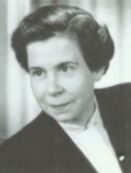
Ruth Vanselow was born in Berlin as the youngest daughter of Ernst Vanselow and Elisabeth von Ziegler. Her father was a naval captain and, in 1918, had signed the Armistice of Compiègne as a representative of the Imperial German Navy. After the war, he turned to the study of law. Ruth Vanselow spent her childhood in Freiburg until the family moved back to Berlin in 1926.
At her mother’s request, Ruth Vanselow attended a rural women's school before training as a chemical-biological laboratory assistant at the Berlin Lette-Haus from 1938 to 1940. Thereafter she worked at the hormone research laboratory of Schering AG until 1943. During the Second World War, she completed her Abitur, worked for seven years as a medical receptionist in Hildesheim, and then studied psychology in Göttingen from 1951 to 1957.
Subsequently she started psychoanalytic training at the Niedersächsisches Landeskrankenhaus Tiefenbrunn near Göttingen, but soon moved to Berlin. The analysis she had begun with Elly Achelis-Lehbert in Göttingen was converted into a training analysis, which she continued in Berlin first with the Freudian Hans Schneider-Kassel and eventually with the Jungian Julius Schirren.
She continued her training as an analytical psychotherapist in Hanover in the 1960s, completing her examinations at the Lehrinstitut für Psychotherapie, which had been recognised by the DGPT in 1965. While still in training, she took up a position in 1961 at the Institut für analytische Kinder- und Jugendlichen-Psychotherapie für das Land Niedersachsen (Child Guidance Clinic) in Hanover. At this institute, founded in 1951 on the model of the London Tavistock Clinic, she worked as a lecturer and training analyst until 1979. Subsequently she pursued working as a child and adolescent analyst in private practice. (Top of the article)
- SELECTED WORKS
- Überlegungen zur Strukturentwicklung im Kindesalter an 60 Tic-erkrankten Kindern. Praxis der Kinderpsychologie und Kinderpsychiatrie 20, 1971
- REFERENCES
- Bundesarchiv (22.1.2019)
- Popp, Ulrike: Ruth Vanselow. In C. Ludwig-Körner: Wiederentdeckt - Psychoanalytikerinnen in Berlin. Gießen 1999, 207-215
- PHOTO from Ludwig-Körner 1999, 211
Ilsabe von Viebahn (1920-2010)
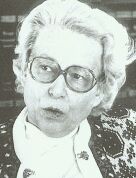
Ilsabe von Viebahn was born into an evangelical free-church family as the daughter of Bernd von Viebahn and Christa von Reese. She grew up with four siblings on an estate near Dresden. In 1935, the family moved to Wittenberg, where Ilsabe attended a girls’ secondary school and completed her Abitur in home economics in 1939. From 1939 to 1941, she trained as a kindergarten teacher at the Pestalozzi-Fröbel-Haus in Berlin. She worked in this profession for a short time before studying psychology and pedagogy in Heidelberg and Leipzig from 1942 to 1945.
After the war, she initially worked in church-run kindergartens. In 1946, she got an employment as a lecturer in psychology and pedagogy at the Pestalozzi-Fröbel-Haus, where she taught kindergarten teachers, youth leaders, and social workers until 1960. At the same time, beginning in 1948, she undertook psychoanalytic training at the Berlin Institut für Psychotherapie (IfP) of the Deutsche Psychoanalytische Gesellschaft (DPG). The institute took a cross-school approach and was headed by Harald Schultz-Hencke until 1953.
Ilsabe von Viebahn preferred the more psychological approach of the neo-analyst Schultz-Hencke to classical psychoanalysis. She therefore underwent her training analysis with Werner Schwidder and Margarete Seiff, both of whom were associates of Schultz-Hencke. In 1954, she completed her psychoanalytic training and became a lecturer at the IfP and a training and supervising analyst of the DPG. In 1957, she graduated at the Free University of Berlin with a dissertation on Fröbel’s pedagogy from the perspective of Freudian psychoanalysis.
In 1960, she moved to Hanover, where she took up a position as a therapist and training analyst at the Institut für analytische Kinder- und Jugendlichen-Psychotherapie für das Land Niedersachsen und Erziehungsberatungsstelle (Child Guidance Clinic). She played a major role in establishing the Lehrinstitut für Psychoanalyse und Psychotherapie in Hanover, which was recognized by the DGPT in 1965. From 1964 to 1973, she served as head of training at the institute, succeeding Ina Böhlendorf. She also served on the board of the DGPT from 1966 to 1972. (Top of the article)
- SELECTED WORKS
- Spielpflege als Hilfe zu gesunder Entwicklung und Lebensanpassung. Praxis der Kinderpsychologie und Kinderpsychiatrie 1, 1952, 1-7 und 39-43
- Erzieherische Fragen zu den Triebregungen in der frühen Kindheit. Pädagogische Blätter 5, 1954, 54-58
- Fröbels Pädagogik des frühen Kindesalters im Aspekt der Freud'schen Psychoanalyse. Phil. Diss. Berlin 1957
- Über die Beziehungen der tiefenpsychologischen Betrachtungsweisen zu einigen Gedanken über Entwicklung und Erziehung bei Rousseau, Pestalozzi und Fröbel. Praxis der Kinderpsychologie und Kinderpsychiatrie 11, 1962, 44-56
- Über den Begriff der Regression. Praxis der Kinderpsychologie und Kinderpsychiatrie 13, 1964, 193-204
- Zur Technik der analytischen Kinderpsychotherapie. Praxis der Kinderpsychologie und Kinderpsychiatrie 19, 1971, 274-281
- Struktureigentümlichkeiten der Lehrerpersönlichkeit aus tiefenpsychologischer Sicht. Schule und Psychologie 18(6), 1971, 169ff
- Seelische Entwicklungen und ihre Störungen. Ein psychoanalytischer Grundlehrgang. Göttingen 1972
- Die verbale Deutung in der Kinderpsychotherapie. Praxis der Kinderpsychologie und Kinderpsychiatrie 25, 1976, 113-128
- REFERENCES
- Ludwig-Körner, Christiane: Wiederentdeckt - Psychoanalytikerinnen in Berlin. Gießen 1999; 2014
- PHOTO from Ludwig-Körner 1999, 227
Else Voigtländer (1882-1946)
Else Voigtländer was an intermediary between the disciplines of philosophy, psychology, and psychoanalysis. She and her twin sister Emmy were born in Kreuznach as the eldest of four children of the bookseller and publisher Robert Voigtländer and Pauline, née Federhaff. In 1888, the family moved to Leipzig, where Else attended private secondary schools for girls and preparatory courses for women wishing to attend university. After passing her maturity exam, she went to Munich in 1905 to study psychology and philosophy under the phenomenologists Theodor Lipps and Alexander Pfänder. In 1909, she was among the first women in Germany to obtain a PhD.
Else Voigtländer was one of the first to develop a phenomenology of feelings. In her main work Vom Selbstgefühl (which is identical to her PhD thesis Über die Typen des Selbstgefühls) she used the phenomenological method to describe types of character traits, which she identified as feelings of self-worth. She also studied emotions such as resentment, inauthentic feelings, and erotic love. Her thesis
was that erotic love, rather than being derived from the sexual instinct, is a subspecies of the sentiment of love.
In her time, Voigtländer was one of the few German psychologists who advocated psychoanalysis. In her essay Über die Bedeutung Freuds für die Psychologie, published in 1911, she dealt with psychoanalytic concepts from a phenomenological perspective and formulated an early phenomenological interpretation of repression. In 1912, she presented this text as an introductory lecture to the IPA Ortsgruppe Berlin and became an extraordinary member of the Berliner Psychoanalytische Vereinigung that same year. In 1915, however, she resigned due to disagreements with Freud. For example, she criticized him for emphasizing experience and neglecting predisposition.
One of Else Voigtländer’s main areas of interest was the application of psychoanalytic concepts to welfare education. In the late 1910s, she was a research assistant to the psychiatrist Adalbert Gregor at the Heilerziehungsheim Kleinmeusdorf near Leipzig. In this capacity, she participated in studies on the character structure of neglected children and adolescents and on the relationship between gender and neglect. Gregor was known for his eugenic views in welfare education, and Voigtländer, as well, advocated racial-hygiene measures to combat neglect, which she regarded as largely hereditary.
In 1926, Else Voigtländer became director of the Waldheim women’s prison in Saxony, which she headed until 1945, becoming a member of the NSDAP in 1937. She was removed from office after the end of the war and died in 1946 from pulmonary edema. (Top of the article)
- SELECTED WORKS
- Über die Typen des Selbstgefühls. Phil. Diss. München 1909
- Vom Selbstgefühl. Ein Beitrag zur Förderung des psychologischen Denkens. Leipzig 1910
- Über die Bedeutung Freuds für die Psychologie. In A. Pfänder (ed.): Münchener Philosophische Abhandlungen. Theodor Lipps zu seinem sechzigsten Geburtstag gewidmet von früheren Schülern. Leipzig 1911, 294-316 + pdf
- Psychoanalyse und Psychologie. Vortrag 18. Mai 1912, Ortsgruppe Berlin
- Über einen bestimmten Sinn des Wortes "unbewußt". Deutsche Psychologie 1, 1916, 63-75 (Review s. Bornfeld 1919)
- Zur Psychologie der Erzieherpersönlichkeit. Zeitschrift für pädagogische Psychologie und expermentelle Pädagogik 18, 1917, 385-400
- Über die "Art" eines Menschen und das Erlebnis der "Maske". Zeitschrift für Psychologie 92, 1923, 326-336
- "Abriß der Psychologie der Kinder und Jugendlichen" und "Schulentlassene Mädchen". In A. Gregor: Leitfaden der Fürsorgeerziehung. Berlin 1924
- Stichworte "Geschlechtsmerkmale" und "Verwahrlosung". In M. Marcuse (ed.): Handwörterbuch der Sexualwissenschaft. Bonn 1926, 240-247 + 795-797
- Über das Wesen der Liebe und ihre Beziehung zur Sexualität. Verh. I. internat. Kongr. Sex.forschg, 10. bis 16. Okt. 1926. Berlin 1928, 189-196
- Fürsorgeerziehung und Psychoanalyse. H. Prinzhorn (ed.): Auswirkungen der Psychoanalyse in Wissenschaft und Leben. Leipzig 1928, 372-377
- Bemerkungen zur Psychologie der Gesinnungen. In E. Heller and F. Löw (eds): Neue Münchener Philosophische Abhandlungen, Alexander Pfänder zum sechzigsten Geburtstag. Leipzig 1933, 143-164
- Über den Strafvollzug der Frauen. Blätter für Gefängniskunde 68 (4), 1937, 268-278
- (and Adalbert Gregor) Die Verwahrlosung, ihre klinisch-psychologische Bewertung und ihre Bekämpfung. Für Pädagogen, Ärzte, Richter. 1. Teil: Die Verwahrlosung der Knaben (Gregor). 2. Teil: Die Verwahrlosung der Mädchen (Gregor und Voigtländer). Berlin 1918
- (and Adalbert Gregor) Geschlecht und Verwahrlosung. Zschr gesamte Neurol Psychiatr 66, 1921, 97-127
- (and Adalbert Gregor) Charakterstruktur verwahrloster Kinder und Jugendlicher. Leipzig 1922
- REFERENCES
- Bornfeld, Siegfried: (Review) Fritz Giese, Deutsche Psychologie. Der Reihe I. Band, Heft 1. (Langensalza 1916. Wendt & Klauwell. 108 Seiten. 3·50 M.). IZP 5, 1919, 129-132
- Freud, Sigmund: Brief an Else Voigtländer vom 1. Oktober 1911. In S. Freud: Briefe 1873-1939. Hg. von Ernst L. Freud. Frankfurt/M. 1960
- Hackl, Gabriele: Dr. Else Voigtländer (1882-1946). In G. Hackl and B. Sack: Das Frauenzuchthaus Waldheim (1933-1945). Leipzig 2016, 269-271
- Hermanns, Ludger M.: Helene Stöckers autobiographisches Fragment zur Psychoanalyse. Luzifer-Amor 4, 1991, 177-180
- Kimmerle, Gerd: Freuds Leonardo-Studie: Eine methodologische Erörterung. Luzifer-Amor 5, 1992, 135-208
- Maeder, A.: (Review) Dr. E. Voigtländer, Über die Bedeutung Freud's für die Psychologie. (Münchener Philosophische Abhandlungen. Th. Lipps zu seinem 60. Geburtstag gewidmet von früheren Schülern.) A. Barth, Leipzig 1911.. Zentralblatt für Psychoanalyse 2, 1912, 207-209
- Pfister, Oskar: Zum Kampf um die Psychoanalyse. Wien und Leipzig 1920
- Rose, Wolfgang, Petra Fuchs and Thomas Beddies: Diagnose „Psychopathie“. Die urbane Moderne und das schwierige Kind. Berlin 1918–1933. Wien, Köln, Weimar 2016
- Sack, Birgit: E-mail, 24 Febr. 2016
- Vereinsberichte: Ortsgruppe Berlin. Intern Zschr ärztl Psychoanal 1 (1), 1913, 112 + Intern Zschr ärztl Psychoanal 3 (3), 1915, 184
- Vendrell Ferran, Íngrid: Emotionen und Sozialität in der frühen Phänomenologie. Über die Möglichkeiten von Frauen in der ersten Phase wissenschaftlicher Schulenbildung. Feministische Studien 26 (1), 2008, 48-64
- Vendrell Ferran, Íngrid: Die Emotionen. Gefühle in der realistischen Phänomenologie. Berlin 2008
- Vendrell Ferran, Íngrid (ed.): Else Voigtländer: Self, Emotion, and Sociality. Cham 2023
- Voigtländer, Else: Lebenslauf (1909) (2014-10-28) + Sterbeurkunde 1946
- Voigtländer, Roland: E-mail, 10 Febr. 2015
- Wikipedia: Else Voigtländer; Adalbert Gregor (2026-08-18)
Edith Weigert née Vowinckel (1894-1982)
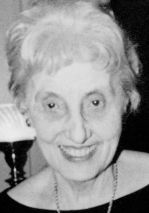
Edith Vowinckel was born in Düsseldorf as the youngest daughter of the bank director Eduard Vowinckel and his wife Auguste, née Pieper. After completing Mittlere Reife, she left school to care for her parents, who were seriously ill both physically and psychologically. During the First World War, she worked as a nurse, before obtaining the Abitur in a reform school. Beginning in 1917, she studied medicine in Jena, Marburg, Frankfurt, Munich, and Berlin, where she passed her state medical examination in 1922. After completing her practical year in Berlin, including at the gynecological department of the Rudolf Virchow Hospital, she worked from 1924 to 1929 as a neuropsychiatrist at the Charité psychiatric clinic in Berlin, where she headed the children’s ward. In 1925, she received her doctorate on a gynaecology topic.
At the same time, Edith Vowinckel began her training at the Berlin Psychoanalytic Institute. Between 1924 and 1928, she underwent training analysis with Franz Alexander and Carl Müller-Braunschweig. She was an assistant to Ernst Simmel at the psychoanalytic sanatorium "Schloss Tegel" from 1929 to 1931, and also held courses at the Verein Jugendheim Charlottenburg. In 1929, she became an associate member of the Deutsche Psychoanalytische Gesellschaft, a full member in 1930, and a training and supervising analyst in 1933.
In 1932, she married the administrative lawyer and ministerial director Oscar Weigert (1886-1968). Their son Wolfgang was born that same year. When Hitler came to power, Oscar Weigert, a Jew who had converted to Protestantism, lost his position. At the invitation of Kemal Atatürk, the Weigerts emigrated to Turkey in 1935. They settled in Ankara, where Oscar Weigert worked as an adviser to the Ministry of Economics and helped reform Turkish labor law.
Edith Weigert-Vowinckel received permission from Atatürk to practice as the first psychoanalyst in Turkey and played a significant role in introducing psychoanalysis there. Izzeddin A. Şadan, a pioneer of Turkish psychoanalysis, underwent his training analysis with her. During this period, she wrote her paper The cult and mythology of the magna mater from the standpoint of psychoanalysis (1938), which examined the ambivalence of the incestuous mother-son relationship in Anatolian mythology. Much to Sigmund Freud’s annoyance, she interpreted the male self-castration in the Magna Mater cult not as a manifestation of the Oedipus complex, but as a desire to become “female” and to participate in female power.
In 1938, Edith Weigert and her family moved to the United States. From 1938 to 1940, she worked at Sheppard and Enoch Pratt Hospital in Towson, near Baltimore, with patients suffering from schizophrenia. Subsequently she opened a private practice in Chevy Chase, near Washington, D.C. In 1938, she became a member of the Washington-Baltimore Psychoanalytic Society and, a year later, a training analyst. As president of the society (1944-1946), chair of its Education Committee (1945-1954), and director of the Washington Psychoanalytic Institute (from 1954), she played an important role in institutional psychoanalysis in Washington. In 1956, she participated in founding the American Academy of Psychoanalysis.
From 1960 onward, Edith Weigert was associated with the Washington School of Psychiatry, founded by Harry Stack Sullivan, where she served as Chairman of the Faculty from 1963 to 1974. Harry Stack Sullivan’s interpersonal theory and Frieda Fromm-Reichmann's intensive psychotherapy for schizophrenic patients had a major influence on her own approach. She adopted the Neo-Freudian's social relativisation of the Oedipus complex and infantile sexuality, but sought a synthesis between Freud and Sullivan. Her main areas of focus included topics such as schizophrenia, existentialism, psychopathology and psychoanalytic technique. (Top of the article)
- SELECTED WRITINGS
- Adrenalinwirkung auf den Blutdruck bei Schwangeren, Wöchnerinnen und Eklamptischen. Med. Diss. Berlin 1925
- Der heutige Stand der psychiatrischen Schizophrenieforschung. IZP 16, 1930, 471-491
- Ein Fall von krankhaft bedingtem Konfessionswechsel. Zeitschrift für Religionspsychologie 3, 1932, 97-111
- Beitrag zur Schizophrenielehre. Lecture, 13th IPA Congress 1934 in Luzern
- A contribution to the theory of schizophrenia. IJP 17, 1936, 190-201
- The cult and mythology of the magna mater from the standpoint of psychoanalysis. Psychiatry 1, 1938, 353-376
- Psychoanalytic notes on sleep and convulsion treatment in functional psychoses. Psychiatry 3, 1940, 189-209
- Die Dynamik der Psychoneurosen. Zeitschrift für Psychoanalyse 1, 1949, 16-28
- Existentialism and its relation to psychotherapy. Psychiatry 12, 1949, 399-412
- Contribution to the problem of terminating psychoanalyses. Psa Quart 21, 1952, 465-480
- Die Entwicklung der psychoanalytischen Ausbildung in den USA. Psyche 6, 1953, 632-640
- Counter-transference and self-analysis of the psychoanalyst. IJP 35, 1954, 242-246
- The importance of flexibility in psychoanalytic technique. JAPA 2, 1954, 702-710
- Frieda Fromm-Reichmann, M. D. - 1890-1957. Bull Amer Psychoanal Assn 14, 1958, 379-380
- Rediscovery of trust. Am J Psychoanal 19, 1959, 33-36
- Søren Kierkegaard's mood swings. IJP 41, 1960, 521-525 [Sören Kierkegaards Gemütsschwankungen. Psyche 14, 1961, 608-616]
- Einsamkeit und Vertrauen. Psyche 14, 1960, 538-551
- Die Rolle der Sympathie in der Psychotherapie. Psyche 16, 1962, 209-220
- Goals in psychoanalysis. In G. E. Daniels et al. (eds): New Perspectives in Psychoanalysis. Sandor Rado lectures 1957-1963. New York; London 1965, 253-281
- Sexuality and love (1966). In Weigert 1970, 24-34
- Narcissism. Benign and malign forms (1967). In Weigert 1970, 119-136
- The Courage to Love. Selected Papers of Edith Weigert. New Haven u.a. 1970
- REFERENCES
- Ärztinnen im Kaiserreich. Institut für Geschichte der Medizin und Ethik in der Medizin, Charité Berlin 2015 (2019-01-25)
- Grotjahn, Martin: Transvestite fantasy expressed in a drawing. Psa Quart 17, 1948, 340-345
- Holmes, Maren: Düsseldorf - Berlin - Ankara - Washington: Der Lebenslauf von Edith Weigert, geb. Vowinckel (1894-1982). Luzifer-Amor 20 (39), 2007, 7-52
- Hristeva, Galina: "Nicht mitzuhassen, mitzulieben bin ich da." Psychoanalyse und Nationalsozialismus im Leben und Werk Edith Weigerts. Werkblatt 32 (Nr. 74), 2015, 96-111
- Schröter, Michael: 129 dokumentierte Ausbildungskandidaten am Berliner Psychoanalytischen Institut 1924-1932: Tabelle. Luzifer-Amor 33 (66), 2020 (2020-12-11)
- Usak-Sahin, Hale: Psychoanalyse in der Türkei. Eine historische und aktuelle Spurensuche. Gießen 2013
- Volkan, Vamik D.: Psychoanalysis, Turkey, and the IPA. In P. Lowenberg and N. L. Thompson (eds): 100 Years of the IPA. The Centenary History of the International Psychoanalytical Association, 1910-2010. Evolution and Change. London 2011, 419-434
- PHOTO: Private. Courtesy of Maren Holmes
Marie Louise Werner (1894-1978)
Marie Louise Werner was born in Rotenburg a. d. Fulda into a large pastor's family. Her father Otto Jean Werner was a school inspector, district school councillor, and city councillor in several German cities. Her mother Louise née Schulze, the daughter of German emigrants, grew up in New York. After graduating from the Oberlyzeum in Berlin-Neukölln and passing an examination in 1918 to qualify as a “wissenschaftliche Lehrerin” for secondary and middle schools, Marie Louise Werner taught at various schools in Berlin. During the 1920s, she attended lectures and seminars given by Gestalt psychologists Kurt Lewin and Wolfgang Köhler.
When her younger sister Hannah married the theologian Paul Tillich in 1924, Marie Louise Werner became friends with Tillich’s friend, the art historian Eckart von Sydow, and, like him, turned to psychoanalysis. She began training at the Berlin Psychoanalytic Institute (BPI) and underwent a training analysis with Karen Horney from 1928 to 1931. In 1936, she became an associate member of the Deutsche Psychoanalytische Gesellschaft (DPG). After the BPI was incorporated in 1936 into the “Aryanized” Deutsches Institut für Psychologische Forschung und Psychotherapie, Marie Louise Werner became a member of "Arbeitsgruppe A," the group of Freudians there. From 1940 to 1942, she underwent a further training analysis with Carl Müller-Braunschweig.
After the war, Marie Louise Werner worked for several years as a psychotherapist at the Kinderhaus am Fuchsstein, a psychoanalytically oriented therapeutic-pedagogical residential home in Berlin-Frohnau. She belonged to the circle of DPG members around Carl Müller-Braunschweig who founded the Deutsche Psychoanalytische Vereinigung (DPV) in 1950 and established the Berlin Institute of the DPV. She was one of the DPV’s first and most influential training and supervising analysts and taught at the Berlin Institute, but also held seminars at the Institut für Psychotherapie e.V., which was directed by the neo-analyst Harald Schultz-Hencke.
Her main areas of focus were seminars on child psychology and child therapy, questions of psychoanalytic technique, and the relationship between psychoanalysis, ethnology, and art. She had a particular interest in the visual arts and in children’s drawings, believing that in both, the unconscious manifests itself directly. (Top of the article)
- SELECTED WORKS
- Drei Fälle von Verwahrlosung. Lecture 1942, "Arbeitsgruppe A", Deutsches Institut für Psychologische Forschung und Psychotherapie
- Erziehen wir unsere Kinder richtig? Berlin 1950
- Eine Kinderanalyse. In L. Bolterauer (ed.): Aus der Werkstatt des Erziehungsberaters. Gedenkschrift zur 10. Wiederkehr des Todestages August Aichhorns. Wien 1960
- Die Kritzelzeichnungen als Widerstandsphänomen. Jb Psychoanal 1, 1960, 235-239
- Kann das Kind trauern? In Stuttgarter Akademie für Tiefenpsychologie und analytische Psychotherapie (ed.): Psychotherapie bei Kindern. Stuttgart 1971, 41-55
- Die Kinderzeichnung in ihrer symbolischen und aktuellen Bedeutung. (unpublished)
- (and Erna Stieffenhofer) Pädagogische und psychotherapeutische Arbeitsweise im "Kinderhaus am Fuchsstein". In Senator für Jugend und Sport (ed.): Aus unserer Arbeit. 1957, 49-58
- REFERENCES
- Brecht, Karen, Volker Friedrich, Ludger M. Hermanns, Isidor J. Kaminer and Dierk Jülich (eds): "Hier geht das Leben auf eine sehr merkwürdige Weise weiter..." Zur Geschichte der Psychoanalyse in Deutschland. Hamburg 1985
- Lockot, Regine: Chronik zur Geschichte der Psychotherapie und zur Psychoanalyse von 1918 bis 1975. DGPT (5.6.2024)
- Lockot, Regine: Die Reinigung der Psychoanalyse. Die Deutsche Psychoanalytische Gesellschaft im Spiegel von Dokumenten und Zeitzeugen (1933-1951). Tübingen 1994
- Ludwig-Körner, Christiane: Wiederentdeckt - Psychoanalytikerinnen in Berlin. Gießen 1999; 2014
- PHOTO from Ludwig-Körner 1999, 243
Ingeborg Zimmermann (1922-2008)
Ingeborg Zimmermann was born in Leipzig. Her parents came to Germany after the collapse of Austria-Hungary, and her father was a syndic in the book trade in Leipzig. He lost his position in 1934 when he refused to join the NSDAP. The family moved to Berlin, where Ingeborg Zimmermann began studying medicine in 1942. After the end of the war, she completed her medical studies in Berlin as a specialist in psychiatry and neurology.
In 1958, she moved to Switzerland and worked at a private psychiatric hospital near Zurich. She began an analysis with a Belgian analyst trained in the Lacanian tradition, but subsequently oriented herself toward the psychoanalytic approach represented by Paul Parin, Fritz Morgenthaler, and Jacques Berna at the Psychoanalytic Seminar Zurich.
In 1962, she returned to Germany and took a position at the Psychosomatic Clinic in Heidelberg, headed by Alexander Mitscherlich, where she worked until 1966. She completed her training analysis with Margarete Mitscherlich-Nielsen and became a member and training analyst of the Deutsche Psychoanalytische Vereinigung (DPV) at the end of the 1960s. She underwent a further analysis with Fritz Meerwein in Zurich.
She then moved to Frankfurt, where she opened her own private practice and worked as an independent associate at the Sigmund Freud Institute, which was directed by Alexander Mitscherlich. During this period, Heinz Kohut’s self psychology had a formative influence on her. In 1972, she moved to Munich and, a year later, founded the Psychoanalytische Arbeitsgemeinschaft München (PAM) together with Lotte Köhler, Antoon Houben, and Erhard Künzler. The organisation was subsequently recognised as a DPV institute.
A particular interest of Zimmermann’s was the working through of emotional numbness, which can arise as an expression of a split between analyst and analysand and can often also impair the capacity for critical thinking. (Top of the article)
- SELECTED WORKS
- Über den Zugang zu frühen unbewußten Persönlichkeitsanteilen. Psyche 25 (2), 1971, 100-123
- Macht-Ohnmacht. Probleme im Verständigungsprozeß zwischen Analysand und Analytiker. In H. Luft et al. (eds): Der psychoanalytische Prozeß. Zum 40jährigen Bestehen der DPV. Hofheim 1991
- Die wiedergefundene Welt. In L. M. Hermanns (ed.): Psychoanalyse in Selbstdarstellungen, Bd. IV. Tübingen 1998, 431-465
- (and Erhard Künzler) Zur Eröffnung des Erstinterviews. Psyche 19 (1), 1965, 68-79
- REFERENCES
- Lockot, Regine: Chronik zur Geschichte der Psychotherapie und zur Psychoanalyse von 1918 bis 1975. DGPT (2020.12-16)
- Pabst, Reinhard: Die Psychoanalytische Arbeitsgemeinschaft München e.V. (PAM) - Institut der DPV. Eine geschichtliche Skizze. In T. Bauriedl und A. Brundke (eds) Psychoanalyse in München. Eine Spurensuche. Gießen 2008, 278-304
- Zimmermann, Ingeborg: Die wiedergefundene Welt. In L. M. Hermanns (ed.): Psychoanalyse in Selbstdarstellungen, Bd. IV. Tübingen 1998, 431-465